DD
MM
YYYY

PAGES

DD
MM
YYYY

spot_img

PAGES

Home Blog Page 22

Oil jumps 3% as Gulf attacks deepen supply shock, with Hormuz disruption keeping markets on edge

0

Global oil prices rebounded sharply on Tuesday, rising about 3% as fresh attacks linked to Iran on the United Arab Emirates reignited fears of prolonged supply disruptions, with the strategically critical Strait of Hormuz still operating far below normal capacity.

Benchmark Brent crude climbed $3.27, or 3.3%, to $103.48 a barrel by mid-morning in London, while West Texas Intermediate rose $3.14, or 3.4%, to $96.64, reversing losses from the previous session when tentative shipping movements through the strait briefly calmed markets.

The latest gains come as the conflict involving the U.S., Israel, and Iran enters its third week, with no clear path to de-escalation. Iranian-linked attacks have disrupted key energy infrastructure in the Gulf. Operations at the Shah gas field remain suspended following a drone strike, while a fresh attack triggered a fire at Fujairah port, forcing the Abu Dhabi National Oil Company to halt loading operations.

Fujairah is a crucial outlet for crude exports, handling volumes equivalent to roughly 1% of global oil demand. Its location outside the Strait of Hormuz has traditionally made it a strategic alternative route, but the latest disruption has underscored how few reliable fallback options exist.

At the center of market anxiety remains the Strait of Hormuz, a narrow maritime corridor through which around 20% of global oil and liquefied natural gas flows. Although Iran says the Strait will be open now to all countries except the U.S. and Israel, the impact of the closure is still weighing heavily on the oil market.

Analysts warn that the situation remains highly fragile. “It only takes one Iranian militia to fire a missile or plant a mine on a passing tanker to reignite the entire situation,” said IG market analyst Tony Sycamore.

Iran has allowed some vessels—including Indian tankers—to pass, easing immediate pressure, but traders continue to price in prolonged instability and intermittent closures, according to market participants.

UAE Output Cuts Signal Tightening Supply

The operational strain is already translating into reduced output. The United Arab Emirates, one of the largest producers within the Organization of the Petroleum Exporting Countries, has reportedly cut production by more than half due to export bottlenecks and security risks.

That reduction is significant in a market already facing constrained supply from other producers and limited spare capacity across OPEC+. Middle Eastern crude benchmarks have surged to record premiums, reflecting scarcity of immediately deliverable barrels, a key indicator of tight physical markets.

Monday’s sharp selloff—when Brent fell 2.8%, and WTI dropped 5.3%—highlighted how quickly sentiment can shift based on even minor improvements in shipping flows. But Tuesday’s rebound underscores a deeper reality: the market is increasingly trading on geopolitical risk rather than fundamentals alone.

“For now, oil markets are fixated on the duration of the conflict, halted supplies at Hormuz and eventually the damage this chaos will leave on oil infrastructure in the Gulf,” said Priyanka Sachdeva of Phillip Nova.

This uncertainty is feeding volatility, with price swings reflecting headline risk as much as actual supply changes.

Diplomatic Rifts Complicate Response

Efforts to stabilize shipping lanes face geopolitical hurdles. Several U.S. allies have declined calls by Donald Trump to deploy naval escorts for tankers transiting the strait. The reluctance exposes divisions among Western partners over how far to escalate military involvement, complicating attempts to secure one of the world’s most vital energy corridors.

Without coordinated naval protection, insurers may continue to raise premiums on tankers, further increasing the cost of transporting oil—even where shipments remain technically possible.

Analysts say oil prices could climb further if disruptions persist or escalate. Technical indicators suggest that WTI could test resistance levels near $124 per barrel in the medium term, according to OANDA. At the same time, the physical market remains under pressure, with limited alternative routes and infrastructure unable to fully compensate for Hormuz disruptions.

Reserves Back In Focus

In response to rising prices, the International Energy Agency has indicated that additional releases from strategic reserves remain an option, on top of the more than 400 million barrels already earmarked by member countries.

Such measures could provide temporary relief, but analysts caution they are not a substitute for sustained supply flows, particularly if infrastructure damage in the Gulf worsens. The resurgence in oil prices is likely to feed into higher global inflation, complicating the outlook for central banks already navigating fragile economic recoveries.

Higher energy costs ripple through transport, manufacturing, and food prices, raising the risk of prolonged inflationary pressure at a time when policymakers had been hoping for stability. In that sense, the oil market is no longer reacting solely to supply disruptions—it is increasingly acting as a barometer for broader geopolitical and economic risk.

With the Strait of Hormuz still constrained and Gulf infrastructure under threat, traders are bracing for further turbulence, as even small developments on the ground continue to trigger outsized moves in global energy markets.

Bitcoin Peaks Near $74K Amid Strong Recovery with over $450M in Short Liquidations

0

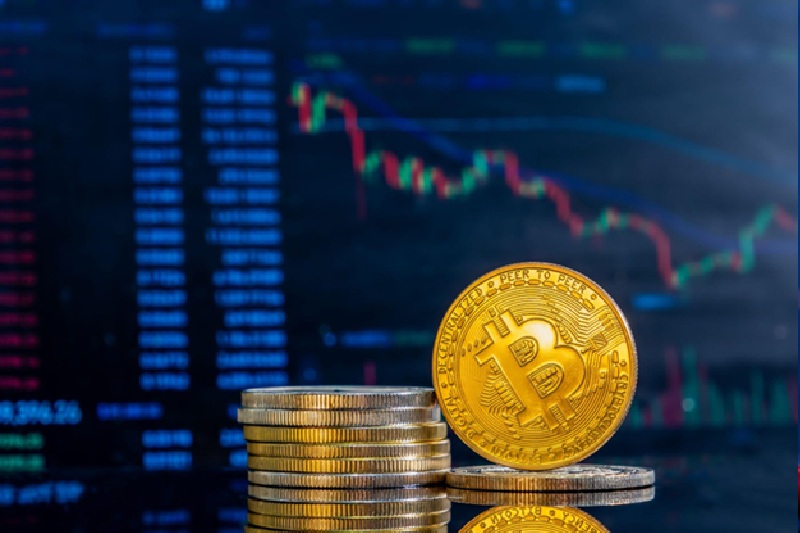
Bitcoin has surged past $75,000 in recent trading sessions amid a strong recovery rally, with significant short liquidations adding fuel to the upside move before some pullback pressure emerged.

As of mid-March 2026, Bitcoin climbed to highs near or above $75,000–$75,900,  currently at $74,191 marking a notable rebound from earlier lows in the $60,000 range earlier in the year. This push triggered substantial liquidations in leveraged short positions across crypto derivatives markets. Reports indicate waves of short squeezes.

In one 24-hour period, around $450 million in crypto futures liquidations occurred, with shorts accounting for the vast majority; ~$485 million out of $609 million in a highlighted instance. Broader data showed even larger potential cascades if price sustained higher, with some analyses warning of $1 billion+ in positions at risk near $75K–$76K levels.

The rally appears driven by a mix of factors: Strong technical breakout from recent ranges. Renewed institutional inflows; Bitcoin spot ETFs seeing consistent positive flows. Macro sentiment shifts, including reduced fears around geopolitical tensions like US-Iran related market jolts. Derivatives momentum, where forced covering of shorts amplified the upward pressure.

After crossing $75K, Bitcoin saw some consolidation and minor pullback, trading around $74,000–$75,000 in fluctuating sessions, with resistance tested near $76K. This fits the classic pattern of a breakout; liquidation-fueled spike, healthy retracement before potential next legs higher.

Current price action hovers in the mid-$74K to low-$75K area, with ongoing volatility. Bulls remain in control if key supports hold, but overleveraged positions could swing either way on any sharp move.

For context on the liquidation dynamics, these events often create “short squeezes” where falling shorts force buys to cover, pushing prices even further before profit-taking kicks in. The launch of spot Bitcoin ETFs in January 2024 marked a pivotal shift in the cryptocurrency ecosystem.

Spot Bitcoin ETFs have attracted substantial capital since inception, serving as a primary channel for institutional and traditional investors to gain exposure without directly holding BTC. Cumulative net inflows have exceeded $55-56 billion with some estimates around $60 billion even after periods of outflows.

Assets under management (AUM) in U.S. spot Bitcoin ETFs hover around $90-110 billion as of mid-March 2026, representing roughly 6-7% of Bitcoin’s total market cap. Major players like BlackRock’s IBIT; holding over $55 billion and leading inflows and Fidelity’s FBTC dominate, with inflows often concentrated in these funds during positive streaks.

Recent trends show renewed momentum: a six-day inflow streak in mid-March 2026 totaling nearly $1 billion, with daily figures like $199 million on March 16. This has reversed earlier 2026 outflows and supported price recovery amid volatility. ETFs create persistent demand by removing BTC from circulation via custodians, tightening supply and establishing a structural price floor.

Inflows often exceed daily mining supply multiple times over, amplifying upward pressure during rallies; recent surges to $75K+ tied to ETF buying and short squeezes. Studies and analyses show short-term positive effects on BTC returns and volatility reduction, with Bitcoin decoupling from altcoins as institutional capital flows primarily into BTC rather than the broader market.

This has contributed to Bitcoin’s evolution into a more “standalone” asset class, less correlated with altcoins post-ETF launch. ETF trading volumes have exploded, boosting spot volume and narrowing spreads often under 0.05%. This has integrated Bitcoin into traditional finance, enabling easier access via brokerage accounts for pensions, hedge funds, and advisors.

Institutional adoption has accelerated: more corporations hold BTC on balance sheets, banks explore custody and collateral use, and sovereign wealth funds enter via ETFs. While volatility persists; drawdowns >25% since launch, followed by recoveries, ETFs have upgraded capital quality—shifting from speculative retail to long-term institutional.

Positive spillovers to other cryptos in returns, but Bitcoin has shown structural decoupling, reducing altcoin correlations. 2026 has seen volatile flows; early-year surges, mid-year outflows, recent rebounds, influenced by macro factors like geopolitics and rates.

This rally aligns with ETF-driven demand providing ballast amid external pressures like regional conflicts. Spot Bitcoin ETFs have accelerated Bitcoin’s institutionalization, mainstream legitimacy, and price resilience—transforming it from a niche asset into a recognized store-of-value with growing TradFi integration. Future inflows potentially $10-70B+ annually could drive further upside, though macro risks remains.

World Liberty Passes Governance Proposal, Introducing Tiered Staking System for High-tier Stakers 

0

A governance proposal for World Liberty Financial (WLFI) — the Trump family-affiliated DeFi project — has passed, introducing a tiered staking system that grants high-tier stakers enhanced benefits, including access to the team.

The proposal, which focused on requiring WLFI holders to lock (stake) their tokens for 180 days to retain governance voting rights with a 2% annual yield in WLFI for participating in votes, created three tiers: Base tier: Minimum 180-day lock for basic voting rights. Node tier: Requires staking 10 million WLFI tokens (roughly $1 million at recent prices) for additional perks like priority stablecoin conversions.

Super Node tier: Requires staking 50 million WLFI tokens roughly $5 million at current valuations for the top benefits, including “guaranteed direct access” or “preferential access,” per later clarifications from WLFI spokespeople to the WLFI business development team and executives for partnership discussions.

The vote concluded recently around mid-March 2026, passing with overwhelming support — over 99% approval from participants, though a small number of large wallets dominated the voting power. This has drawn attention and criticism for creating a pay-to-access model in a project tied to high-profile political figures, with some outlets noting it raises ethics questions about influence in the intersection of crypto, politics, and the White House.

WLFI’s spokesman clarified that this access is to the business development and compliance teams for partnership opportunities — not to specific founders or for political matters — and does not guarantee any partnerships. The program is part of broader governance changes, including locking mechanisms to encourage long-term commitment and directing certain protocol benefits toward larger stakers.

Note that token values fluctuate, so the exact USD equivalent for staking tiers can vary. The passage of the World Liberty Financial (WLFI) governance proposal introducing the tiered staking system — particularly the Super Node tier requiring a ~$5 million stake (50 million WLFI tokens locked for 180 days) for “guaranteed direct access” to the business development and compliance teams — has generated a mix of positive, neutral, and sharply critical reactions as of March 17, 2026.

Encourages long-term commitment and reduces sell pressure: The mandatory 180-day lock for governance voting rights on unlocked tokens creates a token sink, potentially stabilizing or supporting WLFI price by limiting liquid supply. Participants earn ~2% annual yield in WLFI for active voting, incentivizing engagement.

Prioritizes serious ecosystem supporters: WLFI frames the Super Node tier as a “filter” to handle overwhelming partnership inquiries, directing deal flow toward committed holders rather than opportunistic ones. This could accelerate high-quality integrations, stablecoin (USD1) adoption, and institutional involvement.

The vote passed with ~99% support, driven by large holders who control most voting power. This demonstrates strong backing from major stakeholders, potentially attracting more capital and partnerships. Critics highlight the irony of a project promoting “democratized finance” creating an elite tier where ~$5 million buys preferential executive access for partnership discussions.

This has fueled accusations of turning governance into a “pay-to-play” system, contradicting decentralization principles. The high thresholds ($1M for Node tier, $5M for Super Node) could amplify whale dominance — top voters already control significant power. This raises concerns about decisions favoring large holders over the broader community.

Tied to the Trump family with proceeds reportedly flowing heavily to affiliated entities, the program intensifies questions about influence peddling, conflicts of interest, and potential regulatory issues — especially amid WLFI’s banking charter pursuits and political ties. Outlets describe it as blending crypto with “old-school pay-to-play politics,” drawing ethics concerns and warnings of reputational damage.

Some analysts predict short-term volatility or corrections, as the narrative shift from broad access to elite perks alienates retail participants. Broader market downturns have already pressured WLFI’s price, amplifying backlash. Super Nodes gain perks like priority OTC USD1 conversions and weighted voting, potentially boosting WLFI’s USD1 stablecoin usage and funneling benefits to committed users.

X discussions show division — supporters view it as smart game theory for growth, while detractors call it audacious or hypocritical. The high approval rate masks retail discontent, as voting was dominated by large wallets. The setup has heightened attention on WLFI’s operations, including Trump family involvement and flow of funds, potentially inviting more media, congressional, or regulatory examination.

While the change strengthens incentives for deep commitment and could drive protocol growth, it has amplified debates over inclusivity, centralization, and ethics in a politically linked project. Token prices remain volatile, and the long-term success may hinge on how WLFI delivers tangible benefits to Super Nodes without alienating the wider base.


Kalshi Launches $1B Bracket Challenge for the 2026 NCAA Men’s Basketball Tournament 

0

Kalshi, the prediction market platform, has launched a massive $1 Billion Bracket Challenge for the 2026 NCAA Men’s Basketball Tournament (March Madness). It’s designed to highlight the extreme improbability of a perfect bracket while offering huge incentives.

Grand Prize: $1 billion to anyone who submits a perfect bracket — correctly predicting the winner of all 63 games from the Round of 64 through the championship on April 6, 2026. This excludes the First Four play-in games in some descriptions. Consolation Prizes: $1 million guaranteed to the highest-scoring (best overall) bracket, even if no one goes perfect.

An additional $1 million donated to charity and and or scholarships. Free to enter — no purchase, deposit, or trading required. One entry per verified Kalshi account. Open to U.S. residents aged 18+ excludes New York and Florida due to regulations. Submit your bracket via the Kalshi app or website before the first game tips off on March 19, 2026 around 1 p.m. ET or earlier if the game starts sooner.

Kalshi emphasizes this as a “lesson in probability.” A perfect bracket is astronomically unlikely — estimates put the odds at roughly 1 in 9.2 quintillion (if treating each game as a coin flip; real odds improve slightly by favoring higher seeds but remain vanishingly small). No one has ever achieved a perfect bracket in major public contests.

This echoes past high-profile challenges like Warren Buffett’s earlier ones but stands out as one of the largest prizes ever tied to March Madness. It’s backed by Kalshi and partners like Susquehanna International Group.

The math behind the probability of a perfect March Madness bracket correctly predicting the winner of every game in the NCAA Men’s Basketball Tournament is straightforward probability, but the numbers get enormous quickly. The tournament structure and assumptions about game outcomes drive the wildly low odds.

The main bracket excluding the “First Four” play-in games, which most public contests and Kalshi’s challenge ignore for perfection purposes has 63 games: Round of 64 ? 32 games. Round of 32 ? 16 games. Sweet 16 ? 8 games. Elite Eight ? 4 games. Final Four ? 2 games. Championship ? 1 game. Total: 32 + 16 + 8 + 4 + 2 + 1 = 63 games. Each game has 2 possible outcomes (Team A wins or Team B wins).

Assuming independence; a simplification, but standard for this calculation, the total number of possible brackets is 2?³.Calculate that: 2?³ = 9,223,372,036,854,775,808. That’s roughly 9.2 quintillion (9.2 × 10¹?). If you pick completely at random like flipping a fair coin for each game, with 50% chance for either side, the probability of getting a perfect bracket is:P(perfect) = 1 / 2?³ ? 1 in 9.2 quintillion.

This is the number Kalshi and many sources cite as the “coin-flip” or naive random odds. It’s the purest mathematical baseline, treating every game as equally likely regardless of team strength. Some older calculations use 67 games including First Four ? 1 in ~147 quintillion, but modern contests like Kalshi’s focus on the 63-game bracket.

Real games aren’t 50/50. Higher seeds win far more often, especially early: No. 1 seeds almost always beat No. 16 seeds (historically ~99%+ success rate; only one 16-over-1 upset ever). Favorites in later rounds still have edges, but upsets increase. If you use knowledge your effective accuracy per game rises.

Common estimates for “informed” picking: Average expert or good model: ~65–75% correct per game across the tournament. A frequently cited figure from NCAA data and models assumes roughly 66.7% (2/3) accuracy per game. Then probability becomes: P(perfect) ? (0.667)?³ ? 1 in 120 billion (or sometimes cited around 1 in 28–120 billion depending on exact accuracy assumption).

Even at a strong 75% per-game accuracy (very optimistic for the whole tournament) :(0.75)?³ ? 1 in 74 million — still tiny.Some refined models; Duke mathematician Jonathan Mattingly’s approach using seed-based probabilities put realistic odds around 1 in 2.4 trillion. Upsets are correlated (one Cinderella run affects many later games).

Late-round games involve stronger teams, but variance remains. No perfect bracket has ever been recorded publicly (longest streak: ~49 games correct in 2019). With ~60–100 million brackets filled yearly, even at 1 in 120 billion odds, you’d expect zero perfect ones over centuries.

In short: Pure random (coin flips): 1 in 9.2 quintillion ? astronomically impossible. With basketball knowledge / models: 1 in tens to hundreds of billions ? still effectively impossible in any practical sense. Kalshi’s $1B prize highlights this probability lesson perfectly: the prize is huge because perfection is vanishingly unlikely.

The $1M consolation for the best (non-perfect) bracket is far more attainable. If you’re building one, focus on high-confidence early picks and balance risk in later rounds — but don’t count on perfection. Good luck — though as Kalshi puts it, perfection is nearly impossible.

Wall Street Veteran Says ‘60/40’ Portfolio May Be Losing Relevance as U.S. Economy Shifts

0

A long-standing investment strategy that has guided portfolios for decades is facing renewed scrutiny, as structural changes in the U.S. economy challenge its core assumptions.

The traditional 60/40 portfolio — which allocates 60% to equities and 40% to bonds — may no longer offer the optimal balance between risk and return, according to veteran market strategist Jim Paulsen, formerly of The Leuthold Group.

In a recent analysis, Paulsen argues that a sustained decline in recession frequency has shifted the investment landscape in favor of equities, suggesting that investors may need to reconsider their long-held diversification models.

Fewer Recessions, Higher Equity Bias

At the heart of Paulsen’s argument is a structural shift in the U.S. economic cycle. Historically, recessions played a central role in shaping portfolio construction. Between 1940 and 1990, the U.S. economy was in recession roughly 17% of the time — a backdrop that justified holding bonds as a hedge against equity market downturns.

In contrast, over the past three decades, that figure has dropped to about 8%. Outside of the brief downturn triggered by COVID-19, the U.S. has not experienced a prolonged, internally driven recession in nearly two decades.

This shift, Paulsen argues, reduces the need for defensive bond allocations and strengthens the case for higher exposure to equities.

“The appropriate ‘average’ allocation to stocks should be higher for all investors today compared to what it has been historically,” he wrote, citing what he sees as a lasting decline in recession risk.

The data underpinning the 60/40 strategy is also being re-evaluated. Since 1926, a balanced 60/40 portfolio has delivered an average annual return of about 9.5%, according to Paulsen’s estimates. By comparison, a portfolio fully invested in equities has generated closer to 12% annually.

That performance gap becomes even more pronounced in periods of economic stability, where equity markets tend to compound gains over extended cycles.

Paulsen suggests that in a hypothetical environment with minimal recession risk, returns from a fully equity-based portfolio could rise significantly — even approaching high double-digit annualized gains. While he acknowledges that a truly “recession-less” economy is unlikely, the reduced frequency of downturns still alters the traditional risk-return calculus.

Bonds Losing Their Defensive Edge

The argument against the 60/40 model has gained traction in recent years, particularly as bonds have struggled to perform their traditional role as a hedge. During the market turbulence of the early 2020s, both equities and bonds declined simultaneously — a breakdown of the negative correlation that underpins the 60/40 framework.

Data from Morningstar shows that the strategy experienced one of its worst stretches in roughly 150 years in the years leading up to 2025.

Rising interest rates, persistent inflation, and shifting monetary policy dynamics have all contributed to bond market volatility, eroding their effectiveness as a stabilizing force in diversified portfolios.

Structural Forces Reshaping The Economy

Paulsen’s thesis aligns with a broader view among some economists that structural changes have made the U.S. economy more resilient. More proactive central bank policies, particularly from the Federal Reserve, have helped cushion economic shocks through aggressive interest rate adjustments and liquidity support.

At the same time, the growing dominance of the services sector, advances in technology, and improved inventory management have reduced the cyclical swings that once characterized industrial economies.

However, not all analysts agree that recession risks have been permanently diminished. Some point to rising debt levels, geopolitical tensions, and financial market imbalances as potential sources of future instability.

For long-term investors, particularly retirees, the implications could be significant. Paulsen suggests that maintaining a rigid 60/40 allocation in the current environment may come at the cost of lower long-term returns. Instead, he argues for a more flexible approach that reflects changing economic realities.

“A retiree today… should probably consider an average mix meaningfully higher than the ‘old’ 60/40 convention,” he said.

That does not necessarily mean abandoning diversification altogether, but rather recalibrating portfolios to account for a world in which equities may offer a more favorable risk-reward profile than in the past.

Despite growing criticism, the 60/40 portfolio is unlikely to disappear entirely. For many investors, particularly those with lower risk tolerance, bonds still provide income stability and capital preservation benefits that equities cannot match. However, the debate highlights a broader shift underway in global markets: traditional investment frameworks are being reassessed in light of changing economic dynamics.

The question facing the 60/40 strategy is not whether it still works, but whether it remains sufficient as the post-pandemic economy continues to evolve.