
DD
MM
YYYY

PAGES

DD
MM
YYYY

spot_img

PAGES

Home Blog Page 22

Zenith Bank Tops N1tn Profit Mark Again, Proposes A Final Dividend Of N8.75 Per Share

0

Zenith Bank Plc has once again delivered a trillion-naira profit year, reinforcing its position as one of Nigeria’s most profitable lenders, even as a sharp reversal in trading income and rising impairment charges weighed on the final numbers.

The bank’s audited results for the 2025 financial year show profit before tax settled at N1.26 trillion, a 4.78% decline year-on-year from about N1.32 trillion in 2024. Yet beneath that modest drop lies a far more layered story of strong core banking performance, balance-sheet expansion, and shareholder returns that remain among the most attractive in the sector.

The headline decline in pre-tax profit is likely to draw initial attention, but the underlying operating picture is considerably stronger than the surface figure suggests.

A rise in interest-driven earnings led the performance. Interest income climbed to N3.6 trillion from N2.7 trillion, representing a 34.97% year-on-year increase, underpinned by robust yields from loans, treasury bills, and government securities.

The biggest contributor was income from loans and advances to customers, which rose to N1.8 trillion, up 20.15%, showing that Zenith continued to monetize its loan book effectively in a still high-rate environment. Treasury bills contributed another N1.1 trillion, underlining how Nigerian banks have continued to benefit from elevated sovereign yields and active liquidity deployment into government paper.

Additional income streams came from government and other bonds at N507.9 billion, while placements with banks and discount houses generated N210 billion. Promissory notes and commercial papers added smaller but notable contributions. It shows Zenith was not relying solely on traditional loan growth, but was also optimizing treasury operations and fixed-income exposures, a strategy that has become increasingly profitable for tier-one Nigerian lenders amid elevated interest rates.

That strategy fed directly into net interest performance. Despite higher funding costs, with interest expenses rising to N1.03 trillion from N992.4 billion, net interest income surged 52.67% to N2.6 trillion.

Even more telling is what happened after risk costs. After absorbing N742.1 billion in impairment charges, up from N657 billion, net interest income after impairment still stood at about N1.89 trillion, marking a strong expansion from the previous year. This suggests that core earnings were sufficiently strong to absorb rising provisioning costs.

For analysts, this is one of the most critical lines in the results. The increase in impairment charges likely reflects a more conservative risk posture, macroeconomic stress in some borrower segments, and prudential provisioning adjustments. In the current Nigerian operating environment, stronger provisioning is often interpreted positively because it signals management caution rather than balance-sheet weakness.

On the non-funded income side, Zenith also posted healthy growth. Fees and commissions rose 41.06% to N291.8 billion, while other operating income came in at N176.2 billion, largely driven by foreign exchange revaluation gains.

However, this is where the earnings story becomes more nuanced. The major drag on profitability was a sharp reversal in trading performance. The group recorded a N63.1 billion trading loss, compared with a massive N1.1 trillion trading profit in the prior year.

This single line item largely explains why pre-tax profit declined despite strong growth in core banking income. In effect, Zenith’s traditional banking business improved materially, but the extraordinary gains from the previous year’s market and trading conditions were not repeated.

The 2024 base included unusually strong market-related gains, so the comparison somewhat overstates the apparent weakness in 2025 earnings. Operating costs also moved higher. Personnel expenses rose 44.05% to N294.1 billion, while operating expenses increased 14.19% to N669.8 billion.

This reflects the familiar pressures facing Nigerian lenders: wage adjustments, technology spending, branch operations, and inflation-driven administrative costs. Even so, post-tax profit still edged above the trillion-naira mark at N1.04 trillion, supported partly by a lower tax charge of N222.8 billion. Earnings per share, however, fell to N25.32 from N32.87, reflecting the softer bottom-line growth profile.

For shareholders, the most immediate takeaway is the dividend. Zenith proposed a final dividend of N8.75 per share, up sharply from N4.00, bringing the total 2025 dividend payout to N10.00 per share, including the interim dividend of N1.25.

The balance sheet reinforces that confidence as the total assets expanded to N31.4 trillion from N29.9 trillion, while customer deposits rose to N24.3 trillion, underscoring Zenith’s continued franchise strength and deposit mobilization capacity.

Loans and advances stood at N10.4 trillion, while investment securities reached N5.4 trillion, including N4.6 trillion in treasury bills.

Perhaps most striking is the strength of shareholders’ funds. Retained earnings increased to N2.8 trillion, helping push total equity to N4.9 trillion. This provides a strong capital buffer and positions the bank well for future loan growth, dividend sustainability, and regulatory capital requirements.

The market appears to be paying attention. With more than 9 million shares traded on the NGX by late morning on April 7, and the stock already up over 66% year-to-date, investors are likely to focus less on the marginal profit dip and more on the resilience of core earnings and the enhanced dividend yield.
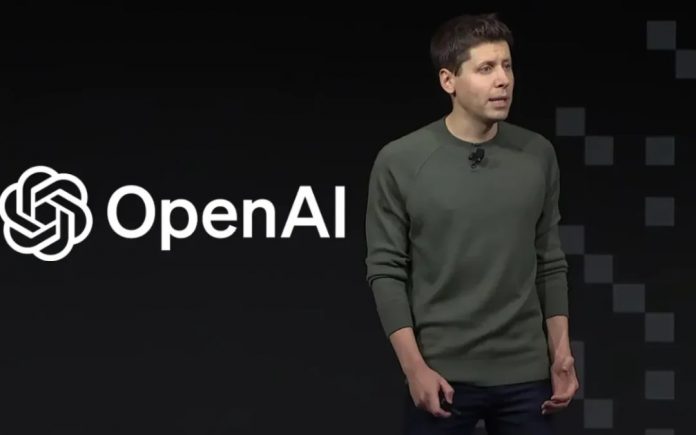

Sam Altman Outlines the Need for New U.S. Social Contract 

0

In a wide-ranging discussion about the rapid approach of AI superintelligence, Sam Altman outlined the need for a major new U.S. social contract — akin to the Progressive Era or New Deal — to handle massive economic disruption, job shifts, and risks from advanced AI. He highlighted cyberattacks and biological threats as the most immediate dangers, not distant hypotheticals.

Altman explicitly agreed with concerns from tech, business, and government leaders that soon-to-be-released AI models could enable a world-shaking cyberattack as early as this year: “I think that’s totally possible. I suspect in the next year, we will see significant threats we have to mitigate from cyber.”

He tied this to broader worries: AI lowering barriers for sophisticated attacks e.g., autonomous agents discovering and chaining vulnerabilities at scale, or enabling novel offensive capabilities that outpace current defenses. He also flagged risks in biosecurity, where AI could accelerate harmful biological research. This isn’t Altman’s first warning on AI risks — he’s previously discussed safety, misuse, and the need for preparedness including OpenAI hiring for head of preparedness roles.

But framing a potentially transformative cyber event as possible within months is stark, especially as he pushes for urgent government-tech coordination on regulation, safety standards, taxes, and wealth redistribution from AI gains. Recent models including from OpenAI, Anthropic, and others show growing prowess in coding, reasoning, and tool use.

Offensive cyber tools could evolve similarly — think AI agents that autonomously scan for zero-days, generate exploits, or orchestrate large-scale operations far beyond what human teams achieve today. Cybersecurity has long struggled with asymmetry; attackers need one success; defenders need to cover everything. AI could widen that gap if offensive uses outpace defensive ones or if models are open-sourced and misused by state or non-state actors.

Dual-Use Reality

The same AI that could supercharge defense e.g., automated patching, threat detection can be flipped for offense. Altman notes this isn’t theoretical anymore. That said, world-shaking is subjective — it could mean disrupting critical infrastructure, financial systems, or supply chains on a massive scale, rather than necessarily apocalyptic. No specific attack vector was detailed publicly, and these warnings often serve dual purposes: genuine caution plus calls for policy and sometimes positioning companies like OpenAI as key partners in solutions.

Altman and OpenAI are racing to build ever-more-powerful models while raising alarms and funds. That’s a fair tension in the industry — progress and risk are intertwined. History shows tech warnings can sometimes align with business incentives, but the underlying technical trends; AI finding vulnerabilities, agentic systems, scaling laws are observable and concerning to many experts beyond OpenAI.

Cyber risks from AI aren’t unique to Altman or OpenAI. Governments, firms like CrowdStrike or Palo Alto Networks, and researchers have been tracking AI-assisted phishing, deepfakes, automated exploits, and agent-based attacks for years. The leap to world-shaking depends on how quickly frontier models gain reliable autonomy, planning, and real-world access — areas where progress is real but still uneven.

Mitigation is possible and already underway: better red-teaming, secure-by-design AI, international norms, hardened infrastructure, and defensive AI tools. Altman’s broader pitch emphasizes proactive policy to capture AI’s upsides while addressing downsides. This is a reminder that AI development isn’t just about capabilities — it’s about stewardship. Expect more scrutiny, investment in cyber defenses, and debate over regulation in the coming months.

Adobe Targets the Classroom With Free AI Study Hub Called Acrobat Spaces, Taking on Google’s NotebookLM

0

Adobe is making an aggressive push into the education technology space with the launch of Acrobat Spaces, a new AI-powered study tool designed to turn static course materials into interactive learning aids such as flashcards, quizzes, mind maps, podcasts, and editable presentations.

The move marks an expansion for a company whose recent AI rollout has largely been focused on enterprise users, creative professionals, and document-heavy workflows. By repositioning Acrobat as a student learning hub, Adobe is now directly stepping into one of the fastest-growing battlegrounds in generative AI: academic productivity.

What makes this launch especially notable is the go-to-market strategy. Adobe is making Acrobat Spaces free, hosting it on a separate URL, and allowing students to begin using it without logging in. That sharply lowers friction at a time when competition from tools such as Google NotebookLM, Goodnotes, and other AI study platforms is intensifying.

This is not just a product update. It is a market-share play. By removing paywalls and account barriers, Adobe is clearly targeting early adoption among students who are already accustomed to uploading lecture notes, PDFs, and web links into AI systems for summarization and revision support.

At its core, Acrobat Spaces transforms uploaded material, including PDFs, Word documents, PowerPoint files, spreadsheets, handwritten notes, links, and transcript files, into multiple study formats.

These include:

  • flashcards
  • quizzes
  • study guides
  • mind maps
  • podcasts
  • editable slide decks powered by Adobe Express

The breadth of supported file types is a notable competitive advantage. Students often work across fragmented ecosystems: lecture slides in PowerPoint, journal articles in PDF, professor notes in Google Docs, and handwritten class notes captured as images or scans.

Adobe’s pitch is that all of this can now be processed in one environment. Charlie Miller, Adobe’s vice president of education, made that positioning explicit.

“Students are already starting in Acrobat to consume these documents and to read all of their course materials,” he said, adding that “The thing that we’ve heard time and time again, they love this as a one-stop shop or a hub for study.”

And he further said: “When they’re already opening Acrobat to read those PDFs, they can just hit generate flashcards, or they can just generate a study space.

“Plus, not have to keep moving documents around, I think that’s one of the big differentiators.”

That “one-stop shop” framing is central to Adobe’s strategy. Unlike AI-native education tools that start from a blank interface, Adobe is leveraging an existing behavior: students already open academic documents in Acrobat.

This gives the company a built-in distribution advantage. Thus, rather than asking students to export materials into another app, Adobe is trying to keep them inside its document ecosystem, where it can extend engagement into premium workflows over time.

This is particularly important from a business standpoint because students acquired early through a free tool today can become long-term users of Acrobat Pro, Adobe Express, Firefly, and other products as they move into the workforce.

In effect, this is also seen as a pipeline strategy for future enterprise customers. The addition of AI-generated two-person podcasts is another notable differentiator. Adobe had already introduced podcast-style summaries for documents earlier this year, and the feature is now being extended into the student product. That allows students to convert dense reading material into audio format, making it easier to study while commuting or multitasking.

This increasingly aligns with how younger users consume information: less static reading, more multimodal engagement.

Adobe says the assistant is anchored in the uploaded documents to reduce hallucinations and factual errors.

In a study setting, that matters enormously because one of the major criticisms of generic AI chat tools in education is that they often generate plausible but inaccurate explanations. Adobe is trying to position Spaces as a more reliable academic assistant by restricting outputs to the source material.

Adobe says it tested the system with 500 students, including groups from Harvard University, University of California, Berkeley, and Brown University. That suggests the company is not merely shipping a generic AI wrapper but is attempting to build around real student workflows and pain points.

The broader significance is that the AI study tools race is becoming increasingly crowded. Adobe’s entry puts pressure on incumbents in edtech and AI note-taking. Tools like NotebookLM have gained traction by allowing students to upload reading materials and generate summaries or podcast discussions.

Adobe’s advantage may lie in its deep integration with documents and presentation creation, allowing students not just to study material but also to produce coursework outputs such as slide decks and study guides from the same interface. That closes the loop between consumption and creation.

For the broader AI market, this launch signals that document companies are no longer content with productivity alone. They are increasingly moving into context-specific intelligence layers, where the value lies not just in summarizing files, but in turning those files into task-ready outputs.

Polymarket Announces Platform Upgrade Including a Rebuilt Trading Engine 

0

Polymarket has announced a major platform upgrade, including a rebuilt trading engine, upgraded smart contracts (CTF Exchange V2), an improved central limit order book, and a new collateral token called Polymarket USD (PMUSD).

Polymarket USD replaces the current bridged USDC.e (Ethereum-originated and wrapped for Polygon). It is backed 1:1 by Circle’s native USDC, making it a private-label or wrapped stablecoin issued and controlled by Polymarket for its platform. This shift gives Polymarket tighter control over settlement, redemptions, liquidity consistency, and overall on-chain operations.

It reduces reliance on bridged assets and should lead to lower gas fees, faster order matching, and a smoother trading experience. The upgrade is expected over the next 2–3 weeks from April 6. It’s described as the platform’s biggest infrastructure change to date. There will be a brief maintenance window where existing order books are cleared.

The transition to Polymarket USD will be largely automatic via the frontend, requiring only a one-time approval prompt. You won’t need to do much manually. For API/power users and bots: You’ll need to wrap your USDC or USDC.e into Polymarket USD using the platform’s collateral onramp contract.

Polymarket USD is not a tradable or speculative token—it’s purely the internal collateral and settlement asset for markets. Moving away from bridged USDC.e to a natively managed 1:1 USDC-backed token improves reliability especially for settlements and redemptions and positions Polymarket for scaling, including potential U.S. expansion.

It also ties into broader infrastructure upgrades that should make trading faster and cheaper. The announcement came directly from Polymarket’s official account and developers, and it quickly sparked discussion including some movement in related prediction markets about a potential $POLY token launch, though the upgrade itself doesn’t directly confirm one.

This is a significant step for Polymarket as it matures its tech stack while staying fully backed by a trusted stablecoin like USDC. Eliminates bridge risk: Bridged USDC.e carried potential custody, interoperability, and technical vulnerabilities. PMUSD, managed directly by Polymarket in partnership with Circle, ties collateral natively to USDC reserves on Polygon.

This reduces settlement friction and makes redemptions and payouts more consistent and capital-efficient. Polymarket now owns the collateral rails, enabling faster, cheaper on-chain operations and fewer external dependencies. This should lead to lower gas fees and more reliable liquidity across all markets.

The rebuilt engine and upgraded central limit order book; hybrid off-chain matching + on-chain settlement aim for quicker executions and deeper liquidity. This benefits both retail traders and high-volume participants. Support for EIP-1271; smart contract wallets like Safe and overall improvements make the platform more attractive to institutions and sophisticated users.

Deposits from multiple chains like Ethereum, Solana, Arbitrum, Base, etc. will auto-convert to PMUSD. During the 2–3 week rollout, open orders will be cleared with advance notice for the maintenance window. Retail users get a mostly automatic one-time approval; API/bot traders must update SDKs and manually wrap USDC/USDC.e into PMUSD via the collateral onramp contract.

This could temporarily reduce automated liquidity and cause minor volatility. Aligns with Polymarket’s CFTC-registered U.S. operations and push for broader compliance. Controlling its own collateral and settlement helps meet stricter standards while reducing reliance on external bridged assets. Positions the platform for potential further U.S. growth and institutional adoption by offering a cleaner, more controlled infrastructure.

Minimal disruption—frontend handles most of the transition. PMUSD is purely internal collateral not tradable or speculative. Power users and bots: Need to adapt code and processes, which may pause some strategies temporarily. The upgrade especially the new branded collateral has fueled community discussion and sharp moves in related prediction markets.

For example, odds on a $POLY token launch by June 2026 jumped significantly, as it signals serious infrastructure maturation and potential future governance and fee features. The upgrade itself does not launch or confirm a $POLY token. This is described as Polymarket’s biggest infrastructure change to date, shifting it toward a more self-contained full exchange model.

It prepares the ground for higher volumes, better market integrity tools, and long-term scaling in the growing prediction market space. No direct impact on existing market resolutions or outcome tokens beyond the collateral change. The changes are overwhelmingly positive for long-term reliability, speed, and growth, with only minor short-term transition costs. It strengthens Polymarket’s position as the leading prediction market while reducing technical and regulatory risks.


Solana Foundation Announces Security Initiatives, Introducing the STRIDE Program 

0

The Solana Foundation has announced a major security overhaul, just five days after the Drift Protocol exploit, introducing the STRIDE program and the Solana Incident Response Network (SIRN) to strengthen DeFi protections across the ecosystem.

On April 1, 2026, Drift Protocol; a prominent Solana-based decentralized perpetuals exchange suffered one of the largest DeFi exploits of the year. Attackers drained approximately $270–286 million in under 12–20 minutes. The breach reportedly stemmed from a sophisticated social engineering campaign linked by researchers to North Korean state-affiliated actors that compromised administrative controls, possibly involving durable nonces and unauthorized access to the security council.

Funds were quickly swapped and bridged out. Drift suspended deposits and withdrawals and coordinated with security firms to contain the damage. The incident highlighted vulnerabilities beyond traditional smart contract bugs, such as operational security (opsec) and insider and admin-level threats.

New Security Initiatives Announced

The Solana Foundation, in partnership with Asymmetric Research, rolled out these tools to move beyond one-off audits toward continuous, proactive security: STRIDE (Solana Trust, Resilience and Infrastructure for DeFi Enterprises): A tiered, structured evaluation program assessing protocols across eight security pillars.

It includes: Publicly published independent evaluation reports. 24/7 active threat monitoring and operational security support funded by Solana Foundation grants for protocols with > $10M TVL that pass evaluation. Coverage scales with risk profile.

Formal verification; mathematical proof of correctness funded for higher-tier protocols. Ongoing monitoring replaces reactive, one-time audits. A dedicated coalition of security firms founding members include Asymmetric Research, OtterSec, Neodyme, Squads, and Zeroshadow for real-time crisis coordination, threat containment, and rapid response to active incidents.

It aims to provide enterprise-level support even to smaller teams. The Foundation also promotes existing free security tools available to all Solana builders, such as: Hypernative — ecosystem-wide threat detection. Range Security — real-time alerting for multisigs and programs.

Others like Riverguard (Neodyme) for attack simulation, Sec3 X-Ray, and AuditWare Radar. The timing is a direct response to the Drift hack and broader concerns about adversaries rapidly innovating. The initiatives emphasize operational and human-factor security e.g., against social engineering alongside technical measures.

This could help rebuild confidence in Solana’s DeFi layer, which has seen strong growth but remains a target. These are voluntary but incentivized programs; grants and public transparency. Larger protocols stand to benefit most from funded monitoring and verification. The ecosystem is shifting toward standardized, ongoing baselines rather than relying solely on initial audits.

The exploit was not a core Solana network or smart contract vulnerability — it stemmed from operational and security council compromise; social engineering + admin-level access via durable noncee, highlighting human and governance risks rather than chain-level flaws. Short-term hit to trust in Solana-based perpetuals and high-TV L protocols.

It became one of the largest DeFi exploits of 2026, amplifying concerns about sophisticated attacks including possible state-linked actors.
Core Solana infrastructure remained unaffected. Other major protocols publicly stated they were unharmed. Overall crypto market reaction was modest; BTC dipped ~2% around the time, but Solana DeFi saw heightened scrutiny.

Increased calls for users to revoke approvals, monitor wallets carefully, and favor protocols with strong opsec. It underscored that even audited projects remain vulnerable to non-code risks. The Foundation’s rapid response aims to turn the incident into a catalyst for stronger standards. Key effects include: Tiered Security Support: Protocols with >$10M TVL that pass independent STRIDE evaluations get free, funded 24/7 active threat monitoring and operational security (opsec) support from the Solana Foundation.

Protocols with >$100M TVL additionally receive funded formal verification; mathematical proofs of contract correctness.
This shifts the ecosystem from reactive, one-off audits to continuous, proactive monitoring — a major upgrade for mid- and large-cap DeFi projects. Publicly published independent security evaluation reports under STRIDE give users and investors clearer visibility into protocol risk profiles across eight pillars.

Encourages protocols to adopt higher security baselines to qualify for grants and monitoring.
Builds on existing free tools and makes advanced protections more accessible, especially for smaller teams. Could reduce exploit frequency, rebuild user confidence, and support Solana DeFi growth by addressing both technical and human-factor risks.

Viewed positively as a proactive step rather than just damage control. Some commentary frames it as a potential price catalyst for SOL or Solana ecosystem tokens by signaling commitment to resilience. Helps differentiate Solana from chains with repeated unaddressed vulnerabilities, though success depends on adoption rates and actual incident reduction.

The Drift hack exposed real operational weaknesses but did not break Solana’s core tech. The STRIDE/SIRN rollout represents a structural improvement: more standardized, ongoing security rather than relying solely on individual teams. Larger protocols stand to gain the most immediately, while the ecosystem as a whole benefits from better crisis coordination and transparency.