DD
MM
YYYY

PAGES

DD
MM
YYYY

spot_img

PAGES

Home Blog Page 2208

Top Crypto to Buy Now in 2025: AI Algorithm Picks Between Solana (SOL), Ripple (XRP) and Rexas Finance (RXS)

0

The 2025 cryptocurrency market is gaining momentum as Solana, Ripple, and Rexas Finance emerge as the primary contenders for high-growth investments. Although Ripple still rules in cross-border payments and Solana is renowned for its lightning-fast blockchain, AI-driven research refers to Rexas Finance (RXS) as the finest investment possibility of the year. RXS is the must-buy cryptocurrency for 2025 because of its fast price increase, real-world asset (RWA) tokenization strategy, and excellent community involvement; it is ready to show exponential gains.

Rexas Finance (RXS) Leads with RWA Tokenization

By emphasizing real-world asset tokenization—a growing industry in 2025—Rexas Finance is changing cryptocurrencies. Rexas Finance crosses traditional finance with blockchain, unlike Solana, which is essentially a blockchain for decentralized apps, or Ripple, which focuses on financial solutions. Tokenizing real estate, commodities, and other precious assets lets regular investors access trillion-dollar markets once controlled by institutions. With a platform that allows investors to have fractional ownership of physical properties, Rexas Finance is leading the way. The global market for tokenized real estate is predicted to surpass $1.5 trillion by 2028. This invention distinguishes it from rivals and qualifies it as the most revolutionary cryptocurrency expected for 2025.

The numbers clearly illustrate the story. Originally priced at $0.03, Rexas Finance has surged to $0.20, a 566% increase before reaching significant markets. Already bringing in more than $47.4 million, the project supports great investor confidence. Driven by artificial intelligence, market forecasts indicate that Rexas Finance might soar to $35 by the end of 2025, a remarkable 17,400% increase from its present price. Although Solana and Ripple are excellent in their respective fields, they lack the same exponential upside, an outstanding degree of growth that exceeds both.  Reflecting a more modest development path, Solana (SOL) traded for $197 in late 2024 and analysts project a climb to $300–$714 by Q4 2025. Likewise, Ripple (XRP) varied between $1.61 and $2.98; bullish estimates of a peak of $5–$8.30 by year-end make it a substantial but less explosive investment. Although SOL and XRP are still appealing options for those looking for consistent increases, they do not approach RXS’s great-reward potential.

RXS’s innovative real-world asset (RWA) tokenizing approach puts it in a position to benefit from a trillion-dollar market, unlike its competitors. For investors hoping for the highest returns in 2025, RXS is the best alternative because of its low entrance price, fast-increasing adoption, and AI-backed projections of unheard-of gains. Lists on CoinMarketCap and CoinGecko also increase legitimacy and visibility, establishing RXS among the top developing cryptocurrencies. Attracting over 1.7 million entries, the $1 million RXS giveaway honors 20 lucky winners with $50,000 worth of RXS tokens each, giving early adopters a significant stake before the network opens. This project increases community involvement and emphasizes the rising faith in Rexas Finance’s long-term plan. The degree of community involvement varies greatly. Solana has a solid developer base, and Ripple stays institutional-oriented. Rexas Finance has created a grassroots movement that guarantees natural adoption and explosive expansion.

Limitations of Solana and Ripple in 2025

Though they still are formidable players, Solana and Ripple have restrictions that keep them from providing the same explosive upside as Rexas Finance. Despite its remarkable scalability and rapid transaction rates, Solana (SOL) keeps having network disruptions, raising questions about its long-term dependability. Although SOL’s technology is still a significant benefit, its vast $67.76 billion market capitalization limits its potential for exponential expansion; hence, it is challenging for SOL to provide 10x or 20x gains shortly.

Although expansion is a well-used cross-border payment network, continuous regulatory difficulties prevent its adoption and price momentum. Furthermore, XRP is less flexible than RXS, which is fast entering high-growth industries such as real estate and commodities tokenization, so it is presented as a more dynamic and profitable investment in 2025. Though they are relatively steady investments, both assets lack the innovative idea and significant upside that Rexas Finance offers.

Conclusion

Rexas Finance (RXS) is the obvious choice for those looking for the most significant possible profits in 2025. Set apart from Solana and Ripple by its unique RWA tokenizing technique, explosive 566% presale growth, and anticipated 17,400% jump before its imminent breakthrough, Rexas Finance offers a once-in-a-lifetime purchasing value at just $0.20. Rexas Finance is a coin worth monitoring and investing in now, as the cryptocurrency market is poised for another significant surge.


For more information about Rexas Finance (RXS) visit the links below:

Website: https://rexas.com

Win $1 Million Giveaway: https://bit.ly/Rexas1M

Whitepaper: https://rexas.com/rexas-whitepaper.pdf

Twitter/X: https://x.com/rexasfinance

Telegram: https://t.me/rexasfinance
Trump Says A TikTok Divestment Deal Will Happen Before April 5 Deadline

0

President Donald Trump has announced that a deal over TikTok’s ownership in the United States will be reached before the April 5 deadline, marking the final chapter in the long-running saga over the embattled social media platform.

Speaking to reporters aboard Air Force One late Sunday, Trump assured that discussions were progressing toward an agreement that would see TikTok sold to a non-Chinese buyer, allowing it to continue operating in the country.

“We have a lot of potential buyers,” Trump said, emphasizing that “there’s tremendous interest in TikTok.” He reaffirmed his stance that the app should remain available to American users but under new ownership.

TikTok’s Chinese parent company, ByteDance, has seen pressure to divest its U.S. operations intensified following the passage of the Protecting Americans from Foreign Adversary Controlled Applications Act in 2024. The law, which received overwhelming bipartisan support, gave ByteDance until January 19, 2025, to sell TikTok or face an outright ban. The law was enacted due to concerns that TikTok’s Chinese ownership could make it a tool for Beijing to conduct data collection on Americans and influence U.S. politics.

With ByteDance failing to secure a buyer before the original January deadline, TikTok temporarily shut down in the United States late last year, causing widespread backlash among its 170 million American users. However, the app reinstated its operation after Trump intervened, extending the deadline to April 5, allowing more time for a deal to be finalized. Now, with just days remaining, the White House is heavily involved in ensuring a resolution, essentially acting as the lead negotiator in brokering TikTok’s future.

A Forced Sale With No Alternative for TikTok

TikTok’s precarious position in the U.S. leaves ByteDance with virtually no bargaining power. Unlike in previous legal battles, where the company managed to delay regulatory actions, it now faces a clear-cut choice: sell or shut down.

Washington has maintained that ByteDance’s ownership of TikTok poses a national security risk, with lawmakers and intelligence agencies warning that the app could be exploited by the Chinese government for surveillance or information warfare. The 2024 law was specifically designed to close any legal loopholes that TikTok might use to evade compliance. With no legal recourse left, ByteDance must now accept a deal, no matter how unfavorable.

Trump has also clarified that China’s approval will be necessary for any agreement, hinting last week that he might offer Beijing certain trade incentives to facilitate the sale. “Maybe I’ll give them a little reduction in tariffs or something to get it done,” he said. This underscores the broader geopolitical significance of the TikTok deal, which has become yet another flashpoint in U.S.-China tensions.

Who Will Buy TikTok?

Several U.S.-based investment groups have emerged as frontrunners in the race to acquire TikTok’s American operations. The most prominent is a consortium of ByteDance’s existing non-Chinese investors, led by Susquehanna International Group and General Atlantic, which has been in talks to inject fresh capital into the bid. Private equity giant Blackstone is also reportedly exploring a minority stake in the company.

The U.S. government has taken an unprecedented level of involvement in these negotiations, with the White House directly overseeing discussions to ensure compliance with national security concerns. Trump’s administration has effectively positioned itself as the final arbiter of TikTok’s fate, wielding immense influence over which buyers will be deemed acceptable.

The temporary shutdown of TikTok late last year was a dramatic moment in the ongoing battle over the platform. Influencers, businesses, and content creators who relied on the platform for their livelihoods were suddenly cut off.

The shutdown also ignited a fierce debate over internet freedom and government overreach, with critics arguing that banning a platform so deeply embedded in American social culture set a dangerous precedent. However, the White House maintained that national security concerns took precedence, with Trump making it clear that only a change in ownership would allow TikTok to resume operations.

The extension to April 5, granted by Trump, who has hinted at the possibility of further extending the deadline, gave ByteDance a lifeline. But with the new deadline now just days away, pressure is mounting on the company to finalize a sale or risk being permanently ousted from the American market.

A Global Tech Battle

The forced divestment of TikTok marks one of the most significant cases of U.S. government intervention in the tech industry. If the sale goes through, it will set a powerful precedent for how the U.S. handles foreign-owned digital platforms, potentially reshaping the global regulatory landscape for social media and data privacy.

At the same time, the saga underscores the deteriorating relationship between Washington and Beijing. China has repeatedly criticized the U.S. over its handling of TikTok, viewing the forced sale as an attack on its technological influence. The outcome of this deal is expected to have lasting repercussions for future Chinese investments in American markets.

SpacePay’s $1M Presale Question: Can Crypto Finally Work for Everyday Payments?

0

For all the growth in crypto ownership, one basic problem remains unsolved – you still can’t easily buy coffee, groceries, or clothes with digital currencies at most stores.

Previous payment projects promised to change this but failed to gain traction with merchants who need practical, affordable systems. As SpacePay reached $1 million in presale funding with tokens at $0.003181, it raises a simple question: can crypto finally work for everyday shopping?

The Crypto Payment Problem

Despite years of crypto growth, we still can’t easily buy everyday items with digital currencies at most stores. This disconnect stems from several practical problems that previous payment projects failed to solve. When examining why crypto payments haven’t gone mainstream, four key barriers stand out.

First, traditional crypto payment systems often cost merchants more than credit cards. Many charge 1-2% platform fees plus network costs, making them more expensive than the 2.5-3% card rates businesses already consider too high. These costs make crypto payments financially unattractive for stores operating on tight margins.

Second, price volatility creates risks for merchants. A store selling a $50 item might receive cryptocurrency worth $45 by settlement time if markets drop. This uncertainty makes setting consistent prices nearly impossible and exposes businesses to potential losses on every sale.

Third, most solutions require special equipment costing hundreds of dollars per terminal. This upfront expense blocks adoption for small businesses that can’t justify investing thousands in new payment hardware without guaranteed returns.

Fourth, technical complexity confuses both staff and customers. Long wallet addresses, confirmation delays, and unfamiliar interfaces create checkout friction that slows lines and frustrates everyone. In retail, where speed and simplicity matter, these complications drive businesses back to familiar payment methods.

SpacePay’s Answer to Each Barrier

SpacePay tackles the fee problem by charging just 0.5% per transaction, majorly below traditional card rates of 2.5-3.5%. This reduction means a store processing $10,000 weekly keeps an extra $200-300 that would otherwise go to payment processors. The lower rate comes from removing unnecessary middlemen and creating a direct payment path between customers and merchants.

The volatility barrier falls through real-time price protection. When a customer pays for a $50 item, the system calculates the exact cryptocurrency amount needed and locks in the exchange rate during the transaction. The merchant receives exactly $50 in their local currency regardless of market movements.

Equipment costs disappear by working with payment terminals stores already own. The platform adds crypto capabilities to standard Android-based systems through a simple software update.

Technical complexity gets replaced with familiar QR code scanning. Instead of typing long wallet addresses or switching between multiple apps, customers simply scan a code with their preferred wallet among the 325+ supported options.

Real Tests, Real Results

SpacePay’s approach addresses limitations observed in previous crypto payment attempts. While many earlier systems focused on cryptocurrency technology first and merchant needs second, SpacePay reverses this priority order.

By examining why businesses hesitate to adopt crypto payments, the platform targets solutions to each specific barrier.

The 0.5% fee directly challenges the economics of traditional payment processing. For a typical business processing $10,000 weekly in card payments, the math becomes simple: $50 in SpacePay fees versus $250-350 with standard card rates. This 80-85% reduction presents a compelling financial case regardless of interest in cryptocurrency technology.

From $1M Presale to Everyday Use

SpacePay’s $1 million presale achievement with tokens at $0.003181 creates a foundation for expanding to everyday payment use. This funding supports completing the technical infrastructure needed to process transactions reliably at scale. The platform focuses on refining the merchant dashboard, payment flows, and settlement systems before wider release.

The path to store adoption follows a practical business approach. Rather than massive marketing campaigns, SpacePay targets specific merchant types that benefit most from lower fees and faster settlements.

Restaurants with tight profit margins, retail stores with inventory management needs, and service businesses that value immediate payment confirmation show particular interest in the benefits.

Token holders participate in platform growth through several mechanisms. The revenue sharing model gives supporters portions of transaction fees, creating passive income as more stores use the system. Monthly voting rights let holders shape feature development and expansion priorities. Quarterly webinars provide updates on progress and merchant adoption metrics.

Growth potential in the payment space remains substantial. With global card processing fees exceeding billions of dollars annually, even capturing a small percentage of this market creates major value.

As merchants see real savings from 0.5% fees and instant settlements, adoption can spread naturally through business communities where store owners share successful experiences with neighboring shops.

For those interested in participating, SpacePay continues accepting various payment methods through its presale, including USDT, AVAX, BASE, MATIC, ETH, BNB, and bank cards. The platform shares regular updates through community channels on Telegram and X.


                                   JOIN THE SPACEPAY (SPY) PRESALE NOW


       Website    |    (X) Twitter    |  Telegram


Join Tekedia Capital Syndicate and Invest in the World’s Finest Startups

0

Tekedia Capital Syndicate, a major investment syndicate with hundreds of professionals, citizens, companies, investment clubs and more, nakes u

Membership for 4 investment cycles goes for $1,000 or N1,000,000 depending on your currency of choice. Go here, become a member and join to co-invest

Tekedia Capital offers a specialty investment vehicle (or investment syndicate) which makes it possible for citizens, groups and organizations to co-invest in innovative startups and young companies around the world. Capital from these investing entities is pooled together and then invested in a specific company or companies. 

WhatsApp Group

Once you become a member, you will also join Tekedia Capital WhatsApp Group where investors like you converge.

Africa’s Billionaires Amass Record $105bn, Dangote Retains Top Spot for 14th Year—but the Continent Still Lags Behind Global Wealth Trends

0

For the first time in history, Africa’s billionaires have collectively amassed a fortune exceeding $100 billion, with their combined net worth reaching $105 billion, according to Forbes’ 2025 rankings.

The new milestone represents a significant increase from $82.4 billion in 2024, marking a major moment for Africa’s wealthiest individuals. The surge in fortunes underlines the business growth of Africa’s ultra-rich, particularly in industries like energy, consumer goods, banking, and real estate, which have benefited from rising equity markets and currency gains.

Dangote Retains Top Spot as Refinery Boosts Fortune

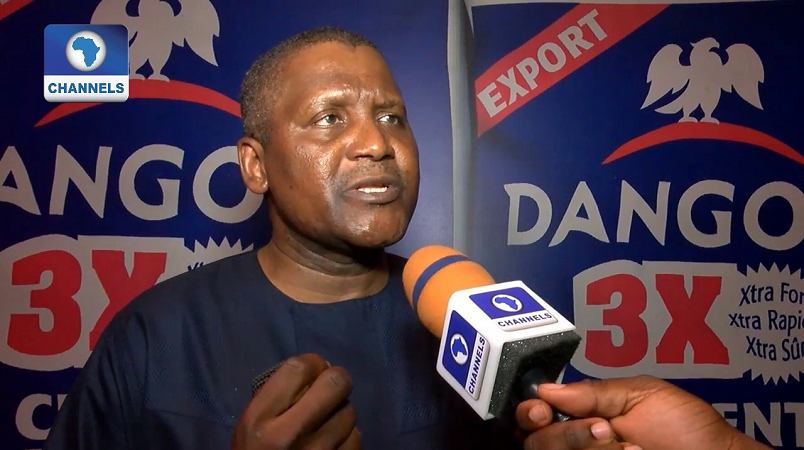
Nigeria’s Aliko Dangote continues his reign as Africa’s richest person for the 14th consecutive year, with his net worth surging to $23.9 billion, up from $13.9 billion in 2024. The sharp increase is attributed to his long-awaited refinery project near Lagos, which finally began operations in early 2024 after years of setbacks.

Speaking to Forbes in February, Dangote described the refinery as a pivotal step in ensuring that Africa refines its own crude oil, thereby creating wealth and prosperity for its vast population. The refinery’s successful launch has positioned Nigeria to begin exporting refined petroleum products, a historic shift for the continent’s largest oil producer, which has long been dependent on fuel imports. The development has not only increased Dangote’s personal wealth but has also boosted investor confidence in Nigeria’s industrial and energy sectors.

South Africa, Egypt, and Nigeria Dominate the Billionaire Rankings

South Africa leads the continent in billionaire representation, with seven individuals making the list. Nigeria and Egypt follow with four billionaires each, while Morocco boasts three. Other countries represented include Algeria, Tanzania, and Zimbabwe. South African luxury goods magnate Johann Rupert, owner of Richemont, remains Africa’s second-richest individual, with a net worth of $14 billion, marking a 39 percent increase from 2024. His growth is second only to Dangote’s, reflecting strong global demand for luxury brands.

Meanwhile, Nigeria’s Femi Otedola, chairman of Geregu Power Plc, saw his fortune rise by over 30 percent to $1.5 billion, driven by a 40 percent surge in Geregu Power’s stock price amid rising energy demand. Despite these gains, Africa’s billionaire list remains dominated by a small group of individuals, with few new entrants. In contrast, Asia and the U.S. add dozens of new billionaires each year, underscoring Africa’s slow pace of wealth creation.

This year’s rankings saw the return of two former billionaires who had previously dropped off the list. Moroccan real estate mogul Anas Sefrioui reentered the rankings following a major surge in shares of his real estate company, Douja Promotion Groupe Addoha. South African investor Jannie Mouton also made a comeback after a 59 percent jump in Capitec Bank Holdings’ stock price, reflecting renewed investor confidence in South Africa’s banking sector.

However, not all billionaires saw gains. Zimbabwe’s Strive Masiyiwa suffered the biggest decline, losing a third of his wealth due to Zimbabwe’s shift from the Zimbabwe dollar to the gold-backed ZiG currency. His net worth now stands at $1.2 billion, a sharp drop that highlights the instability of African financial systems.

Africa’s Billionaires Lag Behind Global Peers

While the Forbes rankings show that African billionaires are growing richer, the continent as a whole continues to struggle to produce new ultra-wealthy individuals. The rankings, based on publicly available financial data, including stock prices and currency exchange rates as of March 7, 2025, show that global billionaire wealth has risen by 22 percent over the past year.

Africa continues to fall significantly behind other regions in billionaire representation, highlighting the continent’s economic challenges.

While Africa’s wealthiest individuals have seen substantial gains, the total number of billionaires on the continent remains disproportionately low compared to other regions. The United States leads the world with 870 billionaires, whose combined wealth exceeds $5.5 trillion. Asia follows with 951 billionaires, reflecting the region’s booming economies, particularly in China, India, and Southeast Asia. Europe ranks third, with 536 billionaires, largely due to its well-established financial markets and industrial giants. In stark contrast, Africa has only a little over 20 billionaires, exposing the continent’s struggles in wealth creation and economic growth.

Africa’s underperformance in the global billionaire index is a direct reflection of the continent’s economic strength—or lack thereof. Unlike the U.S. and Asia, where billionaires emerge from technology, finance, and advanced manufacturing, Africa’s wealth remains heavily concentrated in traditional sectors like oil, commodities, and retail. The continent’s inability to diversify its economy, attract major tech investments, and develop strong financial markets has kept its billionaire count alarmingly low.

Moreover, Africa’s economic trajectory is deeply tied to governance and leadership. While countries like China, India, and Brazil have implemented pro-business policies, industrialization strategies, and financial reforms, many African nations continue to struggle with corruption, weak institutions, and regulatory hurdles that stifle large-scale wealth creation. The few billionaires that exist on the continent often have close ties to governments or operate in monopolistic industries, making it difficult for new entrepreneurs to amass significant wealth.