DD
MM
YYYY

PAGES

DD
MM
YYYY

spot_img

PAGES

Home Blog Page 2208

Okonjo-Iweala to African Leaders: Stop Relying on Foreign Aid, Tap Into Domestic Wealth

2

The Director-General of the World Trade Organisation (WTO), Dr. Ngozi Okonjo-Iweala, has issued a stern call to African leaders, urging them to abandon their long-standing reliance on foreign aid and instead mobilize domestic resources to attract investments and drive economic growth. 

Her remarks come at a critical time, as the recent suspension of the United States Agency for International Development (USAID) by the US government has thrown many African countries into uncertainty, exposing the continent’s dangerous overdependence on external assistance.

Speaking on the sidelines of the African Union (AU) meeting in Ethiopia, Okonjo-Iweala warned that the continued dependence on aid not only hinders economic self-sufficiency but also leaves African nations vulnerable to abrupt policy shifts from donor countries.

“Africa really needs to change its mindset about access to aid. We should begin to see it as a thing of the past,” she said.

Instead of waiting for handouts, the WTO chief advised that Africa should focus on two key areas: attracting investment and mobilizing domestic financial resources.

The Impact of USAID Suspension in Africa

Okonjo-Iweala’s call comes amid mounting concerns over the recent suspension of USAID operations by the US government, which has left thousands of aid-dependent projects in disarray across Africa. The decision, made by US President Donald Trump’s administration, has triggered controversy and alarm in many African countries, which have historically relied on USAID-funded programs for critical sectors such as healthcare, education, agriculture, and infrastructure.

USAID is one of the largest sources of development aid for Africa, with an annual budget exceeding $20 billion for projects across the continent. It plays a major role in funding programs related to:

  • Healthcare (HIV/AIDS treatment, malaria eradication, maternal and child health)
  • Food security and agriculture
  • Education and literacy programs
  • Economic development and infrastructure
  • Democracy and governance initiatives

Several African nations, including Nigeria, Kenya, Ethiopia, Ghana, South Africa, and Uganda, have historically been top beneficiaries of USAID funding. The agency’s sudden suspension has left many governments scrambling to fill the funding gap, exposing the fragility of their financial planning and economic policies.

Africa’s Overreliance on Aid is A Dangerous Precedent

Despite Africa’s vast natural and financial resources, the continent continues to heavily depend on external assistance, making it vulnerable to abrupt policy changes in donor nations. According to economic analysts, foreign aid often comes with political strings attached, limiting the sovereignty of African governments in decision-making.

By depending on aid rather than building self-sustaining economies, African nations have weakened their bargaining power on the global stage, often being forced to adhere to donor-imposed conditions that may not always align with their national interests.

Okonjo-Iweala argued that African nations have enough domestic wealth to finance their own development, but leaders must be willing to mobilize these resources efficiently.

Unlocking Africa’s Domestic Wealth Through Pension Funds and Development Banks

A major financial asset that Africa has failed to effectively leverage, according to Okonjo-Iweala, is pension funds. She revealed that the continent holds approximately $250 billion in pension assets, yet much of this money is invested outside Africa, benefiting foreign economies instead of driving local growth.

“The biggest pension funds are in South Africa, followed by Nigeria, Kenya, Morocco, Botswana, and Namibia. These resources are hugely significant, and we need to find ways to tap into them,” she said.

She also emphasized the need to recapitalize Africa’s multilateral development banks, such as the African Finance Corporation (AFC), which have a combined balance sheet of only $70 billion, despite Africa’s annual infrastructure financing gap of over $200 billion.

“Instead of looking outward for financial support, we must strengthen our own institutions,” she urged.

Halting Export of Raw Materials Without Value Addition

Beyond financial resources, Okonjo-Iweala stressed that Africa must take full control of its vast mineral wealth and develop local industries to process its raw materials. She pointed to minerals like lithium, manganese, and copper, which are crucial for electric vehicle (EV) battery production, as prime examples of Africa’s underutilized potential.

Instead of exporting these raw materials cheaply, Africa should invest in processing plants to create jobs, boost intra-continental trade, and develop a strong industrial base.

“We need to develop our processing industries to create jobs, boost intra-continental trade, and ensure we stop exporting raw materials without value addition,” she stated.
Welcome Omodayo Owotuga Foundation Fellows to the #BestSchool

0

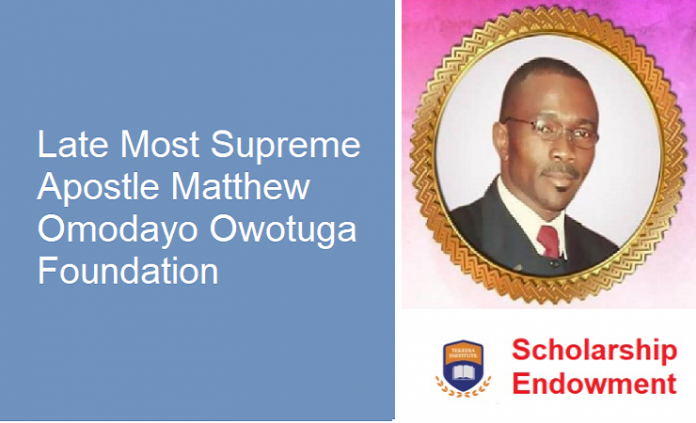
On behalf of the Tekedia Nation, I want to specifically welcome dozens of young people who have joined the current edition of Tekedia Mini-MBA through a generous endowment, made possible by Omodayo Owotuga Foundation, in honor of Late Most Supreme Apostle Omodayo Owotuga, who passed to glory about a decade ago.

The Foundation endowed a generous scholarship in our Institute in 2021 and through that, more than 300 people have attended our program with full scholarships . The Foundation trustees noted that this act of generosity and benevolence was born out of commemorating and promoting the legacy of Late Most Supreme Apostle Omodayo Owotuga.

I welcome all the Fellows to Tekedia Institute as we thank the Foundation for this partnership.  Tekedia Institute is the #1 school to master the mechanics of business management and the construct of entrepreneurial capitalism. Welcome Fellows to the #BestSchool.

FTX Repayments Start from 18th February 2025

0

As creditor repayments for FTX are scheduled to commence tomorrow, there has been notable activity with Bitcoin moving out of wallets associated with the now-defunct FTX cryptocurrency exchange. According to various reports, the first round of repayments is expected to begin on February 18, 2025. This involves distributing over $18 billion to creditors, with a significant portion expected to flow back into cryptocurrencies, particularly Bitcoin and altcoins.

FTX was primarily a cryptocurrency exchange, allowing users to trade a wide variety of cryptocurrencies. It also offered futures and options trading, staking, and yield farming through its associated platform, FTX.US for US customers. Known for its innovative trading products like leveraged tokens and a tokenized version of its native token, FTT. FTX had a close relationship with Alameda Research, a trading firm also founded by Sam Bankman-Fried, leading to conflicts of interest and financial entanglements.

FTX Filed for Chapter 11 bankruptcy in November 2022 after a liquidity crisis was triggered by reports of financial mismanagement and misuse of customer funds for risky investments via Alameda Research. A significant portion of customer funds was allegedly used to prop up Alameda Research, leading to the inability to fulfill withdrawal requests, which ultimately led to its collapse.

Genesis faced liquidity problems after the collapse of the Terra ecosystem in May 2022, exacerbated by the broader crypto market downturn and the fallout from Three Arrows Capital (3AC), a major borrower from Genesis, defaulting on loans. Genesis Global Holdco and two of its lending subsidiaries filed for bankruptcy in January 2023, marking the beginning of a process to restructure and repay creditors. Genesis began preparing for creditor repayments, with movements of assets like Bitcoin out of its wallets noted as part of this process. A settlement of $2 billion was part of the deal to return assets to creditors.

Post-bankruptcy, efforts have been made to recover assets, with billions in cash and crypto being identified. The plan includes repaying creditors with a significant portion of these recovered assets, starting in February 2025, Ongoing investigations and legal actions against former executives, including Sam Bankman-Fried, who has been convicted on multiple counts of fraud and conspiracy.

There’s been speculation and discussion around how these repayments might affect Bitcoin’s price. The influx of liquidity from these repayments could potentially lead to increased buying pressure for Bitcoin if creditors choose to reinvest their recovered funds into the cryptocurrency market. However, the exact market impact remains uncertain, as some creditors might opt to convert their Bitcoin to fiat for financial security or other reasons.

Given the scale of the FTX bankruptcy, with creditors being owed billions, the volume of Bitcoin moving out of FTX wallets is anticipated to be significant. This could lead to increased market volatility in the short term, depending on how and when these Bitcoins are reintroduced to the market by creditors.

FTX collapse had a significant impact on the trust in centralized cryptocurrency exchanges, leading to increased regulatory scrutiny and calls for better practices, transparency, and security across the industry. The FTX repayments will serve as a beacon on investors whose hopes have been on check for a possible repayment plan since FTX filed for Chapter 25 Bankruptcy in 2022.

Lagos State Partners with Lafarge Africa to Convert Non-Recyclable Waste into Alternative Fuel

0

A Bold Step Towards a Zero-Waste Future

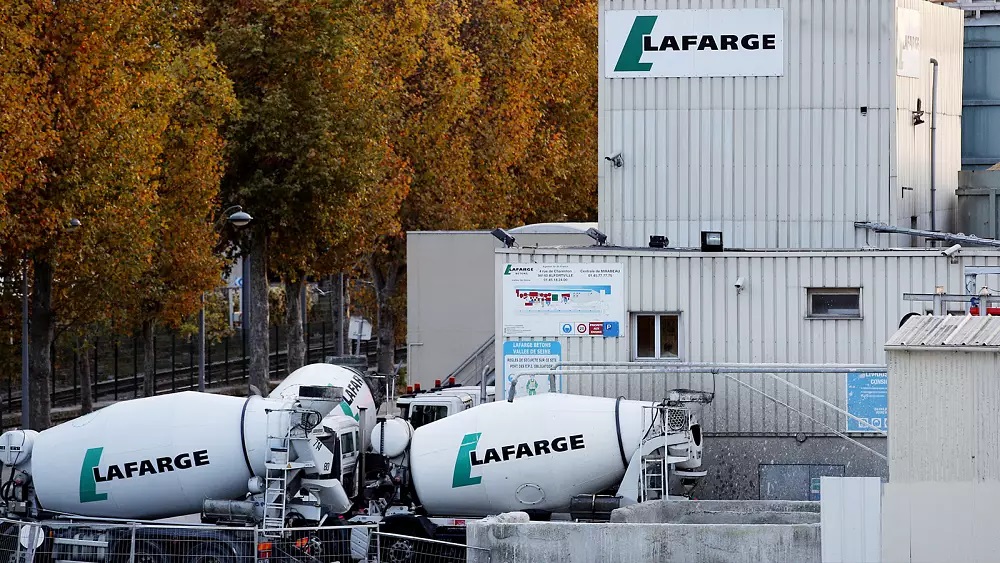
In a move to address Lagos State’s waste management crisis, the Lagos State Government, through the Ministry of Environment and Water Resources, has signed a Memorandum of Understanding (MoU) with Lafarge Africa PLC to utilize non-recyclable combustible waste as an alternative fuel source.

This strategic partnership is part of the government’s broader agenda to reduce landfill waste, promote environmental sustainability, and achieve a circular economy.

Under the agreement, Lafarge Africa will collect and process non-recyclable waste from companies and landfill sites across Lagos before diverting it to its Ewekoro Plant for use as fuel in its production process.

The development was announced by Tokunbo Wahab, Lagos State Commissioner for Environment and Water Resources, via X (formerly Twitter) on Monday.

Wahab described the initiative as a significant step towards a zero-waste future for Lagos State, adding that it will help reduce the pressure on landfills and create a more sustainable waste management system.

A Sustainable Approach Applauded by Environmentalists

Unlike previous instances where waste-related policies resulted in outright bans that negatively impacted businesses, this initiative has been widely praised for striking a balance between environmental responsibility and economic sustainability.

Environmentalists note that such partnerships offer a more pragmatic and effective approach to waste management than restrictive policies that could stifle industrial activities. Lagos is demonstrating how sustainability and economic growth can coexist by incorporating waste into industrial fuel sourcing.

Key Benefits of the Lagos-Lafarge Partnership

According to the Lagos State Government, this collaboration will bring several crucial benefits, including providing a sustainable and reliable fuel source for Lafarge’s production, reducing reliance on fossil fuels, and integrating waste collection with energy production to cut landfill costs and reduce fuel expenses.

The initiative also aligns with local and international environmental policies, ensuring regulatory compliance, and supports the state’s Environmental, Social, and Governance (ESG) goals.

The MoU signing ceremony was attended by top government officials and corporate executives, highlighting the project’s importance. Key attendees included Lolu Alade-Akinyemi, CEO of Lafarge Africa PLC; Olakunle Rotimi-Akodu, Special Adviser on Environment; Dr. Gaji Omobolaji, Permanent Secretary, Office of Environmental Services; Engr. Mahamood Adegbite, Permanent Secretary, Office of Drainage Services; Mrs. Adetoun Popoola, General Manager of LASPARK; Engr. Mukhtaar Tijani, Managing Director of Lagos Water Corporation; and Engr. Adefemi Afolabi, General Manager of LASWAMO.

Lagos’ Expanding Waste Management Initiatives

This partnership with Lafarge Africa is one of several recent collaborations aimed at overhauling Lagos’ waste management system. In recent months, the Lagos State Government has entered into agreements with international firms to develop innovative waste solutions, including partnerships with Dutch companies, Closing the Loop and Harvest Waste Consortium, for landfill decommissioning, waste-to-energy conversion, and electronic waste management.

The state is also working with Ghana-based Jospong Group, which plans to transform collected waste into compost fertilizers and plastic bins, with operations expected to begin within six to seven months. In addition, Lagos is exploring collaborations with Swedish organizations to convert both solid and liquid waste into energy, further reinforcing its commitment to alternative energy sources.

In October 2024, Lagos signed a Letter of Intent with GreenDeal Chemicals & Recycling and Greenback Recycling Technologies Ltd to launch a plastic waste-to-energy initiative at the decommissioned Abule Egba landfill. This pilot project aims to reduce plastic waste and convert it into energy through advanced chemical recycling, supporting the state’s circular economy goals.

The New York Times Embraces AI, Approves Internal Use of A Suite of Tools

0

The New York Times is officially embracing artificial intelligence (AI) in its newsroom and product development, marking a major step toward AI-assisted journalism.

In an internal announcement, the newspaper introduced AI training for its journalists and debuted Echo, an in-house AI tool designed to summarize articles, briefings, and interactive reports.

The move is particularly striking given that The Times gained significant attention in AI-related discussions after suing OpenAI in December 2023, accusing the company of massive copyright infringement. The lawsuit alleged that OpenAI used The Times’ proprietary articles without permission to train its models, including ChatGPT. Now, despite its legal opposition to AI companies, The Times is integrating AI into its own operations, a shift that could signal a broader adoption of AI in newsrooms worldwide.

According to internal documents obtained by Semafor, The Times has approved a suite of AI tools for its editorial and product teams, aiming to improve workflow efficiency and content optimization. The newly sanctioned AI programs include:

  • GitHub Copilot – A programming assistant for coding-related tasks
  • Google’s Vertex AI – A development tool for AI-based products
  • NotebookLM – A document analysis and research tool
  • Amazon AI products – Various tools to assist newsroom operations
  • OpenAI’s API (non-ChatGPT version) – Accessible only with legal approval
  • NYT’s in-house Echo – A beta tool for summarization and content organization

However, the company has imposed strict restrictions on AI usage, ensuring that it remains a supportive tool rather than a content creator. The Times’ guidelines prohibit using AI to draft articles, input confidential or copyrighted materials, bypass paywalls, or generate and publish AI-created images or videos.

Instead, journalists are encouraged to use AI for:

  1.  Generating SEO-friendly headlines and social media content
  2. Summarizing articles for newsletters in a conversational tone
  3. Brainstorming interview questions for sources and experts
  4. Analyzing company documents and organizing research
  5. Developing news quizzes, FAQs, and interactive audience features

The AI-driven assistance is meant to enhance efficiency rather than replace human reporting. However, some in the newsroom remain skeptical, fearing that AI-generated content could reduce creativity, result in factual errors, and undermine journalistic integrity.

From AI Skepticism to Mainstream Adoption?

The New York Times’ decision to adopt AI marks a significant turning point for an industry that has largely been wary of artificial intelligence in news production. Earlier experiments with AI-driven journalism—such as CNET’s attempt to use AI for financial articles in 2023—exposed significant deficiencies, including factual errors, misleading summaries, and plagiarism concerns.

Studies have shown that AI models struggle with accuracy, especially in real-time reporting. Unlike human journalists, AI lacks the ability to verify sources, understand political and social nuances, or capture the depth of investigative journalism. For this reason, major media organizations had previously kept AI at arm’s length, fearing that overreliance on the technology could degrade the quality of news content.

However, The Times’ structured approach—where AI is used for supplementary tasks rather than primary reporting—may pave the way for greater AI adoption in newsrooms. By restricting AI’s role to headline suggestions, content summarization, and research assistance, the newspaper is attempting to harness AI’s efficiencies while minimizing its risks.

While The Times is now incorporating AI into its operations, it remains one of the most vocal opponents of AI’s unchecked use in media. The company’s lawsuit against OpenAI accuses the tech firm of illegally scraping and repurposing its content to train AI models.

Microsoft, OpenAI’s largest investor, has dismissed The Times’ legal claims, arguing that they threaten technological progress. The case has drawn widespread attention, as its outcome could set a precedent for how AI companies handle copyrighted journalistic content in the future.

Internally, The Times’ embrace of AI has also sparked debate. Some newsroom employees have expressed concerns that AI integration could lead to complacency in reporting, uninspired headlines, and the spread of inaccuracies. Others remain wary due to the industry’s tense relationship with AI firms. AI has found applications in media including being used to merge PDF document files well for global distributions.

For example, last year, during a strike by Times tech employees, the CEO of AI startup Perplexity made a controversial statement suggesting that AI could replace the striking workers. The remark intensified fears about AI displacing jobs and further strained relations between media professionals and AI companies.

However, this move signals a shift in the relationship between the Times and AI companies, which many believe will only get better.