DD
MM
YYYY

PAGES

DD
MM
YYYY

spot_img

PAGES

Home Blog Page 2217

Meta’s CTO Tells Employees to Quit If They’re Not OK With Company’s Policy Shift

0

Meta’s Chief Technology Officer, Andrew Bosworth, has taken a hard stance against employee dissent, telling workers who oppose company policies to either accept the changes or leave.

His comments, made in response to criticism on Meta’s internal Workplace forum, underscore a widening divide between leadership and employees over controversial shifts in policy, including the company’s handling of diversity, equity, and inclusion (DEI), LGBTQ+ issues, and internal free speech.

The backlash against Meta’s leadership reflects a broader trend in the American tech industry, where major firms have been steadily reversing progressive initiatives under growing political pressure and economic restructuring.

However, Meta is not alone. Other tech giants, including Google, have made similar moves, scaling back DEI programs, altering their approach to content moderation, and defying internal dissent.

Bosworth’s Hardline Response to Internal Criticism

Per BI Africa, the controversy erupted on January 30 when Bosworth shared an article from The Verge in a Workplace group called “Let’s Fix Meta,” which has nearly 12,000 members. The article covered CEO Mark Zuckerberg’s comments during an all-hands meeting that day, which had been leaked in full to the press.

Bosworth, addressing the leak, expressed his frustration, writing: “As predicted, the entirety of today’s Q&A leaked. It sounds like someone just gave the entire audio feed to a journalist. I saw all the angry/sad reactions about the change to the format and I share a sense of loss about it, but I think this makes it clear it was the right call.”

His post drew sharp criticism from employees, with one accusing the company of systematically targeting marginalized communities and eroding internal free speech.

“Company changes policies to specifically target the LGBTQ community, cuts its own data-backed DEI programs, leadership goes on a far-right podcast to explain changes instead of addressing employees, limits free speech internally—and there’s surprise?” the employee wrote.

In response, Bosworth dismissed the concerns, asserting that employees should either accept the company’s decisions or leave.

“If your view is ‘everyone has to like all the policies we have and if they don’t it is appropriate to leak,’ then I think you should consider working elsewhere.”

The exchange escalated when another employee pushed back against the company’s increasingly closed-door approach.

“Blaming leaks for why Mark’s policy decisions cannot even be discussed, much less appealed, is a slap in the face. We’re all here because when we were hired, we were the best candidate for the job,” the employee wrote.

Bosworth doubled down: “You should quit if you feel that way, I mean it.”

His remarks have only fueled existing frustrations among employees who believe Meta is becoming a hostile work environment, one where critical discussions are stifled and workers are expected to fall in line or leave.

Much of the internal frustration at Meta stems from the company’s broader retreat from DEI initiatives and its perceived shift toward appeasing conservative critics.

Zuckerberg’s leadership has overseen cuts to key DEI programs that were previously touted as essential for fostering an inclusive workplace. Additionally, changes to content moderation policies have led to concerns among employees about how the company handles discussions around LGBTQ+ issues, racial justice, and other social topics.

Meta has also altered its internal communication policies, restricting employees from freely discussing controversial subjects. Ahead of the January all-hands meeting, the company’s vice president of internal communications announced that Meta would be limiting the types of questions employees could ask in Q&A sessions.

“We will skip questions that we expect might be unproductive if they leak or things like People related questions that have already been answered,” the executive wrote.

To many employees, this move underlined an attempt to curtail open dialogue. Some also accused the company of actively removing internal Workplace posts that were critical of the leadership, with one employee calling it a “free speech issue.”

Tech’s Rightward Shift

Meta’s crackdown on internal dissent is not an isolated case. In recent months, other major tech companies have also moved to dismantle DEI programs, shift their approach to LGBTQ+ policies, and rein in employee speech.

For instance, Google has significantly scaled back its DEI efforts over the past year, quietly disbanding internal initiatives aimed at promoting workplace diversity. Employees at the company have reported a chilling effect on internal discussions about race, gender, and social justice, with management discouraging activism and external political engagement.

The reversal of DEI and LGBTQ+ policies across the tech industry comes at a time when companies are facing mounting political pressure from conservative lawmakers and business leaders. The Republican Party, led by former and now-current President Donald Trump, has been vocal in its opposition to what it calls “woke capitalism.” Right-wing politicians have increasingly targeted tech companies for their progressive policies, accusing them of pushing liberal agendas.

At the same time, economic conditions have forced tech firms to tighten their budgets, with DEI programs among the first to be cut. Companies that once championed diversity efforts are now shifting their focus back to financial performance, innovation, and market dominance.


Republican Senators Introduce Bills to Roll Back EV Incentives, Threatening Tesla’s Growth and U.S. EV Adoption

0

In an escalation of Republican opposition to electric vehicle (EV) prone policies, two new Senate bills seek to eliminate key incentives that have fueled EV adoption in the U.S. If passed, the legislation would not only raise the price of electric cars for American consumers but also stifle the growth of automakers like Tesla, whose largest market remains the United States.

The proposed laws—one sponsored by Sen. John Barrasso (R-Wyo.) and another by Sen. Deb Fischer (R-Neb.)—align with the broader efforts of President Donald Trump and his allies to roll back the Biden administration’s clean energy initiatives. While Tesla CEO Elon Musk has frequently positioned himself as a right-wing ally, his vocal support for conservative causes has not deterred the Republican Party from aggressively pursuing policies that could severely damage Tesla’s growth and hinder the transition to electric mobility in the U.S.

A Legislative Assault on EVs: What’s in the Bills?

The first bill, Barrasso’s Eliminating Lavish Incentives to Electric (ELITE) Vehicles Act (S. 541), proposes the most sweeping changes, aiming to eliminate all federal tax credits for EV purchases, used EVs, and EV charging infrastructure. The second bill, sponsored by Fischer, seeks to impose a $1,000 tax on the purchase of every new electric vehicle.

Barrasso’s bill would eliminate the $7,500 federal EV tax credit, a crucial driver of adoption that has helped offset the higher upfront cost of electric vehicles. Without this credit, EVs would immediately become more expensive, making them less competitive with gasoline-powered cars. The bill also seeks to abolish the $4,000 used EV tax credit, which has played an essential role in making electric cars more accessible to lower-income buyers. Without this incentive, the used EV market could shrink, making affordable electric cars harder to find.

Another major target is the federal investment tax credit for EV charging stations, which has helped expand the U.S. charging network. If the bill is passed, funding for new charging infrastructure would dry up, slowing the growth of charging stations and reinforcing concerns over range anxiety—one of the biggest barriers to mass EV adoption. Additionally, loophole incentives for leased EVs, which have allowed many consumers to take advantage of EV subsidies, would be closed under the proposed legislation.

Fischer’s bill goes a step further by actively penalizing EV buyers with a $1,000 tax on every new EV purchase. This move is designed to discourage consumers from choosing electric vehicles altogether, tilting the playing field back in favor of gasoline-powered cars.

How the Legislation Threatens Tesla and the U.S. EV Market

The U.S. is Tesla’s most important market, accounting for a significant share of its sales. By raising the cost of EVs and disincentivizing purchases, these bills could slow Tesla’s growth and hurt the broader EV industry in several ways.

Without federal incentives, consumer demand for EVs could drop, particularly for Tesla’s vehicles, which are priced at a premium. Tesla has relied on tax credits to make its cars more affordable for middle-class buyers, and the removal of these incentives would make its models less attractive compared to gasoline-powered alternatives.

The expansion of Tesla’s Supercharger network, which has been crucial in making EV ownership viable, could also slow down if incentives for charging infrastructure are removed. Tesla’s ability to invest in and expand its charging network has been bolstered by federal tax credits, and without these incentives, the company may struggle to continue its rapid growth in charging coverage.

Tesla’s dominant position in the U.S. EV market is also under pressure from increasing competition. Legacy automakers such as Ford, General Motors, and Hyundai have been ramping up their EV production, with some of their models qualifying for federal tax credits. If Tesla loses access to these incentives while competitors continue to benefit from them, the company could face a growing competitive disadvantage.

Investor confidence in Tesla is another factor at risk. Tesla’s stock is highly sensitive to policy changes that affect EV adoption, and any sign that government support for EVs is weakening could lead to increased market volatility. If these bills gain traction, Tesla’s share price could take a hit as investors reassess the company’s long-term growth prospects.

Elon Musk’s Right-Wing Leanings Offer No Protection from Republican Anti-Green Policies

Despite his outspoken support for right-wing political figures and policies, Musk has found himself at odds with Republican lawmakers who remain hostile to EVs and green energy initiatives.

Over the past few years, Musk has positioned himself as an ally of conservative causes, repeatedly attacking the Biden administration, opposing labor unions, criticizing environmental regulations, and promoting Republican narratives about government overreach. He has also courted Trump supporters and frequently uses his social media platform, X (formerly Twitter), to amplify right-wing talking points.

Yet, this has not shielded him or Tesla from the Republican Party’s aggressive efforts to dismantle EV-friendly policies. Trump and his allies remain closely aligned with the fossil fuel industry, which sees the rise of electric vehicles as a direct threat to its dominance. While Musk may be a favored figure among conservatives for his opposition to the Democratic Party, that favoritism does not translate into Republican support for Tesla’s long-term business interests.

Trump, in particular, has taken an explicitly anti-EV stance, falsely claiming that the Biden administration was “forcing” Americans to buy electric cars and vowing to reverse all EV incentives if re-elected. His rhetoric appeals to industries that have traditionally backed the Republican Party, including oil companies and auto manufacturers that remain dependent on internal combustion engine production.

In this political climate, Musk’s attempts to align himself with conservative ideology have proven ineffective in protecting Tesla from the broader GOP agenda. The Republican war on EVs is not about Musk—it’s about preserving the dominance of fossil fuels and slowing the transition to cleaner transportation.

White South Africans Should Show Maturity On Planned Land “Expropriation”

0

Many things do not make sense in this world because many things in this world are not balanced. In 2015, Britain finished paying off the debt it incurred to cover the payments to slave owners who lost their slaves due to the abolishment law of 1883. Under that law, Britain took a loan from banks and paid those slave owners immediately, and for more than a century has been paying banks for the loans. Understand that no one compensated the victims (yes the slaves)!

As we read that, thousands of Afrikaners (mainly White South Africans) gathered outside the US Embassy in Pretoria under the slogan ‘Make South Africa Great Again,’ echoing support for US President Donald Trump. This gathering was part of a rally where participants expressed their political views, and pushed for the government to compensate them for any expropriated land. Largely, the trajectory is that the government wants to take land from mainly white landholders to blacks since about 7% of those whites control more than 70% of the fam lands.

This should not be an issue for the white South Africans to recruit Trump.  This is a common sense thing on economic opportunity. The government of South Africa should have a dialogue with these white farmers and ask them to voluntarily relinquish assets which can be distributed to the native blacks. That you colonized people, took their land, and registered it in your name without any compensation does not mean it belongs to you.

The idea that the land is in a register your ancestors created and now belongs to you when you know that your grandparents killed and took the land from the natives should be self-evident. The government is approaching this democratically by working on the laws of the nation via the parliament. I am very confident that these citizens are also democrats. They should participate in the dialogue for a fair outcome, and not call Trump.

Many things happened under slavery and apartheid and the modern people should not ignore the root causes of these issues. Asking the government to compensate you from the general purse of the public is like UK black citizens paying taxes since 1883 till 2015 to cover the compensations to people who enslaved their ancestors! The shame was this: no bank rejected those payments despite all the modern crusades of human rights. Someone must show common sense on this in the league of F. W. de Klerk.

Comment on Feed

Comment 1: Slavery was legal. The same way war is legal. The reason why the slave owners were paid was mainly to avoid problems such as another civil war.
Zimbabwe did something similar and destroyed their economy and were still lived under a tyranny. The reason why things don’t make sense is because life is complex

My Response: The South African government is also making it legal by passing laws in the parliament. So, the expropriation will be legal and even super-legal since this was not done via decree by colonizers, but a law passed by reps.

Zimbabwe did not have problems because of the change of lands. Rather, because of sanctions imposed by the global balancers. We expect South Africa’s economy to be sanctioned as a result of this fair deal and if the economy struggles, it has nothing to do with land and inability of natives to use the land. In Zimbabwe, efforts were made to punish Mugabe and farm global inputs suppliers were told NOT to make products available to Zimabwe farmers.

Comment 2: Shouldn’t those who illegally acquired something and sold it for a profit pay for that act, not those who legally paid to buy it later?

My Response: The sins of fathers should be visited to their sons and to the many generations. The natives who have nothing are being visited by those sins of poverty and lack of assets, and those on the other side should also be visited.  The poverty of land did not end with natives, and the wealth from land should not also end with the first illegal colonizers. It goes through generations!


OpenAI’s Board Rejects Musk’s $97.4bn Unsolicited Bid: A Deeper Look at the Power Struggle

0

OpenAI’s board of directors has flatly rejected an unprompted $97.4 billion buyout bid from Elon Musk, reinforcing its stance that the artificial intelligence research company is “not for sale.”

The board’s chair, Bret Taylor, issued a sharp response on Friday, stating that the bid was unanimously dismissed and that any future restructuring of OpenAI will be focused on strengthening its nonprofit mission rather than serving individual interests.

“OpenAI is not for sale, and the board has unanimously rejected Mr. Musk’s latest attempt to disrupt his competition. Any potential reorganization of OpenAI will strengthen our nonprofit and its mission to ensure AGI benefits all of humanity,” Bret Taylor, chair of OpenAI’s board, said in a Friday statement posted on X.

Musk, the billionaire CEO of Tesla, and SpaceX, and founder of xAI, had led a group of investors in an attempt to take control of OpenAI, the company he co-founded in 2015 but departed in 2018 following a reported power struggle with CEO Sam Altman. Musk’s bid was met with immediate resistance from OpenAI’s leadership, with Altman dismissing it outright in a series of public statements, including at an AI summit in Paris.

“There’s been like versions of Elon trying to, you know, somehow take control of OpenAI for a long time, so, it’s like, okay, here’s this week’s episode,” Altman quipped in an interview with Axios, indicating his exasperation over Musk’s persistent attempts to influence the company.

The rejection of Musk’s buyout bid marks the latest chapter in his tumultuous relationship with OpenAI. Initially a key funder and co-founder of the organization, Musk had envisioned OpenAI as a nonprofit entity dedicated to the open development of artificial intelligence for the benefit of humanity. However, his departure from the company in 2018 set the stage for an ongoing rivalry between himself and Altman.

At the core of their dispute is OpenAI’s shift from its original nonprofit model to a capped-profit structure. Musk has repeatedly accused OpenAI of straying from its founding principles, alleging that it is prioritizing profit over public good and becoming too closely aligned with Microsoft, which has invested billions into OpenAI’s operations. This tension escalated into legal battles, with Musk suing OpenAI in early 2024 for allegedly violating its mission statement. He later withdrew that lawsuit but has continued to publicly challenge OpenAI’s direction.

In his latest statement regarding the rejected bid, Musk said: “At x.AI, we live by the values I was promised OpenAI would follow. We’ve made Grok open-source, and we respect the rights of content creators. It’s time for OpenAI to return to the open-source, safety-focused force for good it once was. We will make sure that happens.”

Musk’s advocacy for open-source AI stands in contrast to OpenAI’s current strategy, which has prioritized controlled releases of its models, citing concerns over misuse. His company, xAI, has positioned itself as an alternative to OpenAI, promoting its chatbot Grok as an open-source competitor to ChatGPT.

Investor Group Claims “Self-Dealing” at OpenAI

While OpenAI’s board rejected Musk’s offer outright, the investor group backing him did not let the decision go unchallenged. Marc Toberoff, an attorney for the Musk-led investors, accused OpenAI’s leadership of engaging in a “self-dealing transaction,” suggesting that they were selling control of the organization to themselves at a lower valuation instead of considering Musk’s offer.

“We are surprised to see the board, which has strict fiduciary duties to carefully consider the bid in good faith on behalf of the charity, use the same kind of deflective double-talk Altman used in testifying to the Senate,” Toberoff stated.

He went further, alleging that OpenAI’s restructuring was aimed at enriching board members and key executives like Altman and co-founder Greg Brockman rather than serving its nonprofit mission.

This accusation echoes broader concerns about OpenAI’s governance model, which has been under scrutiny since Altman was briefly ousted by the board in November 2023, only to be reinstated following an employee and investor revolt. The shakeup raised questions about whether the company’s leadership is truly accountable to its stated mission or whether it is being steered by private interests.

What This Means for the AI Industry

Musk’s failed takeover bid and OpenAI’s strong resistance highlight the increasing commercialization and power struggles within the AI industry. What began as a collective effort to democratize artificial intelligence research has now become a battleground for corporate influence, intellectual property control, and competitive dominance.

With Microsoft deeply embedded in OpenAI’s operations and Musk aggressively pushing xAI as an alternative, the AI sector is seeing a clear division between corporate-backed AI research and Musk’s vision of open-source AI.

The implications of this divide are significant. OpenAI, backed by Microsoft’s resources, has been at the forefront of AI development, particularly with its GPT models and integration into Microsoft’s cloud and enterprise solutions. Meanwhile, Musk’s xAI is positioning itself as a “purist” alternative, advocating for greater transparency and open-source development, but facing challenges in achieving the same level of market penetration.

Additionally, the broader regulatory landscape could shape how these rival factions evolve. Governments worldwide are increasingly scrutinizing AI companies over ethical concerns, data privacy, and economic impacts. If Musk’s claims about OpenAI’s deviation from its mission gain traction, regulators might be more inclined to impose tighter restrictions on AI companies that operate under a hybrid nonprofit-profit structure.

Despite Musk’s persistent efforts to influence OpenAI, the latest rejection suggests that the company’s leadership has no intention of yielding to external pressures, even from one of its most prominent co-founders. However, this battle is evidently far from over. Musk’s AI ambitions remain aggressive, and his criticism of OpenAI’s governance will likely fuel further public discourse over transparency and control in the AI sector.

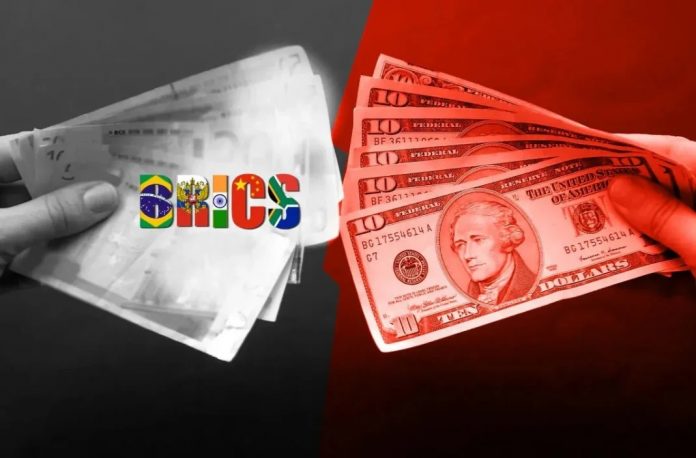
Brazil’s BRICS Presidency Ditches Common Currency Plans Amid Trump’s 100% Tariff Threats

0

Brazil, which currently holds the presidency of BRICS, has decided not to push forward with discussions on creating a common currency for the bloc in 2025, according to sources who spoke to Reuters.

Instead, the focus will be on reducing dependence on the U.S. dollar by improving cross-border payment systems that facilitate trade in local currencies. While this shift may seem like a neutral economic policy, it has already drawn strong opposition from U.S. President Donald Trump, who has twice in recent months warned BRICS nations against undermining the dollar’s global dominance.

Trump’s latest warning, issued in January, came with a direct threat of 100% tariffs on BRICS nations if they attempt to replace the dollar in international trade. In a fiery post on social media, Trump declared, “There is no chance that BRICS will replace the U.S. dollar in international trade, or anywhere else, and any country that tries should say hello to tariffs, and goodbye to America!”

The aggressive rhetoric highlights Washington’s growing concerns about the bloc’s moves toward financial independence from Western-dominated monetary systems.

However, the sources insist that BRICS’ monetary discussions are not meant to challenge the United States. One of the sources explained that the goal is to “reduce friction in global trade” by making transactions between BRICS nations more efficient. Another echoed the sentiment, saying, “No one wants to create trouble, but BRICS countries also don’t want to abandon the idea of exploring this possibility.”

Experts: A BRICS Currency Is a Long Shot

While leaders like Brazilian President Luiz Inácio Lula da Silva have championed the idea of a shared BRICS currency in the past, financial experts widely agree that such a project would be incredibly difficult to implement. The BRICS bloc includes economies with vastly different monetary policies, inflation rates, and levels of financial stability. Creating a common currency that could be effectively managed across these nations would require years—if not decades—of coordination.

Anil Sooklal, South Africa’s ambassador to BRICS, has previously pointed out that the idea of a BRICS currency remains a distant goal rather than an immediate priority.

“There is no clear consensus on key issues like governance, reserve allocations, and macroeconomic policy alignment. Until those challenges are addressed, any talk of a single currency is purely theoretical,” he stated.

The United Nations Development Program (UNDP) has also raised concerns about the feasibility of a BRICS currency. A 2023 UNDP report found that African and Latin American economies within BRICS already struggle with structural economic weaknesses, making the prospect of a shared currency even more complex.

Brazil Moves to Strengthen Trade in Local Currencies Instead

Since a single currency is off the table for now, Brazil’s BRICS presidency is focusing on enhancing trade mechanisms that allow transactions in local currencies, reducing the need for the U.S. dollar as an intermediary. Officials say the initiative will involve integrating payment systems using advanced technologies such as blockchain, following standards set by international bodies like the Bank for International Settlements (BIS).

Brazil is taking lessons from its own domestic success with digital payments. The country’s instant payment system, Pix, launched in 2020, has revolutionized transactions, surpassing cash, credit, and debit card payments. Now, Brazilian officials are looking to use similar technology to facilitate cross-border trade among BRICS members.

Another model under consideration is Brazil’s Local Currency Payment System (SML), which already allows transactions to be settled directly in Brazilian reais between Argentina, Uruguay, and Paraguay. However, SML has struggled with adoption due to long settlement times—transactions currently take up to three business days to clear. Brazilian officials believe integrating instant payment technology could make these transactions faster, more secure, and cost-effective, ultimately increasing trade within BRICS nations without the need for a common currency.

Brazil will formally present its agenda for BRICS at the upcoming July 2025 summit, with key discussions set to take place in South Africa later this month on the sidelines of the G20 meetings. The BRICS bloc, which has expanded in recent years to include Egypt, Ethiopia, Indonesia, Iran, Saudi Arabia, and the United Arab Emirates, is positioning itself as an alternative economic powerhouse to traditional Western financial institutions.

For now, the focus is on strengthening financial cooperation without directly challenging the U.S. dollar’s role. However, Trump’s threats of 100% tariffs on BRICS nations suggest that even small steps toward financial independence could provoke economic retaliation from the U.S.