DD
MM
YYYY

PAGES

DD
MM
YYYY

spot_img

PAGES

Home Blog Page 2225

Experts Discuss – Dogecoin’s Future, Remittix’s 4x Growth and Solana Price Prediction

0

There have been exciting developments in the market recently as experts foresee Dogecoin (DOGE) seeing a relief price rally soon while also making a bold Solana price prediction. For example, CryptoELITES thinks the DOGE price will soar by 5x, while Jelle suggests SOL can potentially experience new price discovery soon. These price predictions could be correct with the recent Donald Trump announcement about a US Crypto Reserve.

Amid all this movement, one project is making a name for itself Remittix (RTX). This DeFi coin, now in its presale run, has already given early buyers a 362% return. But, a Tier-1 CEX listing is expected to pump this value higher. Some investors hint that RTX could be the next 4x DeFi crypto in 2025.

CryptoELITES: The Price of Dogecoin (DOGE) May Reach $5 Soon

Dogecoin (DOGE) is one of the meme coin titans but it has faced some volatility recently. CoinMarketCap shows that the price of Dogecoin fell from around $0.30 to nearly $0.20 in the past 30 days. In other words, over a 30% fall for this meme coin in just a few short weeks.

However, market expert CryptoELITES remains bullish for Dogecoin (DOGE). According to his X post, this meme coin is starting its big move. He even forecasts the price of Dogecoin potentially soaring to $5 soon.
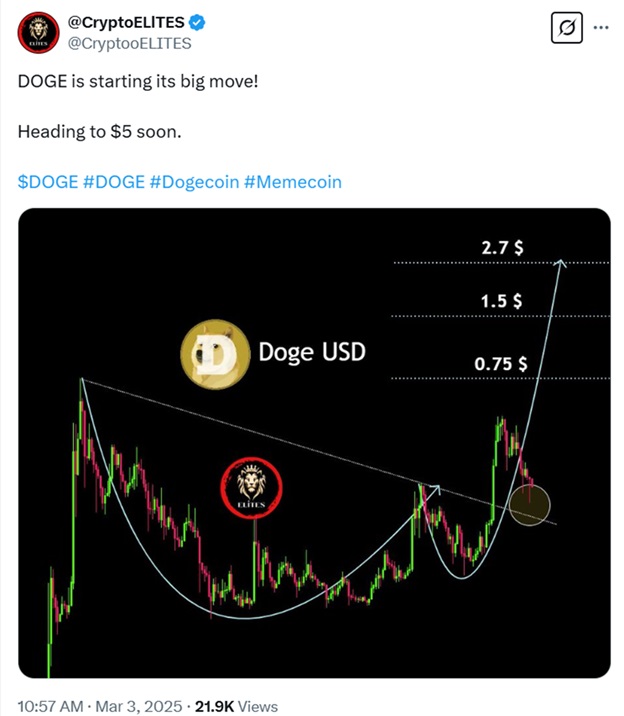
Although this Dogecoin price prediction has turned some heads, TradingView shows mixed signals. For example, the MACD level sits at -0.019, which suggests a good entry point for buyers. However, the Dogecoin price is below its 30-day ($0.25) and 50-day EMAs ($0.27). Therefore, while the Dogecoin crypto may see a rebound, it could be a little while before it does.

Bullish Solana Price Prediction Excites Investors

Although one of the top 10 altcoins, Solana (SOL) has been showing some turbulence. On the one-month chart, the Solana price has fallen nearly 30% as per CoinMarketCap. During that time, its value moved between around $220 and almost $160.

However, the community is still watching this token thanks to a recent bullish Solana price prediction. Recently, market expert Jelle made an X post saying that this altcoin saw a weekly candle closing in the green while holding its trendline. Thus, he foresees a potential pump to $225 in his Solana price prediction.
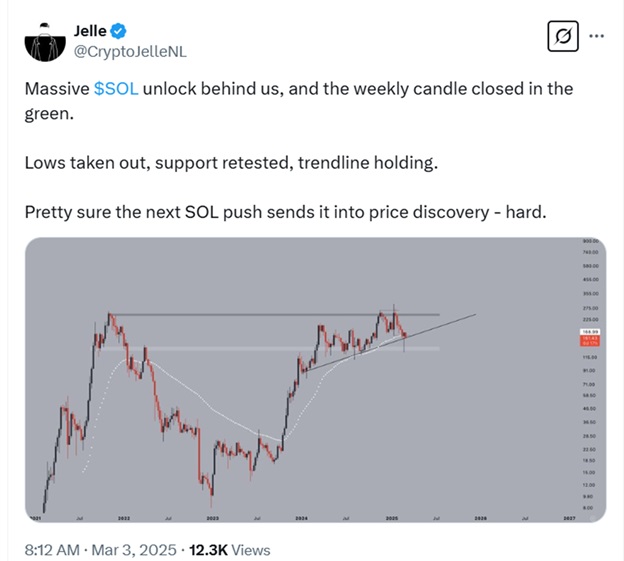
TradingView data supports this Solana price prediction. This altcoin is trading above its 10-day EMA ($158). Also, the Solana crypto has a MACD level of -13.19, which is in the buy zone and suggests a good entry point. However, it is worth noting that its market cap sits at $80B, which means a lot of new money will need to roll in for this Solana price prediction to come true.

Remittix (RTX) Experiences a 362% Price Pump With More Gains To Come

Remittix (RTX) has been making headlines in the past few weeks, for a good reason. Early investors in this DeFi project have already experienced a 362% return. This percentage is bound to rise soon as a Tier-1 crypto exchange like Uniswap will list RTX. Having sold over 513M RTX tokens to more than 16K users, it is clear that demand for this DeFi coin is high.

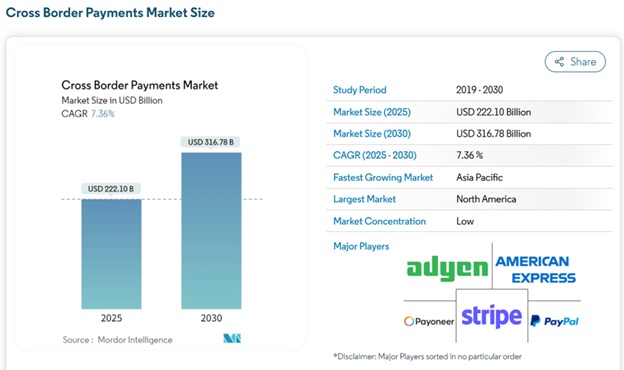
This interest arose as Remittix aims to disrupt the cross-border payments market with its unique crypto-to-fiat platform. On this platform, users will be able to convert over 40 different crypto coins to fiat currencies (YEN, EUR, etc.) and then send them to any global bank account. As a result, Remittix will stand out from its rivals like Stripe or Wise and completely dominate this market, which Mordor Intelligence predicts could be worth $316B by 2030.
Those who want to support this DeFi project are now buying its native token, RTX. By holding it, users will get governance voting rights and up to 8% in staking rewards. Thus, countless traders rush to buy it for a discount, helping Remittix raise over $13.4M. Currently, one RTX costs just $0.0694 but this DeFi coin price will hit $0.0734 once the next block of tokens goes live. Everyone is waiting for a Tier-1 CEX to list RTX, triggering a massive rally.

Are Faster Returns Than Dogecoin (DOGE) and Solana (SOL) Possible Through Remittix (RTX)?

The US Crypto Reserve announcement sparked a rally, which could lead to this Dogecoin and Solana price prediction becoming true. However, many investors believe Remittix (RTX) could see faster price gains than these tokens. Its lower market cap means faster price growth with less money needed.

Also, this project aims to bring something new to the thriving cross-border payments market, giving it great long-term growth potential. As a result, many investors think RTX could soar up to 4x in value before this year ends, making it the best DeFi coin for fast returns.

Discover the future of PayFi with Remittix by checking out their presale here:

Website: https://remittix.io/

Socials: https://linktr.ee/remittix
Warren Buffett Calls Tariffs ‘An Act of War’ Amid Trump’s Intensifying Trade Conflict

0

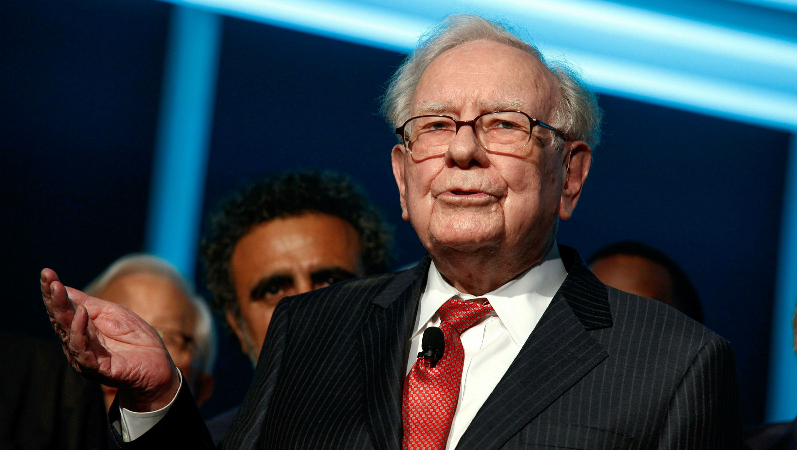
Billionaire investor Warren Buffett has sharply criticized the Trump administration’s escalating use of tariffs, calling them “an act of war, to some degree.” The chairman and CEO of Berkshire Hathaway expressed his concerns during an interview with “CBS News Sunday Morning,” highlighting the economic burden tariffs impose on American consumers.

“Over time, they are a tax on goods. I mean, the Tooth Fairy doesn’t pay ’em!” Buffett remarked when asked about the potential impact of tariffs on inflation. “And then what? You always have to ask that question in economics. You always say, ‘And then what?'”

His comments underscored the cascading economic effects of tariffs, which are ultimately borne by American consumers through higher prices of goods.

Buffett, often referred to as the “Oracle of Omaha,” offered only guarded insights into his views on the current economic climate. When asked about the state of the economy, he said: “Well, I think that’s the most interesting subject in the world, but I won’t talk, I can’t talk about it, though. I really can’t.”

He also refrained from discussing politics, maintaining his recent stance of avoiding endorsements or political commentary. Despite his reluctance to delve into economic specifics, Buffett reiterated his confidence in the U.S. economy, stating that “a majority of any money I manage will always be in the United States because it’s the best place.” His enduring faith in the U.S. market aligns with his investment philosophy, which has consistently favored American businesses.

Since taking office, President Donald Trump has aggressively used tariffs as a cornerstone of his trade policy, targeting countries like China, Mexico, Canada, and the European Union. Economists have repeatedly warned that these tariffs could hurt the domestic economy, with additional costs likely to be passed on to American consumers rather than foreign exporters.

Trump’s approach has included placing a 10% tariff on goods from China last month, which he followed with another 10% tariff last Thursday, accusing Beijing of not doing enough to prevent fentanyl from entering the U.S. The Trump administration has also announced a 25% tariff on all steel and aluminum imports to the U.S., set to take effect on March 12.

Moreover, Trump proposed a 25% tariff on Mexico and Canada, which was initially supposed to take effect in February but was postponed, now started on Tuesday. However, Commerce Secretary Howard Lutnick hinted that the tariffs might not be as high as 25%. Trump’s tariff threats also extended to European Union countries, and he warned of a potential 100% tariff on BRICS nations if they attempted to replace the U.S. dollar as their reserve currency.

The tariffs have sparked significant backlash from affected countries, many of which have retaliated with their own tariffs on U.S. goods. China has responded to the U.S. tariffs by imposing duties on American agricultural products, hitting U.S. farmers hard and contributing to a sharp decline in exports of soybeans, pork, and other produce. Beijing also targeted the U.S. automobile industry, adding to the strain on American manufacturers.

In response to the steel and aluminum tariffs, the European Union is gearing up to impose retaliatory tariffs on iconic American products such as bourbon, motorcycles, and jeans. Canada, one of the closest U.S. allies, slapped tariffs on steel, aluminum, and a variety of consumer goods from the U.S., including ketchup and lawnmowers. Mexico, too, joined the fray by getting ready to enact tariffs on U.S. pork, apples, and cheese, aiming to protect its local industries from the impact of American trade policies.

These tit-for-tat measures have raised concerns among economists and trade experts, who warn that escalating tariffs could trigger a global trade war, disrupt supply chains, and stifle economic growth. The additional costs of tariffs are often passed down to consumers, leading to higher prices for everyday goods.

Analysts also worry that prolonged trade disputes could undermine investor confidence and create volatility in financial markets. The business community in the U.S. has been vocal in its opposition to the tariffs, with trade groups representing industries from manufacturing to retail warning of potential job losses and declining sales.

Buffett, who has previously supported Democratic candidates including Barack Obama and Hillary Clinton, has chosen not to endorse a candidate in the 2024 presidential election. His decision aligns with his recent caution against being impersonated or misrepresented, as he noted in a CNBC interview last year: “Nobody should believe anybody saying I’m telling them how to invest or how to vote.”

The billionaire’s reluctance to enter the political fray this election cycle contrasts with his active involvement in past elections.

As the Trump administration continues to wield tariffs as a policy tool, many are asking the same question Buffett posed—”And then what?”—as they contemplate the long-term effects on inflation, consumer spending, and the overall stability of the global economy.

Tariff War Begins: Trump’s Tariffs Trigger Retaliation from Canada, Mexico, and China

0
USC experts talk about the importance of U.S.-China trade and how it affects the economy. (Illustration/iStock)

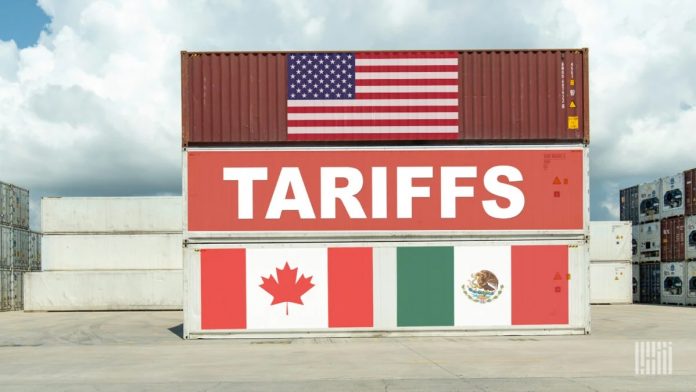
The much-anticipated tariff war has officially begun following U.S. President Donald Trump’s decision to impose steep tariffs on imports from Canada, Mexico, and China.

The new tariffs, which came into effect overnight, include a 25% levy on products from Canada and Mexico, a 10% tariff on Canadian energy imports, and a 20% tariff on Chinese goods—doubling the previous rate. The move has sparked immediate retaliatory measures from the affected countries, raising concerns about global trade stability and the potential for widespread economic repercussions.

The Beginning of the Tariff War

President Trump has framed the tariffs as a strategy to protect American jobs and manufacturing while also addressing illegal migration and drug trafficking. However, the decision to target the United States’ top trading partners—Canada, Mexico, and China—has led to a tit-for-tat escalation, with experts warning of a broader trade war.

Tariffs serve as a tax on imports, intended to shield domestic industries from cheaper foreign competition. But economists believe that such measures often lead to higher consumer prices and disruptions to supply chains. The new tariffs on Canadian and Mexican imports and increased levies on Chinese goods have already set the stage for retaliatory actions, creating a ripple effect that could hit various sectors of the global economy.

Canada’s Swift and Severe Response

Canadian Prime Minister Justin Trudeau responded quickly, announcing C$155 billion (US$107 billion) worth of tariffs on American goods. The tariffs will be implemented in two phases: an immediate 25% tariff on C$30 billion worth of goods, followed by additional tariffs on C$125 billion worth of American products within 21 days.

Trudeau condemned Trump’s tariffs, saying, “There was no justification” for the move, particularly since less than 1% of the fentanyl intercepted at the U.S. border originated from Canada. This rebuttal came as Trump cited drug trafficking, including fentanyl, as part of his rationale for the tariffs.

The tariffs’ potential impact on Canada’s economy is significant. The automotive sector, a vital part of Canada’s economy, could be severely disrupted. Car parts often cross the U.S.-Canada border multiple times during manufacturing, which means they might be taxed repeatedly, raising costs and potentially leading to job losses.

Canada’s provincial leaders have also hinted at drastic measures. Ontario Premier Doug Ford suggested cutting off Canadian electricity supplies to the U.S., emphasizing that Canada provides enough energy to power six million American homes.

“If they want to try to annihilate Ontario, I will do anything, including cutting off their energy, with a smile on my face,” Ford told NBC.

The Canadian Chamber of Commerce called the tariffs “reckless,” warning they could lead to a “recession, job losses, and economic disaster” on both sides of the border.

Mexico Holds Its Fire—For Now

Mexican President Claudia Sheinbaum echoed Trudeau’s sentiments, stating there was “no motive, no reason, no justification” for Trump’s actions. However, unlike Canada, Mexico has opted for a more measured approach, delaying the announcement of specific retaliatory tariffs until Sunday.

Sheinbaum’s stance indicates a potential window for de-escalation, but she made it clear that Mexico is prepared to respond if necessary. Her administration has previously demonstrated its capacity to combat drug trafficking, recently seizing over a ton of fentanyl and dismantling 329 methamphetamine labs. Sheinbaum emphasized that Mexico had already taken steps to curb the flow of illegal drugs into the U.S.

Despite this restraint, the Mexican government has been clear that it will not allow its economy to be targeted without a response. The delay in announcing tariffs could be a strategic move, allowing for last-minute negotiations or a show of good faith to avoid a full-blown trade war.

China’s Counterpunch

China, which now faces 20% tariffs on its goods entering the U.S., has wasted no time in retaliating. Beijing announced new tariffs of up to 15% on key American exports, including agricultural products such as chicken, pork, soy, and beef. China has also imposed additional export controls on 15 American companies, including defense contractors like Leidos and General Dynamics Land Systems.

The spokesperson for China’s National People’s Congress, Lou Qinjian, reinforced China’s unwillingness to be bullied: “China will not accept pressuring or threatening,” he said.

China’s Ministry of Commerce described the U.S. tariffs as harmful to trade relations and urged their withdrawal, underlining a tough stance against what it perceives as economic aggression.

The Chinese tariffs, set to take effect on March 10, could significantly impact U.S. agriculture. American exports of corn and soybeans, which represent a substantial share of trade with China, will now face heightened duties of 15% and 10%, respectively. This move could hit U.S. farmers hard, particularly as China is one of the largest markets for American agricultural goods.

The tariff war marks a significant escalation in global trade tensions. As Canada, Mexico, and China hit back with their own tariffs, the risk of prolonged economic conflict becomes more realistic. While Trump maintains that tariffs are a tool to protect American interests, economists warn that these measures could lead to widespread economic pain.

The coming weeks will be crucial in determining whether this tariff war can be contained or if it will spiral into a broader economic confrontation. With Canada and Mexico already taking steps and China demonstrating its resolve, the international community is bracing for the impact of what could be one of the most disruptive trade conflicts in recent history.

OpenAI Launches $50m NextGenAI Consortium to Boost AI Research at Top Universities Amid U.S. Funding Turmoil

0

OpenAI announced on Monday the launch of a new consortium called NextGenAI, aimed at bolstering AI-assisted research at leading academic institutions. The initiative, which includes 15 founding partners such as Harvard, the University of Oxford, and MIT, will be supported by $50 million in research grants, compute funding, and API access from OpenAI.

The new initiative comes at a critical moment for U.S. AI research, as the Trump administration has reportedly dismissed several National Science Foundation (NSF) employees selected for their AI expertise. The shakeup threatens the NSF’s ability to maintain crucial AI projects, leaving a gap that NextGenAI may partially fill.

Through NextGenAI, OpenAI intends to provide financial and technical support to students, educators, and researchers, with awards set to be distributed in the coming months. The company highlighted the initiative’s mission to fuel the next wave of discoveries and equip emerging talent to shape AI’s trajectory.

“This initiative is built not only to fuel the next generation of discoveries, but also to prepare the next generation to shape AI’s future,” OpenAI wrote in a blog post. “NextGenAI is designed to support the scientist searching for a cure, the scholar uncovering new insights, and the student mastering AI for the world ahead […] As we learn from this initiative, we’ll explore opportunities to expand its reach and impact.”

The consortium is being positioned as an extension of OpenAI’s educational outreach, following the launch of its ChatGPT Edu product for universities last May. By partnering with elite institutions, OpenAI aims to establish a strong presence in academic research, potentially shaping the educational and research sectors with its AI technologies.

A Strategic Move in a Competitive AI Industry

While the funding boost is a welcome relief for many in the academic community, OpenAI’s motives may not be entirely altruistic. By embedding its tools into academic research, the company could cultivate a generation of researchers and scholars who are more familiar with and reliant on its products. This approach could create a strategic advantage over rivals, including open-source AI initiatives that offer alternative tools.

Filling a Void as Federal Support Wanes

The timing of OpenAI’s announcement is also noteworthy. The reported dismissals at the NSF have raised concerns about the U.S. government’s commitment to supporting critical AI research. The NSF has traditionally been a major source of funding and support for emerging technologies, and any disruption could leave researchers scrambling for alternatives.

With NextGenAI, OpenAI could help bridge this funding gap, especially if federal grants and resources become scarcer. However, the initiative also underscores a broader trend where private companies increasingly step into roles traditionally filled by public institutions.

The consortium’s creation comes with intricacies. For universities, the funding and resources provided by OpenAI could accelerate research and provide students with valuable experience. However, it also introduces potential biases, as researchers might feel pressured to use OpenAI’s tools over competitors, which could stifle innovation and reduce the diversity of approaches in the field.

OpenAI indicated that as it learns from the NextGenAI initiative, it may consider expanding its reach and impact. This could lead to more partnerships, greater funding, and potentially broader educational programs.

Presidential Election Sparks Debate Over Crypto Policies

0

The 2028 presidential election is in full swing, and crypto policies have emerged as a key talking point among various campaigns and political platforms. As Americans evaluate their options, the conversation increasingly focuses on how future leaders might shape the nation’s approach to digital assets. Some candidates echo Trump’s crypto policies of prior administrations, advocating a hands-off approach to innovation, while others lean toward stricter frameworks akin to Biden crypto policies. The underlying tension rests on how best to balance crypto regulations with economic growth and consumer protection. This heightened political attention suggests that crypto policies will factor significantly in the outcome of November’s vote — and beyond.

Key Players and Their Views on Crypto

On the Republican side, traditionalists and moderates debate what are Trump’s crypto policies should Donald Trump return to the political scene, whereas more progressive voices highlight Kamala crypto policies if the Democratic ticket secures another term. Even within single parties, stances on crypto policies differ drastically — from permissive attitudes to calls for sweeping regulation. When voters ask how to check crypto policies before choosing a candidate, many turn to official campaign websites or consult third-party trackers that summarize each politician’s statements. Understanding these varied viewpoints is crucial for investors, entrepreneurs, and everyday citizens wondering which policy framework will best serve the fast-growing digital economy.

The Role of AML and Accounting in Shaping Policy

Debates over crypto AML policy (Anti-Money Laundering) have heightened amid concerns about illicit fund flows through crypto exchanges. Politicians referencing Trump’s crypto policies often argue that a robust AML framework helps maintain America’s edge in fighting financial crime. Meanwhile, crypto accounting policy sparks discussions about tax obligations and how transactions should be reported. These issues came to a head during the last administration, which navigated between fostering innovation and keeping track of digital asset transactions. Today, analysts see the synergy of crypto AML policy and crypto accounting policy as essential components of comprehensive crypto policies that can withstand the scrutiny of regulators and global partners alike.

China’s Policy and the Global Context

While American politicians wrangle over crypto policies, it’s impossible to ignore China’s policy on cryptocurrency and its ripple effects worldwide. China’s restrictive stance has contributed to miners and startups relocating elsewhere, shaping the geography of crypto development. As campaigns shift focus to foreign policy, the success or failure of China’s approach can influence proposals on crypto policies at home. Additionally, advocates for a freer market highlight how overregulation could mirror China’s clampdowns, stifling domestic blockchain innovations. This tension underscores why many observers want balanced bitcoin monetary policy in the U.S., ensuring global competitiveness without sacrificing the core advantages of decentralized finance.

Monetary Policy: From Bitcoin to Ethereum

The 2028 election is also spotlighting crypto monetary policy, which covers decisions on token supply, interest mechanisms, and potential pegging strategies. While Bitcoin monetary policy is largely decentralized — predetermined halving events that control the emission rate — other platforms like Ethereum monetary policy evolve with community consensus. Consequently, crypto policies proposed by candidates often hinge on whether they view digital assets as akin to fiat currencies or more like commodities. Legislators who misunderstand these differences risk pushing laws that hamper U.S. leadership in cutting-edge fields like decentralized applications, NFTs, or Layer 2 protocols.

Trading Frameworks and Tax Considerations

A related concern is the formulation of a coherent crypto trading policy. How transactions are regulated can drastically affect liquidity, market sentiment, and investor confidence. Additionally, debates around cryptocurrency tax policy continue to surface, with some candidates favoring structured guidelines that bring clarity and others pushing for more lenient treatments to spur growth. Observers note that past Trump crypto policies had notable gaps in specifying tax details, a reality that still resonates today. Whichever administration takes office must craft crypto policies that address these longstanding uncertainties, ensuring both fairness and competitiveness for U.S. markets.

Summits, Strategies, and the Wider Ecosystem

Events like the blockchain policy summit highlight the intersection of private sector innovation and public sector oversight. Technologists and policymakers converge to discuss best practices, forging frameworks that shape crypto trading strategies and beyond. Amid the swirl of conference talks, the policy conversation frequently touches on the crypto policies needed to support compliance while encouraging entrepreneurship. If you’re looking for in-depth coverage of how government actions impact the crypto sector, resources like CoinDesk offer expert news and analysis. Meanwhile, some in the community look to entertainment platforms featuring 777 fun to unwind — revealing how digital tokens serve not just monetary but also recreational roles.

Accounting Nuances and AML Revisited

Beyond grandstanding and speeches, meaningful policy depends on the nitty-gritty details — like whether crypto accounting policy measures sufficiently capture capital gains and potential tax liabilities. Similarly, a cohesive approach to crypto AML policy must balance user privacy with law enforcement needs. As top stablecoins vie for market share, debates expand to stablecoin guidelines — some compare USDT and USDC, referencing insights like the thorough review available in Which Stablecoin is Better to Use in 2025?

Although stablecoins differ from mainstream cryptocurrencies in certain respects, they still fall under the umbrella of evolving crypto policies that aim to ensure consumer protection and global stability.

America’s Crypto Policies Future

Whether you side with progressive voices, moderate centrists, or hold a preference for Trump crypto policies, there’s no denying that the 2028 presidential race places crypto policies front and center. America’s approach will have far-reaching effects, from supply-chain optimization in farmland to global capital flows and cross-border remittances. The question for voters is how — and whether — each candidate can deliver a clear plan that addresses AML, taxation, and accountability, while nurturing the innovation that sets the crypto world apart. In many ways, the debate unfolds as a litmus test for policymakers who must strike a delicate balance: shaping a regulatory environment that fosters growth while safeguarding public interests in an ever-evolving digital landscape. The result could redefine America’s position in the global race for blockchain leadership and shape the crypto policies future for decades to come.