DD
MM
YYYY

PAGES

DD
MM
YYYY

spot_img

PAGES

Home Blog Page 223

Dow Jones Hits New All-Time High

0

The Dow Jones Industrial Average (DJIA) surged to a fresh all-time high, peaking intraday at approximately 48,040 points before pulling back to close slightly lower amid mixed signals from Federal Reserve Chair Jerome Powell.

This marks a continuation of the index’s strong momentum in late October, driven by a 25-basis-point rate cut by the Fed, cooler-than-expected inflation data, and optimism around corporate earnings and U.S.-China trade developments.

The Dow has now risen nearly 5% since mid-September, reflecting broader market resilience despite global uncertainties. Intraday ATH at 48,040; dipped on Powell’s cautious comments. Data sourced from FRED/St. Louis Fed and market reports; estimates based on session recaps as of Oct 30 morning.

The Federal Reserve’s 0.25% cut to 4.50%-4.75% boosted sentiment, though Powell noted December cuts are “not a foregone conclusion” due to persistent inflation risks. Strong reports from Dow components like Caterpillar (+13%), Coca-Cola, 3M, and UnitedHealth Group propelled gains

U.S.-China talks eased trade tensions, benefiting industrials, while AI hype lifted tech-adjacent names. Early Oct 30 trading: “Der Dow Jones $DJI pushing higher toward yesterday’s ATH of 48,040.”

The S&P 500 (SPX) opened higher amid ongoing earnings digestion and tempered Fed expectations, trading around 6,908 points midday +0.25% from prior close, building on its fresh all-time high (ATH) of over 6,900 hit on October 29.

The index has surged nearly 3% in the past month and 21% year-over-year, fueled by the Fed’s 25-basis-point rate cut to 4.50%-4.75%, robust Q3 earnings 9.2% blended growth, 84% beat rate, and AI-driven optimism in tech giants like Nvidia now at $5T market cap.

As of early October 30, 2025, futures suggest the Dow could test 48,000 again today, but volatility lingers with upcoming economic data. If you’re trading or investing, keep an eye on Powell’s full remarks and Q3 GDP releases.

However, concentration risks loom: the “Magnificent 7” drove +12.5% weekly gains, while the other 493 stocks eked out just +0.8%, signaling fragility in the rally. Data aggregated from FRED, Yahoo Finance, and market recaps; estimates for non-final sessions.

The 0.25% cut boosted initial gains, but Chair Powell’s remarks lowered December cut odds to ~68% from 90%, sparking a “sell-the-news” pullback in megacaps. Q3 saw 87% EPS beats above 5-year avg of 78%, with revenue +7.0% YoY—highest since Q3 2022.

Standouts: Alphabet > $100B revenue, Microsoft; laggards: Meta (hit by $16B AI charge). Tech +12.5% Nvidia’s milestone, Financials mixed amid rate uncertainty; Energy the lone decliner.

Broader tailwinds: U.S.-China tariff relief 57% to 47% and QT end in December. XTraders highlighted the rally’s “air-built” momentum and concentration risks, with calls for rotation to small-caps:”

Markets at ATHs, but watch the warning signs… S&P 500 at fresh ATH at$6890 but only Mag 7 flying +12.5% weekly. The other 493 stocks? +0.8%. Extreme concentration = fragility.” “$SPY hit my wave (v) target yesterday…

Sharp pace of the recent rally… ‘sell-the-FOMC’ reaction was largely expected. This is a classic setup where momentum meets event risk.” “$SPY dropped 30 pts overnight. The last week’s rally was built on air – light volume, shallow conviction – ahead of the FOMC.”

As of midday October 30, 2025, the S&P 500 eyes 6,920 if earnings beats continue, but VIX at 16 signals complacency—watch for rotation or volatility on upcoming GDP data. Forward P/E at 22.7 suggests stretched valuations, with analysts eyeing 11% CY 2025 EPS growth.

Cameo Sues OpenAI Over Sora 2’s “Cameo” Feature, Alleging Trademark Infringement and Brand Tarnishment

0

Celebrity video platform Cameo has filed a trademark infringement lawsuit against OpenAI, accusing the ChatGPT maker of using its brand name “Cameo” without authorization in the newly released Sora 2 app.

The company claims the AI firm’s use of the name directly competes with its core business and threatens to damage the reputation it has built around authentic celebrity-fan interactions.

The lawsuit, filed on Tuesday in a California federal court, centers on Sora 2’s “cameo” feature, which allows users to create AI-generated deepfake avatars of themselves — or of public figures — that can be inserted into videos. Cameo argues that the feature’s name, combined with its ability to generate synthetic celebrity content, risks misleading users into thinking the service is affiliated with or endorsed by the real Cameo brand.

In its filing, the company said OpenAI’s use of the term is “highly likely to dilute and tarnish Cameo’s branding by confusing consumers to associate it with ersatz, hastily made AI slop and deepfakes featuring celebrities.”

Background: Two Very Different “Cameos”

Founded in 2017, Cameo built its brand around personal, authentic, and human connections between fans and celebrities. Through its platform, users can commission short personalized video messages or live video calls from celebrities, influencers, athletes, and other public figures. The company has signed up thousands of entertainers, turning personalized shout-outs into a booming niche industry.

OpenAI’s Sora, by contrast, is a social AI video generator that produces hyperrealistic clips using text or image prompts. Its latest version, Sora 2, launched on September 30, introduced the “cameo” feature — a tool that allows users to upload a likeness of themselves (or another person) to appear in AI-generated videos. Some well-known figures have voluntarily uploaded their likenesses to participate, but reports suggest that the platform’s inadequate safeguards have allowed for the creation of nonconsensual deepfakes, raising fresh concerns about misuse.

Cameo’s Allegations Against OpenAI

In its lawsuit, Cameo contends that OpenAI “intentionally selected” the term “cameo” to exploit the goodwill and public recognition of Cameo’s brand, describing the move as a calculated attempt to trade on the company’s established reputation for authentic celebrity engagement.

Cameo also says that third-party websites and forums have emerged since the Sora 2 launch that specifically highlight or market OpenAI’s “cameo” feature, adding to user confusion and further eroding the distinctiveness of Cameo’s trademark.

“We do not take litigation lightly. While we attempted to resolve this matter with OpenAI amicably, they refused to stop using the Cameo name for their new Sora feature,” Cameo CEO Steven Galanis told The Verge. “To protect fans, talent, and the integrity of our marketplace, we felt that we unfortunately had no other option but to bring this lawsuit.”

The company is seeking unspecified monetary damages and a court injunction to block OpenAI from using “cameo” or “cameos” in any of its product names or marketing.

OpenAI Pushes Back

OpenAI has rejected Cameo’s claims, insisting that the word “cameo” is too generic to be exclusively owned by any single company.

“We’re reviewing the complaint, but we disagree with these claims and will defend our view that no one can claim exclusive ownership over the word ‘cameo’,” OpenAI spokesperson Oscar Haines said in a statement.

The company has not commented on whether it plans to rename the feature, but has maintained that Sora’s tools are designed to encourage creativity and responsible AI use, not to infringe on trademarks or undermine existing businesses.

The Lawsuit, Beyond Cameo

The lawsuit comes amid growing legal and ethical scrutiny surrounding AI-generated media, particularly deepfakes that use the likenesses of real people without consent. The “cameo” feature in Sora has sparked public backlash and questions about how AI companies balance innovation with privacy and intellectual property rights.

Cameo’s case is expected to test the boundaries of trademark protection in the age of generative AI, where words with common meanings are being reinterpreted as digital features or product names. If Cameo wins, the lawsuit could compel AI developers to tread more carefully when naming new tools that resemble established brands.

The case adds to a widening list of legal challenges facing OpenAI, which has also been sued by authors, publishers, and media organizations over the use of copyrighted material to train its AI models.

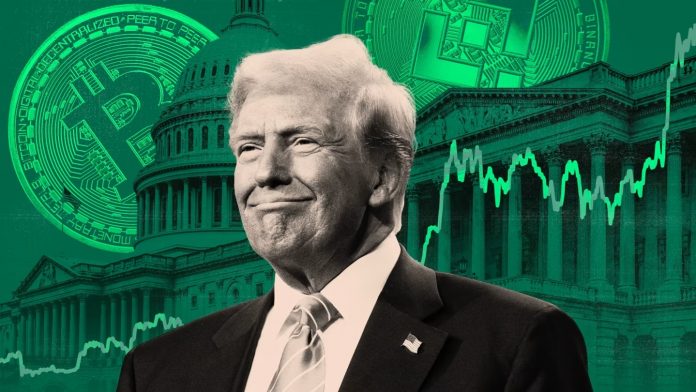
The Acquisition of Republic Will Bolster TRUMP Crypto Tokenized Goods

0

Fight Fight Fight LLC—the company behind the $TRUMP memecoin—is in advanced discussions to acquire the U.S. operations of Republic, a prominent crowdfunding platform.

This potential deal, first reported by Bloomberg could bridge memecoins with traditional startup funding, allowing $TRUMP to be used for investments, grants, and platform fees on Republic.

The news has sparked a 40%+ surge in $TRUMP’s price over the past week, pushing its market cap to around $1.6 billion after a 90% drop from its $9 billion peak earlier this year.

Republic has facilitated over 3,000 fundraising campaigns for startups and real-world assets (RWAs), serving both retail and accredited investors. Its backers include Galaxy Digital and Binance Labs, adding credibility to the platform.

If completed, this acquisition would mark a shift for $TRUMP from speculative hype to practical utility in the crypto economy, especially amid a pro-crypto regulatory environment under the Trump administration.

Parties Involved

The buyer is Fight Fight Fight LLC issuer of $TRUMP memecoin, launched January 2025. The seller is Republic U.S. operations only; international arm unaffected. Fight Fight Fight and CIC Digital hold ~80% of $TRUMP supply.

Users could fund startups, pay fees, or receive grants in the token. It’s boosts crypto startups’ access to capital; aligns with RWA tokenization trends (e.g., equity, funds).

$TRUMP up 40-46% in a week; whale accumulation reported like the $1.5M profit on one trade recorded onchain. Talks are ongoing and private; Republic is engaging multiple partners. No final terms or timeline disclosed; both companies declined comment.

Fight Fight Fight is raising $200M for a digital asset treasury to buy back $TRUMP and stabilize it. This Follows Coinbase’s $375M acquisition of on-chain platform Echo, signaling U.S. crypto fundraising boom.

Recent pardon of Binance’s CZ Changpeng Zhao has fueled speculation on conflicts of interest. This move comes as Trump-linked crypto projects such as World Liberty Financial’s WLFI token face scrutiny for blending politics and finance, with Democrats raising corruption concerns.

Analysts speculate on $TRUMP’s revival, with posts highlighting utility in crowdfunding and RWA plays. Crypto media echoes this, noting it could “transform $TRUMP from hype to functional asset.”

What is RWA Tokenization?

Real-World Asset (RWA) tokenization is the process of converting ownership rights in physical or traditional financial assets—such as real estate, bonds, art, commodities, private equity, or invoices—into digital tokens on a blockchain.

These tokens represent fractional or full ownership and can be traded, transferred, or used as collateral in DeFi (decentralized finance) protocols. Core Idea: Bring illiquid, high-barrier assets onto blockchain rails to enable 24/7 trading, fractional ownership, instant settlement, and global access.

Banks, asset managers, and governments are launching tokenized funds, bonds, and treasuries.  BlackRock: BUIDL tokenized money market fund hit $500M+ AUM in 6 months (2024).

JPMorga’s Onyx platform tokenized $1B+ in assets (2025). Short-term T-bills are the #1 tokenized RWA due to yield + stability. Ondo Finance $ONDO tokenized T-bills ? $300M+ TVL.

Backed.fi issues bIB01 tokenized T-bills on 10+ chains. Total tokenized treasuries hits ~$2.1B on Oct 2025, per RWA.xyz. Tokenized private loans and credit funds offer 8–15% yields with DeFi composability.

Centrifuge: $500M+ in tokenized invoices & credit. Maple Finance relaunched with tokenized senior debt pools. High-value properties split into tradable tokens for retail investors. On Lofty 100+ properties tokenized; daily rental yield payouts. KYC/AML built into smart contracts; licensed issuers dominate.

Securitize: SEC-registered transfer agent; powers BlackRock BUIDL. While Republic Crypto tokenizes startup equity under Reg CF/D. In Europe, MiCA framework enables tokenized funds (e.g., SG Forge).

RWAs moving to high-throughput chains for lower fees and speed. Base, Arbitrum, Polygon, Solana host 60%+ of RWA volume. Chainlink CCIP enables cross-chain RWA transfers. Tokenized assets used as collateral in lending, derivatives, and yield farming.

Aave accepts tokenized treasuries (e.g., BUIDL) as collateral. Pendle splits RWA yield into PT/YT tokens for fixed-income trading. Morpho Blue optimized lending markets for RWAs.

Fed rates at 4.5–5% ? T-bill yields (4.8%) attract crypto natives seeking “safe” returns. Institutions want blockchain efficiency; crypto users want real yield. Oracles (Chainlink), KYC-on-chain (Civic, Lit Protocol), and L2 scaling solve earlier hurdles.

From hype to InfrastructureRWA tokenization is no longer experimental—it’s becoming core financial infrastructure. Full tradFi integration via BlackRock, JPMorgan, Republic. The $TRUMP memecoin team’s potential acquisition of Republic fits perfectly.

Use $TRUMP to invest in tokenized startups under Reg CF. Pay platform fees in memecoin. Grant allocations to community holders This is memeculture meeting institutional RWA rails—a microcosm of 2025’s biggest trend.

While no deal is finalized, this positions $TRUMP at the intersection of memecoins, DeFi, and TradFi—potentially a game-changer if regulatory hurdles clear.

Fidelity Submits Pre-Effective Amendment to Its S-1 Solana ETF

0

Fidelity Investments submitted a pre-effective amendment to its S-1 registration statement with the U.S. Securities and Exchange Commission (SEC) for a proposed spot Solana ETF, advancing the product toward potential automatic effectiveness.

This update removes the previously included “delaying amendment” under Rule 473, which had allowed the SEC to control the timing of approval. As a result, the registration could become effective automatically after the statutory 20-day review period, potentially enabling a launch as early as mid-November 2025 if no objections arise.

The Filing Staking Strategy

The ETF plans to stake nearly 100% of its Solana (SOL) holdings through institutional custodians like Coinbase and BitGo. This aims to generate approximately 7% annual yield for investors, exceeding the fund’s benchmark (Fidelity Solana Reference Rate).

Staking addresses regulatory concerns by using vetted validators and maintaining a small liquid SOL reserve for daily operations. A management fee of 0.25% is proposed, with a waiver for the first six months or until the fund reaches $1 billion in assets under management (AUM), whichever comes first.

The fund will track SOL’s spot price using a proprietary index, emphasizing Solana’s high throughput up to 65,000 transactions per second and low fees fractions of a cent per transaction compared to Bitcoin with 250 TPS, ~50 cents and Ethereum with 800 TPS, ~50 cents.

Fidelity warns of potential SEC classification of SOL as a security, which could impact operations, alongside ongoing concerns over market manipulation and custody.

This filing follows an SEC acknowledgment of Fidelity’s initial proposal in April 2025 and a Cboe 19b-4 listing application in March 2025. It aligns with a broader wave of altcoin ETF momentum, spurred by an August 2025 SEC ruling clarifying that staking does not constitute a securities offering.

The U.S. spot Solana ETF market kicked off on October 28, 2025, with three products debuting and capturing over $81 million in combined first-day inflows.

Bloomberg Intelligence estimates Solana ETFs could attract over $3 billion in inflows within the first year, mirroring Bitcoin and Ethereum trends. Fidelity’s entry, with its aggressive staking and low fees, positions it to challenge leaders like Bitwise.

Other firms, including VanEck and Franklin Templeton, have also updated filings to include staking. SOL dipped ~6% on October 30 amid broader market volatility but remains up significantly YTD.

X discussions highlight optimism around institutional inflows, with users noting the filing as “rocket fuel” for SOL’s price toward $400. However, regulatory hurdles persist, and approval isn’t guaranteed. This development underscores Wall Street’s deepening crypto integration, potentially boosting Solana’s liquidity and accessibility for retail and institutional investors.

Solana uses proof-of-history + Tower BFT; slashing is rare and only for egregious faults. Validators can lose staked SOL if they sign conflicting blocks or go offline too long. ETF uses institutional validators with 99.9%+ uptime and redundancy. No investor-level slashing.

Only ~0.0003% of staked SOL has ever been slashed per Solana Foundation. If Coinbase or BitGo is breached, staked SOL could be stolen. Fidelity holds insurance up to $320M via Coinbase plus cold storage. Still, not 100% guaranteed.

Smart contract bugs in staking pools. Third-party staking protocols (e.g., Marinade, Jito) can have exploits. Fidelity bypasses DeFi pools — stakes directly via trusted validators. Lower code risk. 2022–2023 saw $2B+ in DeFi hacks; institutional staking avoids most of this.

Staked SOL cannot be sold instantly. During a price crash, you’re locked in. ETF shares trade intraday on exchange, but underlying SOL is locked. In extreme sell-off, ETF may trade at discount to NAV (e.g., -5% or more).

During June 2025 dip, staked SOL holders couldn’t exit; ETF would’ve allowed share sales at a potential discount. Staked SOL earns ~6–8% APY but can’t be used in DeFi lending, liquidity pools. Solana’s inflation is ~5.4% annually (2025), gradually decreasing. Staking yield partially offsets this, but not fully if price stagnates.

Net real yield: ~2–3% after inflation assuming 7% staking APY. If SEC declares SOL a security could force ETF to halt staking or liquidate. Fidelity’s S-1 warns: “If SOL is deemed a security, the Trust may need to cease operations.”

Staking rewards currently taxed as income. Future laws could worsen. ETF investors receive no direct rewards — yield is reinvested, taxed only on capital gains when selling shares.

Solana has had 7+ major outages since 2021 longest: 17 hours in Sep 2021. Staking continues, but rewards pause during downtime. ~33% of stake controlled by top 19 validators. Theoretical 51% attack risk. Fidelity mitigates by diversifying across multiple top-tier validators.

Staking risk is dramatically reduced vs. DIY staking — but not zero. Biggest residual risks: ETF trading at discount/premium during volatility. Treat Solana ETF staking like a high-yield bond with crypto volatility — not a risk-free 7% cash equivalent.

How Realistic is OpenAI’s $1 trillion Valuation?

0

Reports indicate that OpenAI is actively preparing for an initial public offering (IPO) that could value the AI powerhouse at up to $1 trillion—potentially making it one of the largest debuts in history, second only to Saudi Aramco’s $29 billion raise in 2019.

This news, first broken by Reuters yesterday, has sparked widespread discussion on Wall Street and X (formerly Twitter), blending excitement over AI’s growth with skepticism about the frothy valuation. OpenAI has not confirmed a firm timeline, emphasizing its focus on advancing artificial general intelligence (AGI), but insiders suggest momentum is building.

OpenAI could file IPO paperwork with the U.S. Securities and Exchange Commission (SEC) as early as the second half of 2026, with a potential listing by late 2026 or 2027. CFO Sarah Friar has reportedly told associates to expect a 2027 debut, though advisers believe market conditions could accelerate it.

Fundraise Size: The offering might raise around $60 billion, aimed at fueling massive AI infrastructure investments, including data centers and computing power to reduce reliance on partners like Microsoft.

OpenAI is already the world’s most valuable private company at about $500 billion, following a recent secondary share sale. Microsoft holds a 27% stake valued at $135 billion after $13 billion in investments, while backers like SoftBank, Thrive Capital, and Abu Dhabi’s MGX stand to benefit.

The company is projected to hit $20 billion in annualized revenue by year-end 2025, up from $4.3 billion earlier this year, but it’s burning cash fast—losing $13.5 billion in the first half of 2025 alone. A $1 trillion valuation would imply a price-to-sales multiple of around 50x forward revenue, drawing comparisons to Nvidia’s explosive growth.

This shift follows OpenAI’s recent restructuring into a public benefit corporation, which lifts prior caps on capital raising and aligns its nonprofit roots with for-profit ambitions.

The timing aligns with a red-hot AI sector driving public market gains: AI-related stocks like Nvidia recently hit a $5 trillion market cap, while cloud provider CoreWeave IPO’d at $23 billion earlier this year and has tripled since.

OpenAI’s ChatGPT and models like GPT-5 have cemented its lead, but competition from Google, Meta, and open-source alternatives (e.g., DeepSeek, Qwen) is intensifying. An IPO would provide liquidity for acquisitions and talent wars.

On X, the buzz is immediate and polarized. Influential accounts like Kobeissi Letter highlighted the historic scale, warning it could signal an AI “bubble” akin to the dot-com era, while traders like zerohedge reposted analyses questioning profitability.

Skeptics point to OpenAI’s $5 billion burn rate in 2024 and the need for $50–100 billion in annual revenue to justify $1 trillion. Is $1 Trillion Realistic? Pros, Cons, and Expert Takes on Yahoo Finance analysts debated this today, comparing OpenAI to Nvidia profitable, hardware-focused and CoreWeave.

$20B ARR by EOY 2025; ads and enterprise deals could explode to $100B+ by 2027. Still unprofitable; GPU costs and data center amortization could eat 50%+ of revenue. Dominant in generative AI; Microsoft partnership ensures scale.

Free open-source rivals outperform on benchmarks; regulatory scrutiny on AGI ethics looms. Nvidia at $5T; AI could surpass cloud computing ($105B for MSFT’s segment). Dot-com echoes—Alibaba’s 2014 IPO ($26B raise) later crashed 80%; $1T pre-profit is “wild.”

Enables trillion-dollar infra buildout for AGI. Broader market pullback (e.g., Nvidia down 50% in a correction) tanks sentiment. Crossmark’s Victoria Fernandez suggested a more grounded $70–100 billion valuation initially, viewing Microsoft as the safer AI proxy for now.

Reddit threads (e.g., r/investing, r/stocks) echo this, with users calling it a “black hole for investors” unless margins improve. In short, while OpenAI’s IPO could redefine tech debuts, it’s a high-stakes bet on AI’s trillion-dollar promise amid mounting losses and hype.

Watch for SEC filings in 2026—the real test will be execution, not just valuation dreams. If you’re eyeing exposure, consider indirect plays like MSFT or NVDA for now.