DD
MM
YYYY

PAGES

DD
MM
YYYY

spot_img

PAGES

Home Blog Page 2252

Do Not Make Nigeria 67 States; Not Necessary

0

Nigeria, please do not do it and take the number of states to 67: “In what appears to be one of the most radical proposals in Nigeria’s political history, the House of Representatives Committee on the Review of the 1999 Constitution has put forward a plan to create 31 additional states, bringing Nigeria’s total to 67 states.”

The Proposed New States Across Nigeria

North-Central:
Benue Ala (from Benue State)
Okun (from Kogi State)
Okura (from Kogi State)
Confluence (from Kogi State)
Apa-Agba (from Benue South Senatorial District)
Apa (from Benue State)
Federal Capital Territory, Abuja (to be recognized as a full-fledged state)

North-East:
Amana (from Adamawa State)
Katagum (from Bauchi State)
Savannah (from Borno State)
Muri (from Taraba State)

North-West:
New Kaduna and Gurara (from Kaduna State)
Tiga (from Kano State)
Kainji (from Kebbi State)
Ghari (from Kano State)

South-East:
Etiti (as the 6th state in the South-East)
Adada (from Enugu State)
Urashi (as the 6th state in the South-East)
Orlu (from the South-East region)
Aba (from the South-East region)

South-South:
Ogoja (from Cross River State)
Warri (from Delta State)
Bori (from Rivers State)
Obolo (from Rivers and Akwa Ibom States)

South-West:
Toru-Ebe (from Delta, Edo, and Ondo States)
Ibadan (from Oyo State)
Lagoon (from Lagos State)
Ijebu (from Ogun State)
Another Lagoon (from Lagos and Ogun States)
Another Ibadan (from Oyo State)
Oke-Ogun and Ife-Ijesha (from Ogun, Oyo, and Osun States)

In my thesis, I do think Nigeria should even convert to 6 states, from the current 36 states. Why? The small states we have now do not have capacity to do anything worthwhile. But at a regional-state level, greater things can happen. Sure, that will reduce the number of governors, aides, etc [the reason that will not fly] but it will help the evolved states to dream bigger projects and get them done.

What we call states now excluding Lagos, Rivers, Akwa Ibom, Delta and maybe two extra, have no capacity for generation-shaping projects because they have no capacity. Then imagine dividing them further! Nigeria should not add more states.

Comment on Feed

Comment: On the contrary, the more States we have, the faster the urbanization and infrastructural development we will have.

My Response: Which infrastructure has Nigeria built in the capitals of Zamfara, Abia, Bayelsa, etc since they were created. Having buildings with exotic cars possibly means “urbanization and infras development” for you. But before that era, states BUILT factories, dams, catalytic projects that required huge sums. Today, states do not have that capacity. They only build markets, junctions and supply kekes. Just name one major project in any state created by Abacha in the last batch to 36 states.

We have local government areas to drive rural development. But that has not happened as your family budget is possibly bigger than most LGAs’

Response #1: I do believe your thesis of faster urbanization and infra development, but if you look at the current prevailing data the states we have today can’t fund themselves, most of them have transitioned into a parasitic kind of relationship with other states and the center.

If we look closely, the HoA that is proposing this move are only thinking about been governors or making their cronies governors and hoping to maintain this current system of governance where the states will survive anyhow.

I am of the opinion like Ndubuisi Ekekwe that if the states are merged into productive units, the tendency to grow faster and develop better will be more.

Response #2: , the more states you have, the more the cost of governance. The more the cost of governance, the less the resources that will be available for development, considering that the current structure already consists of states that are not independently self-sustaining…

Follow the logic.

It is the same logic we employ in Business Process Optimization: elimination of duplicate processes. More states means “duplicating” roles that already exist when there is already low capacity utilisation for such tasks. If you analyse the human resource utilisation of the existing state civil servants and politicians, it would not be out of place to suggest that for every 6 civil servants and politicians today, there should be 1.
Now this brings us back to @Ndubuisi Ekekwe’s suggestion of shrinking the structure to 6 states instead.

Comment: The unification decree of May 1966 promulgated by Aguiyi Ironsi that banned regionalism has destroyed a lot of things.
Prof, where do we go from here?

My Response: That is an easy way of looking at what General Ironsi did. From the thesis of the decree, it was not designed for development, but rather to reverse any sense of regionalization. So, he did put a military style solution towards de-emphasising regions after the coup. So, your thesis when you read the whole context of the decree may not be balanced. As a miliary, he wanted ONE nation, and not a nation of regions. It was not a development playbook, but possibly a unity one after a coup, trying to quench fire.

That said, whatever he did at the fangs of an exploding nation, Nigeria in 1979 had a constitution and could have made changes. Also, when Gen Gowon assumed the position of head of state, he could have reversed whatever decree Gen Ironi put across. Gen Ironsi spent less than 7 months but Gen Gowon ran the show for at least 8 years.

I think the 1979 Constitution is to be blamed and not what the generals did as they were not really focusing on development, but holding the country together.

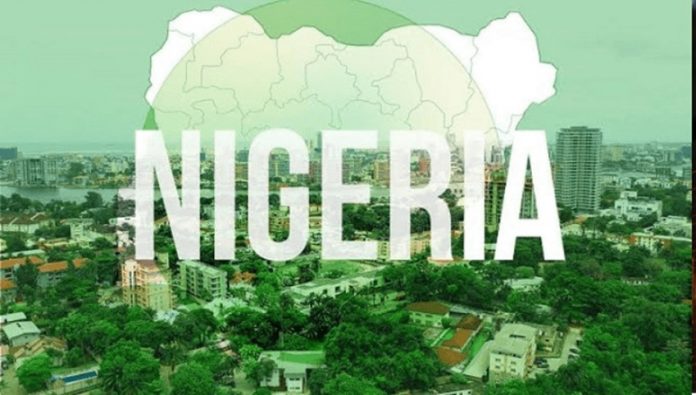
Nigeria’s House of Representatives Proposes Creation of 31 Additional States
Nigeria’s House of Representatives Proposes Creation of 31 Additional States

0

In what appears to be one of the most radical proposals in Nigeria’s political history, the House of Representatives Committee on the Review of the 1999 Constitution has put forward a plan to create 31 additional states, bringing Nigeria’s total to 67 states.

The proposal was presented during plenary on Thursday by Deputy Speaker Benjamin Kalu, who read a letter from the committee detailing the proposed new states. The suggested creations span all six geopolitical zones, with some regions set to gain multiple new states, including Kogi and Benue, which could be split into three separate states each if the proposal is approved.

The Proposed New States Across Nigeria

North-Central:
Benue Ala (from Benue State)
Okun (from Kogi State)
Okura (from Kogi State)
Confluence (from Kogi State)
Apa-Agba (from Benue South Senatorial District)
Apa (from Benue State)
Federal Capital Territory, Abuja (to be recognized as a full-fledged state)

North-East:
Amana (from Adamawa State)
Katagum (from Bauchi State)
Savannah (from Borno State)
Muri (from Taraba State)

North-West:
New Kaduna and Gurara (from Kaduna State)
Tiga (from Kano State)
Kainji (from Kebbi State)
Ghari (from Kano State)

South-East:
Etiti (as the 6th state in the South-East)
Adada (from Enugu State)
Urashi (as the 6th state in the South-East)
Orlu (from the South-East region)
Aba (from the South-East region)

South-South:
Ogoja (from Cross River State)
Warri (from Delta State)
Bori (from Rivers State)
Obolo (from Rivers and Akwa Ibom States)

South-West:
Toru-Ebe (from Delta, Edo, and Ondo States)
Ibadan (from Oyo State)
Lagoon (from Lagos State)
Ijebu (from Ogun State)
Another Lagoon (from Lagos and Ogun States)
Another Ibadan (from Oyo State)
Oke-Ogun and Ife-Ijesha (from Ogun, Oyo, and Osun States)

Unexcited Nigerians See A Scheme for More Political Looting

However, rather than excitement, the proposal has been met with widespread skepticism, as many Nigerians see it as yet another ploy by politicians to expand their empire of looting rather than improve governance.

Given that almost every governor in Nigeria has a corruption case, citizens argue that this will simply create 31 more corrupt politicians with access to public funds.

It is believed that politicians want to create more states because it means more governors, more commissioners, more senators, and more federal allocations that will go straight into their pockets.

For many, the current 36 states and the Federal Capital Territory (FCT) have failed in governance, struggling with unpaid salaries, decaying infrastructure, and poor service delivery.

“Who bewitched Nigeria! When we should be talking about merging the existing states that have proved not viable over time, some not-so-engaged reps members are talking about creating 31 more states in Nigeria,” a social media user noted.

Rather than addressing these issues, lawmakers are more concerned with creating new states, which would come with the burden of setting up new administrative structures, electing new governors, and creating new House of Assembly members. All against the backdrop of the high cost of governance.

“31 more state with each having 3 senators! With the present economic situation in this country, do we have the resources to fund 202 senators at the upper Chamber?” another social media user asked.

Many Nigerians and governance experts have urged lawmakers to focus on fixing Nigeria’s existing governance problems instead of multiplying them. Most Nigerian states are financially dependent on monthly federal allocations, which means they will cease to function without Abuja’s allocations.

Among the many backdrops of the states’ dependence on federal allocations is the inability of many of them to implement the newly-approved N70,000 monthly minimum wage.

Some supporters of the proposal have argued that Nigeria, with over 200 million people, deserves more states. They compare the proposal with the United States, which has 51 states with a population of over 330 million.

However, opponents of the proposal have noted that some of the U.S. states are bigger than Nigeria as a country, yet the government is not seeking to create more from them – even though most American states generate their own revenues, have transparent financial systems, and do not rely on federal handouts to survive.

Will This Proposal Succeed?

The process of creating a new state in Nigeria requires approval from two-thirds of the Senate and House of Representatives, as well as support from the affected state legislatures and local government councils.

Given past attempts to create new states, this proposal is unlikely to succeed—not necessarily because of public opposition, but because it would cause serious political disputes over resource allocation and ethnic balancing.

21% of Customers Fully Trust Generative AI Chatbots in Financial Services, Majority Unsure – Report

0

Salesforce, the global leader in CRM, released its latest Connected Financial Services report, sharing insights from 9,500 financial services institution (FSIs) customers worldwide.

The report revealed that Financial institutions are growing under pressure to deliver better experiences, as customers show increasing willingness to change providers.

Over the past year, 25% of banking customers, more a third of insurance policyholders, and a significant portion of wealth management clients, have switched to competitors, in desire for a better digital experience.

While digital convenience is the top driver of customer movement across these sectors, physical location remains a factor, especially in wealth management. Other considerations include customer service quality and seamless integration across financial products. However, the insurance industry stands out, with 25% of customers citing price as their sole reason for switching providers.

A great digital experience for customers is now a necessity, not a luxury. However, many financial service institutions (FSls) still fall short, leaving room for improvement. The most common source of digital frustration, include Poorly integrated unintelligent chatbots. As Al-powered solutions become industry standard, customers expect smart, efficient, and human-like digital interactions, yet many FSls fail to meet these expectations.

Other frequently cited digital pain points include, difficulty finding information online, Inconsistent customer service, Generic, impersonal interactions that make cust hers feel like just another number.

The report highlighted that today’s customers expect to handle the majority of their financial tasks online, from applying for credit and debit cards to managing insurance policies and investment accounts. In fact, 71% of customers want a seamless digital process for opening new accounts.

Personalization: The Key to Customer Retention

Personalization was highlighted as key to customers retention, revealing that majority of them want their financial service providers to understand their individual needs. Whether it’s securing the best mortgage rate, receiving tailored insurance recommendations, or planning for major life events. 73% of customers expect financial institutions to recognize their unique needs, up from 66% in 2020. 53% of customers would switch FSls if services felt impersonal.

Despite an increasingly digital world, people still crave human, often face-to-face, interaction. The majority of customers prefer non-digital interactions (over digital ones) across all three financial sectors. Banking and wealth management customers prefer to interact in person or by phone, and insurance customers largely prefer to interact by phone.

These preferences suggest a need to feel seen, known, and taken care of. Financial transactions can be complicated, making trust intrinsic to relationships between customers and financial providers. In-person and voice-based communications may help people feel they’re getting more “whole-person” individualized service.

Customers want proactive and timely communication with personalized services and relevant offers. In the case where an issue arises, it is essential that they are able to easily get in touch with their financial services providers. Fortunately, the majority of customers agree that they can contact their providers when issues arise and that they can do so on their channel of choice.

The Al Dilemma

Al-powered financial services are gaining traction, but customers remain uncertain about their benefits. While many recognize Al’s potential to improve efficiency, only 21% of customers fully trust it, 56% are neutral and 23% don’t trust at all, whether it will truly speed up financial transactions. This highlights a need for FSls to build customer trust and transparency around Al-driven services.

To thrive in an increasingly competitive landscape, Financial service institutions must evolve, innovate, and place customer experience at the core of their strategy.

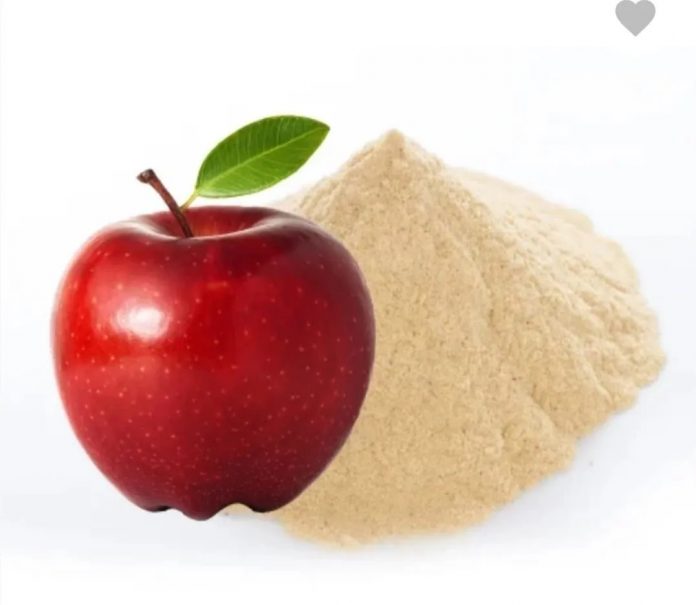
How to Produce Apple Powder

0

The growth of global apple powder has been reported by our analyst, highlighting its role in improving human life due to its various benefits. The analyst also noted that apple powder production in Nigeria remains limited due to factors like a lack of fertile land for large-scale cultivation. This piece explores small-scale apple powder production using existing data and insights from producers in Europe and America, where the product is widely used.

As noted earlier, apple powder is a versatile ingredient. It naturally sweetens smoothies, drinks, and beverages, enhancing flavour in water, tea, or yoghurt drinks. In baking, it works well in cakes, cookies, muffins, and pancake or waffle batter. It also enhances granola bars, snack mixes, and cider-flavored treats. Apple powder intensifies the taste of applesauce and jams and adds a fruity twist to savoury sauces or soups. It’s beneficial in health supplements for its fibre and antioxidants and is used in face masks and hair care. It also serves as a natural sweetener and flavour enhancer in wellness recipes like smoothie bowls or energy drinks.

In the meanwhile, choosing the right apples is the first step in making apple powder. According to information, producers typically favour ripe and fresh apples. For instance, some producers point out that tart apples can also be utilized, but fuji or gala apples, which fall into the sweet category, are frequently employed. The selected flavour will determine this. What distinguishes fresh apples from ripe ones? One of the most important things to ask before starting an apple powder business is this one. 

Start with a visual assessment to determine whether an apple is ripe or fresh: ripe apples have smooth skin, no deep bruises or creases, and brilliant colours unique to that variety. Check for firmness; ripe apples should feel weighty, which indicates juiciness, and they should yield slightly when pressed without becoming squishy. Overripe apples may smell sour, while fresh apples smell delicious. Examine the stem; freshness is indicated by a green, supple stem. Instead of being dry or tasteless, the flavour should be sweet or tangy with juiciness. While dull skin symbolizes aging, glossy skin conveys freshness. Additionally, apples are best harvested in season, and pressure marks are normal, but large dents indicate deterioration.

Wash and peel is the second step. Some producers claim that this step is optional. The apples must be cleaned of any dirt or pesticides. Washing before peeling is therefore crucial to creating high-quality apple powder that will be liked by customers both locally and internationally. Another way to look at this is that, although you can peel the apples, doing so will preserve the additional nutrients and fibre. Before slicing the apples, you must remove the nut that is inside the inner circle, which is known as core removal. To guarantee that the apples dehydrate uniformly, they are sliced. Thinner slices dry more quickly.

Apples can be dehydrated using a variety of techniques. Apple slices should be arranged on trays so they do not overlap. Then, set the dehydrator to 135°F (57°C) and leave it running for 8 to 12 hours, or until the apples are dry and brittle. Arrange the apple slices in a single layer on a baking sheet and preheat the oven to the lowest setting possible, about 170°F or 75°C. Using a wooden spoon, keep the oven door slightly open while baking for 4 to 8 hours, checking for dryness. Another option for bright, dry days is to sun-dry them. Depending on the climate, set the slices on a clean mesh tray and let them dry for one to two days. Every technique guarantees that the apples are completely dried and prepared for powdering.

You can use a blender, food processor, or spice grinder to grind the apples into powder after they are completely dehydrated. The dried apples should be ground into a fine powder after first being pulsed until they split into smaller pieces. To maintain its flavour and keep moisture out, keep the apple powder in an airtight container. The best location for long-term storage is somewhere cool and dark, like a pantry. You can keep the powder in the refrigerator or freezer to extend its shelf life. A variety of additives can be used to prolong the shelf life and preserve apple powder. These consist of calcium/potassium sorbate, silica gel, citric acid, and tartaric acid. 

Say Goodbye to Solana Memecoins After Dogwifhat Crash, Expert Says Future Belongs To Utility Coins

0

While memecoins have had their moment, experts believe the future belongs to utility coins. Even though weekly Solana price fluctuations and Dogwifhat’s recent downfall underscore the dangers associated with meme-fueled enthusiasm, experts think that platforms emphasizing utility are becoming more popular.

Now in presale, DTX Exchange, distinguishes itself as a hybrid trading platform that integrates crypto, stocks, and forex. Having raised $13.5 million and with a token price of $0.16, analysts believe its ability to secure a share of the $92 trillion global trading market could lead to substantial growth. This could be the final opportunity to invest before launch.

Solana Price Swings Signal Shift Toward Utility-Driven Crypto Assets

The recent Solana price fluxes have ignited debates over the long-term viability of meme-inspired projects. Currently, at $205, SOL has been down over 20% in the last week, even as it posted a small gain of 0.71% on Monday.

Analysts opine that this Solana price change showcases wider market trends whereby investors focus on assets with real-world applications. While the SOL ecosystem once thrived on viral tokens like Dogwifhat, the network’s recent struggles to maintain stability have led traders to question whether SOL meme coins can sustainably drive growth.

Source: CoinMarketCap

The Solana price movements highlight a growing appetite for platforms that solve real-world problems. Industry experts point out that the $144 billion SOL market cap remains strong, but its reliance on speculative assets could limit upside potential compared to utility-focused projects.

This transition is further emphasized by the rise of hybrid trading platforms like DTX Exchange that could merge traditional finance with blockchain innovation. As SOL works to stabilize its network, investors are increasingly hedging bets on projects offering clear technological advancements rather than short-term hype.

Dogwifhat Market Collapse Underscores Meme Coin Vulnerability Trends

Dogwifhat’s recent crash has become a cautionary tale for SOL meme coin enthusiasts. After plummeting 37% in a week to $0.80, the token’s $832 million market cap now sits far below its peak. The decline aligns with a pattern observed across similar assets, where rapid gains are often followed by steep corrections. Dogwifhat’s struggles underscore the risks of investing in projects lacking fundamental utility, especially as regulatory scrutiny intensifies.

While Dogwifhat briefly captured attention with its novelty, the token’s inability to deliver lasting value has left many holders seeking alternatives. Analysts note that meme coins frequently struggle during market downturns, whereas utility-driven tokens tend to demonstrate resilience.

For example, hybrid exchanges enabling access to diverse asset classes are gaining traction as investors diversify away from meme-centric ecosystems like Dogwifhat’s. This dynamic is pushing traders toward platforms like DTX that could combine speculative appeal with real-world applications.

DTX Exchange Hybrid Platform Captures Post-Meme Investor Attention

As interest in SOL meme coins wanes, DTX Exchange could emerge as a top crypto to invest in for those seeking stability and innovation. The platform’s mixed approach, enabling the trading of cryptocurrencies, stocks, and forex, could establish it as a flexible option in a divided market. With DTX tokens valued at $0.16 in its current presale, experts believe the project could experience substantial growth upon its launch later this year. Over $13.5 million has already been raised, reflecting strong confidence in its potential to reshape online trading.

The 1000x leverage that it features and blockchain-backed transparency likely differentiate it from traditional platforms. Insiders consider its limited token supply of 475 million a key factor that could drive value, especially if adoption mirrors early successes seen in projects like Cardano. While Solana price instabilities and Dogwifhat’s downturn dominate headlines, DTX’s focus on bridging decentralized and traditional finance could offer a compelling alternative.

Analysts believe the project’s presale phase could provide a rare opportunity for retail investors to access a platform poised to capitalize on the $92 trillion global trading industry. By combining the accessibility of meme coins with the robustness of utility-driven projects, DTX Exchange could be positioning itself as one of the best new cryptos to invest in.

Conclusion

As Solana price fluctuations continue and SOL meme coins like Dogwifhat fade, utility-focused projects like DTX Exchange will potentially gain momentum. With its hybrid trading model and $0.16 presale price, experts think DTX could capture a share of the $92 trillion trading market. This presale phase could be the last chance to invest before launch, as early adopters position themselves for potential growth.


Visit the DTX website to learn more, buy tokens during the presale, or join the Telegram community for updates.