DD
MM
YYYY

PAGES

DD
MM
YYYY

spot_img

PAGES

Home Blog Page 227

Building a Brand Identity with Stock Vector Libraries: An Ouch Review

0

Custom illustrations are the dream. Designers know that hiring an illustrator to build a bespoke brand system is the ideal scenario. But budgets get cut, timelines shrink, and that dream often dies before the kickoff meeting.

The alternative usually involves scouring the web for free vectors. That path leads to a “Frankenstein” UI. Line weights don’t match. Color palettes clash. The user experience feels cheap and disjointed.

Ouch, a vector illustration library by Icons8, tries to fix this mess. It positions itself not as a repository of random images, but as a collection of consistent styles designed to cover entire UX flows. The question for product teams is simple: Can off-the-shelf libraries support a coherent brand system, or is fully custom work the only way to avoid looking generic?

The Architecture of Consistency

Most stock sites fail because they lack depth. You find the perfect “404 error” image, but when you search for a matching “success state” or “login screen,” the style isn’t there. You hit a dead end.

Ouch solves this by organizing its library into over 101 distinct illustration styles. You don’t just search for “dog” and get a mix of watercolors, flat art, and 3D renders. You browse by style packs like “Surreal,” “Business 3D,” or “Hand Drawn.”

This structure lets designers treat the library like a design system. Pick a specific 3D style for your onboarding flow, and you can rely on finding matching assets for your empty states, newsletters, and marketing collateral. With over 28,000 business illustrations and 23,000 technology illustrations, the depth is sufficient to build a full product without hitting a visual wall.

Scenario: The SaaS Dashboard Overhaul

Picture a UI designer tasked with refreshing a B2B fintech dashboard. The current interface is text-heavy and intimidating. The goal is to add visual warmth without making the financial data look childish.

The designer filters Ouch for “Business” categories. They bypass the playful, sketchy styles and settle on a geometric, flat vector style that conveys stability. They need assets for three specific areas: a welcome widget, a “processing payment” state, and a “data export complete” notification.

Since the paid tier offers SVG formats, the designer downloads the vectors and opens them in Illustrator. That is when the “stock” feel vanishes. They strip out the default blue accent colors and replace them with the fintech’s specific brand green. They also delete a few background decorative elements to reduce visual noise.

The result is a set of graphics sharing the exact line weight and geometric language. To the end user, these look like they were drawn specifically for the application. The designer achieved a custom look in three hours rather than the three weeks it would have taken to commission an artist.

Scenario: The Content Marketing Engine

Now look at a marketing manager at a startup. They need to publish two blog posts a week plus a monthly newsletter. They have no dedicated graphic designer. Stock photos of people shaking hands kill engagement, but the manager can’t draw.

They turn to Ouch’s Mega Creator, a web-based tool integrated with the library. For a blog post about “Remote Team Collaboration,” they select a 3D style. They find a scene of a person at a desk but need to add a second character to represent teamwork.

Using Mega Creator, they drag in a second character from the same style pack. They rearrange the elements, moving a 3D plant to the foreground to frame the composition. Because the assets are object-based rather than flattened images, the manager constructs a unique scene that doesn’t exist anywhere else on the web.

They export the final image as a high-resolution PNG. For the newsletter, they grab a pre-made GIF animation from the same style family to add motion to the email header. The visual language remains consistent across the blog and email, reinforcing the brand identity without a single hour of illustrator time.

Workflow: A Developer’s Afternoon

Frontend developers often skip the browser entirely. Here is how a developer integrates these assets during a typical sprint.

They are building a pricing page and realize the “Enterprise” tier looks bare. They open Pichon, the Icons8 desktop app that bridges the gap between the library and the local environment. Code editor on the left, Pichon on the right.

Searching “rocket” within the app, they filter for the specific style used elsewhere in the project. They find a suitable vector. Instead of downloading, unzipping, and importing, they simply drag the asset directly from Pichon into their project folder.

Later, the design lead points out that the rocket’s flame clashes with the background. The developer clicks “Edit” in the app, which routes them to the Mega Creator. They swap the flame color, hit save, and the asset updates. For the mobile view, they need something lighter, so they grab the Lottie JSON version of the same illustration. This ensures it scales perfectly on high-density screens without pixelation.

The Limitations of Stock Systems

Ouch solves the consistency problem better than most, but it isn’t magic. There are distinct limitations where custom work remains the only viable option.

Metaphor Specificity

If your product requires highly specific visual metaphors-say, a cybersecurity firm depicting “a trojan horse tailored as a harmless email attachment being scanned by a bioluminescent AI”-you won’t find that here. Ouch excels at standard concepts like analytics, teamwork, and commerce. It struggles with abstract or niche narratives.

Ubiquity

These assets are public. You might choose a trendy 3D style for your banking app, only to find a pet food company using the same characters next week. Recoloring helps hide the source, but the underlying geometry remains recognizable.

3D Customization Curve

2D vectors are easily manipulated in tools like Illustrator or Figma. 3D assets (provided as PNG or FBX) are harder to change. Without 3D modeling expertise, you are largely stuck with the angle and lighting provided in the pre-rendered images.

Comparing the Alternatives

Ouch vs. UnDraw

UnDraw is the open-source standard for tech illustrations. It is free and supports color customization. But its ubiquity is a problem. UnDraw illustrations are so common they have become invisible to users. Ouch offers significantly more stylistic variety, preventing that generic “bootstrapped startup” look.

Ouch vs. Freepik

Freepik has a massive volume of content. But finding a pack of 50 images in the exact same style is difficult. You often find one great image and then hit a wall. Ouch prioritizes the “pack” concept, ensuring you have coverage for UX states, not just marketing headers.

Ouch vs. Custom Illustration

Custom work offers total ownership and infinite flexibility but costs thousands of dollars and takes weeks. Ouch operates at a fraction of the cost and instant availability. It is the pragmatic choice for MVPs, Series A startups, and agencies.

Practical Tips for Implementation

To get the most out of the library, avoid using the assets exactly as downloaded.

Mix and Match Objects

When searching for the right illustration to fit a specific user flow, look for the “Objects” tab. Many Ouch illustrations are composed of separate elements. Take a background from one image and a character from another (within the same style) to create a scene that fits your layout constraints.

Use Animation Formats

Static images are fine; motion captures attention. Ouch provides Rive and Lottie formats for many styles. These are lightweight code-based animations that load instantly. Replacing a static “Success” PNG with a Lottie animation that plays once upon form submission adds a layer of polish that feels expensive.

Link Attribution Strategy

Zero-budget projects can use the PNGs for free if you link back to Icons8. This works well for blog posts or footer graphics. For core product UI, upgrade to the paid plan. This removes the attribution requirement and unlocks the SVG files essential for responsive scaling.

Verdict

Ouch challenges the notion that you need an in-house artist to maintain a consistent brand. By organizing content into deep stylistic systems rather than a chaotic pile of images, it allows teams to build products that look intentional. It cannot replace the storytelling power of fully bespoke art for unique metaphors. But for day-to-day UI and marketing needs, it is a powerful tool to have in your stack.
Bill Gates Pulls Out of India’s AI Impact Summit as $200bn in Pledges Collide With Logistical Turmoil

0

Bill Gates’ last-minute withdrawal deepened scrutiny of an AI summit that drew over $200 billion in pledges but was overshadowed by cancellations, organizational lapses, and traffic chaos in New Delhi.


Bill Gates withdrew from India’s AI Impact Summit just hours before his scheduled keynote address on Thursday, compounding pressure on an event that has secured more than $200 billion in investment pledges but has been overshadowed by high-profile cancellations and widespread complaints over the organization.

The Bill & Melinda Gates Foundation said the billionaire would not deliver his address “to ensure the focus remains on the AI Summit’s key priorities,” per Reuters. The decision came only days after the foundation dismissed speculation that he would not attend and maintained he was on track to participate.

Gates’ absence followed the earlier cancellation of Jensen Huang, chief executive of Nvidia, and added to what has become a difficult start for a summit billed as the first major artificial intelligence forum in the Global South. India has sought to use the gathering to cement its role in shaping global AI governance.

The withdrawal also came weeks after the U.S. Department of Justice released emails that included communication between the late financier and convicted sex offender Jeffrey Epstein and staff at the Gates Foundation. Gates has previously said his interactions with Epstein were confined to philanthropy-related discussions and described meeting him as a mistake.

Despite the controversy, the six-day summit delivered a wave of headline investment commitments. Reliance Industries announced a $110 billion plan for AI infrastructure in India, accounting for more than half of the total pledges disclosed during the event. Tata Group signed a partnership agreement with OpenAI, underscoring India’s push to deepen collaboration between domestic conglomerates and global AI leaders.

Prime Minister Narendra Modi used his keynote address to frame AI development as both an economic opportunity and a social responsibility. Standing alongside French President Emmanuel Macron and top technology executives, including Sundar Pichai, Sam Altman, and Dario Amodei, Modi called for vigilance in safeguarding children online.

“We must be even more vigilant about children’s safety. Just as a school syllabus is curated, the AI space should also be child- and family-guided,” Modi said.

The leaders gathered on stage to mark the launch of the New Delhi Frontier AI Commitments, a set of voluntary principles aimed at promoting inclusive and responsible development of frontier AI models. A symbolic unity pose, however, produced an awkward moment when Altman and Amodei — heads of rival firms OpenAI and Anthropic — stood side by side but did not join hands, even as others did.

Behind the high-profile announcements and photo opportunities, the summit faced mounting criticism over its execution, according to Reuters. On Thursday, exhibition halls were abruptly closed to the public, angering companies that had invested in elaborate pavilions and stalls. The venue compound, which had drawn large crowds earlier in the week, appeared largely deserted.

An incident involving Galgotias University further dented the summit’s image. The university was asked to vacate its stall after a staff member presented a commercially available robotic dog manufactured in China as an in-house innovation, triggering public backlash.

Traffic management emerged as one of the most contentious issues. Police repeatedly shut down major roads in New Delhi to facilitate VIP movements, disrupting daily life in a city of roughly 20 million residents. The government apologized for the inconvenience caused during the initial days of the summit.

On Wednesday, social media footage showed attendees walking long distances through central Delhi after roads were closed, with limited access to taxis and no visible shuttle services. The scenes fueled criticism from opposition parties and industry participants alike.

Pawan Khera, spokesperson for the opposition Indian National Congress, said: “How can you expect your engineers, AI guys to walk such distances … And then we complain that entrepreneurs are leaving India.”

Jay Gala, a researcher at Microsoft, wrote on X: “The whole summit is, sorry was, meant for researchers, founders, builders who are grinding in the field every day. Instead we get treated like we don’t matter, blocked for hours so some minister or official can pass through.”

For the Modi government, the summit was intended to showcase India’s ambition to become a global AI powerhouse — pairing large-scale capital commitments with a voice in shaping norms around frontier technologies. The scale of investment pledges underscores significant corporate appetite for building AI infrastructure in one of the world’s fastest-growing digital markets.

Yet the contrast between sweeping financial commitments and logistical breakdowns has created a more complicated narrative. With two prominent technology leaders withdrawing and operational missteps dominating headlines, the event underpins both India’s growing weight in the AI ecosystem and the challenges of delivering a seamless global platform at scale.

OpenAI Anchors 100MW AI Data Center Deal With TCS as India Emerges Core Node in $500bn Stargate Build-Out

0

OpenAI’s 100-megawatt commitment to TCS positions India as a frontline hub in the $500 billion Stargate AI infrastructure build-out, underscoring a decisive shift from services to sovereign compute capacity.


OpenAI will become the first customer of the data center business of Tata Consultancy Services, securing 100 megawatts of capacity as part of the global artificial intelligence infrastructure initiative known as Stargate.

The companies said the capacity will support AI model training and inference, placing India directly within a multi-year, $500 billion effort to expand computing power for next-generation systems.

The agreement is strategically significant on multiple fronts. For OpenAI, it locks in large-scale compute in one of the world’s fastest-growing digital markets. For TCS, it validates a capital-heavy pivot announced last year, when the IT services giant disclosed plans to invest up to $7 billion in building a 1 gigawatt data center unit in India — a departure from its historically asset-light outsourcing model.

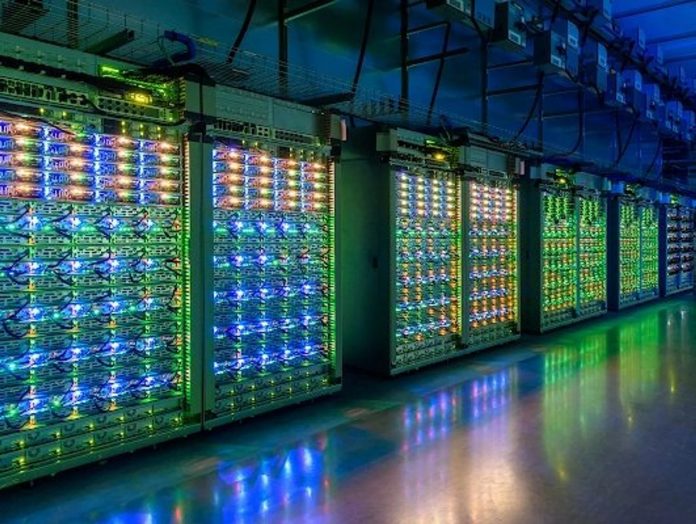
A 100MW commitment is not incremental capacity. In hyperscale terms, it represents infrastructure capable of hosting tens of thousands of high-performance GPUs, depending on configuration. AI training clusters, especially those supporting large language models and multimodal systems, are power-intensive, often demanding dense racks, liquid cooling systems, and resilient grid connectivity. Securing such capacity early is essential in a global market where demand for AI compute has outpaced supply, driving up chip prices and creating multi-year procurement bottlenecks.

The Stargate initiative, described as a $500 billion multi-year build-out of AI data centers for training and inference, is backed by major global investors. Its ambition reflects the arms race underway among AI developers, cloud hyperscalers, and governments seeking domestic control over strategic computing infrastructure. AI compute is increasingly viewed not just as commercial capacity, but as digital sovereignty.

India’s inclusion in this architecture signals a structural shift. Historically, the country’s technology strength lay in IT services and back-office operations. Now, it is positioning itself as a computing host nation. Global firms, including Google, Amazon, Meta Platforms, and Microsoft, have expanded data center investments in India in recent years. Domestic conglomerates such as Reliance Industries and Adani Group have unveiled parallel ambitions spanning cloud services, AI workloads, and renewable-powered infrastructure.

Several structural drivers underpin the surge. India’s digital economy has expanded rapidly, with a vast consumer base, increasing enterprise digitization, and government-backed digital identity infrastructure. Data localization trends and regulatory shifts have also encouraged in-country storage and processing.

Meanwhile, power costs remain competitive in select regions, and state governments are offering incentives to attract hyperscale facilities.

However, scaling to gigawatt levels presents execution challenges. High-density AI facilities require not just reliable electricity but stable grid integration, water or advanced cooling technologies, land acquisition, fiber backhaul connectivity, and proximity to subsea cable landing stations. Energy sourcing is particularly sensitive as hyperscalers face pressure to meet net-zero commitments while expanding capacity. India’s renewable build-out may become a critical enabler if AI data centers are to scale without amplifying carbon intensity.

The move redefines TCS’ role in the AI value chain. Traditionally positioned as a systems integrator and IT services provider, it is now entering the infrastructure ownership layer. Owning and operating data center capacity could enable bundled offerings that combine compute, cloud migration, AI deployment, and enterprise integration. It also diversifies revenue streams toward long-duration infrastructure contracts.

Parallel to the data center agreement, OpenAI is expanding its enterprise footprint within the broader Tata ecosystem. Under a separate partnership, TCS parent Tata Group plans to deploy ChatGPT Enterprise across the conglomerate over several years, starting with hundreds of thousands of employees. The Tata Group spans sectors including steel, automotive manufacturing, aviation, retail, and IT services, making the rollout one of the largest enterprise AI deployments globally.

Such integration could reshape internal workflows across the conglomerate — from software development acceleration within TCS to supply chain analytics, customer support automation, research summarization, and design optimization across other Tata entities. Enterprise AI adoption at that scale may generate secondary demand for compute infrastructure, reinforcing the business case for domestic data center expansion.

OpenAI said India now has more than 100 million weekly ChatGPT users, underscoring the country’s dual significance as both a compute hub and a consumption market. That user base includes consumers, startups, educational institutions, and enterprises, suggesting that India is not only exporting digital services but actively embedding generative AI tools across its economy.

From a geopolitical standpoint, the partnership also aligns with a broader global realignment in AI infrastructure. Governments and corporations are seeking geographic diversification of computing to mitigate concentration risk. The concentration of advanced AI data centers in a handful of Western markets has exposed supply constraints and policy sensitivities. Expanding into India offers capacity expansion while tapping a skilled engineering workforce.

OpenAI’s anchoring with TCS may also serve as a signal to other regional partners. Securing a first customer agreement at scale establishes credibility for TCS’s data center ambitions and could attract additional hyperscale tenants or AI-native companies seeking local infrastructure.

Financially, the agreement reduces ramp-up uncertainty for TCS’s $7 billion data centre plan. Large infrastructure projects require anchor tenants to justify capital deployment. A 100MW allocation from OpenAI provides early utilisation, potentially easing financing and accelerating build timelines.

The deal sits within a broader context of accelerating AI capital expenditure globally. Technology majors are committing tens of billions of dollars annually toward AI chips, networking equipment, and specialised facilities. Supply chains for advanced semiconductors remain tight, with GPU procurement lead times extending into multiple quarters. Locking in power capacity is therefore as critical as securing chips.

As Stargate unfolds over multiple years, the India node anchored by TCS could evolve into a significant training and inference hub serving both domestic and global workloads. The 100MW commitment may represent only the first tranche of capacity, with expansion possible as demand scales.

Taken together, the partnership signals that India is moving beyond its historical role as an outsourcing powerhouse toward becoming a strategic host of AI infrastructure. With OpenAI embedding itself at both the compute and enterprise layers of the Tata ecosystem, the alignment illustrates how global AI developers and domestic conglomerates are converging to reshape the digital backbone of one of the world’s largest technology markets.

Treasury Yields Climb as Fed Minutes Signal No Rush to Cut Rates Ahead of Key Inflation Data

0

The minutes revealed a Federal Reserve that is united in holding rates steady for now but divided over whether the next move should be a cut — or potentially even a hike — if inflation proves stubborn.


U.S. Treasury yields extended their upward move on Thursday as investors weighed hawkish undertones in the Federal Reserve’s latest meeting minutes and positioned for a closely watched inflation report that could reshape expectations for interest rate cuts.

In early trading at 4:36 a.m. ET, the benchmark 10-year Treasury yield rose more than 1 basis point to 4.099%. The 30-year bond yield also advanced by more than 1 basis point to 4.724%, while the 2-year note — which is particularly sensitive to monetary policy expectations — ticked up 1 basis point to 3.478%. One basis point equals 0.01 percentage point, and bond yields move inversely to prices.

The move higher in yields reflects a recalibration in market expectations after the release of minutes from the Federal Reserve’s January policy meeting. While officials unanimously agreed to keep interest rates unchanged at that meeting, the discussion revealed a more nuanced debate about the path forward.

According to the minutes, policymakers were broadly comfortable maintaining a restrictive policy stance but differed over how to frame the risks ahead. Several officials supported using “more two-sided language” when discussing future rate moves — a shift that leaves open not only the prospect of rate cuts but also the possibility of further hikes if inflation fails to ease as expected.

That subtle change in tone is significant for markets that have, in recent months, leaned toward pricing in rate reductions. The acknowledgment that inflation risks remain alive, and that some officials see merit in preserving optionality in both directions, signals that the central bank is not yet convinced that the inflation fight is complete.

Traders are currently assigning roughly a 50% probability to a rate cut in June, according to the CME FedWatch tool. But the minutes suggest that such expectations may be premature, particularly if incoming data continues to show resilience in the economy or stickiness in price pressures.

Investors are now awaiting a fresh round of economic releases that could either reinforce or challenge the Fed’s cautious posture. Weekly jobless claims and pending home sales data are due later Thursday, offering insight into the health of the labor market and housing sector. On Friday, the focus will shift squarely to the personal consumption expenditures (PCE) price index — the Fed’s preferred measure of inflation.

The PCE report carries outsized importance because it feeds directly into the Fed’s policy deliberations. A hotter-than-expected reading could validate the more hawkish voices within the committee and further push back expectations for rate cuts. A softer print, on the other hand, could revive market confidence that inflation is moving sustainably toward the central bank’s 2% target.

Recent data have painted a mixed but broadly resilient picture of the U.S. economy. Industrial production and housing starts released on Wednesday surprised to the upside, reinforcing the narrative of underlying economic strength. That resilience has contributed to upward pressure on yields, as stronger growth can delay the need for monetary easing.

Analysts at Deutsche Bank said in a note Thursday that “the grind higher in rates was also supported by hawkish-leaning minutes of the January FOMC meeting.” They pointed to the discussion around more balanced risk language as a sign that policymakers are intent on preserving flexibility. While they stressed that an active move toward rate hikes remains unlikely, they said the tone “adds to the sense that most of the FOMC are in no rush to deliver further cuts.”

The divergence within the committee reflects a broader tension facing policymakers. On one side is a labor market that, while cooling from peak tightness, remains historically strong. On the other hand, inflation has moderated but not fully returned to target. Some officials appear inclined to prioritize safeguarding employment gains, while others remain focused on ensuring that inflation does not reaccelerate.

This debate is unfolding against a backdrop of financial markets that have already eased conditions relative to last year. Equity markets have remained elevated, credit spreads are relatively tight, and borrowing costs for households and businesses have declined from their peaks. For some Fed officials, that easing in financial conditions may reduce the urgency to cut rates quickly.

The bond market’s reaction underscores how sensitive yields remain to shifts in policy language. The 2-year yield, often viewed as a proxy for near-term Fed expectations, has been particularly responsive to changes in rate-cut probabilities. Meanwhile, longer-term yields such as the 10-year and 30-year reflect not only monetary policy expectations but also views on long-term growth, inflation, and Treasury supply dynamics.

With the PCE report looming and economic data continuing to surprise in pockets, investors face a period of heightened uncertainty. If inflation shows signs of stalling, yields could continue to drift higher as markets adjust to the possibility that rates may stay elevated for longer than previously anticipated. If price pressures resume their downward trend, the case for easing could regain traction.

However, the message from the Federal Reserve for now is one of caution and optionality. Rates are on hold — but the path forward remains open, and markets are adjusting accordingly.

Altman Calls China’s AI Progress “Remarkable” as OpenAI Chases Ads and $100bn Fundraise

0

Sam Altman’s description of Chinese AI progress as “remarkable” underscores how the contest for artificial general intelligence has evolved into a full-stack race spanning chips, models, infrastructure, and monetization.


The progress of Chinese technology companies across the artificial intelligence stack is “remarkable,” OpenAI Chief Executive Sam Altman said in an interview with CNBC, offering a candid assessment of a rivalry that now stretches from semiconductor fabrication to large language models and mass deployment.

Altman said the pace of technological advance in “many fields,” including AI, is “amazingly fast.” In some areas, he noted, Chinese firms are “near the frontier,” while in others they lag behind U.S. counterparts. The distinction is significant: it suggests that while American firms still dominate certain layers of the stack — particularly advanced GPU design — Chinese players are closing the gap in applications, model optimization, and system-level integration.

The broader context is the accelerating race toward artificial general intelligence (AGI), a theoretical milestone at which AI systems can perform most economically valuable tasks at the human level or beyond. Both the United States and China view leadership in AGI as strategically consequential, not only commercially but geopolitically. The competition is therefore not confined to software breakthroughs; it encompasses chip supply chains, energy capacity, cloud infrastructure, and capital mobilization.

At the hardware layer, China has intensified efforts to build domestic semiconductor capabilities capable of competing with global leaders such as Nvidia. U.S. export controls have restricted the sale of certain advanced AI chips and semiconductor manufacturing equipment to Chinese firms, prompting Beijing to accelerate support for homegrown alternatives. The strategy includes scaling local chip designers and investing heavily in fabrication capacity, even as performance gaps remain at the cutting edge.

The financial markets have responded to the policy push. Shares of Chinese AI-linked companies have rallied on domestic exchanges as investors bet on long-term state backing and expanding internal demand. China’s vast digital economy, combined with strong government coordination, provides an environment where AI systems can be rapidly deployed across e-commerce, logistics, surveillance, finance, and manufacturing.

Altman’s remarks also echo concerns voiced by other U.S. executives. Brad Smith, president of Microsoft, told CNBC that American technology companies should “worry a little bit” about the subsidies Chinese competitors receive from their government in the AI race. That comment highlights a structural asymmetry: while U.S. firms rely largely on private capital and market-driven incentives, Chinese firms often benefit from direct state support, industrial policy alignment, and preferential financing.

The contest, analysts say, is effectively a full-stack competition. At the base lies semiconductor design and fabrication. Above that sit cloud infrastructure providers that assemble compute clusters and manage data center operations. On top are foundational model developers such as OpenAI, and finally, the application layer that integrates AI into enterprise workflows and consumer platforms. Gains in one layer can compound advantages in others.

The strategic landscape is intertwined with OpenAI’s own capital needs. According to data from Dealroom, investors have ploughed around $70 billion into the company. Sources told CNBC that OpenAI is seeking to close a $100 billion fundraising round, potentially one of the largest private raises in technology history. Such capital is necessary to finance model training, infrastructure partnerships, and global expansion.

The economics of advanced AI remain demanding. Training frontier models requires massive clusters of GPUs, extensive electricity consumption, and sophisticated cooling systems. Inference — serving millions of user queries — generates ongoing operational costs. The ability to sustain rapid growth, therefore, hinges on achieving “reasonable unit economics,” as Altman described it.

“We are growing at an extremely fast rate right now,” he said. “I think as long as we can have reasonable unit economics, we should focus on continuing to grow faster and faster, and we’ll get profitable when we think we when we think it makes sense.”

That stance signals that OpenAI is prioritizing scale over immediate profitability. Rapid user adoption can create network effects, attract enterprise customers, and justify infrastructure investments. However, sustained losses would eventually test investor patience, especially given the magnitude of capital deployed.

One emerging revenue lever is advertising within ChatGPT. Altman said OpenAI is still determining the optimal format.

“I think we still have some work to do to figure out the exact ad format that’s going to work best,” he said, noting that plans remain at an early stage.

He cited “Instagram style ads where you discover something new that you might really like and otherwise wouldn’t have known about” as a model he personally favors, adding that OpenAI has “a real opportunity to push in that direction with ads in ChatGPT.”

The advertising concept marks a potential strategic shift. Until now, OpenAI’s primary revenue streams have included subscription tiers such as ChatGPT Plus, enterprise licensing agreements, and API usage by developers. Ads could introduce a consumer monetization layer similar to social media platforms, though integrating commercial messages into conversational AI presents design, trust, and regulatory considerations.

OpenAI plans to test adverts first in the United States before expanding to other markets, Altman said. The approach suggests a phased rollout aimed at refining user experience while minimizing backlash. The success of such experiments may influence how conversational AI platforms balance commercial imperatives with user expectations.

Meanwhile, China’s AI ecosystem continues to expand across applications. Large domestic platforms are embedding generative AI into search, e-commerce, and productivity tools. State policy has also encouraged AI integration in manufacturing and public services. While U.S. firms currently lead in certain frontier model benchmarks, China’s scale advantage in deployment could generate rapid feedback loops that enhance model performance and user adoption.

The geopolitical dimension has added complexity as export controls, supply chain constraints, and regulatory scrutiny have introduced friction into cross-border technology flows. If AI development fragments into parallel ecosystems — one centered on U.S.-allied supply chains and another on China’s domestic stack — interoperability and standards may diverge.

Altman’s acknowledgment of China’s momentum reflects a more nuanced view emerging in Silicon Valley. Rather than dismissing Chinese efforts, U.S. executives are increasingly recognizing a credible, well-funded competitor operating across multiple layers of the AI value chain.

Against this backdrop, OpenAI’s immediate priority remains scaling usage and infrastructure while securing fresh capital. However, the longer-term question of when and how profitability emerges remains open.