DD
MM
YYYY

PAGES

DD
MM
YYYY

spot_img

PAGES

Home Blog Page 23

German Export Outlook Improves, But Recovery Remains Uneven Across Key Sectors

0

Germany’s export outlook is showing encouraging signs of recovery after a prolonged period of economic uncertainty, offering renewed optimism for Europe’s largest economy.

Stronger global demand, easing inflation, and improving business confidence have contributed to a more positive outlook for many of the country’s export-oriented industries. However, the recovery remains uneven, with some sectors benefiting significantly while others continue to face structural and geopolitical challenges.

This mixed picture highlights both the resilience of Germany’s industrial base and the need for continued adaptation in an increasingly competitive global marketplace.

Exports have long been the backbone of Germany’s economy. As one of the world’s leading manufacturing nations, Germany relies heavily on international trade, particularly in automobiles, machinery, chemicals, pharmaceuticals, and industrial equipment.

Recent improvements in business sentiment suggest that foreign demand is gradually strengthening, particularly from European trading partners and parts of Asia. Companies are reporting increased order books, reflecting greater confidence among global buyers following a period of sluggish economic growth.

The machinery and engineering sectors have been among the primary beneficiaries of the improving export climate. Rising investment in infrastructure, automation, and industrial modernization across several countries has fueled demand for German-made equipment known for its quality and precision.

Similarly, the pharmaceutical and chemical industries continue to perform relatively well, supported by steady global demand for healthcare products and specialty chemicals. Despite these positive developments, not every sector is sharing equally in the recovery.

Germany’s automotive industry, once the unquestioned leader of its export economy, continues to face considerable obstacles. Competition from Chinese electric vehicle manufacturers has intensified, while the costly transition toward electric mobility requires substantial investment from established German automakers.

Supply chain disruptions have eased compared to previous years, but high production costs and shifting consumer preferences continue to pressure profit margins.

Energy-intensive industries also remain under strain. Manufacturers of steel, glass, paper, and certain chemical products continue to grapple with elevated energy costs, even as prices have moderated from their peak following Europe’s energy crisis. Higher operating expenses have reduced international competitiveness, making it more difficult for these industries to regain lost market share.

Geopolitical uncertainty is another factor influencing Germany’s export performance. Trade tensions between major economies, ongoing conflicts, and evolving tariff policies have created uncertainty for exporters. Businesses are increasingly diversifying their supply chains and exploring new export markets to reduce dependence on any single region.

While this strategy enhances long-term resilience, it also requires significant investment and careful planning. Another challenge comes from slower economic growth in key trading partners. China’s economy, an important destination for German exports, has experienced weaker-than-expected expansion, reducing demand for imported industrial goods.

At the same time, economic uncertainty in the United States and parts of Europe continues to influence purchasing decisions among businesses and consumers. Germany’s export outlook remains cautiously optimistic. Continued declines in inflation, stable interest rates, and improving global economic conditions could further support export growth during the coming months.

Sustained success will depend on the ability of German companies to innovate, embrace digital technologies, invest in clean energy solutions, and remain competitive in rapidly evolving international markets. Germany’s export sector is showing meaningful signs of recovery, but the benefits are not being distributed evenly across the economy.

While industries such as machinery, pharmaceuticals, and engineering are regaining momentum, automotive manufacturers and energy-intensive sectors continue to face significant headwinds. The uneven nature of the recovery underscores the importance of strategic investment, technological innovation, and economic diversification.

As global conditions continue to evolve, Germany’s exporters must remain adaptable to secure long-term growth and maintain the country’s position as one of the world’s leading trading nations.

Commerzbank Says Shareholder Structure Unchanged Amid UniCredit Bid

0

Commerzbank has reassured investors that its shareholder structure remains unchanged despite growing speculation surrounding UniCredit’s interest in acquiring a larger stake in the German lender.

The statement comes at a time when Europe’s banking sector is witnessing increased consolidation, driven by the need for greater scale, stronger profitability, and enhanced competitiveness in an evolving financial landscape. While UniCredit has openly expressed its ambition to expand its presence in Germany.

Commerzbank has emphasized that no changes have occurred in its ownership structure that would alter the bank’s governance or strategic direction.

The reassurance follows heightened market attention after UniCredit accumulated a significant stake in Commerzbank, fueling expectations that Italy’s second-largest bank could eventually pursue a full takeover. Such a move would represent one of the most significant cross-border banking deals in Europe in recent years.

Investors have closely monitored developments, recognizing that consolidation within the European banking industry has long been encouraged by regulators seeking stronger and more efficient financial institutions capable of competing globally.

Commerzbank’s management has reiterated that the bank remains focused on executing its standalone business strategy. The institution has spent the past several years restructuring its operations, reducing costs, modernizing its digital banking services, and improving profitability.

These efforts have strengthened its financial position and increased shareholder confidence. By emphasizing that the shareholder structure has not changed, Commerzbank seeks to reassure customers, employees, and investors that its day-to-day operations continue without disruption.

UniCredit, meanwhile, has argued that combining with Commerzbank could generate substantial synergies. The Italian banking giant believes that a larger European banking group could achieve greater operational efficiency, reduce overlapping costs, and strengthen its competitive position across key markets.

Cross-border mergers have often been discussed as a way to create stronger financial institutions capable of supporting economic growth throughout the European Union.

However, such transactions frequently face regulatory scrutiny, political sensitivity, and concerns about employment and national financial interests. Germany has historically been cautious about foreign acquisitions of major domestic financial institutions.

Commerzbank holds a significant role in financing German businesses, particularly small and medium-sized enterprises, which form the backbone of the country’s economy. Consequently, any potential takeover would likely attract careful examination from regulators, policymakers, employee representatives, and shareholders.

Questions surrounding corporate governance, job security, and long-term strategic priorities would play an important role in evaluating any future proposal. For investors, Commerzbank’s statement signals that no immediate ownership changes have occurred despite ongoing market speculation.

While UniCredit remains an influential shareholder, its current position does not automatically translate into control of the German lender. Any future increase in ownership or formal acquisition proposal would require regulatory approvals and likely involve negotiations with key stakeholders.

The broader European banking industry continues to face challenges, including rising regulatory requirements, technological transformation, digital competition, and changing interest rate environments.

These pressures have encouraged banks to explore partnerships, acquisitions, and strategic alliances as methods of improving efficiency and shareholder returns. UniCredit’s interest in Commerzbank reflects these broader industry trends rather than an isolated corporate event.

Commerzbank’s reassurance underscores its commitment to stability and strategic independence while acknowledging ongoing investor interest surrounding UniCredit’s ambitions. Although speculation about a potential takeover is unlikely to disappear, the bank’s confirmation that its shareholder structure remains unchanged provides clarity for the market.

Whether the situation eventually develops into a formal acquisition attempt will depend on regulatory approvals, shareholder decisions, political considerations, and the strategic objectives of both institutions. Until then, Commerzbank continues to operate independently while remaining at the center of one of Europe’s most closely watched banking stories.

Paystack Launches AI-Powered Paystack Index to Enable Agent-Based Digital Payments in Nigeria

0
Paystack founders

Paystack, a Nigerian financial technology company, has unveiled Paystack Index, a new early-access product designed to enable artificial intelligence (AI) agents to facilitate digital payments and everyday commerce for users in Nigeria.

Developed with product support from TSG Labs, the company’s venture studio and emerging technology arm, Paystack Index allows users to complete transactions with supported Paystack merchants through AI assistants such as Claude, ChatGPT, OpenClaw, and other compatible platforms.

By connecting Zap to Paystack Index, users can instruct AI agents to perform a range of everyday financial tasks, including purchasing airtime and mobile data, sending money, and paying for food orders through Chowdeck.

The company described the launch as an early-stage rollout, noting that the service is initially available in Nigeria with a limited number of supported merchants and use cases.

Speaking on the launch of the feature, Paystack CEO Shola Akinlade said,

“Paystack has always focused on helping businesses get paid safely and reliably, wherever their customers are. As AI agents become a more common way for people to search, decide, and take action, we think checkout has to evolve too.”

He further noted that the product emerged from Paystack’s belief that AI agents are becoming a new interface for action and that AI could represent the next major shift in how people discover and pay for products.

“We believe AI agents could become another important interface for commerce, where people move from asking questions to completing real tasks,” he added.

Also commenting, Paystack COO Amandine Lobelle said,

“AI is completely reshaping how we work, live, and make decisions. We’ve been thinking through how we can continue on our mission to accelerate commerce and power African ambition given these changes. Super excited to announce our first product out of TSG Labs: Paystack Index. You can now pay for goods or services in Africa directly from Claude, ChatGPT, OpenClaw and more.”

Paystack said it plans to expand the platform over time as it gathers insights into how consumers and businesses adopt AI agents for everyday commerce.

According to The Stack Group, the initiative aligns with its broader mission of powering African ambition by supporting the infrastructure, products, and companies that enable businesses and consumers across the continent to benefit from emerging technological advancements.

Artificial Intelligence (AI) is rapidly becoming a defining force in the evolution of financial technology, with fintech companies increasingly embedding intelligent systems into their products and internal operations.

Across the global fintech landscape, companies are racing to harness AI to improve operational efficiency, reduce costs, enhance user experiences, and unlock new business opportunities.

The technology is reshaping how financial institutions interact with customers, process transactions, assess risks, and deliver innovative products at scale.

One of the latest companies demonstrating this shift is Nigerian fintech giant Paystack, which has intensified its investment in AI-powered financial infrastructure.

Paystack recent launch of AI-Powered Paystack Index, comes a month after the fintech unveiled a completely redesigned dashboard, introducing an AI-native Command Centre that allows businesses to interact with their financial data using plain language queries.

According to Dara Assim-Ita, Senior Product Designer at Paystack and lead on the rebuild project, the redesign was inspired by the need to help businesses get direct answers instead of spending time navigating multiple pages and workflows.

She noted that merchants increasingly want faster access to operational insights, such as understanding failed transactions or identifying revenue changes, without having to manually interpret large volumes of data. The new AI-powered experience, transforms the Dashboard into a more intelligent command center capable of helping businesses make quicker and more informed decisions.

Founded in 2015, Paystack is a technology company solving payments problems for ambitious businesses. The fintech is backed by notable investors as well as some of the best payments companies on the planet.

In October 2020, global payments company Stripe acquired Paystack to accelerate commerce across the continent. The company’s mission is to help businesses in Africa become profitable, envied, and loved.

Crypto’s Rally Gives Way to Fear as Bitcoin Tests Critical Support

0

The optimism that briefly returned to cryptocurrency markets after last week’s Iran-related geopolitical de-escalation has evaporated with remarkable speed. What appeared to be the beginning of a sustained recovery has instead become another reminder of how fragile sentiment remains in digital assets.

As investors fled risky markets, Bitcoin and Ethereum surrendered nearly all of their recent gains, while fear returned to levels not seen since some of the darkest chapters in crypto’s history.

Bitcoin fell as low as $59,102 during intraday trading on June 24, coming within striking distance of its June 5 crash low of $59,228. Although buyers managed to prevent a deeper breakdown, the recovery has been tentative.

Bitcoin now trades near $60,805, well below last week’s level of $64,174, underscoring the market’s inability to sustain bullish momentum. Ethereum has suffered an equally painful reversal.

The world’s second-largest cryptocurrency has dropped back to roughly $1,619, a price level many traders associate with periods of market capitulation. Altcoins have broadly followed the decline, extending losses across decentralized finance, gaming tokens, and artificial intelligence-related crypto projects.

Behind the sell-off lies a familiar combination of macroeconomic pressure and investor caution. The U.S. Dollar Index (DXY) has strengthened significantly, making dollar-denominated assets more attractive while reducing demand for speculative investments.

Historically, a stronger dollar has often coincided with weaker performance across cryptocurrencies, commodities, and emerging market assets. Adding to the pressure is the lingering impact of recent Federal Reserve expectations.

Markets continue to digest the implications of a more hawkish policy outlook, with investors increasingly accepting the possibility that interest rates could remain elevated for longer than previously anticipated.

Higher borrowing costs generally reduce liquidity throughout financial markets, leaving fewer resources available for highly volatile assets such as cryptocurrencies. Perhaps the clearest indication of deteriorating sentiment comes from investor psychology.

The widely followed Crypto Fear & Greed Index has plunged back to a reading of 12, placing the market firmly in Extreme Fear. The index has effectively erased all of the optimism built during the previous two weeks and returned to levels reminiscent of the panic experienced during the COVID-era market collapse.

Extreme fear does not necessarily guarantee further declines. Historically, periods of widespread pessimism have occasionally marked important long-term buying opportunities as weak hands exit the market and patient investors gradually accumulate positions.

Yet these moments are also characterized by exceptional uncertainty, where prices can remain under pressure far longer than many participants expect. Technical analysts are now watching Bitcoin’s support zone with heightened attention.

A sustained move below the recent lows could trigger additional liquidation from leveraged traders and increase selling pressure across the broader digital asset ecosystem. If buyers successfully defend current levels, confidence could slowly begin to rebuild, though meaningful resistance remains overhead.

The broader picture suggests that cryptocurrencies are once again trading less on industry-specific developments and more on macroeconomic forces. Expectations surrounding inflation, interest rates, and the strength of the U.S. dollar continue to exert a powerful influence over digital assets, reinforcing their growing integration into global financial markets.

For now, caution dominates trading desks. The brief relief rally that followed geopolitical optimism has faded into another chapter of volatility, leaving investors searching for signs that stability can return.

Whether this latest wave of fear proves to be another temporary setback or the beginning of a deeper correction will likely depend less on crypto itself than on the economic landscape that increasingly shapes its future.

The Energy Transition Index and the Future of Global Energy Systems

0

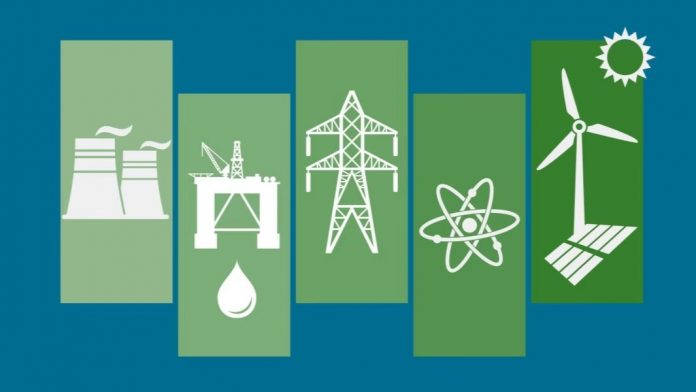
The global energy landscape is undergoing a profound transformation as nations seek to balance economic growth, energy security, and environmental sustainability. At the center of this transformation is the Energy Transition Index (ETI), a tool developed by the World Economic Forum to assess how effectively countries are transitioning toward secure, sustainable, affordable, and inclusive energy systems.

The index serves as a benchmark for measuring progress and identifying challenges in the global shift from traditional fossil fuels to cleaner and more renewable energy sources. The Energy Transition Index evaluates countries based on two key dimensions: system performance and transition readiness.

System performance measures how well a country’s energy system delivers energy security, environmental sustainability, and economic development. Transition readiness, on the other hand, assesses factors such as political commitment, investment climate, infrastructure, innovation, education, and regulatory frameworks that enable long-term energy transformation.

These indicators provide a comprehensive view of a nation’s ability to achieve a successful energy transition.

Over the years, the ETI has highlighted significant progress in many parts of the world. Countries such as Norway, Sweden, Denmark, and Finland consistently rank among the top performers due to their strong investments in renewable energy, efficient energy policies, and commitment to reducing carbon emissions.

These nations have demonstrated that economic prosperity can coexist with ambitious environmental goals. Their success offers valuable lessons for other countries seeking to accelerate their transition toward cleaner energy systems. One of the key drivers behind the energy transition is the growing urgency of addressing climate change.

The burning of fossil fuels remains the largest source of greenhouse gas emissions, contributing to global warming and environmental degradation. As a result, governments and businesses are investing heavily in renewable energy technologies such as solar, wind, hydroelectric, and geothermal power.

Advances in battery storage, electric vehicles, and smart-grid technologies are further supporting the shift toward a low-carbon future. However, the Energy Transition Index also reveals that significant challenges remain. Many developing countries face obstacles such as inadequate infrastructure, limited access to financing, and dependence on fossil fuel revenues.

In some regions, millions of people still lack reliable access to electricity, making energy accessibility a critical concern alongside sustainability. Balancing environmental goals with economic development remains a complex task, particularly for nations striving to industrialize and improve living standards.

The index also underscores the importance of energy security. Recent geopolitical tensions, supply chain disruptions, and fluctuations in energy prices have demonstrated the vulnerabilities of global energy markets. Countries that diversify their energy sources and invest in domestic renewable energy production tend to be more resilient to external shocks.

Consequently, energy transition is not only an environmental necessity but also a strategic economic and security priority. Businesses and investors increasingly use the ETI as a guide for decision-making. Companies are directing capital toward clean energy projects, while governments are implementing policies designed to attract sustainable investments.

International cooperation has become essential in sharing technology, expertise, and financial resources to support a more equitable global transition. The Energy Transition Index serves as a valuable framework for evaluating and accelerating the global shift toward sustainable energy systems.

By measuring performance and readiness, it helps policymakers, businesses, and stakeholders identify opportunities and address barriers to progress. As the world confronts the dual challenges of climate change and energy security, the ETI provides a roadmap for building a cleaner, more resilient, and more inclusive energy future for generations to come.