DD
MM
YYYY

PAGES

DD
MM
YYYY

spot_img

PAGES

Home Blog Page 23

Altman Escalates AI Governance Clash, Accuses Anthropic of ‘Fear-Based Marketing’ of Mythos in Deepening Battle Over Frontier Model Control

0

The competition over frontier artificial intelligence has moved beyond product rivalry into an open dispute over narrative control, safety authority, and who gets to define the boundaries of access.

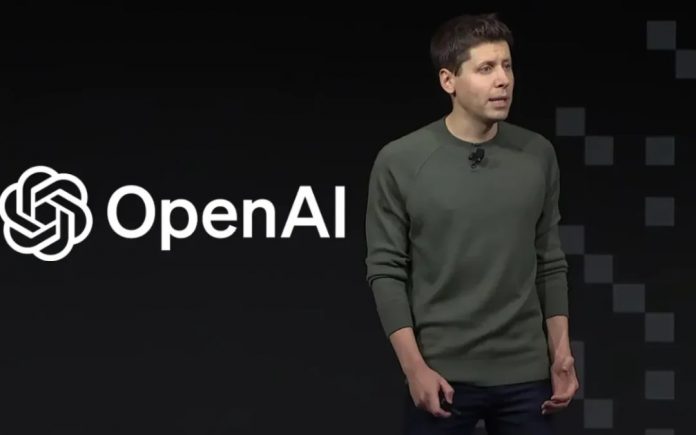
OpenAI CEO Sam Altman has accused rival Anthropic of deliberately amplifying existential fears to market its newest model, Claude Mythos, while simultaneously restricting access to a tightly selected group of corporate partners.

Speaking on the “Core Memory” podcast hosted by Ashlee Vance, Altman characterized the messaging around Anthropic’s rollout as strategically alarmist.

“It is clearly incredible marketing to say, ‘We have built a bomb. We were about to drop it on your head. We will sell you a bomb shelter for $100 million to run across all your stuff, but only if we pick you as a customer,’” he said.

The framing points to a deeper ideological divide in Silicon Valley over whether frontier AI systems should be broadly distributed under controlled safeguards or concentrated within a limited set of vetted institutions.

Anthropic has opted for the latter approach with Claude Mythos. The company has withheld a public release, citing heightened cybersecurity capabilities within the model, particularly its ability to identify system vulnerabilities that could be misused. Instead, it introduced a restricted access framework known as Project Glasswing.

Under that programme, only 11 organizations were granted access, including Google, Microsoft, Amazon Web Services, Nvidia, and JPMorgan Chase. The selection spans cloud infrastructure, semiconductor manufacturing, and financial services, effectively placing frontier model access within a narrow layer of global digital infrastructure providers.

The rationale is rooted in the containment risk for Anthropic. As models become more capable of autonomous reasoning and system-level analysis, the potential for dual-use exploitation increases, particularly in cybersecurity contexts. Restricting access, in this view, becomes a precondition for controlled experimentation.

Altman rejects the implication that such restrictions are neutral or purely safety-driven. He argues that they also function as a form of narrative positioning that consolidates authority over AI deployment decisions.

“There are people in the world who, for a long time, have wanted to keep AI in the hands of a smaller group of people,” he said. “You could justify that in a lot of different ways, and some of it’s real like there are going to be legitimate safety concerns. But if what you want is like, ‘We need control of AI, just us, because we’re the trustworthy people, I think the fear-based marketing is probably the most effective way to justify that.”

The disagreement reflects a broader structural tension emerging in the AI sector: whether governance should be decentralized through broad access and iterative safeguards, or centralized through controlled deployment to a small set of institutions deemed capable of managing systemic risk.

OpenAI, where Altman leads operations, has generally pursued a more distributed model, releasing models to the public with layered safety constraints, usage monitoring, and incremental capability expansion. Even so, Altman acknowledged that not all systems would be broadly released.

“There will be very dangerous models that will have to be released in different ways,” he said. “The goal here is to benefit everybody and also to, I don’t say market this in a way but like get the world to come on this journey with us, and to say, ‘We are going to give you more powerful technology, there’s going to be responsibility that goes along with that.’”

“We are going to try to help set up the world for as much success as we can,” he added.

The contrast between the two approaches has sharpened as model capabilities accelerate. Anthropic’s Claude Mythos reportedly demonstrates heightened competence in identifying cybersecurity weaknesses, a capability that raises both defensive and offensive implications. In restricted-release environments such as Project Glasswing, those risks are managed through controlled exposure, limiting both the user base and the operational context.

Critics of restricted deployment models believe that they risk concentrating power in a small set of corporations, effectively turning frontier AI into an infrastructure layer governed by private gatekeepers rather than broadly accessible tools. Proponents counter that premature mass deployment could amplify misuse risks before sufficient containment mechanisms are established.

The rivalry has also become increasingly personal. Anthropic’s chief executive, Dario Amodei, previously held senior roles at OpenAI before founding the competing firm, embedding institutional memory and philosophical divergence into the competition itself.

Altman suggested that the broader discourse around AI risk has intensified tensions within the industry.

“I think the doomerism talk hasn’t helped. I think the way certain other labs talk about us hasn’t helped,” he said, adding, “I think the way Anthropic talks about OpenAI doesn’t help.”

Beyond corporate positioning, the dispute indicates an unresolved policy vacuum. Governments have yet to establish consistent global frameworks for frontier AI deployment, leaving major labs to effectively define their own governance regimes. In that environment, safety arguments, commercial strategy, and institutional trust become difficult to separate.

What is emerging is not just a product race, but a contest over legitimacy: who is authorized to build, release, and constrain systems that are increasingly embedded in critical infrastructure, financial networks, and cybersecurity operations. As capability thresholds continue to rise, the divide between open deployment and controlled access is likely to deepen, turning today’s rhetorical conflict into a defining fault line in the governance of advanced artificial intelligence.

X Launches Custom Timelines, a For You and Following Tabs Feed Features 

0

X just launched Custom Timelines — a major new feature that lets you pin hyper-personalized, topic-specific feeds directly to your Home tab. Instead of relying only on the general For You or Following tabs, you can now select from over 75 topics with more coming and pin a dedicated timeline for that niche.

Examples include things like art, finance, sports, tech, or whatever you’re deeply into. Each Custom Timeline is powered by Grok:
Grok understands the content of virtually every post on X. It combines that with X’s existing personalization algorithm. A feed that’s tailored just for you around that single topic — and it gets even better if you already engage with that subject a lot. This makes it easier to dive deep into specific interests without the mix of unrelated content that sometimes floods the main timeline.

Early access right now for Premium subscribers on iOS. Android rollout coming very soon. Announced today by X’s Head of Product, Nikita Bier, as one of the platform’s biggest changes in a while. This feels like a smart evolution: more control over what you see, less noise, and deeper engagement in the niches that matter to people. Grok’s role in classifying content at scale is what makes the personalization actually work at this level.

Grok’s content classification on X is the core AI capability that powers features like Custom Timelines, the personalized For You feed, and ranking in the Following tab. Grok doesn’t just scan for keywords or hashtags. It semantically understands the meaning, context, nuance, and intent of virtually every post on X — including text, images, videos, threads, replies, and memes.

For each post, Grok performs real-time analysis to determine: Main topic(s) — e.g., is this about Formula 1, AI ethics, Sub-niches and granularity — It can distinguish deep sub-topics. How substantive, original, or engaging the content is. Sarcasm, humor, misinformation risks, or cross-topic connections. This understanding is then combined with X’s traditional personalization engine (your past likes, replies, follows, dwell time, etc.) to decide what shows up where.

When you pin a topic; one of 75+ available, like Art, Finance, Tech, Sports, Memes, etc: Grok filters the entire firehose of X posts. It classifies which posts belong to your chosen topic using its deep semantic model not rigid rules. It personalizes the feed further: posts you’re more likely to engage with based on your history in that niche rank higher.

The result is a clean, dedicated timeline focused only on that topic — and it gets smarter and more precise the more you interact with that subject. This is why the official description says: It’s powered by Grok’s understanding of every post with the algorithm’s personalization—meaning every timeline is made just for you. And it works even better when it’s a topic you already engage with.

Grok helps recommend posts beyond who you follow by classifying content and matching it to your inferred interests. Even posts from accounts you follow are now ranked not purely chronological using Grok’s predictions of what you’ll find engaging. Topic snooze, content moderation signals, spam/low-quality filtering, and future prompt-based feed adjustments all lean on this same classification layer.

Traditional social media algorithms rely heavily on engagement metrics likes, retweets, views + basic topic tagging. Grok shifts toward true understanding: It handles nuance; context, sarcasm, evolving slang. It scales to hundreds of millions of posts daily. It reduces noise in niche feeds because it’s not just matching keywords — it’s comprehending meaning.

The system is still evolving. X has been moving toward a purely AI algorithm, with Grok playing a central and growing role in ranking and filtering. In short Grok acts as X’s intelligent content layer — reading and categorizing posts at massive scale so the platform can serve you hyper-relevant, topic-specific experiences instead of one generic algorithmic soup.

Global Central Banks Hold Approximately 38,666 Metric Tonnes of Gold Amid Uncertainty in the Middle East

0

Global central banks collectively hold approximately 38,666 metric tons of gold, which represents roughly 17–18% of all gold ever mined throughout human history. Central bank holdings: ~38,666 tonnes. This has grown steadily due to net buying by many emerging-market central banks in recent years, though a few like Turkey in certain periods have sold.

Total gold ever mined above-ground stocks: Estimates from the World Gold Council and similar sources put this at around 216,000–220,000 tonnes as of late 2025/early 2026. About two-thirds of that has been mined since 1950 thanks to modern technology. Dividing 38,666 by ~216,265; a common recent above-ground stock figure gives roughly 17.9%, so the 17% or roughly 17% claim holds up well, with minor variations depending on exact reporting dates and whether all gold ever mined strictly means above-ground stocks.

Central banks are indeed major players in the gold market: They provide a floor for demand, especially during geopolitical uncertainty, inflation concerns, or de-dollarization efforts by some nations. In 2025, they net bought around 863 tonnes; forecasts for 2026 hover around 800–850 tonnes—still well above historical averages.

Top holders include the US ~8,133 tonnes, Germany, Italy, France, Russia, and China which has been adding steadily. Many emerging economies are increasing their share as a hedge. The rest of the gold is split roughly like this approximate % of above-ground stocks: Jewelry: ~44–45%, Bars, coins, and ETFs (investment): ~23% Other industrial/decorative uses and other categories: the remainder.

This distribution underscores gold’s dual role as both a monetary asset (central banks) and a cultural and commodity one; jewelry, especially in places like India and China. The figure highlights a long-term shift: after decades of selling or stability, many central banks have become consistent net buyers since around 2010, viewing gold as a neutral, no-counterparty-risk reserve asset.

The 38,666-tonne number is a solid snapshot, though exact totals get updated quarterly via IMF and World Gold Council data. Central bank accumulation acts as a structural demand floor. Their net purchases like 863 tonnes in 2025, with forecasts around 800–850 tonnes for 2026 remove physical supply from the market permanently, as they are long-term holders rather than traders.

This tightens the supply-demand balance, putting upward pressure on gold prices and contributing to rallies, gold hit record highs above $5,000/oz in recent periods amid strong official buying. It reduces downside volatility during corrections — central banks often provide consistent bids when private demand weakens.

Large buys can cause short-term price spikes and increased volatility, while their presence signals confidence, encouraging other investors to follow. In a market where annual mine supply is only ~4,700–5,000 tonnes, central banks have accounted for 15–26% of demand in recent years, making them a dominant force.

Gold has overtaken U.S. Treasuries in value within central bank reserves for the first time in decades; gold ~$3.87 trillion vs. valuation-adjusted USD assets ~$3.73 trillion in early 2026 data. The U.S. dollar’s share of global reserves has declined to ~56–57% by 2025, partly as emerging-market central banks diversify into gold to hedge against geopolitical risks, sanctions, and potential dollar weaponization.

Gold serves as a neutral, no-counterparty-risk asset— it has no issuer liability, unlike fiat currencies or bonds. This reflects broader de-dollarization trends though the dollar remains dominant. Gold acts as a hedge rather than a full replacement. Many central banks especially in emerging economies like China, India, Poland, Brazil, and Turkey cite inflation protection, crisis performance, and portfolio diversification as motivations.

Surveys show 43–70% plan further increases, with 95% expecting global gold reserves to rise. Countries reduce reliance on foreign currencies or custodian like repatriation from New York Fed or Bank of England. Hedge against inflation, debt, and uncertainty — With global debt exceeding $300 trillion and persistent inflation concerns in some regions, gold helps preserve reserve value during economic stress or currency debasement.

Potential long-term pressure on dollar dominance — While not an immediate threat, sustained shifts could influence borrowing costs, capital flows, and the dollar’s role in trade and finance if confidence erodes further. Gold’s share of total foreign reserves is ~17%, up in value terms relative to GDP, signaling its renewed relevance post-Bretton Woods.

Persistent official demand supports higher average prices and a structurally elevated floor, even if private investment (ETFs) fluctuates. Analysts link this to forecasts of strong gold performance into 2026. Heavy buying often coincides with geopolitical tensions, high debt levels, or doubts about traditional reserve assets.

Unlike the 1990s–2000s; when some banks sold, the trend has reversed to net buying for 15+ years, with no surveyed banks planning reductions. The 38,666-tonne hoard underscores gold’s evolution from a barbarous relic to a strategic reserve asset in a multipolar world. It provides price support, accelerates diversification away from dollar-heavy portfolios, and reflects caution about fiat risks — but it also highlights ongoing global uncertainties rather than a complete overhaul of the system.

German Economics Minister Describes Artificial intelligence as Critical Survival for Germany’s Industrial Base

0

German Economics Minister Katherina Reiche has described artificial intelligence (AI) as a critical survival opportunity for Germany’s industrial base. In statements at the Hannover Messe, Reiche emphasized that AI represents a chance for Germany to maintain its position as a leading industrial production location.

She highlighted Germany’s substantial industrial data assets as a key advantage, allowing the country to leverage AI for enhanced competitiveness in global markets. This view aligns with broader comments from Chancellor Friedrich Merz at the same event. Merz argued that industrial AI requires lighter EU regulation than consumer-facing applications to boost productivity, efficiency, resource optimization, and cost reduction.

He pledged to push for easing the regulatory burden and potentially exempting industrial AI from overly strict rules, calling the current EU framework a regulatory straightjacket. Merz sees AI as essential for Germany to catch up in key technologies and embed it deeply into manufacturing. The fair has featured discussions on scaling industrial AI, with participation from top CEOs, industry leaders, and policymakers.

Themes include transforming established companies or startups into new industrial champions through AI adoption, using Germany’s strengths in manufacturing data, robotics, and physical systems like Siemens-Nvidia partnerships for AI-driven industrial operating systems. Projections suggest widespread AI use in industry could add at least 1 percentage point to annual real GDP growth.

Germany’s push reflects concerns about deindustrialization risks amid high energy costs, global competition especially from the US and China, and the need to modernize Industrie 4.0 with AI. Officials frame it as a window of opportunity where industrial-scale AI—applied to production, supply chains, simulation, and maintenance—can help preserve jobs and value creation rather than just displacing them.

Digital Minister Karsten Wildberger has echoed calls for faster innovation over heavy regulation and supported shifting some AI rules for sectors like medical devices or machinery to more tailored sectoral laws. Germany is investing in AI infrastructure, including data centers and gigafactories, while initiatives like Manufacturing X aim to build collaborative industrial data spaces.

There’s acknowledgment of potential job shifts in software or routine tasks, but the dominant government narrative stresses net gains through higher productivity and new opportunities in tech-enabled manufacturing. This optimistic stance from Reiche and Merz comes as Germany seeks to strengthen its industrial core—manufacturing still accounts for a large share of GDP compared to many peers—by turning AI into a competitive edge rather than a threat.

The discussions at Hannover Messe underscore urgency: act quickly to avoid losing ground. This stance reflects Germany’s urgency to leverage its manufacturing strengths amid high energy costs, labor shortages, slowing growth, and global competition from the US and China.

Widespread industrial AI adoption could add at least 1 percentage point to annual real GDP growth, according to Economy Ministry projections, potentially delivering substantial cumulative value creation over the coming years. Germany’s advantages include one of the world’s largest pools of industrial data, strong expertise in automation, mechanical engineering, robotics, and physical systems.

This could help reverse recent weaknesses: low investment, declining manufacturing output, and export pressures. Manufacturing still represents about 25.8% of German GDP vs. ~17% in the US, making AI integration a potential differentiator for preserving value creation and high-wage jobs rather than offshoring.

Projections indicate net positive effects through new business models and reduced material inputs, though benefits accrue gradually rather than as an immediate shock. Merz has explicitly called the EU AI Act a regulatory straightjacket too restrictive for industrial applications and pledged to push for lighter rules—or exemptions—for factory AI compared to consumer-facing uses.

The goal is faster scaling in areas like production optimization, supply chains, and simulation. This push faces resistance in Brussels, with some member states opposing carve-outs that could favor big industrial players. Germany is also advocating shifting certain AI rules for sectors like machinery or medical devices to tailored sectoral laws instead of the horizontal AI Act.

Supporting initiatives include the High-Tech Agenda with significant funding for AI, quantum, microelectronics, etc., investments in AI gigafactories, data centers, and infrastructure like Manufacturing X for collaborative industrial data spaces. Success depends on execution: accelerating innovation while maintaining safety, cybersecurity, and trust.

Germany’s shrinking working-age population amplifies the need for productivity boosts via AI to sustain output without proportional labor increases. Challenges include reskilling and upskilling at scale and managing regional disparities. The narrative emphasizes co-intelligence where humans, AI, and machines collaborate, potentially preserving more jobs in a high-wage economy than pure automation would.

Reiche’s AI framing underscores a pragmatic bet: without rapid, targeted industrial AI deployment, Germany risks losing ground in global manufacturing. With it—and supportive policy adjustments— the country could reinforce its industrial core, boost productivity to offset demographic and cost pressures, and create new growth avenues.

Outcomes will hinge on how quickly regulation adapts, infrastructure scales, and the workforce transitions. Hannover Messe 2026 served as a clear platform for this industrial policy pivot, with tangible demos from exhibitors showing the shift from pilots to operational impact.

Crypto News Today: Bitcoin and XRP Consolidate as Varntix Fixed Income Platform Sees Record Demand

0

Arthur Hayes, in the past week, warned that current markets are too risky to trade. He pointed out that new AI technology is driving prices down and tensions in the Middle East are making investors nervous about risky assets like BTC and XRP. What’s more, these two crypto giants are consolidating, meaning that there is no big shift in their price trajectory. In situations like this, uncertainty tends to grow. And that’s where a new approach to crypto income is starting to stand out.

Investors are now looking beyond price movements and considering options like Digital Asset Treasuries (DATs) and fixed-income models, which focus on more stable and predictable returns instead of short-term market swings. Varntix is one such platform that is gaining attention, and the demand is clear. When it launched its 24% fixed savings option, it didn’t take long to gain traction; investors snapped up millions in just a few hours.

BTC Holds 7% Monthly Gains While XRP Turns Red

BTC is up 7% in the past month. However, it is staying within a narrow price range as traders watch the market.

This also means that Bitcoin is unlikely to generate any significant returns, and this is the price investors pay for holding and waiting.

Source: CoinMarketCap

On the other hand, XRP has slightly dropped over the past month, recording a minimal dip of about 0.78%.

Source: CoinMarketCap

Consequently, analysts foresee that XRP’s future will largely depend on regulatory clarity and overall crypto market strength, with possible upside if adoption grows but continued sideways movement if uncertainty persists.

In this environment of  XRP consolidation, the gap between passive holding and income-generating strategies becomes clearer. Varntix’s fixed-income platform offers a more stable alternative, as its structured returns within digital asset treasury strategies are set to outperform the unpredictable nature of XRP.

Investing Simplified: Stress Less, Earn More with Varntix

A $15,000 BTC or XRP position sitting in a range for four to five months may generate no return if the price fails to trend.

But adding this amount into a structured yield of about 16%–24% APY could produce roughly $200–$275 per month. And this would add up to about $1,000 or more in realized income instead of waiting on uncertain price movement. Even at $5,000, that’s still around $70–$100 monthly that would otherwise be missed.

How does Varntix do this? It offers two main yield opportunities:

  • Fixed accounts are built for investors who want the highest possible returns and don’t mind committing their capital for a set time. They can choose to lock in their funds for 6, 12, or 24 months to secure a pre-defined return rate as high as 24% APY.

This “set-and-forget” approach is ideal for turning long-term holdings into a high-performance wealth engine, as your profit rate is guaranteed from day one.

  • Flexible accounts offer a low-barrier entry point designed for maximum freedom and accessibility. With a minimum starting point of just $50, investors can earn passive income on their idle stablecoins without any long-term lock-up periods.

It is perfect for beginners or those who want to keep their money working while maintaining the flexibility to withdraw or pivot their strategy whenever market conditions change.

The best part is that all these payouts are either in USDT or USDC, making it easier for investors to predict and plan.

Final Thoughts

Most investors are feeling burned out by the crypto world. Even the rewards for holding coins have dropped so low that they barely feel worth the effort anymore.

Varntix changes the game by bringing fixed income to your digital wallet. Instead of making you guess which way the price will swing tomorrow, it offers a clear, steady way to grow your money so that you can stop staring at price charts and start focusing on your future.

Take a closer look at Varntix if you want your capital to work harder.

FAQs

  1. What is Varntix? Varntix is a digital asset treasury platform that offers “fixed-income” crypto accounts. Unlike trading, which is unpredictable, Varntix provides structured, steady returns so you know exactly how much you are earning.
  2. How do the Fixed and Flexi accounts differ? Flexi accounts offer total freedom with no lock-up periods and a $50 minimum, while fixed accounts offer higher returns up to 24% APY for committing your funds for a specific timeframe.
  3. Is it safer than typical crypto trading? Yes, because Varntix pays out in stablecoins like USDT. This protects earnings from the “rollercoaster” price swings of the regular crypto market, ensuring your profit stays consistent.