DD
MM
YYYY

PAGES

DD
MM
YYYY

spot_img

PAGES

Home Blog Page 23

22% Savings on Live Swap! BlockDAG’s Biggest Ecosystem Shift Arrives in Hours, While Ondo Eyes $0.48 & XRP Price Struggles

0

The Ondo crypto price is aiming for $0.48 after a strong chart breakout and new trading upgrades. Meanwhile, the XRP price is stuck at a key level that could break its downward trend.

Standing out from the competition, BlockDAG (BDAG) is entering a major growth phase with claims for Batches 1–6 and staking scheduled to go live within hours. Alongside this rollout, BDAG is available at a limited-time price of $0.00000019, while Live Swap remains active at 22% below the CoinMarketCap price.

With new ecosystem developments and increasing network activity, BlockDAG is gaining attention among investors searching for the next crypto to explode.

Ondo Crypto Price Targets Breakout Following Perps Launch

The Ondo crypto price recently crossed $0.39 following a chart breakout from a descending wedge pattern. Ondo Finance expanded its system by adding tokenized stocks as collateral on its perpetual futures platform. This feature allows people to trade with up to 20x leverage without turning their holdings into stablecoins. Total volume on the platform has now passed $3.8 billion.

While these new tools have helped boost buyer interest, the coin still faces challenges. Analysts point to a key resistance zone near $0.48 that could slow down growth. Additionally, holders do not get a cut of the platform’s revenue, which makes some investors cautious about holding the token over a long period.

XRP Price Struggles to Clear Resistance Levels

The XRP price recently climbed to $1.16 before pulling back to sit around $1.14. Technical charts show the coin is in a delicate position. To clear its current bearish chart setup, it needs to break above the $1.20 resistance level.

If it fails to cross that line, prices could slide back down toward lower support levels at $0.93 and $0.87. On the positive side, large wallet holders have been accumulating more coins recently, while smaller accounts have been selling off.

Still, chart indicators show momentum is slowing down. Until it cleanly clears $1.20, the risk of a market drop remains a real concern for traders watching the chart.

BlockDAG’s Hour Claims and Staking Launch Brings New Utility

BlockDAG is moving into its next stage as claims for Batches 1–6 and staking prepare to go live within hours. The update introduces new functionality for BDAG holders while expanding the role of the token across the growing ecosystem.

Adding further attention, BDAG is currently available at $0.00000019 for a limited period, while Live Swap continues at 22% below the CoinMarketCap price. This combination of new features and limited-time pricing has placed BlockDAG in focus as market participants look beyond traditional price movements and toward projects building wider utility.

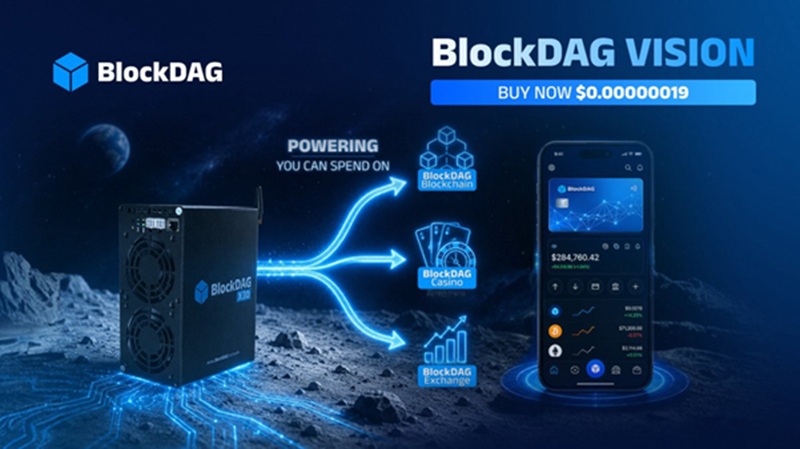
The ecosystem continues developing across multiple areas, including the Casino & Sportsbook, BlockDAG Exchange, Super App, and upcoming Tier 1 exchange listings. These additions strengthen BlockDAG’s broader infrastructure and support its goal of creating a connected blockchain ecosystem.

With claims, staking, and platform expansion happening together, BlockDAG is creating a new level of engagement around BDAG while positioning itself among projects gaining attention in the search for the next crypto to explode.

In a Nutshell

While the Ondo crypto price pushes toward $0.48 and the XRP price fights to clear critical chart levels, neither offers the explosive upside early buyers are looking for right now. Both altcoins face real hurdles, making their immediate recovery uncertain.
BlockDAG is taking a different route by focusing on ecosystem development, new functionality, and network expansion. With claims for Batches 1–6 and staking arriving within hours, along with a $0.00000019 BDAG price and a 22% Live Swap discount, the project is entering a highly anticipated period.

For those tracking the next crypto to explode, BlockDAG’s combination of growing infrastructure, expanding ecosystem products, and upcoming network updates makes it one of the projects attracting increasing attention.

Ultimate Sale: https://purchase.blockdag.network

Website: https://blockdag.network

Telegram: https://t.me/blockDAGnetworkOfficial

Discord: https://discord.gg/Q7BxghMVyu
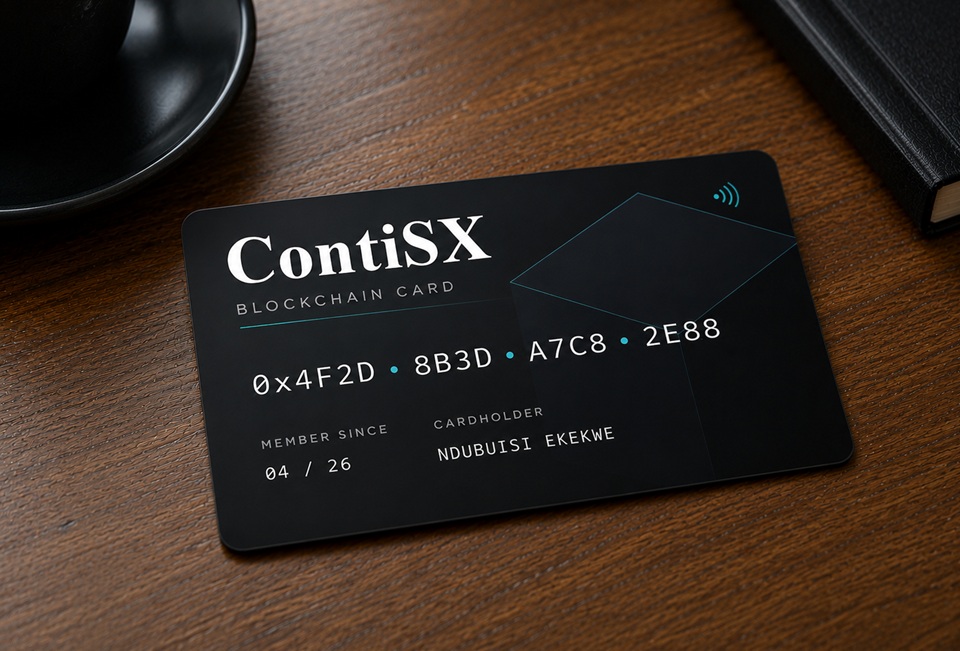
The ContiSX Blockchain Card

0

The Investment and Securities Act (ISA) 2025 stands as the most consequential piece of business legislation enacted in Nigeria in over three decades. Operating on the foundation of this landmark Act, ContiSX Securities Exchange plc is built to power the next decade of capital market evolution and drive unprecedented economic growth across the nation. The Exchange has an approval-in-principle from SEC, and is poised to begin operations in Sept 2026.

Read that Act as I have done many times, notice that ISA 2025 is a big deal. Among other things, as ISA 2025 expands the horizon for the onchain economy, ContiSX is delivering the critical technology stacks and infrastructure via ContiSX Mint, our native technology, to power blockchain-native enterprises and projects across Nigeria and Africa.

I am happy to announce the launch of ContiSX Blockchain Card, to usher transformative era for regional digital asset infrastructure. Our card integrates seamlessly with ContiSX phone, powered by blockchain. Come and build on ContiSX Mint. We also have small funds of $20k with AWS credit of $25k to support you. You also get mentoring from me, a village guy from Ovim!

The ISA 2025 has provided the regulatory framework; it is time to build in Nigeria and Africa. Yes, building the technological foundation to power businesses, institutions, and sovereign entities, and make 2030s the decade of abundance and shared prosperity because the capital market will do its job at scale. Nigeria’s $1 trillion economy must happen!

To Enterprises and Government: If your organization, whether a major banking institution, law enforcement agency, insurance firm, multinational corporation, or industrial enterprise, requires 100% end-to-end cryptographic security across operational data, communications, audio, and video, we welcome the opportunity to connect. We will send our phones and cards for you to trial. Reach out to info@contisx.com if interested. [Onchain entrepreneurs, we print our cards in Nigeria and can help you.]

(Note for retail clients: Our institutional rollout is currently underway; retail features and onboarding will follow shortly. Join the wailist here contisx.com )

Contisx Phone – Blockchain-Powered, No Data Plan Required

Jack Dorsey’s Block Urges U.S. Senate to Pass CLARITY Act for Crypto Regulatory Clarity

0

Payments company Block, founded by Jack Dorsey, has formally called on Senate leaders to bring the Digital Asset Market Clarity Act (CLARITY Act) to a floor vote.

In a letter dated July 29, 2026, addressed to Senate Majority Leader John Thune and Minority Leader Charles E. Schumer, Block expressed strong support for the legislation, describing it as a pivotal opportunity to establish a comprehensive regulatory framework for digital assets.

Part of the letter reads,

“As a company deeply committed to building open, inclusive financial infrastructure, we believe that legal clarity is foundational to responsible innovation. The Clarity Act provides a thoughtful regulatory framework for determining when and how digital assets are considered a security vs. a commodity; a key regulatory question that has long lacked statutory guidance.

This bill would also deliver the first comprehensive federal consumer protection framework for digital assets, rather than relying on the current patchwork of state money transmitter and licensing laws. We are particularly supportive of its preserved inclusion of the Blockchain Regulatory Certainty Act, which recognizes that developers and service providers who do not custody assets should not be considered money transmitters.

The letter, signed by Block’s Chief Legal Officer Chrysta Esperanza, emphasizes that legal clarity is essential for responsible innovation. Block argues that the CLARITY Act would ensure that developers and service providers who do not custody assets are not classified as money transmitters.

The company views this distinction as vital for fostering a healthy, decentralized ecosystem while distinguishing core infrastructure participants from traditional financial intermediaries.

Additional provisions in the legislation that Block supports include stronger safeguards against financial crime, enhanced resources for law enforcement to combat illicit finance without compromising developer protections, and explicit recognition of the right to self-custody digital assets as an important individual liberty.

Block’s demand for the U.S. to pass the Clarity Act comes as Coinbase CEO Brian Armstrong recently made a strong public call for the U.S. Senate to pass the Digital Asset Market Clarity Act.

In a statement, Armstrong declared that clear rules for crypto are nearly here, positioning the legislation at the one-yard line and urging lawmakers to push it across the finish line.

Understanding the CLARITY Act: The Bill That Could Reshape Crypto Regulation in The U.S

The Digital Asset Market CLARITY Act has emerged as one of the most significant pieces of cryptocurrency legislation in the United States.

The Act aims to bring long-awaited regulatory certainty to the cryptocurrency industry by clearly dividing oversight responsibilities.

For years, the U.S. crypto industry has operated under overlapping regulations, with disagreements over whether many digital assets should be treated as securities or commodities. This lack of clarity has resulted in lawsuits, regulatory enforcement actions, and uncertainty that many industry participants argue has slowed innovation.

Under the bill, the Securities and Exchange Commission (SEC) would regulate assets that function like securities, while the Commodity Futures Trading Commission (CFTC) would oversee digital commodities.

It also includes provisions for stablecoins, investor protections, disclosures for certain offerings, and safe harbors for decentralized finance developers and validators.

Proponents argue this framework would replace the current enforcement-first approach with predictable rules that protect consumers while keeping innovation in the United States.

The legislation has already passed the House and advanced through the Senate Banking Committee with bipartisan support. As of late July 2026, momentum appears to be building, with reports indicating several Senate Democrats are open to voting in favor.

Major industry players including BlackRock and other financial institutions have backed the measure, viewing it as essential for the sector’s growth. Armstrong’s latest comments come amid ongoing negotiations and signal optimism that a full Senate floor vote could be imminent, potentially before the August recess.

The bill is seen as a pivotal step toward integrating digital assets into the mainstream financial system, offering clearer guidelines for exchanges, token issuers, and market participants while addressing concerns around market manipulation and investor safeguards.

Industry observers are watching closely as the Senate weighs the legislation. If passed, the CLARITY Act could mark a historic shift, ending years of regulatory ambiguity and providing the foundation for responsible crypto growth in America.

Doubleline’s Gundlach Says Fed May Need Rate Hikes To Restore Inflation Credibility As Bond Market Challenges Policymakers

0

DoubleLine Capital CEO Jeffrey Gundlach said the U.S. Treasury market is sending a clear message to the Federal Reserve that if policymakers are serious about returning inflation to their 2% target, they may have to resume raising interest rates rather than simply maintaining a hawkish stance.

Speaking after the Federal Reserve kept interest rates unchanged, Gundlach said that recent movements in the bond market suggest investors remain unconvinced the central bank will ultimately take the steps necessary to fully tame inflation, even as officials continue to stress their commitment to price stability.

“If you really want to get to 2%, I think you have to raise interest rates,” Gundlach said on CNBC’s Closing Bell on Wednesday.

“I think getting 2% is going to take a long time. We might not get there over the course of the next couple of years.”

The Fed left its benchmark interest rate unchanged at 3.5% to 3.75%, a widely anticipated decision that nevertheless revealed growing divisions within the central bank. Three policymakers dissented in favor of an immediate quarter-percentage-point rate increase, highlighting mounting concern among some officials that inflation remains too persistent to justify holding policy steady.

Gundlach said the Treasury market’s reaction underscored investors’ doubts about whether the Fed will eventually match its rhetoric with action.

While short-term Treasury yields declined, reflecting expectations that policymakers may delay further tightening, longer-dated yields climbed sharply as investors demanded greater compensation for inflation and fiscal risks.

“The two-year Treasury rallied today because it thinks the Fed is taking its time,” Gundlach said.

“And the long bond yield went up significantly after the press conference, because the bond market vigilantes are saying, ‘If you really want us to believe your rhetoric, you’ve got to start acting.'”

Following the Fed’s announcement, the benchmark 10-year Treasury yield climbed more than seven basis points to 4.681%, while the 30-year Treasury yield surged to 5.213%, its highest level since 2007. In contrast, the policy-sensitive two-year yield fell three basis points to 4.244%.

The divergence is significant because shorter-dated Treasury yields largely reflect expectations for Federal Reserve policy over the next few years, while longer-term yields increasingly incorporate investor views on inflation, government borrowing and the long-run credibility of monetary policy.

The steepening of the yield curve after the Fed meeting suggests investors believe inflation and fiscal pressures could remain elevated even if the central bank keeps policy restrictive.

Higher-For-Longer May Not Be Enough

Gundlach’s comments add to a growing debate over whether the Federal Reserve’s “higher-for-longer” strategy will be sufficient to return inflation to target without additional tightening.

Although inflation has moderated considerably from its post-pandemic peak, it has remained above the Fed’s 2% objective for an extended period. That has prompted some economists and market participants to question whether structural forces, including persistent fiscal deficits, labor market tightness, deglobalization and rising energy costs, could make the final stretch of disinflation considerably more difficult.

His view also aligns with concerns increasingly reflected in long-term Treasury yields, where investors appear to be pricing in the possibility that interest rates may need to remain elevated for longer than previously anticipated or even move higher if inflation proves more resilient.

Fed Maintains Hawkish Stance

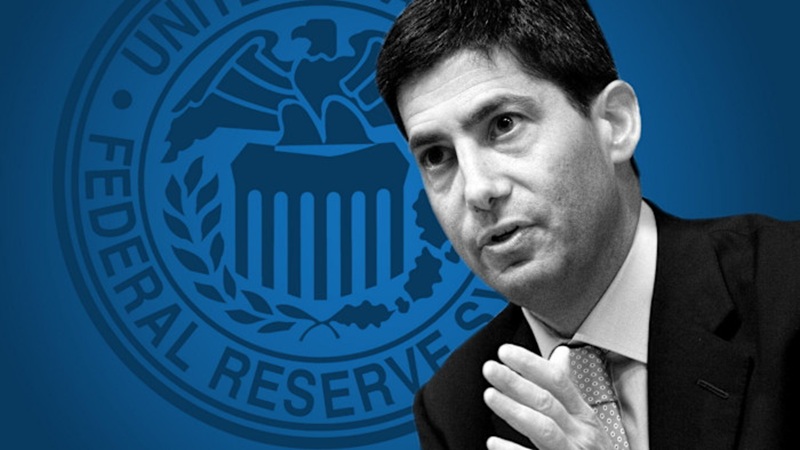
Federal Reserve Chairman Kevin Warsh sought to reinforce the central bank’s commitment to restoring price stability, emphasizing that policymakers remain prepared to act if economic conditions warrant.

“I understand the desire for rolling forecasts and commentary from this committee, but for our part, we need to observe market reaction to developments direct and unfiltered,” Warsh said.

“I want to stress, of course, that decisions by this committee matter a great deal, and where necessary and appropriate, we will not hesitate to act.”

This suggests the Fed is seeking to preserve maximum flexibility as it evaluates incoming economic data, rather than committing to a predetermined policy path.

Why The Market Reaction Matters

The sharp rise in long-term Treasury yields carries implications well beyond the bond market.

Higher long-term borrowing costs increase financing expenses for mortgages, corporate debt and government borrowing while also weighing on equity valuations, particularly for technology companies whose earnings depend heavily on future growth.

The move also signals that investors remain concerned about the combination of persistent inflation and expanding U.S. fiscal deficits. Rising Treasury issuance to finance government spending has increased the supply of long-dated bonds, adding upward pressure on yields at a time when investors are demanding greater compensation for inflation risk.

Thus, the market’s message for the Federal Reserve is that maintaining restrictive policy may no longer be sufficient to convince investors that inflation will return sustainably to 2%. Unless inflation continues to ease meaningfully, policymakers may eventually face a difficult choice between tolerating above-target inflation or resuming rate increases to boost their credibility.

South Korea Confronts Market Turbulence as Russia Escalates Pressure on Telegram Founder Pavel Durov

0

Global financial and technology markets faced another wave of uncertainty as two major developments unfolded on the same day.

In Asia, South Korea’s Finance Minister announced an emergency meeting following sharp volatility in the country’s benchmark KOSPI index, highlighting growing concerns over investor confidence and regional market stability.

Meanwhile, geopolitical tensions intensified after reports that Russia’s Federal Security Service (FSB) charged Telegram founder Pavel Durov with facilitating terrorism, adding another chapter to the increasingly complex relationship between governments and encrypted communication platforms.

South Korea’s emergency response underscores the fragile state of global equity markets.

The KOSPI has experienced significant swings amid concerns surrounding artificial intelligence valuations, semiconductor demand, global monetary policy, and slowing economic growth.

South Korea’s economy is particularly sensitive to fluctuations in the technology sector because of its dependence on major exporters such as Samsung Electronics and SK Hynix. As investor sentiment weakened, authorities moved quickly to assess market conditions and determine whether additional stabilization measures would be necessary.

Emergency meetings of this nature typically involve financial regulators, the central bank, and market supervisors evaluating liquidity conditions, capital flows, and potential risks to financial stability.

While market corrections are common, governments often intervene through policy communication or temporary market-support mechanisms when volatility threatens broader economic confidence.

Investors will now closely monitor any policy announcements that emerge from the discussions, including possible measures aimed at calming markets and restoring confidence.

The uncertainty in South Korea reflects broader global concerns. Rising interest-rate expectations, shifting capital flows, geopolitical risks, and elevated valuations in technology stocks have created a challenging environment for investors worldwide.

Asian markets, which have benefited significantly from the global artificial intelligence boom, remain particularly vulnerable to sharp corrections whenever sentiment changes.

At the same time, developments in Russia have reignited debates over digital privacy, platform responsibility, and government oversight of encrypted messaging services. According to reports, Russia’s FSB has accused Telegram founder Pavel Durov of facilitating terrorism.

The allegations represent one of the most serious legal actions taken against the entrepreneur and could significantly increase pressure on Telegram’s operations in jurisdictions where national security concerns increasingly shape digital regulation.

Telegram has long positioned itself as a privacy-focused messaging platform that protects user communications through strong encryption and minimal content moderation compared to many competing services.

Governments, have repeatedly argued that encrypted platforms can be exploited by criminal organizations and extremist groups because law enforcement agencies have limited access to private communications.

The legal action against Durov highlights the ongoing tension between protecting civil liberties and ensuring public safety.

Technology companies operating global communication networks frequently find themselves navigating conflicting legal frameworks, with some governments demanding greater cooperation on surveillance and content moderation while others emphasize user privacy and freedom of expression.

Beyond the immediate legal implications, the case may influence future regulatory approaches toward encrypted messaging platforms worldwide. Policymakers across multiple jurisdictions continue to debate how technology companies should balance privacy protections with obligations to prevent illegal activities conducted through their services.

The developments in South Korea and Russia illustrate how financial markets and digital technology remain deeply intertwined with geopolitics and government policy.

Whether through emergency interventions to stabilize markets or legal actions targeting global technology platforms, governments are playing an increasingly active role in shaping the future of both economic systems and the digital economy.

Investors, businesses, and technology companies alike will be watching closely as these stories continue to evolve.