DD
MM
YYYY

PAGES

DD
MM
YYYY

spot_img

PAGES

Home Blog Page 230

Bitcoin and Ethereum Trading in Dips Amid Market Uncertainties 

0

Bitcoin experienced a sharp dip below $65,000 during Asian trading hours on February 23, 2026 which aligns with Sunday evening to Monday morning UTC, depending on time zones amid heightened market volatility.

Bitcoin fell as low as around $64,270–$64,400 from highs near $67,700 earlier, representing a drop of over 5% in a short window. It has since partially recovered, trading in the $66,000–$66,300 range as of mid-February 23 with some sources noting levels like $66,181 or $66,328 around midday UTC.

The move was tied to broader risk-off sentiment, including uncertainty over U.S. tariff policies; threats of raising global tariffs to 15% under the current administration, geopolitical tensions, and thin weekend and Asia-hours liquidity amplifying the sell-off.

Massive liquidations accompanied the drop: Crypto futures saw roughly $400–$500 million in total liquidations over the past day, with a heavy skew toward long positions being wiped out; one notable $61 million BTC position liquidated on HTX alone. This added fuel to the downside pressure, as forced selling from leveraged traders cascaded.

On the sentiment side, Google searches for phrases like “Bitcoin is dead” have surged to levels approaching or hitting all-time highs (ATHs) in recent days and weeks of 2026. This spike exceeds peaks seen during the 2022 FTX collapse in some reports and reflects classic “extreme fear” in the market.

Historically, such capitulation signals—where retail despair peaks—have sometimes coincided with local bottoms, though the market remains volatile with ongoing macro headwinds like trade policy risks and ETF outflows.

Ethereum has reacted similarly to Bitcoin’s sharp dip; experiencing a correlated sell-off amid the same macro pressures: U.S. tariff threats including the push toward 15% global tariffs, geopolitical tensions, thin liquidity in off-hours trading, and broader risk-off sentiment dragging down crypto as a high-beta asset class.

Ethereum dropped sharply in tandem with BTC, falling around 5-6% over the past 24 hours. It briefly dipped to lows around $1,845–$1,854, with reports of trading near $1,870–$1,922 mid-day. From recent highs near $1,970–$1,988 (late February 22), this represents a meaningful leg down, pushing ETH well below $1,900 in the process.

ETH is down significantly year-to-date around 30-34% from January 1 levels near $2,600+, part of crypto’s historically poor 2026 start, exacerbated by this latest flush. Crypto-wide liquidations hit $400–$500 million in the event, with ETH contributing notably: over $110 million in long positions liquidated primarily longs, per CoinGlass data.

A whale (tracked via on-chain) added to long exposure up to ~115,000 ETH worth $215M+ to defend against liquidation but still faced cascade risks. Additional selling pressure came from high-profile moves, like Ethereum co-founder Vitalik Buterin accelerating ETH sales (1,869 ETH ~$3.67M over recent days, part of a larger plan to fund ecosystem initiatives amid “mild austerity” at the Ethereum Foundation), which added to bearish sentiment.


ETH is now testing critical support around $1,800, with analysts warning it’s “under extreme threat”—a break below could accelerate toward $1,570 or lower due to clustered stop-losses and DeFi lending liquidations. Like BTC, the dip has amplified “extreme fear” signals, with altcoins including ETH often underperforming majors in risk-off phases but showing correlated downside here.

Partial stabilization or minor rebounds have occurred intraday but conviction remains low amid ongoing macro headwinds. Historically, such synchronized BTC-ETH dumps in corrections have sometimes led to capitulation bottoms, especially if macro eases, but near-term volatility persists—watch $1,800 hold for ETH as a key pivot.

Ethereum mirrored Bitcoin’s pain rather than diverging positively, with amplified downside from leverage unwinds and specific ETH-related selling. The market remains fragile, so developments in U.S. policy or traditional risk assets will likely dictate the next move.

This appears to be another leg down in Bitcoin’s correction from its 2025 highs which reached over $126,000 in some periods, with the asset now well off those peaks but showing resilience in partial rebounds. Crypto markets are highly reactive to macro events right now, so keep an eye on U.S. policy developments and traditional risk assets for cues.

X Reportedly Developing a “Made with AI” 

0

X is developing a “Made with AI” label for content disclosure. The feature is in active development but not yet fully rolled out. It allows users to voluntarily tag their posts especially those with text, images, video, or other media as AI-generated or synthetically created.

Independent app researcher Nima Owji spotted the in-development toggle in the X app, enabling users to disclose AI-made or manipulated content. Once launched, failing to label qualifying AI-generated posts could violate platform rules, potentially risking account suspension — similar to how undisclosed sponsored content is handled.

The move aims to increase transparency, combat AI-generated spam like LLM slop flooding timelines, and preserve the platform’s value for real user opinions and authentic interactions. Nikita Bier noted in discussions, he emphasized that disclosing AI content is crucial for long-term trust on X.

This comes amid broader concerns about AI manipulation online. Earlier in 2026, X introduced “Manipulated Media” warnings for deceptive edited visuals teased by Elon Musk in January, but the new “Made with AI” label focuses more on user self-disclosure for generative content. Other platforms like Meta have experimented with similar labels initially “Made with AI” on Instagram/Facebook, later softened to “AI Info” after backlash over over-labeling minor edits.

X appears to be opting for a user-toggle approach rather than automatic detection. It’s a step toward better handling the flood of AI content, though enforcement relies on user honesty — automatic detection isn’t mentioned as the primary method yet.

X’s “Manipulated Media” warnings were introduced in late January 2026 as a transparency measure to flag potentially deceptive edited or synthetic visuals on the platform. The feature was teased on January 28, 2026, when Elon Musk reposted a message from the anonymous account DogeDesigner.

Musk’s caption was simply: “Edited visuals warning.” The original post claimed X now applies a clear warning to posts using “fake or edited visuals to trick people,” making it harder for “legacy media groups to spread misleading clips or pictures.” Users began reporting sightings of the label shortly after.

This positions X as emphasizing real-time flagging of deceptive content, distinguishing it from other platforms’ approaches. The warning appears as an in-feed label on posts containing doctored, edited, or synthetic media intended to mislead or deceive viewers.

It targets visuals (images, videos, clips) that are “fake or edited” in ways that could trick people — often focusing on deceptive alterations rather than benign edits. Detection likely combines AI tools, community reports, Community Notes, and possibly other signals. The label provides context to help users assess authenticity before engaging or sharing.

It’s distinct from the upcoming “Made with AI” voluntary disclosure toggle (user-tagged generative content), as Manipulated Media focuses more on automatically flagged deceptive edits that could cause harm or confusion. X’s Authenticity rules prohibit sharing “synthetic or manipulated media” that is deceptively altered/fabricated and likely to cause: Widespread confusion on public issues,

Examples of prohibited “manipulated” media include:Substantially edited and post-processed content that distorts meaning. Added and removed visual or auditory elements like new frames, overdubbed audio, modified subtitles. Fabricated and simulated depictions of real people especially via AI and deepfakes.

Violations can lead to labeling, reduced visibility, removal, or account actions. X may also apply labels proactively to provide context, even if not fully removing the post. This revives elements of pre-Musk Twitter’s manipulated media policy but appears more focused on warnings than strict takedowns, aligning with X’s emphasis on free speech while adding transparency tools.

Detection criteria remain unclear — it’s unknown exactly how X determines “manipulated” vs. routine edits. Critics worry about overreach, false positives, or inconsistent enforcement. Enforcement relies partly on automation and reports, but details on accuracy are sparse.

It aims to combat misinformation floods, especially amid rising AI content, but some see it as targeting “legacy media” specifically per DogeDesigner’s framing. It’s a step toward better media literacy on X, though transparency about the system’s mechanics could build more trust.

US Stocks Futures Pointing Lower in Premarket Trading

0

U.S. stock futures are pointing lower in premarket trading aligning with the observation of equities falling around 0.5%.

This comes amid renewed uncertainty over U.S. trade policy following President Donald Trump’s announcement of a new 15% global tariff after the Supreme Court struck down his prior broader “reciprocal” tariffs late last week.

Key futures levels (approximate, based on early morning reports): S&P 500 futures: Down ~0.3% to 0.5%; declines of 0.43% in some updates, or around -0.31% to -0.4%. Dow Jones futures: Down ~0.4% to 0.5% (e.g., -0.39% to -0.48%, with point drops around 200–239). Nasdaq 100 futures: Down ~0.5% to 0.6%.

The pullback reflects risk-off sentiment as investors weigh potential impacts from tariffs on growth, inflation, and corporate earnings—despite some positive reactions last week to the initial court ruling. Meanwhile, precious metals are gaining as safe-haven assets.

Gold is up strongly, with futures climbing ~1% to 1.7% around $5,150–$5,170 per ounce, from a Friday close near $5,080–$5,100. Spot prices hovered near $5,150–$5,160. Silver: Showing even sharper gains, up ~2% to 5–6% around $86–$87 per ounce, with some reports of surges toward $87+.

This divergence is classic in periods of trade and geopolitical uncertainty: equities especially growth and tech-heavy face pressure from potential economic headwinds, while gold and silver benefit from flight-to-safety flows and a weaker dollar tone. Other notable premarket highlights include: Big moves in individual stocks; Novo Nordisk down sharply on trial data, Eli Lilly up; some miners higher alongside metals.

The new 15% global tariff introduces a temporary but broad cost shock to U.S. importers, with net effects on corporate earnings that are modestly negative in the short term—primarily through higher input costs, margin pressure, and heightened uncertainty—while the Supreme Court’s February 20 ruling striking down broader IEEPA-based tariffs provided some near-term relief.

Flat 15% on most imports raised from an initial 10% announcement. Exemptions include Section 232 goods; USMCA-compliant Canada and Mexico goods, and key categories like pharmaceuticals, electronics, critical minerals, energy products, specific agricultural items (beef, tomatoes, fertilizers), aerospace, and others.

Heaviest exposure falls on metals, electrical equipment, motor vehicles/parts, and (if extended) apparel. Temporary (150 days, ~July 2026 expiration unless Congress extends or new authorities are used). This limits full-year 2026 impact but creates front-loaded pressure in Q1–Q2.

With new 15% Section 122: Rises to ~12.2–13.7% depending on behavioral adjustments and exemptions. Net for many firms: Partial relief vs. prior regime (refunds possible on struck-down duties, estimated >$175B at risk), but new blanket adds costs where exemptions don’t apply. Remaining Section 232 tariffs keep baseline elevated ~4.5% effective long-run per some models.

Tariffs function as a tax on imports ~$3T+ annual U.S. goods imports. Affected companies face: COGS inflation: Up to 15% on the imported share of inputs and inventory. Import-reliant sectors see the biggest hit.  Historical data shows 55–80% passed to consumers via price hikes; the rest absorbed via lower margins or cost cuts.

Goldman Sachs and Yale estimates suggest consumers bear ~55–70%, businesses ~22%+. Firms may accelerate imports pre-Feb 24 or draw down stockpiles, muting Q1 impact—but Q2 could see sharper pressure. Supply-chain shifts (nearshoring/reshoring) add one-time costs.

Importers of struck-down IEEPA tariffs could reclaim duties; litigation ongoing; process messy but positive for cash flow/earnings in 2026. Yale models show short-run price level +0.6%, equivalent to ~$600–800 average household hit—translating to softer demand and ~0.1–0.2% long-run GDP reduction ($30B annual). If extended, effects roughly double.

Unemployment +0.3pp by end-2026. This modest macro drag typically flows through to corporate profits (S&P 500 earnings are highly cyclical). S&P 500 EPS haircut is widely published yet (tariff is <48 hours old; analysts will update in coming weeks, especially post-Nvidia earnings). Analogous past episodes triggered 1–3% downward EPS revisions before partial recovery as rates/delays eased.

Expect similar modest trimming here—concentrated in Q1–Q2 guidance—offset partially by the SCOTUS relief and any domestic manufacturing boost. Retail and consumer discretionary (imported apparel, electronics, toys—e.g., Walmart, Target, consumer electronics), autos (parts), industrials with heavy import content.

P&G, McCormick, Levi Strauss cited repeated tariff-driven margin squeezes. Tech like electronics often exempted; but China and Taiwan supply chains still vulnerable; pharma (exempted). Pure domestic manufacturers (steel, autos, durables—output +2% in models), energy, sectors shielded by exemptions. Exporters face retaliation risk (hurting Boeing, Caterpillar, ag firms).

Economists from EY-Parthenon and Oxford Economics highlight planning paralysis—“impossible to plan,” hurting hiring, capex, and investment decisions. Volatility (10% ? 15% overnight) exacerbates this; even temporary, it delays earnings visibility.

Markets largely shrugged off the announcement; Friday stocks rose on SCOTUS relief; premarket dip today reflects broader risk-off + this. Fiscal stimulus elsewhere: Tax cuts, deregulation, and potential extensions could cushion.

Major partners (EU, UK, China, Brazil) face shifts—some lower (China/Brazil see average rate drops), others higher—raising escalation risk and hurting U.S. multinationals’ foreign earnings. +0.6% prices could prompt Fed caution, but small enough that 2026 consensus S&P EPS growth ~12–14% in recent outlooks likely holds with only minor downward tweaks.

Expect a modest 1–2% drag on full-year 2026 S&P 500 earnings growth from the tariff layer; more in import-heavy names, less aggregate due to temporariness and exemptions, plus wider dispersion and guidance caution. The bigger risk is prolonged uncertainty or extension into permanent policy, which would amplify GDP/earnings hits.

Companies with strong pricing power, domestic production, or low import exposure are best positioned; watch Q1 earnings calls for updated guidance. This remains fluid—further legal, bilateral, or Congressional moves could shift the outlook rapidly. Markets remain volatile with key events ahead this week potential State of the Union, Nvidia earnings, PPI data.

US Pending Home Sales Fall to Lowest Levels Recorded in Mid 2010

0

The National Association of Realtors (NAR) report shows that the Pending Home Sales Index which tracks signed contracts for existing homes, a leading indicator for future closed sales, dropped 0.8% month-over-month in January 2026 to 70.9—the lowest level since records began in 2001 and some sources note it’s the lowest in the NAR’s data series back to mid-2010.

It was also down 0.4% year-over-year. Key factors include persistent affordability challenges, tight housing inventory; economic uncertainty, and a “lock-in effect” where many homeowners with low-rate mortgages are reluctant to sell and move. Mortgage rates have eased toward 6% (improving qualification for some buyers), but this hasn’t yet sparked meaningful demand rebound—buyers remain on the sidelines.

Regional variations showed declines in the Northeast and Midwest, with modest gains in the South and West. This continues a trend of subdued activity, with prior months like December 2025 also seeing sharp drops. Economists had expected a slight uptick, but the data signals ongoing housing market weakness despite hopes for improvement with lower rates.

Impacts on Home Sales Decline

Buyers remain sidelined due to affordability challenges; high home prices, even with mortgage rates easing toward ~6%, economic uncertainty, severe winter weather in some regions, and the “lock-in effect” (homeowners with sub-4-5% mortgages reluctant to sell and face higher rates).

This signals subdued demand that could translate to weaker existing-home sales in coming months pending sales are a leading indicator for closings 1-2 months later. While rates have improved qualification for millions more households (NAR estimates ~5.5 million additional potential buyers vs. a year ago, with ~10% possibly entering the market and adding ~550,000 buyers), activity hasn’t picked up meaningfully.

This suggests psychological caution and structural issues outweigh rate benefits for now. Inventory remains critically low, so any demand uptick from newly qualified buyers could simply fuel further price increases rather than volume growth—worsening affordability long-term without more construction or listings.

This reinforces a “soft landing” narrative with sluggish consumer activity in big-ticket items like homes, potentially pressuring related sectors (construction, real estate services, mortgage lending). Regional variations (declines in Northeast/Midwest, modest gains in South/West) highlight uneven impacts, with weather and local factors playing roles.

Without meaningful supply increases or further rate cuts, 2026 could see continued stagnation or slow recovery, contributing to overall economic drag amid other uncertainties. It’s a bearish indicator for the housing cycle, underscoring that lower rates alone aren’t enough to revive momentum in a supply-constrained, high-price environment.

These stories reflect contrasting market moods: caution and stagnation in traditional US real estate versus opportunistic big-money plays in crypto and NFTs.

Whale sweeps 106 Bitcoin Puppets

Meanwhile, a large buyer (“whale”) acquired 106 Bitcoin Puppets NFTs in a series of purchases (a “sweep” of lower-priced listings). The buys were reportedly at prices around 0.01–0.014 BTC each, totaling roughly 1+ BTC spent.

This aggressive accumulation pumped the collection’s floor price significantly—reports vary from 40–60% in a short period from ~0.09 BTC to 0.15 BTC initially, then stabilizing higher around 0.017–0.018 BTC, equivalent to roughly $1,150–$1,200 per NFT at current BTC levels.

Bitcoin Puppets is a 10,000-piece Ordinals collection (inscription range roughly 53M–55M), known for its puppet-themed art. The move sparked speculation about an Ordinals and NFT revival on Bitcoin, especially amid broader crypto sentiment and rotation from other chains like Ethereum.

A large, coordinated buy like this suggests “smart money” sees undervaluation or upcoming catalysts, especially as weak hands exit and volume stabilizes. Sweeps often create short-term hype, pumping floors and trading volume on platforms like Magic Eden. This can attract retail FOMO, leading to temporary rallies—but risks sharp pullbacks if it’s isolated positioning rather than sustained demand.

Amid Bitcoin whale activity (accumulation in some cohorts, strategic moves in others), this fits a pattern of big players rotating into niche assets during perceived dips. It could indicate renewed interest in Bitcoin-native culture and act as ETH NFTs lag or macro conditions favor “on-chain” scarcity plays

Community reactions on X suggest this could signal “smart money” positioning, with some calling it a sign of renewed interest as weak hands exit and volume stabilizes. The collection’s stats show ongoing trading on platforms like Magic Eden, with thousands of owners and significant all-time volume.

Indian Markets Rally After U.S. Supreme Court Voids Trump Tariffs, Export Stocks Lead Gains

0

Indian equities advanced across sectors as investors recalibrated export risk after the U.S. Supreme Court struck down key Trump tariffs, though fresh policy moves from Washington kept volatility risks alive.


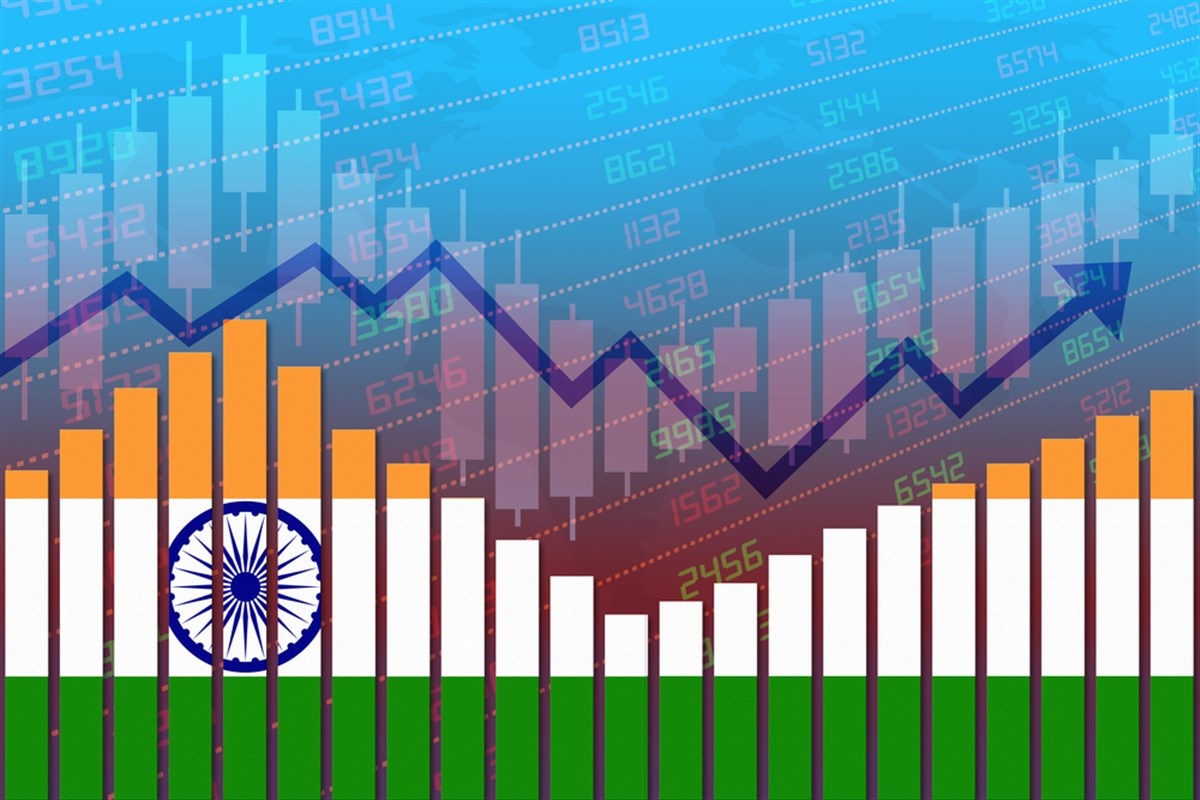
Indian equities opened the week on a firm footing, with benchmark indices climbing in a broad-based rally after the Supreme Court of the United States struck down sweeping import levies imposed by President Donald Trump.

The Nifty 50 rose 0.64% to 25,733, while the BSE Sensex gained 0.62% to 83,333.08 as of 9:41 a.m. IST. Market breadth was decisively positive, with 15 of 16 major sectoral indices trading higher.

Broader indices also advanced. The Nifty Smallcap 100 climbed 0.8%, and the Nifty Midcap 100 edged up 0.1%, indicating risk appetite beyond frontline blue chips.

Tariff Relief Drives Export Optimism

Friday’s ruling by the U.S. Supreme Court invalidated tariffs introduced under emergency powers, reshaping expectations for global trade flows. While Trump subsequently said he would raise a temporary tariff on U.S. imports from 10% to 15% under separate statutory authority, investors appeared to focus on the immediate easing of legal uncertainty surrounding the earlier levies.

“The development is a significant positive for export-oriented sectors, as the effective tariff burden eases,” said Sudeep Shah, head of technical and derivatives research at SBI Securities.

Textile stocks, highly sensitive to U.S. demand, led gains. Trident, Welspun Living, Arvind, and Kitex Garments rose between 2.5% and 8%, reflecting expectations of improved pricing competitiveness in the U.S. market.

India’s textile and apparel exporters are particularly exposed to shifts in U.S. tariff policy, given the scale of American consumer demand and competition from other Asian suppliers.

Despite the rally, investors remain alert to further policy adjustments from Washington. Trump’s weekend announcement that he would increase a temporary tariff to 15% underscores the fluidity of the trade landscape.

Shah cautioned that “any fresh statements or alternative tariff actions under different presidential authorities could reintroduce volatility in the near-term.”

The evolving U.S. position has also prompted strategic recalibration in New Delhi. India delayed plans to send a trade delegation to Washington, citing the need to assess the implications of the court ruling and subsequent tariff changes. The postponement highlights how rapidly shifting U.S. trade policy can disrupt bilateral negotiations and corporate planning.

Divergence in Financials and Pharma

Not all stocks participated in the rally.

IDFC First Bank plunged 15% after disclosing it was investigating a suspected $65 million fraud involving accounts of local government entities. The development raised governance and compliance concerns, dragging the lender sharply lower.

AU Small Finance Bank fell 6.6% after the Haryana government de-empanelled the bank for government business following disclosures of unauthorized and suspected fraudulent activities. The move threatens a revenue stream tied to public-sector transactions.

In pharmaceuticals, Cipla declined 2% after the U.S. Food and Drug Administration classified a unit of its supply partner, Pharmathen Internation in Greece, as “official action indicated” following an inspection. The designation suggests potential regulatory follow-up and may complicate supply chains for certain products.

However, the rally reflects more than a legal technicality. For Indian markets, U.S. tariff decisions feed directly into earnings projections for export-heavy sectors, including textiles, pharmaceuticals, auto components, and information technology services-linked manufacturing.

Relief from sweeping tariffs reduces downside risk to margins and order books, at least in the short term. However, the introduction of a revised 15% temporary tariff keeps a baseline layer of trade friction intact.

Currency dynamics will also be watched closely as a more predictable U.S. trade stance could stabilize capital flows into emerging markets, while abrupt policy shifts may renew volatility in the rupee and equity markets.

For now, investors appear to be pricing in the immediate positive signal from the court ruling, while bracing for additional announcements that could alter the calculus once again.

Overall, the session’s gains suggest confidence that the worst-case tariff scenario has been mitigated — but the durability of that optimism will depend on how the next chapter of U.S. trade policy unfolds.