DD
MM
YYYY

PAGES

DD
MM
YYYY

spot_img

PAGES

Home Blog Page 2300

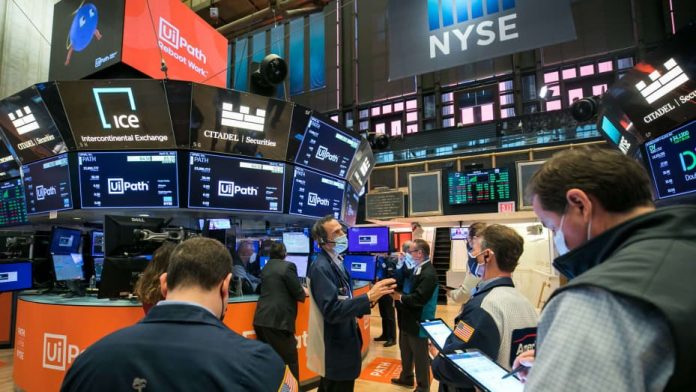
NYSE Submits Proposal to Add Staking on the Bitwise Ether ETF

0

New York Stock Exchange (NYSE) submitted a proposal to the U.S. Securities and Exchange Commission (SEC) to amend the Bitwise Ethereum ETF (ETHW) rules, allowing it to stake the Ethereum (ETH) held by the Trust. This filing, made under the 19b-4 process, aims to enable the ETF—already approved for listing and trading on the NYSE—to offer staking rewards to investors. If approved, this would mark a significant step, potentially making it one of the first U.S. ETFs to integrate staking, a process where ETH is locked up to support the Ethereum network in exchange for rewards.

The proposal outlines a “point-and-click” staking method, where the ETF’s ETH would remain in its wallet, reducing security risks like theft while still earning rewards. Bitwise, the ETF’s sponsor, would manage staking through authorized providers, ensuring the assets stay secure and liquid for investor redemptions. This move could enhance the ETF’s appeal by combining exposure to ETH price movements with passive staking income, all within a regulated investment vehicle traded on the NYSE.

The SEC’s decision is pending, and approval isn’t guaranteed. The agency has historically been cautious about crypto products, often citing concerns over market stability, investor protection, and fraud. However, a shifting regulatory climate—potentially influenced by a more crypto-friendly administration—might improve its chances. If successful, this could boost institutional interest in Ethereum and set a precedent for other proof-of-stake assets in ETF structures. For now, the outcome remains uncertain, with operational risks like “slashing” penalties for validator errors.

Staking rewards are incentives earned by participants in a proof-of-stake (PoS) blockchain network, like Ethereum, for helping secure and operate the network. Unlike proof-of-work systems (e.g., Bitcoin), where miners use computational power to validate transactions, PoS relies on users “staking” their cryptocurrency—locking it up in a wallet—to support the network’s operations. In return, they receive rewards, typically paid in the same cryptocurrency.

To participate, you lock up a minimum of 32 ETH (or join a staking pool with less) to become a validator. Validators are responsible for proposing and verifying new blocks of transactions on the blockchain. The network randomly selects validators to perform these tasks based on the amount of ETH staked and other factors. When a validator successfully adds or verifies a block, they earn a reward. This is usually a percentage of the staked ETH, paid out in newly minted ETH or transaction fees.

On Ethereum, staking rewards typically range from 2% to 7% annually, though this fluctuates based on network activity, total ETH staked, and validator performance. For example, if 10 million ETH are staked and the reward rate is 5%, a validator staking 32 ETH might earn about 1.6 ETH per year. Staked ETH is locked and can’t be traded or withdrawn until certain conditions are met (e.g., Ethereum’s Shanghai upgrade in 2023 enabled withdrawals). This commitment ensures network stability.

The Bitwise Ethereum ETF, staking rewards would mean the ETF locks up its ETH holdings with trusted providers to earn this yield, passing the profits (minus fees) to investors. It’s like earning interest on a savings account but tied to securing a decentralized network. The ETF’s “point-and-click” approach simplifies this by keeping ETH in its own wallet, avoiding direct custody risks while still tapping into the reward stream. This could make the ETF more attractive, blending ETH price gains with a steady income component—assuming the SEC greenlights it.

BlockDAG Ambassador Program Details Out! ETH Market Analysis Shows Bearish Trend & XRP Price Drops

0

Market volatility continues to dictate price movements, with Ethereum (ETH) market analysis pointing to ongoing struggles in surpassing the $2,100 resistance level. Despite accumulating pressure from large holders adding more ETH, technical signals still suggest bearish momentum remains dominant.

Meanwhile, the XRP price drop has put traders on high alert, with increased short interest keeping the asset under pressure. It is barely holding at $2.18, and without reclaiming $2.47, a deeper fall remains likely.

While ETH and XRP grapple with resistance, BlockDAG (BDAG) is surging ahead, securing over $205 million in presale funds and witnessing a 2,380% price jump. BDAG’s momentum is undeniable, and its newly launched Ambassador Program now allows early backers to earn rewards while contributing to a project setting its sights on the top 10 crypto rankings.

Ethereum Market Analysis: Struggles Below Key Resistance

The Ethereum (ETH) market analysis reflects an uncertain outlook, with the price struggling to push beyond crucial levels. ETH remains below $2,100, a level that traders are closely monitoring. Multiple failed attempts to break out suggest ongoing downward pressure, reinforcing a cautious sentiment in the market.

Despite this, Ethereum (ETH) market analysis also highlights that large-scale holders continue accumulating ETH, which some analysts view as a potential reaccumulation phase ahead of a price rebound. However, the overall price action remains weak. Currently priced at $1,895, Ethereum would need to clear $2,125 to pave the way for further gains.

XRP Price Drops as Bears Take Control

The XRP price drop has made traders wary, as the asset struggles to maintain support at $2.18. Broader market trends and a cautious risk environment have pushed XRP lower, discouraging speculative activity. With XRP price drop concerns rising, market data reveals that 77% of leveraged traders are betting against the asset.

Technical indicators signal that unless XRP surpasses $2.47, further declines could be unavoidable. The next significant support level sits at $1.95, where some buying interest may emerge. However, resistance at $2.70 remains strong, and any upside movement will require a considerable shift in sentiment. Market watchers are keeping an eye on these levels to determine the next move.

BlockDAG’s Ambassador Program Brings Big Rewards

BlockDAG is rapidly gaining ground, amassing over $205 million from its presale while drawing in a dedicated community. With more than 300,000 social media followers and the X1 miner app already boasting over 500,000 users, BDAG is proving to be a major player. Its presale, now in batch 27, has seen 18.8 billion coins sold, with BDAG’s price climbing 2,380% to $0.0248. These milestones have fueled growing confidence in its potential as a top 10 crypto contender.

The project’s new Ambassador Program is now live, offering an opportunity for community members to help drive adoption while receiving BDAG rewards, USDT stipends, and valuable blockchain experience. Whether developers, content creators, or Web3 enthusiasts, participants can actively contribute while benefiting from a fast-growing project.

Beyond financial perks, the program provides hands-on involvement in a thriving ecosystem. As BlockDAG’s crypto presale accelerates, early supporters are positioning themselves for both immediate gains and long-term opportunities, strengthening its journey toward mainstream recognition.

Wrapping Up!

The Ethereum (ETH) market analysis underscores the challenge of pushing past $2,100, despite continued whale accumulation. The lack of upward traction keeps traders cautious. At the same time, the XRP price drop persists, with bears in control and resistance at $2.47 limiting potential recoveries.

While ETH and XRP face roadblocks, BlockDAG is capturing attention. Its Ambassador Program allows early adopters to earn while supporting a rising project. With over $205 million raised and a 2,380% surge, BDAG is making waves, and traders are taking notice before it reaches the top 10 crypto rankings.

Presale: https://purchase.blockdag.network

Website: https://blockdag.network

Telegram: https://t.me/blockDAGnetworkOfficial

Discord: https://discord.gg/Q7BxghMVyu

TRUMP Price Drops 21% & TAO’s Outlook Shaky — BlockDAG Raises the Bar on Security as Crypto Hacks Shake Confidence!

0

The latest market downturn has traders scrambling to reassess their portfolios. The Official Trump (TRUMP) price has plunged 21% over the past week. Many link this sharp decline to Bitcoin’s slide and the letdown from Donald Trump’s newest executive order.

Meanwhile, the Bittensor (TAO) future remains unclear as the token tumbled below $300. Analysts are eyeing a critical range between $250 and $260 to see if it holds. Bitcoin’s next move could heavily influence both TRUMP and TAO prices going forward.

Yet for those still asking which crypto to buy today, BlockDAG (BDAG) is making waves. The team has tightened security through an external review by Halborn, ongoing CertiK assessments, and in-depth internal audits. Combine this with a stellar presale that’s already pulled in $205 million, and BlockDAG is becoming a bright spot in an otherwise shaky market.

TRUMP Price Drops 21% as Market Sentiment Worsens

The Official Trump (TRUMP) price has slipped to $10.15 following a tough 21% loss this week. Bitcoin’s downturn has dragged most altcoins lower, and TRUMP is no exception. The drop is also being blamed on disappointment over Donald Trump’s recent executive order, which skipped over any direct mention of Bitcoin purchases. Many in the crypto community were hoping for stronger backing, but this cautious move has left them unimpressed, putting even more pressure on TRUMP’s price.

Wider market weakness, including lackluster U.S. job reports, has added to the slide. Some analysts say a recovery for TRUMP could follow if Bitcoin stabilizes. But for now, sentiment needs a serious lift—and perhaps better policy moves—before any quick rebound is possible.

TAO’s Future Faces Questions After Falling Below $300

Bittensor (TAO) is also feeling the heat. After dipping under $300, the TAO future is under serious scrutiny. The token is now down 46% from its February peak, and many are watching to see if it finds support in the $250-$260 zone where trading activity has been concentrated.

Just like TRUMP, TAO’s future depends on what Bitcoin does next. So far, altcoins have been following Bitcoin’s lead, and TAO is no exception. Analysts point out heavy resistance at $320 and $360. But if Bitcoin fails to turn things around, the TAO future could see prices slip as low as $216 before finding its footing. Buyers are keeping a close eye on volume and price action before making any long-term commitments.

BlockDAG Sharpens Security to Win Trust

Recent security breaches have shaken crypto holders. Multi-million-dollar hacks on exchanges and smart contract failures have wiped out funds fast. Big names like Bybit and DAO have been hit hard, leaving a cloud of doubt over the sector. If there’s one clear takeaway, it’s this—security has to come first.

BlockDAG knows what’s at stake. They’ve built a tough, layered security setup designed to lock things down. This includes extensive internal audits, a completed security review by Halborn, and an ongoing assessment from CertiK. After their beta testnet launch, they’re planning a full blockchain audit. Plus, BlockDAG’s Bug Bounty Program rewards ethical hackers for finding issues before bad actors can exploit them.

These efforts are already paying off. BlockDAG’s presale has exploded, with early adopters seeing 2,380% returns. The project has raised $205 million and sold 18.8 billion coins. Batch 27 coins are now going for $0.0248. With a mainnet launch and exchange listings just around the corner, traders are anticipating even more momentum—and many don’t want to miss their chance.

For anyone wondering which crypto to buy today, BlockDAG makes a strong case. The project offers serious security, clear progress, and a roadmap that’s got people excited. As demand keeps rising, there’s a growing sense that now is the time to act—before it’s too late.

What’s Next for TRUMP, TAO, & BDAG?

Crypto traders remain fixated on market trends as the Official Trump (TRUMP) price struggles to recover from a 21% fall, and the Bittensor (TAO) future remains murky. Both assets have suffered heavy losses, with Bitcoin’s performance steering their next moves. Analysts are watching for signs of support on TAO and a possible bounce for TRUMP if market sentiment shifts.

But for those still deciding which crypto to buy today, BlockDAG is looking like the obvious answer. Backed by Halborn and CertiK audits and with $205 million already raised in its presale, BlockDAG has become a lifeline in today’s uncertain market. As its mainnet and exchange debuts get closer, more traders are jumping in—hoping to get ahead before prices climb higher.

Presale: https://purchase.blockdag.network

Website: https://blockdag.network

Telegram: https://t.me/blockDAGnetworkOfficial

Discord: https://discord.gg/Q7BxghMVyu

JPMorgan Chase Renames DEI Program (DOI) Amid Trump Administration Crackdown

0
JP Morgan Chase puts contents through its CEO account, it goes viral. But the same content via JPMC account, no one cares (WSJ)

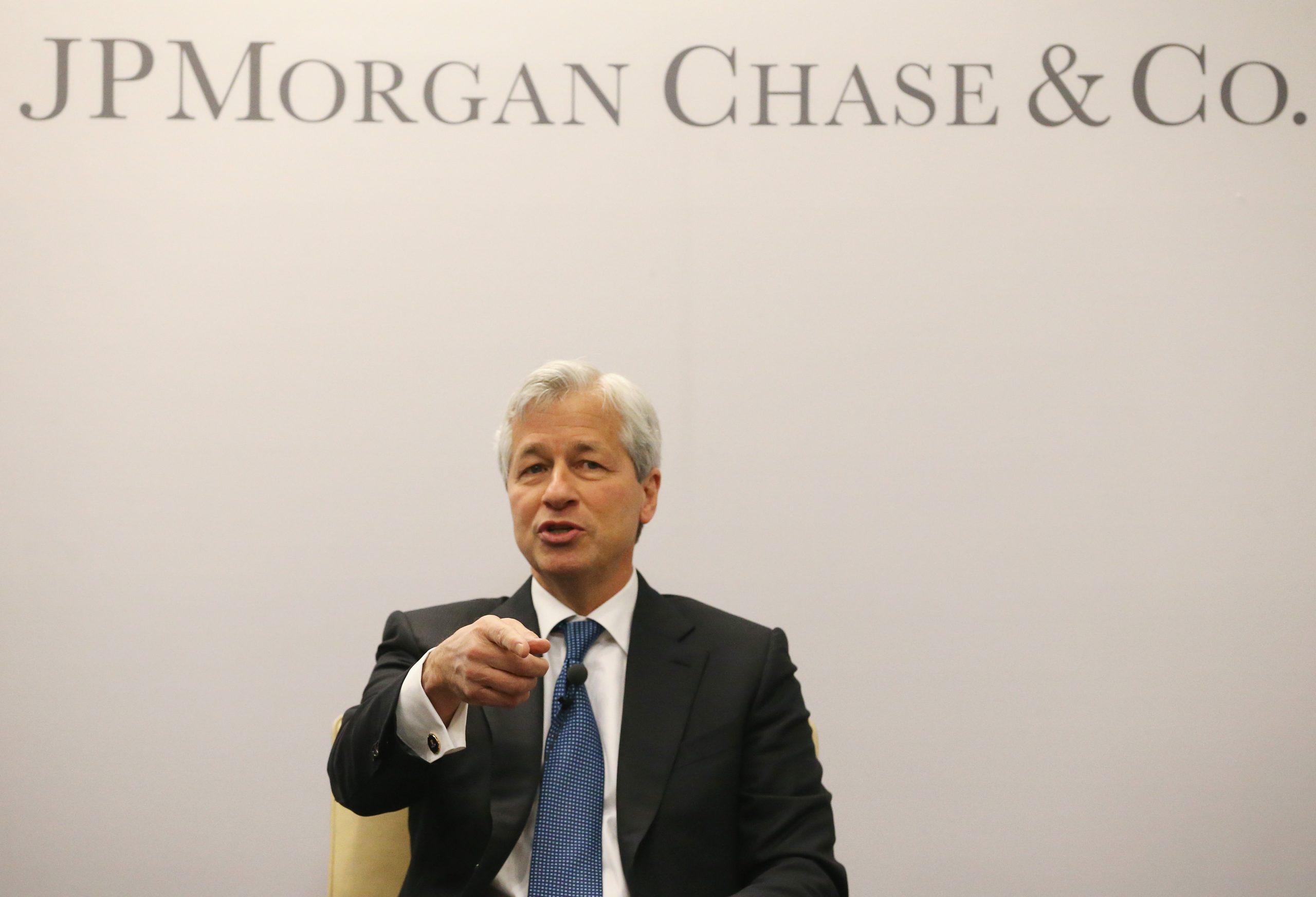
JPMorgan Chase & Co., the largest bank in the United States, has announced a rebranding of its Diversity, Equity, and Inclusion (DEI) program to Diversity, Opportunity, and Inclusion (DOI).

The move comes as the Trump administration intensifies its attack on corporate DEI initiatives, pushing companies to reconsider their approach to diversity efforts.

In a memo to staff, JPMorgan’s Chief Operating Officer, Jenn Piepszak, explained that the bank always understood the “E” in DEI to mean equal opportunity, not equal outcomes. She stated that DOI more accurately reflects the bank’s ongoing approach to growing its business while reaching the most customers and clients.

The decision aligns with a broader shift in corporate America, as many companies have begun reversing, scaling back, or completely eliminating DEI programs in response to increasing political scrutiny.

Trump Administration’s DEI Crackdown

Since taking office in January, President Donald Trump has signed a series of executive orders aimed at dismantling DEI policies across the federal government and corporate sectors. These measures have banned federal agencies and contractors from funding DEI programs, forcing them to erase references to diversity efforts from their websites. They have also restricted corporate hiring and promotion initiatives that incorporate race or gender considerations while threatening legal action against companies that continue to operate DEI policies deemed discriminatory.

As a result, major corporations are adjusting their policies to avoid potential legal and regulatory battles.

JPMorgan’s New Approach to Diversity

While renaming the initiative, JPMorgan insists it remains committed to diversity in hiring, compensation, and promotions—without implementing quotas or race-based pay incentives. In her memo, Piepszak reassured employees that the bank does not have illegal quotas or pay incentives and would never turn someone away because of their political or religious beliefs, or because of who they are.

The bank also announced that it will scale back diversity training programs, maintaining only what it describes as “high-quality offerings.” Employee resource groups, which serve as internal communities for minority and marginalized employees, will remain but will shift their focus to engagement, cultural celebrations, and education rather than direct advocacy.

Other Major Companies Scaling Back DEI

JPMorgan is not alone in making adjustments. Several high-profile companies have also scaled back or eliminated DEI programs in response to political pressure. Goldman Sachs and Citigroup have reduced their diversity hiring targets following scrutiny from conservative groups and political leaders. Walt Disney Co. has quietly removed references to DEI from its corporate strategy, shifting its focus toward traditional merit-based hiring.

Accenture, a global consulting giant, has announced it will no longer use diversity targets in hiring and promotions, citing Trump’s executive orders. Swiss pharmaceutical companies Novartis and Roche have abandoned certain DEI initiatives over concerns about potential legal risks in the U.S. market. Meta, Facebook’s parent company, has disbanded its DEI team, with reports suggesting the company is distancing itself from DEI-related policies.

This wave of corporate rollbacks signals a shift in corporate America’s approach to diversity policies, as businesses attempt to navigate political pressure while maintaining their commitments to inclusion.

The dismantling of DEI initiatives has sparked criticism from civil rights groups, legal scholars, and corporate leaders, who warn that reducing diversity efforts could expose companies to lawsuits for failing to uphold workplace inclusion policies. Many argue that these rollbacks will discourage minority hiring and promotion opportunities, leading to long-term workforce disparities. Others caution that the removal of structured diversity programs could create a hostile work environment for employees who previously benefited from them.

Despite these concerns, Trump’s administration remains firm in its stance against DEI, claiming that such programs promote discrimination rather than prevent it.

Uranium Digital successfully Raised $6.1M to Boost RWA

0

Uranium Digital, a startup focused on revolutionizing uranium trading through tokenization, has successfully raised $6.1 million in a seed funding round. The round was led by Framework Ventures, with participation from other investors, to accelerate the development of a crypto-powered spot trading platform for uranium. This platform aims to bring efficiency and transparency to the uranium market by leveraging blockchain technology, specifically targeting institutional clients while abstracting away the complexities of on-chain trading.

The company, founded by Alex Dolesky, seeks to “financialize” the traditionally opaque and underfunded uranium spot market, capitalizing on the growing global demand for nuclear energy as a clean power source. The funds will be used to enhance the platform’s infrastructure, expand business and engineering teams, and expedite its launch to meet what Dolesky describes as exceptional market demand. This follows a previous pre-seed round of $1.7 million, reflecting strong investor confidence in the startup’s vision to modernize uranium trading.

The $6.1 million seed round raised by Uranium Digital to tokenize uranium sales carries several significant implications across financial, energy, and technological domains. Tokenization on a blockchain platform could streamline the traditionally opaque uranium spot market, reducing intermediaries and transaction costs. By digitizing uranium sales, buyers and sellers—especially institutional players—might benefit from faster settlements and clearer pricing data.

Historically, uranium trading has been illiquid and dominated by long-term contracts. A tokenized spot market could attract more participants, including speculative investors, potentially increasing liquidity and market depth. While aimed at institutions, the platform’s abstraction of blockchain complexities might eventually lower barriers for smaller players, democratizing access to a niche commodity market.

As global demand for clean energy rises, nuclear power is gaining traction. Uranium Digital’s platform could ensure a more reliable and flexible uranium supply chain, supporting the expansion of nuclear energy infrastructure. Increased trading activity and speculation via tokenization might introduce greater price volatility to uranium, which could affect the economics of nuclear power projects—either encouraging investment during price spikes or deterring it during slumps.

This venture exemplifies the growing intersection of cryptocurrency and real-world assets (RWAs). Tokenizing uranium could set a precedent for other commodities (e.g., rare earths, lithium) to adopt similar models, further bridging traditional finance and decentralized systems. The involvement of Framework Ventures and other backers’ signals confidence in crypto-driven financialization. It may draw more venture capital into energy-tech hybrids, especially those leveraging blockchain.

Uranium Digital’s success hinges on building robust infrastructure and convincing conservative energy markets to adopt a crypto-based system. Technical hiccups or security breaches could undermine trust. Uranium is a heavily regulated material due to its use in nuclear energy and weapons. Tokenization introduces questions about compliance with international trade laws, anti-money laundering (AML) rules, and nuclear non-proliferation agreements. Regulatory pushback could slow or derail the platform’s rollout.

The funding reflects optimism about a “nuclear renaissance” driven by climate goals. If successful, Uranium Digital could amplify this narrative, encouraging more investment in nuclear-related technologies. This isn’t just about uranium—it’s a sign of blockchain’s evolution beyond meme coins and DeFi hype into practical, industrial applications. It could bolster the credibility of crypto as a transformative tool.

In summary, Uranium Digital’s seed round and tokenized trading platform could reshape how uranium is bought and sold, aligning with trends in clean energy and financial innovation. However, its implications hinge on execution, market adoption, and navigating a complex regulatory landscape. Success could ripple beyond uranium, while failure might caution against overhyping blockchain’s commodity potential.