DD
MM
YYYY

PAGES

DD
MM
YYYY

spot_img

PAGES

Home Blog Page 2304

Power, Resistance, and the Future of the Ogoni Struggle

0

The Ogoni Bill of Rights stands as one of the most significant documents in the fight for environmental justice, indigenous rights, and political autonomy in Nigeria. It is more than a historical declaration; it is a powerful indicator of the resilience of a people marginalized by the state and exploited by multinational corporations. More than three decades after its publication, its demands remain largely unmet, raising urgent questions about power, governance, and corporate accountability in Nigeria.

At its core, the Ogoni Bill of Rights is a response to an entrenched system of economic and political exclusion. It documents years of environmental destruction caused by oil exploration in the Niger Delta, the systematic marginalization of the Ogoni people, and the failure of the Nigerian government to protect their rights. But beyond the grievances, the Bill also offers a roadmap for justice; one that continues to challenge the status quo.

The Structural Forces at Play

Understanding why the Ogoni struggle persists requires a deeper examination of the structural forces at work. The relationship between the Nigerian state and multinational oil corporations has long been characterized by mutual benefits at the expense of local communities. The government’s reliance on oil revenues has made it complicit in the exploitation of regions like Ogoniland, where environmental regulations have been weakly enforced, and protests have been met with brutal crackdowns.

Corporate actors, particularly multinational oil companies, have leveraged their economic power to shape policies and narratives that downplay their environmental and social responsibilities. The Ogoni Bill of Rights directly challenges this dynamic, making it a revolutionary document that seeks not just environmental restoration but also a restructuring of governance and economic systems.

At the same time, the resistance faced by the Ogoni people reflects a broader pattern seen across resource-rich but marginalized communities. The suppression of dissent through military action, legal constraints on activism, and the criminalization of protest are all tools used to maintain the dominance of the state-corporate alliance. This raises a fundamental question: How do communities reclaim power in a system designed to exclude them?

The Role of Narratives and Historical Revisionism

One of the most effective ways the powerful maintain control is through narratives. For decades, the dominant discourse has framed oil extraction as a necessary driver of national development, with local resistance portrayed as an obstacle to progress. However, the Ogoni Bill of Rights challenges this perception by presenting a counter-narrative—one that exposes the long-term costs of unchecked resource exploitation.

This shift in narrative is critical because power is not just about economic and political control; it is also about who gets to define reality. By documenting their experiences and making international appeals, the Ogoni people have succeeded in reframing their struggle from a local grievance to a global human rights issue. This has had tangible effects, from influencing corporate social responsibility policies to shaping global conversations about environmental justice.

However, narratives alone are not enough. Without legal and institutional changes, even the most compelling stories risk being reduced to symbolic victories. The failure of successive Nigerian governments to fully address the demands of the Ogoni Bill of Rights highlights the limits of awareness without enforcement.

Surveillance, Repression, and the Control of Dissent

The systematic repression of the Ogoni movement demonstrates how power operates not just through laws and policies but also through surveillance and coercion. The execution of Ken Saro-Wiwa and other Ogoni leaders in 1995 remains one of the most striking examples of how dissent is punished. Even today, environmental activists in the Niger Delta face threats, arrests, and violence for challenging the status quo.

This raises serious concerns about the shrinking civic space in Nigeria and other parts of Africa. When governments prioritize corporate interests over human rights, democratic institutions are weakened, and social trust erodes. For stakeholders—ranging from civil society organizations to policymakers—the challenge is not just to condemn these violations but to create mechanisms that protect communities from state and corporate abuses.

The Future of the Ogoni Struggle: Lessons for Stakeholders

Addressing historical injustices requires more than rhetoric. Concrete actions, such as enforcing environmental clean-up efforts, implementing resource control policies, and recognizing indigenous governance structures, are necessary to rebuild trust. The reluctance to fully implement the UNEP-led clean-up of Ogoniland is a glaring example of the gap between promises and action.

The era of unchecked corporate power is fading. Investors and consumers are increasingly demanding accountability from businesses operating in vulnerable regions. Companies that fail to align with ethical environmental practices and social responsibility will face reputational and financial risks. Transparency, fair compensation, and meaningful engagement with local communities should no longer be seen as optional but as fundamental business principles.

The Ogoni struggle demonstrates the power of organized resistance. However, movements must evolve by leveraging technology, legal mechanisms, and international alliances to sustain momentum. Strategic litigation, digital advocacy, and coalition-building with global environmental groups can amplify local voices in ways that traditional protests alone cannot.

Global institutions and foreign governments have a role to play in holding both corporations and states accountable. Sanctions, trade policies, and diplomatic pressure can be effective tools if applied consistently. However, the international community must also recognize its complicity; many of the corporations responsible for environmental degradation in the Niger Delta are headquartered in the West, and their continued operations are often enabled by lax regulatory frameworks in their home countries.

TRUMP Token Mania: How Politics is Redefining Cryptocurrency

0

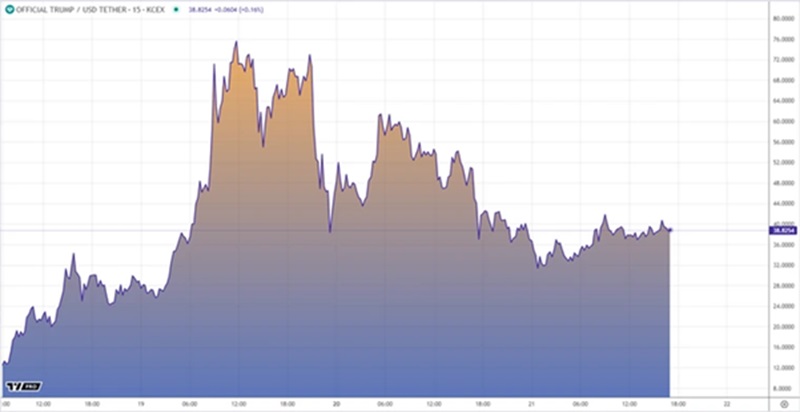
The cryptocurrency market recently witnessed an unprecedented event. Just two days before his official inauguration, US President-elect Donald Trump made waves by launching an “official meme” cryptocurrency called TRUMP on the X social network. This bold move not only became a sensation but also catapulted his wealth to astronomical heights and led to a surge in crypto trading volumes.

Within 48 hours of its launch, the TRUMP token’s 24-hour trading volume reached a staggering $52.5 billion, indicating a high interest level from private investors and large financial institutions. At the same time, Bitcoin price made a mighty leap, reaching a new all-time high. This synchronized growth shows how political events can ripple through financial markets, creating extraordinary opportunities for speculation.

Of the almost 1 billion TRUMP tokens issued, about 80% are controlled by CIC Digital LLC, an affiliate of The Trump Organization, and another Trump company, Fight LLC. This gives Trump an estimated $40 billion fortune tied to meme coins alone. Such a tremendous success can be attributed to the unique mechanism for attracting investors embedded in the TRUMP token.

Built on the Solana blockchain, the TRUMP token has become a speculative financial instrument, allowing investors to bet on political changes. However, this also makes it an inherently unstable financial asset, as Trump’s political decisions can directly impact the token’s price and, by extension, investors’ profits.

Of the issued tokens, 200 million coins are actively traded. Trump-controlled entities own the rest and may enter the market over the next three years, starting in April. According to the official website, the new cryptocurrency is not an investment opportunity and has nothing to do with any political campaign or office. Still, that hasn’t stopped early adopters from reaping millions on it. On average, Trump’s companies will be able to sell about 24 million tokens per month, further fueling market speculation.

Adding to the family’s crypto empire, Trump’s wife, launched her own token, MELANIA. It quickly skyrocketed in value, reaching $9.6 per coin and achieving a market capitalization of over $1.85 billion. Not to be left behind, Donald’s daughter entered the crypto space with her own IVANKA token, cementing the Trump family’s growing influence in the cryptocurrency arena.

The prospect of easing regulation in the field of cryptocurrencies has sparked enthusiasm in the industry, which has been one of the factors driving Bitcoin’s growth since Trump’s election victory in November.

Interestingly, Trump’s influence extends beyond cryptocurrencies, with notable ripples in traditional currency markets. As the USD experienced a pullback at the start of Trump’s term, European currencies like EUR/USD and GBP/USD show signs of strengthening in response to his inauguration.

Thus, the story of cryptocurrencies launched by Donald Trump highlights how extraordinary political events can profoundly impact financial markets. As the crypto industry navigates this new era, the allure of crypto riches will continue to draw both investors and regulators into its fold. However, it is vital to remember that cryptocurrency investments are inherently risky, and every decision requires careful analysis.

Volunteering and SDGs 2030 Through the Lens of World Values Survey

0

Over the past four decades, the World Values Survey (WVS) has provided critical insights into global attitudes toward volunteering. Conducted between 1981 and 2022, the survey reveals patterns of civic engagement across various sectors, highlighting both strengths and gaps in volunteer participation. As the world moves towards the Sustainable Development Goals (SDGs) 2030, understanding these trends is vital for shaping policies and initiatives that enhance collective efforts for global progress. According to the survey, individuals are more likely to engage in social welfare and religious organizations than in environmental, political, or peace-related initiatives. This pattern has remained relatively consistent over the years, reflecting cultural and societal priorities that shape volunteer behaviour.

High Engagement in Social Welfare and Religious Organizations

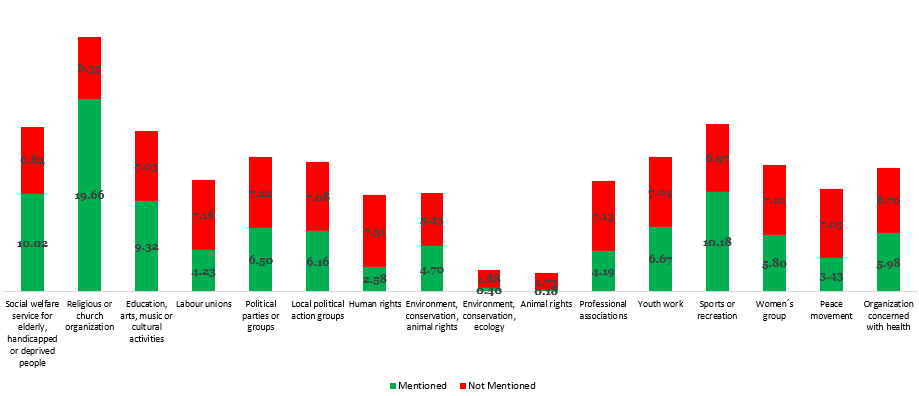
Among the surveyed groups, social welfare services for the elderly, handicapped, or deprived people saw strong participation, with 10.02% of respondents mentioning engagement. Similarly, religious or church organizations attracted the highest engagement at 19.66%. This highlights the enduring role of faith-based and humanitarian groups in fostering community support.

These findings align with SDG 1 (No Poverty) and SDG 10 (Reduced Inequalities), as volunteers in these sectors contribute directly to supporting vulnerable populations. The challenge, however, is ensuring that these efforts are integrated into formal structures that enhance long-term social impact rather than being limited to ad-hoc charitable activities.

Moderate Involvement in Political and Civic Engagement

Participation in labour unions (4.23%), political parties (6.50%), and local political action groups (6.10%) remained relatively low throughout the survey period. This suggests a persistent gap in political engagement, despite the increasing importance of civic participation in democratic governance.

For SDG 16 (Peace, Justice, and Strong Institutions), this is a crucial area of concern. Strong institutions thrive on active citizen engagement, and low volunteerism in these sectors may indicate a lack of trust in political systems or a limited understanding of how individuals can contribute to policy development. Governments and civil society organizations must address this gap by promoting civic education and creating more accessible pathways for political participation.

Limited Participation in Environmental and Animal Rights Organizations

Perhaps the most concerning finding is the low engagement in environmental conservation and animal rights volunteering. Only 4.70% of respondents mentioned involvement in environmental causes, while a mere 0.92% cited participation in environmental conservation and ecology.

As the world faces escalating climate challenges, these numbers suggest an urgent need to mobilize public participation in climate action (SDG 13). Governments, non-governmental organizations (NGOs), and businesses must intensify awareness campaigns, incorporate environmental education into school curricula, and provide tangible incentives for individuals to engage in sustainability efforts.

Health and Peace Movements: Areas of Concern

Organizations concerned with health saw only 5.98% engagement, while peace movements garnered 3.43%. Given the global health crises, including pandemics, mental health concerns, and healthcare accessibility, these numbers raise concerns about the prioritization of health-related volunteering.

The low participation in peace movements similarly poses challenges for SDG 16. With geopolitical conflicts and social unrest on the rise, fostering volunteer-driven peace initiatives should be a global priority. Governments and international organizations should consider integrating peace education programs and community conflict-resolution initiatives to encourage greater involvement.

Exhibit 1: People’s interest in various volunteering types (in percentage)

Source: World Values Survey, 1981-2022; Infoprations Analysis, 2025

 Strategies for Strengthening Volunteerism

Volunteerism holds the power to transform societies, yet the disparities in engagement revealed by the World Values Survey indicate that much work remains to be done. To truly harness the potential of volunteerism for sustainable development, we must address the gaps (both in awareness and participation) by fostering a culture of civic engagement that is inclusive, sustainable, and responsive to global challenges.

One of the most pressing concerns is the unequal distribution of volunteer participation across different sectors. Religious organizations, social welfare services, and cultural activities receive significant attention, yet environmental conservation, human rights, and peace movements struggle to attract sustained involvement. This imbalance suggests that while people recognize the importance of community and tradition, causes that address long-term systemic challenges require more visibility and advocacy. Bridging this gap means rethinking how we engage volunteers, ensuring that all causes, especially those directly linked to the Sustainable Development Goals (SDGs), receive the necessary support.

A key strategy lies in education and awareness. Many individuals may not volunteer simply because they are unaware of the impact they can have. Schools, workplaces, and digital platforms can play a vital role in embedding a sense of civic duty from an early age. Integrating volunteerism into formal education, through service-learning programs or community-based projects, can inspire lifelong commitment. Governments and organizations should also invest in campaigns that highlight the direct impact of volunteering on social progress, demonstrating how small actions contribute to broader global goals.

Another critical factor is accessibility. Volunteering should not be a privilege available only to those with time and financial stability. Many people, particularly in low-income communities, may be willing to contribute but lack the resources or flexible opportunities to do so. To address this, organizations must develop more inclusive models of volunteer engagement such as micro-volunteering, remote opportunities, and skills-based initiatives that allow individuals to contribute based on their expertise and availability. Providing stipends or incentives for volunteers, particularly in high-impact areas like human rights and environmental conservation, could also help bridge economic barriers to participation.

Technology presents another avenue for strengthening global volunteerism. Digital platforms can connect people across borders, enabling collaboration on pressing issues regardless of geographic limitations. From virtual mentorship programs to online advocacy campaigns, leveraging technology can expand the reach of volunteer-driven initiatives and create opportunities for those who might otherwise struggle to participate. Additionally, organizations should embrace data-driven strategies to track participation trends, understand volunteer motivations, and tailor engagement efforts accordingly.

At the heart of any effective volunteer movement is collaboration. Governments, non-profits, businesses, and international organizations must work together to create an ecosystem that nurtures and sustains volunteer efforts. Public-private partnerships can provide financial and infrastructural support, while global frameworks (such as the United Nations’ SDG Action Campaign) can help align local volunteer efforts with international development goals. Encouraging cross-sector collaboration ensures that volunteerism is not just an individual act of goodwill but a strategic tool for systemic change.

Ultimately, the future of volunteerism depends on how effectively we bridge these gaps. Strengthening engagement across all sectors, making opportunities more accessible, leveraging technology, and fostering collaboration will ensure that volunteerism remains a driving force for sustainable development. As we move closer to 2030, it is clear that achieving the SDGs is not just the responsibility of governments and institutions; it is a collective effort that requires the participation of individuals and communities worldwide.

Editor’s Note: The analysis covers 41,786 responses from participants who mentioned volunteering and 633,698 responses from those who did not, across the various volunteering types considered in the survey.

With X Money Wallet, X (Twitter) Goes Fintechnolization

1

When you ask any thinking AI this question – “what is fintechnolization?” – you could get this answer (Microsoft Copilot):  “Fintechnolization is a term coined by Ndubuisi Ekekwe, which refers to the trend of digital platforms evolving to offer financial services. Essentially, it means that many companies, even those not initially in the financial sector, are incorporating fintech solutions into their business models. This trend is driven by the high value and demand for financial services, making it a lucrative addition for digital platforms.

“For example, companies like Tencent and Alibaba in China, and Google and Facebook in the U.S., have integrated financial services into their platforms. This allows them to provide a more comprehensive range of services to their users and tap into new revenue streams.”

The AI tried and my real position is this: when digital platforms attend stable states, they are expected to add financial products. X (Twitter) is elevating that playbook with X Money account in partnership with Visa!

What is X Money Account? “X struck a deal with Visa, the largest U.S. credit card network, to be the first partner for what it is calling the X Money Account…Visa will enable X users to move funds between traditional bank accounts and their digital wallet and make instant peer-to-peer payments, like with Zelle or Venmo.”

The Fintechnolization of Digital Platforms

OpenAI Sam Altman Reacts to DeepSeek R1 Model, Promises to Roll Out Much Better Models

0

OpenAI CEO and founder Sam Altman, has reacted to the DeepSeek frenzy, that has stirred the tech world, describing the model as impressive.

Altman noted that the Chinese AI startup has a great model, particularly around what they are able to deliver for the price.

In a post made on X, he wrote,

“Deepseek’s r1 is an impressive model, particularly around what they’re able to deliver for the price. We will obviously deliver much better models and also it’s legit invigorating to have a new competitor! We will pull up some releases.

“But mostly we are excited to continue to execute on our research roadmap and believe more compute is more important now than ever before to succeed at our mission. The world is going to want to use a LOT of AI, and really be quite amazed by the next-gen models coming. Look forward to bringing you all AGI and beyond”.

Altman’s response suggests that the emergence of DeepSeek and its R1 model has served as a catalyst for OpenAl to accelerate its development efforts and solidify its position as a leading force in the global Al landscape.

His reaction to the DeepSeek model is coming after the Chinese tech startup stirred the tech world with its groundbreaking AI features, producing similar results as ChatGPT. The company has become a hot topic after it shot to fame with its V3 large language model (LLM) that outperformed many popular US tech giants while being developed at a much lower cost ( $6 million).

DeepSeek’s LLMs are built at much lower costs and processing power than its Western rivals, challenging the prevailing belief that running AI models requires ever-increasing amounts of computing power. In a paper last month, DeepSeek researchers said the V3 model used older Nvidia H800 chips for training and cost a paltry sum, compared to the billions that AI Giants like Microsoft, Meta and OpenAI have committed to spend this year alone.

DeepSeek-V3 boasts an impressive speed and efficiency, processing information at a blistering 60 tokens per second, and a threefold increase over its predecessor. The low-cost model is reportedly threatening the market share of existing AI companies. Recall that recently, the emergence of the Chinese artificial intelligence model has threatened the dominance of current AI leaders like Nvidia, shaving $592.7 billion off the chipmaker’s market value. On Monday, the chatbot assistant reportedly overtook U.S. rival ChatGPT in downloads from Apple’s app store.

Reacting to this, Deutsche Bank analyst Adrian Cox wrote in a research note on Monday that DeepSeek was “sowing seeds of doubt to the ‘bigger is better’ approach that has fuelled the AI race up to now.” Cox added that “cheaper AI is likely to mean more AI, with an explosion in real-life uses as it becomes available in myriad forms on every conceivable device.”

Also commenting, Marc Andreessen, the Silicon Valley venture capitalist, said in a post on X

“Deepseek R1 is one of the most amazing and impressive breakthroughs I’ve ever seen and as open source, a profound gift to the world.”

DeepSeek’s Emergence Intensifies US And China AI Dominance

OpenAl and DeepSeek represent two sides of the race to develop artificial inteiligence in the U.S. and China respectively. The contest is explicit, with DeepSeek describing itself as “rivaling OpenAl’s Model o1,” and with Altman aiming to make the U.S. dominant in the Al industry.

DeepSeek’s arrival also managed to relegate Trump’s big AI moment below the fold. Recall that on January 21, 2025, US President Donald Trump stood with OpenAI’s Sam Altman, SoftBank’s Masayoshi Son, and Oracle’s Larry Ellison to declare an AI victory for America, with a US$500 billion Stargate AI infrastructure project.

Checkout reasons why the emergence of DeepSeek, has the potential to intensify the rivalry between the United States and China.

Here’s why:

Al Dominance: DeepSeek’s rapid advancements in Al technology, particularly with its model DeepSeek-R1, challenge the current dominance of US companies like OpenAl. This shift in the Al landscape could alter the global technological power balance.

Economic Implications: DeepSeek’s success could have significant economic consequences. If Chinese Al companies gain a competitive edge, it could impact US tech investments and potentially disrupt the global Al market.

The emergence of DeepSeek and its powerful Al model, R1, has indeed challenged the long-standing dominance of the United States in the field of Artificial Intelligence. The Al landscape is constantly evolving, and the future of US Al dominance remains uncertain.