DD
MM
YYYY

PAGES

DD
MM
YYYY

spot_img

PAGES

Home Blog Page 2315

Mr John Hunpatin Makes Donations to Tekedia General Scholarship Fund

1

Good People, join me to thank Mr. John Hunpatin for donating to Tekedia General Scholarship. Many young people attend Tekedia Institute programs free due to scholarships and fellowships funded by global citizens like Mr. Hunpatin.

For this donation, 10 secondary school teachers in rural parts of Africa will attend Tekedia Mini-MBA free. Among other things, we do hope you could learn how modern technologies can assist in your great mission of educating Africa’s future. We’re adding modules specifically to make it possible to educate teachers on how to use generative AI to improve outcomes in classes. We will teach how to setup and use Copilot, ChatGPT and Gemini.

Ideas Worth Billions IWB Africa, a non-profit run by young people across Africa, does all our scholarship selections. If interested, connect with IWB, as they have a transparent, fair and rigorous process to handle the selections.  They will send the final names latest Feb 9 as the next edition of Tekedia Mini-MBA begins Feb 10, 2025.

Mr Hunpatin, win more markets and thank you for funding the FUTURE. To learn more about Tekedia Mini-MBA, go here.

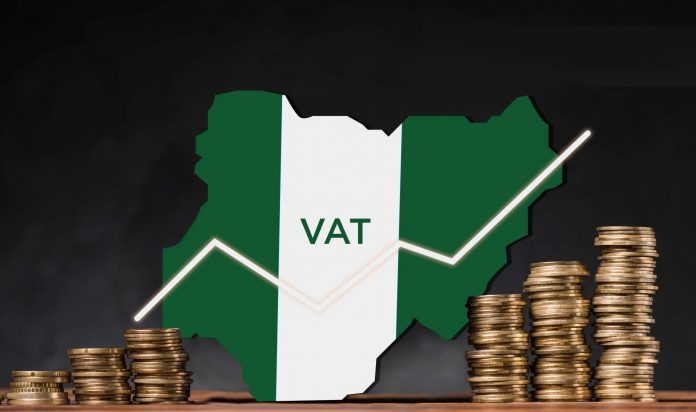
VAT Distribution in Nigeria: What States Contribute and What They Receive

0

The distribution of value-added tax (VAT) revenue in Nigeria has once again come under scrutiny. New data from Agora Policy shed light on the significant disparities between states’ contributions to the VAT pool and their subsequent allocations.

The report, based on figures from the Federation Accounts Allocation Committee (FAAC) for 2024, has reignited debates about fiscal fairness, equity, and systemic reform, further fueling the controversy surrounding the proposed tax reform bills.

Introduced in 1993 to replace the Sales Tax, VAT has become a cornerstone of Nigeria’s non-oil revenue collection, administered by the Federal Inland Revenue Service (FIRS). Despite its critical role in boosting revenue, the formula for VAT distribution has been a source of longstanding controversy. Under the current framework, revenue is shared as follows:

  • 50% based on equality among all states
  • 30% based on population
  • 20% based on derivation (the state where the VAT was generated)

This formula, while ostensibly designed to promote national cohesion and reduce regional disparities, has been criticized for its perceived inequity, particularly by states that generate significant VAT revenue but receive only a fraction in return.

The disparities highlighted by the 2024 FAAC data have amplified the controversy surrounding proposed reforms to Nigeria’s tax system. A tax and fiscal policy committee led by Taiwo Oyedele recently recommended a revised VAT-sharing formula:

  • 20% based on equality
  • 60% based on derivation
  • 20% based on population

The proposed formula aims to address inequities by granting higher revenue shares to states based on their contributions. However, the Nigeria Governors’ Forum (NGF) rejected this proposal, instead suggesting an alternative formula:

  • 50% based on equality
  • 30% based on derivation
  • 20% based on population

While both formulas diverge in emphasis, they have sparked heated debates, with critics arguing that the NGF’s proposal does little to address the systemic imbalances inherent in the current framework.

The controversy surrounding these proposals is rooted in the glaring disparities in VAT contributions and allocations, which are seen by many as emblematic of deeper fiscal inequities across Nigeria’s geopolitical regions.

Disparities in Contributions and Allocations

The 2024 data reveals a stark imbalance in VAT remittances. Lagos state, Nigeria’s economic powerhouse, contributed N2.75 trillion to the VAT pool—nearly half of the total VAT revenue generated. Despite this, the state received only N460 billion in return, representing just 16.7 percent of its contributions.

Similarly, Rivers state, another major contributor, generated N832 billion but received only N186.6 billion, or 22.4 percent of its input.

In sharp contrast, states with minimal contributions to the VAT pool often receive allocations far exceeding their input:

  • Kano State: Contributed N77.7 billion but received N117.1 billion.
  • Katsina State: Contributed N22 billion but was allocated N85.6 billion.
  • Abia State: Contributed N8.68 billion and received N63.78 billion—a 734.8 percent return.
  • Imo State: Contributed N4.38 billion but received N70.7 billion—a 1,613 percent return.
State Contribution (?) Received (?) % Received
Lagos 2.75 trillion 460.1 billion 16.74%
Rivers 832.7 billion 186.7 billion 22.42%
Oyo 272.4 billion 116.8 billion 42.89%
Kano 77.8 billion 117.2 billion 150.70%
Delta 73.4 billion 80.7 billion 110.00%
Bayelsa 64.7 billion 63.4 billion 98.08%
Edo 53.5 billion 72.3 billion 135.08%
Anambra 47.5 billion 78.0 billion 164.12%
Akwa Ibom 46.9 billion 76.1 billion 162.14%
Adamawa 42.0 billion 70.4 billion 167.60%
Borno 35.3 billion 76.2 billion 215.82%
Niger 34.8 billion 74.8 billion 214.65%
Taraba 32.4 billion 63.2 billion 195.40%
Kwara 31.5 billion 63.6 billion 201.96%
Kaduna 30.3 billion 88.5 billion 292.06%
Ekiti 29.6 billion 63.5 billion 214.60%
Jigawa 28.5 billion 76.7 billion 268.67%
Benue 26.6 billion 75.5 billion 283.79%
Ogun 26.2 billion 72.1 billion 275.66%
Sokoto 26.0 billion 71.9 billion 276.89%
Gombe 25.4 billion 62.8 billion 246.70%
Ebonyi 25.1 billion 61.4 billion 244.68%
Kogi 23.6 billion 68.7 billion 291.20%
Plateau 22.1 billion 67.9 billion 307.08%
Katsina 22.1 billion 85.6 billion 387.61%
Yobe 19.8 billion 61.8 billion 312.12%
Bauchi 19.6 billion 77.5 billion 395.31%
Zamfara 17.8 billion 67.9 billion 380.72%
Nasarawa 15.9 billion 58.2 billion 365.95%
Enugu 15.4 billion 67.5 billion 438.66%
Osun 14.8 billion 68.6 billion 463.81%
Ondo 13.8 billion 68.6 billion 496.81%
Cross River 9.4 billion 64.2 billion 686.54%
Kebbi 8.8 billion 66.6 billion 758.54%
Abia 8.7 billion 63.8 billion 734.76%
Imo 4.4 billion 70.7 billion 1,612.85%

Regional Breakdown of VAT Disparities

Across Nigeria’s geopolitical zones, the disparities are equally pronounced:

  • South-West: Led by Lagos, the zone contributed N3.11 trillion (the largest share of VAT revenue) but received only N849.71 billion—27.4 percent of its contributions.
  • South-South: Contributed N1.08 trillion but was allocated N543.49 billion—50.3 percent of its contributions.
  • North-West: Contributed N211.27 billion but received N574.32 billion—271.8 percent of its contributions.
  • North-East: Contributed N174.50 billion and received N411.84 billion—236 percent of its contributions.
  • North-Central: Contributed N154.54 billion but received N408.66 billion—a 264.4 percent return.
  • South-East: Contributed the least (N101.09 billion) but received N341.46 billion—a 337.8 percent return.

Collectively, southern states, driven by economic hubs like Lagos and Rivers, contributed N4.28 trillion to the VAT pool but received only N1.73 trillion—40.5 percent of their contributions. In contrast, northern states contributed N540.31 billion but received N1.39 trillion, representing a 258.2 percent return.

Tax Reform Debates

The glaring inequities in VAT distribution have become a central point of contention in Nigeria’s ongoing tax reform discussions. Advocates for reform argue that the current system disincentivizes revenue generation by states while disproportionately rewarding those that contribute less.

This controversy has significant implications for Nigeria’s broader fiscal policies. The Oyedele-led committee’s recommendations, which emphasize derivation, have the potential to incentivize states to strengthen their revenue-generation mechanisms. However, political resistance from influential groups, including the NGF, underscores the challenges of achieving consensus on reform.

The debates over VAT distribution have also fueled broader concerns about Nigeria’s federal structure and the need for fiscal federalism. Many believe that the current system perpetuates dependency on federal allocations, undermining states’ capacity to sustain independent economic growth.

Nation Building in China and America, and Lessons for Africa on Quest for “Credible” Leaders

1

Good People, I’ve read the comments on the broad conversation of building nations through credible leaders, understanding that credibility could be domain specific. Yes, Donald Trump is a credible businessman who speaks the language of business, and can tell investors what they want to hear, typically “assured high returns”, if they invest in America. Imagine if Nigeria makes Aliko Dangote the president, he can raise $billions quickly because his business credibility will enable him to bring truckloads of money into the nation as investments. Afterall, in most years, Dangote Group has raised more money than the federal government of Nigeria!

Yet, that Trump is a credible businessman does not mean he could be a credible man to lead your church choir.  In the same spirit, asking Dangote to lead a national movement to ask those who gave Nigeria loans to forgive them may not be prudent.

But in everything, I see building a nation to come down to one core sphere: pragmatism and honesty with a system that rewards results. In America, elections are readily free and fair, and the candidate most voters judge to be the best wins. But in China, they do not follow that process but when you look deeper, despite “no voting”, they are doing the same thing.

Assume Nigeria practices what China does, we will have a one-party system headquartered in Abuja. The leaders of the party will appoint 774 men and women to all the local governments in Nigeria to run those LGAs with clear targets and deliverables. Those appointments are not made based on state of origin. That means, a Kano indigene can be appointed to become the LGA of my beloved Isuikwuato LGA in Abia State. His job will be to improve my local government. If he does well, he would be promoted to a quasi-regional government like becoming a governor of Osun state. If he fails, he is cut-out.

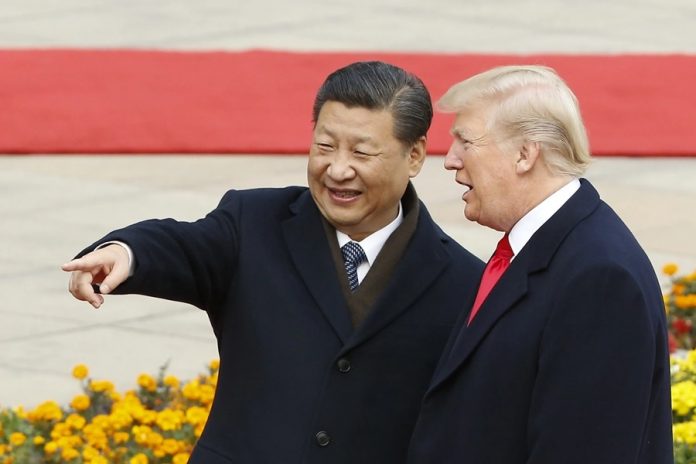
In other words, for Chinese leaders, this is like a corporation where the party leaders are appointing managers to run shows at local, and state levels. If you do well, you are promoted, and doing well is clearly stated as developing the place. Magically, that system makes local governments and states competing against one another because every leader is working to have good scorecards for the next elevation. The current Chinese leader XI Jinping was a regional leader in different places, and his results qualified him to be on the national committee.

Credibility to lead a nation comes via many ways; the Americans and Chinese have their own models, and those are working. If you are from Imo State and did well to transform Sokoto State, it is very likely that markets will see you as a credible transformer, within the Chinese model. In America, if your fellow citizens have voted for you in a free and fair election, they will see you as a credible representative of the people. With credibility, you can form alliances and advance communities and people. 

Finally, the challenge for Africa remains that we continue to struggle to attract people with credibility at the highest levels because the process to get there is convoluted with mass rigging of elections and undemocratic systems. But in ancestral Africa, we used to have ways to elect and select leaders – yes, credible leaders – but we lost those due to colonialism, and embraced a Western system we may not mature into for the next 100 years! 

How did they do it then? Villages were governed by elders, and elders would honour promising members of the community with leadership roles. Those days, to speak in a village square, you must have been qualified by concrete things you have done in the community via service. Have you been cleaning the village source of drinking water? Have you been teaching women how to feed babies better? Have you taken orphans to apprenticeships?  In other words, you cannot get to a position of leadership without evidential tractions in communities!

In short, in ancestral Ovum (the name of my village before the British renamed it Ovim), to speak at the village square, many villagers would have seconded you and that is done out of service and impact.

Those services were self-evident to all, making it possible that when you raise your hand to speak, the elders will allow you to address the community. And upon that credible service, the villagers would readily follow you. Today, it is about what the electoral umpires have announced irrespective of what happened in the polling units or communities; that will not help the “leaders” and the subjects, and neither would those global investors believe.

Comment on Feed

Comment: What ancestral Africa? Is it the corrupt Dibia’s? Or the thieving village elders whose judgment can be scanned under wads of cash-on-hand?

My ResponseActually, if you study Africa before the Europeans came, they had a working system. That system failed when it was modulated by Western system. In the old days, if you were caught stealing, they would banish you from the village. Dibia is a word for “doctor” and I am not sure of your point, but if a Dibia was found to be corrupt, consequences followed. They excommunicated people. In ancestral Igbo, the name Nneka was powerful. A man stays in his father’s place at peace time, but at bad times, only the mother’s place was the only place of abode. There was discipline and the system functioned.  But that system was attached by Western process, breaking the heart of excommunicating people which can now be challenged in court due to property rights

Saving 140 million Nigerians from Poverty – The Simple Plan

Solana Loses Its Spark as PayFi Prodigy Remittix ‘Dominates’ With Innovative FIAT Exchange

0

For some time, Solana has been a favorite among traders seeking swift transactions and lively new tokens. Yet recent weeks have cast doubt on whether big memecoin trades can sustain Solana’s momentum long-term. Many see these meme-fueled projects as risky, capable of imploding once hype moves on.

Meanwhile, a new PayFi star called Remittix is rising fast, offering a more reliable approach that reminds some watchers of XRP’s early appeal. Below, we’ll explore why Solana may struggle to keep its spark and how Remittix is capturing attention as a solution for global finance.

Solana’s Meme Coin Flurry May Not Last

Over the last month, Solana enjoyed a surge partly fueled by meme tokens that drew large volumes. While this drove profits for short-term speculators, critics argue it doesn’t always strengthen Solana’s core utility. Once social media chatter shifts to another chain or a fresh meme, the volume on Solana could plummet, leaving ordinary users with fewer reasons to stay.

Though Solana still impresses on speed, some worry the chain’s heavy reliance on short-lived memecoin mania won’t hold up against real market shifts. If a sudden wave of new memes appears on a rival network, Solana’s fast transaction perk may not be enough to protect it from a tumble in user activity.

PayFi vs. Speculative Hype

In contrast to memes, PayFi altcoins fix actual finance issues. The idea is straightforward: people want to move crypto into fiat effortlessly, cutting out pricey middlemen and long settlement delays. A token that streamlines these tasks can see consistent demand, even when the broader crypto scene cools.

This focus on daily problems has led analysts to draw parallels between PayFi projects like Remittix and the earlier cross-border ambitions of XRP. While XRP remains a giant with major daily volume, some note that Remittix’s direct consumer model could unlock broader mainstream use—reaching freelancers, merchants, and anyone sending money worldwide.

Remittix’s Rise to Prominence

So, why does Remittix stand out? Unlike many tokens riding quick hype, Remittix (RTX) aims at the PayFi model, letting users convert crypto to fiat inside 24 hours. The project’s presale has raised over $6.1 million, with OVER $500,000 raised  in a single day signalling strong signs of real investor faith. Observers say Remittix offers an avenue for stable growth, unlinked to random hype cycles. Its direct conversion tool is meant to appeal to ordinary people, not just big traders hunting the next meme spike.

Because of these features, some watchers label Remittix the best bet among newer altcoins striving for real-world impact. If more people use crypto for daily transactions, coins that address immediate pain points—like tough banking fees or slow wire transfers could see substantial gains. In that respect, Remittix may dominate the niche that Solana’s memecoin mania never fully covered.

XRP Comparisons and What Comes Next

Veterans recall how XRP soared once it captured the attention of financial institutions dabbling in cross-border trials. While legal questions swirl around Ripple, the token’s push for fast, cheap global payments caught a lot of interest. Remittix shares that emphasis on bridging traditional finance, but it does so by courting everyday users.

That approach might save it from some of the complexities that slowed XRP’s road to adoption. If Remittix manages a simpler regulatory path and broad user appeal, many believe it could outshine chains stuck hosting fleeting meme tokens.

Conclusion—A Shifting Tide Toward Utility?

While Solana soared due to recent memecoin surges, experts warn that reliance on hype can cause abrupt drops when the market’s attention drifts. This risk has led many to re-evaluate tokens that tackle real money needs, like Remittix.

By offering a fast and user-friendly transition from crypto to fiat, Remittix (RTX) might claim the PayFi throne in a way reminiscent of XRP’s early promise. If mainstream adoption grows, Remittix may well eclipse chains heavily tied to meme trades, proving that practical solutions hold better long-term value than the fleeting excitement of online fads.

Ready to delve into Remittix’s PayFi movement?

Automation in Maintaining and Preparing Sports Venues: Everything You Need to Know

0

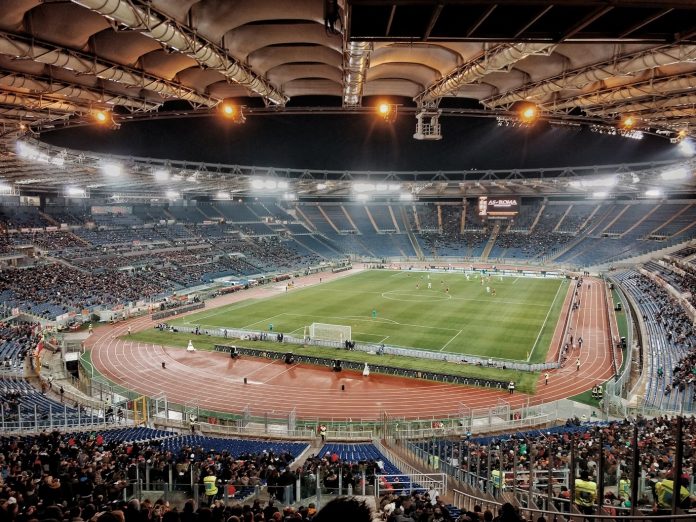
Playing sports and their venues have changed immensely due to automation. From maintaining immaculate grounds to tailgating, everything has become automated to increase efficiency, cut down on costs, and heighten the fan experience. In 2023, more than 65% of entertainment and sports venues across the continents will start utilizing automated systems. But how has automation aided sports venues? Let’s delve into its potential, applications, and the corresponding technologies.

What Is Automation in Sports Venues?

Automation in sports venues is defined as the use of advanced technology for the management, maintenance, and preparation of the facilities. Automated systems are able to perform tasks such as turf care, lighting, cleaning, and even crowd management. A case in point is Wembley Stadium in London, which has automated irrigation systems for the pitch and saves 30% in water use annually.

These technologies go beyond simply saving time or effort. They have a significant impact on the performance as a whole. In venues like Mercedes-Benz Stadium, automated energy management has lowered electricity costs by 25%. By using robotics, sensors, and artificial intelligence (AI), sports venues can achieve more precise and sustainable results, satisfying the needs of both athletes and fans. State-of-the-art technology not only improves stadiums but also improves your betting experience. Thanks to the betting app, the adrenaline rush of a game is now available at the touch of a finger. If you are ready to make every game a memorable experience, the MelBet app download and witnesses its true magic. Whether it’s real-time statistics, easy-to-use browsing, or incredible betting options, this app is for people who are real fans. A true fan does not just want to watch the game but wants to take part in the thrill!

Types of Automated Systems Used in Venue Maintenance

Automated systems cover a broad range of venue maintenance and preparation tasks. Some of their main types are the following:

  • Field Maintenance Systems: Automated turf mowers and irrigation systems ensure efficient and regular care of grass fields. For instance, robotic mowers at golf courses cut lawn maintenance hours by 40%.
  • Cleaning and Sanitization Robots: Cleaning robots thoroughly clean the seats and closet areas. An example is the cleaning robots used during the Tokyo 2020 Olympics, which raised hygiene standards by 35%.
  • Energy Management Systems: Automated lighting systems turn on and off according to real-time activities. Sensors placed in New York’s Madison Square Garden have cut down energy consumption by 20% every year.
  • Security Systems: Security is enhanced with AI surveillance cameras and automated crowd monitors. Fans coming into places such as Levi’s Stadium, which hosts 50,000 people, benefit from facial recognition technology, which allows for speedy and effortless entry.

These systems show that automation leads to cost-cutting and improved service delivery while maintaining the best standards of venues. By subscribing to Instagram MelBet, you will learn even more interesting facts about the most modern sports stadiums. Moreover, subscribing to this group will help you stay up to date with all sports events and even receive unique memes on sports topics.

Smart Field Management: Automated Turf Care and Irrigation

It is critical that we maintain a perfect playing surface to allow athletes to perform at their best and to give the fans something to enjoy. Automated turf care systems have revolutionized this aspect of venue management. Soil sensors and robotic lawnmowers are working in unison to ensure fields are always at their best. For instance, FC Barcelona’s Camp Nou cuts its water waste from 45% to 30% annually by using smart irrigation systems that adjust water levels based on real-time weather data.

Turf care and soil analysis sensors also offer the intelligence to know when nutrients are at safe levels, which helps maintain healthier grass. These technologies are used in stadiums like the Allianz Arena to minimize downtime for turf maintenance and make it more resistant to damage. By utilizing real-time data and AI algorithms, venues attain unprecedented field management precision that results in ideal sports event conditions.

Robotics in Cleaning and Preparing Sports Surfaces

Robotics is essential to keep venues clean and to prepare the sports surfaces. Here’s a breakdown of their applications:

Robotic System Function Impact
Autonomous Sweepers Clean stadium floors and walkways efficiently Reduces cleaning time by 50%
Disinfection Robots Use UV light to sanitize surfaces Eliminates 99.9% of germs in seating areas
Ice Resurfacers Maintain smooth ice for hockey rinks Saves 30% in operational costs
Tennis Court Robots Clean and maintain clay and hard courts Improves surface quality consistently
Smart Vacuum Systems Manage debris in indoor facilities Reduces manual effort by 70%

In the case of Tokyo’s Olympic facilities, disinfection robots used during the pandemic took cleanliness to a whole new level. These robots set new benchmarks when it came to disinfection protocols. Such systems improve operational productivity and free personnel to spend their time on more important activities.

Energy Management Through Automation in Stadiums

Energy consumption in sports facilities can be a hefty expense. An automated energy management system relies on sensors and AI to control lighting, heating, and cooling to optimize consumption. For example, AT&T Stadium in Dallas reported annual savings of $1.5 million due to overheating and overcooling elimination systems that automatically adjust to occupancy and weather conditions.

LED lighting added to automation is another new milestone. Its dynamic control for lighting at events utilizes 75% less energy than other forms of lighting. Systems like those used in the Automation Amsterdam ArenA allow for spectacular synchronized light shows during halftime of sporting events while cutting energy costs. Cost savings aside, automated solutions, when applied to energy management, result in a smaller carbon footprint for large sports venues.

Enhancing Security and Crowd Management with Automated Solutions

The well-being of both fans and players requires the highest levels of security and crowd management. Automated systems facilitate these operations with the use of technologies like:

  • Facial Recognition: Ticket validation is completed within seconds. Rose Bowl Stadium employs this technology to place administrative and ticket management systems at the facility, where more than 90,000 people are managed.
  • Drone Surveillance: Scanning is done over vast territories to detect security vulnerabilities. Drones utilized in the 2022 FIFA World Cup were able to cover a great deal of ground with little personnel.
  • AI Crowd Analytics: Improper actions by crowds are analyzed as they happen. This technology diminished security incidents by 15% at the 2019 Super Bowl.
  • Automated Ticket Scanning: Increased entry point bottlenecks are decreased. Ticket processes equipped with RFID in Lord’s enabled 25% more fans to attend Wimbledon in previous years.

These examples demonstrate the increase in operational effectiveness for security processes regardless of the scale of the events. Using AI, venue managers are able to forecast problems and stop them from occurring, making attendees feel safer and enjoy the event.

Future Innovations in Automated Sports Venue Maintenance

The possibilities in the field of automation for sports venues have no bounds. The future holds innovations such as the intelligent scheduling of maintenance using AI, autonomous servicing drones for field inspections, and even energy harvesting systems utilizing fans. Smart stadiums are projected to take over the market by 2030, cutting costs by 40% and reaching net-zero emissions. It wouldn’t be accurate to say that AI-enabled sports venues are the future. Rather, it is the future of the entire game. Therefore, let’s rejoice in this new dawn and futuristic stadiums that are smarter, greener, and more fun to watch from every angle.