DD
MM
YYYY

PAGES

DD
MM
YYYY

spot_img

PAGES

Home Blog Page 2322

A Quick Review of Donald Trump’s Executive Order on Cryptocurrency in the U.S

0

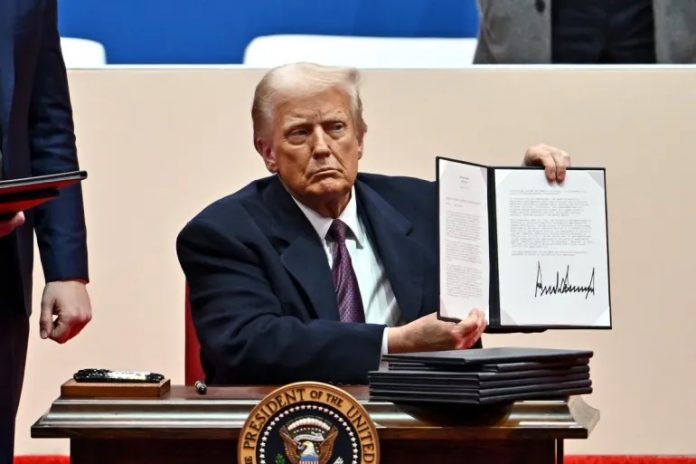
Donald Trump’s latest executive order on cryptocurrency, issued on January 23, 2025, represents a decisive shift in the U.S. approach to digital assets and blockchain technology. This landmark directive aims to position the United States as a global leader in digital finance while emphasizing innovation, economic liberty, and the sovereignty of the U.S. dollar. Let’s dive into the key provisions of the executive order and their potential impact on the cryptocurrency landscape.

A Vision for Responsible Innovation

The executive order on cryptocurrency highlights the critical role digital assets play in fostering economic growth and maintaining U.S. leadership in financial technology. It underscores the importance of supporting blockchain technologies across all sectors, ensuring their lawful and accessible use for individuals and businesses alike.

A cornerstone of this vision is the preservation of individual economic liberty. The order protects citizens’ rights to access decentralized blockchain networks, transact without censorship, and self-custody their digital assets. This commitment to decentralization underscores the administration’s focus on creating a vibrant and inclusive digital economy.

Safeguarding the Dollar’s Sovereignty

In an era of rapid advancements in digital currencies, the executive order on cryptocurrency takes significant steps to safeguard the U.S. dollar’s dominance in global finance. By promoting the development of legitimate, dollar-backed stablecoins, the administration aims to reinforce the dollar’s position as a cornerstone of international commerce, ensuring its relevance in the digital age.

Prohibition of Central Bank Digital Currencies (CBDCs)

One of the most controversial elements of the executive order on cryptocurrency is its outright ban on the establishment, issuance, or use of Central Bank Digital Currencies (CBDCs) within the U.S. jurisdiction. The administration argues that CBDCs pose risks to financial stability, individual privacy, and monetary sovereignty. Federal agencies are directed to terminate any ongoing CBDC initiatives, reflecting a decisive move away from centralized digital currencies.

Commitment to Regulatory Clarity

The executive order on cryptocurrency calls for transparent, technology-neutral regulatory frameworks that foster innovation while providing clear guidance to businesses and entrepreneurs. This approach aims to eliminate confusion, reduce barriers to entry, and encourage growth in the digital asset sector.

Establishment of the President’s Working Group on Digital Asset Markets

To advance its vision, the executive order on cryptocurrency establishes the President’s Working Group on Digital Asset Markets. This group, led by the Special Advisor for AI and Crypto, includes senior officials from key federal agencies like the Treasury, Justice Department, and SEC. Its responsibilities include:

  • Developing a comprehensive federal regulatory framework for digital assets and stablecoins.
  • Evaluating the creation of a national digital asset stockpile using lawfully seized cryptocurrencies.
  • Reviewing existing regulations to align them with the new policies outlined in the executive order on cryptocurrency.

Revocation of Outdated Frameworks

The executive order revokes Executive Order 14067 (2022) and the Treasury’s 2022 Framework for International Engagement on Digital Assets. These moves reset the regulatory landscape and align it with the administration’s forward-looking agenda for the cryptocurrency sector.

Encouraging Public Engagement

Recognizing the importance of collaboration, the working group is directed to engage with industry leaders and hold public hearings. This ensures that the regulatory frameworks reflect the realities and needs of the rapidly evolving digital asset sector.

Implications for the Future

This executive order on cryptocurrency sets a bold course for the United States, emphasizing innovation, decentralization, and the primacy of the U.S. dollar. It provides regulatory clarity and support for businesses, innovators, and investors while firmly opposing centralized digital currencies like CBDCs.

However, the prohibition of CBDCs may spark debates about whether this move puts the U.S. at odds with global trends. As the President’s Working Group implements the order, all eyes will be on how these policies unfold and whether they can solidify America’s position as a leader in digital financial technology.
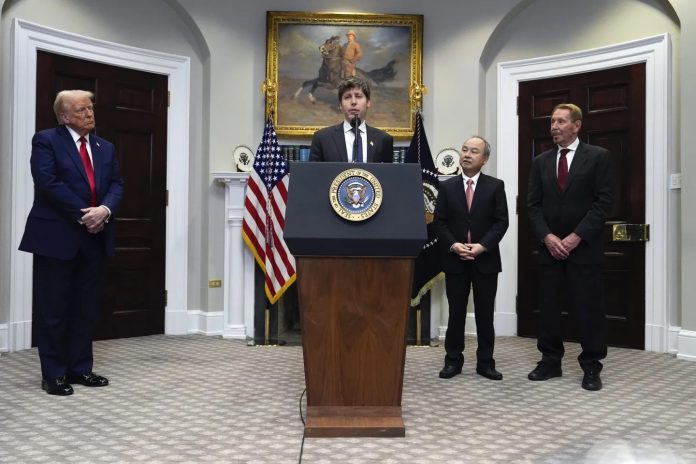

Sam Altman Changes View On Trump As Stargate AI Project Will Be Exclusive to OpenAI

0

Stargate, an ambitious artificial intelligence (AI) infrastructure initiative promising to transform America into the global leader in AI development, which was announced this week by U.S. President Donald Trump, will be exclusive to OpenAI, the creator of ChatGPT.

With a projected $500 billion budget over four years, the project was introduced as a testament to American ingenuity.

Stargate is backed by OpenAI and SoftBank as its primary drivers, with founding partners Oracle and Abu Dhabi’s state AI fund MGX also contributing. The project’s initial funding goal is $100 billion, with plans to scale up to $500 billion to build next-generation data centers and infrastructure exclusively for OpenAI’s use.

“The intent is not to become a data center provider for the world—it’s for OpenAI,” said one insider.

While the scale of Stargate’s ambitions is unprecedented, the exclusivity of its services to OpenAI has among other things, brought about a surprising shift in the relationship between OpenAI CEO, Sam Altman and Trump.

Industry experts argue that focusing resources on a single entity could limit the democratization of AI innovation and potentially give OpenAI disproportionate influence in the AI space.

Funding Uncertainties and SoftBank’s Role

Stargate has yet to secure the financing required to execute its plans. Insiders revealed that the project will receive no government funding, relying instead on equity and debt raised by its backers.

SoftBank and OpenAI have committed over $15 billion each as anchor funding for Stargate. SoftBank, under its ambitious chairman Masayoshi Son, is expected to inject additional capital from existing funds. However, insiders remain cautious about whether the initiative can raise the remaining billions needed.

“They haven’t figured out the structure, they haven’t figured out the financing, they don’t have the money committed,” said a source close to the project, quoted by The FT.

Microsoft, a major backer of OpenAI, will provide technical support without direct financial contribution to Stargate. Notably, Microsoft has independently launched a $30 billion AI infrastructure fund with BlackRock and plans to invest $80 billion in infrastructure projects this year, underlining its autonomy from OpenAI’s new initiative.

Altman has been vocal about the need for unprecedented computing power to achieve his ultimate goal: artificial general intelligence (AGI). AGI refers to AI systems that surpass human cognitive abilities, revolutionizing industries and scientific research while potentially supplanting humans in the workforce.

Altman’s vision has necessitated forging partnerships beyond OpenAI’s exclusive ties with Microsoft. For over two years, he has been in discussions with SoftBank’s Masayoshi Son about potential collaborations in AI. Their talks culminated in detailed plans for Stargate in the months leading up to this week’s announcement.

Political Overtones: Altman’s Shift on Trump

The Stargate announcement also marked a surprising political pivot for Altman. Once an outspoken critic of Trump, Altman has recently expressed admiration for the president’s leadership.

“Watching [Trump] more carefully recently has really changed my perspective on him,” Altman wrote on X (formerly Twitter). “I think he will be incredible for the country in many ways!”

This newfound support follows Trump’s repeal of an executive order by President Joe Biden, which placed regulatory guardrails on AI development. Trump also announced a $500 billion private-sector investment in AI infrastructure, further aligning with Altman’s goals.

Altman’s shift in tone has drawn backlash. Tesla CEO Elon Musk, a former OpenAI co-founder, mocked Altman’s reversal by reposting his old tweets criticizing Trump. Musk also claimed that Stargate’s backers lacked the necessary funds, prompting Altman to counter: “Wrong, as you surely know.”

Altman’s $1 million personal donation to Trump’s inauguration fund added to the controversy, as did contributions from other tech titans, including Amazon and Meta, who each donated $1 million. Many believe that such gestures highlight the growing entanglement of AI development with political influence.

Stargate’s Infrastructure Plans Take Shape

Despite financial uncertainties, work has already begun on Stargate’s first data center in Abilene, Texas. Data center start-up Crusoe, backed by $3.4 billion in financing from Blue Owl, has been constructing the facility since June 2023. Oracle is expected to invest $7 billion in chips to power the site, which will be dedicated to OpenAI’s computing needs.

The Stargate project will be structured as a standalone entity, with OpenAI, SoftBank, Oracle, and MGX holding stakes. The company will feature two divisions: an operational unit led by OpenAI to oversee data center construction and management, and a capital-raising unit under SoftBank’s purview.

The timing of the announcement, coinciding with Trump’s inauguration, has also raised questions. Insiders suggest the decision was driven more by optics than readiness.

“People want to do splashy things in the first week of Trump being in office,” said a source familiar with the project.

Stargate is launching at a time of heightened competition in AI infrastructure. Microsoft, Google, and Amazon are all investing heavily in cloud computing and AI capabilities. Microsoft’s independent efforts, including its $30 billion fund with BlackRock, signal a divergence from OpenAI’s plans.

Meanwhile, geopolitical tensions have highlighted the strategic importance of AI. Stargate’s inclusion of Abu Dhabi’s state AI fund MGX reflects the growing involvement of Middle Eastern players in global tech investments.

Guinness Nigeria Plc Posts N20.1bn Pre-Tax Profit in Q2 2024, Reversing Losses Amid Management Overhaul

0

Guinness Nigeria Plc has recorded a pre-tax profit of N20.1 billion for the second quarter ending December 31, 2024. This marks a remarkable turnaround from the N8.2 billion pre-tax loss reported during the same period in 2023, making it the first quarterly profit since September 2023.

The profit recovery comes on the heels of Tolaram Group’s acquisition of Guinness Nigeria from Diageo in June 2024. Under Tolaram’s stewardship, the brewer achieved an operating profit within six months, underlining a positive shift in its operations.

The Q2 profit not only bolstered confidence in the company’s management but also helped Guinness Nigeria swing to a half-year pre-tax profit of N4.1 billion, marking a notable recovery from the N4.4 billion loss reported in the same period the previous year.

Guinness Nigeria recorded N133.7 billion in revenue for the second quarter, bringing the total year-to-date revenue to N259.6 billion—an impressive 82.06% increase from FY 2023. Domestic sales accounted for 98.5% of total revenue, with export sales contributing a modest 1.5%.

However, the revenue boost came with cost pressures. The cost of sales surged by 107.54%, rising from N96.6 billion in FY 2023 to N200.5 billion in FY 2024. This substantial increase in production costs dampened margins despite the topline revenue growth.

Gross profit, however, grew by 28.45% year-on-year, reaching N59 billion, up from N45.9 billion in FY 2023.

Marketing and distribution expenses also saw significant growth, increasing by 33.00% to N31.6 billion compared to N23.7 billion in the prior year.

Finance Income and Net Gain

One of the key drivers of profitability was the swing in net finance charges, which had been a major drag on the company’s earnings in recent years. Despite finance expenses more than doubling to N59.5 billion, this was offset by a surge in finance income, which reached an extraordinary N63.9 billion—a nearly 2000% increase year-on-year.

The majority of this gain—99.51%—stemmed from the remeasurement of foreign currency balances, highlighting the company’s ability to leverage favorable exchange rate dynamics to its advantage.

Guinness Nigeria’s operating profit margins rebounded to 13.2% in Q2 2024, the highest since March 2022, when margins peaked at 18.5%. The operating profit for the quarter stood at N18.1 billion, a sharp contrast to the N6.8 billion operating loss recorded in Q1 2024.

This recovery underscores Tolaram Group’s effective cost management strategies and operational realignment, enabling the company to mitigate cost pressures and maximize revenue gains.

A Milestone for Tolaram Group

The Q2 profit is a significant milestone for Tolaram Group, which acquired Guinness Nigeria Plc in June 2024. Within six months of assuming control, Tolaram has demonstrated its ability to steer one of Nigeria’s largest brewers toward profitability.

The company’s performance reflects the effectiveness of Tolaram’s management approach, which has revitalized operations and positioned Guinness Nigeria for long-term growth.

As Tolaram moves forward with its plans for a mandatory takeover of shares from minority shareholders, Guinness Nigeria is expected to be delisted from the Nigerian Exchange. This move aligns with Tolaram’s strategy to consolidate its ownership and streamline operations.

However, the turnaround of Guinness Nigeria Plc is a promising development for the brewing industry and the Nigerian economy at large. With Tolaram Group at the helm, the company appears well-positioned to build on its recent successes.

However, challenges remain, particularly in managing rising production costs and sustaining revenue growth in a competitive market. The new management’s ability to navigate these challenges will determine whether Guinness Nigeria can maintain its profitability trajectory in the coming years.

As HSBC shuts down Zing, we learn why big companies fail against startups

1

Big companies do struggle against startups as HSBC shuts down Zing: “HSBC, one of the largest banking and financial services institutions in the world, has announced the shutdown of its international payments platform Zing, one year after launch…The closure of Zing highlights the difficulties traditional banks face in developing sustainable fintech ventures. Similar initiatives by other banks, such as NatWest’s digital bank Bó, Santander’s small business bookkeeping app Asto and Barclays’ mobile payments service Pingit, have also been discontinued after brief periods.”

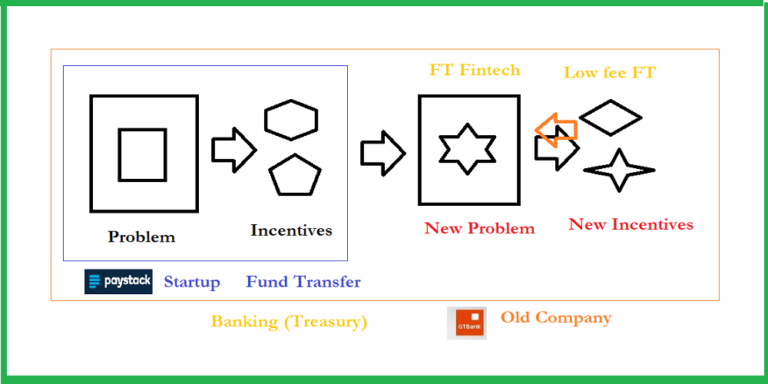
In Tekedia Institute, I have put out a construct to enable why this happens and I have called it Startup Incentive Construct. This is a summary from AI on my construct: “The Startup Incentive Construct by Tekedia, explained by Ndubuisi Ekekwe, discusses why startups often succeed despite challenges from established companies. The key idea is that startups have different incentives compared to older companies, which allows them to solve problems more effectively.

“Older companies often have what Ekekwe calls “Innovation Hangover”, meaning they are reluctant to disrupt their existing revenue streams. Startups, on the other hand, are more agile and can focus on solving problems without being tied to legacy systems or profits. This construct highlights the advantage startups have in being able to innovate and adapt quickly, while established companies may struggle to change due to their existing commitments and structures”.

And that means, you should not be afraid when those big banks and companies clone your app or product because what they will launch will never be the same. Why should a bank launch a cheap treasury app that will cannibalise the hefty fees they charge clients?

The Startup Incentive Construct

A Spotlight on Businesses That Soared By Not Having to Start from Scratch

0

Growing a new business from the ground up can feel like a daunting prospect. For start-ups in hugely competitive markets, it’s a big challenge to lock horns with well-established businesses and brands with strong partnerships, contacts and workforces.

However, some new businesses have managed to leverage existing expertise, assets and partnerships to hit the ground running and scale quickly.

There are many instances of successful spin-offs and strategic acquisitions which have thrived without starting entirely from scratch. Below, we’ll discuss three impressive examples, as well as the learnings from these success stories.

Alphabet

Alphabet, the parent company of Google, is another prime example of a spin-off business that didn’t start from scratch. While Google was already a tech giant by 2015, its co-founders, Larry Page and Sergey Brin, sought to create a broader structure for their growing portfolio of ventures. Thus, Alphabet was born as a parent company overseeing Google and its other subsidiaries, such as Waymo, specializing in self-driving cars, Verily, focused on healthcare technology, and DeepMind, the experts in artificial intelligence.

The creation of Alphabet allowed Google’s core business to focus on search engines and advertising while giving its other projects the independence to innovate and grow. Alphabet’s approach has facilitated rapid advancements in cutting-edge technologies, solidifying its reputation as a leader in multiple industries, from AI to autonomous vehicles.

Rather than starting new businesses independently, Alphabet leveraged Google’s resources, reputation, and revenues to create a thriving ecosystem of innovation.

Games Global

Founded in 2021, Games Global is an upstart online casino game provider that’s made a real splash in the last few years. What’s been the secret of their success and why are they now a dominant force in the supply of state-of-the-art casino games online?

You may not know that Games Global is a spin-off company from Microgaming. It was founded by a group of iGaming industry veterans, including some major figureheads from the Isle of Man-based Microgaming. Their first mission was to gain exposure. In 2022, they acquired Microgaming’s Quickfire platform, which consisted of a suite of 3,000+ casino games, plus access to the content of many of Microgaming’s partnered studios.

This move helped the Games Global name gain overnight credibility and exposure, effectively piggybacking off the Microgaming portfolio. It’s a move that’s worked well in some of the fastest-growing iGaming markets, not least in Canada. At Betano, which is one of the leading online casino Canada-licensed brands, Games Global has now surpassed Pragmatic Play as the biggest supplier of slot games – 739 titles to be precise.

PayPal

PayPal is one of the most successful companies to emerge from a spin-off strategy. Originally a part of eBay, PayPal started out as the online marketplace’s primary payment platform. However, in 2015, PayPal was spun off as an independent entity to capitalize on the rapidly growing digital payments market.

With eBay’s global reach and PayPal’s established user base, the company didn’t need to build a customer network from scratch. Instead, it could focus on expanding its services and becoming a leader in the fintech industry. Today, PayPal operates in over 200 countries, offering everything from peer-to-peer payments to merchant services and cryptocurrency integration.

This strategic separation allowed PayPal to grow rapidly, attract investors, and innovate in ways that may not have been possible under eBay’s umbrella.

Whether it’s leveraging existing networks, intellectual property or active customer bases, this trio of firms avoided the plethora of pitfalls of starting from scratch, better positioning themselves for long-term sustainability. These firms show that it’s possible to succeed without reinventing the wheel, leaning on solid foundations to achieve greatness.