DD
MM
YYYY

PAGES

DD
MM
YYYY

spot_img

PAGES

Home Blog Page 2340

US President’s Memecoin ‘$TRUMP and $MELANIA Stir Crypto Bulls Sentiments’

0

Donald Trump and Melania Trump have indeed launched their own meme coins, named $TRUMP and $MELANIA respectively, in the lead-up to Trump’s second term as President of the United States. This move has stirred significant interest and debate within the cryptocurrency community:

Trump’s Memecoin: Donald Trump launched the $TRUMP coin, which saw its value surge dramatically, reaching a market cap of billions within hours of its announcement. The coin was introduced with the slogan of celebrating “everything we stand for: WINNING!” This has been interpreted by some as a marketing genius move, capitalizing on Trump’s brand and political stature to promote cryptocurrency.

However, there’s also considerable skepticism regarding the legitimacy and sustainability of such meme coins, with concerns about them being potential vehicles for scams or quick financial gains rather than having real utility or backing.

Following closely, Melania Trump introduced $MELANIA, which has sparked further discussion and market volatility. The launch of Melania’s coin coincided with a drop in the value of $TRUMP, illustrating the competitive nature of meme coins even within the same family. Critics argue that these launches could be seen as an attempt to capitalize on their public image for personal gain, potentially conflicting with their public roles or adding to the skepticism around cryptocurrencies.

Market and Political Impact: The meme coins have caused a stir in the crypto market, with debates ranging from their potential to become the “biggest memecoin ever” to concerns about their impact on the broader perception of cryptocurrencies. Ethically, there are questions about conflicts of interest, especially with Trump’s previous statements about crypto being a “scam” and his current administration’s pro-crypto stance. This has led to discussions on how these launches might influence regulatory perspectives on cryptocurrency, particularly under a Trump administration.

Public and Industry Reaction: There’s a mix of excitement and criticism from the public and crypto industry. Some see it as an innovative way to engage with supporters or the crypto community, while others view it as inappropriate for political figures to involve themselves in speculative financial ventures like meme coins. The rapid rise and fall in value of these coins also highlight the volatile nature of meme cryptocurrencies.

The launch of these meme coins by Donald and Melania Trump has created a significant buzz, with implications for both the cryptocurrency market and political ethics. It’s a development that showcases the intersection of politics, celebrity, and the burgeoning crypto industry, raising questions about market manipulation, ethics in public office, and the future of meme coins in the broader financial landscape.

The $TRUMP coin has several implications for the cryptocurrency market

The coin has introduced significant volatility into the market, with its value surging dramatically upon launch due to hype and speculation. This reflects the broader meme coin trend where rapid price movements are driven more by social media buzz than by fundamental value.

The $TRUMP coin has captured widespread attention, drawing both crypto enthusiasts and Trump supporters into the market. This could potentially increase overall interest in cryptocurrencies, but it also highlights how political figures can influence market dynamics through their brand or public image.

The launch might lend some legitimacy to meme coins in the eyes of the public, given Trump’s high profile. However, it also underscores the speculative nature of these assets, potentially deterring more risk-averse investors or those concerned about the lack of intrinsic value in meme coins.

Impact on Crypto Regulation: Trump’s involvement in cryptocurrency through this coin might influence his administration’s approach to crypto regulation. His previous statements against cryptocurrencies and his current stance could lead to a regulatory environment that’s either more favorable or more scrutinous, depending on how he chooses to navigate this new venture.

Pump and Dump Risks: There’s a risk that $TRUMP could be used in pump-and-dump schemes, where the price is artificially inflated before being sold off by early investors, leaving latecomers with significant losses. This concern is particularly acute given the coin’s association with a public figure known for his business ventures.

Detty December Nigeria and Fintech’s Biggest Risk

2

It was a great business model on paper: have a fintech solution that will make it possible so that when African diasporas visit their homelands like Nairobi, Lagos, Accra, etc, they can use the same credit cards they have used in America, Germany, UK, etc to pay for things!

But there is a problem: payments in our part of the world have always attracted more chargebacks*. And in sub-Saharan Africa, we have taken that to an unfortunate level with severe implications for merchants, fintechs and the broad ecosystem.

For example, a bank in East Africa which provides the API that enables some of these payments lost its partnership with a leading payment processing and issuing company because of the unusual level of chargebacks in the continent. But startups did not give up as they continued on how to serve the diaspora market.

But what we’re reading on what happened in Nigeria in December 2024 is extremely unfortunate: some people used hotel services, restaurant services, paid with their foreign cards, and upon returning to their foreign bases called their banks that the payments were paid without their approvals.

Typically, in US, Canada and most Western European countries, the banks are expected to refund them unless the merchants can provide compelling evidence to support that they actually approved those payments. 

That is how banking works there: banks are there to protect you when bad things happen. Of course, that does not include approving spending, getting services, and then wickedly asking for a refund.

This falls to the #1 challenge for fintech companies in Africa and specifically Nigeria, as I noted: ‘Good People, Nigeria should declare a financial state of emergency on “Cyberfraud, Identity Theft & Wire Fraud” in the nation. In the last three years, many fintech startups have failed, not because of market conditions, but because of this fraud vector.” Indeed, for this Detty December issue, some of the fintech companies which have facilitated these sales will see their licenses revoked by their US, Canadian and European partners, for enabling an ecosystem with more than average chargebacks.

Yet, if you are a merchant, this is your defence: always request for your customers to sign their card payments and print a copy of that payment. And any purchase above $200, ask that person for an ID and copy the last 4 digits of his or her driver’s license or passport and write on that receipt. 

If you do have that copy, present it to the payment processing partner. When you do that, you will not be open to this chargeback risk as that person knows you have enough evidence to win the dispute. But where you have nothing, you could lose money.

*A chargeback is a reversal of a debit or credit card transaction. It happens when a cardholder or their bank disputes a charge and the dispute is resolved in the cardholder’s favor.

Nigeria Announces Plans for General Multipurpose National Identity Card (GMPC) to Replace Multiple IDs

0
National ID Card, Nigeria

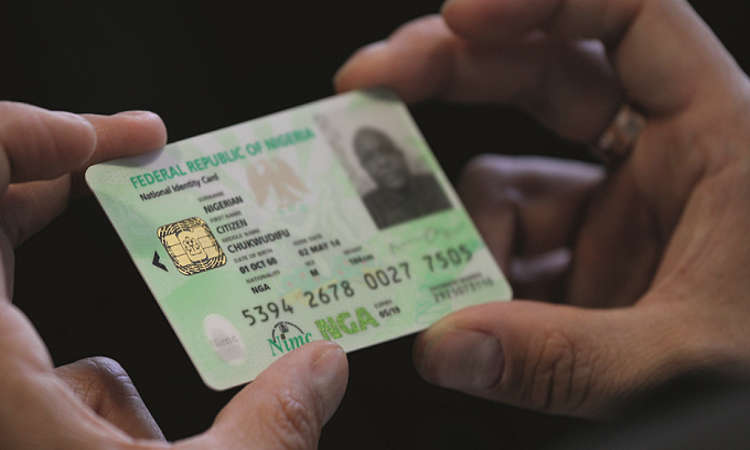
The National Orientation Agency (NOA) has unveiled plans for the General Multipurpose National Identity Card (GMPC), promising a streamlined solution for identification and service access.

The GMPC is designed to consolidate multiple identification cards into one, simplifying access to government services, financial transactions, and travel-related needs. NOA emphasized the card’s role in easing the burden of carrying multiple forms of identification, describing it as a step toward modernizing Nigeria’s identity management systems.

In a statement on Sunday, the agency explained: “The GMPC will serve multiple purposes, combining several existing cards into one. This new card will eliminate the need for citizens to carry multiple forms of identification, making it more convenient for everyday use.”

However, the announcement has been met with mixed reactions, as many Nigerians are skeptical about the initiative’s potential to deliver meaningful change.

While the initiative is being positioned as a landmark achievement, many Nigerians are not overly excited, citing past experiences with similar programs that failed to live up to expectations. The rollout of national identity cards in Nigeria has a long history of lofty promises, with little to show for the billions of naira spent over the years.

President Goodluck Jonathan launched a new national identity card on August 28, 2014, to replace the earlier version introduced in 2003 under President Olusegun Obasanjo. The 2014 initiative, a collaboration between the Nigerian Identity Management Commission (NIMC) and MasterCard, was touted as a revolutionary solution for identification and financial inclusion. Despite the grand launch, the system failed to gain widespread adoption, with many citizens unable to access the card or its promised benefits.

For many Nigerians, this latest effort to introduce the GMPC feels like déjà vu. Many believe that each new administration presents a different version of the national ID card, often abandoning the previous system, rendering earlier investments wasted.

Expressing their frustration, many have asked: Every new government wants to start a fresh ID card project. Why can’t we improve on what we already have instead of spending billions on the same thing every few years?

Others have also raised concerns about the likelihood of this program being sustained beyond the current administration. Given Nigeria’s history of abrupt policy changes, many fear that a future government could discard the GMPC, just as previous systems were phased out. This lack of continuity often leads to wasted resources and public disenchantment.

The financial burden of launching a new identity card system is another contentious issue. It is believed that funds allocated to the GMPC could be better spent on pressing national concerns such as education, healthcare, and infrastructure.

Additionally, challenges related to accessibility and implementation remain unresolved. In rural areas, many citizens lack access to the National Identification Number (NIN), a prerequisite for obtaining the GMPC. Past initiatives have often struggled with logistical bottlenecks, raising questions about the feasibility of delivering the GMPC to every Nigerian.

While the NOA has positioned the GMPC as a game-changer, public perception paints a different picture. For many Nigerians, the initiative appears to be another expensive exercise with little guarantee of success.

However, the NOA insists that the GMPC will improve access to financial services and government programs, reduce reliance on foreign payment systems through the AFRIGO card scheme, and bolster national security. Applications for the GMPC can be made through NIMC offices, participating banks, or online, with card issuance managed by applicants’ banks.

The NOA emphasized that transparency will be a cornerstone of the program, promising to publish weekly updates on issuance and utilization.

PiggyVest Surpassed N2 Trillion in Payouts as Economic Challenges Reshaped Savings in 2024

0
Piggybank for saving has enslaved many to online lenders

Nigeria’s largest online savings & investing platform Piggyvest, has announced a major milestone of surpassing N2 trillion in total payouts to users since its inception in 2016.

The company announced that 2024 was a year of growth, that saw N835 billion paid out to users, on an average of N44,000 saved.

Speaking on this milestone, the company’s CEO and Co-founder Somto Ifezue described the year 2024 as a very profitable year.

In his words,

“2024 was an amazing year. It was our most profitable year, one of the years we achieved the most growth, and our most focused year as a company. It was also a year that tested our resolve in the face of economic challenges, but we remained steadfast and continued to deliver value to our users”.

Across Piggyvest, Piggyvest business, and Pocket App, Piggytech processed over N2 trillion. Ifezue links the growth to focusing on customer service and meeting user needs. “We adjusted our interest rates to align with market trends and worked diligently to offer our users even greater value for every naira. Every milestone stems directly from our focus on serving our users better,” he said. 

Key Milestones Achieved by Piggyvest in 2024

The company’s achievements in 2024 were beyond crossing the N2 trillion payout milestone. Highlights from its year-in-review include:

  • Surpassed 5.5 million users on Piggyvest.
  • Recorded 76% AUM growth.
  • Over 8.2 million users across all its products.
  • Over N835 billion was paid out, up from N545 billion in 2023.
  • Recorded over N1 trillion transaction volume on pocket app, up from N760 billion in 2024.
  • Named among the world’s Top 250 fintech companies by CNBC.
  • N334 billion transaction volume on Piggyvest business in 2024, up from N282 billion in 2023.

Amidst Nigeria’s economic challenge, by the end of 2024, Piggyvest users were reportedly saving and investing at the rate of N44,000 every second. This comes as several challenges which include the high cost of living and an increase in the cost of food price, amongst others, reshaped their savings. It is understood that economic devaluation towards the end of 2023 significantly impacted the Nigerian economy. Inflation rose to 32.1%, levels not seen in almost 20 years.

Many have complained that their salaries no longer last until the end of the month. Recall that Piggyvest in its 2024 savings report, revealed that over 37% of Nigerians earn below N100,000 monthly, highlighting the low earning power affecting a significant number of the population. When asked about their saving habits, 57% of respondents indicated that they save a portion of their monthly income. This group is comprised of 47% who save consistently every month and 10% who only save occasionally.

This marked a concerning decline when compared to the PiggyVest Savings Report 2023, where 64% of Nigerians reported having a savings habit. Despite these financial pressures, almost 1 in 10 Nigerians now have emergency savings, demonstrating resilience and an increased commitment to financial preparedness even as fewer Nigerians are able to maintain consistent savings habits.

In a bid to help users manage their day-to-day expenses and ensure that their salary lasts until the next payday, the CEO Ifezue, announced that Piggyvest plans to introduce a new feature on the app in 2025. This feature is designed to help users better manage their day-to-day expenses and ensure their salaries last until the next payday.

Piggyvest’s growing user base and record-breaking payouts underscore the resilience of Nigerians in their quest for financial security. With new tools and features on the horizon, the platform aims to further support its users in navigating an increasingly challenging economic landscape.

Trump’s Second Coming: A Dramatic Policy Shift from Leftist Ideals

0

President Donald Trump’s return to the Oval Office has been anything but conventional, marked by an aggressive push to reverse the policies of his predecessor, Joe Biden.

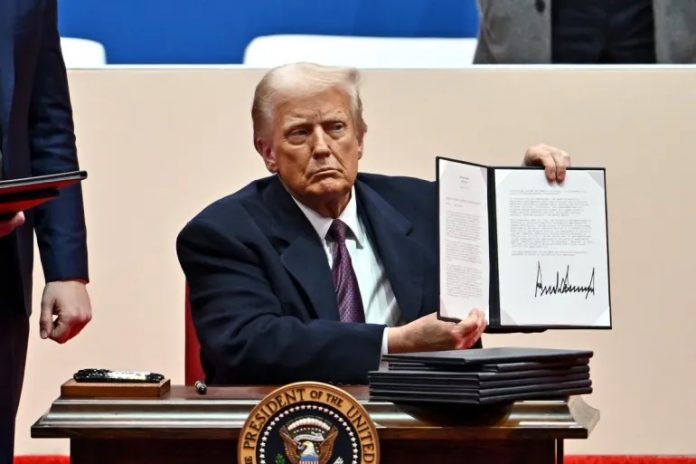
Within hours of his inauguration on Monday, Trump signed a sweeping array of executive orders and initiated personnel changes that signal a stark departure from the progressive ideals championed by the previous administration.

A Blitz of Executive Actions

In just his first 24 hours, Trump about 100 executive actions, overturning several landmark Biden-era policies. These actions span a wide range of issues, including climate change, energy production, immigration, and foreign relations.

Trump has also made 115 personnel decisions, replacing key officials across government agencies with individuals aligned with his agenda. These orders reflect his bold commitment to dismantling key aspects of the Biden administration’s legacy and charting a new path for the United States. Here’s a detailed breakdown of the most significant actions taken so far:

1. Withdrawing from the Paris Agreement: Effective immediately, the U.S. has exited the Paris Climate Accord. Trump justified the decision by stating that the agreement unfairly disadvantaged American workers and industries while providing little tangible environmental benefit. He pledged to focus on domestic energy policies that prioritize economic growth over international commitments.

2. Emergency Price Relief: In an effort to address inflation and rising costs, Trump ordered all executive departments and agencies to deliver emergency price relief to the American people. The directive emphasizes increasing the prosperity of American workers while adhering to applicable laws.

3. Temporary Hiring Freeze: Trump imposed a temporary hiring freeze across the federal government until his administration is fully operational. Additionally, within 90 days, the Office of Management and Budget (OMB), in consultation with other federal offices, must submit a plan to reduce the federal workforce through efficiency improvements and attrition.

4. Regulatory Freeze: Trump issued a sweeping halt to all pending regulations, stating that no department or agency may propose or issue any new rules until they are reviewed and approved by a presidentially appointed agency head. This move is intended to reduce bureaucratic red tape and streamline governance.

5. Return to In-Person Work: Federal agencies must terminate remote work arrangements and require employees to return to full-time, in-person work at their duty stations. Agency heads are permitted to grant exemptions when necessary. Trump framed this as a step toward restoring normalcy and efficiency in government operations.

6. End the Weaponization of Government: The Attorney General has been tasked with reviewing the enforcement activities of all federal agencies to ensure that they are free from partisan bias. This initiative aims to rebuild public trust in federal institutions.

7. Restoring Freedom of Speech: Trump emphasized his commitment to protecting constitutionally guaranteed free speech. He stated that federal policies must uphold the right of Americans to express their views without fear of censorship or retaliation.

8. Rescinding Biden Executive Orders: Trump nullified 78 executive orders issued during Joe Biden’s presidency. While details of the revoked orders were not specified, the move signals a broad rejection of Biden-era priorities.

9. Pardons Related to January 6th: Trump granted unconditional pardons to individuals convicted of offenses related to the January 6th Capitol events. Critics argue this could undermine accountability, while supporters view it as a step toward reconciliation.

10. Extending the TikTok Deadline: Trump ordered the Attorney General to delay enforcement actions against TikTok for 75 days to allow his administration to determine the best course of action regarding the app’s operations in the U.S.

11. Withdrawal from the World Health Organization (WHO): Citing concerns about transparency and effectiveness, Trump ordered the U.S. to withdraw from the WHO, a move he had previously initiated during his first term.

12. Restoring Accountability: Federal employees in politically sensitive roles must implement administration policies without expressing personal or political opposition. Failure to comply will be grounds for dismissal.

13. Election Interference Accountability: Trump revoked security clearances for 51 former intelligence officials, including John Bolton, who allegedly spread misinformation about Hunter Biden’s laptop during the 2020 election. This order aims to prevent the Intelligence Community from engaging in partisan politics.

14. National Emergency at the Border: Trump declared a national emergency at the southern border, authorizing the use of military personnel, including the National Guard, to assist the Department of Homeland Security in achieving full operational control.

15. Resolving Security Clearance Backlogs: To address delays in security clearance processing, Trump ordered expedited reviews for individuals awaiting access to critical facilities and information.

16. Trade Policy Reforms: Trump directed the investigation of an External Revenue Service (ERS) to streamline tariff and trade-related revenue collection. He framed this as a step toward addressing unfair trade practices.

17. Energy Independence: Trump reignited his push for energy exploration on federal lands and offshore areas, calling for abundant and reliable energy supplies. He also rescinded mandates promoting electric vehicle (EV) adoption, emphasizing the need for public input and scientific analysis in energy policy decisions.

18. Refugee Admissions Overhaul: Trump tightened refugee admission criteria, requiring applicants to demonstrate their ability to fully assimilate into American society. He also emphasized preserving taxpayer resources for U.S. citizens.

19. Restrictive Citizenship Policy: New restrictions on citizenship documentation were introduced, primarily targeting children born to non-citizen parents in certain circumstances. This policy aligns with Trump’s broader efforts to limit birthright citizenship.

20. Water Resource Redistribution: Trump ordered increased water transfers from the Sacramento-San Joaquin Delta to areas in California suffering from water shortages, prioritizing human needs over environmental conservation.

21. Restoring the Death Penalty: The Attorney General has been instructed to seek the death penalty for severe crimes. Trump cited this as a necessary deterrent for heinous offenses.

22. Architectural Reform: Federal buildings must reflect traditional and classical architectural styles. Agencies have 60 days to submit recommendations for implementing this policy, aimed at beautifying public spaces.

23. Border Security Enhancements: Trump reaffirmed his commitment to securing the U.S.-Mexico border, including resuming construction of the border wall and expediting deportations of undocumented immigrants.

24. Accountability in Military Operations: The Armed Forces have been directed to prioritize protecting U.S. sovereignty and territorial integrity, particularly along national borders.

Trump’s early actions underscore his determination to reshape the federal government and its policies in line with his vision of “America First.” While supporters hail his decisiveness, critics warn of potential overreach and deepening divisions. The coming months and years will determine the long-term impact of these sweeping reforms.