DD
MM
YYYY

PAGES

DD
MM
YYYY

spot_img

PAGES

Home Blog Page 238

ASTER Loses $1 Support, Toncoin Sinks, and BlockDAG’s $435M Presale Redefines Market Confidence Before Listing

0

The crypto market is buzzing again, but not every project is riding the wave. Toncoin (TON) and ASTER are both facing serious challenges as traders re-evaluate which networks can sustain growth in the face of heavy competition and token unlock pressures.

Toncoin, despite its strong ties to Telegram, has slipped below key support levels, while ASTER’s price crash has triggered caution among retail holders. These setbacks are prompting investors to ask: where is the next big move coming from?

The answer, many analysts argue, might just be BlockDAG (BDAG). This project has raised almost $435M in presale, built a global user base of 3.5M mobile miners, and sold 27B+ coins before its official launch.

Why Everyone’s Talking About BlockDAG’s $435M Presale

The numbers behind BlockDAG’s rise are impressive, but the story goes deeper than fundraising. The project’s momentum is fueled by what analysts are calling its “Utility-Scarcity Flywheel.”

Here’s how it works. The BDAG coin serves as the mandatory utility and gas token for every transaction on its high-speed Layer-1 network. That means every dApp, every smart contract, every on-chain interaction must use BDAG. As adoption grows, the demand for BDAG rises continuously, while supply remains capped.

This dynamic creates a scarcity cycle that’s hard to ignore. It’s not driven by speculation or hype; it’s built into the network’s DNA. As more decentralized apps migrate to BlockDAG, demand for BDAG will increase automatically, creating an ongoing supply squeeze that strengthens long-term value.

The results are already visible. Over 312,000 holders have joined the ecosystem, purchasing BDAG in the Batch 32 presale at $0.005 ,ahead of the planned $0.05 listing on February 10, 2026.

BlockDAG’s infrastructure is also backed by real-world validation. More than 20,200 X Series hardware miners have been shipped globally, and its X1 mobile app has surpassed 3.5 million users. This level of participation before launch is nearly unheard of in presale history, which explains why so many analysts have started referring to BDAG as the top bullish crypto to watch in 2025.

Toncoin Faces Pressure as Token Unlock Nears

For Toncoin (TON), the market sentiment has shifted rapidly. The token recently fell below the $2.50 support zone, now trading near $2.12–$2.20, signaling short-term weakness. The immediate cause? A massive 80 million token unlock scheduled for late October 2025, representing about 3.2% of the circulating supply.

Historically, large unlocks tend to trigger increased selling, especially when market liquidity is thin. On-chain data shows a rise in whale outflows as traders brace for potential volatility. This has created a near-term bearish environment for TON.

Yet, long-term fundamentals remain solid. Institutional investors are still backing the network heavily. Coinbase Ventures recently reaffirmed its holdings, and Verb Technology (TON Strategy Co.), a Nasdaq-listed firm, confirmed a $558 million private placement dedicated to accumulating TON as a strategic asset.

With TON integrated into Telegram’s billion-user ecosystem, analysts believe it still holds enormous potential for mainstream adoption, just not without turbulence in the short term.

ASTER’s Breakdown Below $1 Sparks Concern

The situation for ASTER has been even more dramatic. The token has dropped over 57% from its September high of $2.41, now trading between $0.95 and $1.02. Technical charts paint a challenging picture, with the MACD confirming a bearish crossover and RSI levels suggesting oversold conditions without recovery yet in sight.

Much of this decline stems from internal and competitive pressures. A delayed airdrop and concerns over a potential supply overhang have made investors cautious. On top of that, new rivals are entering the decentralized exchange space, adding fresh competition.

To counter the slide, ASTER launched its Rocket Launch Program on October 23, designed to boost liquidity for emerging projects. It also rolled out the Vibe Trading Arena, an AI-powered developer competition that aims to attract builders and community engagement. While these moves show promise, the market remains skeptical until ASTER can reclaim its critical $1.10 resistance level and prove it can rebuild momentum.

Why BlockDAG Is Dominating the Conversation

The current market paints a picture of contrast. Toncoin faces pressure from unlock events despite strong institutional backing. ASTER struggles to hold key levels as competition intensifies. Yet amid this uncertainty, BlockDAG is quietly building a complete ecosystem backed by transparency, scalability, and real-world usage.
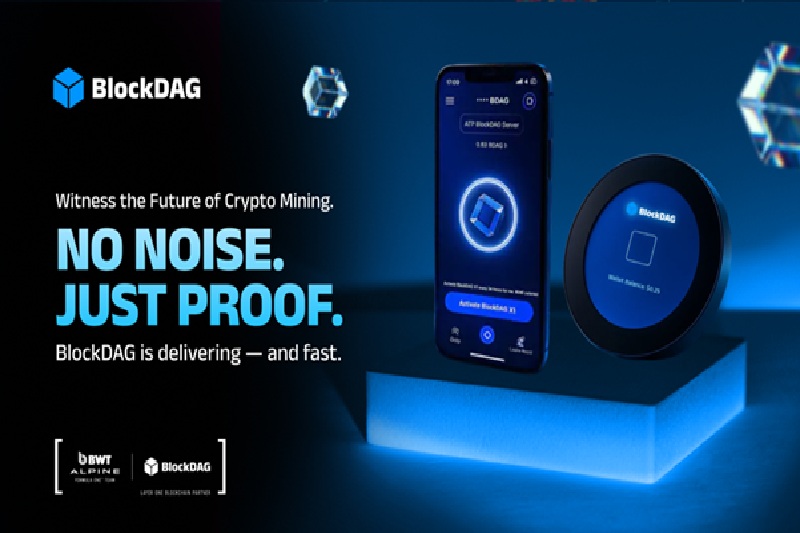
With almost $435 million raised, 27 billion coins sold, and 3.5 million engaged users, BlockDAG isn’t just promising results; it’s delivering them before launch. For investors searching for the next defining success story in crypto, the choice seems clear.

In a market driven by hype, BlockDAG is standing on fundamentals, technology, and verifiable progress. As the February 10, 2026 listing approaches, the question isn’t whether it will rise, it’s how high it will go once it does.

Presale: https://purchase.blockdag.network

Website: https://blockdag.network

Telegram: https://t.me/blockDAGnetworkOfficial

Discord: https://discord.gg/Q7BxghMVyu

Uber Picks San Francisco for Debut of New Robotaxi Fleet with Lucid and Nuro in Challenge to Waymo

0

Uber has chosen San Francisco as the launch site for its long-anticipated robotaxi service, developed in partnership with electric vehicle maker Lucid Motors and autonomous driving company Nuro.

The announcement marks the first major milestone in a deal that aims to roll out 20,000 self-driving vehicles across the United States over the next six years — a move seen as one of Uber’s most ambitious steps back into autonomous mobility since winding down its own self-driving division in 2020.

The companies confirmed that on-road testing has already begun following the delivery of the first Lucid Gravity SUV prototypes, each retrofitted with Nuro’s latest self-driving hardware and software stack. These vehicles will form the foundation of Uber’s next-generation robotaxi fleet.

However, before commercial operations begin, the companies will need to secure the necessary driverless operational permits from the California Department of Motor Vehicles (DMV) and ride-hailing authorization from the California Public Utilities Commission (CPUC) — two key regulatory hurdles that stand between testing and passenger deployment.

In a joint statement, Uber, Lucid, and Nuro said they have been in “regular communication with policymakers and regulators at every level” to ensure compliance and transparency throughout the testing process.

Uber’s Chief Product Officer, Sachin Kansal, described the city’s choice as both symbolic and strategic.

“The Bay Area has long been the birthplace of transformative technology, and it’s only fitting that Uber’s next-generation robotaxi program with Lucid and Nuro will begin here – launching to the public next year,” Kansal said.

Prototype Fleet and Testing Phase

Lucid confirmed that it has delivered several engineering prototypes of its all-electric Gravity SUV to Nuro, which has since equipped them with a complete suite of autonomous technologies — including lidar, radar, cameras, and redundant safety systems designed for driverless operation. The companies plan to expand this phase rapidly, targeting “over 100 robotaxis” in their engineering fleet over the coming months.

According to the companies, Nuro will lead all validation and testing activities, which include advanced simulations, closed-course trials, and controlled on-road testing with human safety drivers still behind the wheel. The goal is to refine the vehicles’ navigation, obstacle detection, and passenger handling systems before removing human oversight.

California remains one of the most competitive markets for autonomous mobility, but it also has the most stringent regulatory framework. Uber and its partners must obtain two separate permits before launching commercially — a driverless testing permit from the DMV and a drivered or driverless deployment permit from the CPUC to carry paying passengers.

The choice of San Francisco brings Uber into direct competition with Waymo, the Alphabet-owned company that has become a dominant force in the local robotaxi market. Waymo removed its waitlist in 2024, opening its service to the general public and quickly capturing a significant share of the city’s autonomous ride-hailing demand.

An analysis of credit card transaction data from December 2024 found that Waymo’s market share in San Francisco had reached parity with Lyft’s, though only within its approved operating zones. That data underscores the rising consumer adoption of driverless services — and the challenge Uber faces in reclaiming a portion of the market it once sought to dominate.

The new collaboration effectively signals Uber’s re-entry into the autonomous vehicle race, years after selling off its self-driving research unit, Advanced Technologies Group (ATG), to Aurora Innovation in 2020. By partnering with Lucid and Nuro — companies with established strengths in electric vehicle manufacturing and robotic delivery — Uber is betting on a hardware-software partnership model rather than in-house development.

The fleet will be owned either by Uber directly or by third-party fleet management partners, with Nuro providing the self-driving systems and Lucid supplying the electric SUVs.

Uber’s decision to return to self-driving is believed to align with its long-term goal of reducing driver-related operating costs while expanding mobility access in dense urban areas. Pending regulatory approval, the San Francisco rollout could serve as a blueprint for deployment in other major U.S. cities, potentially beginning with Los Angeles, Miami, and Dallas, which have been under consideration for future expansion.

Cooperation and Competition with Waymo

While Uber prepares to go head-to-head with Waymo in San Francisco, the two companies are simultaneously collaborating in other cities. In Austin, Atlanta, and Phoenix, Waymo’s driverless vehicles are already available through the Uber app, allowing users to hail a Waymo robotaxi just as they would a traditional ride.

But that partnership, born out of a reconciliation between two former rivals, could face new tensions as Uber launches its own autonomous service.

Inside Nigeria’s Crypto Revolution: The Three Groups Driving Digital Assets Adoption

0

Nigeria’s crypto revolution is no longer just about Bitcoin trading or overnight profits; it’s about survival, strategy, and smart financial adaptation.

With more than 26 million Nigerians actively using or holding digital assets, the country has emerged as a global leader in cryptocurrency adoption, outpacing most developed markets in both usage and innovation.

Eight out of ten Nigerian crypto users now utilize digital assets for purposes beyond short-term trading. More than two-thirds are focused on wealth creation and preservation. What started as a speculative rush has matured into a movement powered by purpose, discipline, and innovation.

But beyond the numbers lies a deeper story, one of resilience and reinvention. In a nation where inflation erodes savings and access to global financial systems remains limited, cryptocurrency has become more than a digital trend; it’s a lifeline. Nigerians are turning to crypto not simply to trade, but to save, invest, and transact in ways traditional finance has often failed to support.

According to a new report by Quidax, one of Africa’s leading cryptocurrency exchanges and digital asset infrastructure providers, Nigerians are reshaping what it means to engage with crypto.

The report identifies three key groups driving this transformation: the Investors, the Pragmatists, and the Traders, each with distinct motivations and behaviors that together define the nation’s evolving digital finance landscape.

From long-term wealth builders to everyday problem-solvers and active market participants, these groups reflect how deeply crypto has woven itself into Nigeria’s economic fabric.

Here’s a closer look at the three groups shaping the future of crypto in Africa’s largest economy.

1. The Investors – The Goal-Oriented Wealth Builders

This is the largest and most stable group, representing 67.2% of users. These individuals see cryptocurrency as a foundation for financial growth and long-term security. Their motivations are twofold: growing wealth through strategic investment (45.4%) and building a reliable financial base for the future (21.8%). They balance ambition with prudence, preferring to hold assets long-term rather than chase volatile gains.

2. The Pragmatists – The Utility-First Investors

Comprising 18.4% of users, this segment prioritizes practicality over profit. Their focus lies in solving real-world financial challenges such as protecting savings from naira depreciation, enabling faster and cheaper international payments, and facilitating online transactions. For them, cryptocurrency is not just an investment, it is a functional financial lifeline.

3. The Traders – The Active Market Participants

Representing 14.4% of the market, these are the high-engagement users who trade actively to capitalize on market fluctuations. Trading serves as a potential source of income, either full-time or supplementary. While their numbers are smaller, they play a critical role in providing liquidity and sustaining market activity.

Ultimately, Quidax’s findings reveal that the dominant force in Nigeria’s crypto ecosystem is saving, not speculation. The majority of users are driven by long-term financial strategies, leveraging crypto as a means to protect and grow their wealth amid economic uncertainty.

In Nigeria, crypto has transcended beyond hype; it has become a cornerstone of financial planning and a path toward economic empowerment.

Notably, this shift from short-term speculation to long-term strategy defines Nigeria’s crypto-native generation, a population that views digital assets not as a get-rich-quick scheme but as a tool for financial resilience.

3 Meme Coins That Could Beat Pepe Coin (PEPE) With Less Risk

0

Amid the return of hopes for an “Uptober” rally in the market, retail demand is tailwinding the breakouts in DOGE, SHIB, and PEPE. The sudden recovery on Sunday has boosted interest in top meme coins amid speculation.  PEPE still receives a lot of attention, but most investors now view it as a risky bet that lacks substance and is merely hype. Meanwhile, coins like DOGE, SHIB, and LILPEPE are gaining notice for different reasons.

Little Pepe (LILPEPE): Fresh Coin With Staying Power

If PEPE defined the 2023 meme wave, Little Pepe (LILPEPE) is emerging as its steadier, more competent successor. PEPE doesn’t really do anything besides ride the wave of social chatter. Little Pepe is taking a different approach. It’s not rushing; instead, it’s blending humor with genuine features and fostering trust through its community.  The presale? That’s already pulled in more than $27 million at $0.0022 per token. Little Pepe decided to shake things up with a $777,000 Giveaway, a move meant to keep people around. Most meme coins burn out fast, but Little Pepe is aiming for something more.

What sets Little Pepe apart is tone and intention. It’s still fun, but not reckless. The community focuses on memes and humor, while the developers focus on liquidity, security, and exchange readiness. This makes it a meme coin that actually feels planned. At a listing price of $0.003, even a rise to $0.09–$0.12 would result in a 30× gain, and some bullish forecasts extend even higher if listings proceed smoothly. Compared to PEPE’s hype-only model, Little Pepe’s structured presale, fair tokenomics, and strong verification make it a lower-risk, higher-upside play in today’s meme-coin lineup.

Dogecoin (DOGE): Classic Meme Energy With Real Utility

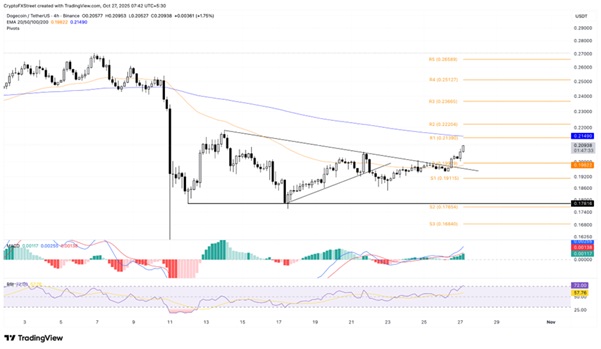
Dogecoin has once again proven it’s not going anywhere. Trading near $0.25, DOGE has held strong while most meme tokens have struggled to recover from recent corrections. Examining Dogecoin, the 4-hour chart indicates that a descending triangle pattern is forming. FXStreet analysts say if DOGE breaks out, it could run up to $0.60. The MACD continues to trend upward, and with the RSI near 72, buyers are definitely piling in. If DOGE holds above $0.23, it has a shot at $0.33, possibly even $0.60.

However, charts aside, Dogecoin’s real strength lies in the fact that people use it. It started as a joke, and is now facilitating quick and cheap transactions, as Elon Musk continues to tease DOGE payments on X. If he actually rolls that out, you can bet demand for DOGE will shoot up.

Shiba Inu (SHIB): Building Utility to Match Its Brand

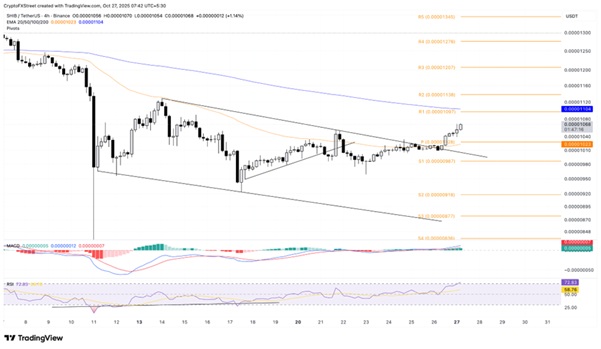
Then there’s Shiba Inu (SHIB). It’s holding steady above $0.00001000 and just jumped almost 5% in a day. Both the MACD and RSI indicate renewed buying interest. So, instead of just wild speculation, people seem to believe in SHIB’s longer-term growth. Unlike most other meme coins, including PEPE, SHIB stands out because of its layered ecosystem. Shibarium, the project’s Layer 2 network, has provided SHIB with a practical foundation for lower gas fees, faster transactions, and expanded DeFi activity. This structure has helped SHIB maintain relevance even as newer meme coins flood the market. Analysts expect it to target $0.00002–$0.00003 if retail inflows and Shibarium adoption continue to grow through 2025.

Conclusion

Dogecoin and Shiba Inu have already proven that meme coins don’t have to be just passing trends; they can stick around if they build something real. But honestly, Little Pepe is shaping up to be the next big step. It’s striking the balance between fun, thoughtful design, and a community you can actually trust. If market momentum holds through early 2026, this could be the meme-coin rotation where cautious buyers finally receive their reward.

For more information about Little Pepe (LILPEPE) visit the links below:

Website: https://littlepepe.com

Whitepaper: https://littlepepe.com/whitepaper.pdf

Telegram: https://t.me/littlepepetoken

Twitter/X: https://x.com/littlepepetoken

$777k Giveaway: https://littlepepe.com/777k-giveaway/


Aptos and Chainlink Face Challenges, But BlockDAG’s Nearly $435M Presale and Reward Model Lead 2025

0

The market spotlight is once again on major Layer-1 and Oracle networks as traders track Chainlink (LINK) and Aptos (APT) to gauge where the next leg of growth might come from. The Chainlink price rally has shown signs of strength but remains constrained by key resistance levels, while Aptos faces uncertainty due to ongoing coin unlocks. With such mixed conditions surrounding established projects, the market’s attention is turning to new entrants.

BlockDAG (BDAG) isn’t just another presale story; it’s a growing ecosystem built on transparency, innovation, and community engagement. Its nearly $435 million presale and dynamic reward structure have cemented its reputation as one of the top cryptos to buy now, giving it a clear edge over legacy players like Chainlink and Aptos.

BlockDAG’s $0.005 Presale and Rewards System Drive Unprecedented Interest

BlockDAG’s presale has crossed nearly $435 million raised, with over 27.2 billion BDAG coins sold and 312,000+ holders globally. The project’s success isn’t just about numbers; it’s a reflection of strong trust and engagement from investors worldwide. Now entering Batch 32, BlockDAG offers its coins at a final $0.005 price, ahead of its confirmed February 10, 2026 listing, a clear countdown moment for the community.

What sets BlockDAG apart is how it turns participation into performance. Its reward-based community system allows contributors to climb leaderboards, earn bonuses, and gain exclusive launch benefits. This interactive layer transforms the presale from a passive buy-in into a gamified, collaborative experience that drives both excitement and retention.

It’s this model merging technology, incentives, and accessibility that positions BlockDAG as a breakout contender in 2025. Investors aren’t just buying coins; they’re joining a rapidly expanding movement that blends innovation with real rewards.

Chainlink: Building Momentum for a Potential Price Rally

Chainlink is currently trading within a tight range between $17.85 and $18.30, with analysts pointing to strong on-chain signals suggesting that accumulation is underway. Whale traders have reportedly purchased over $116 million in LINK, while the Exchange Supply Ratio continues to decline, hinting at shrinking sell-side pressure.

Adding to the optimism is a major new partnership with S&P Global, which integrates Stablecoin Stability Assessments (SSAs) into Chainlink’s on-chain oracle data. This move strengthens Chainlink’s institutional positioning and reinforces its reputation as the go-to solution for secure, real-time data. If the price can break above $25.00 resistance, analysts forecast a potential rally toward the $46.00 range.

Still, despite these positive signs, LINK remains sensitive to broader market swings, and traders are watching closely to confirm whether the next breakout has real follow-through.

Aptos (APT): Institutional Strength Meets Selling Pressure

Aptos is showing a mix of optimism and caution. While short-term charts point to bearish tendencies, its fundamentals remain robust thanks to significant institutional interest. The biggest development came when BlackRock’s BUIDL fund deployed another $500 million in tokenized assets on the Aptos blockchain, pushing its Real-World Asset (RWA) total beyond $1.2 billion. This milestone cements Aptos as the second-largest chain for tokenized assets, behind only Ethereum.

Yet, the price remains under pressure. Regular token unlocks continue to inject new supply into the market. The most recent release of 11.31 million APT in October 2025 sparked short-term volatility, with the price hovering around $2.73 support. Analysts forecast that while Aptos might see long-term gains due to real-world integration, short-term traders should expect continued selling pressure as the vesting schedule extends into 2028.

Why BlockDAG Could Outperform Established Players

While projects like Chainlink and Aptos demonstrate resilience, they’re also bound by existing limitations, whether it’s resistance zones or supply dilution. In contrast, BlockDAG is emerging as a project built from the ground up for scalability, accessibility, and sustained community engagement. Its presale performance has already proven trader trust, with nearly $435M raised.

The traders can still secure the $0.005 price point, claim leaderboard advantages, and gain early access to rewards during launch. This dual structure of inclusivity and innovation makes BlockDAG a compelling option for anyone eyeing the best-performing crypto coins in the upcoming market cycle.

As legacy projects like Chainlink and Aptos continue to navigate their respective challenges, BlockDAG offers a rare mix of accessibility, innovation, and momentum.

Presale: https://purchase.blockdag.network

Website: https://blockdag.network

Telegram: https://t.me/blockDAGnetworkOfficial

Discord: https://discord.gg/Q7BxghMVyu