DD
MM
YYYY

PAGES

DD
MM
YYYY

spot_img

PAGES

Home Blog Page 24

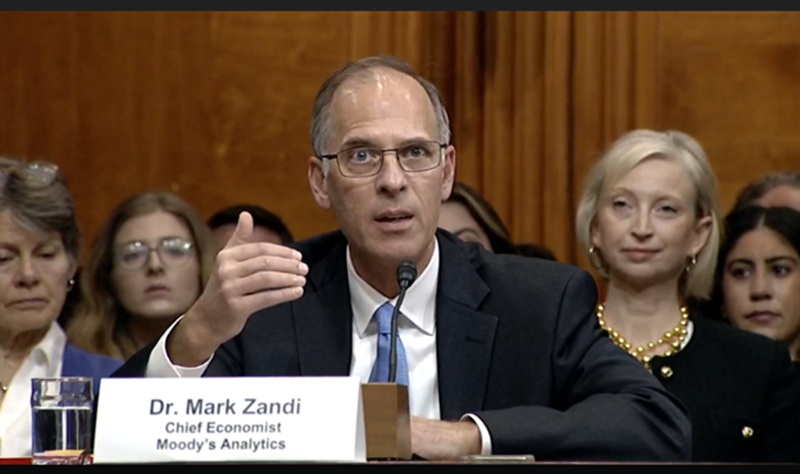
Moody’s Mark Zandi Says U.S. Economy Is Flashing a Warning Sign Even as GDP Keeps Growing

0

The U.S. economy continues to post positive growth figures, with gross domestic product (GDP) expanding and consumer spending remaining relatively resilient. On the surface, these indicators suggest an economy that is successfully navigating a challenging environment marked by high interest rates, geopolitical uncertainty, and rapid technological change.

Yet according to economist Mark Zandi, chief economist at Moody’s Analytics, beneath the headline numbers lies a warning sign that policymakers, investors, and businesses should not ignore. Zandi has argued that while GDP growth remains positive, several underlying indicators point to a gradual weakening of economic momentum.

This divergence between strong headline growth and deteriorating fundamentals is often observed during the later stages of an economic cycle. The economy may still be expanding, but the engines driving that growth are beginning to lose power. One of the most concerning signals is the condition of the labor market. While unemployment remains relatively low by historical standards, hiring has slowed considerably compared to previous years.

Job openings have declined, businesses have become more cautious about expanding payrolls, and workers are finding it increasingly difficult to switch jobs for higher wages.

Labor markets tend to weaken gradually before broader economic activity slows, making employment trends a critical leading indicator. Consumer finances are also showing signs of strain. American households have largely supported economic growth through strong spending, but many consumers are increasingly relying on credit cards and other forms of borrowing.

Savings accumulated during the pandemic have been largely depleted, and higher interest rates have increased the cost of carrying debt. As borrowing becomes more expensive and financial cushions shrink, consumers may eventually reduce spending, removing one of the economy’s most important growth drivers. The housing market presents another challenge.

Elevated mortgage rates have cooled housing activity and limited affordability for many potential buyers. Although home prices have remained relatively firm in many regions, reduced transaction volumes indicate a market that is struggling to maintain momentum. Housing often plays a significant role in economic expansions, and prolonged weakness in the sector can have ripple effects throughout the broader economy.

Business investment has also become more selective. Companies remain interested in long-term opportunities, particularly those related to artificial intelligence and advanced technologies.

However, uncertainty surrounding economic conditions and financing costs has encouraged many firms to delay or scale back major investment decisions. This cautious approach may slow productivity growth and limit future economic expansion. Zandi’s warning is not necessarily a prediction of an imminent recession. Rather, it reflects concern that current GDP figures may be masking vulnerabilities that could become more apparent over time.

Economic growth can continue even as underlying conditions weaken, particularly when supported by government spending, temporary consumer resilience, or specific sectors experiencing rapid growth. The risk is that these supports may not be sustainable indefinitely.

For investors and policymakers, the key lesson is that GDP alone does not tell the entire story.

Economic health depends on a broad range of factors, including labor market strength, consumer confidence, household balance sheets, business investment, and financial stability. When several of these indicators begin to soften simultaneously, they can serve as early warning signals even if overall growth remains positive.

As the economy moves forward, the challenge will be determining whether these warning signs represent a temporary slowdown or the beginning of a more significant downturn. Mark Zandi’s message is clear: growth may still be visible in the headline data, but the economy’s foundation deserves closer scrutiny.

SpaceX Is The First Too-Big-to-Fail IPO

0

For decades, the phrase “too big to fail” has been associated with major banks, financial institutions, and corporations whose collapse could threaten broader economic stability. Today, however, a new candidate is emerging from a very different industry. SpaceX, the private aerospace company founded by Elon Musk, is increasingly being viewed as the first truly too-big-to-fail IPO whenever it eventually reaches public markets.

SpaceX has grown far beyond its origins as a commercial rocket company. It has become a critical pillar of modern infrastructure, national security, telecommunications, and space exploration. Through its Falcon rocket program, the company dominates the global launch market, carrying satellites, scientific missions, military payloads, and astronauts into orbit.

Its ability to launch payloads at significantly lower costs than competitors has fundamentally reshaped the economics of the space industry.

What makes SpaceX unique is that its influence extends far beyond rocket launches. The company’s Starlink satellite network has become one of the largest telecommunications projects ever undertaken. With thousands of satellites in orbit, Starlink provides internet connectivity across remote regions, disaster zones, military operations, maritime routes, and rural communities.

In several geopolitical conflicts and humanitarian emergencies, Starlink has functioned as a critical communications backbone when traditional infrastructure failed. This dual role as both a space transportation company and a communications provider gives SpaceX a strategic importance rarely seen in a private enterprise.

Governments increasingly depend on the company for access to space and resilient communications networks. Defense agencies rely on its launch capabilities, while commercial customers depend on its satellite services. As a result, the company’s success has become intertwined with national interests and economic activity on a global scale.

An eventual SpaceX IPO would likely become one of the largest and most anticipated public offerings in history. Investor demand could rival or surpass landmark technology listings such as Meta Platforms, Alibaba Group, and Saudi Aramco. Institutional investors, pension funds, sovereign wealth funds, and retail investors would all seek exposure to a company that sits at the intersection of aerospace, telecommunications, defense, artificial intelligence, and advanced manufacturing.

The too-big-to-fail argument emerges from the scale of SpaceX’s economic and strategic footprint. If a publicly traded SpaceX were to face severe financial distress, the consequences would extend well beyond shareholders. Satellite communications could be disrupted, launch schedules delayed, national security projects affected, and numerous industries dependent on space-based services thrown into uncertainty.

Governments might feel compelled to intervene, not necessarily to protect investors, but to preserve critical infrastructure and operational continuity.

Another factor strengthening this argument is SpaceX’s leadership position in future industries. The company is developing Starship, a fully reusable launch system designed to dramatically reduce the cost of space transportation. Starship is expected to support lunar missions, Mars ambitions, large-scale satellite deployments, and entirely new commercial markets in orbit.

The success or failure of these projects could influence the trajectory of the global space economy for decades. Of course, being labeled too big to fail carries risks. History shows that markets can become complacent when investors assume governments will step in during times of crisis. Such assumptions can encourage excessive risk-taking and inflated valuations.

SpaceX occupies a category unlike any company before it—a private enterprise whose services have become essential to both economic activity and national security. Whenever SpaceX eventually goes public, it may not simply be another IPO. It could represent the emergence of the world’s first aerospace and communications giant whose importance is so vast that failure is no longer viewed as an option.

Nicolás Maduro Strengthens Defense Team With One of Diddy’s Lawyers

0

Former Venezuelan leader Nicolás Maduro has added a high-profile attorney from the legal team that represented Sean Combs, better known as Diddy, to his defense team as he prepares for a major legal battle in the United States. The move has drawn significant attention because it links one of the most politically controversial defendants in recent years with a lawyer who recently worked on one of the most closely watched celebrity trials in the country.

Court filings show that attorney Anna Estevao has officially joined Maduro’s legal team. Estevao was part of the defense group that represented Combs during his federal criminal trial. She gained national recognition for her courtroom performance, including her cross-examination of key witnesses in the case.

Her addition to Maduro’s legal team signals an effort to bring experienced trial lawyers into what is expected to be a lengthy and complex legal proceeding. Maduro is facing serious federal charges in the United States, including allegations related to narcoterrorism and drug trafficking. He has pleaded not guilty and has consistently denied wrongdoing.

The case has become one of the most politically sensitive criminal prosecutions in recent memory, attracting global attention because of Maduro’s former position as Venezuela’s leader and the international implications surrounding his arrest and prosecution.

The defense team is already led by prominent attorney Barry Pollack, who is known for handling complex and high-profile cases. Pollack has previously argued that Maduro’s capture and transfer to the United States raise significant legal questions and has indicated that the defense intends to challenge various aspects of the government’s case. The addition of Estevao expands the team’s litigation capabilities and provides additional courtroom experience for the battles ahead.

The decision to hire a lawyer associated with Combs’ defense highlights how elite legal talent often moves between celebrity cases, corporate disputes, and politically charged prosecutions. While the allegations facing Combs and Maduro are entirely different, the common thread is the need for attorneys capable of handling intense media scrutiny, complex evidence, and high-stakes courtroom proceedings.

In both situations, public perception can become almost as important as the legal arguments presented before a judge and jury.

For Maduro, the move also reflects the seriousness with which his defense team is approaching the case. High-profile defendants frequently seek attorneys with recent trial experience, particularly lawyers who have demonstrated success under extraordinary public pressure. Estevao’s involvement suggests that Maduro’s legal strategy will focus on aggressive courtroom advocacy as well as broader challenges to the government’s case.

Political analysts note that the case extends beyond a standard criminal prosecution. It touches on questions of international law, diplomacy, and U.S.–Venezuela relations. As hearings move forward, every legal development will be closely watched by governments, investors, and observers seeking clues about the broader geopolitical consequences of the trial.

As the proceedings continue, the case is likely to remain under intense international scrutiny. The addition of one of Diddy’s former lawyers has added another layer of intrigue to an already extraordinary legal saga. Whether the expanded defense team can successfully challenge the charges remains to be seen, but the recruitment of a lawyer from one of America’s most publicized recent trials underscores the magnitude of the battle that lies ahead.

iRWA secures 6 further projects – total 22, $607 billion of assets – 50% African

0

LONDON, June 2026 — intangible Real World Assets (iRWA) has increased traction to 22 projects representing over $600 billion of assets under management. From a pilot in Sept 2025, the rate of onboarding has now increased from 2 per month to 6 in May 2026. Largest growth has been in Africa, a continent rich in assets, culture and provenance, but poor in value. iRWA aims to bring more equity to the value .v. values global balance through disintermediation.

intangible Real World Assets is a framework to value assets not solely by their financial value, but also by their non-financial value, recognising the value of going good – kindness, happiness, goodwill, hope. This has been a journey starting in 2011 researching through universities ways to measure non-financial value which was recognised as a global standard in 2014 by The Vatican and across a dozen governments.

In 2016 the team moved from measurement to transacting using blockchain to move digital value resulting in the first FCA compliant ICO in 2017 (UK) with the Seratio® SER social impact token. Focus 2018 to 2023 was on selective implementation across 4 states, providing the evidence to implement the first retail pilot in 2025 in Kenya. This has now expanded to Switzerland, Canada, Columbia, Spain, Germany, etc and those not subject to NDA are available at:

GLOBAL: https://irwa.digital/

With the rapid update in Africa, a historically rich continent in commodities and assets, but notoriously poor in getting it’s fair share of the value creation which seems to gravitate to Western and Far East entities in unequal proportions, iRWA has established a separate operational team for Africa already gaining momentum.

Whilst bodies like AfCFTA have made substantial progress in facilitating cross-border efficiency, the mammoth task remains of shifting the value proposition back to where it originated. Technology now exists to radically shift this paradigm, connecting global consumers with the source of their happiness originated in Africa but consumed in the rest of the world. This connection platform is called intangible Real World Assets and it is a scalable and sustainable solution.

AFRICA: https://irwa.africa/  

Contact


Maryam Taghiyeva

Head of Tokenization

Maryam.Taghiyeva@cceg.org.uk

+44 7341 441793

https://irwa.digital/

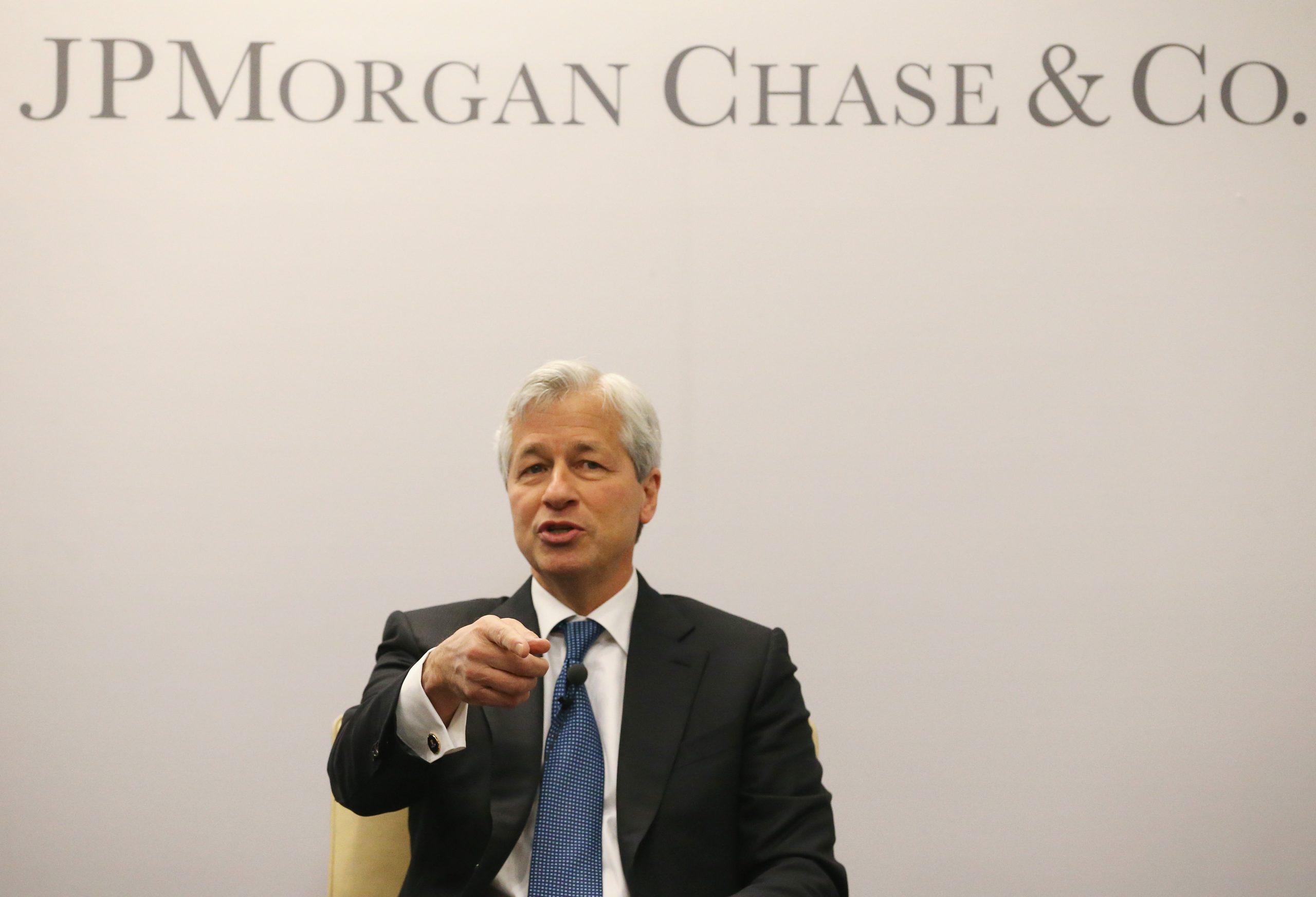
Jamie Dimon’s JPMorgan AI Hiring Push will Transform Wall Street Banking Workflows

1
JP Morgan Chase puts contents through its CEO account, it goes viral. But the same content via JPMC account, no one cares (WSJ)

Jamie Dimon’s recent signal that JPMorgan Chase will expand hiring of AI specialists alongside traditional bankers marks a structural shift in how large financial institutions are internalizing artificial intelligence. Rather than treating AI as an external vendor layer or experimental productivity tool, the bank is effectively embedding it into its core operating model.

This reflects a broader transition toward agentic AI systems that can execute workflows, reason across datasets, and interact with internal financial infrastructure in semi-autonomous ways. Historically, banks deployed automation in narrow silos such as fraud detection, credit scoring, and algorithmic trading.

The new paradigm differs because agentic systems are not confined to single tasks; instead, they orchestrate multi-step decision pipelines across compliance, risk, customer onboarding, and portfolio management. Hiring both AI engineers and bankers signals a hybrid workforce strategy where domain expertise and machine learning capability are tightly coupled rather than separated.

From an operational perspective, agentic AI introduces compounding efficiency gains.

Instead of analysts manually pulling reports, reconciling data, or drafting routine financial narratives, AI agents can perform these steps continuously and in parallel. This shifts human labor toward supervision, exception handling, and strategic judgment. In banking environments where latency, accuracy, and regulatory compliance are critical, these systems function as structured decision accelerators rather than simple automation tools.

This move also reflects competitive pressure from fintech firms and AI-native startups that are already building lean, software-driven financial operations. Large incumbent banks cannot rely solely on scale advantages; they must integrate advanced AI systems to maintain margin efficiency and customer responsiveness. By expanding AI hiring, institutions like JPMorgan Chase are effectively building internal AI factories that generate models, agents, and decision systems tailored to proprietary financial data.

Dimon’s framing underscores a broader inflection point in financial services: AI is no longer peripheral, but foundational. As agentic systems mature, the distinction between banker and software operator will continue to blur, creating a hybrid professional class that manages both capital flows and computational agents. The firms that successfully integrate these capabilities early are likely to define the next decade of banking competitiveness.

One of the most consequential implications of this shift is architectural. Agentic AI in banking typically relies on layered systems combining large language models, structured data retrieval pipelines, and rule-based compliance constraints.

These agents are not free-running models; they are bounded within governance frameworks that enforce auditability, traceability, and deterministic fallback behaviors. In practice, this means every AI-driven recommendation or action must be explainable in terms of data provenance and decision logic, particularly in regulated environments such as capital markets and consumer lending.

As institutions scale these systems, they are effectively building distributed cognitive infrastructures that resemble operating systems for financial decision-making rather than isolated applications. The expansion of agentic AI into core banking workflows also introduces non-trivial risks. Model hallucination, data leakage, and adversarial manipulation become systemic concerns when AI agents are allowed to execute multi-step financial operations.

Regulatory bodies will likely respond by demanding stricter model validation standards, continuous monitoring, and human-in-the-loop controls for high-impact decisions. Over time, the competitive advantage will shift from merely deploying AI to governing it effectively at scale. Banks that fail to build robust AI oversight mechanisms may find that efficiency gains are offset by operational and compliance vulnerabilities.