DD
MM
YYYY

PAGES

DD
MM
YYYY

spot_img

PAGES

Home Blog Page 24

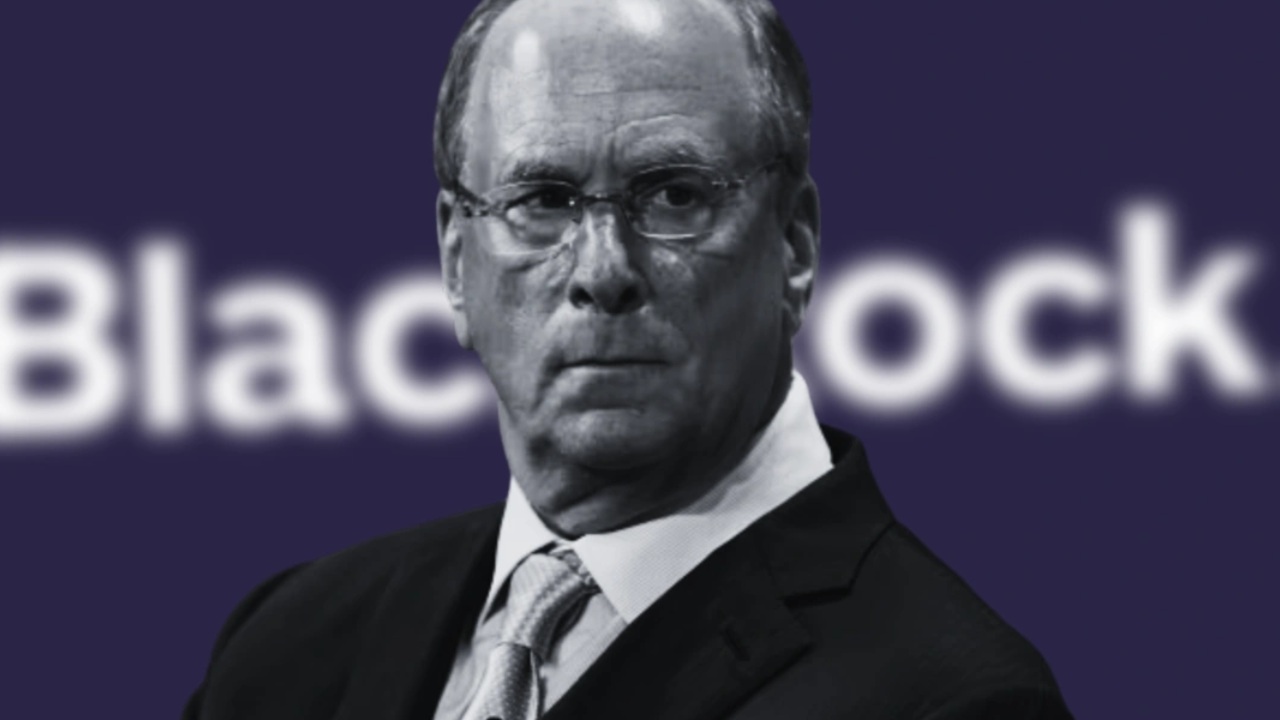
BlackRock’s Massive Growth and the Increasing Concentration of Global Capital

0

BlackRock has reached a historic milestone, becoming the first investment firm in history to surpass $15 trillion in assets under management (AUM).

The achievement marks not only a defining moment for the company itself but also highlights the increasing concentration of global capital in the hands of a few major asset managers that now wield enormous influence over financial markets.

Founded in 1988 by Larry Fink and several partners, BlackRock began as a risk management and fixed-income investment firm.

Over nearly four decades, it transformed into the world’s largest asset manager through a combination of strategic acquisitions, technological innovation, and expanding investor trust.

Crossing the $15 trillion threshold represents extraordinary growth from the firm’s modest beginnings and underscores the increasing demand for professionally managed investment products.

Several factors have contributed to BlackRock’s meteoric rise. The company has become a dominant player in exchange-traded funds (ETFs) through its iShares platform, which remains one of the largest ETF businesses globally.

ETFs have fundamentally changed how investors access financial markets by providing low-cost, diversified exposure to equities, bonds, commodities, and alternative assets. As both institutional and retail investors increasingly favor passive investment strategies over traditional active management.

BlackRock has been one of the greatest beneficiaries of this structural shift.

The firm’s technological edge has also played a crucial role. BlackRock’s Aladdin platform, a sophisticated risk management and portfolio analytics system, has become deeply embedded across the global financial industry.

Governments, pension funds, banks, and competing asset managers rely on Aladdin to assess risk and manage investment portfolios. This technological infrastructure has further strengthened BlackRock’s position as not merely an asset manager but also a critical financial technology provider.

BlackRock’s rise also reflects broader changes in global wealth accumulation. Pension funds, sovereign wealth funds, insurance companies, and individual investors increasingly seek large, stable institutions capable of managing vast pools of capital across multiple asset classes and jurisdictions.

The firm’s global reach, extensive product offerings, and reputation for risk management have positioned it as a preferred destination for these funds. The milestone also raises important questions about concentration and systemic risk.

With more than $15 trillion under management, BlackRock’s investment decisions can significantly influence stock prices, corporate governance, and capital allocation across industries and countries.

The firm’s voting power in thousands of publicly traded companies has sparked debates about whether a handful of asset managers now possess excessive influence over corporate America and global markets.

Critics argue that such concentration could create vulnerabilities during periods of market stress. A sudden shift in investor sentiment, large-scale redemptions, or disruptions in major asset classes could have ripple effects across the financial system.

Regulators worldwide have increasingly examined whether giant asset managers like BlackRock should face additional oversight due to their systemic importance. BlackRock has continued to expand into emerging sectors, including private markets, infrastructure investments, artificial intelligence, and digital assets.

The company has become a significant participant in the growing tokenization and cryptocurrency sectors, signaling its willingness to adapt to changing financial landscapes. Its entry into Bitcoin exchange-traded products and tokenized finance initiatives demonstrates how traditional finance giants are increasingly embracing digital asset infrastructure.

BlackRock surpassing $15 trillion in assets under management is more than a corporate milestone; it is a reflection of the evolving structure of global finance. The achievement highlights the growing dominance of passive investing, the importance of financial technology, and the increasing concentration of capital within a select group of institutions.

As BlackRock continues to expand its influence, its future decisions will likely shape investment trends, corporate governance, and the broader trajectory of global financial markets for years to come.


Mark Rutte Defends Germany’s Missile Plans Amid Rising Russia Concerns

0

NATO Secretary General Mark Rutte has dismissed concerns that Germany’s planned acquisition of United States-made Tomahawk medium-range cruise missiles will unnecessarily escalate tensions with Russia.

His remarks come at a time when European security is undergoing its most significant transformation since the end of the Cold War, driven largely by Russia’s invasion of Ukraine and growing fears of a broader confrontation on the continent.

Germany’s decision to pursue long-range precision strike capabilities reflects a wider shift in European defense thinking. For decades, Berlin maintained a relatively restrained military posture, emphasizing diplomacy, economic engagement, and multilateral cooperation.

The security environment in Europe has changed dramatically since 2022. Russian military actions in Ukraine have convinced many European governments that deterrence and military preparedness are once again essential components of national security.

The Tomahawk cruise missile is one of the world’s most advanced long-range precision weapons systems. Capable of striking targets hundreds of kilometers away with high accuracy, it provides countries with the ability to neutralize strategic military assets while minimizing collateral damage.

Germany’s interest in acquiring such systems is seen by many analysts as part of its broader effort to modernize the Bundeswehr and strengthen NATO’s collective defense capabilities. Critics, argue that deploying medium-range missiles in Europe risks reviving memories of Cold War-era missile confrontations.

During the 1980s, the deployment of intermediate-range nuclear forces sparked widespread protests across Europe and heightened tensions between NATO and the Soviet Union.

Some observers fear that Russia may interpret Germany’s acquisition of Tomahawk missiles as a direct threat, potentially triggering an arms buildup or prompting Moscow to deploy additional missile systems near NATO borders.

Mark Rutte rejects this interpretation. According to the NATO chief, deterrence should not be confused with provocation. From NATO’s perspective, strengthening defensive capabilities is a response to an increasingly unpredictable security environment rather than an attempt to escalate conflict.

Rutte has repeatedly emphasized that Russia itself has significantly altered the European strategic balance through its actions in Ukraine and its continuous military modernization.

Supporters of Germany’s decision argue that credible deterrence reduces, rather than increases, the likelihood of conflict. The logic is straightforward: if potential adversaries understand that NATO members possess the capability to respond effectively to aggression, they may be less inclined to take destabilizing actions.

In this view, military weakness, not strength, often creates opportunities for miscalculation. Germany’s move also aligns with broader efforts by European states to reduce dependence on the United States for security while simultaneously deepening transatlantic cooperation.

European governments have significantly increased defense spending, invested in new technologies, and sought to enhance interoperability among allied forces.

The acquisition of advanced missile systems represents another step toward building a more resilient and capable European defense architecture. The political and diplomatic implications cannot be ignored. Russia has consistently criticized NATO’s military expansion and modernization efforts, portraying them as threats to its national security.

The Kremlin is likely to condemn Germany’s missile plans and may use the development to justify its own military deployments or strengthen anti-Western narratives domestically. The debate surrounding Germany’s planned purchase of Tomahawk missiles reflects a larger question facing Europe.

How can the continent maintain peace in an era of renewed great-power competition? Mark Rutte’s position suggests that deterrence and preparedness are indispensable to preserving stability.

Whether this strategy succeeds in preventing future conflict or contributes to deeper geopolitical divisions will depend on the actions of both NATO and Russia in the years ahead.

Bybit’s $1.4 Billion Hack Exposes the Security Limits of Crypto Institutions

0

The rapid rise of decentralized finance has created an entirely new financial ecosystem, one that promises transparency, efficiency, and borderless access to capital markets.

Yet beneath the innovation lies a persistent concern: many of the largest DeFi protocols continue to operate without sufficient real-world collateral backing their assets.

This structural weakness has increasingly drawn scrutiny from regulators, institutional investors, and credit rating agencies, particularly S&P Global.

The issue centers on the distinction between endogenous and exogenous collateral. Endogenous collateral consists of assets whose value is derived primarily from the same crypto ecosystem that supports the protocol itself.

In simpler terms, a token is often backed by another token whose valuation depends on continued confidence in the broader crypto market. During periods of growth, this arrangement can appear sustainable. When market sentiment deteriorates, the entire structure risks entering a self-reinforcing downward spiral.

The collapse of TerraUSD in 2022 remains the most prominent example. Billions of dollars in value evaporated because the stablecoin relied largely on market incentives and internally linked assets rather than independently valuable collateral.

The event fundamentally changed institutional perceptions of digital assets and highlighted the dangers of reflexive financial structures. It is for this reason that S&P Global has become increasingly reluctant to support or assign favorable assessments to stablecoins lacking exogenous collateral.

Assets backed by cash reserves, short-term Treasury bills, or other real-world instruments offer a clearer pathway to redemption and risk management. In contrast, stablecoins dependent solely on crypto-native collateral introduce significant uncertainties regarding liquidity, contagion risks, and recovery prospects during market stress.

The institutional concerns surrounding digital assets were further reinforced by the massive $1.4 billion Bybit hack.

Although the cryptocurrency industry has made significant strides in security infrastructure, the attack demonstrated that even major platforms with sophisticated systems remain vulnerable to cyber threats. Importantly, the incident exposed the reality that institutional-grade branding does not necessarily equate to institutional-grade security.

The Bybit breach highlighted several critical vulnerabilities. First, concentration risk remains substantial. A successful compromise of key infrastructure can create immediate systemic consequences across multiple interconnected protocols.

Second, operational security remains a human problem as much as a technological one. Multi-signature systems, custody arrangements, and governance procedures can all become points of failure if not properly designed and monitored.

For institutional investors considering tokenized products, these developments have introduced a far greater emphasis on due diligence. The conversation is no longer simply about yield opportunities or blockchain efficiency. It is increasingly about legal claims, redemption rights, collateral quality, and cybersecurity resilience.

This leads to perhaps the single most important question any investor should ask before allocating capital to a tokenized fund: What exactly backs this asset, and what legal claim do I possess if everything goes wrong?

This question cuts through marketing narratives and technological jargon. A tokenized fund may offer attractive returns, but if investors lack enforceable legal rights over the underlying assets, ownership can become ambiguous during periods of distress.

Likewise, if collateral consists primarily of volatile digital assets rather than independently valuable reserves, the token’s stability may prove illusory. Tokenization undoubtedly represents one of the most important financial innovations of the coming decade.

History repeatedly demonstrates that financial engineering cannot eliminate risk; it merely redistributes it. Investors must therefore distinguish between genuine asset-backed innovation and systems that rely primarily on confidence and perpetual growth.

As institutions like S&P Global continue to demand stronger collateral standards and as incidents such as the Bybit hack reveal persistent vulnerabilities, the future winners of digital finance are likely to be those protocols that combine technological innovation with traditional principles of risk management, transparency, and enforceable ownership rights.

Jesse Pollak Admits Onchain Social Vision Fell Short as Base Shifts Toward Coinbase Integration

0

Jesse Pollak, the creator of Coinbase’s Layer-2 network Base, has publicly acknowledged that one of his most ambitious visions—turning Base into a dominant onchain social ecosystem—has failed to achieve the traction he initially expected.

In a significant strategic shift, Pollak announced that the future direction of the Base application would now be more directly integrated into Coinbase’s broader ecosystem, effectively handing over greater control and operational responsibility to the crypto exchange giant.

The admission marks a rare moment of candor in the blockchain industry, where founders often continue promoting narratives long after market realities have changed.

Pollak had envisioned Base becoming more than just a scaling solution for Ethereum. Instead, it was meant to become a new digital social layer where creators, users, and communities could interact entirely onchain, with identity, content, and economic incentives seamlessly embedded into decentralized infrastructure.

The concept gained considerable attention during the rise of decentralized social applications such as Farcaster and other SocialFi experiments. Many industry participants believed that blockchain technology could fundamentally reshape social media by giving users ownership of their content, identities, and monetization opportunities.

Base positioned itself at the center of this movement, betting that social interactions would become one of crypto’s largest consumer use cases. Reality proved more challenging.

Despite generating enthusiasm among developers and attracting numerous experimental applications, onchain social platforms struggled to reach mainstream audiences.

User growth remained relatively niche, onboarding processes continued to present friction, and many applications failed to demonstrate a compelling advantage over established social media giants such as X, Instagram, and TikTok.

Moreover, crypto markets have increasingly shifted their attention toward other narratives. Artificial intelligence, stablecoins, tokenized assets, prediction markets, and real-world asset infrastructure have become the dominant themes attracting both venture capital and user engagement.

In comparison, SocialFi has struggled to maintain momentum. Pollak’s acknowledgment reflects a broader industry lesson: technological possibility does not automatically translate into product-market fit. Building decentralized social networks requires not only innovative infrastructure but also strong network effects, simple user experiences, and clear incentives for ordinary consumers.

By bringing the Base App closer to Coinbase’s ecosystem, the company appears to be pursuing a more pragmatic strategy. Coinbase already possesses one of the largest crypto user bases globally, serving millions of customers and maintaining trusted infrastructure for trading, custody, and payments.

Integrating Base more deeply into Coinbase’s products could dramatically increase distribution and improve user onboarding. This transition may also indicate that Coinbase sees Base less as a standalone social platform and more as foundational infrastructure for broader onchain applications.

Stablecoin payments, tokenized financial services, decentralized commerce, and AI-driven agent economies are emerging as potentially larger opportunities than decentralized social media alone.

The move highlights an increasingly important trend within the blockchain industry: consolidation around practical utility.

Investors and builders are becoming more focused on applications that generate sustainable demand rather than relying solely on ideological narratives around decentralization. Pollak’s original vision should not be dismissed entirely.

Many transformative technologies experience multiple failed iterations before achieving widespread adoption. The internet itself went through numerous unsuccessful social experiments before platforms like Facebook, YouTube, and X eventually emerged.

Pollak’s admission represents maturity rather than defeat. Recognizing when a strategy has underperformed and adapting accordingly is often a hallmark of successful technology leadership. By repositioning Base within Coinbase’s larger ecosystem, the company may be laying the groundwork for a more scalable and commercially viable future.

The story of Base serves as a reminder that in crypto, infrastructure alone is insufficient. Lasting success requires aligning technological innovation with genuine user needs, market timing, and sustainable economic models. The dream of onchain social networks may not be dead, but for now, the industry’s focus has clearly shifted toward more immediate and tangible applications of blockchain technology.

Crypto Clarity Act Odds Crash to Record Low as U.S Congress Convenes

0

Hopes for the passage of the Crypto Clarity Act have taken a sharp hit, with prediction markets assigning the legislation its lowest odds yet of becoming law this year.

According to Polymarket, the odds of the Act being signed into law in 2026 have dropped sharply to around 32%, marking an all-time low as lawmakers return to Washington for critical discussions.

The Clarity Act represents the most significant attempt yet to create a comprehensive federal framework for digital assets in the United States.

It would divide regulatory oversight between the Securities and Exchange Commission (SEC) and the Commodity Futures Trading Commission (CFTC), clarify whether tokens are securities or commodities, set rules for trading platforms, and provide consumer protections along with guidance for developers.

The House passed its version in July 2025, while the Senate has been negotiating a merged text from its Banking and Agriculture committees.

Recent betting data shows a steep decline in optimism throughout 2026, with the probability line plunging in July. This shift comes as the Senate faces a tight timeline.

Negotiators aim for floor action as early as the week of July 20. Still, the chamber must adjourn for its August recess, leaving only a narrow window before attention turns fully to midterm elections.

Congress convened a key field hearing on July 17, 2026, in New York to examine the Digital Asset Market Clarity Act. The session, organized by the House Financial Services Subcommittee on Digital Assets, Financial Technology, and Artificial Intelligence, focused on how the legislation could provide long-sought regulatory certainty for the cryptocurrency industry while fostering innovation in finance.

The event brought together lawmakers, industry stakeholders, and experts to evaluate the bill’s potential impact on markets, consumer protection, and technological development.

The CLARITY Act aims to reshape U.S. crypto oversight by classifying various digital assets—such as digital commodities, stablecoins, and securities—and dividing regulatory responsibilities between the Securities and Exchange Commission (SEC) and the Commodity Futures Trading Commission (CFTC).

Proponents argue it would reduce uncertainty that has driven talent and business overseas, offering protections for software developers in decentralized finance (DeFi) projects and tools for combating illicit finance.

This hearing follows the House’s passage of its version in July 2025 and the Senate Banking Committee’s advancement of related text in May 2026.

Negotiations continue in the Senate to merge versions from the Banking and Agriculture Committees, addressing issues including ethics rules for officials’ crypto holdings, stablecoin provisions, and federal preemption.

The bill requires 60 votes to advance in the Senate, making bipartisan support essential within a narrowing legislative window ahead of the August recess.

Industry voices, including Coinbase’s policy chief, have described the measure as a “dramatic advance” in market integrity and consumer safeguards. CFTC Chair Michael Selig has warned that without congressional action, regulators would continue filling gaps with patchwork rules detrimental to business.

Critics and law enforcement groups have raised concerns over certain protections, prompting White House engagement to balance innovation with security needs.

As the hearing unfolded, participants highlighted the stakes for America’s position in global finance. With the Senate eyeing potential floor action in the coming weeks, the CLARITY Act represents a pivotal step toward comprehensive crypto legislation.

Success could stabilize markets and encourage domestic growth, while delays risk prolonging the current regulatory ambiguity. Lawmakers face pressure to reconcile differences and secure passage before political timelines tighten further.

Passage in the Senate requires 60 votes, meaning substantial Democratic support is essential. While some progress has been made on merging bill texts—with reports of over 70 additional pages emphasizing consumer protections—outstanding issues continue to complicate bipartisan agreement.

President Trump has also publicly urged passage, citing risks of China gaining an edge in crypto.

The plummeting prediction market odds reflect real frustrations among traders and observers. Despite months of negotiations and committee approvals, the bill’s path forward looks increasingly uncertain.

A failure to advance before the August recess could push meaningful reform past the 2026 midterms, prolonging regulatory uncertainty that has already shaped much of the industry’s challenges.

As Congress meets this week, all eyes are on whether lawmakers can bridge remaining gaps or if market skepticism will prove justified.