DD
MM
YYYY

PAGES

DD
MM
YYYY

spot_img

PAGES

Home Blog Page 24

USD.AI Releases ICO and Airdrop Details

0

USD.AI developed by Permian Labs is a DeFi protocol issuing the yield-bearing stablecoin USDai and staked variant sUSDai, backed by loans against AI infrastructure like GPUs and compute resources.

It bridges crypto liquidity with real-world AI hardware financing.The project’s governance and utility token is $CHIP: CoinList (whitelist/eligibility based on Allo points from the “Allo Game” points program). Sale Period: February 22, 2026 (23:00 UTC) to February 27, 2026 (23:00 UTC). Token Price: $0.03 per $CHIP. Fully Diluted Valuation (FDV): $300 million. Allocation: 700,000,000 $CHIP (7% of total supply).

Unlock: 100% at Token Generation Event (TGE). Additional Incentives for ICO Participants via “Level Up” mechanism and post-purchase options: Refund rights (full USDC/USDT refund if needed, e.g., in case of underperformance).

Discount rights for voluntary lockups: 4-month lock ? effective $270M FDV (10% discount); 8-month lock ? $190M FDV (37% discount). Boost and Max paths for additional perks like discounted subscriptions or premium buyouts, plus Season 2 points accrual.

Eligibility: Tied to Allo points alignment (ICO path earns brown points at 5x multiplier, no native yield). The ICO is not open to everyone—participants need sufficient Allo points from prior engagement like minting and staking USDai/sUSDai. 300,000,000 $CHIP (3% of total supply).

Eligibility: Based on Allo points from the “Allo Game” (Season 1 ends February 18, 2026). Airdrop path (teal points) earns 2x multiplier with native yield from sUSDai staking. Higher-than-average alignment may be required for meaningful shares.

Distribution: Automatic to the connected wallet on the app at TGE—no separate claim needed. Unlocks fully unlocked at TGE. No Minimums for airdrop qualification.

Guaranteed buyout at $350M or $420M FDV paid in cash at TGE. Limited capacity; pro-rata if oversubscribed; irreversible decision. Token Release (TGE)Expected in March 2026, exact date and full token distribution and vesting mechanics to be announced soon.

Season 1 participants receive distributions automatically. Season 2 strategies and further details incoming. This follows the “Allo Game” points farming campaign (ongoing since 2025), where users chose ICO (brown points) or airdrop (teal points) paths.

TVL has been strong (hundreds of millions), backed by investors like Framework Ventures, Dragonfly, YZi Labs, and Coinbase Ventures. The USD.AI ($CHIP token) ICO and airdrop, set against a $300M FDV at $0.03 per token, carry several key implications as of February 12, 2026. The project has built substantial TVL around $658M recently, per reports through its GPU-backed stablecoin (USDai/sUSDai) lending model, backed by reputable VCs like Framework Ventures, Dragonfly, YZi Labs, and Coinbase Ventures.

However, community sentiment and market conditions introduce notable risks and dynamics. USD.AI bridges DeFi with real-world AI infrastructure financing (loans against GPUs/compute). High TVL reflects genuine adoption, with yields on sUSDai ~9% in some periods attracting liquidity providers.

The “Allo Game” points system successfully bootstrapped engagement since 2025, creating a committed user base. ICO participants get refund rights (full USDC/USDT return if needed, and voluntary lockup discounts (4 months effective $270M FDV / 10% discount; 8 months ? $190M FDV / 37% discount).

Airdrop users can opt for “buyout” paths; commit Season 2 Pendle YTs for guaranteed cash at $350M–$420M FDV at TGE. These reduce downside for aligned participants and could stabilize early price action.

$CHIP enables DAO governance, potentially decentralizing decisions and unlocking new yield strategies. If TVL sustains/grows post-TGE, it could drive protocol revenue toward token value. ICO (Feb 22–27 on CoinList) and airdrop distribution at TGE could inject liquidity and speculative interest, especially if broader market recovers or AI/DeFi narratives heat up.

$300M FDV draws heavy criticism as potentially overvalued, especially in a subdued market. Some users note prior VC rounds mean retail pays a premium. Community posts highlight “extraction” risks, with comparisons to recent ICOs that dumped 50%+ pre-market or post-launch.

Allo points farming yields modest $CHIP amounts. Many early participants (YT farmers, etc.) face breakeven only at 3x+ launch FDV ($900M+), leading to sentiment like “peanuts” or “nobody getting rich.” Some regret choices (ICO vs. airdrop paths) as market shifted.

Full unlock at TGE for both ICO (7% supply) and airdrop (3% supply) could flood liquidity if recipients dump. Airdrop changes; now fully unlocked vs. prior locked expectations amplify this. Polymarket odds ~60% chance of >$300M FDV day 1 reflect uncertainty, with potential for sharp drops if hype fades.

Smart contract and operational vulnerabilities, regulatory hurdles for real-world asset lending, and competition in AI and DeFi stablecoins. General crypto market weakness could suppress post-TGE performance. Posts show frustration vs. optimism from loyal farmers. ICO seen as “no bottom” risky by some experienced participants.

This feels like a high-stakes transition: strong fundamentals in GPU-backed stablecoin utility, but timing and $300M FDV create skepticism amid a tough market. Protections help mitigate downside for participants, but upside depends on sustained TVL, yield delivery, and market recovery.
Delta40 Lands $20M to Support Diverse Founders Tackling Africa’s Urgent Challenges

0

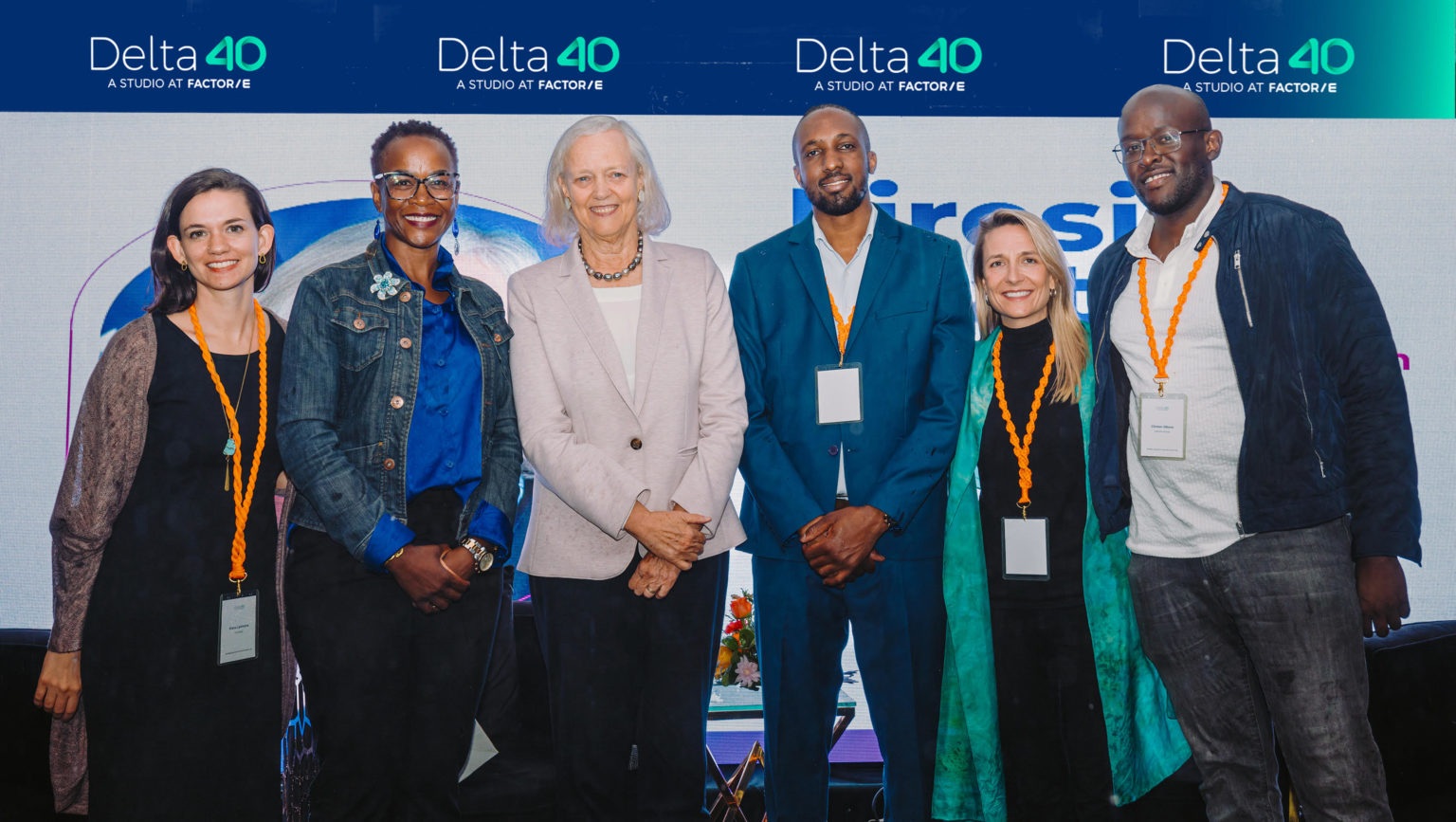
Delta40, a venture studio and VC fund investing in and supporting founders addressing Africa’s most urgent challenges, has secured $20 million in funding to strengthen its integrated Venture Studio and Fund model, supporting Africa’s diverse startup founders.

The funding round attracted participation from 54 investors across 13 countries, spanning global institutions, high-net-worth individuals, development finance institutions (DFIs), family offices, and foundations.

The raise included backers from across Africa to Silicon Valley, including 25 Founders, the Soros Economic Development Fund, FMO, GIZ, Autodesk Foundation, the Rockefeller Foundation, Allan and Gill Gray Philanthropies, Livelihood Impact Fund, Small Foundation, Lemelson Foundation, Factor (E) Ventures, Skoll Foundation, and global law firm Wilson Sonsini.

Speaking on the milestone, Lyndsay Holley Handler, Founder & CEO of Delta40, said,

“Through Delta40, we’re building and scaling innovations that transform lives, economies, and planetary health across Africa — with solutions that can power and feed the world. What sets this model apart is our community of innovators, investors, and business leaders who provide hands-on support from idea to pan-African scale and impactful exits. Over 75% of our investors and team have built ventures in Africa, bringing deep experience, networks, and lessons from successful exits across the continent and beyond.”

Also commenting, Georgia Levenson Keohane, CEO of the Soros Economic Development Fund, stated,

“Delta40 exemplifies the kind of bold, locally-led innovation that is essential to building inclusive economies and environmental resilience across Africa. At SEDF, we are proud to support visionary founders who are solving urgent challenges – and shaping a more just and sustainable future.”

Launched in 2023, Delta40’s integrated fund and venture studio model was designed to back founders at the ideation stage, accelerate innovation and execution, and scale resilient businesses across Africa. The firm writes initial checks ranging from $100,000 to $500,000 at the idea-to-Seed stage, with opportunities for follow-on investments.

Delta40’s mission is to increase incomes and tackle climate change in Africa by building and investing in inclusive climate innovations. The firm focuses on Africa because 40% of the world’s population is projected to live on the continent by 2100. Its investment thesis centers on energy, agriculture, and mobility innovations, critical sectors for sustainable growth while prioritizing climate innovation given the urgency of preventing irreversible environmental damage within the next decade.

The firm also emphasizes investing in diverse founders, recognizing that they are closest to customers and bring essential ideas, lived experiences, and skills needed to solve complex challenges across the continent.

Beyond providing capital, Delta40’s venture studio team delivers hands-on support, shared services, and strategic partnerships to accelerate speed, returns, and impact. Acting as a long-term extension of startup teams, the studio supports commercial growth and fundraising execution, including investor materials, financial modeling, strategy development, exit planning, and targeted introductions to facilitate subsequent funding rounds.

Global benchmarks show that venture studios help startups raise capital twice as fast and achieve IPO and M&A exits 30% faster than traditional models. Additionally, venture capital funds that offer significant post-investment support have been shown to generate 50% higher net internal rates of return (IRRs).

Delta40 was established to address persistent gaps within Africa’s innovation ecosystem. Currently, less than 2% of venture funding goes to female founders, and less than 30% to African founders despite data demonstrating that locally led ventures and diverse founding teams deliver stronger financial returns and outsized impact. Many startups also struggle to scale or achieve exits due to limited access to appropriate capital, technology, and talent.

To date, Delta40 has invested in and supported 16 companies, including five ventures built directly within its studio, achieving a 5.5x leverage on its capital. These ventures across clean energy, agriculture, and fintech, operate in more than 30 African countries, and have created over 5,000 direct and indirect jobs, driving income growth and environmental sustainability.

With offices in Nairobi, Kenya, and Lagos, Nigeria, Delta40 is led by a team of experienced entrepreneurs, operators, and innovators committed to providing catalytic capital and embedded support from idea stage to pan-African scale.

The Power of One Team: Why Collaboration Outruns Individual Brilliance

0

If you studied Social Studies in junior secondary school, you probably memorized the textbook advantages of partnerships and team management. One line my teacher, Mr. Mbah, emphasized was: “joint hands in making management decisions.” We recited it faithfully, preparing for exams, without truly grasping what it meant in practice.

By senior secondary school, the Economics subject deepened that lesson through the concepts of division of labour and the factors of production. Expertise matters, even the entrepreneur, the so-called “risk taker,” cannot achieve much without labour, coordination, and shared effort. Enterprise is not a solo act; it is the deliberate construction of a working team.

The same principle holds everywhere: when a company, a family, a society, or a nation functions as one team, it outperforms the sum of its individual talents.

Usain Bolt ran the fastest 100 meters ever recorded: 9.58 seconds. Yet four Jamaicans, running together in the 4×100 meter relay, completed the race in 36.84 seconds. On average, each covered 100 meters at about 9.21 seconds. Simply by running together, they collectively outperformed the best individual record.

The message is simple and enduring: collaborate, partner, and advance together.

Implications of the Recently Released US Jobs Report 

0

The latest US jobs report, released by the Bureau of Labor Statistics (BLS) covers January 2026 data; delayed slightly due to a partial government shutdown.

It showed nonfarm payrolls increased by 130,000, beating economists’ expectations, which had ranged around 55,000 to 70,000 like the Dow Jones consensus at 55,000, Reuters/LSEG around 70,000. Nonfarm payrolls: +130,000 vs. expectations of ~55,000–70,000; prior month December revised to +48,000.

Unemployment rate: Edged down to 4.3% from 4.4% in December; better than forecasts expecting it to hold steady at 4.4%. Private sector added 172,000 jobs, while government especially federal saw declines of around 42,000.

Job gains were led by health care and social assistance; combined over 120,000, construction (+33,000), and business and professional services (+34,000). Sectors like retail, leisure/hospitality, federal government, and financial activities saw little change or losses.

Wages rose solidly (average hourly earnings up ~0.4% monthly, ~3.7% annually). A broader unemployment measure (U-6, including underemployed) fell to 8.0%. This marked a solid start to 2026 after a very weak 2025, providing some relief to labor market concerns.

However, the report included significant annual benchmark revisions that painted a much softer picture for prior years:2025 job growth was revised down sharply to only +181,000 total from an initial ~584,000 estimate, averaging ~15,000 per month—the weakest non-recession year in decades.

Revisions also lowered prior estimates for 2024. These revisions (based on more complete data like unemployment insurance records) suggest the labor market was closer to stalling in 2025, with growth heavily concentrated in health care and limited elsewhere, some blue-collar sectors even saw net losses over parts of the period.

Markets and analysts viewed the January beat as a positive surprise, potentially signaling stabilization or early recovery momentum into 2026—possibly influenced by factors like warmer weather boosting construction or policy effects—but tempered by the weak revisions and ongoing questions about sustainability beyond essential sectors.

Benchmark revisions in the US jobs report refer to the annual process by which the Bureau of Labor Statistics (BLS) adjusts its monthly estimates of nonfarm payroll employment from the Current Employment Statistics (CES) survey to align them with more comprehensive and accurate “universe” counts of employment.

The CES survey provides the headline nonfarm payroll numbers like the +130,000 jobs added in January 2026. It surveys about 121,000 businesses and government agencies each month for timely data.

However, this survey has limitations: response rates aren’t 100%, it can miss newly formed businesses (births) or not immediately detect closures (deaths), and it uses models like the birth-death model to estimate net changes from these unobserved events.

To improve accuracy, the BLS annually “benchmarks” these estimates using near-complete administrative data, primarily from the Quarterly Census of Employment and Wages (QCEW). The QCEW draws from state unemployment insurance (UI) tax records, covering nearly all nonfarm employees with minor supplements from other sources.

These records are more exhaustive but less timely—they become available with a lag, so benchmarking focuses on a specific month typically March of the prior year. The difference is the benchmark revision e.g., -898,000 jobs for March 2025, or -0.6%. Wedge back and forward — To create a smooth, continuous time series.

Adjust monthly estimates between the previous March benchmark and the new one using a linear “wedge-back” procedure (spreading the revision proportionally across intervening months). Extend adjustments forward to later months up to about 9-10 months after March on a not seasonally adjusted basis, with seasonal factors recalculated.

This release also includes final monthly revisions from additional survey responses and seasonal factor recalculations. Historical data often back 1-2 years, with seasonal adjustments sometimes farther get revised. In the February 11, 2026 release: The March 2025 benchmark level was revised downward by about 898,000 jobs.

This led to 2025 total job growth being slashed from an initial ~584,000 to just +181,000 averaging ~15,000 per month—the weakest non-recession year in decades. Some 2024 estimates were also lowered; cumulatively over a million fewer jobs than previously reported across recent years.

These revisions are normal and transparent—BLS has done them since the 1930s, with preliminary indications released in summer and fall and finals in February. Historically, average absolute revisions are small ~0.2% over the prior decade, but they’ve been larger recently, possibly due to factors like shifts in business dynamics, immigration patterns affecting the birth-death model, or economic turning points where models over- or under-estimate.

In short, benchmark revisions make the data more accurate over time by trading initial timeliness for better completeness. The January 2026 report’s strong beat (+130K jobs, unemployment to 4.3%) stood out against these downward revisions to prior years, highlighting a potential stabilization in early 2026 despite the softer underlying picture for 2025.

Samsung Ships HBM4 Chips, Escalating High-Stakes Battle for AI Memory Dominance

0

Samsung Electronics said it has begun shipping its most advanced high-bandwidth memory, HBM4, to unnamed customers, a milestone that signals a more aggressive push into the fastest-growing and most strategically important segment of the semiconductor market: memory for artificial intelligence accelerators.

The move comes as global technology companies pour billions of dollars into AI data centers, driving extraordinary demand for specialized chips capable of feeding massive data streams into processors designed by companies such as Nvidia. In this ecosystem, HBM is not a peripheral component — it is a core enabler of performance.

Why HBM4 is A Market Darling

High-bandwidth memory is engineered to sit physically close to AI accelerators, using advanced packaging techniques such as 2.5D integration and silicon interposers to drastically reduce latency and increase data throughput. As AI models scale in size and complexity, memory bandwidth — not just raw compute — has become a central constraint.

Samsung said its HBM4 delivers a consistent processing speed of 11.7 gigabits per second, representing a 22% increase over its prior-generation HBM3E. The company added that the chip can reach a maximum speed of 13 Gbps, positioning it to ease data bottlenecks that arise when accelerators wait for memory access during training or inference tasks.

Those incremental gains are economically significant. AI accelerators are among the most expensive components in data centers. Underutilized compute due to memory limitations reduces return on capital for cloud providers and AI developers. Faster memory allows for improved throughput, better model scaling, and higher system efficiency.

Song Jai-hyuk, chief technology officer for Samsung Electronics’ chip division, said customer feedback had been “very satisfactory,” suggesting the product has met early technical benchmarks.

Samsung also said it plans to provide samples of HBM4E — an enhanced version of the architecture — in the second half of the year. That forward-looking roadmap is important in a market where hyperscalers and AI chip designers expect a rapid cadence of performance upgrades.

Playing Catch-Up to SK Hynix

Although Samsung is the world’s largest memory chipmaker overall, it ceded leadership in advanced HBM to SK Hynix during the AI surge. SK Hynix secured early design wins for HBM3 and HBM3E in Nvidia’s leading AI GPUs, giving it a dominant position in one of the most lucrative memory segments.

In January, SK Hynix said it aims to maintain its “overwhelming” market share in next-generation HBM4, noting that the chips are already in volume production. It also said it seeks to achieve production yields for HBM4 comparable to those of HBM3E — a critical metric in advanced manufacturing.

Yield rates determine how many usable chips can be produced per wafer. In high-performance memory, where stacked dies and complex packaging increase fabrication difficulty, achieving stable yields is both a technical and financial hurdle. Companies that master yields earlier can scale production faster and capture more orders.

Samsung’s announcement of shipments suggests it has reached a level of process maturity that enables customer deployment, though the company did not disclose volumes or specific buyers.

Micron Enters the Fray

The competitive landscape now includes three major players. Micron Technology’s chief financial officer has said the company is in high-volume production of HBM4 and has begun customer shipments, according to media reports.

Micron’s entry increases supply diversity for AI accelerator makers and could introduce pricing competition over time. However, in the near term, industry analysts widely expect HBM demand to exceed supply, limiting downward pressure on prices.

Nvidia at the Center of the Ecosystem

Nvidia remains the central gravitational force in the AI hardware supply chain. Its accelerators — including the Hopper and next-generation architectures — require tightly integrated high-bandwidth memory stacks to achieve advertised performance.

Securing approval as a supplier for Nvidia’s advanced GPUs is a lengthy qualification process involving electrical validation, thermal performance testing, and co-optimization of packaging technologies. Once qualified, suppliers often maintain multi-year relationships across product generations.

Samsung’s progress in HBM4 is therefore not merely about closing a revenue gap; it is about regaining strategic relevance in Nvidia’s roadmap and ensuring it is not structurally disadvantaged in future AI cycles.

Market Reaction And Broader Industry Impacts

Samsung shares rose 6.4% following the announcement, while SK Hynix gained 3.3%. The parallel increase suggests investors expect robust AI memory demand to benefit all major suppliers, even amid intensifying competition.

HBM has reshaped the memory industry’s earnings profile. Traditional DRAM and NAND markets are cyclical and heavily influenced by consumer electronics demand. HBM, by contrast, is tied to capital expenditures by hyperscalers and AI developers — spending that has accelerated sharply as companies race to deploy generative AI models and large-scale inference services.

The AI-driven shift has elevated the importance of advanced packaging capabilities, including chip stacking and thermal management. Companies that integrate memory fabrication with advanced packaging may gain an edge in delivering turnkey solutions to accelerator makers.

The AI boom has also introduced geopolitical considerations into semiconductor supply chains. Advanced memory chips are increasingly viewed as strategic technologies, and supply concentration among a few Asian manufacturers has drawn scrutiny from policymakers in the United States and elsewhere.

Samsung’s strengthened position in HBM4 could diversify supply for Western AI companies that seek redundancy across vendors. At the same time, competitive dynamics among South Korea’s Samsung and SK Hynix — alongside U.S.-based Micron — are likely to intensify as each company invests heavily in capacity expansions and next-generation nodes.

The next test for Samsung will be sustained volume shipments and customer disclosures that confirm integration into major AI platforms. Sampling HBM4E later this year will also be critical to maintaining technological parity as competitors push similar upgrades.

In the near term, demand for AI accelerators shows little sign of slowing. Each new generation of models increases memory bandwidth requirements, reinforcing HBM’s central role in system architecture.

Samsung’s entry into HBM4 shipments narrows a competitive gap that had raised questions about its responsiveness to AI-era demand. It also marks the AI memory race moving into a new phase, with three global players vying for position in a segment that has become foundational to the future of computing.