DD
MM
YYYY

PAGES

DD
MM
YYYY

spot_img

PAGES

Home Blog Page 241

Qualcomm Unveils New AI Chips to Challenge Nvidia’s Market Dominance

0

In a move to expand beyond its traditional mobile processor business, Qualcomm has announced two new artificial intelligence chips — the AI200 and AI250 — designed to rival Nvidia’s dominance in the fast-growing AI hardware market.

The company said the AI200 will launch in 2026, followed by the AI250 in 2027, marking its most ambitious push yet into high-performance computing. Both chips are built on Qualcomm’s Hexagon neural processing unit (NPU) architecture, the same technology that powers AI features in its Snapdragon chips for smartphones and laptops.

Unlike Nvidia’s flagship GPUs, which are designed for both training and inference, Qualcomm’s new chips are focused solely on AI inference — the process of running already-trained models efficiently in data centers or edge computing systems.

According to CNBC, Qualcomm’s AI processors can be deployed inside large data racks, with up to 72 chips operating as a single computer, mirroring Nvidia’s and AMD’s multi-GPU configurations.

The AI200 chip will feature 768GB of RAM, optimized for inference workloads such as generative AI applications, voice assistants, and multimodal reasoning tasks. Qualcomm said the next-generation AI250 will deliver a “generational leap in efficiency,” offering “much lower power consumption” while maintaining high processing power — a critical advantage as energy costs rise across AI data centers.

Qualcomm’s expansion into AI datacenter hardware has already attracted major partnerships. Humain, the AI firm backed by Saudi Arabia’s Public Investment Fund (PIF), announced plans to adopt both the AI200 and AI250 chips to power its AI datacenters across the Middle East. The collaboration is part of a broader effort by Saudi Arabia to position itself as a regional AI hub, with large-scale investments in generative AI and cloud infrastructure.

The partnership pinpoints Qualcomm’s growing importance in AI infrastructure beyond consumer electronics, extending its reach into sovereign computing and national AI strategy projects.

Taking Aim at Nvidia’s Stronghold

The move comes as Nvidia continues to dominate the global AI hardware market, controlling more than 80% of the market for AI chips used in data centers. Qualcomm’s approach — emphasizing energy-efficient inference rather than high-cost training — is expected to carve out a niche in a sector that’s increasingly focused on cost-effective scalability.

Qualcomm aims to position its AI200 and AI250 chips as attractive alternatives for enterprises and governments seeking AI infrastructure with lower operating costs by leveraging its expertise in low-power, high-efficiency chips honed through years of building processors for mobile devices.

It is believed that Qualcomm’s decision to focus on inference chips aligns with the next wave of AI deployment, where companies are shifting from training massive models to running and scaling them efficiently across devices and servers.

The launch represents a major strategic shift for the company, which has traditionally derived most of its revenue from smartphone and telecommunications chips. The company’s growing investment in AI semiconductors signals its intention to diversify revenue streams and participate in what many analysts call the “AI compute boom.”

The AI200 and AI250 chips are expected to help Qualcomm secure a foothold in a market long dominated by Nvidia and AMD — a move that may redefine the global semiconductor market.
How This New Crypto Is Making Bitcoin Payments Easy and Affordable

0

Your favorite local store probably doesn’t accept crypto, and there’s a reason for that. Business owners take one look at the complexity, the fees, and the volatile prices, then decide it’s not worth the trouble.

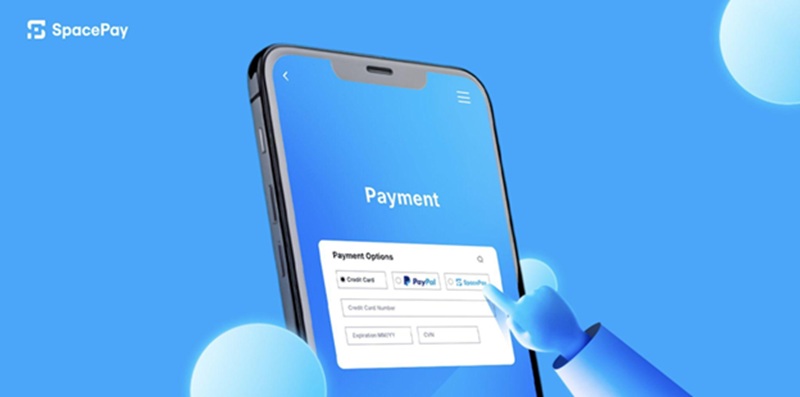
SpacePay from London figured out how to eliminate these problems. Their platform lets merchants accept cryptocurrency using the card readers already sitting on their counters. No new equipment, no complicated training, and no worrying about Bitcoin crashing overnight.

The startup has already raised over $1.4M during its presale phase, with $SPY tokens currently available at $0.003181. What makes this different is how they’ve stripped away everything that typically stops businesses from accepting digital currencies.

Why Bitcoin Payments Have Been So Hard

Around 400 million people worldwide own cryptocurrency, yet most can’t spend it anywhere except online exchanges. The problem isn’t a lack of interest from either side. Business owners would love to serve crypto customers, and crypto holders would love to spend their digital assets at regular stores.

Traditional crypto payment solutions create too many obstacles. They require expensive new terminals, extensive staff training, and force merchants to deal with blockchain technology they don’t understand. Most shop owners look at the requirements and pass.

Bitcoin payments face another major issue – price volatility. A merchant might accept payment worth $50 today, then discover it’s worth $42 tomorrow. This unpredictability makes crypto seem more like gambling than accepting payment for goods and services.

Best Crypto to Buy: SpacePay Takes a Different Path

When looking for the best crypto to buy, projects with real-world utility stand out from speculative tokens. SpacePay addresses actual problems that prevent cryptocurrency adoption in physical retail locations.

The platform works with Android-based point-of-sale terminals that millions of businesses already use. A simple software update enables crypto acceptance. Coffee shops, bookstores, auto repair garages – any business with an existing card reader can start accepting digital currencies immediately.

SpacePay handles over 325 different cryptocurrency wallets. Customers can stick with whatever crypto wallet they already have on their phone. MetaMask, Trust Wallet, or that random app they downloaded months ago works the same.

Merchants never have to worry about Bitcoin tanking overnight because the system converts everything to regular money instantly. When someone pays with Bitcoin or Ethereum, SpacePay immediately converts it to traditional currency. The business receives dollars or euros within seconds, completely bypassing the risk of price fluctuations.

Visit SpacePay Presale

SpacePay One Testnet Shows Real Progress

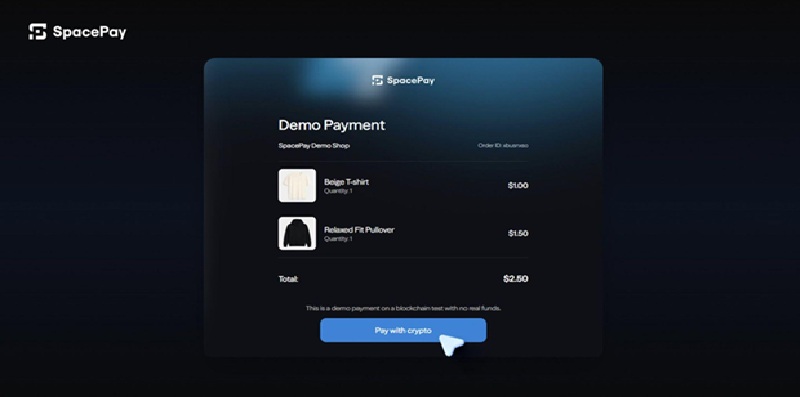
SpacePay One Testnet recently went live, giving developers and early testers a chance to explore the platform’s capabilities. The V1 release includes a functional payment widget with an API-first design and seamless checkout flow.

The testnet currently supports Base Sepolia and Ethereum Sepolia networks. Users can test the system at the provided link and experience how the payment process works. Desktop use is recommended for now while the team addresses mobile-specific issues.

This testnet represents the foundation for SpacePay’s broader vision of enabling instant, gasless crypto-to-fiat payments. Having working technology before asking for investment money sets SpacePay apart from projects that launch with only promises and marketing materials.

The development team actively requests feedback through their Telegram channel. This open approach to testing and improvement suggests they’re building for long-term success rather than quick profits.

Low Fees Change the Economics

Credit card processors usually grab between 2% and 4% of every sale. For a small business watching every penny, those fees hurt. SpacePay only takes 0.5%, which makes a real difference at the end of each month.

Consider a restaurant processing $25,000 monthly. Traditional payment processors would take $500 to $1,000 in fees. SpacePay’s 0.5% rate means just $125. That difference could cover utilities, pay for ingredients, or fund employee bonuses.

The transparent fee structure eliminates surprise charges. Business owners know exactly what each transaction costs without hidden fees appearing later. This predictability helps with budgeting and financial planning.

Lower processing costs also benefit customers indirectly. Merchants can offer better prices when they’re not losing thousands to payment processors each month. Everyone wins when transaction fees drop.

Getting Started With the $SPY Presale

Getting involved is pretty simple. Head over to SpacePay’s official website and connect your crypto wallet. You can pay with Ethereum, Binance Coin, Polygon, Avalanche, Tether, or USD Coin. If you don’t own any crypto yet, standard bank cards work just fine.

Tokens currently cost $0.003181 each. The price increases as each presale stage completes, so earlier participants receive better pricing. After connecting your wallet, enter your desired investment amount and confirm the transaction. Keep records of your purchase for when token claiming becomes available.


JOIN THE SPACEPAY ($SPY) PRESALE NOW

Website    |    (X) Twitter    |  Telegram

BlockDAG’s 1000x Vision Sets It Apart as Bittensor Gains Strength & Dogecoin Becomes a Top Buying Opportunity

0

As investor attention shifts toward fresh opportunities, the Bittensor (TAO) bullish pattern and Dogecoin (DOGE) buying opportunity are capturing renewed interest. Both coins show promising setups that reflect broader market optimism.

Yet, one project, BlockDAG (BDAG), has emerged as a potential catalyst for a new wave of blockchain growth. With a functioning testnet, unmatched speed, and $430 million already raised, BlockDAG could redefine what investors expect from the next crypto ETF candidate.

BlockDAG’s Network Innovation Could Spark the Next Major Migration

BlockDAG is quickly becoming the center of attention for developers and investors alike. With Ethereum’s gas fees continuing to rise, many builders are searching for faster, cost-efficient networks to deploy their projects. BlockDAG’s Awakening Testnet, fully compatible with the Ethereum Virtual Machine (EVM), provides that solution, allowing seamless migration of decentralized applications (dApps) from Ethereum to a platform capable of handling 15,000 transactions per second (TPS).

This shift isn’t only about performance; it’s also about security. BlockDAG uses a hybrid structure combining Bitcoin’s Proof-of-Work (PoW) stability with scalable DAG-based efficiency. The result is a secure, high-throughput network that could soon attract billions in liquidity as developers transition. Analysts predict that early BDAG buyers could benefit from exponential price growth as adoption increases, especially given its 1000x potential from a confirmed $0.05 launch price.

The presale, which has already raised over $430 million, offers BDAG at just $0.0015 through the final TGE phase. Once it ends, this discounted entry disappears permanently. With its partnership with the BWT Alpine Formula 1® Team and technical readiness, BlockDAG is shaping up to be more than a blockchain; it’s a potential frontrunner for the next crypto ETF.

Bittensor (TAO) Bullish Pattern Points to Continued Strength

The Bittensor (TAO) bullish pattern is becoming one of the standout setups for Q4 2025. TAO has held firmly above Fibonacci support at $428, suggesting strong accumulation. Trading volume has tripled in recent weeks as anticipation builds ahead of its December halving, which will reduce token supply and could fuel a move toward $500. The rise in institutional interest supports this scenario, with analysts pointing to a possible continuation of the medium-term uptrend if TAO stays above $400.

The project’s appeal lies in its unique AI-driven protocol that blends decentralized computing with blockchain efficiency. This combination has made it a key focus for funds seeking exposure to artificial intelligence infrastructure within crypto. If TAO breaks through the $460–$478 resistance range, analysts believe it could set the stage for one of the strongest rallies heading into year-end.

Dogecoin (DOGE) Buying Opportunity Gains Traction Among Traders

Dogecoin’s recent rebound has reignited enthusiasm in the meme coin market. Analysts describe the current price zone between $0.19 and $0.20 as a critical accumulation range, marking a strong Dogecoin (DOGE) buying opportunity. Whale data shows over $20 million worth of DOGE was purchased during the last market dip, suggesting major investors are positioning ahead of potential catalysts tied to ETF developments.

There are growing rumors about a possible DOGE spot ETF, expected to trade under the ticker “TDOG.” If approved, it could introduce significant liquidity and institutional exposure to the world’s most recognized meme coin. Technically, DOGE is displaying bullish signals with an ascending triangle pattern and improving RSI. Short-term resistance remains near $0.25, but sustained buying pressure could push it toward $0.27, and possibly as high as $0.39 by year-end.

Summing Up

The Bittensor (TAO) bullish pattern and Dogecoin (DOGE) buying opportunity reflect a market regaining confidence through strong technical setups and credible growth triggers. TAO’s halving momentum and DOGE’s ETF speculation both indicate renewed optimism across diverse sectors of the market.

Yet, among these developments, BlockDAG stands as the project redefining progress through real infrastructure and speed. With a 15,000 TPS hybrid network, EVM compatibility, and a $430 million presale, it’s positioned to capture both developer migration and global investor attention. As markets look ahead to the next crypto ETF narrative, BlockDAG’s 1000x potential makes it the name most likely to lead the next major crypto uptrend.

Presale: https://purchase.blockdag.network

Website: https://blockdag.network

Telegram: https://t.me/blockDAGnetworkOfficial

Discord: https://discord.gg/Q7BxghMVyu

Litecoin Tests Support, Chainlink Eyes a Breakout, BlockDAG Presale Surges Beyond $433M Selling 27B Coins!

0

Recent market moves have created uncertainty among traders. Chainlink (LINK) price forecasts show mixed signals even as whale activity intensifies, while Litecoin’s (LTC) recent drop has prompted questions about where true long-term value lies.

Both cryptocurrencies are supported by solid fundamentals. Yet recent fluctuations highlight one truth: strong technology alone is not enough; the people behind the project define its strength. The question remains, where does real conviction in crypto come from amid uncertainty?

BlockDAG (BDAG) enters the scene with intellect over hype. Led by Dr. Maurice Herlihy, a Gödel and Dijkstra Prize winner, this project brings verified expertise to blockchain innovation. Its platform is designed for high scalability, speed, and utility, aiming for substantial growth potential. With a $433M+ presale and over 27 billion coins sold alongside 20,000+ miners, BlockDAG positions itself as one of the most promising projects in the market today.

BlockDAG: A Team of Geniuses Driving Real Innovation

When determining which crypto projects deserve attention, leadership quality is one of the strongest indicators of long-term success. BlockDAG sets a high standard in this regard, being led by a fully transparent and highly credentialed team rather than an anonymous group. Among its leading figures is Dr. Maurice Herlihy, a Gödel and Dijkstra Prize-winning computer scientist known globally for his groundbreaking work in distributed systems,  achievements regarded as the highest honors in computing.

BlockDAG merges the robust Proof-of-Work (PoW) security of Bitcoin with the efficiency of Directed Acyclic Graph (DAG) technology, enabling transaction speeds between 2,000 and 15,000 TPS without sacrificing decentralization. This hybrid design ensures both scalability and stability, creating a system engineered for real-world applications rather than theoretical promises.

The project’s presale success further reflects its strong fundamentals, having raised over $433 million and sold more than 27 billion BDAG coins alongside 20,000+ X-series miners. Currently priced at $0.0015 via TGE code, with a confirmed listing price of $0.05, early buyers stand to benefit from a notable upside. With over 3.5 million active X1 app users, BlockDAG already demonstrates substantial adoption, setting it apart as a technically advanced and future-ready crypto built for real-world performance.

LINK Whales Accumulate as Analysts Eye Breakout

Chainlink (LINK) has regained attention as whale accumulation rises. LINK hovers around $17 after steady accumulation near $16 support. Analysts suggest a potential breakout if LINK crosses the $19.95–$25 resistance zone, with short-term targets near $26–$27 by the end of 2025.

Some forecasts even see a move beyond $25, unlocking further potential up to $100, though this remains uncertain. The accumulation phase indicates that major holders are confident in LINK’s role in data verification and oracle services.

Chainlink continues to be vital in DeFi and blockchain infrastructure, drawing interest from institutional players. If LINK maintains above $16 and benefits from positive market trends, it could reclaim higher levels quickly. Oracles are becoming increasingly critical, keeping LINK a key player to watch for upcoming cycles.

Litecoin Pullback Finds Support, Eyes Recovery

Litecoin (LTC) has faced a significant correction, falling from above $120 to nearly $90, a drop of about 25%. Analysts attribute this to profit-taking and short-term market weakness. Charts now indicate potential stabilization and support around $85. Resistance points are seen near $102 and $140.

A bullish RSI divergence signals that buyers may regain momentum if support levels hold. While the short-term outlook shows weakness, Litecoin’s long-term perspective remains positive. Factors such as institutional interest and potential approval of a Litecoin ETF could strengthen the market.

If $85 support persists, LTC could retest $100+. Its long-standing network, reliable liquidity, and strong history make Litecoin an asset still closely watched for steady performance despite volatility.

In Summary

Chainlink and Litecoin show cautious optimism. LINK’s price outlook hints at recovery as whales accumulate near support. LTC demonstrates short-term weakness but offers potential for a technical rebound if $85 holds. Both remain influential, with market sentiment driving their next moves.

BlockDAG stands apart, built on verified expertise rather than speculation. Its advisory board features top computer scientists, and the project has raised over $433 million in presale. More than 27 billion coins and 20,000+ miners have been sold, while 3.5 million X1 App users show adoption traction.

Purchasing BlockDAG at $0.0015, before the $0.05 launch price, aligns with a project driven by intellect and problem-solving. With potential for substantial gains and real-world application, it is considered one of the best cryptos to follow now.

From FET’s Legal Challenges to NEAR’s $3 Risk, BlockDAG’s $0.0015 Entry & TGE Code Defines Trust in 2025’s Crypto Market

0

Confidence and transparency remain the dividing line between hype and progress in crypto. While Fetch.ai (FET) and Near Protocol (NEAR) struggle through legal and governance setbacks, BlockDAG (BDAG) continues to dominate conversation after crossing $430 million in its presale. The project’s TGE code, a system designed for verifiable ranking and distribution transparency, has become a case study in how accountability can coexist with growth.

As traders debate whether FET and NEAR can recover from recent declines, BlockDAG’s focus on measurable delivery and secure audits positions it among the top crypto for 2025, redefining market expectations for trust and scalability before its official Genesis Day listing.

FET’s Alliance Split Triggers Volatility

The latest FET price update highlights growing turbulence after the Artificial Superintelligence Alliance fractured this week. Following Ocean Protocol’s exit on October 23 2025, Fetch.ai plunged 7.95 % to $0.25, remaining below all key moving averages: MA-20 ($0.37), MA-50 ($0.52), and MA-200 ($0.65). This technical weakness, combined with an ongoing legal dispute over financial losses, has intensified seller pressure.

Momentum readings confirm deep oversold conditions: RSI 16.24 and CCI 84.65 signal exhaustion, while the MACD stays negative. Forecasts place short-term trading between $0.17 and $0.20, with upside probability under 20 %. Traders expect a period of sideways consolidation unless FET reclaims resistance at $0.36.

Despite short-term pain, analysts note that oversold signals could later trigger a rebound. For now, governance concerns, legal action, and shifting alliance dynamics leave FET battling uncertainty rather than joining the top crypto for 2025 contenders.

NEAR Governance Fallout Nears $3 Support

The Near Protocol (NEAR) price setup remains fragile after a divisive governance proposal stirred debate over decentralisation and decision-making integrity. The team implemented a tokenomics upgrade to cap inflation at 2.5 % and strengthen smaller validators, but it did so despite failing to pass a community vote, raising fears of centralization.

Technically, NEAR trades close to $3, the lower boundary of its long-term consolidation range between $1.95 and $3.25. A breakdown below support could send prices back toward the $0.97 lows last seen in 2023. Indicators reinforce the bearish view: the weekly RSI has slipped below 50, and MACD shows a fresh crossover pointing downwards.

Critics, including Chorus One, argue that unilateral governance actions risk damaging network credibility. Unless sentiment recovers soon, NEAR could extend its downtrend into year-end, losing its place among the likely top crypto for 2025 performers.

BlockDAG’s $0.0015 Entry Price & TGE Code Reinforces Market Trust & Accountability

While competitors wrestle with internal disruption, BlockDAG (BDAG) continues to build credibility through structured delivery and verifiable transparency. The project has officially crossed $430 million raised, making it one of the largest presales of 2025. Its TGE code is central to this progress, enabling on-chain validation of buyer rankings, reward eligibility, and transaction history. By embedding traceability within the distribution process, BlockDAG removes ambiguity that often surrounds presale operations.

The platform’s hybrid Proof-of-Work and Directed Acyclic Graph (DAG) architecture underpins its technical appeal, supporting 2,000–15,000 transactions per second without compromising security. Independent audits by CertiK and Halborn verified these systems, confirming multisig protection and code stability.

Market readiness is reinforced through 20 confirmed exchange listings, including MEXC, LBank, BitMart, and Coinstore, scheduled around Genesis Day on 26 November 2025. These listings ensure instant liquidity once trading opens, marking the transition from presale promise to live utility.

With over 3.5 million X1 app miners already participating, BlockDAG’s network represents both decentralised engagement and real adoption. Its transparent infrastructure, validated codebase, and community participation contrast sharply with the instability seen elsewhere. As presale interest intensifies at $0.0015 per BDAG, traders view it as one of the few projects combining verifiable audits, scalable performance, and open governance, qualities defining the top crypto for 2025.

Final Thoughts

The contrast across these three ecosystems captures the broader mood of 2025’s crypto market. FET’s legal dispute and alliance breakdown highlight governance risk; NEAR’s decentralisation controversy warns of credibility loss; and BlockDAG’s over $430 million TGE milestone proves that verified transparency continues to attract buyers.

As Genesis Day approaches, BlockDAG’s blend of open-source accountability, exchange readiness, and high-speed architecture stands out as a benchmark for sustainable growth. While FET and NEAR attempt to regain footing, BDAG’s structured delivery and community validation position it firmly among the top crypto for 2025, signalling that trust, not speculation, will define the next market cycle.

Presale: https://purchase.blockdag.network

Website: https://blockdag.network

Telegram: https://t.me/blockDAGnetworkOfficial

Discord: https://discord.gg/Q7BxghMVyu