DD
MM
YYYY

PAGES

DD
MM
YYYY

spot_img

PAGES

Home Blog Page 2413

Reddit Cofounder Express Interest in Acquiring TikTok-US and Integrating it on the Blockchain

0

Alexis Ohanian, co-founder of Reddit, has recently expressed interest in acquiring TikTok’s U.S. operations and integrating it with blockchain technology. On March 4, 2025, Ohanian announced via X that he has joined a consortium, known as “The People’s Bid for TikTok,” led by billionaire Frank McCourt under Project Liberty. The goal is to purchase TikTok U.S. and transition it “on-chain” using the Frequency blockchain protocol, which is built on Polkadot’s infrastructure.

This move aims to give TikTok’s 170 million U.S. users greater control over their data and content, aligning with Ohanian’s vision of empowering creators and decentralizing social media. Ohanian has emphasized that “users should own their data” and “creators should own their audience,” suggesting that blockchain integration could make TikTok more transparent and creator driven.

Decentralized social media refers to platforms built on distributed technologies, like blockchain or peer-to-peer networks, where control isn’t concentrated in a single entity (e.g., a corporation like Meta or X). Instead, data, governance, and operations are spread across a network of users, aiming to enhance privacy, user ownership, and resistance to censorship. The idea ties into Alexis Ohanian’s recent proposal to put TikTok on the Frequency blockchain, but it’s part of a broader movement.

The Frequency protocol is intended to serve as the backbone of this redesigned platform, prioritizing privacy, security, and digital independence. This isn’t Ohanian’s first venture into blockchain; Reddit previously experimented with Ethereum-based “Community Points” and Polygon-based NFT avatars, though some of these initiatives were scaled back or discontinued.

Unlike centralized platforms where a company stores your data on its servers, decentralized social media uses protocols where: Data Ownership: Users control their content and personal info, often stored on distributed ledgers or personal nodes, not corporate databases. Interactions happen directly between users via the network, reducing reliance on a central authority. Many platforms use cryptocurrencies or tokens to reward creators, incentivize moderation, or fund development (e.g., Steemit with STEEM).

A federated network of independent servers (instances) where users can host their own communities, interoperating via the ActivityPub protocol. It’s not blockchain-based but decentralized in structure. Ohanian’s pitch to move TikTok to Frequency (a Polkadot-based chain) fits this trend. Frequency is designed for high-throughput social data, claiming to handle large-scale interactions while keeping things decentralized. The idea is to let TikTok’s 170 million U.S. users own their digital identities and content, potentially using tokens or NFTs to represent value. It’s ambitious—TikTok’s centralized infrastructure is a speed demon; porting it to blockchain would require massive reengineering.

The bid comes amid ongoing pressure from the U.S. government on TikTok’s Chinese parent company, ByteDance, to divest its U.S. operations due to national security concerns. While the proposal is ambitious, challenges remain, including the technical feasibility of adapting TikTok’s massive platform to blockchain infrastructure and navigating regulatory hurdles. Ohanian’s involvement reflects his long-standing interest in decentralized digital ecosystems, but whether this vision will come to fruition is still uncertain as the acquisition process is in its early stages, competing with other potential buyers like Microsoft and Oracle.

Decentralized social media has been hyped for years (remember Diaspora?), but adoption lags. Mastodon has about 1.5 million monthly active users, a fraction of X’s 400 million or TikTok’s 1 billion+. Tech hurdles, like blockchain’s transaction costs and latency, plus user inertia, keep centralized giants dominant. Still, with figures like Ohanian pushing it, and regulatory pressure on apps like TikTok, the concept’s getting fresh momentum. Whether it’s practical or just Web3 buzz remains the big question.

Crypto casinos are on the rise

0

Being able to make a speedy, secure payment is the aim for most players when accessing online betting sites of all types. Be it a casino, sportsbook, or sweeps casino, this is a very important feature to have. For many years, the go-to secure payment methods included card payments or bank transfers. While secure, these took a long time to process. Other methods such as prepaid cards or eWallets proved to be equally secure, while being speedier. But a new payment method is on the rise that beats all of these. And this is cryptocurrency.

Security of cryptocurrencies

Unlike other currencies, crypto is a decentralized one, which means that it is not governed by banks or governments. Acting outside of this regulatory framework, it’s not bound by the same rules. It also operates on the blockchain, a significantly different method to any other currency or payment method. Using the blockchain means that all transactions are recorded. Not only that, but they are completely transparent as well. This means that anyone can check the status of a transaction quickly and easily. Better still, transactions can’t be changed or modified once made. And, they’re all anonymous, which means they can’t be traced back to a specific person.

When it comes to speed, they’re also the fastest option out there. Some cryptos are slower than others due to the number of confirmations a transaction has to go through, and whether there is congestion on the blockchain. Even then, the payment processing time is typically less than ten minutes, which is far and away faster than anything offered by other payment options.

Casinos accepting crypto

With the increased popularity of cryptocurrency, it comes as no surprise to find that more and more casinos are offering this payment method. Alongside the desire for secure, speedy payments, players increasingly look for anonymity online, something crypto provides. Consequently, there are more casinos accepting crypto payments than ever before.

Not only that, but there are a growing number of sweepstakes casinos that accept crypto too. Sweeps casinos themselves are becoming more popular due to their risk-free nature. And yes, while purchasing gold coins is the only thing you need to spend on when using these sites, being able to use crypto for those purchases is particularly appealing to many. Of course, staying safe and secure is still key, and any online casino offering crypto needs to be licensed and regulated.

This is the only time that problems may occur. Some crypto casinos do not take regulation that seriously, and often do not have proper licensing. Given the gray area of crypto in many government laws, it’s also hard to enforce such licensing. Of course, using crypto is legal, but the casinos offering it often aren’t. With this in mind, it’s important that players take into consideration the fact that the casino might not be as safe and secure as the payment method it is offering.

At the end of the day though, crypto is readily available at online sites. And it makes for a great, speedy, and secure option.

Samsung to Launch Project Moohan XR Headset, Taking on Apple’s Vision Pro

0

Samsung is set to launch its highly anticipated extended reality (XR) headset, known as Project Moohan, later this year, according to a company spokesperson who spoke to CNBC on Tuesday.

The device marks Samsung’s ambitious entry into the evolving XR market, directly challenging Apple’s $3,500 Vision Pro, which launched last year.

Samsung first teased the Project Moohan headset last year but unveiled it publicly for the first time at the Mobile World Congress (MWC) in Barcelona this year. The XR device aims to merge the digital and physical worlds, offering an immersive experience through advanced visual and interactive technology.

Innovative Features and Design

While Samsung has not disclosed full specifications, the physical device features four cameras on the front lens and what appears to be touch controls on its side. The company collaborated with tech giants Qualcomm and Google to develop the Android XR platform, a new operating system designed for XR devices.

The headset will also integrate Google Gemini, providing a “conversational user interface” allowing users to interact with Google’s AI assistant, potentially enhancing navigation through apps and tasks. The presence of multiple cameras suggests the device could support gesture controls similar to those on Apple’s Vision Pro.

Patrick Chomet, Executive Vice President of Samsung’s Mobile Division, emphasized the role of intelligence in the device’s functionality.

“To me, the breakthrough technology is a combination of advanced vision capability with intelligence that understands user intention. I think without the intelligence part, it’s a defective product,” Chomet told CNBC.

His statement reflects the broader vision of the tech industry, where AI-powered digital assistants play a critical role in delivering a seamless user experience.

A Fresh Attempt at XR After Early VR Ventures

Samsung was one of the early entrants into the virtual reality (VR) space, having launched its Gear VR headset in partnership with Oculus in 2015. However, the VR market did not expand as rapidly as expected, leading to a quiet retreat from that segment.

With advancements in display and processing technologies, the XR market is gaining renewed interest from major tech players. Samsung is hoping that its new XR headset, coupled with sophisticated AI and gesture control, will capture the growing market for mixed and extended reality devices.

Competing with Apple and the Future of XR

Apple’s Vision Pro, which debuted at $3,500, has set a high bar in the XR space, offering advanced hand tracking, eye control, and immersive displays. Samsung’s Project Moohan will likely be closely compared to the Vision Pro, particularly in functionality, user interface, and price point.

During a presentation in January, Samsung hinted at a broader product roadmap, including a trifold smartphone and potential smart glasses. These smart glasses could represent a future direction for the XR lineup, offering similar experiences to a headset but in a more compact and wearable form factor.

Industry analysts believe Samsung’s entry into the XR market could invigorate competition and potentially lower prices for consumers.

“Samsung’s partnership with Qualcomm and Google gives it a strong foundation in hardware and software integration, which could be critical for the success of Project Moohan,” said Jitesh Ubrani, a research manager at IDC.

“The XR market is still in its infancy, and while Apple has positioned itself as a premium leader, Samsung’s strategy might focus on accessibility and integration with its broader ecosystem of devices,” Ubrani added.

Despite the hype, XR devices still face challenges in mainstream adoption. Price, comfort, battery life, and the breadth of applications are critical factors that could determine the success of Project Moohan. Samsung’s focus on combining advanced vision technology with intelligent interfaces could offer a unique value proposition.

As the tech world awaits the official launch and pricing details of Project Moohan, the XR market appears poised for a new wave of competition that could accelerate the development of augmented and mixed reality technologies, pushing them closer to everyday use for consumers.

New Products from Tekedia: WinGPT With Business Education and Coaching Features

0

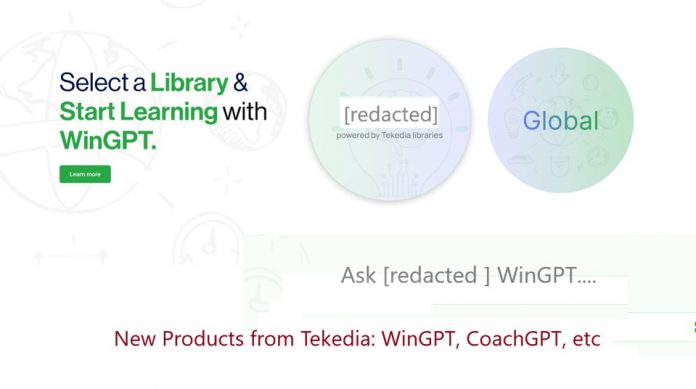
Good People, Tekedia Institute will be unveiling new products in June, in sync with Tekedia Mini-MBA edition 17. When you register for our Annual Tekedia Mini-MBA Package or Tekedia CEO/Director Program, you will have access to an eVault to store your digital files (MOUs, certificates, contracts, etc), business tools (inventory management, bookkeeping, invoicing, etc) to organize whatever you do, courses on different topics (libraries of Tekedia), and an AI solution that will do the following:

WinGPT is a personal business educator which will guide learners on business education, using Tekedia libraries and universal libraries which learners can select based on interest. For the Tekedia libraries,  we have trained the AI system with our courseware. For example, if you want to understand how the One Oasis Strategy can help you win in Uyo, WinGPT will provide guidance. WinGPT has a coaching feature.

The coaching feature is designed to prepare people for job interviews, promotion exams, project lead interviews, etc. You will upload your resume and experiences along with what you would be interviewing for (e.g. promotion to GM Technology and Operations in Bank A with expected responsibilities). WinGPT will then launch a video and prepare you, using its understanding of your capabilities, expected tasks and knowledge of the company or industry.

A lot of great things are coming. I have been doing a lot of coding here, refining models because I want an AI system that understands the foundational DNAs of Tekedia Institute. Please if you have business cases on African companies you own rights, and want to support our Institute with, we will be happy to add your work as we train our models on the nuances of the African business sphere; connect here.

WinGPT:  Business Education Tool

  • It’s a personalized business education tool.
  • It uses AI to guide learners through business concepts.
  • It draws from Tekedia’s course materials and other selected libraries.
  • It can provide specific guidance based on real-world scenarios.
  • Everything is baked with the nuances of doing business in Africa.

WinGPT: Personal Interview Coach

  • It’s an AI-powered interview and career preparation tool.
  • It analyzes resumes and experience to tailor coaching.
  • It simulates interview scenarios through video.
  • It leverages knowledge of specific companies and industries.

Tekedia Institute AI Strategy

We recently finalized the Tekedia Institute AI Strategy. The Strategy emphasizes the value of proprietary, localized data in the age of large language models like ChatGPT and Gemini. These AI models are trained on vast datasets, making data that is unique and inaccessible to them highly valuable.

By leveraging localized and proprietary data and insights, Tekedia Institute will continue to differentiate itself and offer high quality business management and leadership programs. Yes, in a world of abundance, scarce resources become overly strategic, making them monetizable!

This strategy is driving our new products including WinGPT with Business Education and Coaching Features. AI will offer a golden era for educational institutions because AI will help personalize learning, and accelerate the effectiveness of faculty. If you are a university with a business school in Africa, our technology can support your mission.

Tekedia brings AI into our programs with WinGPT baked with the nuances of African business.

Amazon Expands AI Ambitions With Plans to Launch Its Advanced Reasoning Model, Forms New Agentic AI Group

0

E-commerce giant Amazon is reportedly developing an advanced AI model with sophisticated reasoning capabilities, positioning itself alongside industry leaders like OpenAl’s o3-mini and DeepSeek’s R1.

According to Business Insider, the new model is expected to launch under Amazon’s Nova brand as early as June. This development follows Amazon Web Services (AWS) unveiling of the Nova family of multimodal generative Al models at its re: Invent conference in December 2024.

The lineup includes four text-based models, Lite, Pro, and Premier-as well as an image-generation model (Nova Canvas) and a video-generation model (Nova Reel). While Micro, Lite, and Pro became available to AWS customers immediately, Premier is slated for release in early 2025.

Amazon’s upcoming AI reasoning model is expected to incorporate a hybrid reasoning architecture, similar to Claude 3.7 Sonnet by Anthropic. This approach enables the model to deliver quick responses for simple queries while also handling more complex reason I g tasks with the same system. Such advancements are particularly valuable in fields like mathematics and scientific research, where step-by-step logical progression is crucial.

One of Amazon’s key objectives is to make its reasoning model more cost-efficient than its competitors, which it has to take on the pricing of the Chinese AI model Deepseek, which offers pricing to users. While costs vary depending on usage tiers, it is understood that deep seek r1 pricing is generally lower than many competing models, making it accessible to individuals and small businesses.

Amazon Bets Big on AI Agents

Alongside the launch of its AI reasoning model, Amazon is betting big on AI agents as it reportedly forms a new agentic AI group. According to a report by Reuters, the new group is with AWS, dedicated to creating AI agent systems that help people automate part of their lives.

In an email to staff seen by Reuters, AWS CEO CEO Matt Garman said agentic Al has the potential to be “the next multi-billion business for AWS.” A longtime AWS executive who previously led the company’s Al and data teams, Swami Sivasubramanian, will reportedly lead the new agentic Al group.

Amazon is the latest company to join the tech industry’s shift toward Al agents. Notably, the e-commerce giant has already begun showcasing agentic capabilities with Alexa+, an enhanced version of its voice assistant. Alexa+ demonstrated its ability to book rides, navigate websites, and complete tasks autonomously, highlighting Amazon’s ambition to integrate Al into everyday life.

Beyond consumer applications, AWS is expected to explore enterprise Al agents, positioning itself against competitors like Microsoft and Salesforce in automating business operations.

Amazon AI Push: What This Means For The AI Industry

Amazon’s bold move in the Al space with the development of an advanced Al reasoning model and Al-powered agents signals its intent to compete with major players like OpenAl, Google DeepMind, and Anthropic.

The company’s Al push could significantly impact the competitive landscape in the following ways:

• Challenge Top Players: With its advanced reasoning capabilities, Amazon’s Al models could compete directly with OpenAI GPT-4o, Claude 3.7, and Google’s Gemini 1.5, as it looks to displace their dominance.

•Enterprise Al Disruption: By integrating Al agents into AWS, Amazon could challenge Microsoft Copilot, Salesforce Einstein, and other business-focused Al solutions.

• Cost Leadership: Amazon reportedly aims to make its reasoning models more affordable than competitors, potentially pressuring Al model providers like OpenAl and Anthropic to lower prices.

With these advancements, Amazon is solidifying its position in the Al-driven future, expanding beyond cloud computing into cutting-edge artificial intelligence that enhances both consumer and enterprise experiences.

Also, Al innovation accelerates, the giant tech company’s entry into reasoning models, and Al agents could reshape how businesses and consumers interact with artificial intelligence, setting the stage for a new era of automation and efficiency.