DD
MM
YYYY

PAGES

DD
MM
YYYY

spot_img

PAGES

Home Blog Page 2418

VC Investments in Emerging Markets Decline by Over 40% in 2024

0

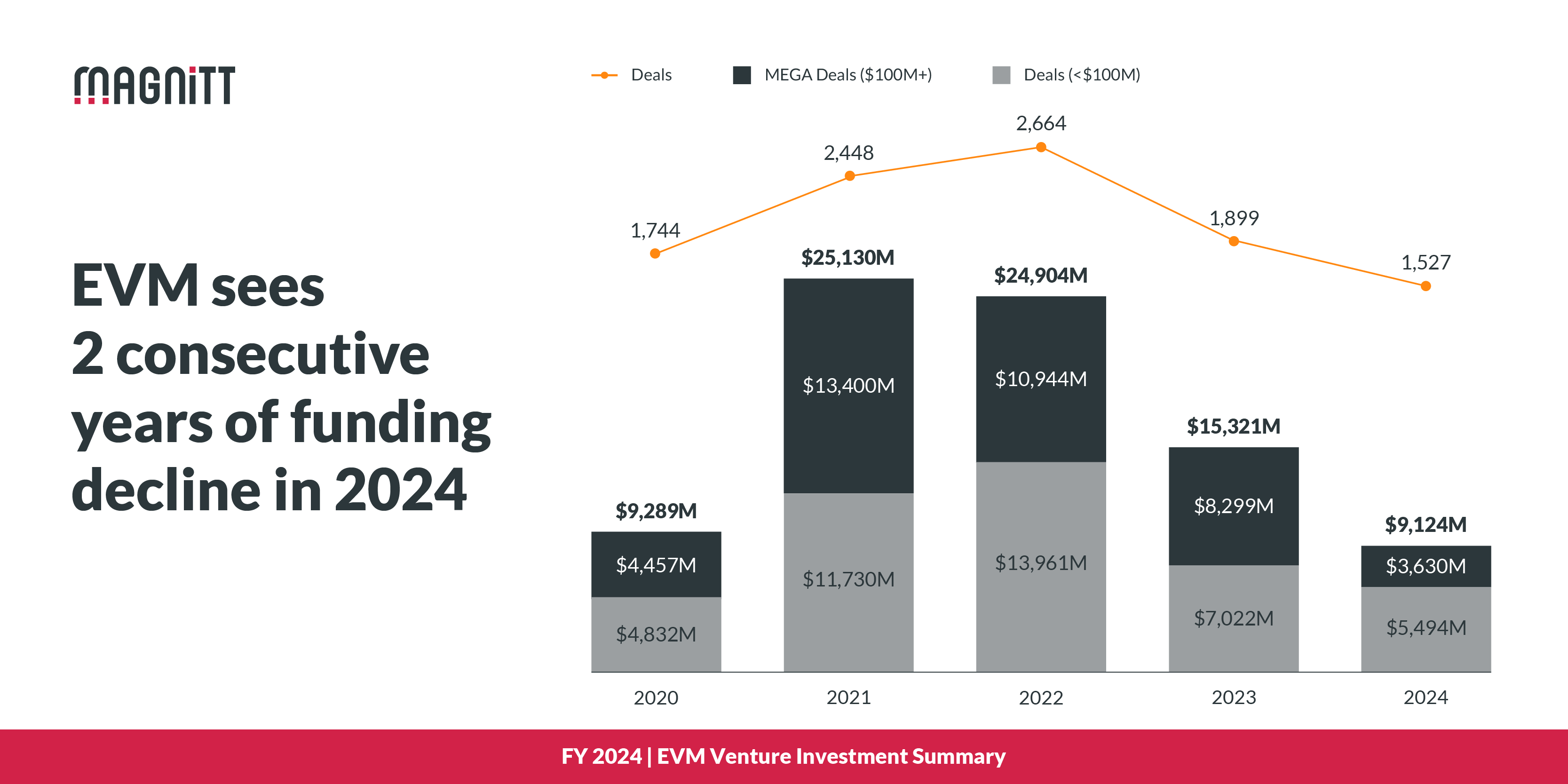
Venture Capital (VC) investments in emerging markets such as the Middle East, North Africa (MENA), and other regions experienced a sharp decline in 2024, with funding dropping by over 40% compared to 2023.

This downturn reflects a broader global trend in reduced VC activity, particularly for non-AI companies, over the past two years.

According to the report by MAGNITT, a number one source of analytics, data, and insights covering startups, investors, and funds, only $9.1 billion was raised in the Middle East, Africa, Pakistan, Turkiye, and Southeast Asia, as these regions struggle with the global funding downturn.

Despite the significant funding decline, there was positive news recorded, as the total number of investors backing emerging Venture Markets (EVMs), increased by 2% YoY to 1,707, signaling an increase in 2025.

Regional Highlights

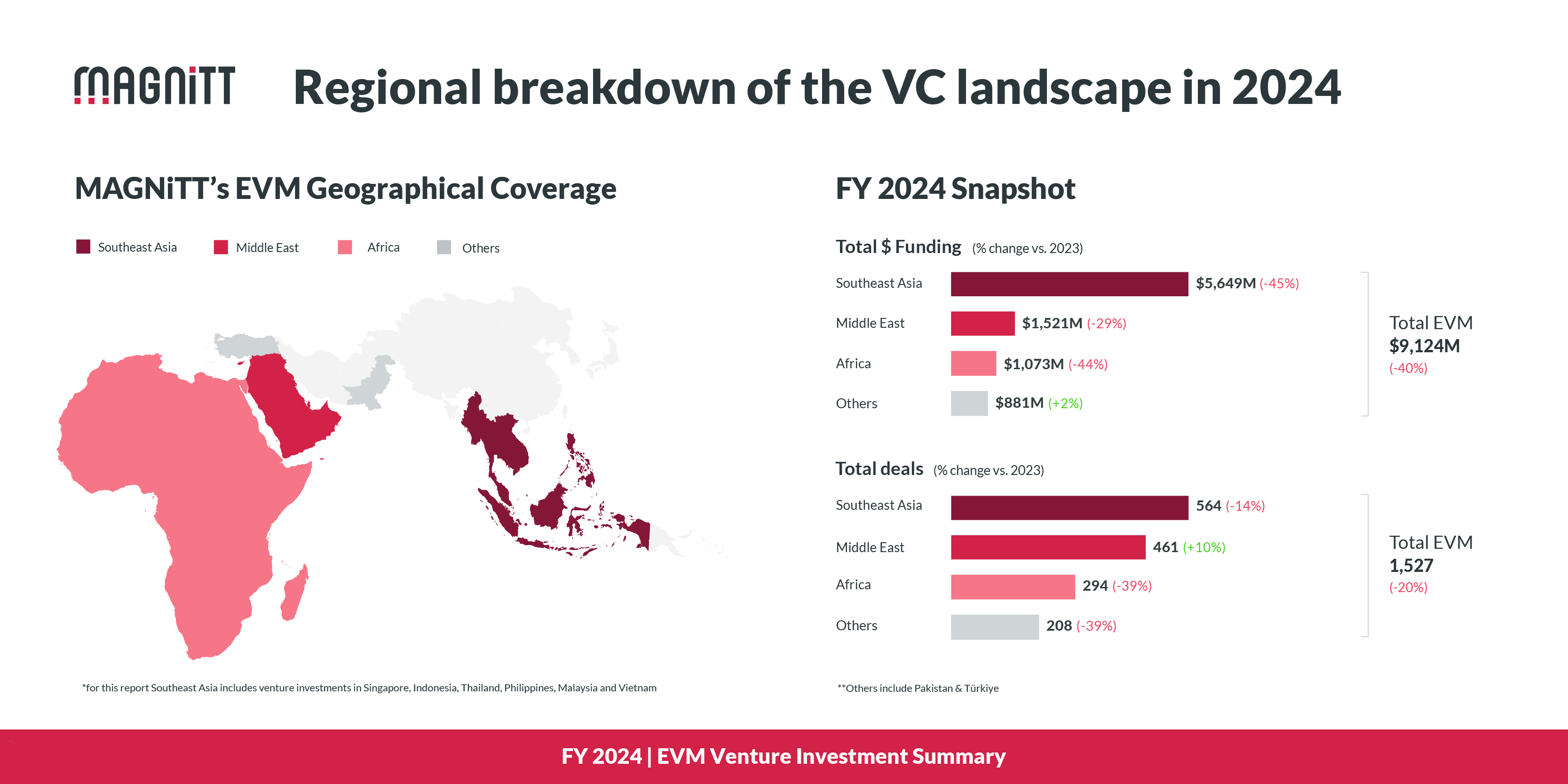
MENA: Startups in the region raised $1.9 billion in 2024, a 29% decline. Saudi Arabia emerged as the frontrunner in venture investment, fueled by the $100M+ round by SallaApp. Comprising 40 percent of the total capital deployed in the region. The report also revealed that Saudi Arabia set a new record with 178 VC deals in the same year. This highlights the attractiveness of the Saudi market, boosts its competitive environment, and solidifies the Kingdom’s position as the largest economy in MENA.

Despite fewer deals and funding year-on-year, the absolute number of investors in MENA surged, showcasing a clear focus on smaller ticket sizes at the early stage.

Southeast Asia: This region was the hardest hit by the 2024 downturn, as total funding in the region dropped by 45%, marking its lowest funding and deal levels in over five years.

In the first nine months of 2024 (9M’24), Southeast Asia (SEA) raised $2,770M across 352 deals—a significant 64% drop in funding and a 27% decrease in deal volume compared to the previous year. The funding decline was largely driven by a sharp reduction in MEGA deals.

Africa: This region experienced a 44% funding decline. The African venture capital ecosystem faced significant volatility during the first nine months of 2024, primarily due to an unstable macroeconomic environment. Despite efforts by regional governments to stabilize their economies—such as inflation control measures and climate resilience, amongst others, these pressures have left investor confidence shaken, driving a notable drop in VC funding and deal-making across the region.
In terms of sectors that received the highest number of funding, fintech emerged as a key driver, securing $3.9 billion in funding across MENA, Africa, Southeast Asia, Türkiye, and Pakistan. This underlines fintech’s importance in regions where financial services infrastructure remains underdeveloped. Industries like advertising, Marketing and IT solutions also attracted significant investor interest, with their funding increasing by 181% and 30% YoY respectively.

The report highlighted investment trends showing a predictable split in investor focus. International investors leaned toward late/stage deals, including Insider’s $500 million round and Tyme’s $250 million series D. Local investors on the other hand, primarily supported early-stage startups. The downturn in global VC funding also impacted exits, which dropped by 32% to just 94 in 2024. Additionally, late-stage Capital became scarcer as public markets remained subdued.

Despite the decline in VC investments, the report noted opportunities for mergers and acquisitions (M&A) across geographies within emerging markets. With fintech leading the charge and early-stage funding showing resilience, the ecosystem is poised to rebound as economic conditions show signs of  improvement.
Why I Cannot Accept Your Friend Requests on LinkedIn

0

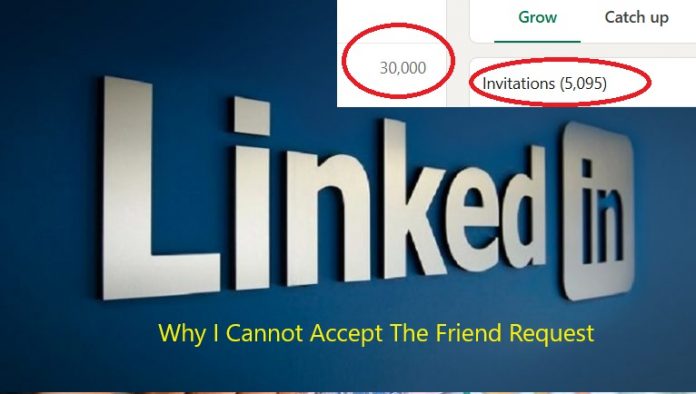
Good People, I am unable to accept new friend requests here on LinkedIn. It does not mean that I do not appreciate your invitation.  Simply, I have max’d my allowed direct connections on LinkedIn. In other words, I cannot accept any new connections even though you can send me requests! I have about 5,000 requests PENDING which will fade within weeks.

Right now, the only option available is to FOLLOW me. If you click FOLLOW, if we are not connected already, you will read my feeds. Do it now as I want you to be reading me! (lol).

But know one thing: your education or status has no relationship to this. The max direct connection possible is 30,000. I am on 30k with about 5,000 pending requests. Since I do not remove people, I have to wait until someone unfriends before a new slot will open (please do not unfriend, lol).

I appreciate your assists here, and please keep visiting this feed. And FOLLOW if you have not done so already.

Turn Money into Capital to have sustained financial independence!

0

When you are paid at work, make sure to elevate a part of that salary to capital. Money is a unit of capital and does not have an inherent regenerative ability in its stable state. The reward of most Labour is money. But Labour expires or retires which means sources of money can be cut-off. Breakthrough comes when one earns money via Capital/Equity because capital neither retires nor expires, unless restructured.

In other words, to find sustained financial independence, find how to turn some of your money into capital. That principle is the same for individuals, families and nations. Poor nations operate at the level of money; rich nations operate at the capital level.

The formation of capital expands the wealth of nations. Simply, when people move their money to the level of capital, they create wealth.

In the five factors of production – land, labour, Capital, entrepreneur and knowledge – there is no Money listed. Capital represents assets (physical and non-physical encapsulating skills, education, knowledge systems, etc) which are used to make goods and services during the transmutation process of turning ideas, and raw materials, into finished goods. Money does one thing: means to exchange goods and services.

In short, the unit of Capital is money (i.e capital is measured in monetary terms).

What is the right percentage you need to elevate on your monthly salary (i.e.your money) to capital?  In Tekedia Mini-MBA, in the Personal Economy lecture (your own economy), I provide a foundational thesis to help on that modelling.  Join me in the next edition of Tekedia Min-MBA which begins on Feb 10,  and help us refine and improve the modelling. Go here and register.

The Untapped Wealth of Nations, and How Nigeria Remains A Nation of Money Instead of Capital

Tezos and Solana Investors Patterns Show 1Fuel Added To Portfolios, But What Is 1Fuel?

0

Tezos and Solana caused many investors to be impressed with their remarkable track record in the past year. But lately, their investors have been interested in a new altcoin, 1Fuel (OFT).

A lot of buzz has been surrounding 1Fuel lately, and many investors are curious about why the OFT token is capturing attention in the crypto space. Read on to find out what makes 1Fuel stand out in the market.

Tezos and Solana Investors Expand their Portfolios

Tezos (XTZ) and Solana (SOL) are well-known as leading players in the crypto market. Their traders have been using well-known platforms like MetaMask and Trust Wallet to manage the tokens. Analysts noticed that the investors of the two tokens have been adding more coins to their portfolios, especially new altcoins like 1Fuel.

In the past year, Tezos increased by an impressive 47.06%, and has settled at a current value of $1.28. Analysts expect its value to soar to $4.09, making it among the cryptocurrencies to watch in 2025. Meanwhile, Solana has experienced remarkable growth, with a staggering 119.81% increase over the year.

1Fuel Emerges as a Top DeFi Token

1Fuel is now standing out as one of the best DeFi tokens in the crypto space today. The excitement surrounding this token comes from the bullish analyst predictions that 1Fuel could grow by 100x once it is publicly listed in Q2 2025.

The 1Fuel presale is structured into multiple stages, with stage 1 and 2 already completed in record time. Currently in stage 3, the presale has surpassed expectations, selling over 123 million tokens and raising $1.179 million. During this stage, the token is being offered at an attractive price of $0.015, giving investors a chance to secure their positions early.

As a utility token backed by a robust DeFi ecosystem, 1Fuel is offering an edge over platforms like MetaMask and Trust Wallet.

1Fuel’s DEX Wallet Set to Transform the Crypto Space

1Fuel is backed by a robust ecosystem which is making waves in the crypto community, especially since it’s backed by some innovative DeFi features. It features a DEX wallet that can rival well-known platforms like MetaMask and Trust Wallet. With these features backing the OFT token, it has become one of the cryptocurrencies to watch in 2025.

Investors are especially excited about the cross-chain capability of 1Fuel, which allows investors to transact across multiple blockchain networks from a single wallet. 1Fuel also comes with peer-to-peer exchange, one-click transactions and single asset requirement, driving value as the best DeFi token.

The wallet also integrates a crypto card, allowing users to spend their assets easily in the real world. Security and privacy are at the heart of the 1Fuel wallet, with an inbuilt privacy mixer to anonymize transactions. This sets it apart from other platforms like MetaMask and Trust Wallet.

Take Advantage of 1Fuel Presale in 2025

1Fuel is gaining the attention of DeFi enthusiasts around the world. The OFT token has secured its place as a top contender in 2025, and is expected to grow by 100x once it is publicly listed. Now that the presale is running, investors have an exciting chance to purchase the token at the lowest price.


To Find Out More About The 1Fuel Presale Use The Links Below:

Website: https://1fuel.io/

Telegram: https://t.me/Portal_1Fuel

Twitter / X – https://x.com/1Fuel_

Samsung Faces Q4 Profit Challenges, Banks on AI to Outpace Global Growth in Smartphones, Home Appliances

0

Samsung Electronics’ preliminary fourth-quarter (Q4) operating profit fell short of expectations by a large margin, with the tech giant hit hard by extra costs.

The company via a statement disclosed that  its earnings were negatively impacted by rising research and development costs and the ramp-up of manufacturing capacity for advanced semiconductors. It also added that low demand for conventional memory chips used in PCs and mobile phones also weighed on earnings.

Samsung announced an operating profit estimate of 6.5 trillion won (£4.47 billion) for the fourth quarter of 2024, however falling short of analysts’ expectations of 7.7 trillion won.

The shortfall reflects ongoing challenges in the memory chip and consumer electronics sectors. The tech giant reported consolidated sales of approximately 75 trillion won. Although the profit marked a 131% increase compared to the same period last year, it however represented a 29% decline from the third quarter.

Its Rival SK Hynix is Nvidia’s main supplier of high-bandwidth memory (HBM) chips used in artificial intelligence graphics processing units (GPUs) whereas Samsung has struggled to meet Nvidia’s requirements. Samsung disclosed during its third-quarter earnings that it was making progress in supplying HBM chips to Nvidia but has not made any public updates since then.

The tech giant attributed the dip in earnings to high research and development expenses and increased investments in advanced chip manufacturing. Demand for conventional memory chips used in mobile phones and PCs also declined, while the company’s logic chip business struggled with low factory utilization rates and reduced smartphone demand.

In its devices segment, comprising mobile phones, TVs, and home appliances, profits shrank due to intense market competition and lackluster demand for recently launched smartphone models. Analysts noted that these obstacles overshadowed the favorable impact of a weaker South Korean won, which typically boosts overseas earnings.

Samsung’s shares initially dipped 1% in early trading but recovered by the end of the day, closing with a slight gain. However, the company’s stock underperformed last year, declining 32%, compared to a 10% drop in the broader market. While some analysts caution that Samsung’s key business segments risk losing their edge, others remain optimistic that chip demand may have bottomed out.

Samsung Banks on AI to Outpace Global Growth in Smartphones, Home Appliances

Looking forward, Samsung plans to expand its on-device Al capabilities, aiming to outpace global growth in the consumer electronics segment. Jong-Hee Han, Samsung’s CEO and head of its Device eXperience division, in an interview with CNBC, disclosed that he wants to build an AI-driven company.

In line with this, Samsung is integrating Al chips into appliances such as refrigerators, washing machines, and robot vacuum cleaners, while bolstering Al features in its flagship Galaxy S24 series. These include innovations like real-time foreign language translation during phone calls.

It is worth noting that the tech giant competitors which include Huawei and Xiaomi, are gaining traction with high-end smartphones at significantly lower prices. Despite the pressure, Samsung emphasized that competition benefits both the company and its consumers.

As Samsung navigates these challenges, its strategic investments in Al and connected devices aim to position the company for future growth, even as market dynamics evolve.