
DD
MM
YYYY

PAGES

DD
MM
YYYY

spot_img

PAGES

Home Blog Page 245

Anthropic’s $30B Raise Highlights Ongoing Race for AI Supremacy 

0

Anthropic officially announced that it has raised $30 billion in a Series G funding round at a $380 billion post-money valuation. This marks one of the largest private funding rounds in tech history and the second-largest venture deal ever behind only OpenAI’s $40 billion round in 2025.

The round was led by Singapore’s sovereign wealth fund GIC and Coatue, with co-leads including D. E. Shaw Ventures, Dragoneer, Founders Fund, ICONIQ, and MGX. Other notable participants include Accel, General Catalyst, Jane Street, the Qatar Investment Authority, and prior backers like Nvidia and Microsoft with some of their earlier commitments rolled in.

This more than doubles Anthropic’s previous valuation of around $183 billion from its Series F in September 2025. The company highlighted explosive enterprise demand for its Claude models including Claude Code, with key stats shared: Annualized revenue run rate now around $14 billion.

Rapid year-over-year growth reportedly 10x in recent periods. Heavy adoption among large enterprises—eight of the Fortune 10 are customers. Claude powering a significant portion of global developer workflows, 4% of GitHub commits in some reports.

The fresh capital will support frontier research, product innovation, and massive infrastructure scaling to meet demand. The news sparked reactions across the industry, including sharp commentary from Elon Musk, who called Anthropic’s models “misanthropic and evil” amid intensifying AI rivalry.

Some observers noted bubble concerns in the broader AI market, given sky-high valuations and skittish public tech stocks, but enterprise traction appears to be driving the momentum. This positions Anthropic as a major contender in the race for frontier AI leadership, with speculation about a potential IPO in the coming 12–18 months.

This more than doubles Anthropic’s prior $183 billion valuation from September 2025, positioning it as one of the world’s most valuable private companies—trailing only OpenAI ($500 billion in some reports) and ahead of or alongside entities like SpaceX in startup rankings.

It intensifies direct rivalry with OpenAI which raised $40 billion previously, Google, Meta, and others. Anthropic’s enterprise-focused traction; 8 of the Fortune 10 as customers, Claude powering developer workflows like 4% of GitHub commits gives it a strong moat in business adoption, where Claude’s safety-aligned models and tools like Claude Code and Cowork agent are seeing explosive uptake.

The capital fuels massive scaling: frontier model research, product innovation, and infrastructure buildout to meet “insatiable” enterprise demand. This could accelerate Anthropic’s path to market leadership in enterprise AI agents and coding assistants.

Anthropic disclosed a $14 billion annualized revenue run rate—up dramatically reportedly 10x+ year-over-year growth over three years, with ~80% from enterprises. Claude Code alone hits ~$2.5 billion run rate, enterprise subscriptions up 4x, and over 500 customers spending $1M+ annually.

This validates AI’s shift from hype to real revenue engine, proving frontier models can generate massive cash flow in business use cases. It counters earlier doubts about AI monetization and sets a benchmark for peers. Validates continued massive investor appetite for top-tier AI despite broader tech volatility.

Backers like GIC, Coatue, Founders Fund, Nvidia, Microsoft rolling in prior commitments, and others show belief in sustained growth. At ~27x forward revenue multiple; higher than many mature SaaS giants, the valuation embeds expectations of dominant market share, pricing power, and continued hyper-growth.

Critics highlight risks like: Capital intensity (huge GPU/infra spend could lead to underutilized capacity if demand slows).
Margin compression from competition.
Potential “AI bubble” dynamics—echoing prior software stock selloffs tied to AI disruption fears.
Broader AI capex arms race continues, benefiting infra players (Nvidia, data centers, power) but pressuring application-layer software incumbents.

Tools like Cowork and Claude Code threaten legacy software contributing to recent selloffs in software stocks as investors weigh AI’s transformative potential. Positions Anthropic alongside OpenAI and possibly xAI as a prime candidate for a blockbuster public debut in the next 12–18 months, though public markets may demand stricter proof of profitability and sustained growth.

Heavy sovereign wealth involvement and big-tech ties raise questions about power concentration in frontier AI. The scale intensifies the compute and talent race; Anthropic’s “safety-first” ethos may face tension under growth demands.

This round cements Anthropic as a genuine contender for AI supremacy, backed by real revenue traction rather than pure speculation. However, it also heightens scrutiny: the bar for execution is now extraordinarily high, with limited margin for error in a hyper-competitive, capital-hungry field.

If Anthropic delivers on scaling and innovation, it could redefine enterprise software; if not, it risks becoming a high-profile case of overvaluation in the AI boom.

OPEC+ Leans Toward Resuming Oil Output Increases from April as Brent Nears Six-Month High Amid U.S.-Iran Tensions

0

OPEC+ is leaning toward resuming phased oil output increases from April 2026, three sources from within the group told Reuters on Wednesday, as the alliance prepares for rising summer demand and seeks to regain market share lost to sanctioned producers and constrained output elsewhere.

The eight key OPEC+ producers—Saudi Arabia, Russia, the United Arab Emirates, Kazakhstan, Kuwait, Iraq, Algeria, and Oman—are scheduled to meet on March 1 to review market conditions and quotas. All three OPEC+ sources indicated the group is tilting toward restarting increases in April. Three additional sources familiar with OPEC+ deliberations expressed similar expectations. No final decision has been made, and discussions will continue in the coming weeks, two of the sources said.

OPEC and authorities in Russia and Saudi Arabia did not immediately respond to requests for comment. The eight members had raised production quotas by 2.9 million barrels per day (bpd) from April to December 2025—equivalent to roughly 3% of global demand—before freezing further planned increases for January through March 2026 due to seasonally weaker consumption.

Resuming increases would allow Saudi Arabia and the UAE, which have maintained voluntary cuts beyond formal quotas to support prices, to reclaim market share from sanctioned producers like Russia and Iran, as well as Kazakhstan, which has been hampered by repeated pipeline constraints and field maintenance issues.

Brent crude futures are trading near $68 per barrel, close to a six-month high of $71.89 reached in January on heightened U.S.-Iran tensions. Despite earlier fears of a 2026 supply glut suppressing prices, the market has remained supported by geopolitical risk premiums, steady demand recovery in Asia, and disciplined OPEC+ supply management.

Russian Deputy Prime Minister Alexander Novak, asked about potential quota increases, told reporters last week that delegates expect demand to rise gradually from March and April: “Starting from around March and April, demand is gradually increasing. This will be an additional factor to ensure the balance.”

OPEC’s latest monthly oil market report forecasts demand for OPEC+ crude in the second quarter of 2026 falling by 400,000 bpd from the first quarter but projects full-year demand 600,000 bpd higher than in 2025. The International Energy Agency (IEA) this week lowered its 2026 global oil demand growth forecast to 850,000 bpd—still above 2025’s 770,000 bpd growth—citing slower economic momentum in some regions offset by resilient transport fuel demand.

The potential resumption comes as OPEC+ continues to manage a complex landscape. Saudi Arabia and the UAE have voluntarily withheld additional output to support prices, while Russia and Iran face Western sanctions that limit their effective output and market access. Kazakhstan has struggled with pipeline constraints and field maintenance issues, reducing its ability to fully utilize allocated quotas.

Brent’s stability near six-month highs reflects a combination of factors: geopolitical risk premiums tied to U.S.-Iran tensions, steady demand recovery in Asia, and disciplined OPEC+ supply management. Earlier fears of a 2026 supply glut have eased as non-OPEC+ production growth (led by the U.S., Brazil, and Guyana) has moderated, while demand has proven more resilient than anticipated.

A resumption of increases would aim to balance the market ahead of peak summer demand while allowing compliant members to regain share from sanctioned or constrained producers. However, any decision will depend on updated demand forecasts, inventory levels, non-OPEC supply trends, and geopolitical developments.

The March 1 meeting will be closely watched as a signal of OPEC+’s confidence in the demand outlook and its willingness to prioritize market share over short-term price maximization. With Brent holding above $68 and summer driving season approaching, the group appears poised to gradually unwind restraint, provided macroeconomic and geopolitical conditions remain supportive. OPEC+ collectively pumps about half of the global oil supply, giving its decisions outsized influence on prices. The potential shift from freeze to modest increases would reinforce the group’s flexible, consensus-driven approach to balancing supply with demand in an uncertain global environment.

However, market participants note that any resumption would likely be gradual and data-dependent, with Saudi Arabia and the UAE likely to retain some voluntary cuts to maintain price support. Energy analysts expect the interplay between OPEC+ policy, U.S.-Iran tensions, and non-OPEC supply dynamics to remain central to oil price formation through 2026.

Instacart Shares Jump 7% as Earnings Reassure Investors Despite Competitive Pressures

0

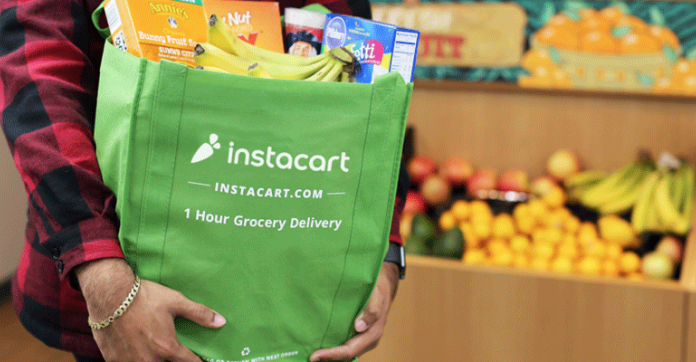
Instacart’s “beat-and-raise” quarter — its strongest GTV growth in three years — helped calm fears that Amazon, Uber Eats, and DoorDash are eroding its competitive moat.

Shares of Instacart surged more than 7% after the company posted stronger-than-expected fourth-quarter results and issued an optimistic outlook, easing concerns that intensifying competition in grocery delivery could undermine its position.

During an earnings call, Chief Executive Chris Rogers pushed back on mounting skepticism around the company’s durability in a crowded field.

“There is definitely a market for us here and we feel good about our points of differentiation,” Rogers said, adding that Instacart monitors competitive threats “extremely closely.” He described concerns about competitive encroachment as “overblown.”

Responding from Wall Street, Bernstein analysts characterized the results as a “solid rebuttal” to competitive and AI-related worries. Analysts at Barclays called it a rare “clean beat-and-raise” in the current internet earnings cycle, noting that Instacart stood out against a backdrop of mixed tech earnings.

Instacart reported 14% growth in gross transaction value (GTV), its strongest quarterly increase in three years. Orders reached 89.5 million, topping a StreetAccount estimate of 87.8 million, indicating continued consumer engagement even as rivals scale their own grocery offerings.

The company projected first-quarter GTV between $10.13 billion and $10.28 billion, above the $9.97 billion estimate from StreetAccount. Adjusted EBITDA is expected to land between $280 million and $290 million, ahead of the $277 million forecast.

The guidance suggests not only sustained demand but also improving operating leverage. Investors have closely watched whether Instacart can balance growth investments with profitability, particularly in a category known for thin margins and high fulfillment costs.

Defending the Moat in a Crowded Field

Instacart operates a marketplace model that partners with grocers rather than owning inventory. This asset-light structure has allowed it to scale nationally without the fixed costs associated with warehouse-based or vertically integrated grocery models.

Still, the competitive environment has intensified. Amazon continues to expand its grocery logistics and same-day delivery footprint, leveraging its Prime ecosystem and physical retail presence. Uber Eats and DoorDash have aggressively integrated grocery into their food delivery apps, using existing courier networks to increase order frequency and cross-sell categories.

The key question for investors has been whether Instacart’s differentiation — retailer partnerships, fulfillment expertise, and a growing advertising business — can offset the scale advantages of these rivals.

Retail media has become central to that argument. Instacart’s advertising platform enables consumer packaged goods brands to promote products within search results and category pages, creating a higher-margin revenue stream that is less dependent on delivery economics alone. As brands shift more ad dollars toward commerce platforms that provide direct purchase data, Instacart’s first-party transaction data becomes strategically valuable.

AI as Both Threat and Opportunity

Artificial intelligence has emerged as another focal point. Investors have weighed whether generative AI tools embedded in search or digital assistants could disintermediate marketplace platforms by enabling consumers to shop directly across retailers.

Instacart is responding by embedding AI into its own ecosystem. The company has introduced AI-driven search enhancements, personalization tools, and retailer analytics capabilities designed to improve product discovery, basket size, and conversion rates.

Management’s commentary suggests that AI is being framed internally as an operational efficiency lever and a customer acquisition tool rather than a structural threat.

Structural Trends in Online Grocery

Online grocery penetration remains lower than other e-commerce categories, partly due to logistics complexity and perishability concerns. However, consumer habits formed during the pandemic have continued to support digital grocery ordering, particularly for convenience-driven and repeat purchases.

Instacart’s latest results indicate that demand has stabilized at levels sufficient to drive double-digit GTV growth. If sustained, that trajectory could signal that online grocery is entering a more mature but steady expansion phase, rather than reverting to pre-pandemic norms.

At the same time, profitability discipline has become more central. Investors are rewarding companies that can demonstrate both growth and margin expansion — a combination that has been scarce across consumer internet names in the current earnings cycle.

The stock’s rally reflects renewed confidence that Instacart can defend its share in a strategically important segment of digital commerce. Grocery spending is frequent, habitual, and resilient relative to discretionary categories, making it attractive for platforms seeking stable transaction volume.

The quarter does not eliminate competitive risks. Larger rivals retain deeper capital resources and broader ecosystems. However, the results suggest that Instacart’s marketplace model, advertising flywheel and technology investments are delivering measurable performance gains.

Overall, investors appear persuaded that the company’s operational execution is outpacing the threats. The “beat-and-raise” quarter provides tangible evidence that Instacart’s moat — long debated on Wall Street — remains intact, at least in the near term.

United States Grants General License to Reliance Industries Ltd for Venezuelan Oil Purchases

0

The United States has issued a general license permitting Reliance Industries Ltd to purchase Venezuelan crude oil directly without violating U.S. sanctions, according to two sources familiar with the matter who spoke to Reuters.

The development marks a significant recalibration of sanctions enforcement toward Venezuela’s energy sector and carries broad implications for global crude trade flows.

The license authorizes the purchase, export, and refining of Venezuelan-origin oil that has already been extracted. It effectively clears a compliance pathway for Reliance to resume direct transactions with Venezuelan counterparties, eliminating the need to rely solely on intermediaries operating under individual licenses.

Reliance had applied for the license in early January. Neither the company nor the U.S. Treasury’s Office of Foreign Assets Control (OFAC) immediately commented.

Sanctions Shift and Venezuela’s Oil Strategy

The move follows Washington’s announcement earlier this month that it would ease sanctions on Venezuela’s energy industry after the capture of President Nicolás Maduro. U.S. officials said the sanctions relief would facilitate a $2 billion oil supply arrangement between Caracas and Washington, alongside a broader $100 billion reconstruction initiative aimed at revitalizing Venezuela’s long-deteriorated oil infrastructure.

Venezuela’s oil production has fallen sharply over the past decade due to underinvestment, sanctions, operational mismanagement, and infrastructure decay. Allowing select buyers back into the market could accelerate export volumes, improve cash flow for the state oil sector, and provide momentum for rehabilitation efforts.

Washington is signaling a willingness to expand the pool of authorized buyers beyond Western oil majors and commodity traders by granting Reliance a general license. Earlier, traders, including Vitol and Trafigura, received permissions to market Venezuelan barrels following Maduro’s capture.

Strategic Value for Reliance and India

The license is commercially significant for Reliance. The conglomerate operates two refineries in Jamnagar with a combined capacity of roughly 1.4 million barrels per day, forming the world’s largest refining complex. These facilities are configured to process heavy and sour crude grades, such as those produced in Venezuela’s Orinoco Belt.

Heavy Venezuelan crude is typically sold at a discount to lighter benchmark grades, providing refiners with an opportunity to improve margins if logistics and quality specifications align. Direct access allows Reliance to optimize feedstock procurement without paying intermediary premiums.

Earlier this month, Reliance purchased 2 million barrels of Venezuelan oil from trader Vitol. Direct sourcing under a U.S. general license would reduce transactional friction and potentially increase volumes over time.

The license also carries geopolitical weight. Indian refiners, including Reliance, have reportedly been avoiding Russian oil purchases for April deliveries and may continue to scale back such trades. Diversifying toward Venezuelan supply could help India manage trade relations with Washington while maintaining cost-effective crude sourcing.

President Donald Trump recently removed a 25% punitive tariff on India and said New Delhi would buy more oil from the U.S. and potentially Venezuela, reinforcing energy trade as a diplomatic lever.

Analysts expect the re-entry of a large-scale buyer like Reliance into Venezuela’s export ecosystem to reshape regional crude flows. Also, increased Venezuelan shipments to India may displace some Middle Eastern or Russian volumes, altering freight patterns and benchmark pricing differentials.

Expanding Venezuela’s customer base reduces dependence on a limited group of sanctioned trade channels. For the United States, calibrated sanctions relief offers leverage while encouraging the structured reintegration of Venezuelan oil into global markets.

However, there are still practical constraints as Venezuela’s production capacity is still constrained by infrastructure bottlenecks and years of underinvestment. Output increases will depend on the pace of field rehabilitation, access to equipment and financing, and political stability.

The license enhances Reliance feedstock flexibility at a time of shifting geopolitical supply chains, while it strengthens India’s energy security by broadening sourcing options. In the global market, the development signals a tangible shift in U.S. sanctions policy that could incrementally ease supply tightness in heavy crude segments.

However, the longer-term impact will depend on export volumes, compliance conditions attached to the license, and the durability of Washington’s revised posture toward Caracas.

Meta Platforms Considers Facial Recognition Rollout for Smart Glasses

0

Meta is preparing to introduce facial recognition capabilities to its smart glasses as early as this year, according to a report by The New York Times. The feature, internally called “Name Tag,” would allow wearers to identify individuals in their field of vision and retrieve information about them through Meta’s AI assistant.

The plan remains under internal discussion and could change. Executives have been weighing how to deploy a feature that carries what the company has described as significant safety and privacy risks.

An internal memo cited in the report shows that Meta had initially considered launching Name Tag at a conference for the visually impaired before expanding access more broadly. That limited rollout did not occur. The memo also indicated that the company believed the current political climate in the United States could provide a less adversarial backdrop for launch.

“We will launch during a dynamic political environment where many civil society groups that we would expect to attack us would have their resources focused on other concerns,” the document said.

A Bet on Wearables and AI

Meta’s renewed push into biometric identification reflects broader strategic priorities. The company has been repositioning itself around artificial intelligence and hardware ecosystems, aiming to reduce dependence on third-party platforms and create direct consumer interfaces.

Its smart glasses, developed in partnership with Ray-Ban parent EssilorLuxottica, have exceeded early sales expectations. The devices already support hands-free photo capture, livestreaming, and AI-powered voice assistance. Adding facial recognition would deepen their functionality and potentially differentiate them in a competitive wearable market that includes offerings from Apple and other hardware makers investing in spatial computing.

Meta previously considered facial recognition integration in 2021 but abandoned the idea due to technical limitations and ethical concerns. Advances in on-device AI processing, improved computer vision models, and edge computing efficiency may now make real-time identification more feasible without constant cloud dependence.

The timing also intersects with shifting regulatory dynamics. The administration of President Donald Trump has signaled closer engagement with major technology firms, potentially reducing immediate federal pushback compared with prior regulatory cycles.

Deploying facial recognition in consumer eyewear would test legal and ethical boundaries. Biometric identification technologies are subject to a patchwork of U.S. state laws, including statutes that require explicit consent for collecting or processing facial data. Internationally, regulations such as the European Union’s General Data Protection Regulation impose strict standards for biometric data handling.

Key operational questions remain unresolved:

  • How the system would source identification data. Whether it would rely on publicly available images, user-uploaded databases, or opt-in contact lists.
  • Where processing would occur. On-device computation would limit external data transmission, while cloud-based processing could raise additional surveillance concerns.
  • How consent would be managed. Non-users in public spaces may not be aware they are being scanned, raising questions about informed consent and reasonable expectations of privacy.
  • What safeguards would prevent misuse? Real-time identification could facilitate stalking, harassment, or unauthorized data harvesting if guardrails are insufficient.

Civil liberties organizations have historically opposed widespread facial recognition deployment, arguing that the technology erodes anonymity in public spaces. Law enforcement use of similar systems has already triggered litigation and municipal bans in some U.S. jurisdictions.

If Meta proceeds, the launch would mark one of the most visible attempts to normalize biometric identification in everyday consumer devices. Smart glasses, unlike fixed surveillance cameras, are mobile and discreet, potentially transforming how individuals experience public interaction.

The feature could also reshape social norms. Wearers might gain informational advantages in networking, professional settings, or social encounters. At the same time, widespread adoption could create pressure for individuals to assume they are constantly identifiable in public environments.

The decision represents a calculated risk for investors as enhanced functionality could boost device sales and reinforce Meta’s long-term augmented reality roadmap. However, regulatory backlash or reputational damage could offset commercial gains.