DD
MM
YYYY

PAGES

DD
MM
YYYY

spot_img

PAGES

Home Blog Page 2487

Africa’s Soaring Debt Crisis: $74bn Required for Debt Servicing in 2024 – AfDB

0

Africa’s debt crisis has reached a critical juncture, with countries on the continent projected to spend $74 billion in 2024 to service their debt obligations, a dramatic rise from $17 billion in 2010.

This sobering revelation was made by Prof. Kevin Urama, Chief Economist and Vice President of Economic Governance and Knowledge Management at the African Development Bank (AfDB), during the launch of the Debt Management Forum for Africa (DeMFA) in Abuja on Monday.

The event, themed “Making Debt Work for Africa: Policies, Practices, and Options,” provided a platform to address the mounting challenges surrounding Africa’s debt sustainability.

Urama highlighted that 54% of the 2024 debt service obligation, or $40 billion, is owed to private creditors. However, he cautioned that the actual burden could be higher when factoring in hidden debts and contingent liabilities.

“Twenty African countries are in debt distress or at high risk of debt distress,” Urama warned, pointing to the increasing refinancing risks for nations with substantial bullet redemptions.

The scale of Africa’s debt burden reveals a stark disparity between developed and developing countries. Developed economies, Urama explained, can sustain higher debt levels due to lower servicing burdens, while African nations are channeling significant fiscal resources into servicing public debt at the expense of developmental needs.

The AfDB Chief Economist noted that annual debt refinancing needs are projected to reach $10 billion between 2025 and 2033. The situation is worsened by skyrocketing African Eurobond yields, which surged to 15% in 2023, more than double their 2019 rate.

“These high yields are driven by a combination of domestic and external factors, as well as unfair risk perceptions,” Urama said, further stressing the urgent need for reform.

The “Africa Risk Premium” and Global Inequalities

Urama drew attention to a systemic bias in global financial systems, referencing the United Nations Development Programme (UNDP) estimate that Africa incurs an “Africa Risk Premium” of $24 billion annually in excess interest due to inflated sovereign risk perceptions.

“This deprives the region of critical resources for development,” he stated, calling for Africa-led solutions to reimagine borrowing models and prioritize productive investments.

Despite the urgency of the crisis, existing debt relief and restructuring mechanisms remain inadequate, slow, and unsustainable. Urama criticized these measures for failing to tackle the structural issues underpinning Africa’s debt sustainability challenges.

Ms. Allison Holland, Assistant Director of the Strategy, Policy, and Review Department at the International Monetary Fund (IMF), added to the discourse, emphasizing the importance of engaging private creditors first in debt resolution efforts.

“The big challenge here is, why don’t we move forward with the private sector first? Wouldn’t this be faster?” she asked, stressing that IMF interventions depend on the readiness of official creditors to engage.

Climate Shocks and Rising Borrowing Needs

The increasing frequency of climate shocks has further compounded Africa’s debt challenges. Dr. Anthony Simpasa, Director of the Macroeconomic Policy, Forecasting, and Research Department at the AfDB, explained that many African nations have been forced to borrow heavily to finance climate-related projects.

“Many countries, particularly those vulnerable to climate shocks, have been forced to borrow heavily to finance climate-related projects. These projects, aimed at adaptation and mitigation, constitute the largest share of instruments used for climate financing on the continent,” he noted.

A Call for Action

Addressing Africa’s debt crisis requires a multifaceted approach that goes beyond traditional debt relief measures. Urama and other experts at the forum advocated for rethinking borrowing models and exploring Africa-led solutions that prioritize productive investments and address systemic inequalities in global financial systems.

They note that the challenges, while formidable, also present an opportunity for African nations to push for a more equitable global financial architecture—one that recognizes and addresses the continent’s unique vulnerabilities while fostering sustainable development.


Senate Introduces Bill to Ban Use of Foreign Currency Amid Concerns Over Naira’s Decline

0

In a bid to address the persistent decline of the Naira, the Nigerian Senate has introduced a bill aimed at banning the use of foreign currencies for payments and other financial transactions within the country.

The bill, titled “A Bill for an Act to Alter the Central Bank of Nigeria Act, 2007, No. 7, to Prohibit the Use of Foreign Currencies for Remuneration and for Other Related Matters,” is sponsored by Senator Ned Munir Nwoko, Chairman of the Senate Committee on Reparations and Repatriation.

The legislation seeks to enforce the exclusive use of the Naira for all payments, including salaries, and to end what the Senator described as a “colonial relic” — the widespread use of foreign currencies in domestic transactions.

Key Provisions of the Bill

The bill proposes that:

  • All payments, including salaries and wages, must be conducted exclusively in Naira.
  • Exports, including crude oil, must be sold in Naira to drive demand for the local currency.
  • Informal currency markets, which contribute to unethical practices like currency round-tripping by banks, should be abolished to stabilize the formal economy.

According to Senator Nwoko, the proposed law is a critical step toward strengthening confidence in the Naira and reclaiming Nigeria’s financial independence.

He said the continued use of foreign currencies in our financial system is a colonial relic that undermines the Naira and hinders our economic sovereignty, and this bill seeks to put an end to discriminatory practices against our currency and reinforce its value.

The Senator also argued that requiring crude oil exports to be sold in Naira would compel international buyers to purchase the currency, potentially driving up its demand and value in global markets.

Beating About the Bush

Despite its intentions, the bill has been met with skepticism from financial experts and economic analysts who argue that it merely scratches the surface of the issues causing the Naira’s free fall. The initiative has been described as a form of “beating about the bush,” pointing out that the fundamental factors driving the currency’s weakness remain unaddressed.

Experts have noted that the problem with the Naira isn’t just how it is used or circulated but also the productivity of the economy. They stressed that until Nigeria boosts domestic production, diversifies exports, and addresses structural inefficiencies, no legislative or monetary intervention will deliver lasting results.

“The strength of Naira does not come from the Central Bank of Nigeria (CBN) but from warehouses and factories (the modern and the old). Until Nigeria leaves financial engineering and focuses on what anchors Naira, Naira will continue to fade. Every apex bank has two core missions: strengthen currency by managing inflation and boost employment through interest rates management,” Prof. Ndubuisi Ekekwe, Lead Faculty of Tekedia Institute, and Chairman of Tekedia Capital, said.

The country’s oil sector, which should be a significant source of foreign exchange, continues to struggle with low production due to theft, underinvestment, and inefficiencies. Industry players have repeatedly called for reforms to address these challenges and ensure that oil output meets its potential.

Economists have long advocated for policies that prioritize economic diversification, increased exports, and improved oil production as sustainable ways to stabilize the Naira. Nigeria’s heavy reliance on oil exports, which account for over 90% of foreign exchange earnings, leaves the economy vulnerable to external shocks when global oil prices fluctuate.

Dr. Muda Yusuf, CEO of the Centre for the Promotion of Private Enterprise (CPPE), has emphasized the importance of expanding non-oil exports and strengthening local production. He said there is need for industrialization in driving economic growth, as seen in Europe and North America, and stressed the need for a thriving manufacturing sector supported by innovation, infrastructure, and strong economic policies.

Others have emphasized that Nigeria needs to move beyond its mono-product economy, explaining that increased exports of goods and services, particularly in agriculture, manufacturing, and technology, will create demand for the Naira on global markets and ultimately shore up its value.

While the proposed bill underscores the urgency of addressing Nigeria’s currency crisis, experts warn that without addressing these root causes, legislative fixes may provide only temporary relief, leaving the Naira’s vulnerabilities intact. This means that the success of the legislation will depend on how well it is integrated with broader economic reforms aimed at tackling the structural challenges facing the economy.

Lightfall in Irawo Owode

1
facing:0

Electricity is often taken for granted in Nigeria’s bustling urban centres. High-rise buildings are bathed in lights, neon signs pulse vibrantly, and homes hum with the sound of appliances. Yet, in Irawo Owode and countless rural communities, the story is strikingly different. Here, life dims after sundown. Students huddle around weak flames or solar lamps to study, artisans abandon their tools, and businesses shutter early. This is not by choice but by circumstance.

This disparity is not just an economic inconvenience; it is a barrier to human development. Energy access is a proven driver of education, entrepreneurship, and security. When towns like Irawo Owode remain in the dark, their progress stalls. Poor lighting compromises safety, exposing residents to crime and accidents. Educational opportunities shrink as children cannot study effectively at night. The local economy stagnates, with shops and businesses unable to operate beyond daylight hours. In essence, a lack of electricity dims futures as much as it dims homes.

In the heart of Irawo Owode, where shadows stretch long under the night sky, a solitary light flickers—a beacon powered not by the national grid but by the sun’s forgotten rays. It is a light that does more than illuminate; it narrates a story of struggle, resilience, and the urgent need for change. This small town, like countless others across Nigeria, stands as a stark reminder of the yawning gap between urban development and rural neglect, where electricity remains a luxury rather than a basic right.

Our analyst in Irawo Owode’s Lightfall scene

The photograph of Irawo Owode captured by our analyst and his team during a late evening fieldwork session is more than a visual representation; it is an allegory of adaptation and survival. A dim solar-powered bulb struggles against the enveloping darkness, casting faint silhouettes on mud walls and rickety wooden tables. A lone figure, barely visible, is swallowed by the gloom. It is an image that unsettles and inspires in equal measure. It urges us to confront an inconvenient truth: millions of Nigerians are still left behind in the country’s electrification drive, their lives shaped by shadows that the rest of us hardly notice.

The Light of Resilience: Solar Power as a Lifeline

But amid this systemic failure, the people of Irawo Owode demonstrate a resilience that is nothing short of inspiring. The dim solar-powered light in the photograph is evidence of their determination to adapt. Where the national grid has failed, the sun has become a lifeline—a small but significant reprieve from total darkness. Solar energy, despite its limitations, is empowering this community to reclaim agency over their lives, even if on a modest scale.

The implications of this adaptation are profound. It speaks to the ingenuity of rural Nigerians who find solutions where systems fail them. It reveals the untapped potential of renewable energy in closing the energy gap for underserved communities. But it also raises a critical question: why must citizens be left to fend for themselves when energy access is a fundamental human right?

Bridging the Gap

The plight of Irawo Owode is not an anomaly. Nigeria, despite being Africa’s largest economy, has one of the lowest electrification rates in the world, with rural communities bearing the brunt of this deficit. According to the World Bank, over 85 million Nigerians lack access to grid electricity, a figure that highlights the magnitude of the challenge.

However, this challenge is not insurmountable. The solution lies in a deliberate and strategic shift towards renewable energy investments, policy reforms, and public-private partnerships. Solar power, as evidenced by Irawo Owode, holds immense potential to transform rural communities. By scaling up solar microgrids and community solar systems, we can provide consistent and affordable energy to towns and villages across the country.

Two transformers awaiting connection to the national grid

Governments must take the lead by prioritizing rural electrification in their development agendas. Policies that incentivize renewable energy adoption, particularly in underserved areas, are crucial. Equally important is the role of the private sector in driving innovation and investments in clean energy solutions. Community-based capacity building—where locals are trained to install and maintain solar systems—can further empower residents, creating jobs and sustaining energy solutions.

From Shadows to Light

Lightfall in Irawo Owode is more than a physical phenomenon. It is a metaphor for the systemic darkness that rural communities endure. But within that darkness lies a flicker of hope, powered by the ingenuity of the people and the promise of renewable energy. It is time to amplify that light, to scale solutions, and to ensure that no community is left behind. The path forward is clear: invest in energy access, bridge the rural-urban divide, and empower communities to step into the light. Irawo Owode may be a small town, but its story holds a lesson for the entire nation—when we light up one community, we ignite the potential of a thousand others. And in that light, Nigeria will find its true brilliance.

A New Dawn for Rural Nigeria

Imagine an Irawo Owode where the night no longer feels like an enemy. Picture children studying under bright, consistent lights; artisans working into the evening to meet demand; local businesses thriving beyond sunset; and families gathering safely under well-lit streets. This is not a utopian vision, it is an achievable reality.

The story of Irawo Owode is not one of hopelessness but of possibility. The faint solar light in that photograph is proof that even the smallest interventions can create ripples of change. It is a call to action for policymakers, innovators, and stakeholders to see rural electrification not as a burden, but as an opportunity to transform lives and unlock potential.

The Power of Client Reference: Boosting Credibility and Trust

0

Trust is the cornerstone of any successful business relationship. In a marketplace flooded with choices, customers often seek social proof to help make informed decisions. Client references serve as a powerful tool in this regard, offering a tangible testament to the quality and reliability of a business’s offerings. Authentic client testimonials and case studies are not just marketing fluff; they are vital elements that can significantly enhance credibility and trust. Below, we explore the intricacies of client references and how they can propel your business forward.

Understanding Client References and Their Impact on Business

Alt text: A large circular light fixture illuminates a room where two people engage in conversation in the background.

A client reference is a crucial tool for businesses, as it serves as a badge of honor, indicating the value of a company’s products or services to potential customers. These references can set a business apart from competitors, highlighting a track record of satisfied customers. In today’s digital age, potential clients often research a company’s reputation before engaging with it, making robust client references sway decision-making in favor.

Client references can also enhance company morale, attract top talent, and bolster investor confidence. The most effective references are relatable and authentic, demonstrating how the service or product has solved similar problems for the prospective client. Strategic showcasing of client references, such as a website with prominent testimonials or detailed case studies, can significantly fuel growth and convert leads into customers.

Building Trust Through Authentic Client Testimonials

Client testimonials are a valuable tool for businesses, as they provide a direct voice from satisfied customers who can be more trustworthy than self-proclamations of excellence. They can capture the essence of a customer’s positive experience and potentially lead prospects towards a sale. Not all testimonials are created equal, and authentically expressed praise can resonate deeply.

To maximize impact, testimonials should be paired with the client’s name, title, and company, and video testimonials can be particularly impactful. Businesses should ask for testimonials at the right time, often after a successful project or when appreciation is expressed. Encouraging ongoing dialogue with clients can lead to updated testimonials that reflect long-term relationships and sustained satisfaction, demonstrating consistency and building a narrative of growth and partnership.

Showcasing Real-World Success Stories

Case studies provide a detailed narrative of how a product or service has made a significant difference, highlighting the challenges faced, solutions provided, and benefits gained. They are a more in-depth format that allows potential customers to see themselves in the scenario and understand how they might benefit from the product.

The narrative should be informative and engaging, focusing on the problem-solution-benefit arc. Case studies serve as evidence of capability and a learning tool within an organization, highlighting best practices and areas of excellence. They can also be used as benchmarks for future performance. By transforming client successes into marketable content, businesses can reach a diverse audience and improve internal operations.

Leveraging Positive Client References for Improved SEO

Alt text: A person typing on a laptop with a cityscape backdrop, displaying a client reference on the screen.

Client references are crucial for improving a website’s SEO, as they provide valuable testimonials and case studies that are rich in relevant keywords. These references can boost a website’s relevance in search engine algorithms and drive organic traffic to the site. They also offer opportunities for backlinking, which increases traffic and is considered by search engines when determining a page’s authority and ranking.

Engaging narratives from client references can also increase the potential for content to be shared on social media, reinforcing brand recognition and driving new audiences back to the company’s website. Tailoring client references to target specific market segments or keywords can lead to higher quality leads and more effective consumer engagement.

Strategies to Encourage Clients to Share Their Experiences

To encourage clients to share their experiences, businesses should provide exceptional service, provide clear channels for feedback, and offer incentives such as exclusive content, discounts, or marketing materials. These should be transparent and ethical, ensuring testimonials remain authentic and truthful. Timing is crucial, as asking for references immediately after a successful transaction or milestone can capitalize on client enthusiasm.

Providing a template or guiding questions can streamline the process and increase the likelihood of gathering valuable endorsements. Building and maintaining strong relationships with clients can lead to them advocating for the business, becoming repeat customers and referring others, initiating a virtuous cycle of affirmation and trust.

Altogether, client references can dramatically influence the success of your company, serving as compelling evidence of your business’s ability to deliver. Maximizing their potential requires attention to authenticity, timing, and promotion, ensuring that these genuine endorsements reach their fullest impact. The strategies discussed here provide a blueprint for leveraging these powerful marketing tools effectively, fostering trust and credibility with your target audience along the way.

Dogecoin News: DOGE Eyes $4, But Analysts Predict Yeti Ouro To Reach $5 In 2025, Will Shiba Inu Be Able To Keep Up?

0

Dogecoin is making itself known in crypto again. Recent price action has put this spring in the step of investors. Other analysts are even predicting that DOGE could target a whopping $4 by as early as 2025. One that has grabbed everyone’s attention, though, is the Yeti Ouro viral altcoin. Yeti Ouro (YETIO) is set to crush Dogecoin and hit $5 by 2025. According to experts, Shiba Inu (SHIB) is under pressure to keep up in this fast-moving market.

Dogecoin Price Prediction: DOGE’s Path To $4

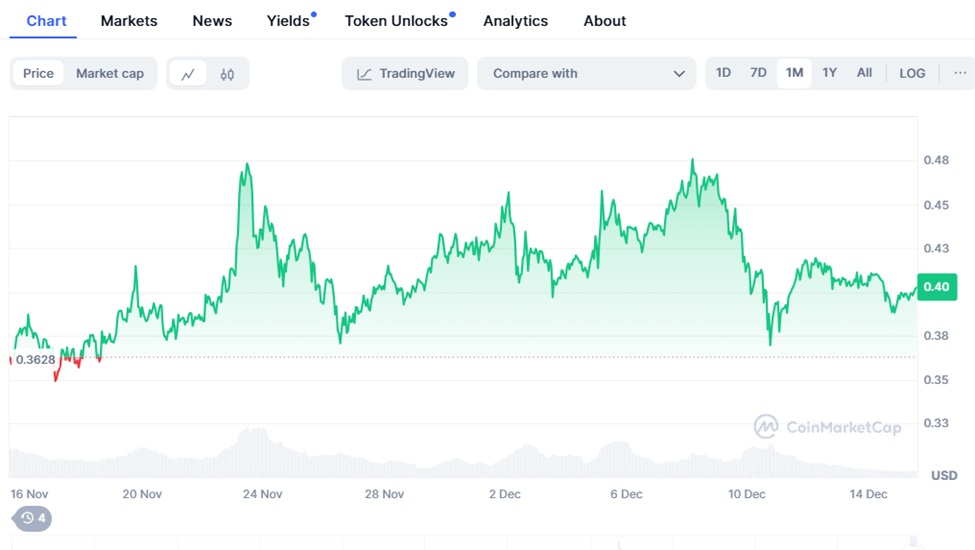
Meme currency pioneer Dogecoin has always surprised the crypto world. DOGE is still strong at $0.40 after surging 10%+ in the past month. DOGE price has been propelled upward due to whale activity and growing adoption as a method of payment. Dogecoin could repeat its historic 2021 bull run, many investors believe.

1-week Dogecoin price chart- source: CoinMarketCap

Among meme coins, DOGE is still no 1. Its robust community backing and high-profile endorsements, especially from Elon Musk, keep investment sentiment buoyant. If momentum in the market continues, analysts expect Dogecoin to reach over $4 by 2025. That price point would be a 900% gain from current levels.

The Rise Of Yeti Ouro: A Fierce Contender

As Dogecoin peaks his target of reaching $4, Yeti Ouro is hot on his heels. This viral altcoin has experienced widespread popularity, bolstered by its novel Play-to-Earn (P2E) environment. Unlike traditional meme coins, Yeti Ouro features gaming utility with financial incentives.

Yeti Go is an Unreal Engine game that powers Yeti Ouro. The game offers high-octane PvP racing, environmental hazards, and tactical power-ups. There are YETIO tokens that players can earn through gameplay and staking rewards. This utility sets Yeti Ouro apart from competitors such as Dogecoin and Shiba Inu, which mostly exist on hype.

With demand only growing, Yeti Ouro has just surpassed $1.2 million in presale figures. Experts believe YETIO price will skyrocket as the P2E market expands. Yeti Ouro has projections that it will reach $5 by 2025, which would be a remarkable potential gain for early investors.

Shiba Inu News: The Challenge Of SHIB To Remain Relevant

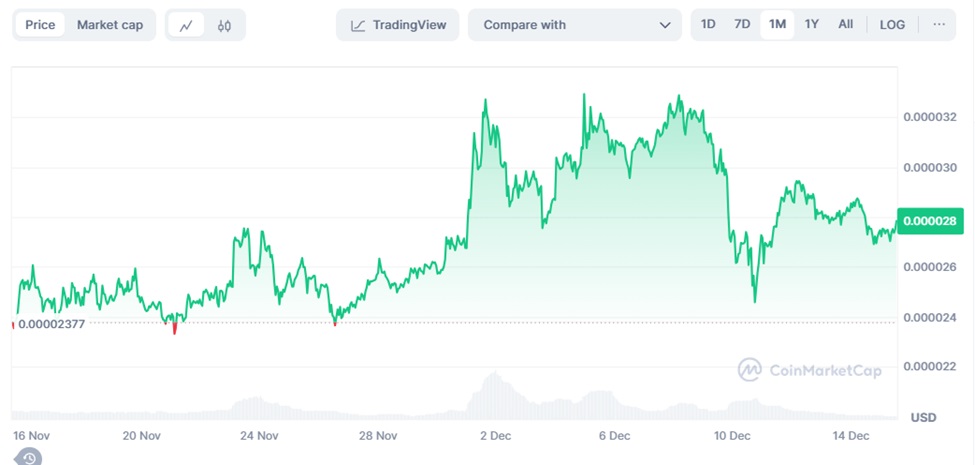
Since launch, Shiba Inu — known as the “Dogecoin Killer” — has enjoyed great success. But SHIB will now be headed into tough competition from Dogecoin and Yeti Ouro. And despite recent gains, Shiba Inu coin price is currently at $0.00002784 — a long way from where it once was.

1-week Shiba Inu price chart- source: CoinMarketCap


The Shiba Inu ecosystem, comprising Shibarium (Layer 2) its staking mechanisms, has contributed to growth. Despite this, SHIB’s supply is still a significant obstacle. Due to its massive circulating supply at 589.25 trillion tokens, as price points reach higher and higher, it becomes more and more challenging to push the price up.

Shiba Inu will need to innovate to remain competitive. Community-driven initiatives and progress like the launch of Shibarium are positives. However, whether it can track the momentum of DOGE or Yeti Ouro remains unclear.

Why Yeti Ouro Are Attracting So Many Investors

Yeti Ouro is attracting more investors for these reasons:

  • Real Utility Token: YETIO has a true utility in the Yeti Go game, making it different than meme-only tokens.
  • Yeti Ouro has Long-Term Value Because of the Booming P2E Market Play-to-Earn Potential
  • Returning 500x: Mass increase forecasts have put Yeti Ouro at a $5 price tag

YETIO is extremely attractive due to the fusion of gaming excitement and financial incentives. As such, this approach is apt to resonate with crypto enthusiasts and gamers searching for profit opportunities.

Conclusion: Meme Coins, What’s Next?

Nevertheless, with its devoted community and market dominance, Dogecoin’s target of $4 is realistically ambitious. In the meantime, Yeti Ouro is the fast-emerging dark horse of 2024 with its P2E utility and potentially bullish price action. Experts estimate YETIO to reach $5 by 2025, making it a better performer than Dogecoin and Shiba Inu.

Although Shiba Inu is a contender, it has to make further developments to keep up in this competitive environment. Yeti Ouro is the top game right now for investors seeking long-term gains.

With its presale already over $1.2 million, the countdown to the rise of Yeti Ouro has begun. YETIO’s Future Looks Brighter than Ever With Growth of P2E Market. Could it be the next big success story?


Join the Yeti Ouro Community

Website: https://yetiouro.io/

X (Formally Twitter): https://x.com/yetiouro

Telegram: https://t.me/yetiouroofficial

Discord: https://discord.gg/YtUsEZ2ZrV