DD
MM
YYYY

PAGES

DD
MM
YYYY

spot_img

PAGES

Home Blog Page 249

Bitcoin Surges Past $115,000 as Trade Optimism And Fed Expectations Lift Market Sentiment

0

The price of Bitcoin has significantly surged, after the crypto asset climbed 3.6% on Monday to cross the $115,000 mark, buoyed by renewed investor confidence and improving global risk appetite.

The rally came as signs emerged that trade tensions between the United States and China may be easing, sparking optimism across both equity and crypto markets. Recall that Trump had earlier stated plans to impose a 100% tariff on all Chinese imports, reigniting fears of a renewed trade war between the world’s two largest economies.

This pushed Bitcoin’s price below key technical levels, including the $110,000 and $108,500 support zones, triggering automated sell orders and accelerating the downturn, while renewed interest surged among traders exploring how to buy Bitcoin during the dip.

In a recent development, over the weekend, senior U.S. and Chinese economic officials reportedly outlined a framework for Presidents Donald Trump and Xi Jinping to review later this week in South Korea. The proposed deal would pause steeper U.S. tariffs and delay China’s planned rare-earth export controls, a development that has helped calm investor nerves following months of escalating trade risks. Trump has expressed optimism about reaching an agreement soon, further lifting market sentiment.

Technically, Bitcoin ended the week above the bull market support band, a key indicator that often distinguishes bullish expansions from corrective phases. With BTC now trading around $115,239 at the time of writing this report, analysts suggest the market can confidently declare that the cryptocurrency has exited its downward trend. The weekly chart, according to traders, reflects Bitcoin’s resilience and the restoration of its long-term bullish structure.

The improved outlook was also reflected in sentiment indicators. The Crypto Fear & Greed Index rose to a neutral score of 51 out of 100 on Sunday, exiting the “fear” zone for the first time in more than two weeks. This marks an 11-point increase from Saturday’s reading of 40 and a gain of over 20 points since the previous week, signaling a significant shift toward renewed confidence in the crypto market.

On the technical front, bulls pushed the price above $113,500 and the 100-hourly simple moving average before Bitcoin spiked past $115,000. It is now consolidating gains above the 23.6% Fibonacci retracement level of the recent wave from $106,718 to $115,400. However, analysts caution that if Bitcoin fails to break the $115,500 resistance zone, it could face a pullback. Key support levels lie around $114,000, followed by $113,500 and $111,000. A further decline could send the price toward $110,500, with the main support anchored at $108,500.

Beyond technicals, macroeconomic factors are also in focus. Investors are closely monitoring the Federal Reserve’s upcoming meeting, where markets widely expect a second rate cut of the year. According to the CME FedWatch Tool, the probability of a 25-basis-point cut stands at 97.3%. The Fed’s decision, alongside Chair Jerome Powell’s Wednesday press conference, will likely shape market expectations for the remainder of the year.

With the recent government shutdown restricting access to updated economic data, analysts expect Powell to address how the Fed plans to balance inflation concerns with a cooling job market. Should the Fed signal confidence in continued monetary easing, particularly if quantitative tightening is nearing its end, it could inject liquidity back into financial markets, fueling further rallies in both equities and cryptocurrencies.

Outlook

With a potentially dovish Fed, easing trade tensions, and renewed market optimism, Bitcoin’s recent breakout appears to be supported by a strong mix of technical and macroeconomic tailwinds.

As the week unfolds, all eyes remain on the Trump–Xi meeting and Powell’s remarks, two key events that could determine whether Bitcoin’s momentum continues or pauses for consolidation.

How Does Noomez Work? Breaking Down the Next Big Meme Coin Everyone’s Watching

0

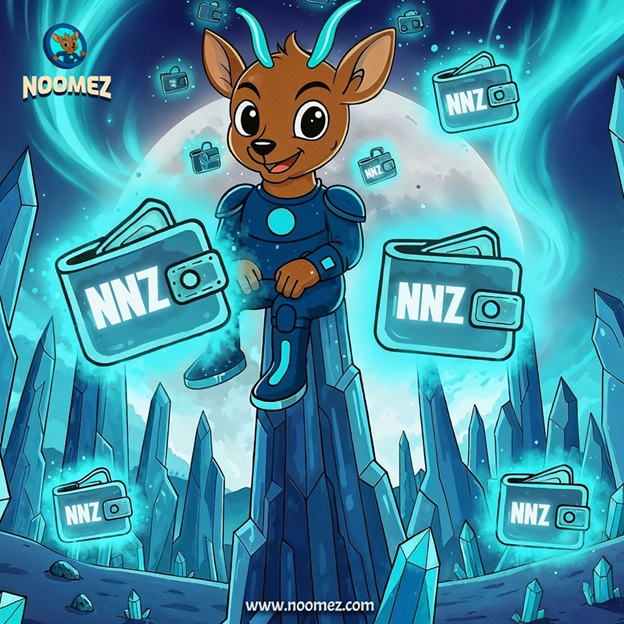
As meme coins continue to dominate retail interest in 2025, Noomez runs on a fixed-stage model where each presale phase has a locked price, hard supply limit, and public burn mechanism for unsold tokens.

To fully understand how does Noomez work, it’s necessary to look at how value unlocks are tied directly to time, supply, and stage-based activity.

How Noomez Works in Presale: The 28-Stage Presale System

According to project data, Noomez distributes 140 billion $NNZ (half of its total supply) through a structured 28?stage presale. Each stage lists a fixed token cap and price, with a seven?day deadline before the next phase begins.

  • Stages 1–7: 7 billion $NNZ per stage
  • Stages 8–14: 5 billion $NNZ per stage
  • Stages 15–21: 2 billion $NNZ per stage
  • Stages 22–28: 300 million $NNZ per stage

The sale opens at $0.00001 per token, rising gradually to $0.0028. All price points and supply limits are published ahead of time and locked on?chain. If a stage fails to sell out, its unsold tokens are permanently burned.

Project materials describe the system as a way to create transparency and scarcity without relying on demand surges or private sales.

This approach defines exactly how Noomez works in presale; by limiting access, reducing available supply over time, and enforcing a schedule that operates independently of hype or demand spikes.

How Participation Triggers Rewards and Token Flow

Project data shows that buyers can only take part in one active stage at a time, with wallet caps in place to prevent large holders from dominating early rounds. Purchases are limited to individual stages, meaning tokens cannot be stacked across multiple rounds.

Each completed stage activates a new segment on the Noom Gauge, a visual tracker that logs presale progress and determines when features unlock. If a stage closes without selling out, its segment remains inactive, and the unsold tokens are burned.

According to the presale framework, one wallet from each stage that contributes at least $20 is selected for a random airdrop of X?million?$NNZ, where X equals the stage number. Results are verifiable on-chain.

Participants can also stake tokens during the presale. Rewards unlock 30?days after launch with returns of up to 66%?APY. Early contributors in Stages?1–7 receive a 2× multiplier, linking reward potential directly to timing rather than token volume.

Inside the Noomonomics: Fixed Tokenomics and Deflationary Logic

Noomez tokenomics operate on a strict fixed-supply model with no future minting. The remaining supply is distributed across liquidity, development, marketing, growth incentives, burns, and staking pools.

Key Allocations:

  • Presale Fuel (50%): Drives the 28-stage rollout. Any unsold tokens per stage are permanently burned.
  • Liquidity Lock (15%): Locked at launch via third-party provider, verifiable publicly.
  • Marketing (10%): Reserved for listings, PR, influencer reach, and global campaigns.
  • Team & Dev (5%): Vested over 6–12 months; all wallets are visible to the public.
  • Noom Stake (5%): Used for staking rewards post-launch and Noom Rewards during presale.
  • Noom Recruit (5%): Funds community growth, airdrops (including X Million), and referral bonuses.
  • Burn Vault (5%): Allocated for lore-based burns such as Vault unlocks or milestones, all tracked on-chain.
  • Ecosystem Growth (5%): Reserved for future partnerships, integrations, and tooling.

Deflationary Design Highlights:

  • Stage-End Burns: If a stage fails to sell out by Day 7, all remaining tokens are burned automatically.
  • Planned Lore Burns: Additional burns occur during milestone events or unlock rituals.
  • Transparent Tracking: Burn logs, vesting schedules, and liquidity lock proofs are publicly posted.

Trust & Alignment:

  • 15% liquidity locked at launch and verifiable.
  • Team KYC and blue-tick verification reduce impersonation risk.
  • All contracts are open-source, with on-chain verification available at deployment.

How Value Unlocks Over Time in the Noomez System

Noomez ties value activation to stage-based progress and time-locked features. Staking begins 30 days post-launch, the Noom Gauge marks each phase, and airdrops, vault events, and burns follow verified milestones. This makes participation the key to how Noomez works in practice.

For More Information:

Website: Visit the Official Noomez Website

Telegram: Join the Noomez Telegram Channel

Twitter: Follow Noomez ON X (Formerly Twitter)


UK Competition Appeal Tribunal Hands Apple $2bn Fine For Abuse Of Dominant Market Position

0

Apple has spent years battling lawsuits and fines from governments over its App Store policies. Now, a new collective-action lawsuit in the United Kingdom has added another $2 billion to the company’s mounting legal troubles, underscoring the growing pressure US tech giants face from regulators in both the UK and the European Union.

The UK Competition Appeal Tribunal ruled that Apple abused its dominant market position by imposing what it described as “excessive and unfair” commission fees on app developers, which in turn inflated costs for consumers. The lawsuit—filed by British academic Rachel Kent on behalf of 20 million iPhone and iPad users—accuses Apple of charging unjustifiable fees through its App Store, where developers pay up to 30 percent on all transactions. The court awarded up to £1.5 billion ($2.01 billion) in damages, potentially translating to about £75 ($100) per claimant.

Apple said it would appeal the ruling, arguing that its App Store model ensures security and privacy for users. “Eighty-five percent of developers pay nothing,” Apple said in its defense, maintaining that its fees are consistent with global standards and support app distribution and platform maintenance. The hearing to determine the compensation structure is scheduled for next month.

The UK case adds to a growing wave of legal challenges confronting Apple, Google, Meta, and other US tech companies in Europe. Regulators in Brussels have intensified enforcement of the Digital Markets Act (DMA) and Digital Services Act (DSA)—laws designed to break up digital monopolies and increase transparency in online platforms. Earlier this year, the European Commission fined Apple $580 million for failing to comply fully with the DMA, citing restrictions that still prevented fair competition among app developers. Apple has appealed the fine, claiming the EU’s interpretation of compliance “misunderstands how app ecosystems function.”

Meanwhile, Apple recently lost a long-running antitrust case against Epic Games in the United States, which forced the company to loosen rules on third-party payment systems. Although Apple made changes to align with the EU’s new laws, regulators concluded that the company’s steps were insufficient, with European Competition Commissioner Margrethe Vestager warning that Apple could face additional penalties if it continues to “self-preference” its own services.

Across the Atlantic, tech companies are also facing intensifying scrutiny. In the UK, regulators have expanded investigations into Google’s advertising dominance and Meta’s data handling practices, particularly how they intersect with user privacy and competition laws. The UK Competition and Markets Authority (CMA) recently announced a probe into Google’s control over ad data, suggesting that the company’s dominance may stifle smaller competitors.

Meta, too, is under pressure in Europe. The European Commission said last week that Facebook and Instagram failed to meet their obligations under the DSA to give researchers meaningful access to public data. The Commission accused Meta of using “deceptive interface designs” and imposing “burdensome procedures” that discourage transparency, potentially violating EU law. TikTok faced similar accusations, with regulators arguing that the Chinese-owned platform had failed to make its public data easily accessible to independent researchers.

These developments illustrate how Western regulators are increasingly converging on a shared mission to curb Big Tech’s influence over digital markets. In both the UK and EU, authorities have emphasized consumer protection, fair competition, and data privacy—areas where Apple, Meta, and Google have repeatedly clashed with regulators.

App developers and lawmakers continue to demand that Apple and Google open their mobile platforms to competition. Earlier this year, US lawmakers introduced two bipartisan bills that would compel both companies to permit third-party app stores and sideloading of apps—something the firms have long resisted, citing security concerns. Developers, including Spotify, Epic Games, and Match Group, have since joined forces in a coalition to challenge what they call a “duopoly of mobile app distribution.”

A recent industry survey found that a majority of developers believe third-party app stores could drive innovation and consumer choice. Apple’s restrictions on alternative web browser engines have also come under scrutiny, with developers arguing that such rules suppress creativity and prevent apps from functioning at full capacity.

In Europe, under the DMA, regulators can fine companies up to 6 percent of their annual global revenue for breaches—a figure that could run into tens of billions for the largest firms. Currently, Apple’s £1.5 billion penalty in the UK represents another flashpoint in a years-long struggle between Silicon Valley’s biggest players and European regulators determined to rein in their dominance over digital life.

Reddit Sues Perplexity and Data Firms for Alleged Data Theft, Accuses Them of Bypassing Digital Guardrails

0

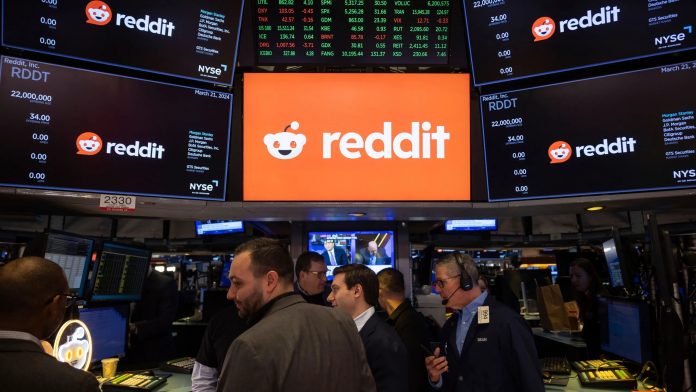
Reddit has filed a sweeping lawsuit against Perplexity and three other data-mining firms — Oxylabs UAB, AWM Proxy, and SerpApi — accusing them of illegally scraping its content and violating its digital protection systems.

The lawsuit, lodged Wednesday in Manhattan federal court, claims that the companies circumvented Reddit’s safeguards by exploiting Google’s search results to harvest data from the platform, according to Business Insider.

“These Defendants are similar to would-be bank robbers, who, knowing they cannot get into the bank vault, break into the armored truck carrying the cash instead,” the lawsuit states, alleging that the firms effectively stole Reddit’s user-generated content for commercial use.

The legal action is one of the most aggressive moves yet by Reddit as it seeks to assert control over its vast archive of public conversations — an increasingly valuable dataset in the age of artificial intelligence.

According to Reddit, Perplexity ignored a cease-and-desist order sent in May 2024, which demanded it stop scraping data unless it reached a licensing deal similar to those Reddit signed with Google and OpenAI. Despite initially telling Reddit it would “respect Reddit’s robots.txt,” the platform’s lawsuit says Perplexity’s citations to Reddit surged “forty-fold after Reddit told it to stop.”

“Rather than respect Reddit and its users’ rights, what Perplexity has done in response is simply come up with increasingly devious schemes to circumvent Reddit’s security systems and policies,” the lawsuit claims.

Reddit alleges that Perplexity used at least one of the other named scraping firms to ingest its data into large language models (LLMs).

“In other words, Perplexity’s business model is effectively to take Reddit’s content from Google search results, feed them into a third party’s LLM, and call it a new product,” the complaint reads. “While that business model has somehow translated into a $20 billion valuation, it has not resulted in a willingness to pay for what others (including Google) have.”

Perplexity spokesperson Jesse Dwyer responded that the company “will always fight vigorously for users’ rights to freely and fairly access public knowledge,” adding that its approach “remains principled and responsible as we provide factual answers with accurate AI, and we will not tolerate threats against openness and the public interest.”

Representatives for Oxylabs and SerpApi said they plan to defend themselves, while AWM Proxy, described in the suit as a former Russian botnet, could not be reached for comment.

Reddit’s ‘Marked Bill’ Trap and Evidence of Scraping

The lawsuit details how Reddit set up a digital “marked bill” trap to prove that Perplexity was scraping its data. The company created a test post viewable only to Google’s search engine. Within hours, Reddit says, the post’s contents appeared in responses generated by Perplexity’s “answer engine,” confirming unauthorized access.

“Within hours, queries to Perplexity’s ‘answer engine’ produced the contents of that test post,” the filing states.

Cloudflare CEO Matthew Prince weighed in on the controversy earlier this year, likening Perplexity’s alleged tactics to those of cybercriminals.

“Some supposedly ‘reputable’ AI companies act more like North Korean hackers,” Prince wrote on X in August. “Time to name, shame, and hard block them.”

Reddit’s Chief Legal Officer Ben Lee said the lawsuit highlights the growing problem of illicit scraping operations that feed the AI industry.

“Scrapers bypass technological protections to steal data, then sell it to clients hungry for training material,” Lee told Business Insider. “Reddit is a prime target because it’s one of the largest and most dynamic collections of human conversation ever created.”

The company said it has invested tens of millions of dollars over the years to combat automated data collection.

AI Partnerships and the Battle Over Data Control

The lawsuit comes as Reddit doubles down on turning its trove of user-generated content into a profitable asset. In March 2024, Reddit struck a lucrative licensing deal with Google that allows the search giant to train its AI models using Reddit posts. In return, Reddit gained access to Google’s Vertex AI tools, enhancing its own search and content moderation capabilities.

“Reddit is one of the few platforms positioned to become a true search destination,” the company said in its Q2 2024 report. “We offer something special: a breadth of conversations and knowledge you can’t find anywhere else. Every week, hundreds of millions of people come to Reddit looking for advice, and we’re turning more of that intent into active users of Reddit’s native search.”

The deal came just one month before Reddit’s highly anticipated IPO, which valued the company at $6.4 billion.

However, the Reddit-Perplexity clash is seen as part of growing tension between content owners and AI developers over who controls access to public data. While AI companies argue that publicly available information should remain free to use for training algorithms, content platforms like Reddit, The New York Times, and Getty Images insist that unauthorized scraping amounts to intellectual property theft.

For Reddit, which has been positioning itself as both a social network and a data company, the lawsuit marks an effort to establish new boundaries in the age of generative AI — and to send a clear message that it intends to monetize its content on its own terms.

Trump Names Michael Selig as CFTC Chair, Signaling Stronger Push for U.S. Crypto Dominance

0
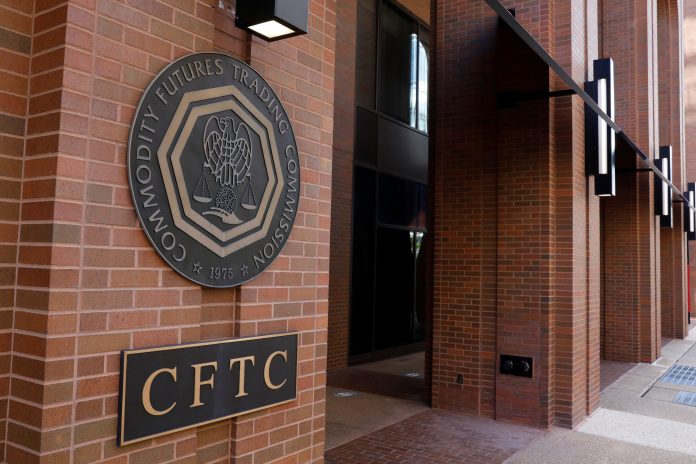
Signage is seen outside of the US Commodity Futures Trading Commission (CFTC) in Washington, D.C., U.S., August 30, 2020. REUTERS/Andrew Kelly

U.S. President Donald Trump has appointed Michael Selig as the new chair of the Commodity Futures Trading Commission (CFTC), underscoring the administration’s growing commitment to making the United States the global leader in digital assets.

Selig, who currently serves as chief counsel for the CFTC’s crypto task force, confirmed his appointment on Saturday in a post on X, saying he would “work tirelessly to facilitate well-functioning commodity markets, promote freedom, competition, and innovation, and help the President make the United States the Crypto Capital of the World.”

The appointment was first reported by Bloomberg News and later confirmed by an administration official and Selig himself. David Sacks, the White House artificial intelligence and crypto czar, also confirmed the move in a separate post on X, describing Selig as “deeply knowledgeable about financial markets and passionate about modernizing our regulatory approach in order to maintain America’s competitiveness in the digital asset era.”

Selig’s selection marks a turning point for the CFTC, the agency responsible for overseeing futures, options, and derivatives markets. His appointment signals Trump’s intent to reshape the regulatory landscape around cryptocurrency, aligning with his administration’s broader effort to reduce barriers for digital asset innovation and attract global crypto investment.

Before joining the CFTC in March 2025, Selig was a partner at the international law firm Willkie Farr & Gallagher. He has worked closely with Securities and Exchange Commission Chairman Paul Atkins, and is known in Washington for advocating a “light-touch” regulatory approach to blockchain and fintech startups.

A Shift in Crypto Policy Under Trump

The Trump administration has made cryptocurrency a central feature of its economic strategy, framing it as both an innovation engine and a matter of national competitiveness. Earlier this year, Trump signed into law the GENIUS Act and the CLARITY Act, both of which establish clearer rules for digital assets and distinguish between securities and commodities in the crypto space.

The GENIUS Act (Global Entrepreneurship and National Innovation in U.S. Systems) focuses on promoting blockchain infrastructure and creating tax incentives for crypto startups. The CLARITY Act, meanwhile, is designed to prevent regulatory overlap between the CFTC and SEC, which investors had long complained created uncertainty in the market.

The two laws have been widely welcomed by investors and crypto entrepreneurs, many of whom have praised the administration for its efforts to provide regulatory certainty after years of mixed signals from Washington.

Trump’s new CFTC pick comes after the collapse of an earlier nomination. The president had originally named Brian Quintenz, a former CFTC commissioner and crypto advocate, to head the agency. However, his nomination stalled amid opposition reportedly led by Tyler Winklevoss, co-founder of Gemini (GEMI.O), who was said to have lobbied the White House against the move. Quintenz later accused Winklevoss of using personal influence to derail his confirmation.

Selig’s appointment has largely been seen as a “safe yet ambitious” choice, given his policy expertise and his experience navigating both Washington’s bureaucracy and the private financial sector.

The CFTC is typically led by five commissioners, with the chair appointed by the president and confirmed by the Senate. Historically, the White House has maintained a bipartisan balance on the commission. Selig’s confirmation, which is expected to proceed without major opposition, will further cement Trump’s deregulatory tilt in the financial sector.

Crypto in the Trump Business Orbit

Cryptocurrency has become an increasingly visible feature of the Trump family’s business interests. Trump Media & Technology Group (DJT.O), which owns the social media platform Truth Social, has ties to several blockchain ventures. DT Marks DEFI LLC, an entity linked to the Trump family, holds nearly 38% of equity in the company controlling World Liberty Financial, a crypto venture that has recently drawn investor attention.

The president himself has launched digital tokens, and his wife, Melania Trump, has also released a series of themed crypto collectibles. These ventures have made the Trump brand a significant symbol in the political and commercial crypto ecosystem.

Selig’s leadership is expected to usher in a new era of regulatory modernization at the CFTC. It is believed that his appointment will likely accelerate the integration of blockchain technologies into traditional commodities markets, while streamlining compliance processes that have historically deterred startups from operating in the U.S.

The move could also reinforce investor confidence in the crypto industry, especially as global competition intensifies. The European Union’s Markets in Crypto-Assets (MiCA) regulation and China’s push into central bank digital currency (CBDC) frameworks have pressured Washington to define its own stance on digital finance.

Analysts say Selig’s confirmation would align the CFTC more closely with Trump’s vision of using digital assets to fuel U.S. economic competitiveness. However, some financial watchdogs have warned that loosening rules too quickly could expose markets to new forms of risk.