DD
MM
YYYY

PAGES

DD
MM
YYYY

spot_img

PAGES

Home Blog Page 25

Bitcoin Under Pressure as Oil Prices Surge and Inflation Fears Reignite

0

Brent crude’s climb above $90 per barrel has once again reminded global markets that geopolitics and energy remain deeply interconnected.

The escalation of conflict between the United States and Iran, coupled with disruptions to shipping through the Strait of Hormuz, has reignited fears of an energy shock similar to previous oil crises.

For investors and policymakers, the implications extend far beyond higher fuel prices, touching inflation expectations, monetary policy, and the outlook for risk assets such as Bitcoin.

The Strait of Hormuz is one of the world’s most critical energy chokepoints. Roughly a fifth of global oil supplies pass through the narrow waterway each day. Any military conflict or disruption in this region immediately raises concerns about supply shortages and transportation bottlenecks.

As reports emerged of shipping interruptions, traders rushed to price in a potential decline in oil availability, sending Brent crude sharply higher. Higher oil prices present a significant challenge for the global economy because energy costs influence almost every sector.

Transportation, manufacturing, food production, and logistics all become more expensive when crude prices surge. These rising costs eventually filter into consumer prices, creating renewed inflationary pressure at a time when many central banks believed they were beginning to win the battle against persistent inflation.

For the United States Federal Reserve, this development complicates the monetary policy outlook. Markets had increasingly anticipated that interest rates might remain stable or even begin easing if inflation continued to moderate.

A sustained rise in oil prices threatens to reverse that progress. If energy-driven inflation accelerates in the coming months, policymakers may be forced to consider another rate hike or maintain restrictive monetary conditions for longer than expected.

The prospect of tighter monetary policy is particularly problematic for risk assets. Higher interest rates increase borrowing costs, reduce liquidity, and make safer investments such as government bonds more attractive relative to speculative assets.

This environment typically creates headwinds for equities, technology stocks, and cryptocurrencies. Bitcoin, often described as digital gold, has struggled to maintain its recovery amid these macroeconomic uncertainties.

While some investors view Bitcoin as a hedge against inflation, its recent trading behavior has been more closely aligned with high-risk assets. During periods of rising interest rates and declining market liquidity, Bitcoin has frequently experienced significant volatility and downward pressure.

The current situation therefore presents a complex narrative for the cryptocurrency market. On one hand, persistent inflation and concerns about fiat currency purchasing power could strengthen the long-term investment case for Bitcoin as a scarce digital asset.

On the other hand, fears of additional Federal Reserve tightening could suppress investor appetite for speculative investments in the short term. Other cryptocurrencies face even greater challenges.

Altcoins, which generally exhibit higher volatility than Bitcoin, often suffer larger declines during periods of macroeconomic stress. A prolonged oil shock combined with tighter financial conditions could lead to further capital outflows from the broader digital asset market.

The rise of Brent crude above $90 serves as a reminder that global financial markets remain highly sensitive to geopolitical events. The US-Iran conflict is no longer merely a regional security issue; it has become a major macroeconomic factor influencing inflation expectations, central bank decisions, and investor sentiment worldwide.

For Bitcoin and other risk assets, the coming months may depend less on technological developments and more on the trajectory of oil prices and monetary policy. If energy markets stabilize, risk assets could regain momentum.

If disruptions in the Strait of Hormuz persist and inflation accelerates, investors may face another period of heightened volatility and economic uncertainty.

The New Security Architecture Emerging in the Gulf Region

0

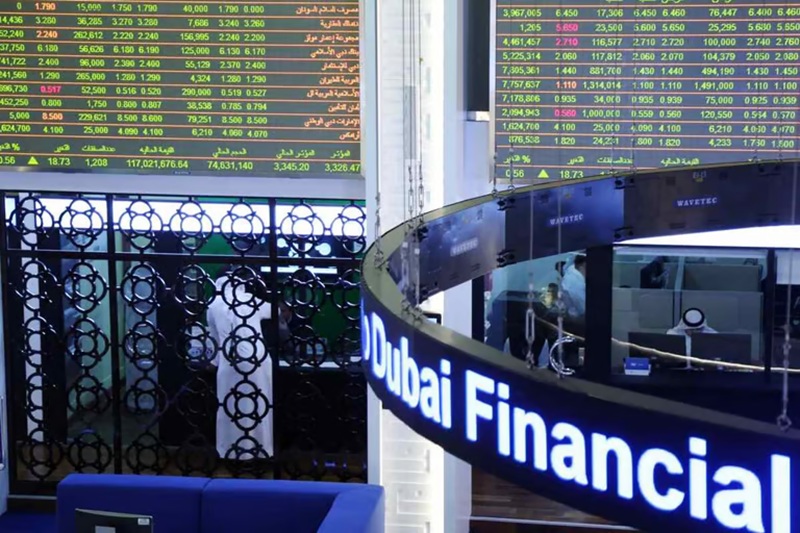
The recent conflict involving Iran has become a defining moment for the Gulf states, forcing regional leaders to reassess long-standing assumptions about security, alliances, and military preparedness.

For decades, Gulf Cooperation Council countries largely depended on external powers, particularly the United States, to guarantee regional stability. The war has demonstrated that modern conflicts are increasingly complex, multidimensional, and capable of disrupting economies far beyond the battlefield.

The lessons drawn from this confrontation are likely to shape Gulf security strategies for years to come. One of the most significant lessons is the vulnerability of critical infrastructure.

Attacks and threats against shipping routes, energy facilities, and communication networks revealed how exposed Gulf economies remain despite their military spending.

The temporary disruptions to maritime traffic through the Strait of Hormuz underscored the fact that energy-exporting nations can suffer immense economic consequences even without direct territorial invasion.

Gulf states are increasingly focusing on protecting strategic assets, enhancing resilience, and developing rapid-response capabilities. The role of external partners, especially the United States, will remain central but is also evolving.

Washington continues to be the primary security guarantor in the region through military bases, intelligence cooperation, and advanced defense systems. Yet Gulf leaders have become more aware that American involvement may not always be immediate or unconditional.

Shifting U.S. strategic priorities toward the Indo-Pacific and domestic political considerations have encouraged Gulf states to pursue a more diversified approach to security partnerships.

Regional countries are increasingly engaging with other global powers such as China, France, the United Kingdom, and India. These relationships are not necessarily intended to replace the United States but rather to complement existing partnerships and reduce strategic dependence on any single actor.

Future Gulf security architecture is therefore likely to become more multipolar. The conflict has also revived discussions about deeper regional defense cooperation among GCC members. Historically, political rivalries and differing threat perceptions limited meaningful military integration.

Recent events have highlighted the necessity of collective defense mechanisms. Shared intelligence platforms, integrated air defense systems, and coordinated maritime security initiatives are increasingly viewed as strategic imperatives.

A more unified Gulf defense posture could significantly improve deterrence capabilities. Joint command structures, interoperable military systems, and common procurement strategies would enable Gulf states to respond more effectively to regional threats.

While achieving full military integration remains challenging, the conflict has strengthened the argument that no individual state can effectively address emerging security risks alone.

Another transformative lesson concerns the growing importance of new military technologies. Drones, autonomous systems, cyber warfare, and artificial intelligence have fundamentally changed the nature of conflict in the Middle East.

Low-cost drones have demonstrated the ability to threaten highly valuable infrastructure and overwhelm traditional defense systems. Gulf states are rapidly investing in counter-drone technologies, electronic warfare capabilities, and advanced surveillance systems.

Artificial intelligence is also becoming central to defense planning through predictive analytics, autonomous monitoring systems, and enhanced intelligence gathering. Cybersecurity has emerged as another priority, as future conflicts are increasingly expected to target financial systems, energy grids, and digital infrastructure.

Gulf security after the war will likely be defined by a hybrid framework combining external partnerships, regional cooperation, and technological innovation. Rather than relying exclusively on foreign military guarantees, Gulf states appear to be moving toward a model of strategic autonomy supported by diversified alliances.

This emerging framework could include integrated missile defense networks, enhanced maritime security arrangements, greater intelligence sharing, and expanded diplomatic engagement aimed at preventing future escalation.

The conflict with Iran has reinforced a fundamental reality: security in the Gulf can no longer be measured solely by conventional military strength. Resilience, technological adaptation, and collective regional action will become the defining pillars of the Gulf’s post-war security order.

China’s New Mining Strategy Could Redefine Global Commodity Markets

0

On December 25, 2024, while the world was busy with the holidays, Beijing did something that many geopolitical analysts are still trying to assess.

A new state-owned firm, Guangyan International Investment Co., was quietly registered in Beijing, with 60 billion yuan (about $8.9 billion) in registered capital. The majority owner is China Minmetals Corp., one of China’s largest state-supervised minerals conglomerates, which holds a 71% stake.

It was created to line up, coordinate, and basically harmonize all Chinese overseas mining and metals investments under the direct “steering” of the National Development and Reform Commission (NDRC), widely regarded as China’s most powerful economic planning body.

For months, the company attracted little attention outside specialist circles. Then, in June 2026, Bloomberg revealed its broader strategic purpose. The announcement prompted analysts to reassess what could become one of the defining developments for global commodity markets in the years ahead, with ripple effects likely to be reflected across future economic calendar data.

What makes Guangyan different from a conventional holding company is its scope. It can co-invest alongside Chinese firms in overseas resource projects, provide regulatory and legal compliance support across jurisdictions, and shape industry-wide planning of outbound deals. 

In May 2026, the NDRC summoned major Chinese miners, including Zijin Mining Group, the country’s largest copper and gold producer, and steel giant China Baowu, to deliver a clear directive: large companies would receive government backing for overseas investments, while smaller, riskier players would face tighter controls.

More strikingly, the NDRC explicitly urged Chinese miners to enhance China’s influence over commodity prices on international markets, a directive that turns Guangyan from a financing vehicle into an instrument of global market power.

The scale of China’s existing advantage makes this institutional consolidation particularly significant. China accounts for about 60% of rare earth mining worldwide and over 90% of processing and refining capacity. It also produces roughly 93% of the world’s high-strength permanent rare earth magnets. In other words, it dominates nearly every stage of the supply chain.

Since 2023, Chinese firms have already invested more than $120 billion in overseas mining and mineral processing. The focus has been on lithium, copper, nickel, cobalt, and various rare earth elements.

Then there’s Africa, home to some of the world’s largest reserves of critical minerals. Chinese state-backed banks handed out $24.9 billion in Belt and Road Initiative mining loans in the first half of 2025 alone, already exceeding the total for all of 2024.

In the Democratic Republic of Congo, which supplies the majority of the world’s cobalt, Chinese state-owned companies control about 80% of total production. Also, half of the ten biggest cobalt mines in the world are owned by Chinese entities.

Ownership is only part of the strategy. In April 2025, Beijing imposed export restrictions on seven rare earth elements in retaliation for US tariffs, impacting supply chains for US stock screener leaders such as Tesla and Apple. By October 2025, those controls expanded to twelve elements and were modeled explicitly on the US foreign direct product rule, extending Chinese regulatory authority across global supply chains. 

The consequences were immediate: prices for controlled materials rose by as much as sixfold outside China, while European companies saw licensing approval rates fall below 25% in several sectors.

As of July 1, 2026, China’s new Outbound Investment Regulations (State Council Order No. 837) have further tightened central oversight of all overseas capital flows, creating a legal framework capable of unwinding foreign deals that conflict with national security interests.

Western responses exist: the US-Australia Critical Minerals Framework, NATO’s recognition of rare earths as essential to defense and security, the EU’s €350 billion Critical Raw Materials strategy. Yet the structural gap remains substantial.

Analysts estimate it will take five to seven years to build meaningful alternative processing capacity outside China. In May 2025, Lynas Rare Earths became the first non-Chinese company to produce commercial quantities of dysprosium oxide — a single element, in a single facility. 

China is not betting on individual mines. It is building a globally integrated critical minerals system spanning financing, diplomacy, refining, and pricing. By contrast, the West is still building individual projects. That asymmetry, more than any major export ban or investment deal, may prove to be the defining industrial story of the year.

Has Governor Ademola Adeleke Delivered on His 2022 Promises?

0

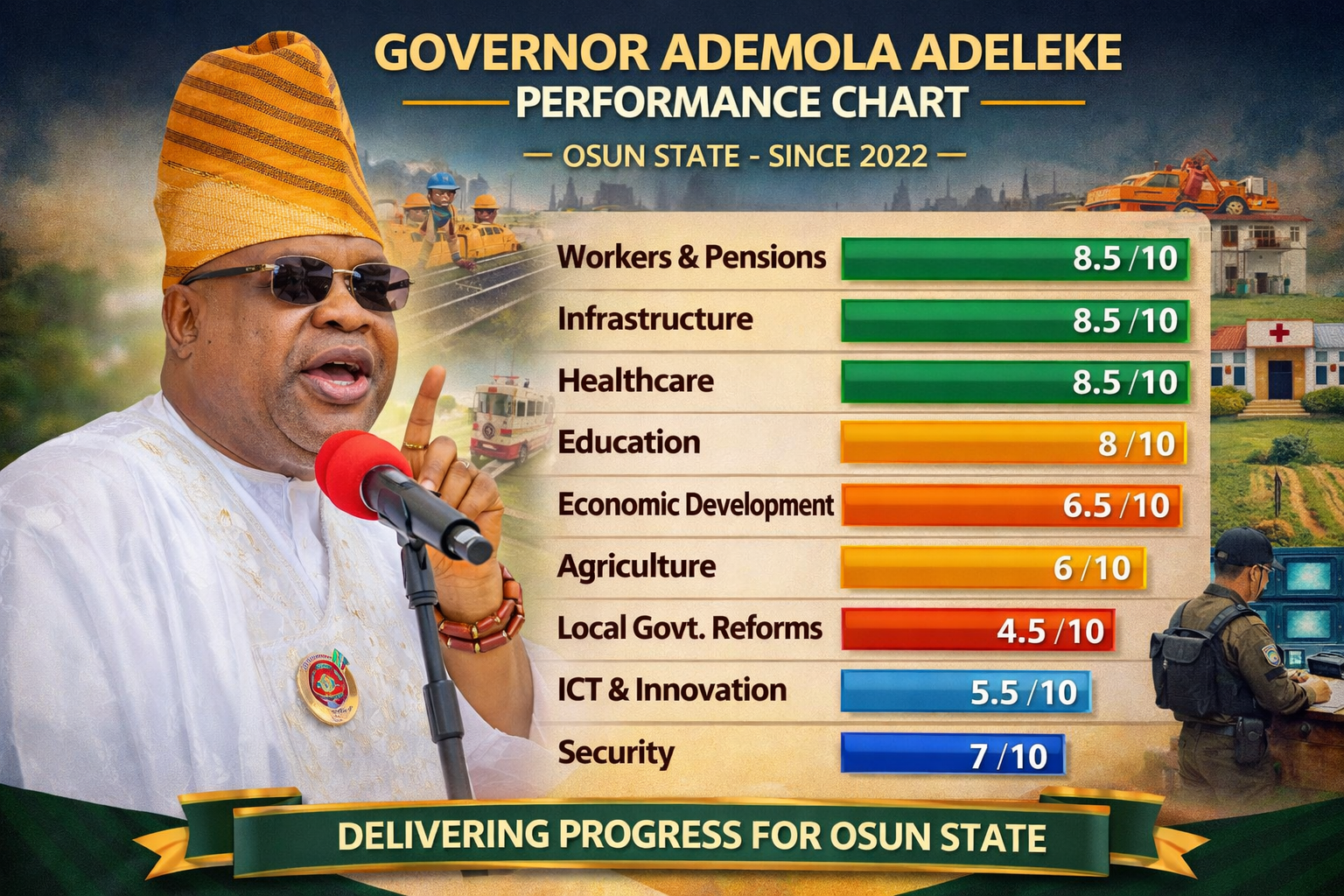
Has Governor Ademola Adeleke fulfilled the promises that earned him victory in 2022? Campaigns often generate ambitious pledges, but governance is ultimately judged by measurable outcomes rather than political rhetoric. In this piece, our analyst evaluate performance against campaign commitments, provides a more objective basis for assessing his administration using publicly available data from 2022 to 2026.

Governor Adeleke entered office with a governance agenda centred on improving workers’ welfare, rebuilding infrastructure, expanding access to healthcare and education, stimulating economic growth, strengthening agriculture, promoting digital innovation and restoring public confidence in government. Nearly four years into his administration, the record presents a picture of notable achievements alongside areas where expectations remain unmet.

Perhaps the administration’s strongest performance has been in public infrastructure. Road rehabilitation projects have been implemented across the state’s three senatorial districts, addressing roads that had deteriorated over many years. The government has also prioritised the completion of abandoned projects, signalling an intention to maximise previous public investments rather than initiating entirely new projects for political visibility. Rehabilitation of schools and primary healthcare facilities has similarly become one of the administration’s defining achievements, with numerous public facilities receiving upgrades that directly affect service delivery.

The administration has also earned recognition for improving the welfare of civil servants and pensioners. Prompt salary payments have become more consistent compared with previous years, while outstanding promotion issues and pension obligations have been addressed in phases. Recruitment exercises for teachers and healthcare workers have reduced staffing shortages in critical sectors. These interventions have helped rebuild confidence among public employees, who remain central to the effective delivery of government services.

Healthcare has emerged as another area of measurable progress. Investments in primary healthcare centres, medical equipment and health service accessibility reflect a deliberate effort to strengthen the foundation of healthcare delivery. Rather than focusing exclusively on urban hospitals, the administration has expanded attention to community based healthcare, which has the potential to improve health outcomes for rural populations where access to quality services has historically been limited.

Education reforms also demonstrate tangible progress. Beyond the recruitment of additional teachers, investments in school infrastructure have created a more conducive learning environment. Government officials have cited improvements in student performance indicators, although some of these claims would benefit from broader independent verification. Nevertheless, improvements in school facilities and teacher availability represent concrete outputs that are visible across many communities.

Economic development, however, presents a more mixed assessment. While the administration has pursued revenue reforms aimed at improving internally generated revenue and reducing financial leakages, the broader objective of transforming Osun into a more diversified and investment driven economy remains a work in progress. The state continues to rely significantly on federal allocations, making it vulnerable to fluctuations in national revenue. Large scale private sector investment and industrial expansion have not yet reached the level many expected during the campaign.

Agriculture illustrates a similar pattern. Government programmes have sought to support farmers and improve agricultural productivity, but the promised transformation towards agro industrialisation has progressed slowly. The establishment of processing industries capable of creating substantial employment opportunities remains limited. As a result, agriculture continues to contribute below its potential to economic growth and youth employment.

Digital transformation represents another area where implementation has lagged behind campaign expectations. Although the administration has expressed commitment to innovation and digital governance, progress in expanding technology infrastructure, promoting digital entrepreneurship and positioning Osun as a competitive digital economy has been modest. In an increasingly technology driven economy, this represents an opportunity that future policy priorities should address more aggressively.

The administration has also encountered significant challenges beyond its direct control. The prolonged political and legal disputes surrounding local government administration have complicated efforts to strengthen grassroots governance. These disputes have affected service delivery in some areas and illustrate how institutional conflicts can limit the implementation of campaign promises, regardless of executive intentions.

Security presents a relatively positive picture. Although Osun has avoided the widespread insecurity experienced in several neighbouring states, maintaining this stability requires continuous collaboration between state institutions, traditional rulers, community organisations and federal security agencies. The state’s comparatively peaceful environment remains an important advantage for economic and social development.

Kalshi’s World Cup Success Signals a New Era for Event Trading Platforms

0

The 2026 FIFA World Cup was not only a triumph for football but also a watershed moment for prediction markets.

Among the biggest winners off the pitch was Kalshi, the U.S.-based event trading platform, which reportedly added three million users during the tournament and generated more than $1.2 billion in trading volume on its World Cup winner market.

The figures highlight how major sporting events are increasingly becoming catalysts for financial innovation, blending entertainment, speculation, and technology into a single experience.

Kalshi’s success during the World Cup did not happen by accident. The company aggressively positioned itself at the intersection of sports fandom and financial markets.

Strategic partnerships with football organizations, high-profile stadium branding, and marketing campaigns featuring global icons such as Luka Modric and Jose Mourinho significantly expanded its visibility.

Football fans who may have never engaged with prediction markets before were introduced to the concept through familiar faces and environments. This approach mirrors the strategy employed by major sports betting companies over the past decade.

By embedding itself within the football ecosystem, Kalshi effectively transformed prediction markets from a niche financial product into a mainstream consumer experience. For millions of users, trading on World Cup outcomes became another way to engage with matches, much like fantasy sports or betting pools.

The company now faces its most difficult challenge: retention. Large sporting events often create temporary surges in user activity that quickly fade once the tournament concludes. The World Cup, with its emotional intensity and global audience, naturally drives extraordinary engagement.

But maintaining that momentum after the final whistle is considerably harder. The question facing Kalshi is whether users came for the platform itself or simply for the World Cup experience. If the majority of new participants viewed prediction contracts merely as entertainment during the tournament.

User activity could decline sharply in the coming months. To avoid this, Kalshi will need to broaden its appeal by offering compelling markets around politics, economics, technology, entertainment, and other major global events.

Prediction markets possess significant long-term potential because they tap into humanity’s natural desire to forecast outcomes. Elections, central bank decisions, corporate earnings, AI breakthroughs, and geopolitical developments all present opportunities for active trading.

If properly cultivated, these markets can become valuable information aggregators, often producing forecasts that rival traditional polling and expert analysis.

Yet growth is not solely dependent on user behavior. Regulation remains perhaps the biggest obstacle. U.S. regulators continue to debate whether sports-related event contracts constitute legitimate financial instruments or simply another form of sports betting.

The distinction is crucial. If regulators classify such products as gambling, platforms like Kalshi could face stricter oversight, licensing requirements, and limitations similar to those imposed on sportsbooks.

Supporters of prediction markets argue that these contracts serve broader economic and informational purposes. Market prices aggregate collective expectations and can provide real-time insights into probabilities surrounding important events.

Critics, contend that contracts tied to sports outcomes are functionally indistinguishable from traditional betting products. This regulatory uncertainty creates a difficult balancing act. Kalshi must continue innovating and attracting users while simultaneously defending its business model in legal and policy arenas.

The World Cup demonstrated that prediction markets can achieve mainstream appeal when paired with globally significant events. Three million new users and over $1.2 billion in trading volume represent a remarkable milestone for an industry that, until recently, remained largely on the fringes of finance.

Whether this moment becomes a lasting transformation or merely a temporary spike will depend on two factors: Kalshi’s ability to retain and diversify its user base, and regulators’ willingness to define prediction markets as a legitimate new asset class rather than a sophisticated form of gambling.

The post-World Cup period may ultimately determine not only Kalshi’s future but also the future of prediction markets in the United States.