DD
MM
YYYY

PAGES

DD
MM
YYYY

spot_img

PAGES

Home Blog Page 25

India’s Markets Reel as Iran War, Oil Shock, and Foreign Selloff Deliver Worst Fiscal Year Since Pandemic

0

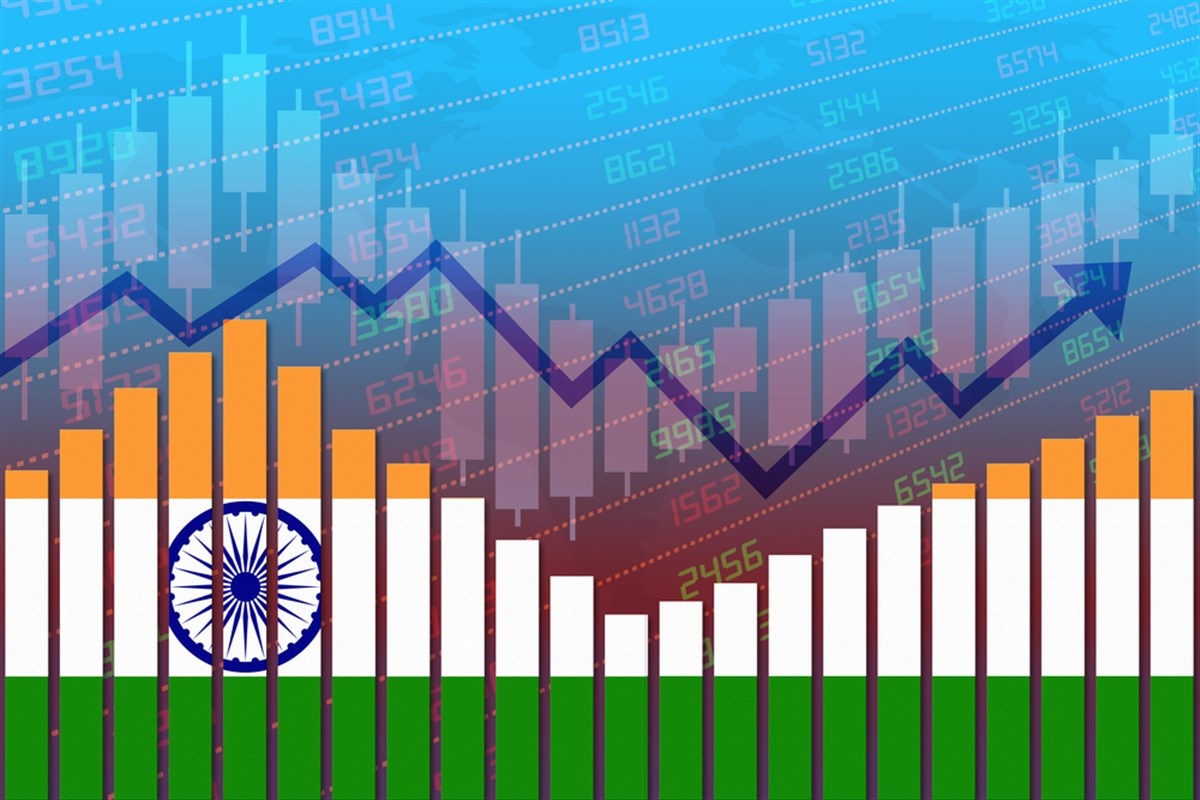
India’s financial markets closed the fiscal year on a deeply fragile note on Monday, with benchmark equities recording their weakest annual performance in six years as the widening Iran war, surging crude prices, and an unprecedented foreign investor exodus combined to batter sentiment across Dalal Street.

The benchmark Nifty 50 and Sensex ended the 2025-26 fiscal year down 5.1 per cent and 7.1 per cent, respectively, their poorest showing since the pandemic-driven rout of 2020. The selloff gathered pace toward year-end as the Middle East conflict pushed Brent crude above $115 a barrel, sending tremors through one of the world’s most oil-dependent major economies.

This is no longer merely a market correction. It is increasingly a macroeconomic stress event, with the war involving Iran now feeding directly into India’s inflation outlook, currency stability, fiscal arithmetic, and corporate earnings prospects.

India, the world’s third-largest crude importer, remains acutely exposed to geopolitical disruptions in West Asia. Nearly nine out of every 10 barrels consumed domestically are imported, meaning every escalation in the Gulf transmits almost immediately into higher import bills, a weaker rupee, and renewed inflationary pressure.

That vulnerability is now starkly visible.

The rupee has already fallen to successive record lows, while the benchmark 10-year bond yield climbed to 6.97 percent on Monday, its highest level since July 2024, reflecting investor concern that elevated oil prices may force the Reserve Bank of India to maintain a tighter monetary stance for longer.

“The bottom line is that the RBI’s cap does not change the underlying dynamics that fueled pressure on the currency,” analysts at Barclays said in a Monday note.

“The INR remains particularly vulnerable to an oil supply shock, while India’s balance of payments position may ?deteriorate further, and capital and ?financial account pressures are increasing.”

This means the Iran war is exerting pressure on India’s economy through multiple channels.

First is energy inflation. Higher crude prices raise transport and manufacturing costs across the board, from aviation fuel to fertilizer inputs and logistics. This threatens to reverse recent progress on price stability and could squeeze household consumption, already sensitive to food and fuel costs.

Second is the external account. A larger oil import bill worsens the current account deficit and intensifies demand for dollars, putting additional strain on the rupee. A weaker currency, in turn, makes imports more expensive, reinforcing imported inflation.

Third is investor confidence. Foreign portfolio investors pulled a record $19.69 billion from Indian equities during the fiscal year, one of the sharpest annual outflows on record, with March alone accounting for a substantial portion of the selloff.

This has left Indian equities underperforming most Asian and emerging market peers.

What makes the current shock particularly severe is that it comes on top of pre-existing pressures from U.S. tariffs, elevated Treasury yields, and structural concerns over the earnings outlook in the technology sector.

IT stocks, the second-heaviest segment on the benchmarks and a traditional driver of foreign inflows, fell 21.2 per cent over the fiscal year. Major names such as Tata Consultancy Services, Wipro, and Infosys ranked among the worst performers as concerns mounted over softer U.S. enterprise spending and the disruptive impact of generative AI on the outsourcing model that underpins India’s software export engine.

This is where the economic consequences of the Iran war extend beyond oil.

As global investors de-risk portfolios amid war fears, capital is flowing toward perceived safe havens such as U.S. bonds and away from emerging markets. For India, that means the conflict is amplifying existing capital market fragilities rather than creating them in isolation.

The result is a cascading effect: weaker equities, currency depreciation, rising bond yields, and deteriorating business confidence.

Analysts warn that if the conflict drags on and shipping routes near the Strait of Hormuz or Red Sea face further disruption, the implications for India could be severe. A sustained crude price above $110 to $120 per barrel would likely pressure corporate margins, complicate fiscal management, and potentially force revisions to growth forecasts for the new fiscal year.

“A prolonged Iran war is going to be a catastrophic event, because of India’s dependence on crude… that’s a real concern going into the new fiscal year,” said Vivek Shukla, regional head ?at Emkay Global Financial Services in Bengaluru.

However, pockets of resilience have emerged. Defense and metals stocks offered rare bright spots. Bharat Electronics rose 33 per cent on strong earnings and continued policy support for defense indigenization, while Hindalco Industries gained 30 per cent amid stronger global metal prices and firm operational performance.

Their gains underscore a broader shift now underway in investor positioning: away from growth-sensitive sectors such as IT and consumer names, and toward industries seen as beneficiaries of geopolitical realignment and commodity tightness.

“Gen AI differs from past tech transitions on two counts, one, it hits at (the) core of Indian IT and two, expands competition beyond IT services to software/Gen AI natives,” Ashwin Mehta of Ambit Institutional Equities said.

“A 15%-20% revenue deflation is quite possible over three-five years.”

The bigger story, however, remains the macro fallout from the Iran war. Like many economies across Asia and Europe, India is now paying the economic cost of a conflict beyond its borders. But because of its heavy energy import dependence, those costs are magnified.

What is unfolding is a reminder that for large import-driven economies, wars in energy-producing regions do not remain distant geopolitical events. They rapidly become domestic economic crises, visible in fuel prices, stock indices, exchange rates, and bond markets.

Ethereum Foundation Stakes 22,517 ETH Via the Treasury’s Multisignature Wallet 

0

The Ethereum Foundation (EF) has staked 22,517 ETH, worth approximately $46–46.25 million at current prices around $2,050–2,075 per ETH, in its largest single-day deposit to date.

This occurred via the treasury’s multisignature wallet, split across 11 deposits of roughly 2,047 ETH each into the Ethereum Beacon Chain deposit contract. On-chain trackers like Arkham Intelligence flagged the activity. This move accelerates the EF’s announced plan started in February 2026 to stake up to ~70,000 ETH total from its treasury.

The goal: generate staking rewards projected ~1,900–2,200 ETH annually at current yields to fund protocol research, grants, and operations—replacing the previous practice of selling ETH, which often created sell pressure in the market. It follows recent treasury activity, including a BitMine sale that freed up capital.

The EF is using open-source validator tools from Attestant for solo/distributed staking. Ethereum’s total staked ETH already exceeds 30–38 million ~30%+ of supply, bolstering network security in its proof-of-stake model. The EF is putting significant “skin in the game” by locking up capital long-term rather than liquidating.

This reduces potential circulating supply and demonstrates confidence in ETH’s future. Moves away from sell-to-fund toward a self-sustaining yield model, which many in the community view positively as it aligns incentives better with holders. No major immediate market reaction: It’s a known strategy extension, not a surprise, though it adds to on-chain commitment narratives.

ETH price has been hovering in the low $2,000s recently amid broader market dynamics. This staking doesn’t unlock new ETH or change fundamentals dramatically but reinforces the Foundation’s alignment with the network it stewards.

The EF holds approximately 147,000–172,650 ETH in its main treasury reserves plus additional ~10,000 WETH. Earlier 2026 figures often cited ~172,650 ETH ~$315M at then-prevailing prices. More recent references around the latest staking activity point to ~147,400 ETH remaining after prior movements/sales.

One tracker showed a high of ~244k ETH earlier, but the active deployable treasury has trended in the 147k–173k range. At current ETH prices ~$2,050–2,075, the core treasury is valued in the $300–360 million range, depending on the exact snapshot. The primary treasury multisig often tracked via Arkham as the 0xc06… or similar addresses manages these funds.

A portion is held in liquid or operational wallets, while another is designated for long-term or locked use. Stake up to ~70,000 ETH from the treasury to generate native ETH yield for funding operations like research, grants, development instead of selling ETH and creating sell pressure.

Started February 24, 2026, with an initial ~2,016–2,106 ETH deposit. Largest single-day deposit of 22,517 ETH ~$46M across multiple ~2,047 ETH transactions into the Beacon Chain deposit contract as been recorded today, this accelerates the rollout. At current staking rates ~2.8–3.1%, the full 70k ETH position is expected to generate 1,900–2,200 ETH annually roughly $4–4.5M at current prices, recycled back into the treasury.

Uses open-source tools like Dirk for distributed signing, Vouch for validator management with diverse client pairings for security and decentralization. No reliance on centralized providers. This shift aligns with the EF’s June 2025 Treasury Policy, emphasizing sustainability, reduced opex targeting a drop toward 5% annual spending by 2030, and alignment with Ethereum’s proof-of-stake model.

WETH: Additional ~10,000+ WETH, which can be easily converted or used in DeFi. Fiat buffer: Not publicly detailed in real-time, but the policy maintains liquidity for operations alongside crypto holdings. Overall approach move away from passive holding or frequent ETH sales toward yield generation. Rewards fund public goods without diluting circulating supply pressure.

The EF also holds some other tokens or investments historically, but ETH dominates, >99% of on-chain value in tracked wallets. Holdings are trackable via Arkham Intelligence and Etherscan for key multisigs. Recent large deposits were flagged publicly via on-chain monitors. The staking reduces the need for sell-to-fund tactics, which previously sometimes weighed on ETH price.

It demonstrates long-term conviction: locking significant capital while contributing to network security; total staked ETH network-wide is now over 34 million. Remaining unstaked ETH provides runway and flexibility. The foundation has conducted occasional sales and transfers to entities like BitMine but staking is now the primary deployment mechanism for a large chunk.

Note that exact figures fluctuate with transfers, staking activations, and market prices—always verify live via Arkham or Etherscan for the latest. The “0xde0…” or treasury multisig wallets are commonly referenced for major moves.

DeepSeek Suffers Longest Outage Yet, Raises Questions Over Scale, Reliability, and the Race for V4

0

China’s fast-rising artificial intelligence startup DeepSeek suffered its longest service disruption yet on Monday, a seven-hour outage that rippled across offices, developer communities, and social platforms.

This outage exposed the growing dependence of hundreds of millions of users on generative AI tools and sharpened focus on the company’s delayed next-generation model.

According to the company’s official status page, the outage lasted 7 hours and 13 minutes, stretching from the early hours of Monday until 10:33 a.m. local time, when the incident was finally marked resolved. The disruption is the most prolonged recorded failure of DeepSeek’s consumer-facing chatbot since the breakout success of its R1 and V3 models last year.

The outage was significant not simply because of its duration, but because it struck at a moment when DeepSeek has become embedded in everyday work routines across China and beyond. Users rely on the platform for drafting emails, preparing proposals, writing code, summarizing documents, and conducting research, making even a few hours of downtime operationally costly.

Chinese social media platforms were inundated with complaints as the service went dark. One widely shared post on Xiaohongshu captured the mood succinctly: “Only after DeepSeek went down did I realize I no longer knew how to work without it.”

That remark speaks to a broader reality in the AI economy: generative tools are no longer novelty products. They are increasingly becoming workplace infrastructure.

DeepSeek’s user base, estimated at more than 355 million as of February, means the outage likely affected a massive volume of consumer and enterprise workflows simultaneously. At that scale, a technical disruption becomes a business story, not merely a software incident.

The company has not disclosed the cause, adhering to its standard incident protocol. But the timeline suggests a more complex failure than a routine frontend glitch.

Reports indicate users first began experiencing problems late Sunday evening. An initial fix appeared to restore service temporarily, only for fresh performance issues to emerge hours later before the final resolution on Monday morning.

That multi-wave sequence points to deeper backend instability, potentially involving inference servers, load balancing, storage layers, or deployment rollback issues. In hyperscale AI systems, outages of this nature can stem from failed model-serving updates, GPU cluster overloads, memory bottlenecks, or cascading failures in distributed orchestration systems.

The timing has inevitably intensified speculation around DeepSeek V4, the long-anticipated successor to the models that propelled the Hangzhou-based startup into the global AI spotlight.

For weeks, the industry has been waiting for signs of a new flagship release. Yet DeepSeek has remained notably silent, even as rivals such as Zhipu AI, MiniMax, and Moonshot AI have launched increasingly sophisticated models and multimodal capabilities.

This matters strategically.

DeepSeek’s early advantage was built on performance, accessibility, and rapid adoption. But in China’s increasingly crowded AI race, market leadership now depends just as much on infrastructure reliability and product cadence as on benchmark scores.

A prolonged outage at a time of delayed product expectations risks feeding the perception that rivals are beginning to outpace it.

There is also a competitive capital-markets dimension to the story. Reliability is increasingly a proxy for enterprise readiness. Large clients choosing between foundational models for internal deployment will weigh uptime and stability as heavily as raw model intelligence.

In that sense, Monday’s disruption lands at a sensitive moment. The company’s rivals are making visible performance gains, while global attention remains fixed on whether DeepSeek can deliver a meaningful leap with V4. Any suggestion of infrastructure strain inevitably feeds market speculation that backend systems are being reconfigured for a major rollout, though no evidence currently supports that conclusion.

This is not the first major interruption the company has faced. Shortly after the release of R1 last year, DeepSeek disclosed that it had been hit by “large-scale malicious attacks”, widely understood to be distributed denial-of-service attacks aimed at overwhelming its servers during the height of its viral rise.

But Monday’s outage appears different in character. Unlike an external traffic flood, this incident appears to have affected the core web and app interface in a sustained manner, with multiple attempted fixes before full restoration. That pattern suggests either an internal deployment issue or infrastructure stress linked to scale.

For a platform whose value proposition increasingly rests on becoming indispensable to work and productivity, the incident brings to the fore that operational resilience has become central to the AI race.

The bigger story, then, is not merely that DeepSeek went down. It is that a seven-hour blackout has revealed how deeply AI systems are now woven into daily economic activity and how quickly reliability issues can translate into reputational and competitive pressure.

A Look into CoinShares Weekly Digital Asset Fund Flows Report 

0

According to the latest CoinShares weekly digital asset fund flows report, investment products tracking cryptocurrencies recorded $414 million in net outflows for the week ending March 27, 2026. This marked the first weekly outflow in five weeks, ending a streak of inflows that totaled about $2.2 billion.

Ethereum (ETH) led the outflows with approximately $222 million withdrawn, pushing its year-to-date flows into negative territory around -$273 million. Bitcoin (BTC) saw $194 million in outflows, though it remains strongly positive year-to-date roughly +$964 million.

XRP was a notable exception, attracting modest inflows while most other assets saw red. Spot Bitcoin ETFs specifically posted around $296 million in outflows, snapping a prior four-week inflow streak. Total assets under management (AUM) across these products fell to about $129 billion, a level last seen in early February 2026.

The United States dominated the outflows, with roughly $445 million withdrawn. Switzerland saw minor outflows ~$4 million, while some smaller inflows appeared in Germany and Canada in certain reports. Analysts attribute the reversal primarily to: Escalating geopolitical tensions, particularly fears around the Iran conflict and related market volatility.

Shifting Federal Reserve expectations: Markets moved away from anticipated rate cuts toward a more hawkish stance or even potential rate hikes at the June FOMC meeting amid persistent inflation concerns. This weighed on risk assets broadly. A general rise in caution among investors, with the Crypto Fear & Greed Index hovering in Fear territory around 27 as Bitcoin traded near $67,000–$68,000 during the period.

This comes after a period of resilience in crypto fund flows despite earlier macro and geopolitical noise. Note that early data for the current week has shown some partial recovery in spot Bitcoin ETF inflows in certain reports ~$414 million mentioned in isolated early-week snapshots, but the overall sentiment remains cautious amid ongoing uncertainty.

The Federal Reserve’s target range for the federal funds rate remains at 3.50%–3.75%, unchanged since the FOMC’s March 17–18 meeting. The committee voted to hold steady, describing policy as appropriately balanced amid solid economic growth, a resilient labor market, and inflation that has been sticky above the 2% target—recently complicated by geopolitical shocks.

The Fed’s Summary of Economic Projections showed a hawkish tilt compared to December 2025: Median forecast for end-2026: 3.4% unchanged, implying one 25bp cut sometime in 2026, most likely late in the year. Only 5 of 19 officials now see two or more cuts, down sharply from 8 previously. A majority expect zero or one cut for the full year.

Median for end-2027 at ~3.1%; longer-run neutral rate raised slightly to 3.0%. Officials nudged up near-term PCE inflation forecasts due to energy price spikes, but still see it trending toward 2% over time if the economy cooperates. This reflects greater caution: the Fed is data-dependent and not rushing to ease. Interest-rate futures as of late March 2026 align closely with the Fed but show even more uncertainty: Near-term (April/June meetings): Overwhelming probability of no change typically 80–99% for the next few meetings.

Full-year 2026: Roughly consistent with one 25bp cut by year-end; implied rate around 3.25%–3.50%, but the probability of zero cuts or even a modest hike has risen sharply. Odds of at least one hike by December climbed to ~25% by mid-March and briefly exceeded 50% in some snapshots late last week—driven by oil price volatility. Traders are pricing in a wider range of outcomes than the Fed’s median dot.

February CPI held steady at 2.4% y/y and ~2.5% core—better than feared but still elevated. However, the Fed’s preferred PCE gauge showed core at 3.1% in January. Energy costs from the Iran conflict are expected to push both measures higher in Q2–Q3. Surging oil prices have raised near-term inflation risks. Powell noted it is too soon to know the full scope but acknowledged upside risks to inflation and thus to rates.

He explicitly said a rate hike is not off the table if pressures persist—though not the base case. Solid expansion and job gains continue, but risks are to the downside for employment favoring potential cuts versus to the upside for inflation favoring holds or hikes. Powell described the situation as difficult and on the higher borderline of restrictive.

In the post-meeting press conference, he emphasized patience: If we don’t see that progress on inflation, then you won’t see the rate cut. The committee discussed hikes as a contingency but still sees the path as neutral-to-easing over time. Incoming data: March CPI due mid-April, Q1 GDP, and ongoing oil price trends will be pivotal.

Persistent core services inflation + energy shock has delayed the cutting cycle that began with three 25bp cuts in late 2025. In short, Fed rate expectations have shifted from a couple of cuts likely in 2026 to one cut at most, with meaningful odds of none—or even a hike if inflation doesn’t cooperate.

This hawkish pivot away from aggressive easing has weighed on risk assets broadly, including the recent crypto fund outflows you mentioned earlier, as higher-for-longer or even higher rates reduce appetite for speculative investments. Markets will remain highly sensitive to every inflation print and oil price move in the coming weeks.

Fund flow data like this from CoinShares is a useful proxy for institutional and professional investor sentiment, though it doesn’t capture all on-chain or retail activity. Crypto markets remain highly sensitive to macro developments right now.

Houthi (Ansar Allah) Officially Enters Ongoing US-Israel Conflict Against Iran, Pakistan to Host Talks between the United States and Iran

0

The Houthis (Ansar Allah), the Iran-backed militant group controlling much of northern Yemen, have played a supporting role as part of Iran’s Axis of Resistance. They officially entered the 2026 Iran war on or around March 28, 2026—about one month into the conflict—by launching attacks on Israel.

Houthi Actions in the Current Conflict

Missile and drone strikes on Israel: On March 28–29, the Houthis claimed responsibility for firing ballistic missiles at sensitive military sites in southern Israel near Beersheva and Eilat areas. They followed up with cruise missiles and drones.

Israel intercepted the initial ballistic missile and subsequent threats; no major damage or casualties were reported from these specific launches. Houthi spokesman Yahya Saree described it as their first military operation in support of Iran, Lebanon, Iraq, and Palestinian groups, vowing continued actions until aggression against Iran and allies ends.

The group has warned of resuming attacks on shipping in the Red Sea and Bab el-Mandeb Strait, potentially disrupting global trade routes as they did extensively in 2023–2025 against vessels linked to Israel. Analysts note this could complement Iran’s efforts in the Strait of Hormuz by creating a dual-chokepoint pressure on maritime traffic.

Rhetoric from Houthi leaders and observers suggests they are positioned to target Saudi infrastructure, UAE sites, or Western military bases in the region more effectively than direct Iranian launches in some scenarios. However, as of late March 2026, their confirmed actions have focused on Israel rather than direct involvement in the Prince Sultan Air Base strike which was carried out by Iran itself.

The Houthis had largely stayed on the sidelines earlier in the war following a fragile ceasefire dynamic with Israel tied to Gaza developments in late 2025, but escalated in solidarity as Israeli/U.S. operations against Iran intensified. As one of Iran’s most capable non-state allies alongside Hezbollah in Lebanon, the Houthis provide asymmetric options. Their long-range missiles and drones often Iranian-supplied or designed allow strikes from Yemen that force Israel and coalition partners to expend air defenses, munitions, and intelligence resources.

This helps deplete stockpiles and stretches defensive lines without requiring direct Iranian involvement in every theater. Red Sea shipping disruption: Their prior campaign involved over 100 attacks on merchant vessels, sinking some and raising insurance costs dramatically. Re-entering this could economically pressure the U.S., Israel, and allies by affecting energy and goods flows.

Houthi reach is constrained by distance, Israeli and Saudi air defenses, and U.S. naval presence in the region. Many of their projectiles have been intercepted in past rounds. Saudi Arabia has historically responded forcefully to Houthi cross-border attacks during the Yemen civil war.

Houthi involvement widens the war geographically and complicates de-escalation. It risks drawing in more actors and escalates economic ripple effects through shipping and oil markets. U.S. officials and analysts view it as Iran leveraging proxies to maintain pressure while facing direct strikes on its territory and leadership.

No direct Houthi link has been publicly confirmed to the recent Iranian missile/drone attack on Prince Sultan Air Base in Saudi Arabia which wounded 10–15 U.S. troops and damaged aircraft. That was attributed to Iran proper. However, the timing of Houthi strikes on Israel has coincided with Iran’s retaliatory actions, contributing to the sense of a multi-front escalation.

The situation remains fluid. Houthi statements emphasize solidarity with Iran, while their actual operational tempo will depend on Iranian guidance, their own capabilities, and responses from Israel, the U.S., and Gulf states.

Pakistan to Host Talks between the United States and Iran in the Coming Days

Pakistan has announced it will host talks between the United States and Iran in the coming days, as part of regional efforts to de-escalate the ongoing month-long war involving US and Israeli actions against Iran.

Pakistani Foreign Minister Ishaq Dar made the statement on March 29, 2026, following a meeting in Islamabad with top diplomats from Türkiye, Egypt, and Saudi Arabia. He said: Pakistan is very happy that both Iran and the U.S. have expressed their confidence in Pakistan to facilitate the talks. Pakistan will be honored to host and facilitate meaningful talks between the two sides in the coming days for a comprehensive settlement.

The meeting focused on ways to end the conflict early and permanently, including potential direct or indirect US-Iran discussions in Islamabad. The diplomats are expected to meet again on March 30. Pakistani Prime Minister Shehbaz Sharif has publicly stated that Islamabad stands ready and honoured to host if both sides agree, and Pakistan has been quietly relaying messages between the parties.

Pakistan maintains relatively good ties with the US under President Trump, Iran, and Gulf states, positioning it as a potential neutral facilitator. No immediate confirmation or detailed response has come from Washington or Tehran about attending specific talks in Pakistan. President Trump has suggested a deal could be reached soon and that talks are progressing, while the US has deployed additional forces including Marines to the region and issued proposals like a 15-point framework for de-escalation.

Iran has shown skepticism, with officials dismissing some negotiations as cover for military plans and issuing strong warnings. Tehran has eased some restrictions on shipping through the Strait of Hormuz allowing more vessels but maintains a firm stance against perceived coercion. Iranian-backed groups like the Houthis have also become involved, raising risks to Red Sea shipping.

The conflict, now in its second month, has disrupted global energy markets, shipping through key chokepoints like Strait of Hormuz and potentially Bab el-Mandeb, and caused significant casualties and regional spillover including actions involving Israel, Lebanon, and Gulf states.

Analysts note wide gaps between the sides, with limited prospects for full normalization but possible pathways toward a ceasefire or temporary de-escalation. Pakistan’s move reflects its interest in regional stability and its role as a diplomatic bridge. Whether the talks materialize—and in what format—remains uncertain, with the situation fluid amid ongoing military posturing and parallel diplomatic channels.

Pakistan has a notable, though often understated, history of acting as a backchannel facilitator and occasional mediator in major international and regional conflicts. Its geographic position—bridging South Asia, Central Asia, and the Middle East—combined with relationships across rival powers including the US, China, Iran, Saudi Arabia, and Afghan factions has enabled it to play this role repeatedly, even as it faces its own domestic and border challenges.

Then-President General Yahya Khan facilitated secret backchannel contacts between the United States and China. This paved the way for US President Richard Nixon’s historic 1972 visit to Beijing and the eventual normalization of US-China diplomatic ties in 1979. This remains one of Pakistan’s most celebrated diplomatic contributions during the Cold War.

As a frontline state after the 1979 Soviet invasion of Afghanistan, Pakistan served as a key interlocutor. It channeled US, Saudi, and Chinese support to the Afghan mujahideen while participating in UN-brokered negotiations. These efforts contributed to the 1988 Geneva Accords, which facilitated the Soviet troop withdrawal.

Pakistan has long maintained influence over Afghan Taliban factions. In 2015, it hosted the first acknowledged direct talks between the Afghan government and the Taliban in Murree with US and Chinese observers. More significantly, Pakistan facilitated contacts that supported the US-Taliban negotiations, culminating in the 2020 Doha Agreement.

This deal set the stage for the US-led NATO withdrawal and the Taliban’s return to power in 2021. Islamabad has also hosted or supported intra-Afghan dialogues over the years. Outcomes will depend on responses from the US and Iran, as well as continued regional coordination.