DD
MM
YYYY

PAGES

DD
MM
YYYY

spot_img

PAGES

Home Blog Page 25

The Amazon’s Grand Unification in Nigeria

1

The news is in: Nigeria has issued seven-year satellite permits to Amazon’s low-Earth-orbit broadband network, Amazon LEO (formerly Project Kuiper), expanding the frontier of space-based internet competition as the nation races to close its deep digital access gap. Beginning in February, Amazon will operate alongside Elon Musk’s SpaceX Starlink, whose footprint in Nigeria has grown rapidly since its 2023 debut.

In 2020, I wrote that Amazon was laying the foundation for a new technological order: “Amazon begins a new tech wave—spending $10 billion to deliver internet from space and possibly disintermediate current telcos by bundling cloud hosting, digital commerce, and broadband. With a small device, your AWS could run through Amazon’s pipes instead of MTN or 9mobile. And Amazon Prime movies, music, etc., would be meter-free because Amazon becomes the network carrier.”

That future is now at our doorstep. As satellite broadband hits maturity, Africans will confront a new decision matrix:

Do I use Elon Musk’s Starlink, which delivers pure internet OR Amazon’s broadband, which delivers internet plus Prime Video, music, games, Champions League*, cloud hosting, and possibly more, all unmetered within Amazon’s ecosystem?

That, Good People, is the grand unification playbook: bundling connectivity, content, cloud, and commerce into one pipeline. It is Amazon’s integrated stack meeting Nigeria’s digital ambitions.

And that is why this license matters: it is not just another satellite approval; it is the beginning of a new competitive frontier where broadband becomes the gateway into an entire digital civilization. A really big gateway!

In finality, if Amazon secures broadcast rights for the Champions League, major European football, and the NBA, Elon Musk will not enjoy an automatic slam-dunk victory in Nigeria, or across Africa’s satellite broadband arena. The contest will shift from pure connectivity to connectivity plus content, and in that battleground, Amazon becomes a formidable force.

ZKP Crypto, Bitcoin, Ethereum, and Solana: Which Is the Best Crypto for Long Term Gains?

0

The largest gains in crypto often don’t come from what’s trending today, they come from early access and structural advantage. With Bitcoin hovering just below $97,000 and Ethereum and Solana holding key levels, the broader market is beginning to stir. But for long-term positioning, it’s not just price that matters, it’s access, architecture, and timing.

This list breaks down leading names that combine strong technical setups with sustainable fundamentals. From dominant platforms like Ethereum and Bitcoin to rising infrastructure plays like Solana and BNB, each has its place. But only one, Zero Knowledge Proof (ZKP), offers a live, rules-based presale with 100x to 10,000x modeled upside based purely on how and when buyers participate.

If you’re trying to determine the best crypto for long term positioning in 2026, this breakdown highlights the key opportunities, and the project that may still be flying under the radar.

Zero Knowledge Proof (ZKP): Timing-Weighted Access Could Define Future ROI

Zero Knowledge Proof (ZKP) introduces a 450-day auction format that deliberately avoids the capital concentration seen in typical token launches. Rather than letting large contributors dominate, ZKP levels the field with structural constraints:

  • Daily contribution cap of $50,000 per wallet
  • No private rounds, discounts, or early unlocks
  • Price discovery resets every 24 hours
  • Participation advantage based on entry timing, not contribution size

The result is a system where every participant has the same rules, and early buyers benefit from lower daily competition. This model rewards consistency and discipline. And because the network, infrastructure, and reward mechanics are already live, Zero Knowledge Proof (ZKP) removes the usual delay between buying and mainnet deployment.

Historically, outsized returns in crypto have come from projects that provide early access without insider distortion. Analysts reviewing long-duration auctions like ZKP’s have modeled return potential ranging from 100x to as high as 10,000x, depending on entry point, adoption, and market momentum.

ZKP isn’t trying to replicate Bitcoin or Ethereum. It’s building a system where capital discipline drives outcomes. For those seeking the best crypto for long term value, especially during presale phases, ZKP stands out as structurally unique.

Bitcoin (BTC): Macro Tailwinds Reinforce a Long-Term Store of Value

Bitcoin remains a central force in the crypto market, currently trading near $95,610 and recently touching $97,000 for the first time in two months. While its movements may seem modest compared to more volatile assets, Bitcoin’s appeal lies in its macro alignment.

Key drivers for BTC include:

  • Moderating inflation across key economies
  • Continued institutional accumulation via spot ETFs
  • Clearer U.S. policy frameworks, including the Digital Asset Market Clarity Act
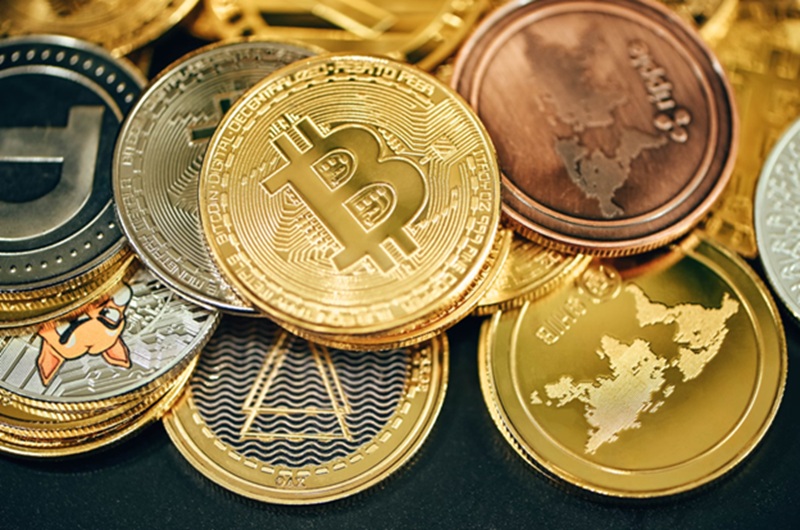
Bitcoin continues to operate as a long-term hedge against macro uncertainty. As traditional financial institutions gain more access through regulated investment vehicles, BTC’s role as digital gold only strengthens.

Forecasts suggest price targets ranging between $100,000 and $200,000 during the next cycle, depending on central bank policy and ETF-driven inflows. While Bitcoin may not deliver 100x returns from current levels, it remains among the best crypto for long term portfolio inclusion due to its liquidity, security, and institutional interest.

Ethereum (ETH): A Layer-1 Powerhouse Evolving Through Layer-2 Growth

Ethereum is currently consolidating near $3,307, with technical resistance around $3,350. While short-term price movements remain steady, Ethereum’s strength lies in long-term infrastructure positioning.

Three critical trends support its growth:

  • Layer-2 solutions such as Arbitrum and Optimism are scaling transaction volume
  • ETH’s burn rate continues to reduce total supply
  • Staking adoption remains high across validators and liquid staking protocols

As the foundation for most of DeFi, NFTs, and tokenized real-world assets, Ethereum maintains a central role in blockchain infrastructure. Its ongoing upgrades aim to optimize performance while preserving decentralization.

Ethereum doesn’t have the headline velocity of newer projects, but it offers durable, real-world usage. As its scaling roadmap progresses, many analysts still see room for 10x to 50x growth over a multi-year horizon. For those focused on smart contract platforms, Ethereum remains one of the best crypto assets for long term positioning.

Solana (SOL): High-Speed Ecosystem That Rewards Volatility Exposure

Solana is holding around $143, with minor pullbacks following a strong recent run. While short-term fluctuations continue, Solana’s long-term prospects remain tied to its performance advantage.

Why Solana still matters:

  • Near-zero transaction fees
  • High-speed throughput with low latency
  • Expanding developer base across DeFi, gaming, and NFTs

Solana tends to outperform in high-volatility environments. It attracts both retail and institutional players looking for faster networks without high gas costs. As app usage and total value locked (TVL) continue to climb, its upside grows accordingly.

Among Layer-1 chains, Solana remains a higher-beta play. If capital rotation continues into risk-on segments of the market, SOL could show strong outperformance. For growth-focused buyers, it still ranks among the best crypto for long term asymmetric returns.

Binance Coin (BNB): Real Utility Drives Renewed Momentum

BNB is gaining traction again, trading volume is up, and integration across major exchanges continues to increase. With Coinbase now supporting BNB, its exposure is widening beyond the Binance ecosystem.

What supports long-term value for BNB:

  • Trading fee discounts across Binance platforms
  • Launchpad access for early-stage token offerings
  • On-chain utility across BNB Chain and DeFi projects

While BNB isn’t a base-layer smart contract platform like ETH or SOL, it leverages ecosystem synergies and centralized scale effectively. In bull cycles, that combination often leads to aggressive upside.

For those looking for long-term exposure tied to exchange growth and token utility, BNB remains one of the best crypto coins to hold. It captures value from both platform activity and broader crypto adoption.
Cardano (ADA): Long-Term Execution with Emphasis on Governance and Stability

Cardano trades at approximately $0.39 and continues to build steadily, even when market sentiment fluctuates. Its approach is rooted in slow, methodical development and peer-reviewed protocols.

Key pillars of Cardano’s future value:

  • Implementation of on-chain governance
  • Maturation of smart contract functionality
  • Growth in decentralized applications on the network

Cardano doesn’t typically lead rallies, but it remains a favorite for long-term holders due to its transparency, roadmap discipline, and expanding ecosystem. As more utility arrives through governance and dApps, its upside potential becomes more visible.

For conservative long-term buyers seeking steady exposure to a layer-1 with protocol-first principles, ADA holds its place as one of the best crypto choices for balanced growth.

Final Thought

As we look deeper into 2026, crypto is entering a new phase. Bitcoin and Ethereum continue to provide stability and foundational strength. Solana, BNB, and Cardano each offer distinct angles, from high-speed ecosystems to governance-heavy development paths.

But Zero Knowledge Proof (ZKP) stands apart due to how it rethinks access. Its 450-day auction, capped daily contributions, and live infrastructure remove typical presale risks and create a system where early, consistent participation could yield extraordinary results. It’s not just about finding the next breakout, it’s about entering before the structure tightens.

For those seeking the best crypto for long term growth, especially where architecture meets fairness, ZKP deserves attention before the market fully prices it in.

Passion Inspires, Talent Pays: A Roadmap for Young Graduates

0

Question: Sir, could you reconcile passion and talent, and how both shape financial success for young graduates?

My Response:
I have a deep passion for football, but absolutely no talent for it. I love sports, but I am not good at any of them. In secondary school, I competed in long jump and the 100m race, and I consistently came last. After a few humiliating outings, I made a simple but life-changing decision: perhaps it was wiser to invest more effort in Mathematics, Integrated Science, and the subjects where my natural ability was clear.

To this day, I can say that choosing talent over passion helped me thrive. Passion is emotionally exciting, but it does not automatically translate into financial success. What puts money in your pocket is the talent you possess, or the skill you have deliberately mastered. Passion becomes powerful only when it rests on a foundation of ability. Otherwise, it could decimate a path to financial stability.

Good People, if your passion aligns with your talent, that is a divine blessing. Indeed, blessed are the very few whose talents are entwined with their passions! But where that is not self-evident, follow this order: discover your talent (your innate strength), nurture it through discipline and learning, and with time, mastery will transform it into passion.

Indeed, when you become good at something, it becomes a passion. As a person, I write for liberation, not to be read since I can write even if no one is reading. Those days in secondary school, I could lock myself in a room and give a lecture on Mechanics simply because it was fun.

Talent, when released through dedication and mastery, fuels confidence, competence, and eventually, deep enjoyment. But if you begin with passion that lacks talent, frustration, especially financial frustration, is almost guaranteed.

People often say, “Follow your passion and money will follow you.” That is incomplete advice. If your passion cannot earn you income, then you have built your life on an emotional high without economic grounding. That is very dangerous. Passion does not pay bills. Talent or skill does!

So, identify what you do exceptionally well. Develop it relentlessly. That path is more likely to offer financial stability because excellence attracts compensation. Passion without talent leads to disappointment. But when passion and talent converge, you win twice, joy and prosperity at the same time. Good luck.

Tekedia Mini-MBA begins on Feb 9, and I invite you to join our Personal Economy Series, where we explore how individuals can build and grow their own personal economies, not only scale corporate balance sheets or national GDP.

EU–Mercosur Seal Historic Trade Pact After 25 Years, Redrawing Global Trade Lines

0

The European Union and the South American trade bloc Mercosur have finally crossed a diplomatic threshold that had resisted compromise for a quarter of a century, signing a sweeping free trade agreement that now stands as Europe’s largest-ever external trade pact by market size.

Yet even as officials celebrated the breakthrough in Asunción, Paraguay, the deal’s future remains uncertain, caught between geopolitical urgency and domestic resistance on both sides of the Atlantic.

The agreement, signed on Saturday by European Commission President Ursula von der Leyen, European Council President Antonio Costa, and leaders from Argentina, Paraguay, and Uruguay, is the culmination of negotiations that began in 1999 and stalled repeatedly over agricultural protection, environmental safeguards, and shifting political winds. Brazilian President Luiz Inácio Lula da Silva, whose return to office helped revive talks, was represented by his foreign minister but had earlier thrown his full weight behind the pact.

If ratified, the deal would bind together two economic blocs representing about 700 million people and formalize trade ties that reached €111 billion in 2024. European exports to Mercosur are dominated by machinery, chemicals, and transport equipment, while South America’s exports lean heavily on agricultural goods, minerals, wood pulp, and paper. Supporters say tariff reductions and regulatory cooperation could unlock billions of euros in additional trade and investment over time.

The agreement is about more than commerce for Brussels. It lands at a moment when the global trade system is under strain, tariffs are once again being wielded as geopolitical weapons, and Europe is seeking to hedge against overreliance on a narrow set of partners. Von der Leyen cast the pact as a strategic statement as much as an economic one, arguing that Europe was choosing openness and long-term partnerships at a time when protectionism is gaining ground elsewhere.

“This agreement sends a very strong message to the world,” she said at the signing ceremony. “We choose fair trade over tariffs. We choose a productive, long-term partnership over isolation.”

That message was sharpened by events unfolding far from Asunción. Just hours before the ceremony, President Donald Trump threatened to impose escalating tariffs on eight European countries unless the United States is allowed to purchase Greenland, reinforcing European concerns about the volatility of transatlantic trade relations. EU officials privately say the Mercosur pact is part of a broader effort to diversify economic alliances and strengthen Europe’s strategic autonomy.

Antonio Costa echoed that view, describing the agreement as a milestone in strengthening economic security without abandoning core values. He argued that deeper ties with Mercosur would help both regions navigate a world marked by geopolitical shocks, trade fragmentation, and rising uncertainty.

Still, the celebratory tone masks significant political challenges ahead. The agreement must now pass through the European Parliament and be ratified by the national legislatures of Argentina, Brazil, Paraguay, and Uruguay.

In Europe, opposition from farming lobbies and environmental groups remains intense. Farmers fear that cheaper South American beef, poultry, and other agricultural products could undercut domestic producers already grappling with high costs and strict environmental rules. Environmental organizations warn that expanded agricultural exports could accelerate deforestation in the Amazon and other sensitive ecosystems, despite sustainability clauses built into the deal.

These concerns have already shaped the pact’s long gestation and are likely to dominate ratification debates. Several EU governments that backed the deal last week have signaled that they will push for strict enforcement of environmental commitments and safeguard mechanisms to protect sensitive sectors. Failure to reassure skeptical lawmakers could still derail the agreement in national parliaments.

In South America, the calculus is different but no less complex. For Brazil, Argentina, and their neighbors, the deal offers preferential access to one of the world’s largest consumer markets at a time when global growth is slowing, and competition for investment is intensifying. Lula has framed the agreement as central to Brazil’s strategy of expanding and diversifying export markets, reducing dependence on any single partner, and attracting foreign capital.

Brazil’s government said the pact was emblematic of Lula’s broader push to reposition the country as a key player in global trade, noting parallel negotiations with the United Arab Emirates, Canada, and Vietnam, as well as efforts to expand a tariff-preference agreement with India. Mercosur officials, however, have acknowledged unease over the EU’s regulatory standards, which some fear could limit industrial development or impose compliance costs on exporters.

Beyond economics, the agreement carries geopolitical weight. It reinforces South America’s ties with Europe at a moment when China has become a dominant trade partner for much of the region and the United States is adopting a more transactional approach to trade. For Europe, closer links with Mercosur could help secure access to critical raw materials and agricultural supplies while opening new markets for European manufacturers.

However, analysts believe that the pact’s ultimate entry into force will depend on how convincingly leaders can address fears at home while selling the promise of long-term gains.

Kuda Announces Expansion Plan to Tanzania And Canada Amid Global Rollout

0

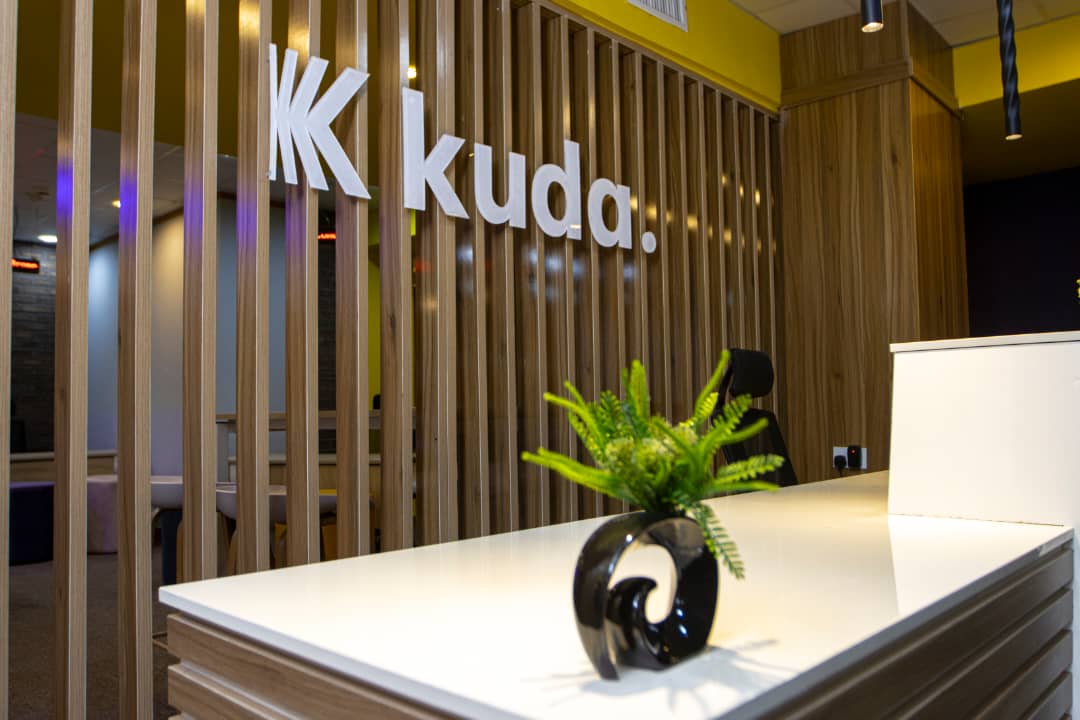
Kuda Bank, a Nigerian microfinance bank that offers convenient, fee-free digital banking services, has announced plans to expand to Tanzania and Canada, as part of a global rollout. This also follows after a successful 2025.

The company’s CEO, Babs Ogundeyi, announced the expansion in a new year’s message to customers, while assuring them of more reliable services.

Part of his message reads,

Behind the scenes, the Kuda Technologies team tested and refined our remittance product in preparation for public launches in countries like Canada and Tanzania, where we are licensed to operate.  Last year’s progress has set us to do more for you in 2026, so you should look forward to more reliable services, more responsive support, and more rewards for using Kuda consistently”.

The expansion marks a significant shift for Kuda as it evolves from a Nigerian digital bank into a broader financial platform, serving regional and diaspora customers. Also, the decision to enter Tanzania and Canada represents a calculated and forward-looking move that aligns with broader trends in global remittances and the evolving needs of Africa’s diaspora.

Kuda Bank’s Standout Year in 2025

In 2025, Kuda Bank marked a series of significant milestones that underscored its growing influence in Africa’s fintech landscape. Building on its early investments in digital innovation and customer-centric products, Kuda strengthened its market position by driving transaction volumes, enhancing customer engagement, and advancing its service offerings.

Kuda in Numbers 2025

  • N29 Trillion+ worth of transactions made.
  • Over N656 billion saved.
  • More than N125 billion worth of overdraft used.
  • N2 billion+ worth of free transfers given.
  • Over 1 billion transactions made.
  • N797.6 million+ worth of interest paid on savings.
  • More than 154.9 million bills paid.

Kuda’s performance in 2025 reflects more than just numerical achievements; it illustrates a fintech that is maturing strategically, diversifying its offerings, and strengthening its foothold across both retail and business segments.

Founded in 2019 by CEO Babs Ogundeyi and CTO Musty Mustapha, Kuda Bank began as a digital-first challenger aiming to reinvent banking for African consumers with a mobile-only platform that removes many traditional fees and barriers.

From modest beginnings with around 300,000 users in late 2020, Kuda quickly expanded its user base by offering free digital banking services tailored to everyday needs. It processed a dramatic increase in transaction volume, from $5.2 million to over $2 billion in one month in early 2021, underscoring the rapid adoption of its platform.

In the years following its launch, Kuda’s customer numbers surged. It hit 2 million users by late 2021, then climbed to 3 million in early 2022 and 4 million by mid-2022. By June 2023, Kuda had surpassed 6 million customers in Nigeria, reflecting strong organic growth as financial services increasingly moved into digital channels.

Kuda also expanded beyond Nigeria. It launched services in the United Kingdom in 2022, setting the stage for broader international reach, and continued building its technology stack around cross-border payments and multi-currency capabilities.

By 2025, Kuda’s growth was measurable not just in users but in transaction scale and product depth. Its journey from a lean startup to a multi-million-customer fintech reflects strategic product development, significant venture capital backing, and consistent user adoption across retail and business segments.

Notably, the bank’s recent planned expansion into Tanzania and Canada signals a new chapter in its evolution from a Nigerian digital bank to a global, platform-driven financial brand.