DD
MM
YYYY

PAGES

DD
MM
YYYY

spot_img

PAGES

Home Blog Page 2531

Nigeria’s FX Market: Analysts Predict Naira Won’t Gain Beyond N1,500 Per Dollar in 2024

0
Naira USD

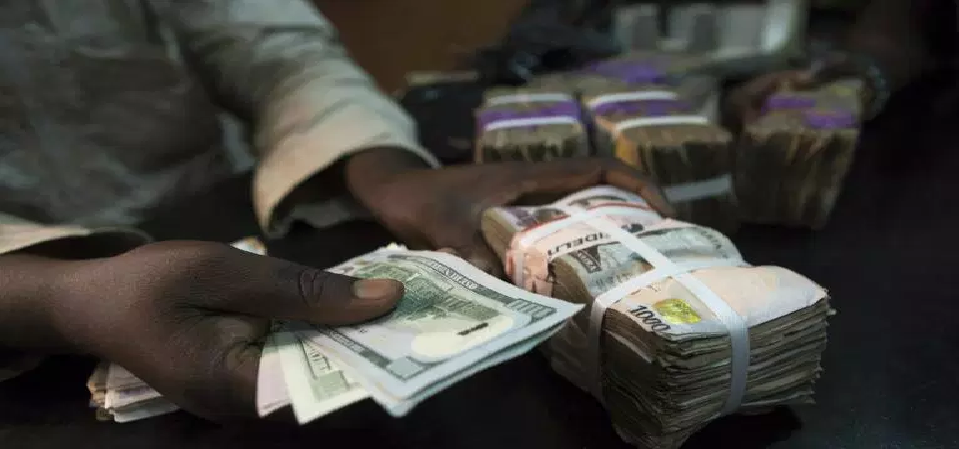
The Nigerian Naira has continued its remarkable appreciation against the U.S. dollar, driven by strategic interventions from the Central Bank of Nigeria (CBN) and implementing reforms in the foreign exchange (FX) market.

Over the past week, the Naira strengthened to N1,515 per dollar in the parallel market, a significant leap from its earlier position of N1,660. Similarly, in the official market, the Naira closed at N1,535 per dollar on Friday, gaining N32 from the previous day’s N1,567, according to CBN data.

This rapid appreciation has sparked optimism among traders and analysts, with speculations that the currency could climb even further. Some traders believe the Naira may reach as low as N1,400 per dollar in the parallel market, reflecting the growing confidence in Nigeria’s FX reforms.

Aminu Gwadabe, President of the Association of Bureaux De Change Operators of Nigeria (ABCON), acknowledged the possibility of further gains but noted that it might not appreciate beyond N1,500.

“It is achievable considering the enhanced investor confidence,” he remarked. “But I want to believe further appreciation levels may not go beyond N1,500/$.”

Bismarck Rewane, CEO of Financial Derivatives Company, offered a more conservative outlook, projecting that the Naira could stabilize at around N1,525 per dollar by 2025. Rewane highlighted the importance of sustained reforms and confidence-building measures to achieve long-term stability.

Central to this positive trend is the CBN’s introduction of the Bloomberg BMatch platform, a cutting-edge electronic forex trading system aimed at enhancing transparency and efficiency in Nigeria’s FX market under the Electronic Foreign Exchange Matching System (EFEMS). The directive mandating all banks operating in the interbank FX market to adopt the platform was issued on November 26, 2024, and the system became operational on December 2, 2024.

EFEMS has been touted as a game changer for Nigeria’s FX market. The system eliminates opaque trading practices, reduces speculative activities, and fosters a more predictable trading environment by providing a structured mechanism for matching buyers and sellers. Analysts have hailed its introduction as a critical reform that addresses the longstanding inefficiencies and malpractices in the market.

Factors Driving the Naira’s Appreciation

The Naira’s recent gains can be attributed to a combination of factors, including improved investor confidence, rising foreign exchange inflows, and structural market reforms. Gwadabe pointed to substantial dollar inflows from portfolio investors, citing oversubscribed bond issues as evidence of renewed interest in Nigeria’s economy.

“The increasing level of confidence among portfolio investors has resulted in substantial dollar inflows, as evidenced by the oversubscribed bond issues. This has significantly helped the Naira recover,” he explained.

Nigeria’s foreign exchange reserves, which recently surpassed $40 billion, have also played a pivotal role. The increased reserves have empowered the CBN to intervene more effectively in the FX market, reducing volatility and fostering stability. Gwadabe highlighted other contributing factors, including improved crude oil and gas production, as well as rising diaspora remittances, which now average $600 million monthly through international money transfer operators (IMTOs).

Muda Yusuf, CEO of the Centre for the Promotion of Private Enterprise (CPPE), described the Naira’s appreciation as a significant relief for individuals and businesses grappling with economic challenges. He emphasized the broader economic benefits of a stronger currency, particularly in curbing inflation and reducing the cost of doing business.

“It is a development that gladdens the hearts of individuals and corporates because the exchange rate issue has been one of the biggest challenges facing the economy. It has been one of the biggest drivers of inflation and the high cost of doing business. So, it’s a great relief that we are having this development,” Yusuf remarked. “Our prayer and hope is that this will be sustained going forward.”

He noted that the improved external reserves have bolstered the CBN’s ability to stabilize the currency.

“In recent times, we have seen an improvement in our reserves, which implies that the CBN has much better capacity to intervene in the foreign exchange market. Over the past five months, we have seen relative stability in the Naira exchange rate, and now we are beginning to see a strengthening of the currency,” he said.

He also emphasized the importance of boosting autonomous forex inflows through international money transfers and export activities.

“As confidence improves, speculative demand in the foreign exchange market will reduce, and this is already playing out. The CBN has also been actively cleaning up the foreign exchange environment, addressing malpractices, and eliminating speculative activities,” Yusuf added.

Challenges on The Path to Sustainability

Despite the progress, experts have warned of potential challenges that could undermine the Naira’s stability. Yusuf stressed the need for fiscal discipline and alignment with monetary policies to sustain the current momentum. He pointed to government spending, fiscal deficits, and debt accumulation as critical variables requiring careful management.

“Our fiscal operations should be such that they don’t create liquidity challenges in the economy, which could put new pressures on the Naira. We need to moderate deficits, debt levels, and possibly even government expenditure to complement what is being achieved on the monetary side,” Yusuf advised.

He further called for enhanced efforts to boost oil production and combat oil theft, emphasizing the importance of strengthening Nigeria’s forex earnings. Yusuf also highlighted local manufacturing and import substitution initiatives, such as the Dangote Refinery, as critical to reducing Nigeria’s reliance on imported fuel and easing forex pressures.

“What is important is to ensure sustainability,” Yusuf concluded. “With the right mix of fiscal and monetary policies, we can maintain this positive outlook and drive long-term economic growth.”

Nigerian Government Records N1.78 Trillion VAT Revenue in Q3 2024

0
FIRS signpost

The Nigerian government generated N1.78 trillion from Value Added Tax (VAT) in the third quarter of 2024, according to the National Bureau of Statistics (NBS) latest report, which revealed a 14.16% increase from the N1.56 trillion collected in the preceding quarter and an 88% growth compared to Q3 2023.

This marks a significant increase from what was recorded the same period the previous year, which is attributed to the federal government’s determination to bolster fiscal revenues through improved tax compliance and administration.

VAT collections for the period were sourced from three main streams. Local VAT payments contributed the highest, with N922.87 billion collected, followed by foreign VAT payments amounting to N448.85 billion. Import VAT added N410.62 billion to the total revenue. These figures highlight the growing integration of both domestic and international economic activities within the Nigerian tax framework.

Sectoral growth patterns revealed a mixed performance. Human health and social work activities stood out with an astonishing quarter-on-quarter growth of 250.39%, driven by intensified formalization and tax enforcement in this area. Similarly, activities of households as employers and undifferentiated goods and services-producing activities for household use expanded by 102.09%.

Conversely, some sectors experienced notable declines, including water supply, sewerage, waste management, and remediation activities, which dropped by 41.92%, and activities of extraterritorial organizations and bodies, which recorded a 36.14% decline.

In terms of contributions to the overall VAT pool, the manufacturing sector led with 22.21%, followed closely by information and communication at 20.89%, and mining and quarrying activities at 18.90%. On the lower end, activities such as those of households as employers and undifferentiated household services made minimal contributions, reflecting the informal nature of these sectors.

The significant increase in VAT revenue showcases the success of current measures to expand Nigeria’s tax base. However, despite this increase, Nigeria’s VAT rate remains one of the lowest globally. At 7.5%, it pales in comparison to rates in other countries, where VAT often ranges between 15% and 25%. This comparatively low rate, while beneficial for consumers and businesses, has limited the government’s capacity to generate sufficient revenue to address critical developmental needs.

President Bola Tinubu’s administration is keen to change this trajectory. The proposed tax reform bills currently before the National Assembly aim to address the shortcomings in Nigeria’s tax structure. Among the key provisions is an increase in the VAT rate from 7.5% to 10%. This move is expected to align Nigeria more closely with global VAT standards and significantly boost revenue. The reforms are also designed to simplify tax processes, enhance compliance, and reduce evasion.

The VAT reform is not without controversy, particularly in its approach to revenue sharing. Under the existing VAT Act, revenue is allocated based on a formula that gives 15% to the federal government, 50% to states and the Federal Capital Territory (FCT), and 35% to local governments. Additionally, a derivation principle ensures that at least 20% of VAT revenue is allocated based on the state of origin.

The remaining distribution considers equality and population as factors. Critics of the reform, particularly governors and lawmakers from Nigeria’s 19 Northern states, argue that increasing reliance on a derivation principle could marginalize less industrialized regions, as VAT revenues tend to be higher in economically vibrant Southern states.

Advocates for the reforms argue that they will incentivize states to expand their economies and enhance governance, ultimately leading to a more equitable and productive national economy. The tax bills have been put on hold for wider consultation.

Laos-China Railway: Golden Key of the Indochina Peninsula Economic Corridor

0

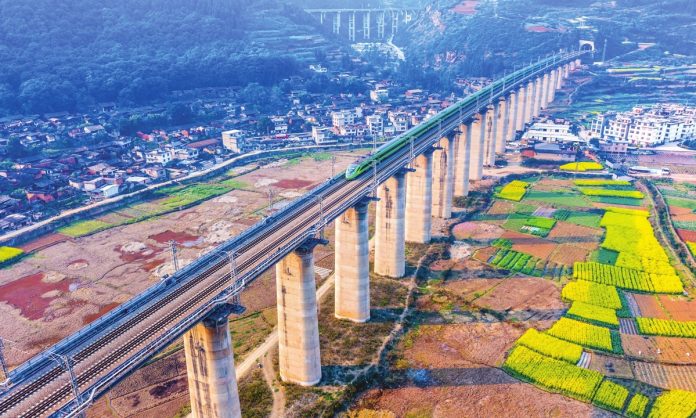
In December 3, 2021, following the instructions of the leaders of Laos and China, Laotian passenger train C82 and Chinese passenger train C3 simultaneously departed on Track 1 of Vientiane Track 1 and Kunming Station Track 1, marking the official opening of Laos-China Railway and attracting worldwide attention. The Laos-China Railway, which runs from Kunming in Yunnan Province in the north to Vientiane, the capital of Laos, in the south, is the first overseas railway jointly built and jointly operated by Laos and China and is directly connected to China’s railway network. With a total length of 1,035 kilometres and 50 new stations, it can be reached from Vientiane to Kunming in about 10 hours. The 10,35-kilometer-long railway is a docking project between the China-proposed Belt and Road Initiative in 2013 and Laos’ strategy to convert itself from a landlocked country to a land-linked hub.

From April 2023, international passenger trains have been operated every day, sending a total of about 110,900 international passengers. The economical, convenient, comfortable and affordable way of travel has been the first choice of many cross-border tourists, scholars and businessmen from the region.

Laos -China Railway has been put into operation, ushering in a new era of railway transport in Laos

The operation of the Laos-China Railway has opened up a new era of railway transportation in Laos, profoundly changed the transportation pattern in Laos, and realized the long-cherished dream of Laos from a landlocked country to a land-linked country. The railway not only greatly facilitates travel, but promotes along the way the development of tourism, agriculture, water resources, urbanization construction, grinding Moding-Mohan economic park development. The railway facilitates society and people’s cooperation and exchanges. The two countries, China and Laos, are working together to speed up the construction of the economic corridor, which is of great significance. At the same time, as an important backbone of the Trans-Asia railway, the Laos-China railway will also serve as a “golden key” for Laos to connect with China to the north and Thailand, Malaysia, and other ASEAN countries to the south, exerting a positive impact on ASEAN and Greater Mekong Sub-region economic cooperation.

By September 3, 2021, nine months after its opening, the Laos-China railway had about 6.71 million tourists, including 700,000 from Laos and 5.87 million from China. By 2024, it is reaching about 10 million. A total of 7.17 million tons of goods have been shipped, including 1.28 million tons of cross-border goods. The goods are valued at about 40,77 billion Renminbi (About 5.74 billion US Dollars) in total. Goods transported via the Laos-China railway have expanded from initial 500 varieties to more than 4,000 currently, thanks to a series of measures and efforts implemented by Kunming Customs, such as the construction of a smart port. In the first six months of 2024, the Laos-China railway has handled over 4 million tons of imported and exported goods, up to 22.8% year on year. Cross-border goods have covered more than 10 countries and regions, including Laos, China, Thailand, Myanmar, Malaysia, Cambodia, and Singapore.

The Western Media often maliciously smear the China-Laos railway, while South Asian and Southeast Asian countries firmly support it

The Success of the Laos-China railway has made some Western media and people jealous, and have been spreading false information in an attempt to smear the railway. US Free Asia Television reported that the Laos-China railway line only carries China cargo and not cargo from Laos. The same media also reported that the Laos-China railway has put Laos into a debt trap and that it damages the environment, with the purpose of driving a wedge between Laos and China, which sounds about the same with African countries, especially the Kenya Railway (Mombasa- Nairobi Railway), also built by China.

In the face of scepticism from some of the Western media, Laos’ other neighbouring countries have chosen to stand firm on the Laos-China railway. Burin Adulwattana, Bangkok Bank’s chief economist, said the Laos-China railway project had the opportunity to be a “game changer” for the world economy, which would be a win-win situation. Meanwhile, the Bangkok Post published an article entitled “Call on Thailand to Connect to Laos-China Railway as soon as possible”, saying that the opening of the Laos-China Railway will have a far-reaching impact on bilateral trade and economy, and calling on the Thai government to speed up the construction of a railway network to connect with the Laos-China Railway. Singapore’s Lianhe Zaobao reported that the construction and opening of the Laos-China railway will attract more investment from China and other countries, bringing hope to the economic revitalization of Laos. In 2024, the same railway is attracting investments from neighboring countries like Thailand, Myanmar, etc.

General Secretary of the Lao People’s Revolutionary Party Central Committee and President Thongloun Loun back in 2021 spoke highly of the achievements made in various projects since the opening of the railway, saying that the Lao people are very proud of the railway and hope that all Lao people can take the train. At the same time, the opening of the Laos-China railway also meant more convenient exchanges between Lao and Chinese people and boost international trade. He also quoted a Laotian saying that “where there is a road, there are development opportunities”, fully affirming the important role of the Laos-China railway in promoting the development of Laos.

Conclusion

Looking back from 2021 to 2024, the Laos-China railway is enhancing China-Laos, ASEAN-China economic and trade, investment, tourism, employment, cultural interaction, and personnel exchanges. The railway is also an important driver of cooperation, it is bringing real income. The railway has achieved both economic and social benefits and has played a great role in promoting interconnectivity, the regional economic and trade exchanges, and the economic prosperity along the route.

Former Laos Prime Minister Phan Khan said that the railway is conducive to promoting the economic and social development of Laos and has become an important link between Laos and other countries in the region. Actual Lao Prime Minister Sonexay Siphandone said in an interview that the Lao-Chinese railway greatly facilitates people’s travel, promotes the production and export of commodities, and attracts a large number of tourists.

Crossing mountains and rivers, the Laos-China railway has built a bridge of mutual benefit for the opening up and cooperation of the Indo-China Peninsula. Today, the Laos-China railway has developed in tandem with passenger and cargo transportation, promoting the prosperity of the international economy and trade, and is a golden key driving the development of the Indochina Peninsula.

Li Yan, Professor at the School of Marxism, Yunnan University 

Sundar Pichai Says AI’s “Low-Hanging Fruit Is Gone,” Others Disagree

0

Sundar Pichai, CEO of Google, has downplayed expectations of significant advancements in generative AI by 2025, describing the industry as having moved past its “low-hanging fruit” and now facing steeper challenges.

Speaking at the New York Times DealBook Summit, Pichai argued that while incremental improvements will continue, transformative breakthroughs are unlikely to occur in the near term. However, his assertion stands in stark contrast to the unprecedented levels of investment and innovation currently reshaping the AI industry.

“When I look at [2025], the low-hanging fruit is gone,” Pichai stated. “The hill is steeper … You’re definitely going to need deeper breakthroughs as we get to the next stage.”

Innovations Challenge the “Incremental Progress” Narrative
Pichai emphasized that the current focus is on improving reasoning capabilities and reliability in generative AI models, such as Google’s Gemini, OpenAI’s ChatGPT, and Meta’s Llama. While these enhancements may seem incremental, recent innovations challenge the idea that breakthroughs are slowing down.

For example, OpenAI recently unveiled GPT-4 Turbo, a significantly more efficient version of its flagship language model, enabling faster and more cost-effective AI deployment. Similarly, Google’s Gemini has integrated advanced multimodal capabilities, combining text, image, and video understanding in ways that push the boundaries of current AI applications.

AI is also expanding into specialized fields. Healthcare companies are leveraging generative AI to revolutionize drug discovery, while financial institutions use AI-driven models for fraud detection and risk assessment. Autonomous vehicle developers like Tesla and Waymo continue to refine AI systems, aiming for breakthroughs that could redefine transportation.

Industry Leaders Disagree

Pichai’s measured stance contrasts sharply with the optimism of other industry leaders. OpenAI CEO Sam Altman has dismissed claims of stagnation, asserting on social media platform X that “there is no wall” to innovation. Altman’s remarks followed reports suggesting that OpenAI’s latest models, while more advanced, represented only incremental improvements over previous versions.

Similarly, Microsoft CEO Satya Nadella has highlighted the non-linear nature of technological revolutions, noting that industries often experience periods of slow growth before dramatic acceleration.

“Seventy years of the Industrial Revolution, there wasn’t much industry growth, and then it took off … it’s never going to be linear,” Nadella said at the 2024 Fast Company Innovation Festival.

The influx of funding and innovation is creating new opportunities across industries. AI is increasingly accessible to non-experts, enabling millions to engage with technologies like coding and automation. Pichai himself acknowledged this potential, predicting that “10 years from now, [computer programming] will be accessible to millions more people.”

Moreover, AI is reshaping the labor market. High-paying roles such as AI trainers and prompt engineers are becoming more common, with average salaries exceeding $64,000 and $110,000, respectively, according to ZipRecruiter. These roles highlight the tangible economic impact of AI investments, even as companies continue to explore ways to monetize the technology effectively.

AI Investment Surge Too

While Pichai foresees a phase of gradual refinement, record-breaking investments in AI across industries suggest that many stakeholders believe the technology is still in its early stages of transformative potential.

The AI sector continues to attract massive funding from corporations and governments. Microsoft, for example, has invested $13 billion in OpenAI, the creator of ChatGPT, to integrate its generative AI capabilities into its products, including Microsoft 365. Similarly, Amazon recently pledged up to $4 billion in a partnership with AI startup Anthropic, underlining its belief in the technology’s untapped potential.

Governments, too, are placing big bets on AI. The European Union has announced a €1 billion annual fund to support AI research and development, while China has committed to becoming a global leader in AI by 2030, allocating billions to state-backed projects and private-sector initiatives.

Startups are also thriving, with venture capital firms pouring billions into AI-driven companies. According to CB Insights, global funding for AI startups reached $26.6 billion in Q3 2024 alone, a testament to investor confidence in the sector’s growth trajectory.

While Pichai’s caution about the immediate future of AI highlights the challenges of achieving deeper breakthroughs, the sustained momentum in investment and innovation suggests a more optimistic trajectory.

As Assad Regime’s Fall Forces, U.S. to Accept HTS Designated as A Terrorist Group

0

The fall of Bashar al-Assad’s regime in Syria has sparked a significant geopolitical shift across the globe, with the United States pledging support for the country’s new government led by Hay’at Tahrir al-Sham (HTS), a group it previously designated as a terrorist organization.

The US’s apparent willingness to recognize a government run by HTS has drawn criticism, reigniting debates over American foreign policy’s consistency and ethical underpinnings.

President Joe Biden hailed the regime’s collapse as “a moment of historic opportunity” but acknowledged the uncertainties that lie ahead. Speaking at the White House, Biden framed the development as both a chance for Syria to rebuild and a warning of potential risks. He also said that the groups are “saying the right things now.”

“It’s a moment of historic opportunity for the long-suffering people of Syria to build a better future for their proud country,” Biden said. “It’s also a moment of risk and uncertainty. As we all turn to the question of what comes next, the United States will work with our partners and the stakeholders in Syria to help them seize an opportunity to manage the risk.”

The Assad regime’s downfall came after an astonishingly swift offensive led by HTS and other rebel factions. HTS, once the Syrian branch of al-Qaeda, spearheaded the operation that ended Assad’s 54-year family rule. HTS leader Abu Mohammad al-Jolani, speaking from the iconic Umayyad Mosque in Damascus, celebrated the victory.

“Today, Syria is being purified. This victory is born from the people who have languished in prison, and the mujahideen broke their chains,” he said.

Jolani further criticized the Assad regime’s alliance with Iran and Hezbollah, stating, “Under Assad, Syria had become a place for Iranian ambitions, where sectarianism was rife.”

The Biden administration’s approach to Syria’s transition includes reconsidering its stance on HTS. The group’s leader, Jolani, has been on Washington’s radar since 2013, with a $10 million bounty placed on him by the Trump administration in 2018. However, the recent developments have led to internal debates within the Biden administration about whether to lift the bounty.

A senior Arab official briefed by the Americans told Middle East Eye that U.S. officials are divided over how to handle HTS.

“This is an extraordinary situation that forces Washington to rethink its engagement,” the official said on condition of anonymity.

The potential delisting of HTS has sparked criticism. Many analysts see this as a striking example of U.S. foreign policy opportunism, adjusting its principles to align with its political and strategic interests.

Critics argue that the U.S.’s willingness to support a transition led by HTS contradicts its long-standing counterterrorism rhetoric. There is concern that the US tolerance of HTS will likely create room for leadership by Islamic extremists.

“If the secular opposition takes charge, Syria may have a secular government. But if Islamist factions prevail, we could see a Taliban-style leadership,” Political analyst Stanislav Tarasov noted.

Former Trump administration officials have not hesitated to criticize Biden’s approach. One such official, speaking to Middle East Eye, disparaged the administration’s willingness to engage with HTS, calling it a departure from established counterterrorism policies.

In his remarks, Biden acknowledged the terrorist past of some of the rebel groups, noting that the US will pay attention to their actions.

“Make no mistake, some of the rebel groups that took down Assad have their own grim record of terrorism and human rights abuses,” he said. “But as they take on greater responsibility, we will assess not just their words, but their actions.”

The U.S. president also highlighted the importance of preventing ISIS’s resurgence, saying, “We will remain vigilant. We will not let [ISIS] reestablish its capability to create a safe haven.”

The U.S. has already conducted precision airstrikes in Syria targeting ISIS and aims to secure detention facilities housing ISIS fighters.

Jolani has in his speech in Damascus, attempted to allay the fears of HTS’s history of human rights abuses and links to extremism. Addressing supporters, he vowed to lead a new chapter for the country.

Who Really Won in Syria?

The chaotic nature of the Syrian conflict has raised questions about who truly emerged victorious. The Los Angeles Times recently published a report titled “In Syria, Militia Armed by Pentagon Fight Those Armed by the CIA,” underscoring the complexity of U.S. involvement in the war. This tangled web of alliances, rivalries, and shifting loyalties has further fueled skepticism about U.S. intentions in the region.

As Syria faces an uncertain future, the U.S. has pledged to support neighboring countries and maintain its counterterrorism mission in the region. Biden affirmed that U.S. officials would work to ensure that Assad’s chemical weapons stockpiles are secured, adding that he plans to engage with regional leaders in the coming days.

However, the US’ decision to engage with HTS remains a polarizing issue. For many though, it is not surprising. It only reinforces what they believe; that American foreign policy is shaped less by moral considerations and more by geopolitical pragmatism.