
DD
MM
YYYY

PAGES

DD
MM
YYYY

spot_img

PAGES

Home Blog Page 256

How did I miss Bitcoin?

0

The revelation from JP Morgan: ‘The biggest U.S. bank will allow institutional investors to use Bitcoin or Ether as collateral for loans, Bloomberg reports, citing anonymous sources. The decision marks the continued evolution of CEO Jamie Dimon, who once referred to crypto as a “hyped-up fraud” and “pet rock.” In other banking news, Goldman Sachs launched an exchange-traded fund that seeks to approximate “private equity-like returns.”‘ -LinkedIn News

There was a season in our generation when wealth walked in the streets without disguise. It was called Bitcoin. It knocked on our doors like a friendly neighbor. Yet many of us, including this teacher, looked away. In my quest to be “pure” and academically untainted by the crypto wave, I avoided even holding it in my name. Today, I sometimes imagine: if one had allocated $1,000 and picked up 1,000 units of Bitcoin during its infancy, what story would we be telling now? It was a rare moment, the kind that generations do not see twice.

But we missed it. Why? Because the “experts” told us. They wrote papers, spoke on TV, and educated us that digital money was illusionary. And we listened. Yet today, those same experts are accumulating Bitcoin, building custodial vaults, designing ETFs, writing structured derivative notes around it. The same voices that dismissed it now shape the entry gates.

Over the next decade, firms like JP Morgan, BlackRock, and Goldman Sachs will not just participate, they will price Bitcoin. They will set the effective “yield curve” of digital capital. And people will shout that the system is rigged. But let us be honest: nothing was rigged. We had the land before the industrialists came. But we refused to cultivate it.

How did I miss Bitcoin? I still do not have an answer. It remains one of the most baffling case studies of my personal economy. It was as if one was searching for diamonds in distant lands while the foundation of his own house was laid on diamond, and yet the eyes did not see. It reminds me of that classic story from Russell Conwell’s Acres of Diamonds, the man who sold his land to travel the world in search of wealth, only for the new owner to discover diamonds in the very soil he abandoned!

Truly, our generation held acres of digital diamonds. Bitcoin was not hidden. It stood before us, open and unassuming. But familiarity is a dangerous thing. Yes, sometimes the treasure you see daily loses its shine because the mind has not been trained to recognize value before the world proclaims it. So, when I ask myself “How did I miss Bitcoin?”, the silence in my heart is loud. Because the diamond did not hide, I simply did not look, and that is unfortunate!
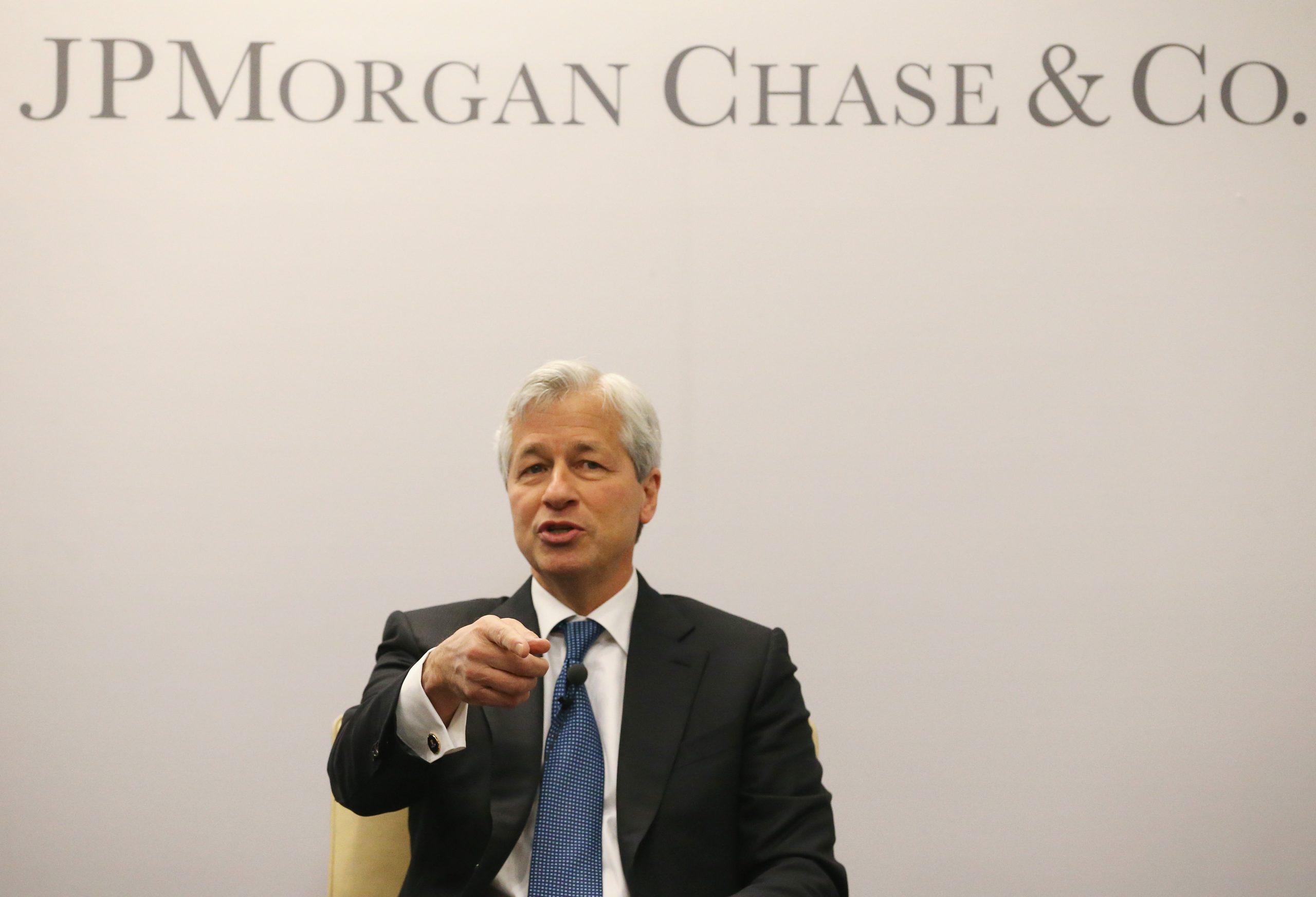
JPMorgan Moves to Accept BTC and ETH as Collateral, A Major Step for Institutional Crypto Integration

0
JP Morgan Chase puts contents through its CEO account, it goes viral. But the same content via JPMC account, no one cares (WSJ)

According to a Bloomberg report published today, JPMorgan Chase is planning to allow its institutional clients to use Bitcoin (BTC) and Ethereum (ETH) holdings as collateral for loans by the end of 2025.

This global program targets trading desks, wealth-management accounts, and high-net-worth individuals, marking a significant evolution in how major banks are incorporating digital assets into traditional finance.

Primarily for institutional clients, including hedge funds and asset managers. It extends JPMorgan’s earlier policy introduced in June 2025 of accepting crypto-linked ETFs as collateral, now allowing direct pledges of BTC and ETH.

Pledged tokens will be held by third-party custodians to manage risk and ensure compliance, rather than JPMorgan taking direct custody. Clients can access fiat credit lines or structured loans against their crypto holdings, similar to using stocks, bonds, or gold as collateral. This avoids the need to sell assets, providing liquidity while retaining exposure.

Rollout expected by year-end 2025, pending final internal approvals. JPMorgan’s CEO, Jamie Dimon, has historically been skeptical of crypto—once calling Bitcoin “worse than tulip bulbs”—but the bank has pivoted amid surging client demand and a more favorable regulatory environment under the current U.S. administration.

Bitcoin recently hit record highs above $110,000, and spot BTC/ETH ETFs have amassed over $149 billion in assets since their 2024 approval. This move aligns with a wave of Wall Street adoption

Morgan Stanley plans to enable retail trading of BTC, ETH, and Solana on ETRADE by Q2 2026. BNY Mellon launched tokenized money market products with Goldman Sachs in July 2025. Fidelity, State Street, and BlackRock are expanding custody and trading services.

By treating BTC and ETH like traditional collateral, the program could unlock billions in liquidity for institutions, accelerate crypto’s mainstream integration, and signal reduced volatility risks as banks refine valuation and risk models.

Morgan Stanley, managing over $8 trillion in assets, has ramped up its cryptocurrency offerings in 2025 amid a pro-crypto regulatory shift under President Trump. This builds on earlier moves like offering Bitcoin funds to wealthy clients since 2021 and approving spot BTC/ETH ETFs in 2024.

The firm’s strategy emphasizes integrated digital asset management alongside traditional portfolios, with a focus on risk-managed exposure. Morgan Stanley removed eligibility restrictions, allowing all clients—regardless of net worth, risk tolerance, or account type—to invest in crypto funds starting October 15, 2025.

Restricted to clients with ?$1.5M in assets, aggressive risk profiles, and taxable brokerage accounts only. Initially BlackRock and Fidelity BTC/ETH funds; clients can also request any listed spot crypto ETFs. The firm is monitoring for additional products like altcoin funds.

Automated monitoring caps crypto at ~4% of portfolios (per Global Investment Committee recommendation) to prevent over-concentration in volatile assets. This extends to retirement (e.g., IRAs) and trust accounts, potentially injecting billions from retail and mass-affluent investors into crypto.

Bitcoin (BTC), Ethereum (ETH), and Solana (SOL) at launch; potential expansion to others. With Zerohash (crypto infrastructure provider) for liquidity, custody, and compliance. Morgan Stanley participated in Zerohash’s $104M Series D-2 round in September 2025, valuing it at unicorn status (~$1B).

Developing an in-house digital asset wallet for secure storage, described as the “tip of the iceberg” in broader strategy. Up to 4% “opportunistic” allocation to crypto in diversified portfolios, tailored by risk profile (0% for conservative; higher for growth-oriented).

Recently issued “Dual Directional Trigger PLUS” notes linked to BlackRock’s iShares Bitcoin Trust (IBIT) ETF, closing October 31, 2025—offering leveraged exposure with auto-call features. Competitors like JPMorgan accepting BTC/ETH as loan collateral by end-2025 and Goldman Sachs tokenized funds are following suit.

CEO Ted Pick has emphasized safe crypto integration via regulators. For clients, this means seamless liquidity and exposure without selling assets; for the market, it could drive $10B+ inflows, boosting prices and legitimacy. Retail rollout via ETRADE targets younger investors, but execution risks remain.

JPMorgan to Accept Bitcoin And Ether as Loan Collateral in Global Expansion of Crypto Services

0

JPMorgan Chase & Co. is preparing to allow institutional clients to use Bitcoin and Ether holdings as collateral for loans by the end of the year, according to a Bloomberg report.

The initiative will operate globally and rely on a third-party custodian to securely hold the digital assets. This marks a significant step beyond the bank’s earlier practice of accepting crypto-linked exchange-traded funds (ETFs) as collateral.

Initially, JP Morgan allowed clients to use financial products tied to the value of cryptocurrencies such as Bitcoin or Ether ETFs, as collateral for loans or other financing activities. These ETFs track the performance of crypto assets but are traded on regulated exchanges, making them easier for banks to manage under existing financial and compliance frameworks.

In essence, the bank was engaging with crypto exposure indirectly through regulated investment instruments, rather than through the direct custody or acceptance of actual digital assets. The upcoming move to accept Bitcoin and Ether themselves as collateral represents a deeper step into the crypto space, signaling greater confidence in the maturity of digital asset markets and the infrastructure supporting them.

Also, the move comes as the Bank CEO Jamie Dimon, who was once a strong critic of cryptocurrency, describing it as “fraud”, has finally softened his stance on the digital asset. Lately, Dimon has moderated his stance somewhat, while remaining skeptical. “I don’t think we should smoke, but I defend your right to smoke,” he said at JPMorgan’s investor conference in May. “I defend your right to buy Bitcoin, go at it.”

JPMorgan’s latest move comes as it opened its new global headquarters at 270 Park Avenue, marking a major milestone in its commitment to New York City. The tower will be home to 10,000 employees by the year-end.

With Bitcoin’s sustained price rally and a more accommodating regulatory environment under the current U.S. administration, JP Morgan is not the only bank exploring crypto-related services. Across the financial sector, similar developments are underway.

Recent regulatory adjustments in the United States have encouraged other banks to design digital asset services, ranging from cryptocurrency trading and wallet management to tailored investment strategies.

Here’s an overview of some of the key players and their initiatives:

Morgan Stanley

Morgan Stanley became the first major U.S. bank to offer Bitcoin funds to its wealth management clients. Through partnerships with firms such as Galaxy Digital and NYDIG, the bank provides exposure to Bitcoin investment products. It continues to research digital asset infrastructure and is assessing opportunities in decentralized finance (DeFi).

Citigroup (Citi)

Citigroup has been building a digital assets division focused on developing blockchain-based solutions for trade finance, securities services, and cross-border payments. The bank has also tested tokenized deposits and recently received regulatory approval to provide digital asset custody and settlement services to institutional clients.

Bank of New York Mellon (BNY Mellon)

BNY Mellon, the world’s largest custodian bank, has launched a digital asset custody platform, allowing clients to hold and transfer cryptocurrencies like Bitcoin and Ether alongside traditional investments. The bank’s move reflects its belief that digital assets are becoming an essential part of modern investment portfolios.

Standard Chartered

Standard Chartered has been particularly active in the crypto ecosystem. Through its subsidiary Zodia Custody, the bank provides institutional-grade crypto custody services in partnership with Northern Trust. It also operates Zodia Markets, a digital asset trading platform offering spot and over the counter (OTC) services for institutional clients.

HSBC

Although traditionally cautious about crypto, HSBC has entered the digital asset space through tokenization and blockchain pilots. It has launched projects involving tokenized gold and is exploring central bank digital currency (CBDC) integration for international payments.

Executives in the industry emphasize that blockchain-based infrastructure is now mature enough to support mainstream adoption. They note that clients should have seamless access to both digital and traditional assets within a single financial platform, a shift that signals the growing convergence of conventional finance and the crypto economy.

Overall, these developments illustrate how traditional banks are no longer treating crypto as a fringe asset but as an emerging component of global finance.

By offering custody, trading, and tokenization services, these institutions aim to bridge the gap between traditional finance (TradFi) and the rapidly expanding digital asset economy, a trend expected to accelerate as regulations evolve and institutional demand grows.

TRUMP Token Team, as Leading MET Airdrop Recipient, Aided Price Declines

0

The team behind the Official Trump (TRUMP) meme coin on Solana—three wallets linked to its developer and early liquidity providers—received approximately $4.2 million in MET tokens from Meteora’s airdrop on October 23, 2025.

This positioned them as one of the top 5 recipients and effectively the leading cluster among identifiable entities, sparking controversy over potential “airdrop farming” and immediate selling pressure on MET’s price.

Arkham Intelligence tracked the wallets, which provided Day 1 liquidity for TRUMP on Meteora’s DEX. These included: The TRUMP developer address. Two additional addresses that seeded significant early liquidity for TRUMP.

The wallets collectively claimed ~6.2 million MET tokens valued at $4.2M at launch price of ~$0.68 per token. All three wallets deposited the full allocation to OKX exchange within hours, contributing to MET’s 40% price drop from $0.68 to $0.51 on debut trading.

Meteora distributed 15% of its 1 billion MET supply ~150 million tokens to liquidity providers and ecosystem participants. While individual top recipients aren’t fully public, the TRUMP-linked cluster stands out as the largest disclosed group, outpacing typical retail claims many under $1,000.

This distribution was rewarded for providing liquidity on Meteora pools, but critics argue it highlights insider advantages in Solana’s DeFi ecosystem, where high-volume providers like TRUMP’s team dominate rewards without vesting periods or sybil resistance.

MET’s launch saw heavy selling from airdrop recipients, including the TRUMP wallets, exacerbating a post-airdrop correction common in Solana projects (e.g., similar to JUP or PUMP.fun teases).

X discussions exploded with accusations of “gaming the system” and “rug pull vibes,” especially amid a class-action lawsuit against Meteora’s co-founder Benjamin Chow for alleged pump-and-dump schemes involving TRUMP-related tokens like MELANIA and LIBRA.

Separate wallets tied to MELANIA received ~$1.2M in MET, but these are linked to a different team. The event coincides with heightened Trump crypto hype, including World Liberty Financial’s $550M+ raises and rumors of policy favors such as pardons for figures like Binance’s CZ. However, it underscores risks in meme coin liquidity farming.

The implications of the TRUMP token team being the leading recipient of the Meteora (MET) airdrop are multifaceted, affecting market dynamics, community trust, and the broader Solana DeFi ecosystem.

The TRUMP team’s rapid deposit of ~6.2 million MET tokens ($4.2M) to OKX contributed to a 40% price drop from $0.68 to $0.51 on MET’s launch day. Large-scale dumps by top recipients amplify post-airdrop corrections, common in Solana projects like JUP or PUMP.

Heavy selling by prominent recipients signals potential lack of long-term commitment, deterring retail investors and stabilizing MET’s market cap ~$263M, rank #269. Future price recovery depends on broader Solana momentum and Meteora’s utility growth.

The concentration of ~2.8% of the airdrop supply in three TRUMP-linked wallets fuels accusations of “airdrop farming” and insider favoritism. X posts highlight community frustration, with terms like “rug pull vibes” and demands for fairer distribution.

The airdrop rewarded high-volume liquidity providers (LPs) like the TRUMP team, exposing flaws in Solana’s DeFi reward systems. Without checks (e.g., vesting or caps), large players can dominate, skewing decentralization.

Similar patterns in Solana meme coins suggest a trend where well-funded teams exploit airdrops, potentially stifling smaller participants and innovation. It highlights how political branding can intersect with DeFi, but also risks associating projects with speculative volatility.

Large airdrop claims and quick liquidations could attract attention from regulators, especially amid lawsuits and pump-and-dump allegations, impacting Solana’s reputation as a DeFi hub.

The backlash may push Meteora and similar platforms to adopt vesting schedules, anti-sybil measures, or tiered rewards to prevent whale dominance. This could stabilize future airdrops but may reduce short-term hype.

Retail traders may grow warier of airdrop-driven projects, favoring tokens with locked allocations or transparent distribution. Meteora may need to address community concerns via governance updates to restore trust.

Robinhood Lists HYPE, Marking a Milestone for Hyperliquid

0

Robinhood became the first major centralized cryptocurrency exchange to list HYPE, the native token of the decentralized perpetual futures exchange Hyperliquid.

This spot trading listing is available to eligible U.S. customers via the Robinhood app, allowing users to buy, sell, and hold the token directly. The announcement, shared via Robinhood’s official X account, has ignited significant market activity, with HYPE surging over 13% in the immediate aftermath to highs above $40.87 as of October 24.

As a commission-free broker with millions of retail users, Robinhood’s move broadens HYPE’s accessibility beyond decentralized exchanges (DEXs). This is particularly notable since larger players like Binance and Coinbase have not yet listed it, despite high demand.

Historical Robinhood listings like BNB and CRV have often led to short-term volume spikes and liquidity boosts. Hyperliquid, a leading on-chain perp DEX, recently reclaimed the top spot in perpetual DEX trading volume, surpassing CZ-backed Aster and Lighter.

It generated $4.26 million in fees over the past 24 hours as of October 23, with portions allocated to HYPE buybacks. Coinciding with the listing, Hyperliquid Strategies filed with the SEC for a $1 billion raise to fund HYPE token buybacks, holding ~12.6 million HYPE valued at ~$470 million plus $305 million in cash reserves for further purchases.

HYPE has been a top performer in 2025, up over 66% year-to-date, though it pulled back from a $60 ATH amid broader market corrections. HYPE broke out from a descending wedge pattern post-listing, recovering from an intraday low of $35 to above $40.

Analysts project a potential rally to $56.50 a ~40% upside from current levels by November, supported by increased retail exposure and whale accumulation in leveraged longs. However, near-term support sits at $35, with risks tied to overall crypto market volatility.

Hyperliquid is a decentralized perpetual futures exchange (DEX) built on its own layer-1 blockchain, specializing in on-chain perpetual futures trading. Hyperliquid recorded $4.26 million in fees over the past 24 hours, reflecting high trading activity. Its perpetual futures markets support a wide range of assets, offering up to 50x leverage on some pairs.

The native HYPE token powers the ecosystem, with a portion of trading fees used for buybacks, enhancing token value. Hyperliquid Strategies’ recent SEC filing for a $1B raise aims to further bolster HYPE buybacks, holding 12.6M HYPE ($470M) and $305M in cash reserves.

All trades are executed and settled on Hyperliquid’s L1 blockchain, ensuring transparency and security without reliance on centralized custodians. Competitive fee structures maker/taker fees typically lower than centralized exchanges attract high-frequency traders.

Deep order books and tight spreads, driven by market makers and retail participation, especially post-Robinhood listing. No KYC requirements, appealing to DeFi-native users, though Robinhood’s listing now bridges to retail with KYC.

Hyperliquid outpaces other perp DEXs, with daily volumes often exceeding $1B. Growing rapidly, fueled by DeFi adoption and recent mainstream exposure via Robinhood. Supports major cryptos (e.g., BTC, ETH) and altcoins, with plans to expand offerings.

HYPE’s listing on October 23, 2025, as the first major centralized exchange to offer it, has boosted on-chain activity. Spot trading on Robinhood complements Hyperliquid’s perp markets, potentially driving cross-platform arbitrage.

HYPE’s 13% surge to ~$40.87 post-listing reflects increased perp trading interest, with leveraged longs accumulating. Analysts eye $56.50 as a near-term target if volume sustains. Hyperliquid’s on-chain perp trading combines DeFi’s trustlessness with high-leverage derivatives, rivaling centralized exchanges like Binance.

Its low-cost, high-speed L1 and fee-driven HYPE buybacks create a self-reinforcing ecosystem. However, risks include market volatility and regulatory scrutiny, especially with the SEC filing. For traders, Hyperliquid offers a robust platform for perps with DeFi’s transparency.

This listing underscores Robinhood’s aggressive push into DeFi assets, following recent additions like BNB, ASTER, XPL, and VIRTUAL. For Hyperliquid, it validates its “everything exchange” positioning amid rising competition in on-chain trading.