DD
MM
YYYY

PAGES

DD
MM
YYYY

spot_img

PAGES

Home Blog Page 2565

Why This New Trending Altcoin May Hit $5 Before Dogecoin or Popcat

0

In the dynamic world of cryptocurrencies, surprises are the norm. Dogecoin and Popcat have captured the imaginations of investors who enjoy the playful side of the crypto market. Yeti Ouro, a newcomer on the scene, is starting to stir significant interest. Thanks to its solid base and innovative features, Yeti Ouro (YETIO) is on track to reach the $5 mark before its better-known competitors.

Dogecoin Price Prediction: A Gradual Climb To Higher Levels

Dogecoin remains one of the most well-known cryptocurrencies. Created as a joke, it has become a genuine player in today’s market. Currently trading at $0.4214, Dogecoin has had trouble catching any momentum.

Though its community has strength, Dogecoin’s infinite supply has worked to keep its price comparatively low. Even with celebrity endorsement or other promotional tools of note, the token is still lacking a degree of scarcity required for large upward movements in price.

Popcat Price Prediction: A Rising Star with Limits

Yet another meme-based currency, Popcat, has come under the limelight. Popcat’s price of $1.23  has surpassed Dogecoin in dollar terms. However, its upside potential is limited by poor trading volume and the fact that it has no real use outside the purview of memes.

Popcat’s off-centre branding draws investors to it, but its future remains uncertain without the visibility of an ecological system or clear market niche.

Why Yeti Ouro Might Reach $5

YETIO is a groundbreaker in the altcoin world. Compared with Dogecoin and Popcat, YETIO possesses real-life utility in addition to meme culture. For this alone, it is a promising project with considerable potential for swift development.

Yeti Ouro’s great appeal is its relationship with Yeti Go, a play-to-earn game (P2E). Players can use the YETIO token to enter games, modify their vehicles and receive prizes in the race arena. Playing the game with YETIO has a clear mission; it is not just a  joke coin that simply hoards YETIO, which makes it different from memic coins with no real value. Yeti Ouro also gets this right regarding tokenomics, with a capped total supply of 1 billion tokens that ensures built-in artificial scarcity.

As tokens are burnt the ‘token effect’ will further reduce supply, stimulating demand and increasing prices. It has already raised more than $850,000 in its pre-sale, and interest is still growing. With more players coming into Yeti Go and the ecosystem expanding at present the YETIO token is gaining value.

What Yeti Ouro Is A Great Bet For Investors?

Yeti Ouro is certainly not just another meme coin riding on a fad, as a form of consumer credit that combines fun and actual rewards with high-stakes racing games on blockchain technology. Yeti Go, the signature game, embodies this spirit.

This marriage of gaming and De-Fi innovation is unique to Yeti Ouro. Both gamers and investors are entitled to its benefits, which include the opportunity to get entertainment with an added plus that keeps you up at night. It’s the best of all worlds.

The Road To $5

With Dogecoin and Popcat making no headway, Yeti Ouro has begun to emerge as the potential dark horse in the altcoin field by its limited supply of 1 billion tokens, and it has real-life use for honest citizens regardless of what they want to call themselves.

If its current trajectory continues, Yeti Ouro could reach $5 faster than its meme counterparts. Equally strong fundamental strength and a committed community give Yeti Ouro the competitive advantage necessary to achieve significant growth and then some.


Join the Yeti Ouro Community

Website: https://yetiouro.io/

X (Formally Twitter): https://x.com/yetiouro


Telegram: https://t.me/yetiouroofficial


Discord: https://discord.gg/YtUsEZ2ZrV

 

December’s Crypto Power Players: 4 Coins Positioned to Outperform the Market

0

What’s the deal with December’s top cryptocurrencies? With blockchain evolving at lightning speed, certain coins are stepping up to solve real problems and lead the charge into the future. From platforms that revolutionise how people trade and invest to those offering unmatched speed and scalability, 2024 has some exciting names on the horizon. Whether it’s tokenising assets, streamlining transactions, or driving decentralised innovation, these cryptos have analysts and investors buzzing.

Take Qubetics ($TICS), Solana, Avalanche, and Cardano, for example. Each of these coins addresses unique challenges, from enabling fractional ownership of real-world assets to creating highly efficient blockchain ecosystems. Qubetics’ groundbreaking tokenization marketplace empowers both businesses and individuals, while Solana’s speed and cost efficiency make it a favourite for high-demand applications. Avalanche shines with its custom subnet technology, and Cardano’s Hydra upgrade is setting the stage for a more scalable future. Let’s dive deeper into why these coins are the best cryptos to buy this month and what sets them apart.

1. Qubetics Solves Real Problems With Tokenization

Qubetics ($TICS) is rewriting the rules of blockchain technology with its real-world asset tokenization marketplace. By enabling physical and digital assets to be converted into tradable digital tokens, Qubetics opens up investment opportunities that were once exclusive to a privileged few. Think about property ownership or rare commodities—Qubetics transforms them into accessible digital tokens, giving everyone a fair shot.

Picture a small business owner who wants to raise capital without traditional loans. With Qubetics, they can tokenize their assets and attract global investors. For individuals, it’s just as transformative. Imagine someone wanting to invest in fine art or rare real estate but lacking the funds to own it outright. Qubetics makes fractional ownership possible, helping regular folks diversify their portfolios like pros. This marketplace also addresses inefficiencies like illiquidity and lack of transparency that have plagued traditional systems for years.

Why this coin made it to this list: The $TICS presale is turning heads for a reason. At $0.0282 per token in its 11th stage, the project has already raised $4.2 million from over 5,900 holders. Experts predict $TICS could hit $0.25 by presale end, offering a 783% ROI. For example, a $65,700 investment today could grow to $343,400 at $1 or skyrocket to $985,500 if it hits $15 after the mainnet launch. These numbers don’t lie—Qubetics is one to watch.

2. Solana Pushes The Limits Of Blockchain Performance

Solana is making waves with its unmatched speed and scalability. Known for processing thousands of transactions per second, it’s one of the most technically advanced blockchains around. Developers are flocking to Solana for decentralised apps, NFTs, and DeFi projects that demand high performance without breaking the bank on fees.

One reason Solana is so popular is its ability to handle traffic during peak times. For instance, during NFT launches or major crypto events, other blockchains have struggled with congestion. Solana, however, keeps transactions lightning-fast and affordable, making it ideal for projects with high user demand. This efficiency has sparked predictions that Solana will play a major role in expanding blockchain technology to mainstream users.

Why this coin made it to this list: Solana’s ability to combine speed, low costs, and developer-friendly tools makes it one of the best cryptos to buy this month. Its consistent performance and growing adoption among big projects are reasons experts believe it’s here to stay.

3. Avalanche Innovates With Subnet Technology

Avalanche has been making headlines with its subnet architecture, which allows developers to build custom blockchain networks within its ecosystem. This flexibility means projects can create their own tailored solutions without worrying about the broader network’s congestion. It’s a bold approach that solves many of the limitations found in older blockchains.

A great example is its use in gaming and metaverse projects. Subnets allow developers to create dedicated blockchains for games, ensuring smooth user experiences even during high activity. Avalanche’s ability to adapt to unique needs has made it a go-to platform for innovation. Analysts see this technology as a key reason why Avalanche will continue gaining traction in the crypto world.

Why this coin made it to this list: Avalanche’s groundbreaking subnet technology gives it a competitive edge and positions it as one of the best cryptos to buy this month. Its focus on flexibility and scalability is drawing attention from developers and investors alike.

4. Cardano Continues To Evolve With Hydra Scaling

Cardano stands out for its focus on research-driven development, but it’s not just about slow and steady progress anymore. The platform’s Hydra upgrade is set to massively improve its scalability, addressing one of the biggest hurdles in blockchain technology. Hydra enables Cardano to process transactions much faster, making it a strong contender in the DeFi and NFT spaces.

Cardano’s real-world applications are also worth noting. From improving supply chains to aiding digital identity solutions, its use cases go beyond speculation. This practical approach has earned Cardano a loyal following and increasing institutional interest, with many experts predicting it will be a key player in the next phase of blockchain adoption.

Why this coin made it to this list: Cardano’s focus on innovation through Hydra scaling and its commitment to solving real-world problems make it one of the best cryptos to buy this month. With its strong fundamentals and ongoing development, it’s a coin to keep an eye on.

Conclusion

This month’s crypto power players are proof that innovation is alive and well in the blockchain world. From Qubetics’ asset tokenization marketplace to Solana’s blazing speed, Avalanche’s subnet architecture, and Cardano’s Hydra scaling, each of these projects has something unique to offer. Analysts and investors alike are optimistic about their potential, making them solid picks for anyone exploring the best cryptos to buy this month.

If you’re ready to invest, check out the Qubetics website to learn more about its presale and secure $TICS tokens before the price hike. With the crypto market heating up, now’s the time to act wisely and look ahead to a promising future.

For More Information:

Qubetics: https://qubetics.com/

Telegram: https://t.me/qubetics

Twitter: https://twitter.com/qubetics

Best Cryptos to Buy in December 2024: Qubetics Presale Crosses $4.2M as Cosmos and EOS Seek Bullish Momentum Next Year

0

2024 has brought several interesting developments, and among the most exciting is the explosive performance of Qubetics’ presale, which recently broke records by raising over $4.2 million. With other projects like Cosmos looking poised for growth in the coming years, and EOS positioning itself to recover from past legal struggles, the next 12 months could be incredibly lucrative for investors interested in the best cryptos to buy in December 2024.

In this article, we’ll take a deep dive into Qubetics’ impressive presale numbers, explore why Cosmos could be set for growth by 2025, and highlight how EOS plans to rebound. Whether you’re an experienced crypto investor or just beginning to explore this exciting world, there’s a lot to unpack here. Let’s dive in!

Qubetics: Investors Eyeing Huge Gains

Qubetics is undoubtedly one of the most exciting new blockchain projects making waves in 2024. The Layer 1, Web3 aggregated blockchain is designed to unite all blockchain networks, including Bitcoin, through its chain abstraction mechanism. With Ethereum Virtual Machine (EVM), WebAssembly (Wasm), and Bitcoin compatibility, Qubetics is uniquely positioned to offer an efficient, secure, and scalable solution for tokenized assets and cross-border payments.

What makes Qubetics stand out? It’s all about solving the scalability, security, and interoperability issues that have hindered many previous blockchain solutions. For example, while platforms like Ethereum have struggled with scalability, Qubetics’ unique tech is designed to handle increased demand without sacrificing security or decentralisation.

The presale has been nothing short of explosive. As of the latest update, Qubetics has raised over $4.2 million, with more than 261 million $TICS tokens sold. The presale has generated interest from over 5,900 token holders, making it one of the most successful presales of the year. Currently in Stage 11, the token price is at $0.0282—an incredible opportunity for early investors before the price is expected to surge.

Analysts are predicting big things for Qubetics once the presale concludes. Projections suggest that the token could soar to $0.25 by the end of the presale, representing an 871% ROI.

And that’s just the beginning. After the mainnet launch, some analysts are forecasting $TICS could reach as high as $15, representing a massive 58,213% ROI from the current presale price. Imagine investing $50,000 at $0.0282 per token—by the time the mainnet launches, you could potentially be looking at an eye-popping return if Qubetics hits these expected milestones. No wonder it’s one of the best cryptos to buy in December 2024.

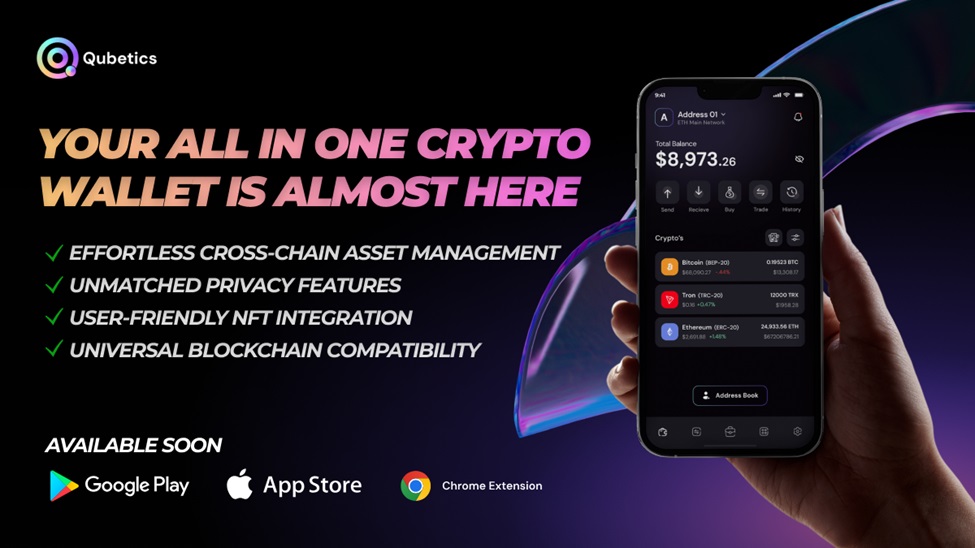
The Qubetics presale is not just an opportunity for massive returns; it’s also a chance to get involved with a project that solves real-world problems in digital finance and beyond. Whether you’re interested in the platform’s non-custodial wallet, its ability to tokenise real-world assets, or the innovative QubeQode development interface, Qubetics is a project that will change the way we think about blockchain.

Watch this video for more information.

Cosmos: Aims for Growth by the End of 2025

While Qubetics is setting the stage for a major breakout, another blockchain project—Cosmos—has been making strides toward growth and expansion in 2025. Cosmos is often referred to as the “Internet of Blockchains” due to its mission of solving the fragmentation problem in the cryptocurrency world.

With its Tendermint core and Cosmos SDK, Cosmos enables the creation of sovereign blockchains that can communicate with each other, a feature that sets it apart from traditional blockchain solutions like Bitcoin or Ethereum.

Cosmos has been working on scalability and interoperability for years, with the goal of connecting independent blockchains and allowing them to interact seamlessly. This is a crucial aspect of blockchain technology that many projects are still trying to tackle. As decentralised finance (DeFi) and tokenisation gain traction, Cosmos’ position as a hub for blockchain communication could become more important than ever.

In terms of price action, Cosmos has been steadily gaining attention and is expected to see significant growth by the end of 2025. The increased demand for interoperable blockchain networks, coupled with Cosmos’ well-established ecosystem, positions it well for the future.

Analysts are predicting that Cosmos could experience a substantial increase in price as the adoption of the platform’s solutions grows, making it an attractive investment for those looking to diversify their crypto portfolios. While Qubetics is in its presale phase, Cosmos is established and poised for continued growth in the years ahead.

EOS: Recovery from Legal Hurdles Could Lead to Long-Term Growth

Another coin to keep an eye on is EOS. Despite facing legal challenges in the past, EOS is showing signs of recovery and promises to grow once again. The EOS platform is designed to support the development of decentralised applications (dApps) with its high throughput and scalability. Its blockchain has been known for offering fast and low-cost transactions, making it a popular choice among developers in the DeFi space.

EOS experienced a rough patch in 2020 when it faced a legal battle with the U.S. Securities and Exchange Commission (SEC) over its initial coin offering (ICO). The case was eventually settled, but it left a cloud hanging over the project for a while. Now, with the legal hurdles behind it, EOS is focused on rebuilding and gaining momentum once again.

The future of EOS looks promising, especially as the platform continues to evolve and position itself as a leader in the dApp space. As more use cases for decentralised applications emerge, EOS could see a resurgence in adoption and, consequently, a rise in its price. While it may take some time for EOS to reach the same levels of attention it garnered during its ICO boom, many investors believe that its legal struggles are behind it, and the coin could experience long-term growth.

Conclusion: Qubetics Is on a Roll – Join the Revolution!

As we’ve seen, Qubetics is making waves in the cryptocurrency world, positioning itself as one of the best cryptos to buy in December 2024. With a potential surge to $15 after the mainnet launch, the opportunity to invest in $TICS at the presale price of $0.0282 is one that simply can’t be missed.

Whether you’re looking to get involved for short-term gains or long-term growth, Qubetics offers something for everyone.

Don’t wait—join the Qubetics presale today and secure your stake in the future of blockchain! With the presale price still available, this is your chance to be part of a revolutionary project before it goes mainstream. Ready to make your move? The time is now!

For More Information:

Qubetics: https://qubetics.com/

Telegram: https://t.me/qubetics

Twitter: https://twitter.com/qubetics

Microsoft Slammed With £1 Billion Lawsuit Over Alleged Cloud Licensing Practices

0

Tech giant Microsoft has been slammed with a lawsuit, accusing the company of overcharging customers using rival cloud platforms.

The legal action seeks damages of more than £1 billion ($1.27 billion), as it alleges that businesses using Amazon Web Services (AWS), Google Cloud Platform, or Alibaba Cloud, which are major competitors to Microsoft’s Azure, are forced to pay inflated prices to license Microsoft’s Windows Server software on these rival infrastructures.

According to the lawsuit, Microsoft offers Windows Server licenses at a lower cost to customers who use Azure, its cloud platform, than to those opting for competing services. This practice, according to the lawsuit, unfairly increases costs for organizations choosing alternative cloud solutions and leverages Microsoft’s dominant position in cloud-based server operating systems to push customers toward Azure.

Maria Stasi, a competition lawyer and the claimant, is seeking compensation for UK businesses affected by these practices. Stasi argues that Microsoft’s approach is anti-competitive, forcing UK organizations to overpay and restricting fair competition.

In her words,

Microsoft is punishing UK businesses and organizations for using Google, Amazon, and Alibaba for cloud computing by forcing them to pay more money for Windows Server. This lawsuit challenges Microsoft’s anti-competitive behavior and seeks to return the money unfairly overcharged to organizations across the UK.”

The lawsuit coincides with increased regulatory attention from the UK’s Competition and Markets Authority (CMA), which is expected to propose remedies for anti-competitive practices in the cloud sector. A provisional decision from the CMA is anticipated between November and December 2024.

Recall that in June this year, Microsoft reached a €20 million ($21 million) settlement with the EU cloud trade body CISPE to resolve an antitrust complaint over similar licensing issues in Europe. Cloud services organization CISPE, whose members include Amazon and a score of small EU cloud providers, complained to the European Commission in late 2022 alleging that contractual terms imposed by Microsoft on Oct. 1 were harming Europe’s cloud computing ecosystem.

Also, in September 2024, Google filed an antitrust complaint with the European Commission accusing Microsoft of using unfair licensing contracts to stifle competition in the multibillion-dollar cloud computing industry. At the heart of Google’s complaint is the allegation that Microsoft uses unfair licensing terms to “lock in” clients and exert control over the cloud market.

The outcome of the latest lawsuit slammed on Microsoft, and the CMA’s pending decisions could significantly impact competition and licensing practices in the cloud computing industry. While Microsoft’s dominance in the cloud computing market provides it with significant leverage, the lawsuit and regulatory actions could challenge its business practices, leading to potential financial costs, operational adjustments, and reputational risks.

The outcome will not only affect Microsoft’s future strategy but could also reshape competition dynamics in the global cloud computing industry.

Elon Musk’s $56 Billion Tesla CEO Pay Package Voided Again: Court Finds Compensation Improperly Granted

0

Tesla CEO Elon Musk faced a major legal defeat on Monday when a Delaware court reaffirmed its earlier decision to void his record-breaking $56 billion 2018 compensation package, the largest pay plan in U.S. corporate history.

Chancellor Kathaleen McCormick rejected Tesla’s attempt to overturn her January ruling, stating that the package was approved through a flawed process and heavily influenced by Musk himself.

Tesla responded by announcing plans to appeal the ruling, while Musk denounced the decision on X, the social media platform he owns, calling it “absolute corruption.”

Background of the Case

The controversial 2018 pay package was structured to provide Musk with stock options valued at $56 billion if Tesla met specific performance milestones, including market capitalization and operational goals. At the time, Tesla’s board described the plan as an innovative way to incentivize Musk, aligning his financial rewards with the company’s success.

However, shareholders filed a lawsuit, alleging that Musk used his dominant influence over Tesla’s board to secure the package. The plaintiffs claimed the board had failed to conduct a fair negotiation or provide proper oversight.

During the trial, Chancellor McCormick agreed with the shareholders, ruling in January 2024 that Musk had “controlled Tesla” and dictated the terms of his pay plan. She described the approval process as “deeply flawed” and stated that the compensation package violated corporate governance principles.

Following the ruling, Tesla attempted to sway the court by holding a shareholder vote in June 2024, asking investors to retroactively approve the pay plan. However, McCormick dismissed this strategy in her Monday opinion, emphasizing that such actions could not alter the original judgment.

“Even if a stockholder vote could have a ratifying effect, it could not do so here,” McCormick wrote in her opinion Monday. “Were the court to condone the practice of allowing defeated parties to create new facts for the purpose of revising judgments, lawsuits would become interminable.”

As part of her ruling, McCormick awarded $345 million in attorney fees to the legal team representing Tesla shareholders. The law firm Bernstein, Litowitz, Berger & Grossmann, which successfully argued the case, praised the decision.

“We are pleased with Chancellor McCormick’s ruling, which declined Tesla’s invitation to inject continued uncertainty into court proceedings,” the firm said in a statement.

Musk’s Wealth and Position in the Billionaire Index

However, the ruling does not impact Musk’s standing as the world’s wealthiest individual. According to Bloomberg’s Billionaires Index, Musk remains firmly at the top, with a net worth of $ 330.1 billion as of December 2024. His wealth is largely derived from his stakes in Tesla and SpaceX, as well as his recent ventures in AI and social media.

Tesla’s stock price, which has seen significant gains in recent weeks, has bolstered Musk’s fortune. Shares of the electric vehicle giant have surged 42% since November 2024, driven by investor optimism about Musk’s influence on U.S. policies and the company’s growing market dominance. Even without the 2018 pay package, Musk’s Tesla holdings are valued at approximately $150 billion.

Had the pay package remained valid, Equilar estimates suggest its value would have exceeded $101.4 billion at Tesla’s current stock price.

Corporate Governance Concerns

The court’s decision highlights longstanding concerns about corporate governance at Tesla, where critics argue Musk wields disproportionate influence over the board and major decisions. The ruling could set a precedent for greater scrutiny of executive compensation, especially in cases where corporate leaders hold substantial sway over their companies.

Following the January ruling, Musk publicly criticized Delaware’s legal system, advising businesses to avoid incorporating in the state. Tesla subsequently held a shareholder vote to reincorporate in Texas, completing the process earlier this year. Musk’s other ventures, including SpaceX, have also shifted their incorporation to Texas.

For now, Musk’s status as a billionaire entrepreneur remains intact, but the final outcome of the case is expected to have lasting implications for executive pay practices and shareholder rights.