DD
MM
YYYY

PAGES

DD
MM
YYYY

spot_img

PAGES

Home Blog Page 2587

Beyond the Numbers: Rethinking Nigeria’s Tax Bill Through Equity and Trust

0

In Nigeria’s fiscal landscape, the new tax bill has sparked debates about its potential to recalibrate the nation’s revenue streams and foster economic sustainability. In this piece, our analyst addresses some critical questions as the debate rages on. What problems does the bill claim to address, whose interests does it prioritize, and how does its framing influence public perception? Beyond its technical language, the tax bill carries profound implications for equity, governance, and social justice.

Framing the Problem: Revenue Dependency and Tax Evasion

At its core, the tax bill identifies Nigeria’s over-reliance on oil revenues and low tax compliance as critical fiscal challenges. By expanding the tax base to include emerging sectors, such as digital markets, and strengthening enforcement mechanisms, the bill seeks to address these issues. On the surface, these appear to be pragmatic solutions to fiscal instability.

Yet, this framing of the problem carries certain assumptions. It portrays fiscal deficits as primarily a technical issue of insufficient revenue collection rather than a systemic one rooted in governance deficits. Corruption, inefficiencies in tax administration, and lack of transparency—critical factors undermining public trust—are conspicuously absent from the policy’s narrative. By narrowly focusing on compliance, the bill risks perpetuating the view of taxation as an extractive tool rather than a collective investment in national development.

The Power Dynamics of Tax Policy

Taxation is inherently political, reflecting and reinforcing power dynamics within society. In this context, the bill elevates the state as the primary authority over economic activities while positioning taxpayers as subjects of compliance.

However, this dynamic reveals a trust deficit. Decades of mismanaged public funds have eroded citizens’ confidence in the government’s ability to utilize tax revenues effectively. Without addressing this trust deficit, efforts to expand compliance may encounter resistance, particularly from informal workers and small businesses already burdened by economic uncertainties.

Further, the bill aligns with global tax standards, such as curbing Base Erosion and Profit Shifting (BEPS) by multinational corporations. While this alignment is commendable, it largely serves the state’s interests in negotiating with large corporations. Meanwhile, local businesses—especially those in the informal sector—struggle with limited institutional support, placing them at a disadvantage in this new tax regime.

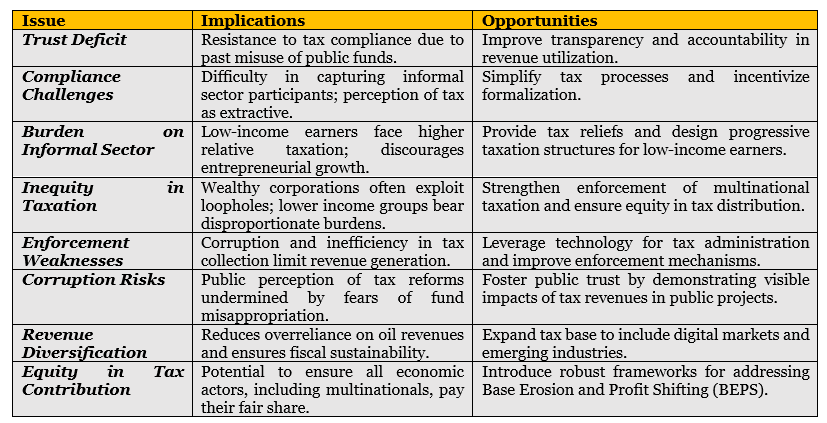
Exhibit 1: Issues and opportunities in the proposed bill
tax
Source: Nigeria’s 2024 Tax Bill; Infoprations Analysis, 2024

Language and Legitimization

The language of the tax bill is steeped in technical jargon, emphasizing modernization, compliance, and revenue diversification. This language conveys a sense of inevitability and progress, masking the political nature of taxation and its redistributive consequences.

For example, terms like “tax compliance” and “enforcement mechanisms” are presented as neutral tools for fiscal discipline. However, they carry implicit moral judgments, framing taxpayers as either cooperative citizens or deviants undermining national development. This binary framing risks alienating small businesses and informal workers, who may face systemic barriers to compliance rather than deliberate tax evasion.

Moreover, the bill’s language overlooks the socio-political realities of enforcement. Increased taxation without addressing systemic inefficiencies in tax collection could exacerbate the financial burden on marginalized groups while enabling elites to exploit legal loopholes.

Equity in Focus: Who Gains, Who Loses?

From a social justice perspective, the bill raises critical concerns about equity. Its emphasis on broadening the tax base may inadvertently burden low-income earners and small businesses, who already operate in a challenging economic environment. Without progressive measures—such as tax reliefs for low-income groups or incentives for small businesses—the reforms risk deepening existing inequalities.

Conversely, the bill’s provisions for addressing multinational corporations’ tax practices represent a potential win for equity. By ensuring that wealthier corporations contribute their fair share, the policy could reduce fiscal inequities. However, the effectiveness of these measures hinges on robust enforcement mechanisms and the government’s willingness to resist corporate lobbying.

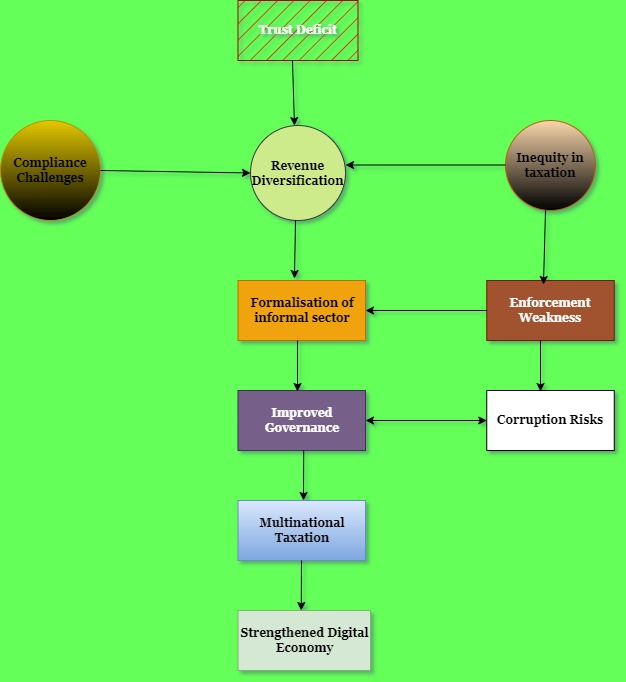
Exhibit 2: Network of issues and opportunities in the proposed tax bill
issues in taxation
Source: Infoprations Analysis, 2024

The Informal Economy: A Marginalized Stakeholder

The informal economy, which constitutes a significant portion of Nigeria’s GDP, is notably underrepresented in the bill’s narrative. While the policy seeks to integrate informal workers into the tax system, it provides little clarity on how systemic barriers—such as lack of financial inclusion or complex registration processes—will be addressed.

For many informal workers, taxation is not just a financial burden but also a bureaucratic challenge. Simplifying tax processes, providing incentives for formalization, and ensuring that tax revenues translate into tangible benefits are critical to fostering compliance and trust among this group.

Public Trust and Governance: The Missing Link

The success of any tax reform lies in its ability to foster public trust. Citizens are more likely to comply with tax obligations when they perceive that revenues are being utilized transparently and effectively. Unfortunately, Nigeria’s fiscal history is marred by allegations of corruption and mismanagement, undermining confidence in the tax system.

To bridge this trust gap, the government must adopt a participatory approach to tax reform. Engaging citizens in fiscal decision-making, enhancing transparency in public expenditure, and demonstrating accountability are crucial steps toward building a more inclusive and equitable tax system.

Toward a Just and Sustainable Fiscal Future

The Nigerian tax bill represents a significant step toward fiscal modernization and economic diversification. However, its potential benefits must be weighed against its social and political implications. By framing taxation as a neutral economic tool, the policy risks obscuring its redistributive effects and marginalizing vulnerable groups.

To ensure its success, the government must go beyond technical fixes and address the deeper systemic issues that undermine public trust. This includes tackling corruption, simplifying tax processes, and fostering a more inclusive dialogue on fiscal priorities. By aligning taxation with broader social and economic goals, Nigeria can create a tax system that not only generates revenue but also promotes equity, inclusion, and trust.

In the end, taxation is not merely about numbers; it is about building a fairer society where every citizen, regardless of income or status, contributes to and benefits from national development. Through a more equitable and transparent tax policy, Nigeria can lay the foundation for a just and sustainable fiscal future.
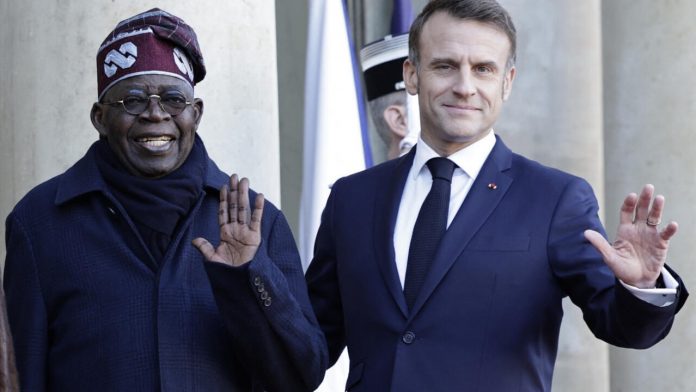

Tinubu and Macron Sign €300m Landmark Agreements to Boost Nigeria’s Development

0
CREATOR: gd-jpeg v1.0 (using IJG JPEG v80), quality = 82

President Bola Ahmed Tinubu of Nigeria and French President Emmanuel Macron have signed two major agreements aimed at driving Nigeria’s development in critical sectors, including agriculture, infrastructure, and energy.

The agreements, valued at over €300 million, were formalized during President Tinubu’s state visit to France at an economic forum at the Palais des Elysée in Paris.

The forum, attended by business leaders, government officials, and stakeholders from both countries, marked a significant step toward strengthening Nigeria-France relations. Nigeria’s Minister of Finance and Coordinating Minister of the Economy, Mr. Wale Edun, and representatives from the French government signed the agreements, setting the stage for long-term collaboration.

A €300 Million Commitment to Infrastructure and Food Security

According to a statement from the Adviser to the President on Information and Strategy, Bayo Onanuga, the partnership aims to improve critical infrastructure and bolster agricultural value chains while enhancing food security across Nigeria’s six geopolitical zones.

“The two countries affirmed their commitment to work together on investment and development of critical infrastructure, healthcare, transportation, agricultural value chain, renewable energy, and human capital development, through diverse financial and technical assistance programmes, of over Euros 300m spread across all geopolitical zones in the country,” the statement read.

The agreements also focus on fostering mutual trade by removing fiscal barriers, protecting labor rights, and providing technical support to key sectors.

Another agreement, signed by Mr. Edun and the Chief Executive Officer of the French Development Agency (AFD), Mr. Remi Rioux, is designed to support Nigeria’s Renewed Hope Agenda, a set of reforms aimed at revitalizing the economy.

“The AFD reaffirmed its commitment to long-term support of the Renewed Hope Agenda of Mr. President on energy access and transition, sustainable agriculture, and food security by financing the improvement of agro-logistic hubs,” the document stated.

It further outlined commitments to sustainable urban infrastructure, transportation networks, housing, and education, particularly in science, technology, engineering, and mathematics (STEM).

“Importantly, the AFD committed to supporting the real sector by providing capital for MSMEs in high-impact sectors,” the statement added.

The partnership also seeks to address Nigeria’s longstanding infrastructure and energy deficits. With millions of Nigerians lacking access to reliable electricity and facing poor transportation networks, the agreements prioritize urban infrastructure development and renewable energy projects.

The AFD’s commitment to energy access and transition aligns with global efforts to combat climate change while addressing Nigeria’s growing demand for electricity.

While the agreements represent a major opportunity, their success will depend on Nigeria’s ability to address systemic barriers, including corruption, inefficient governance, and security challenges.

The Tinubu administration has pledged to ensure that the projects are implemented efficiently and transparently.

“The Federal Republic of Nigeria also affirmed its support for the projects financed by the AFD and committed to ensure that the implementation of the projects are expedited efficiently,” the statement emphasized.

A Shared Vision for Development

President Tinubu’s state visit to France underscores Nigeria’s determination to leverage international partnerships to address domestic challenges. As Macron emphasized during the forum, this partnership represents a shared vision for progress: “The Declaration set out the enduring relationship between the AFD and the FRN, and the AFD’s continuing commitment to support the socio-economic growth of Nigeria.”

While the agreements hold great promise, their impact will depend on whether Nigeria can create an enabling environment for these projects to succeed. With insecurity and infrastructural deficits still prevalent, the road to tangible development remains steep.

For instance, insecurity, particularly in the northern region, has disrupted farming activities and left vast swathes of arable land unused. This insecurity, driven by banditry and invasion of farmlands by herders, has exacerbated food insecurity and driven up food prices nationwide.

While the French government’s financial and technical assistance aims to provide a lifeline to the agricultural sector, which remains critical to Nigeria’s economy, the government is expected to tackle insecurity and other potential obstacles to the implementation of the agreement.

Shiba Inu Whales Bet Big on RCO Finance Following Predictions of a 22,304% Bull Run

0

Shiba Inu whales are selling their tokens huge amounts and joining the RCO Finance (RCOF) presale. As SHIB struggles below the resistance of $0.000028,  RCOF’s predictions of a massive 22,304% bull run gain traction.

The innovative AI-powered DeFi platform of RCO Finance is attracting more investors worldwide with its no geo-restrictions policy. Let’s learn why Shiba Inu whales are diversifying to RCOF.

>>  BUY RCOF NOW <<<

Shiba Inu Whales Sell 7.48 Trillion Tokens Amid Resistance at $0.000028

Reports from IntoTheBlock suggest Shiba Inu whales are selling off their SHIB tokens. There is a 712% increase in outflows from Shiba Inu whales’ wallets. On November 27, Shiba Inu whales sold over 7.48 trillion tokens, which was only 1.05 trillion on the day prior.

Yet, on November 28, SHIB was trading around $0.000025, with a weekly gain of 6%. For upward movement to continue, buyers must push SHIB above the $0.000028 resistance level.

A break above this level could move Shiba Inu toward $0.000039. If SHIB falls below the $0.000023 support level, it could signal a bearish reversal, and the price could drop to $0.000020.

Consequently, Shiba Inu whales are moving towards RCOF for a projected gain of up to 22,304%. Experts say this is the best way to grow their portfolio.

Invest Globally and Manage Easily Via RCO Finance

RCO Finance is receiving praise from Shiba Inu whales for its amazing AI-powered DeFi investment solution. The whales are amazed at the investment options in the fully automated, no-code platform.

Beginners are attracted more towards RCO Finance for its ease of access and user-friendly design. Moreover, RCO Finance has removed brokers and fund managers from their platform so that their users can access investment instruments directly.

In addition, RCO Finance’s AI robo advisor assists every user of its platform in building a portfolio and maximizing returns. First, it creates a personalized investment strategy based on your financial condition and risk tolerance capacity.

Then, it implements the strategy for you and adjusts your portfolio in real time based on its market forecasts. Its forecast is precise as RCO Finance has fed millions of historical data and has live access to financial data from verified sources.

RCO Finance’s platform offers over 120,000 assets from 12,500 asset classes, including stocks, forex, commodities, and more. You can trade or invest in any asset you like. The platform has also included tokenized RWAs.

Small investors can now buy and hold a fraction of tokenized real-world assets (RWAs) like real estate and Gold. Previously, these RWAs were only accessible to high-net-worth individuals or institutions, but RCO Finance has made it possible for everyone for everyone to invest in them.

Additionally, RCO Finance is a KYC-free ecosystem where anyone can join and invest anywhere in the world without any geo-restrictions.

RCOF Presale: Secure DeFi Investment with 22,304% Growth Potential

RCO Finance offers exclusive benefits to RCOF holders, such as staking rewards and dividends. Audited by SolidProof, its smart contracts are among the most secure in DeFi. Thus, Shiba Inu whales are accumulating the RCOF tokens, and a 50% buy bonus is currently available.

Currently priced at $0.055 in stage 3, RCOF aims to launch at $0.60 on Uniswap, offering 10x ROI to new investors. Analysts predict gains of 22,304% when the RCO Finance community matures, and RCOF’s demand rises shortly.

Buy RCOF now and gain 225x profit!

For more information about the RCO Finance Presale:


Visit RCO Finance Presale

Join The RCO Finance Community

Shiba Inu, Cardano, and PropiChain: The Top 3 Altcoins to Watch for 9,008% Gains in 2025

0

Despite the $310 million liquidations from the crypto market this week, Shiba Inu (SHIB) and Cardano (ADA) keep rising, making them two altcoins to watch closely in this cycle.

Yet, PropiChain is the one analysts call the best crypto to buy now, as the PCHAIN presale offers a much lower entry point and explosive profits upwards of 9,008%.

Shiba Inu (SHIB) and Cardano (ADA) Investors Face Dilemma After $300 Million Crypto Liquidations

Shiba Inu (SHIB) shows resilience in the face of market uncertainty, with a 3.98% surge over the past 24 hours.

Bitcoin’s (BTC) chilling fall from $99k to $92k sent crypto prices crashing, with Watcher Guru reporting $310 million in liquidations within 12 hours. The Shiba Inu price fell victim to the market decline, but SHIB is now back up, selling at $0.00002526 today.

In other news, Cardano (ADA), which fell with the broader market, has crossed the $1 mark once more to reach $1.01. Cardano (ADA) and Shiba Inu (SHIB) are worth investments, especially under the pro-crypto Trump administration approaches.

However, investors find them unattractive this late into the bull cycle, given SHIB’s notable volatility, ADA’s poor track record, and diminished profit potential for holders.

PropiChain (PCHAIN) Emerges Best Crypto for this Bull Run

Boasting potential gains of up to 9,008%, PCHAIN offers what Shiba Inu (SHIB) and Cardano (ADA) can no longer offer: early adoption profits and untapped growth.

With a revolutionary goal, groundbreaking technology, and a low presale entry point offering maximum ROI for investors, PropiChain is positioned to become the best crypto presale project to emerge from this bull cycle.

PCHAIN is powering PropiChain, a platform about to change how we do real estate businesses forever. PropiChain (PCHAIN) and today’s blockchain real estate solutions fundamentally differ in their approach to satisfying business needs.

Instead of handing out complex tools and expecting users to understand how to integrate them into existing businesses, PropiChain (PCHAIN) is creating the ultimate do-it-all platform, where users can tokenize real estate, discover valuable assets, transact them, store them, and manage property rights and rental agreements.

Blockchain is central to PropiChain’s (PCHAIN) vision, as the technology will provide three things: a tamper-proof, decentralized ledger, the ability to tokenize assets, and smart contract automation.

You cannot underestimate the need for a global shift from transacting properties with falsifiable paper deeds and records to blockchain-first platforms like PropiChain (PCHAIN). Statista reports that real estate suffered the highest losses from occupation fraud between 2021 and 2022, amongst every other industry, losing billions of dollars.

Yet, the most game-changing feature of PropiChain (PCHAIN) is the fractional ownership model through RWA tokenization. PropiChain will allow any individual to hold stakes as low as $100, $10, $5, or less in million-dollar properties in the most expensive areas, such as Manhattan or Monaco.

By removing the financial barrier to investing in real estate, PropiChain (PCHAIN) can expand the already $634 trillion real estate industry by opening its doors to millions of people across the globe who couldn’t traditionally afford it.

Accessibility is a key feature of PropiChain, so the platform is launching a global metaverse marketplace, enabling advanced property discovery, virtual property tours, virtual meetings, virtual negotiations, and even virtual property staging with augmented reality to test layouts and interior decorations without paying inspection fees.

Investors jubilate as experts say PropiChain’s metaverse marketplace will skyrocket the platform’s adoption and drive PCHAIN’s value upwards.

Another smart feature for property managers is smart contract automation, allowing for automatic leasing of properties and auto rent renewals that save time, effort, and costs by removing contractual processes and expensive middlemen.

Shiba Inu (SHIB) vs. Cardano (ADA) vs. PropiChain (PCHAIN): Which Crypto to Buy Now?

While seasoned tokens like Shiba Inu (SHIB) and Cardano (ADA) rally through a turbulent market, PropiChain (PCHAIN) is seizing the spotlight with unmatched profit potential.

Crypto analysts are calling PCHAIN the best altcoin to buy now, thanks to its presale offering a rare opportunity for investors to enter ground zero. The latest projections after the PropiChain BlockAudit security audit show that PCHAIN can surge 9,008% by Q1 2025.

Forget Shiba Inu and Cardano: PropiChain is the Best Crypto Presale To Buy Now

Crypto innovation is gradually moving to the tokenization of real-world assets, and even the CEO of BlackRock thinks so after his famous quote saying, “The next step going forward will be the tokenization of financial assets.”

PropiChain is leading the race to tokenize real estate and becoming the leading platform for discovering, trading, storing, and managing properties on the blockchain.

Investors have their eyes fixed on PCHAIN, as the altcoin is powering the revolution and poised for explosive growth, especially under Trump’s pro-crypto administration.

Crypto investors have been quietly accumulating PCHAIN in round one of the presale at $0.004, the lowest the altcoin will ever be. However, the PropiChain CoinMarketCap listing tripled traffic to the presale, meaning the window to acquire PCHAIN at its lowest price will soon be gone.

With a modest $500 acquisition in round one today, investors can make $1,540 by round two and $4,507 by the final round. From there, PCHAIN is projected to surge by another 9,008%, potentially bringing your initial investments to $405,990 by Q1 2025.

PropiChain (PCHAIN) is offering more gains than Shiba Inu (SHIB) and Cardano (ADA) combined, but the clock is ticking to make the most out of the presale. Click the links below to join round one of the PropiChain presale today.


For more information about the PropiChain Presale:

 Website: https://propichain.finance/

Join Community: https://linktr.ee/propichain

Dogecoin Or Shiba Inu? Elon Musk’s Grok AI Reveals Which Altcoin Will Turn $1,200 To $2.2 Million By 2025

0

Recently, as the crypto market gears up for another massive altcoin rally, an artificial intelligence Chatbot Grok AI, initiated by Tesla CEO Elon Musk, has made bullish speculations on an altcoin WallitIQ (WLTQ), predicting it will surpass top meme coins like Dogecoin and Shiba Inu (SHIB). This article discusses why the Grok AI developed by Elon Musk has predicted major surges in the WallitIQ (WLTQ) altcoin and what coin the AI chatbot believes is next for Shiba Inu (SHIB) and Dogecoin.

Elon Musk’s Grok AI Bullish On Dogecoin and Shiba Inu (SHIB)

The Grok AI created by Elon Musk started as a chatbot, has evolved into one of the most reliable prediction tools in the crypto market. It predicts the price of top assets in the coming months or weeks. Top meme coin, Dogecoin, was not left out, as the Elon Musk Grok AI speculates that Dogecoin could see a high of $0.34 and a low of $0.05 before the year runs out.

The Grok AI also made bullish speculation on Shiba Inu (SHIB), predicting that SHIB could see a 275% surge in value, reaching a high of $0.000030. At the same time, the Grok AI developed by Elon Musk suggested a low of $0.000006 for Shiba Inu (SHIB).

Recently, Dogecoin skyrocketed to about $0.45, surpassing the bullish speculations of Grok AI for the meme coin. Shiba Inu (SHIB) also rose to a price high of about $0.000029, approaching predicted values by the Elon Musk Grok AI.

Meanwhile, according to CoinGecko, Dogecoin currently trades around the $0.43 mark, ranking 7th in the crypto market, and Shiba Inu (SHIB) exchanges hands at $0.000025 and ranks 15th in the crypto market.

WallitIQ (WLTQ) Breaks Into Bullish Formation For 1000x Surge In Presale

Like Dogecoin and Shiba Inu (SHIB), the Grok AI developed by Elon Musk is bullish on WallitIQ (WLTQ), speculating that the altcoin is about to experience a 1000x surge in its ongoing presale.

In this presale, WallitIQ (WLTQ) is offering its altcoin WLTQ to everyone at a low price of $0.0171 in stage 1. However, by stage 2, the altcoin price will increase to $0.0243 per coin, enabling all early buyers to automatically profit from their investments.

The promise of automatic profit has convinced both large and small portfolio investors to pitch their tents with WallitIQ (WLTQ); however, they are also impressed with the AI-powered wallet in its ecosystem. This AI-powered wallet, like traditional wallets, enables users to spend, convert, buy, and save cryptocurrencies on a single interface.

However, unlike traditional wallets, WallitIQ (WLTQ) incorporates decentralization, Artificial intelligence, and machine learning algorithms, enabling users to do more with their assets. The artificial intelligence algorithms on WallitIQ (WLTQ) also allow users to carry out automated transactions. The automated transaction feature lets AI execute transactions for users at the best possible time, eliminating the constant need to monitor the crypto market.

WallitIQ (WLTQ) also introduces intelligent security. This advanced security feature incorporates an AI-powered anomaly detection technique and biometric authentications to protect each user’s digital assets from all cyber attacks. As an added security measure, WallitIQ (WLTQ) has agreed to an audit of its smart contract by SolidProof, a top blockchain security firm.

After thoroughly examining the smart contract, SolidProof found no serious abnormalities that can create loopholes that hackers can exploit to gain access into the platform. WallitIQ (WLTQ) also features WLTQ, an altcoin that powers the network and serves the purpose of utility and governance, enabling users to participate in the decision-making on the platform. Users who hold the altcoin will also be eligible to make passive income when they stake their tokens on the platform staking pool.

Conclusion

While the Elon Musk Grok AI is bullish on Dogecoin, Shiba Inu (SHIB), and WallitIQ (WLTQ), the AI prediction tool leans heavily on the latter. Interestingly, with 2025 already around the corner, WallitIQ (WLTQ) has been listed on asset tracking platform Coinmarketcap, boosting Fomo on the altcoin.


Join the WallitIQ (WLTQ) presale and community:

Join WallitIQ (WLTQ) Presale

 Join the WallitIQ (WLTQ) Community