DD
MM
YYYY

PAGES

DD
MM
YYYY

spot_img

PAGES

Home Blog Page 26

2025: The Year AI Minted Over 50 New Billionaires Amid Record Funding and Infrastructure Boom

0

Artificial intelligence dominated headlines, investments, and wealth creation in 2025 like no other sector, transforming entrepreneurs into billionaires at an unprecedented pace and solidifying AI’s role in everyday work and life.

According to Forbes, more than 50 new billionaires emerged from the AI ecosystem this year, driven by explosive valuations, massive funding rounds exceeding $200 billion globally, which captured 50% of all venture capital, up 16% from 2024 per Crunchbase, and infrastructure commitments rivaling national budgets. The year kicked off with a shockwave in January when Chinese startup DeepSeek released an open-source large language model trained with dramatically less compute than U.S. counterparts, sending ripples through markets and instantly elevating founder Liang Wenfeng to billionaire status with an estimated net worth of $11.5 billion.

U.S. frontrunner Anthropic, developer of the Claude model family, raised $3.5 billion early in the year at a $61.5 billion valuation, propelling all seven cofounders—including siblings Daniela and Dario Amodei—into the billionaire ranks for the first time. The company went on to secure a total of $16.5 billion in funding across rounds, culminating in a September valuation of $183 billion.

Infrastructure became the year’s defining theme. In January, President Donald Trump announced the $500 billion Stargate data center initiative involving OpenAI, SoftBank, and Oracle—sparking a cascade of commitments from tech giants. Meta, Alphabet, and Microsoft each pledged upwards of $65 billion toward AI compute facilities, fueling a data center construction frenzy that minted over a dozen new billionaires among suppliers and enablers.

Semiconductor networking firm Astera Labs saw its cofounders enter billionaire territory amid surging demand for high-bandwidth interconnects. Data center real estate player Fermi and Korean manufacturers ISU Petasys (chips) and Sanil Electric (transformers) similarly benefited from hyperscaler buildouts. Cloud provider CoreWeave, backed by Nvidia, achieved multibillion-dollar status, enriching its founders through explosive growth in GPU cloud services.

The talent and data wars intensified. In June, Meta acquired a 49% stake in data labeling leader Scale AI for over $14 billion, valuing the company at approximately $29 billion. The deal appointed 28-year-old CEO Alexandr Wang—already a billionaire since 2022—as Meta’s chief AI officer, while briefly making cofounder Lucy Guo (31, departed 2018 but retained equity) the world’s youngest self-made female billionaire at $1.4 billion.

Rivals filled the vacuum: Surge AI founder Edwin Chen reached an estimated $18 billion net worth via his 75% stake in the company, which hit a $24 billion valuation on $1.2 billion in 2024 revenue. Data labeling startup Mercor soared to $10 billion in October after a $250 million round, turning its three 22-year-old cofounders into the youngest self-made billionaires ever, each worth around $2.2 billion.

Multimodal AI captured imaginations in September with OpenAI’s Sora 2 launch, flooding social media with hyper-realistic generated videos and images. Billions flowed into image, video, and audio startups, notably ElevenLabs, whose AI voice synthesis platform raised $100 million at a $6.6 billion valuation in October, minting billionaires out of cofounders Mati Staniszewski and Piotr Dabkowski.

Workplace adoption accelerated dramatically: Gallup surveys showed weekly AI usage doubling from 11% in 2023 to 23% in 2025, with even higher penetration among developers. Microsoft CEO Satya Nadella—himself newly minted a billionaire through stock performance—revealed up to 30% of the company’s code was AI-generated. Coding tool Cursor from Anysphere reached a $29 billion valuation in November, creating four new billionaire cofounders.

Companies heavily leveraging AI, including video game developer Paper Games, translation software firm TransPerfect, and Chinese robotics maker Orbbec, propelled their founders into the billionaire ranks. As AI permeates industries from software to manufacturing, 2025’s wealth creation wave, fueled by unprecedented capital concentration and technological breakthroughs, marks the sector’s transition from hype to economic powerhouse. It has reshaped global billionaire lists and is expected to set the stage for even greater transformations ahead.


Ozak AI Continues Its Meteoric Rise — $5.12M Raised and Counting as Retail and Whale Investors Load Up Ahead of Listing

0

Ozak AI, or $OZ, has rapidly become one of the most exciting AI-powered crypto projects this year, putting together high-performance predictive intelligence with a DePIN-driven decentralized infrastructure model. Situated at the crossroads of AI automation and tokenized network growth, Ozak AI has managed to gain the interest of both retail traders and large-scale investors. As Phase 7 of its presale gains momentum, the project continues to exude strong market conviction against overall turbulence across the wider crypto sector.

Presale Progress: Nearing the $5.5M Mark With Fast Climbing Demand

The momentum of Ozak AI’s presale has now reached an unprecedented high, with the project currently in Phase 7 at a token price of $0.014. It has oversold 1.05 billion $OZ tokens sold, pushing total funds raised to $5.12 million. Such rapid progress places Ozak AI well within reach of its first $5.5 million milestone-an impressive level that signals both widening adoption and early investor confidence.

From its earliest phases, the $OZ token price has climbed significantly, reflecting more than a 400% appreciation from its starting range. With the next phase set to introduce a higher price and the project maintaining its $1.00 listing target, interest has continued to build among those seeking early entry into an AI-driven ecosystem poised for real-world adoption.

The Technical Foundation Behind Ozak AI’s Growing Appeal

The strength of Ozak AI’s architecture lies in its fusion of AI-powered infrastructure with a robust DePIN layer. By distributing compute workloads through decentralized networks and enhancing them with predictive analytics, Ozak AI enables faster data processing, automated insights, and the ability to adapt dynamically to market behavior.

Cross-chain compatibility ensures that the ecosystem can operate seamlessly across various blockchain environments, reducing friction for developers and partners integrating Ozak’s technology. Staking, governance, and ecosystem-wide participation strengthen the utility of the $OZ token, creating a long-term alignment between tokenholders and protocol development.

Security remains a central pillar of the project. Ozak AI’s successful Sherlock audit, which reported zero unresolved issues, reinforces its credibility at a time when presale investors are more cautious than ever.

A Powerful Partnership Network Fueling Ozak AI’s Expansion

Much of Ozak AI’s rising demand can be attributed to its expanding roster of strategic partnerships, each adding a new layer of value to the ecosystem. Its collaboration with SINT enhances the project’s real-time intelligence by enabling one-click AI agent upgrades, voice-controlled automation, and seamless execution of Ozak’s predictive signals. The project’s work with Hive Intel (HIVE) deepens its analytical capabilities, giving Ozak AI access to multi-chain blockchain datasets, NFT activity, smart contract intelligence, and wallet behavior patterns significantly boosting accuracy and model training.

Meanwhile, Ozak AI’s integration with Weblume empowers developers to instantly embed actionable market insights into dashboards and dApps using a no-code interface, speeding up real-world adoption. Its partnership with Meganet, a bandwidth-sharing network supported by over 6.5 million nodes, strengthens the project’s distributed compute environment, ensuring faster and more cost-efficient AI processing.

Why Retail and Whale Investors Are Buying Aggressively Before Listing

Despite recent market pullbacks, Ozak AI’s investor base continues to expand, with on-chain activity and presale participation indicating strong inflows from both retail traders and larger capital players. The appeal lies in the combination of low entry price, verified technology, and a clear roadmap that integrates AI, DePIN, and token utility into a cohesive ecosystem. Many analysts believe that the project’s fundamentals, especially its partnerships and expanding use-case network position it for substantial post-listing appreciation.

With a projected listing near the $1.00 mark, early investors purchasing at $0.014 see a favourable risk-reward ratio compared to other emerging AI tokens in the market.

Conclusion

As Ozak AI nears the $5.5 million mark, it continues to lead a trajectory proving that robust fundamentals and technological utility actually attract investor confidence-even in choppy market conditions. Having sold more than 1.03 billion tokens thus far in the fast-advancing presale, along with its rapidly expanding partnership ecosystem, Ozak AI is starting to stand out as one of the most promising AI-centric blockchain projects heading into its listing phase.

The surge of retail and whale participation is not accidental; it reflects growing recognition that Ozak AI is building infrastructure that could define the next wave of decentralized AI innovation. For many investors, getting in at $0.014 may be one of the most compelling early-stage opportunities before the project enters its next major valuation cycle.


For more information about Ozak AI, visit the links below:

Website: https://ozak.ai/

Twitter/X: https://x.com/OzakAGI

Telegram: https://t.me/OzakAGI

Guangzhou Futures Exchange Tightens Trading Rules for Platinum and Palladium Futures to Rein in Speculation

0

China’s Guangzhou Futures Exchange (GFEX) has announced a fresh set of trading curbs for selected platinum and palladium futures contracts, tightening position requirements and daily trading limits as part of broader efforts to manage volatility and curb speculative activity in the niche precious metals market.

In a statement issued on Thursday, the exchange said the changes will take effect from December 29 and will apply to several forward-dated platinum and palladium contracts that are actively traded by investors. For platinum, the affected contracts are PT2606, PT2608, PT2610, and PT2612, while the adjustments for palladium cover PD2606, PD2608, PD2610, and PD2612.

Under the revised rules, the minimum daily opening position for the specified platinum and palladium contracts will be raised from one lot to two lots. The minimum closing position will remain unchanged at one lot. Exchange officials said the adjustment is intended to raise the entry threshold for new positions, discouraging short-term, low-capital trades that can amplify price swings, while still allowing investors to reduce or exit positions smoothly.

Beyond the opening position requirement, GFEX will also impose a daily opening position limit of 300 lots per contract for non-futures company members and individual clients. The cap applies on a per-contract basis and is designed to prevent concentrated bets from dominating trading in markets that are relatively small compared with major base metals or energy futures. The exchange clarified that hedging transactions and market-making trades will be exempt from the limits, ensuring that industrial users and liquidity providers can continue to operate without restriction.

Platinum and palladium futures are among the newer contracts launched by the Guangzhou Futures Exchange, which was established to expand China’s derivatives market beyond traditional commodities and to strengthen the country’s role in pricing strategic resources. Both metals are critical inputs in automotive catalytic converters and are also used in electronics, chemicals, and jewellery, making their prices sensitive to shifts in global auto production, emissions regulations, and substitution between the two metals.

Market participants say these contracts can be prone to sharp price moves, particularly when liquidity thins or speculative interest rises. As a result, Chinese exchanges frequently adjust trading rules such as position limits, margins, and transaction thresholds to maintain orderly markets and contain systemic risk. Similar measures have been deployed in the past across commodities ranging from steel and coal to lithium and rare earths during periods of heightened volatility.

The timing of the latest curbs also comes as global platinum group metals markets face structural uncertainty. Demand is being reshaped by slowing growth in internal combustion vehicle sales in some regions, rising adoption of electric vehicles, and ongoing shifts in emissions standards. Supply dynamics, including output from major producers in South Africa and Russia, continue to add to price sensitivity.

By exempting hedging and market-making activity, GFEX appears to be signaling that its focus is squarely on speculative excess rather than on restricting legitimate risk management or liquidity provision. Traders said the measures are likely to moderate intraday volatility without materially harming overall market participation.

The exchange did not indicate whether further adjustments are planned, but analysts expect GFEX and other Chinese exchanges to remain proactive in fine-tuning trading rules as market conditions evolve and as newer futures contracts gain broader participation.

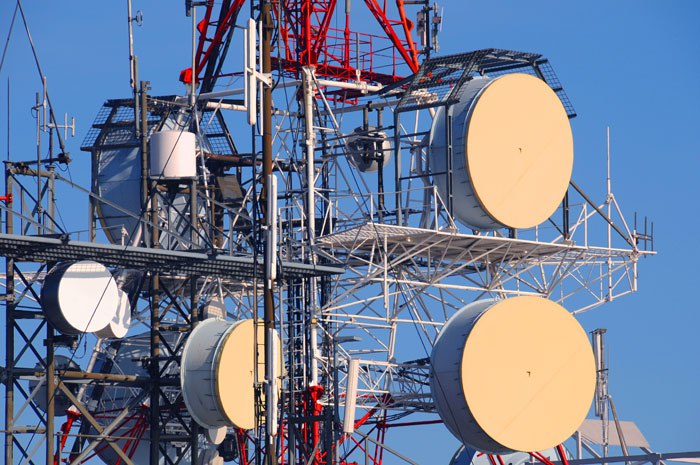
Nigeria Hits 50.58% Broadband Penetration Milestone in November 2025, But Misses 70% National Target

0

Nigeria’s broadband penetration crossed the 50% threshold for the first time in November 2025, reaching 50.58%—a historic milestone reflecting gradual improvements in digital infrastructure amid economic challenges.

However, this achievement underscores the country’s failure to meet the ambitious 70% target outlined in the National Broadband Plan (NBP) 2020-2025, which expires at the end of December 2025.

The shortfall highlights persistent structural barriers, including infrastructure deficits, regulatory hurdles, and economic pressures, despite concerted efforts to expand connectivity in Africa’s most populous nation. According to the latest industry statistics released by the Nigerian Communications Commission (NCC) on December 24, 2025, broadband subscriptions—defined as connections offering minimum speeds of 1.5 Mbps under the NBP—totaled 109.6 million in November, up from October’s figures and representing a 0.69 percentage point monthly gain.

Year-to-date growth stands at 6.15 percentage points, rising from 44.43% at the end of 2024, when broadband connections were approximately 91.5 million.

Total internet subscriptions, encompassing 3G, 4G, and emerging 5G, reached 144.7 million, a slight increase from 142.6 million in October.

Active voice subscriptions hit 177.4 million, with teledensity at 81.84% based on a population estimate of 216.7 million.

Market leadership remains concentrated among the “Big Four” operators.

MTN and Airtel’s dominance is driven by aggressive 4G/5G rollouts, with MTN launching commercial 5G in 28 cities and Airtel in over 20 states. Globacom’s fiber-optic backbone (Glo 1 submarine cable) supports its fixed broadband push, while 9mobile struggles post-rebranding and ownership changes.

While the 50% crossing—achieved two years after the NBP’s interim 50% goal for 2023—signals progress driven by mobile network expansions, competitive data bundles, and initiatives like the National Broadband Alliance for Nigeria (NBAN) launched in February 2025, stakeholders lament persistent structural barriers.

Gbenga Adebayo, Chairman of the Association of Licensed Telecommunications Operators of Nigeria (ALTON), attributed slow rollout to unresolved issues like multiple taxation (up to 40 levies per state), exorbitant right-of-way (RoW) fees (e.g., N145 per meter in some states despite federal waivers), and hidden levies, including education taxes, highway charges, imposed despite official waivers.

Additional challenges include infrastructure vandalism (19,000 fiber cuts reported in 2025, averaging 30-43 daily), unreliable power supply forcing diesel dependency (costing operators N500 billion annually in fuel), spectrum scarcity delaying 5G rollout, weak corporate governance, and SIM-NIN linkage mandates causing a 10-15 million subscriber drop in early 2025.

Foreign direct investment (FDI) in telecoms has plummeted (239% drop in 2023, continuing into 2025) due to forex shortages, naira devaluation (from N460/$ in 2023 to N1,600/$ in 2025), and policy instability.

The NBP 2020-2025, developed by ICT experts and approved in March 2020, set bold targets to bridge the digital divide:

  • 70% penetration by 2025 (missed; current 50.58%).
  • Minimum speeds: 25 Mbps urban, 10 Mbps rural (partial progress; average 15-20 Mbps in cities).
  • 50% by 2023 (delayed to 2025).
  • At least one smartphone assembly plant by 2023 (unrealized; reliance on imports; cheapest 4G devices >N100,000 vs. target N18,000).
  • 70% 4G subscriptions by 2023 (missed; now 51.99%; 5G at 3.6%).
  • Investment: $3.5-5 billion needed; actual inflows fell short due to economic headwinds.

Progress has been uneven: From 37.8% in 2020 to 50.58% in 2025, driven by 4G coverage reaching 80% of the population and fiber optic expansion—over 50,000 km laid.

Initiatives like NBAN of February 2025 promote infrastructure sharing to cut costs, while NCC’s approval for 4,000 new towers in 2025 aims to extend coverage to underserved rural areas, where penetration lags at ~30%.

Economically, broadband penetration is pivotal: A 10% increase correlates with 2% GDP growth, according to World Bank estimates, fueling sectors like fintech, e-commerce, and edtech.

Google’s 2025 report projects $1.1 billion higher GDP from penetration gains, enabling innovation, productivity, and digital inclusion—critical for Nigeria’s young population with 18 years median age.

Yet, the shortfall risks exacerbating inequality: Urban areas (e.g., Lagos at 65%) advance, while rural North lags (20-30%), hindering poverty reduction and SDG goals. As the NBP sunsets, focus shifts to a successor—potentially NBP 2026-2030—emphasizing fiber inland with 120,000 km target, 5G acceleration with spectrum auctions in Q1 2026, public-private partnerships, and affordability subsidies.

With Africa’s largest population, Nigeria’s trajectory is expected to influence regional digital ambitions—balancing incremental gains against the urgency for transformative infrastructure investment without succumbing to fiscal constraints.

China Urges Law-Compliant, Balanced Resolution as TikTok Moves to Hand Over U.S. Operations

0

China’s commerce ministry has said Beijing wants companies involved in the restructuring of TikTok’s U.S. operations to reach solutions that comply with Chinese laws and regulations and balance the interests of all parties.

This underscores its first substantive public comment as a long-negotiated deal to avert a U.S. ban on the app moves toward completion.

The remarks come weeks after TikTok’s Chinese parent, ByteDance, quietly signed binding agreements to hand over control of TikTok’s U.S. operations to an Oracle-led consortium, a breakthrough aimed at ending years of regulatory limbo and intense political pressure in Washington. Despite the significance of the transaction, Beijing has so far remained largely mum on the details of the deal, underscoring the sensitivity of the arrangement for Chinese authorities.

Speaking at a regular press conference on Thursday, commerce ministry spokesperson He Yongqian said China’s position was consistent.

“The Chinese government would like to see companies reach solutions that comply with Chinese laws and regulations and balance the interests of all parties,” she said, when asked directly about the TikTok handover.

He added that Beijing expects reciprocal goodwill from Washington. “It is hoped that the U.S. side will work with China in the same direction, earnestly fulfill its corresponding commitments, and provide a fair, open, transparent and non-discriminatory business environment for the continuous and stable operation of Chinese enterprises in the United States,” she said.

The deal, brokered earlier this month after months of renewed negotiations, would see control of TikTok’s U.S. business transferred to a new entity majority-owned and governed by U.S. investors. Oracle, which already hosts TikTok’s U.S. user data under a long-running data security partnership, is expected to take a central role in overseeing data storage, security architecture, and compliance. Other U.S.-based financial investors are also part of the consortium, according to people familiar with the arrangement.

Under the terms agreed so far, ByteDance would retain a minority, non-controlling stake in the U.S. entity, while relinquishing operational control and governance rights.  Three managing investors—Oracle Corporation, private equity firm Silver Lake, and Abu Dhabi state investment firm MGX—will collectively hold 45% of the new company. Another 5% will be owned by additional new investors whose identities have not been fully disclosed. Affiliates of existing ByteDance investors will hold 30.1%.

The structure is designed to address U.S. national security concerns by ensuring that TikTok’s U.S. operations, including data handling and content moderation policies, are effectively ring-fenced from its China-based parent.

The transaction is expected to be finalized by January, a timeline that reflects pressure from U.S. lawmakers and regulators who have threatened to enforce legislation that could force TikTok off U.S. app stores if it fails to sever ties with ByteDance. TikTok has more than 170 million users in the United States, making it one of the most politically charged technology platforms in the country.

China’s cautious language reflects the legal and political constraints surrounding the deal. Beijing has repeatedly stressed that any transfer of TikTok-related technology, particularly its recommendation algorithms, must comply with China’s export control rules, which were updated in 2020 to cover advanced data-processing technologies. Those rules effectively give Chinese authorities veto power over the export of TikTok’s core algorithm, a key reason negotiations stalled in previous years.

While the latest arrangement is structured as a transfer of operational control rather than a full sale of technology, it still requires careful navigation of Chinese regulatory requirements. That sensitivity helps explain why Beijing has avoided explicit endorsement of the deal, even as talks advanced and binding agreements were signed.

The commerce ministry’s comments also reflect broader frustration in Beijing over what it sees as discriminatory treatment of Chinese firms operating in the United States. TikTok has become the most prominent example of a wider pattern of scrutiny facing Chinese technology companies amid deepening strategic rivalry between the two countries.

If finalized as planned, the Oracle-led deal would mark one of the most significant forced restructurings of a major global tech platform. Whether it fully satisfies regulators on both sides, however, will only become clear once the final structure is approved and implemented early next year.