
DD
MM
YYYY

PAGES

DD
MM
YYYY

spot_img

PAGES

Home Blog Page 26

9 Ways AI Video Can 10x Your Content Output

0

Let’s be real — creating video content the traditional way is exhausting. You need a script, a camera setup, decent lighting, editing software, and usually a few hours you don’t have. Meanwhile, the algorithm keeps demanding more. AI video tools have fundamentally changed this equation, and creators who figure this out early are pulling ahead fast. Here’s exactly how AI video can multiply your content output without multiplying your workload.

1. Turn Blog Post Into Videos

You’ve already done the hard work of researching and writing. Why let that content sit in one format? AI video tools can transform a written blog post into a narrated, visually engaging video clip in a fraction of the time it would take to film and edit manually. One piece of long-form content becomes a YouTube video, a Reel, a TikTok, and a LinkedIn post — all from the same source material. That’s not repurposing. That’s multiplication.

2. Generate B-Roll Without a Camera Crew

B-roll footage used to mean hiring a videographer or spending hours hunting through stock libraries. AI video generation changes that completely. Type a description of the visual you need — a busy city street, a product close-up, a dramatic landscape — and generate it on demand. Your talking-head videos suddenly have professional-quality cutaways, and you never left your desk.

3. Produce Social Content at Scale

The biggest bottleneck for most creators isn’t ideas — it’s production time. AI video tools let you batch-generate content in a single session rather than producing each piece individually. Plan your content calendar for the week, generate your clips in one sitting, and schedule everything out. What used to take five days now takes an afternoon. Platforms like Pollo AI make this even more practical by giving you access to multiple leading AI video models in one place, so you can match the right tool to each piece of content without switching between a dozen different apps.

4. Animate Your Static Images

If you’re sitting on a library of product photos, illustrations, or brand visuals, AI video tools can animate them into eye-catching clips that perform significantly better on social media than static images. A still product photo becomes a dynamic showcase. A portrait becomes a cinematic moment. The content already exists — AI just makes it move.

5. Create Multilingual Video Content

Reaching a global audience used to mean either subtitles or expensive re-shoots in different languages. AI video tools with lip sync capabilities can generate localized versions of your content that match audio in different languages to on-screen characters naturally. You film once, and the AI handles the rest. Your content reach expands dramatically without your production effort expanding at all.

6. Prototype and Test Ad Creatives Faster

Running paid social campaigns means constantly testing new creatives. Traditionally, producing even a handful of video ad variations requires significant time and budget. With AI video generation, you can produce multiple creative concepts quickly, run them all, see what performs, and double down on winners — without wasting production resources on ideas that don’t land. Faster testing means faster learning, which means better results over time.

7. Build a Consistent Posting Rhythm

Consistency is one of the most important factors in growing an audience on any platform, and it’s also one of the hardest things to maintain when production is slow. AI video removes the production bottleneck that causes most creators to post inconsistently. When generating a video takes minutes rather than hours, maintaining a daily or near-daily posting schedule becomes genuinely achievable rather than aspirational.

8. Personalize Video Content for Different Audience

Generic content gets generic results. AI video tools make it practical to create slightly different versions of the same content tailored to different audience segments — different industries, different pain points, different tones. What would have required multiple production runs now requires multiple prompts. Personalization at scale is no longer a luxury reserved for brands with large production budgets.

9. Repurpose Long Video Into Short Clips

If you’re already producing long-form video — podcasts, webinars, YouTube videos, interviews — AI tools can help you extract the most compelling moments and repackage them as short-form clips optimized for different platforms. Instead of manually scrubbing through footage to find the highlights, the process becomes fast, systematic, and repeatable. Every long video you produce now has the potential to generate five, ten, or more pieces of derivative short-form content.

The Bottom Line

The creators and brands winning the content game right now aren’t necessarily working harder — they’re working smarter with better tools. AI video generation removes the production ceiling that used to cap how much content any individual or small team could realistically produce. The nine strategies above aren’t theoretical. They’re practical workflows that are already transforming how serious creators operate.

If you haven’t started exploring AI video tools yet, the gap between you and those who have is growing every day. Start experimenting, find the workflows that fit your content style, and let the technology do the heavy lifting. Your output — and your audience — will thank you for it.

Apple Names John Ternus CEO As Tim Cook Becomes Chairman

0

Apple has announced its first leadership transition in more than a decade, naming John Ternus as chief executive officer, succeeding Tim Cook, who will become executive chairman on September 1.

The move closes a defining chapter in Apple’s history and opens a more uncertain one, as the company confronts intensifying competition in artificial intelligence, geopolitical strain on its supply chain, and growing investor scrutiny over its innovation pipeline.

Cook, 65, will remain CEO through the summer to oversee the transition. Ternus, currently senior vice president of hardware engineering, will also join Apple’s board upon assuming the role, while chairman Arthur Levinson will shift to lead independent director.

“It has been the greatest privilege of my life to be the CEO of Apple and to have been trusted to lead such an extraordinary company,” Cook said. “I love Apple with all of my being, and I am so grateful to have had the opportunity to work with a team of such ingenious, innovative, creative, and deeply caring people who have been unwavering in their dedication to enriching the lives of our customers and creating the best products and services in the world.”

Ternus becomes Apple’s eighth CEO, taking over from a leader who transformed the company operationally and financially. Since succeeding Steve Jobs in 2011, Cook has overseen a roughly 24-fold increase in market capitalization, with Apple closing at about $4 trillion. Revenue has nearly quadrupled to more than $400 billion annually, driven in part by expansion into wearables such as the Apple Watch and AirPods, and newer categories like the Vision Pro headset.

Cook’s tenure was defined by operational discipline. A former supply chain executive with stints at IBM and Compaq, he rebuilt Apple’s global manufacturing network, turning it into one of the most efficient and tightly managed supply chains in the technology industry. That capability became a competitive advantage, allowing Apple to scale production and maintain margins even as its product portfolio expanded.

He also evolved into a central figure in policy and diplomacy. Cook’s engagement with governments ranged from defending user privacy, including a high-profile standoff with U.S. authorities over iPhone encryption, to navigating trade tensions under Donald Trump. His recent efforts included promoting Apple’s commitment to invest $600 billion in the United States, a move aimed at mitigating tariff risks and strengthening political alignment.

Yet the transition comes at a moment when Apple’s challenges are shifting from operational execution to technological leadership. Ternus inherits a company widely seen as trailing peers in artificial intelligence, an area reshaping the competitive landscape for consumer technology.

While Apple has continued to deliver strong hardware performance, including solid demand for the iPhone 17, it has faced criticism for lagging in generative AI capabilities. That concern intensified after delays to upgrades of its Siri voice assistant. The company has since moved to reset its AI strategy, including leadership changes and plans to integrate models such as Google Gemini into future products.

Ternus’s background signals continuity in hardware excellence but raises questions about how aggressively Apple will pivot toward AI-led services. Having spent roughly half his life at Apple, he has overseen engineering across flagship products including the iPhone, iPad, Mac, Apple Watch, AirPods, and Vision Pro. His elevation suggests Apple is betting on deep institutional knowledge and product integration as it navigates its next phase.

As part of the reshuffle, Johny Srouji will assume an expanded role as chief hardware officer, consolidating oversight of hardware technologies and engineering. That move could streamline development as Apple seeks tighter integration between silicon, devices, and software, a critical factor in competing on AI performance.

The broader context is less forgiving than the one Cook inherited. Apple faces a more fragmented global supply chain, shaped by geopolitical tensions and shifting trade policies. Tariffs and regulatory pressures are complicating manufacturing decisions, particularly in China and other Asian markets central to Apple’s operations.

At the same time, the surge in demand for AI chips is creating supply constraints across the semiconductor industry, adding a fresh challenge. Apple’s ability to secure and integrate advanced silicon will be central to its competitiveness in AI-driven products.

The transition also denotes a generational shift. Ternus, roughly 15 years younger than Cook, steps into the role at a time when Apple’s growth narrative is under scrutiny. The company must balance its legacy as a hardware innovator with the need to lead in software and AI, areas where rivals have moved faster.

The key question for investors is whether Apple can replicate its past formula of tightly integrated ecosystems in a world increasingly defined by AI platforms. Cook’s era demonstrated that operational excellence could drive extraordinary value. Ternus’s challenge will be to prove that Apple can still set the pace in defining the next wave of technology.

U.S. Supreme Court Tests SEC’s Power to Seize Illegal Profits in High-Stakes Disgorgement Case

0

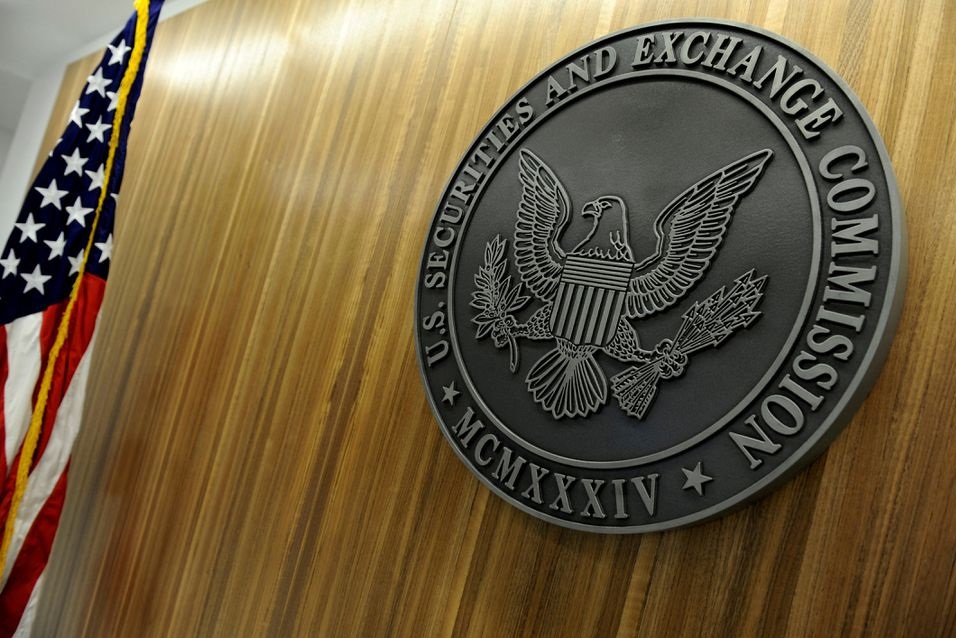
The U.S. Supreme Court is set to examine the reach of the Securities and Exchange Commission’s authority to strip illegal profits from wrongdoers, in a case that goes to the core of how the agency polices financial markets.

At issue is not whether the SEC can seek disgorgement, a remedy long recognized by courts and codified by Congress, but how far that power extends. The justices are being asked to decide whether the regulator must prove that investors suffered concrete financial harm before it can compel defendants to return ill-gotten gains.

The challenge is brought by Ongkaruck Sripetch, who was ordered to repay more than $3 million linked to a pump-and-dump scheme involving penny stocks. Sripetch admitted violating securities laws and served a 21-month prison sentence in a related criminal case. His argument now focuses on the limits of civil enforcement: that the SEC failed to show his actions caused stock prices to fall or inflicted measurable losses on investors.

The administration of President Donald Trump has defended the SEC’s broader reading of its powers, framing disgorgement as a tool aimed at removing incentives for fraud rather than compensating victims.

“Disgorgement is a remedy designed to strip ill-gotten profits from wrongdoers, not to compensate victims for their losses,” Justice Department lawyers argued in court filings.

The distinction is consequential because if disgorgement is treated primarily as a deterrent, the SEC can pursue it without tying profits directly to investor losses. If the court adopts Sripetch’s position, the agency would need to demonstrate a clearer causal link between misconduct and financial harm, raising the bar for enforcement.

The case arrives against a backdrop of heavy reliance on disgorgement. The SEC secured about $1.4 billion through the remedy in fiscal 2025, excluding certain large settlements, following $6.1 billion the previous year, when it accounted for nearly three-quarters of total penalties. Those figures underline how central disgorgement has become to the agency’s enforcement model, particularly in complex cases where identifying and compensating individual victims is impractical.

Lower courts have not spoken with one voice. A federal judge in California sided with the SEC, and the ruling was upheld by the U.S. Court of Appeals for the Ninth Circuit. But other appellate courts have taken a narrower view, requiring evidence of “pecuniary harm” to justify disgorgement. That divergence has created legal uncertainty for both regulators and defendants, prompting the Supreme Court to intervene.

Beyond the immediate case, the implications extend to how financial misconduct is deterred. Disgorgement operates on a simple premise: wrongdoing should not be profitable. By forcing defendants to give up gains, the SEC aims to neutralize the economic incentive behind fraud. Requiring proof of investor harm could complicate that approach, particularly in modern markets where losses are diffuse, indirect, or obscured by trading dynamics.

There is also a practical enforcement dimension. Many securities violations, including insider trading and market manipulation, generate profits that are easier to calculate than the losses suffered by counterparties. Imposing a strict harm requirement could limit the SEC’s ability to act in such cases, potentially shifting emphasis toward fines and penalties, which serve a different legal purpose.

However, critics of the SEC’s approach argue that expanding disgorgement without clear limits risks blurring the line between equitable remedies and punitive sanctions. They contend that requiring proof of harm would align enforcement more closely with traditional legal principles and prevent overreach.

The case also fits into a broader pattern of judicial scrutiny of administrative agencies. In recent years, the Supreme Court has signaled a willingness to narrow or clarify the scope of regulatory authority, particularly where statutes leave room for interpretation. This case could further define how far agencies can go in shaping enforcement tools that are not explicitly detailed in legislation.

For financial institutions and market participants, the ruling could alter risk calculations. A narrower disgorgement standard may reduce exposure in certain enforcement actions, while a broader one would preserve the current framework, where profits can be reclaimed even without a precise accounting of investor losses.

The stakes are therefore both legal and economic. At one end, a ruling in favor of Sripetch could constrain one of the SEC’s most potent tools, forcing a recalibration of enforcement strategy. At the other, a decision backing the agency would reinforce its ability to act decisively against misconduct in increasingly complex markets.

The court’s eventual decision is expected to clarify whether the principle that “fraud should not pay” is sufficient on its own, or whether regulators must also demonstrate who, precisely, paid the price.

Wall Street Stumbles After Record Run as Hormuz Disruptions Reignite Oil and Inflation Risks

0

U.S. equities pulled back on Monday, interrupting a powerful rally that had pushed major indexes to record highs, as renewed instability in the Strait of Hormuz forced investors to reassess assumptions around energy supply, inflation, and geopolitical risk.

The retreat followed a sharp shift in the Middle East narrative. Markets had surged late last week after Iran briefly reopened the Strait, easing fears of a prolonged bottleneck. That relief proved fleeting. Over the weekend, shipping activity again stalled, with security concerns and operational constraints effectively shutting the corridor that handles nearly 20% of global crude transit.

By late morning trading, the Dow Jones Industrial Average slipped 0.12% to 49,389.25, while the S&P 500 declined 0.33% and the Nasdaq Composite fell 0.55%. The move, while modest, marked a notable shift in tone after the S&P 500 and Nasdaq had recorded their strongest weekly gains in months and logged three consecutive record closes.

Oil led the reversal. Crude prices rose about 5% on Monday, reflecting renewed concerns over supply constraints. The increase lifted energy stocks within the S&P 500 but weighed on the broader market by reviving fears that higher fuel costs could feed back into inflation, complicating expectations for monetary easing.

The episode underlines a deeper fragility in the current rally. Much of last week’s momentum was built on the assumption that geopolitical tensions, particularly between Washington and Tehran, were moving toward containment. The abrupt re-disruption of Hormuz has challenged that premise, exposing how quickly sentiment can pivot when physical supply risks re-emerge.

Trump has said the US would not lift its blockade of Iranian ports until Iran agrees to a deal.

“THE BLOCKADE, which we will not take off until there is a ‘DEAL,’ is absolutely destroying Iran,” Trump wrote.

“They are losing $500 Million Dollars a day, an unsustainable number, even in the short run,” he argued.

Diplomatic signals have done little to anchor expectations. Iran is reportedly considering fresh talks with the United States in Pakistan, even as uncertainty surrounds the participation of U.S. officials. President Donald Trump has paired the prospect of negotiations with renewed threats of military escalation, reinforcing a pattern of mixed messaging that keeps markets reactive rather than forward-looking.

Iran says it has no plans to send negotiators to Pakistan for a new round of talks after the United States seized an Iranian-flagged cargo ship in the Strait of Hormuz. Still, Trump says the US team, led by Vice President JD Vance, is on its way to Islamabad,

Sector performance reflected these crosscurrents. Energy shares advanced, benefiting from higher crude prices, while technology stocks led declines as rising inflation expectations pressured valuations. Semiconductor companies were particularly weak, pulling down the Philadelphia SE Semiconductor Index, a bellwether for growth-oriented equities.

There were, however, pockets of resilience tied to structural themes. Marvell Technology rose about 4% after reports of potential collaboration with Google on AI-focused chips. The gain highlights how the artificial intelligence trade continues to provide selective support, even as broader market sentiment softens.

Consumer-facing and communication stocks bore the brunt of the pullback. Amazon and Meta Platforms declined, with Meta on track to end a nine-session winning streak. The moves suggest a degree of profit-taking in sectors that had led the recent rally.

Volatility metrics also turned higher. The CBOE Volatility Index climbed to a one-week high, signaling a modest uptick in hedging activity. While not indicative of panic, the rise reflects growing caution as investors navigate a market increasingly driven by geopolitical developments.

Beyond immediate price action, the situation raises broader questions about the durability of the current bull run. Markets have shown a willingness to discount geopolitical risk when it appears contained, but the repeated disruption of Hormuz suggests that energy security remains a live issue with the potential to reshape macro expectations.

The implications extend into monetary policy. Sustained increases in oil prices are expected to feed into headline inflation, complicating central bank efforts to balance growth and price stability. For equities, that introduces a second-order risk: even if corporate earnings remain strong, higher rates or delayed easing could compress valuations.

Earnings season, now coming into focus, will provide a more grounded test of market assumptions. Companies such as Lockheed Martin and IBM are set to report, while Tesla will open results from the “Magnificent Seven.” Investors are likely to scrutinize not just performance, but forward guidance for indications of how energy volatility and geopolitical risk are filtering into corporate planning.

Market breadth offered a mixed signal. Advancers slightly outnumbered decliners, and new highs continued to exceed new lows, suggesting that underlying momentum has not fully dissipated. Yet the reliance on a narrow set of drivers, AI optimism on one side, geopolitical risk on the other, points to a market that is balanced rather than firmly anchored.

Dangote Sugar Targets N500bn Rights Issue in Bid to Rebuild Balance Sheet and Fund Expansion

1

Dangote Sugar Refinery Plc is seeking to raise up to N500 billion through a Rights Issue, one of the largest equity offerings in Nigeria’s corporate history, as it moves to repair its balance sheet and position for a new phase of expansion under recently installed leadership.

The plan, approved by shareholders at the company’s 20th Annual General Meeting in Lagos, authorizes the board to issue new ordinary shares to existing investors on terms yet to be finalized. According to the company, the offer may be underwritten, and any shares not taken up by current shareholders could be placed with other investors.

“The Directors of the Company be and are hereby authorized to raise capital of up to N500 billion by way of Rights Issue,” the company said, underlining the scale of the fundraising and the flexibility being granted to execute it.

The move is seen as a balance sheet repair exercise following a period of heavy losses driven by rising input costs and currency pressures. It is also seen as a forward-looking capital allocation decision aimed at scaling operations in a market where demand remains resilient, but margins have been compressed.

Financial results illustrate that tension. In its 2025 audited accounts, the company reported a 24.56% increase in revenue to N829.2 billion, largely supported by bulk sugar sales, particularly the 50kg segment, which alone accounted for N807 billion. Yet profitability remains under strain. Cost of sales rose to N706.5 billion, driven primarily by raw material expenses of N573.3 billion, leaving a gross profit of N122.6 billion.

The company still posted a pre-tax loss of N72.2 billion, though that marks a significant improvement from the N270.8 billion loss recorded a year earlier. The narrowing deficit suggests that while operational performance is stabilizing, structural cost pressures, particularly around imported inputs, continue to weigh on earnings.

The Rights Issue is therefore as much about restoring financial flexibility as it is about funding growth. By raising equity rather than relying solely on debt, the company reduces leverage risk while creating capacity to invest in production, distribution, and potentially backward integration initiatives.

Geographically, Dangote Sugar’s revenue concentration also provides context for its expansion strategy. Lagos accounts for more than half of total sales at 55.82%, followed by northern markets at 35.35%, leaving relatively smaller contributions from the rest of the country. This distribution highlights both the strength of its core markets and the opportunity to deepen penetration in underrepresented regions.

The capital raise is expected to support those ambitions, particularly as competition intensifies and input costs remain volatile. Nigeria’s sugar industry continues to depend heavily on imported raw materials, exposing producers to exchange rate fluctuations and global commodity cycles. Expanding local capacity, whether through refining efficiency or upstream investments, remains a key long-term objective across the sector.

The company has also indicated that its share capital will be increased to accommodate the new issuance, with the board authorized to manage allocations, fractional holdings, and any unsubscribed shares in line with regulatory requirements. Unallotted shares may be cancelled, preserving capital structure discipline.

Leadership transition adds another dimension to the timing of the raise. The departure of former Group Managing Director Ravindra Singhvi and the appointment of Thabo Mabe signal a shift in operational direction. Mabe, who brings experience across multiple international markets, is expected to steer the company through a period that requires both cost control and strategic expansion.

The scale of the Rights Issue suggests that management is preparing for a capital-intensive phase. Whether that translates into capacity expansion, supply chain restructuring, or deeper vertical integration will become clearer as details of the deployment strategy emerge.

The offering presents a familiar trade-off for investors. Rights Issues allow existing shareholders to maintain their stakes, often at a discount, but they also reflect a need for fresh capital that can dilute earnings in the near term. The success of the raise will depend on confidence in the company’s ability to convert top-line growth into sustainable profitability.

More broadly, the transaction is indicative of a trend among large Nigerian corporates: turning to equity markets to navigate a challenging macroeconomic environment marked by currency volatility, inflation, and high financing costs. In that context, Dangote Sugar’s move is both defensive and strategic.

The company is stabilizing after a period of losses, but it is also positioning for scale in a market where demand fundamentals remain intact.