DD
MM
YYYY

PAGES

DD
MM
YYYY

spot_img

PAGES

Home Blog Page 2614

Solana (SOL), Tron (TRX), and Rexas Finance (RXS) Are Shaping the Next Era of Blockchain Innovation: Here’s How

0

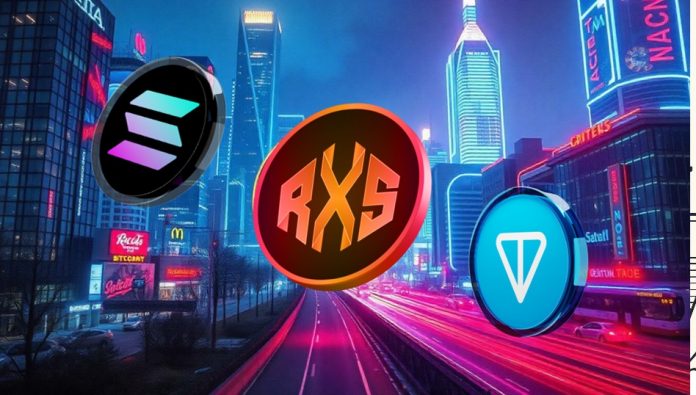
Since more individuals now invest and transact with cryptocurrencies, blockchain technology looks set to enter another level of innovation.  Solana, Tron, and Rexas Finance, each with its unique offers, are poised to lead the new era of blockchain innovation. Here’s how they influence the current crypto market through their innovative solutions. 

Rexas Finance (RXS): Redefining Investment Through Innovation

Rexas Finance is the next generation of blockchain technology that enables the tokenization of Real-World Assets (RWAs) like real properties and agricultural products. By utilizing this novel tokenization concept developed by Rexas Finance, people can sell these valuable assets through their fractional ownership, thus avoiding the traditional high entry-cost restrictions as well as geographical limitations. For instance, instead of buying a whole property that costs hundreds of thousands, an investor can purchase a small portion using RXS tokens.

The Rexas Finance ecosystem is a hallmark of innovation in the RWA tokenization sector. Its  novel features that differentiate it as a potential leader in blockchain innovations:

  • Rexas Token Builder: Simplifies token generation for non-technical users, making blockchain accessible to anyone.
  • Rexas GenAI: Allows users to create NFTs and tokenize digital art, expanding Rexas Finance’s reach beyond real estate and into other asset classes.
  • Rexas Launchpad: Allows users to raise funds and connect with global investors for their startups.
  • Rexas Estate: Enables fractional ownership of real-world properties, providing investors with passive income opportunities.
  • Rexas Treasury: Users can increase returns by staking, automating yield farming, and compounding interest strategies.
  • Rexas AI Shield: Secures transactions throughout the Rexas ecosystem, preventing breaches and other damaging threats.

Rexas Finance’s presale journey has been extraordinary, with six stages completed in just ten weeks. So far, 120 million tokens have been sold, totaling $12 million. Stage 7 is currently live, offering RXS for $0.09, with the next stage set at $0.10. Following the presale, RXS will be listed at $0.20 on three tier-1 exchanges, guaranteeing rapid liquidity and growth. Meanwhile, Certik just recently audited the platform, which provides top-tier security while minimizing risks and instilling investor confidence. This audit provides a key vote of confidence for potential buyers. The ongoing $1 million giveaway fuels the excitement surrounding RXS. Twenty winners will each get $50,000 in RXS tokens, providing a lucrative potential for community growth and investor participation. With an emphasis on democratizing asset ownership and an ecosystem of innovative features, Rexas Finance is set to shape the next era of blockchain innovation. 

Solana (SOL): Breaking Records Again

For Solana, November has been exceptional as it has gained over 50% so far. Solana’s price has surged to $264 in the last bull run. Its current market capitalization is $123 billion, demonstrating substantial investor interest. This growth is being driven by favorable market sentiment and growing use cases in DeFi, NFTs, meme coins, and Web3 projects. A pillar of blockchain innovation, Solana’s speed, scalability, and efficiency make it all prepared to extend its dominance in the crypto market. 

Tron (TRX): Steady Growth Toward a Milestone

Tron is steadily approaching its 2018 all-time high of $0.23, trading at $0.1996 today, up 0.4% in the past day and 10.3% in the last week. Tron’s scalable and low-fee infrastructure keeps it a favored choice for decentralized apps, with 22.7 million USDT holders compared to Ethereum’s 4.2 million. The current spike in daily transactions, which peaked at 6.94 million, demonstrates Tron’s scalability and growing ecosystem. These findings confirm Tron’s status as a premier blockchain network for stablecoin adoption and DeFi applications. 

Conclusion

Solana, Tron, and Rexas Finance are advancing blockchain technology through speed, scalability, and novel features. Their accomplishments herald the next wave of blockchain innovation. Rexas Finance comes itself as the most potential investment option. RXS’s robust ecosystem, successful presale, and planned tier-1 exchange listings position it for significant growth, making it a must-buy for forward-thinking investors.


For more information about Rexas Finance (RXS) visit the links below:

Website: https://rexas.com

Win $1 Million Giveaway: https://bit.ly/Rexas1M

Whitepaper: https://rexas.com/rexas-whitepaper.pdf

Twitter/X: https://x.com/rexasfinance

Telegram: https://t.me/rexasfinance

5 Single Points of Failure and How Your Company Can Avoid Them

0

In the IT world, something exists that workers call a “single point of failure.” It’s an ominous term, but not one that’s as catastrophic as it sounds. However, if a single point of failure becomes an issue, it can slow a company down or even force it to temporarily grind to a halt. 

Since single points of failure can disrupt your business, they’re worth talking about if your company has anything to do with IT. In this article, we’ll define single points of failure, and then we’ll identify five of the most common ones that can occur. We’ll also get into how your company can most easily avoid them.

What Does Single Point of Failure Actually Mean?

Let’s say for a moment that you have a company with some IT involvement. It would be hard to envision a business entity that does not need IT at least a little. Even if you have only minimal online activity, simply running a website requires some degree of IT expertise.

Single point of failure means that something failed within the general or broad confines of your IT system. When it did, it caused a total system shutdown. 

As you can imagine, having something that counts as a single point of failure can become problematic pretty quickly. What’s truly alarming, though, is that many companies have not one single point of failure, but many. They may not know about them until the worst actually happens and the network or their operation goes down. 

The Weakest Link Comparison

Some individuals in the IT world call a single point of failure the weakest link. If there are many interconnected pieces that make up a company’s online capabilities as a whole, a single point of failure, or weakest link, if you want to call it that, can prove disastrous if someone utilizes it for nefarious purposes. 

While you might think of hackers taking advantage of a single point of failure, incompetence can just as easily cause a system shutdown from this type of source. That’s why having backup plans or redundancies in place makes sense.

Now that you know about single points of failure in a more general sense, let’s talk about some of the particular ones that often prove the most problematic for companies of all kinds.

Human Error

As with any issue that a company might encounter, it’s best we start by talking about human error. A human might do something that turns them into an instant single point of failure. For example, they might accidentally delete some crucial data that the company didn’t back up. They may enter some incorrect credentials. Perhaps they’ll misconfigure a system.

Redundancies in the system can help you to guard against this as a company. You can also make sure to train your workers well. You will want to teach your employees not to open phishing emails, to change their passwords often, and to follow password complexity guidelines. 

Network Connectivity

Network connectivity can become a single point of failure if you have one critical component in the system that fails, and it causes network connectivity to go down. For example, maybe you have a central switch that someone trips, a primary router that malfunctions, or an internal service provider connection that suffers a fundamental breakdown.

Again, having redundancies in place can go a long way toward stopping this from happening. Also, you can avoid having centralized dependence. Single ISP reliance is also a mistake. If you have multiple internet service providers, then you can fall back on another option if your primary one stops working for a lengthy period of time. 

Load balancing should also help you. This involves having load balancers distribute your network traffic across multiple network connections and servers. That way, you won’t see any overload at a single point. 

Hardware Failures

A hardware failure can certainly represent a single point of failure. When that happens, it usually means you’re putting too much trust in a single piece of hardware, like a server. 

You never want to have one piece of server hardware that controls virtually everything that’s happening within your network. Even someone who’s just starting to learn about IT will tell you the same thing. Having backup systems, redundancies, and load balancing will also prevent this from happening. 

Power Outages

You can easily see how a power outage might represent a single point of failure for your business entity. If your power goes out, then the whole system goes down. It will likely remain that way until your power company takes steps to fix the problem.

If you have a system that utilizes a single power source, you’re asking for trouble. Once again, you want to have redundancies in place that can immediately restore power if your normal source goes down.

Having a generator on the premises makes sense, assuming you have a physical office space. You might also choose to set up power alerts and monitoring. 

This way, you should have ample warning before anything goes wrong. You can fall back on a different grid or a use a generator till the situation stabilizes. 

Software Failures

If you have some critical software that is part of your system, and it stops working, then you will lose the entire system until you can come up with a fix or a workaround. Backup measures and redundancies can help you, but you will also want to have robust security measures in place so that hackers can’t easily access your system. 

You might think that if you own a small company or you don’t have many competitors that no one will try to crash your system. Some hackers look for vulnerabilities not for industrial espionage purposes, but just because they like wreaking havoc. 

You should keep this in mind when you set up any software suite that controls much of your company’s functionality. Hiring ethical hackers who can probe your system for weaknesses makes sense. 

The History of Phone Ringing

0

Before the era of catchy ringtones, a simple, tinny sound would fill a room, calling everyone’s attention to that revolutionary device sitting on the table—the telephone.

Tring Tring. Tring Tring.

(Most people won’t even recognize the sound, and we don’t blame you for that!).

In the early days, phone ringing wasn’t just about alerting someone to an incoming call. It was much more. It was the sound of connection – a small moment that hinted at something significant happening just beyond reach.

Today, we take for granted the customizable ringtones or subtle vibrations in our pockets. But, phone ringing has evolved dramatically over the years. From the sharp trills of rotary phones to personalized ringtones, each era’s “ring” tells a story of technology, culture, and human connection.

Let’s journey back and explore how the sound of a ringing phone has evolved.

The First Telephone Rings

In 1876, Alexander Graham Bell’s invention of the telephone forever transformed communication. It allowed voices to travel over wires rather than through written messages. But an unexpected question quickly arose.

How would people know they had a call?

In the earliest days, phones lacked a ringer, so operators physically alerted people to pick up. Soon after, the “mechanical bell ringer” arrived, featuring a small, metal bell activated by an external hand crank. With a quick twist, this crank set off a distinct ring, echoing through rooms and signaling that a connection was waiting.

These first telephone rings weren’t just sounds–they were symbols of novelty and progress. As phones entered more homes, the ringing bell became a familiar, exciting presence. This early ringing system laid the groundwork for a universal alert. It marked the beginning of a long, evolving relationship between technology and our desire to connect instantly and audibly.

The Evolution of the Phone Ringing Sound

As telephones evolved, so did the way they rang. The manual crank was soon replaced by electric ringers. This change sparked the rise of the iconic, double-bell sound that would define telephones for decades.

This electric bell not only added consistency and convenience but also created a universally recognized alert. In the mid-20th century, the advent of rotary phones made ringing even more distinctive. Each “ding-ding” signaled a line connection and a call waiting.

Later, as automated switchboards became common, the ringback tone was introduced. This new sound—a steady buzz that played while waiting for someone to answer—reinforced the idea that a call was successfully placed.

As phone technology entered households around the world, these ringing and ringback sounds became deeply ingrained in everyday life. These laid the foundation for customizable ringtones that would soon allow us to choose sounds uniquely meaningful to each of us.

Ringtone Culture and Personalization in the Digital Age

The arrival of mobile phones in the late 1990s and early 2000s brought a major shift in ringtone culture. No longer bound to the traditional double-bell sound, users could now personalize their phone ringing sound with downloadable ringtones. Soon, popular songs, movie themes, and quirky jingles became the soundtrack of social interactions everywhere.

Remember those old Nokia phones before Android and iPhone were even a thing?

As ringtone options grew, so did the demand for customization. Entire websites and companies emerged. Currently, these platforms offer thousands of ringtone options, from polyphonic recreations of pop hits to ambient nature sounds. Every phone has a distinct ringtone with its own unique flair, making ringtones both a functional tool and a form of self-expression.

The ringtone boom marked the beginning of a new era. An era where technology and personal style met in the most audible of ways.

Creative Uses of Ringtones

While looking at the history of phone ringing or ringtones, the creative uses need a special mention. In movies and television, a carefully chosen phone ringing sound can instantly set the tone of a scene. The sudden ring of an old rotary phone often signals a moment of tension in thrillers, while a playful, modern jingle adds lightness to comedies. Similarly, in nostalgic scenes, the sound of a classic ringtone can transport viewers back in time.

Similarly, for content creators, such as social media influencers, filmmakers, and podcasters, a thoughtfully selected phone ringing sound can add authenticity and depth to their work. A ringing sound isn’t just a cue—it’s a storytelling tool that draws audiences into the moment. For instance, a YouTube video set in the 1980s might use the iconic ring of a rotary phone, instantly adding authenticity and evoking the nostalgia of that era for viewers.

Wrapping Up

From the clanging bells of early telephones to today’s custom ringtones, the sound of a ringing phone has evolved alongside our technology, culture, and ways of connecting. Each era’s distinct ring tells a story, marking changes in how we communicate and express ourselves. Today, creators can harness these sounds to add depth and authenticity to their projects, enriching storytelling in countless ways.

As we look ahead, the phone ring remains a timeless cue, reminding us of our ongoing need to connect.

Tekedia Capital Welcomes Corgi

0

Corgi (corgi.insure) is building the first full stack AI insurance carrier for the massive US insurance sector. If they succeed, it means an insurance company which uses 30,000 workers may just need 200 people, because AI agents and systems will run the operations at scale. Tekedia Capital (capital.tekedia.com) welcomes this amazing and pioneering company into our portfolio of companies.

Corgi, win the future, and become a unicorn. We’re here to support you.

Dangote Refinery Lowers Fuel Price to N970 Per Liter for Marketers

0

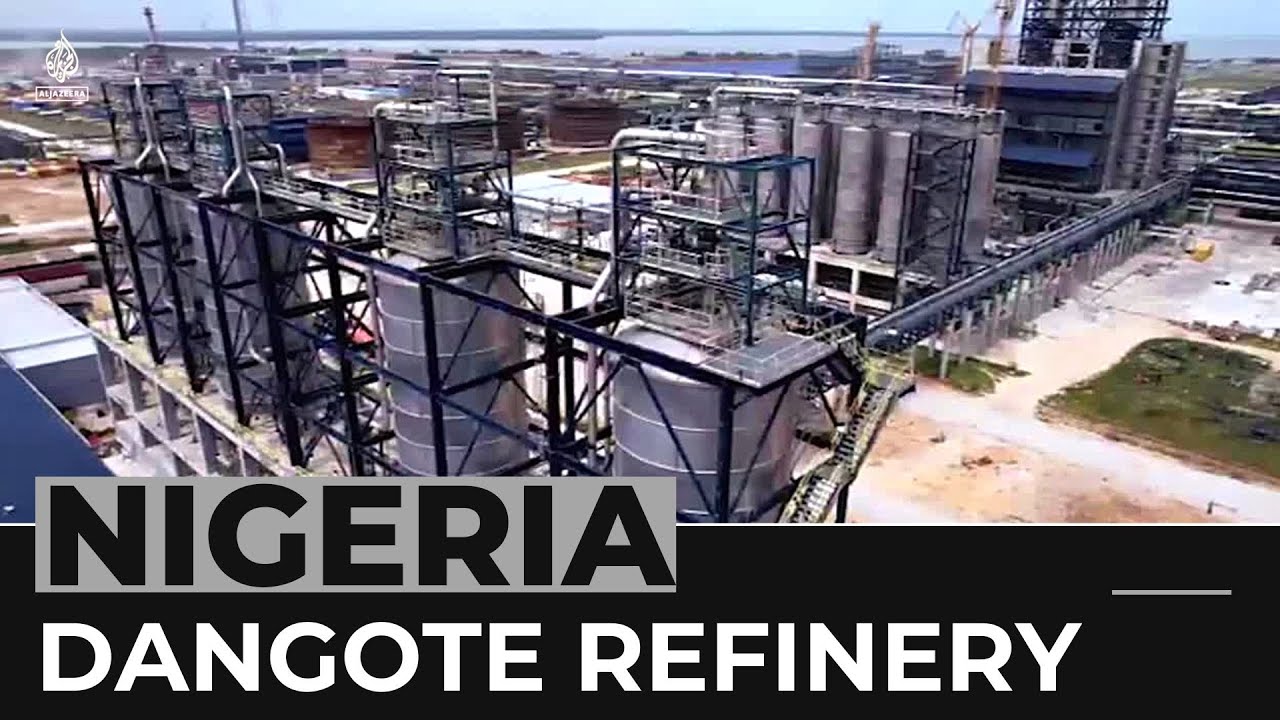
The Dangote Group has announced a reduction in the price of its Premium Motor Spirit (PMS), lowering it to N970 per liter from its previous rate of N990 per liter.

This adjustment comes as part of the refinery’s effort to support Nigerian consumers and marketers amid rising fuel price tensions. The announcement was made in a statement by Anthony Chiejina, the Group’s Chief Branding and Communications Officer, on Sunday.

Chiejina explained that this price reduction reflects the refinery’s commitment to offering competitive pricing while maintaining premium product quality.

He stated: “Dangote Petroleum Refinery has effected a reduction in the prevailing price of its Premium Motor Spirit (PMS) from N990/liter to N970/liter for the marketers. As the year comes to an end, this is our way of appreciating the good people of Nigeria for their unwavering support in making the Refinery a dream come true.”

The statement also reassured consumers of the quality of Dangote’s PMS, highlighting its environmentally friendly and sustainable properties. Chiejina added that the refinery is determined to ramp up production to meet domestic fuel consumption needs, reducing fears of supply shortages.

“While the refinery would not compromise on the quality of its petroleum products, we assure you of best quality products that are environmentally friendly and sustainable,” he said.

“We are determined to keep ramping up production to meet and surpass our domestic fuel consumption; thus, dispelling any fear of a shortfall in supply.”

The price reduction comes amidst ongoing tensions between Dangote Refinery and some marketers over the pricing of petrol. The Petroleum Products Retail Outlets Owners Association of Nigeria (PETROAN) criticized the refinery’s initial price of N990 per liter, arguing that importing PMS could be more cost-effective. PETROAN’s National Public Relations Officer, Joseph Obele, called for competition in the downstream sector to avoid monopolistic practices.

“The pricing from Dangote Refinery at N990 was inconsiderate, and we have finalized arrangements with foreign refinery partners to import high-quality PMS at a lower cost,” he said.

Obele refuted allegations from Dangote Refinery that PETROAN was planning to import substandard products, asserting that all products would meet regulatory standards.

However, Dangote Group countered these claims, asserting that significantly lower prices often indicate compromises in product quality or connections to oil theft. The company maintained that its products adhere to global regulatory standards, offering premium unleaded gasoline with 10ppm sulfur—a far superior quality compared to the 1,000ppm sulfur typically found in many imported fuels.

Kelvin Emmanuel, an energy and financial analyst, weighed in on the pricing debate, noting the quality gap between Dangote’s PMS and lower-cost imports.

He remarked: “The difference between Dangote selling at N970 and importers landing at N971 is significant. While they are landing substandard petrol of more than 1k ppm for sulphur, he’s selling premium unleaded gasoline of 10ppm sulphur that is accepted by regulators all over the world.”

Emmanuel likened the quality disparity to the contrast between luxury experiences, comparing a vacation in Bali to visiting a local destination (Oxbow Lake in Yenegoa), with far fewer amenities.

Dangote Refinery’s price reduction is seen as a strategic move to ease marketer concerns and foster stronger relationships within the sector. The Independent Petroleum Marketers Association of Nigeria (IPMAN) recently reached an agreement to lift petroleum products directly from Dangote’s facility, signaling improved collaboration.

The price adjustment also aligns with the refinery’s broader goal of addressing domestic fuel demands and reducing Nigeria’s dependency on fuel imports. However, industry analysts caution that Dangote Refinery’s competitive edge in quality and sustainability will need to be balanced with affordability to ensure long-term consumer and marketer support.