DD
MM
YYYY

PAGES

DD
MM
YYYY

spot_img

PAGES

Home Blog Page 2617

Bitcoin Resumes Upward Price Rally, Pushes Towards $100,000 Milestone

0

The price of Bitcoin has surged back above $96,000, recovering nearly 6% from a pullback earlier in the week that saw the price of the crypto asset trade as low as $90,868.

Bitcoin is currently trading at $95,648, at the time of writing this report, while Ethereum saw a sharper rebound, climbing over 9% to $3,636,46. Also, the broader crypto market, as tracked by CoinDesk rose by 7%.

Bitcoin has been on an upward trajectory since the November 5 US presidential election that saw Donald Trump emerge as the winner, pushing the gains of the crypto asset by 38% during that period. After the election, BTC continued to push up massively, reaching an all-time high of $99,849.99 before testing the $90,000 support level.

The selling pressure has been offset to some extent by institutional inflows, including purchases by MicroStrategy and bitcoin exchange-traded funds (ETFs). However, ETFs experienced $438 million in outflows on Monday, ending a five-day streak of inflows.

Traders have been cashing in for a second consecutive day following Bitcoin’s post-election surge, fueled by optimism about President-elect Donald Trump’s pro-crypto policies. According to Alex Thorn, head of firmwide research at Galaxy Digital, the current Bitcoin bull market has strong momentum despite potential regulatory uncertainties.

In his words,

“There will be corrections and hiccups, which is normal. But increasing institutional, corporate, and potentially nation-state adoption, coupled with a crypto-friendly incoming U.S, administration, points to further growth in the near and medium term.”

Also speaking, Katie Stockton of Fairlead Strategies added that Bitcoin is in uncharted territory with no clear resistance levels, as it recently reached $92,000 for the first time on November 13. She noted that Bitcoin’s typical trading pattern involves sharp runups followed by periods of consolidation. “Investors should be prepared to allow for volatility while focusing on the cryptocurrency’s long-term potential,” Stockton advised during a CNBC interview.

Bitcoin is up 126% year-to-date and is still widely anticipated to surpass the $100,000 milestone before the end of the year. Ether, while trailing Bitcoin with a 59% annual gain, remains a strong performer since the election. Notably, long-term Bitcoin holders further support a possible push toward the $100,000 mark.

According to data shared by on-chain analyst Martinez, this class of investors is exhibiting increased greed, a behavior historically linked to market tops. Previous cycles suggest it takes 8-11 months from such sentiment shifts for Bitcoin to peak. If the trend holds, the technical expert noted that investors could expect a potential market top between June and September 2025.

This positive outlook comes as Bitcoin attempts to recover after dropping to as low as $95,700 in the last 24 hours. Investors anticipate this as the last dip before the asset resumes the upward momentum triggered by Trump’s victory, who is expected to implement crypto-friendly policies.

Meanwhile, some players maintain that if BTC follows historical patterns, the asset will likely surge to $135,000 by December 2024. On the other hand, some see this rally as a peak that could lead to a sharp correction.
Reddit Overtakes X as the Fifth Most Popular Social Media Platform in the UK

0

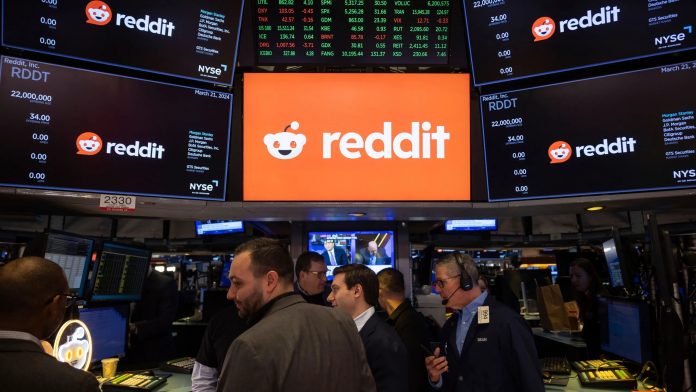
Reddit has surged past X (formerly Twitter) and LinkedIn to become the fifth most popular social media platform in the UK, according to Ofcom’s annual report on digital habits.

The platform was visited by 22.9 million UK adults in May 2024, representing a 47% increase compared to the same period in 2023. This growth positions Reddit just behind major platforms like YouTube, Facebook, Instagram, and TikTok.

At the same time, YouTube has overtaken Facebook to claim the top spot in the UK, reaching over 44 million users.

Reddit’s rise has been fueled by multiple factors, including strategic adjustments and shifts in the broader digital ecosystem. A key driver has been a 2024 update to Google’s search algorithm, which significantly increased Reddit’s visibility in search results.

Farhad Divecha, managing director of UK-based digital marketing agency AccuraCast, highlighted this boost, noting that Reddit’s content now appears more prominently in search queries.

“Google’s latest algorithm update in the first half of 2024 gave Reddit a big boost in organic search traffic. I think that has probably contributed a lot,”  Divecha said.

Additionally, Reddit’s decision to limit third-party apps from accessing its content forced users to engage directly with the official platform, bolstering site traffic. The platform’s IPO in March 2024 also garnered significant publicity, bringing new users into its fold.

Reddit’s community-driven appeal—centered on topic-specific forums known as “subreddits”—continues to draw users who prefer niche discussions and specialized content over the generalist approach of other platforms.

A Growing Exodus from X

While Reddit is flourishing, X is grappling with a decline in popularity, seeing its UK user base shrink by 8% since May 2023. The platform has struggled to maintain trust and user engagement under Elon Musk’s ownership, facing widespread criticism over weakened content moderation and the proliferation of misinformation.

This dissatisfaction has sparked a wave of departures among prominent figures, organizations, and news outlets, many citing an increasingly toxic environment and a failure to address disinformation. For example, prominent news organizations, including The Guardian UK, have pulled back from the platform, opting for alternatives that better align with their values and audience engagement goals.

The Rise of Bluesky and Threads

In the wake of X’s decline, competitors like Bluesky and Threads have experienced a surge in growth. Bluesky, a decentralized social platform, has gained attention for its focus on user control and data privacy. Threads, launched by Mark Zuckerberg’s Meta in July 2023, is rapidly positioning itself as a user-friendly alternative to X, attracting individuals and organizations disillusioned with the direction of Musk’s platform.

The influx of users to these platforms highlights a growing apathy toward X, with many users seeking spaces that prioritize trust, community, and authentic interactions over divisive content.

Ofcom’s report paints a broader picture of evolving digital habits in the UK. Misinformation remains a significant concern, with four in ten adults encountering false or manipulated content online. The spread of deepfakes and AI-generated content has further complicated users’ ability to discern authenticity, with one-third admitting they lack confidence in identifying such material.

Conspiracy theories also persist, with three in ten adults subscribing to the belief in a global elite controlling the world or claiming electoral fraud evidence in the UK.

Thus, the decline of X and the rise of alternatives like Reddit, Bluesky, and Threads reflect a shifting social media landscape. Users are increasingly prioritizing platforms that foster authentic, community-driven interactions while addressing concerns about misinformation and toxicity.

Elon Musk begins consolidation as SpaceX Starlink gets FCC approval with D2C Era Loading

0

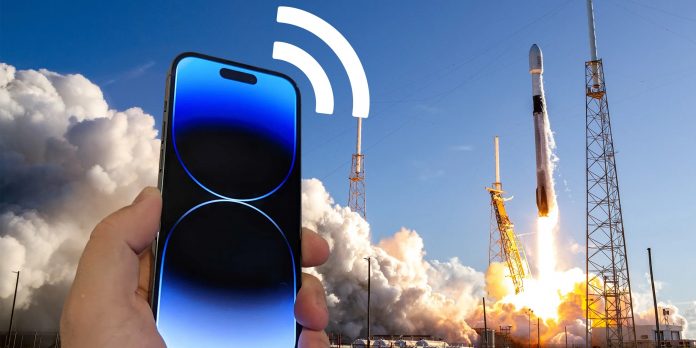
Elon Musk begins consolidation as SpaceX Starlink gets FCC approval: “The Federal Communications Commission (FCC) has granted SpaceX the green light to utilize its Starlink broadband satellites for providing T-Mobile customers with direct-to-cell connectivity. This decision marks a groundbreaking development in telecommunications, as it is the first official collaboration between a satellite operator and a wireless carrier to receive FCC approval for delivering supplemental cell coverage from space.”

In Nigeria, if you have an active mobile virtual network operator (MVNO) license, and can get NCC (Nigeria’s telecom regulator) to approve a partnership with SpaceX, that will enable you to deliver D2C (direct to cell) service across Nigeria, Tekedia Capital will invest in your business. If you do get NCC approval in principle, we will first invest at least $1 million.

We believe that GSM has a decade remaining as the future of telecoms is going to be anchored on satellite. CDMA destroyed the cobwebs of wired telephony (e.g. Nitel), and GSM took down CDMA (e.g. Visafone, Starcomms). Within a decade, satellites will take over as GSM operators lose marginal cost competitiveness.

FCC Approves SpaceX-T-Mobile Partnership for Direct-to-Cell Satellite Service

FCC Approves SpaceX-T-Mobile Partnership for Direct-to-Cell Satellite Service

0

The Federal Communications Commission (FCC) has granted SpaceX the green light to utilize its Starlink broadband satellites for providing T-Mobile customers with direct-to-cell connectivity.

This decision marks a groundbreaking development in telecommunications, as it is the first official collaboration between a satellite operator and a wireless carrier to receive FCC approval for delivering supplemental cell coverage from space.

In a statement accompanying the decision, the FCC highlighted the public benefits of the satellite-to-device service.

“The Commission recognized that satellite-to-device connectivity can support critical public interest benefits, including ubiquitous connectivity, access to 911 service from remote areas, technological advancement, and innovative spectrum use,” it said.

The SpaceX-T-Mobile partnership, initially announced in 2022, is aimed at eliminating cellular dead zones across the United States. It seeks to address long-standing connectivity gaps, particularly in remote areas where traditional terrestrial networks have struggled to provide reliable service.

The collaboration gained traction earlier this year when the FCC granted temporary clearance for the two companies to deliver Starlink services to regions affected by Hurricane Helene.

Other carriers have followed suit, with Verizon and AT&T establishing similar partnerships with satellite operator AST SpaceMobile to enhance coverage in underserved areas.

The FCC’s chair, Jessica Rosenworcel, emphasized the importance of fostering competition in this emerging field.

“The FCC is actively promoting competition in the space economy by supporting more partnerships between terrestrial mobile carriers and satellite operators to deliver on a single network future that will put an end to mobile dead zones,” she said.

Conditions and Challenges for Full Deployment

While the approval marks a major milestone, it comes with specific limitations. The FCC has not yet decided whether SpaceX can increase the radio emission power of its satellites to enable advanced features such as real-time voice and video calls. Rival carriers AT&T and Verizon have raised concerns, arguing that bypassing current power flux-density limits could lead to interference with their existing networks.

Additionally, the commission is still deliberating on whether SpaceX can expand its Starlink constellation by launching an additional 22,488 satellites. For now, the company is operating under an earlier approval to deploy 7,518 satellites granted in 2018.

SpaceX and T-Mobile have already begun deploying initial satellites equipped with direct-to-cell capabilities, with the first batch launched in January 2023. However, the complete constellation necessary to deliver full voice and data services is still under construction.

When granted temporary clearance last month, SpaceX hinted at testing basic texting (SMS) capabilities in collaboration with T-Mobile. The rollout of voice and data services, however, is not anticipated until 2025, as the companies work to refine the technology and expand satellite coverage.

A Game-changer in The Telecom Market

The FCC’s approval signals a significant shift in how telecommunications companies and satellite operators collaborate. By allowing satellite services to supplement terrestrial networks, the commission is advancing its goal of creating a unified, seamless connectivity ecosystem.

This move could redefine how mobile carriers address connectivity challenges, offering solutions for emergencies, remote communication, and broader network resilience.

The approval also puts SpaceX and T-Mobile at the forefront of an emerging space economy, where partnerships between satellite providers and terrestrial carriers are expected to become increasingly common.

Traditional cellular networks often struggle to provide reliable coverage in remote, sparsely populated, or disaster-stricken areas due to the high costs of building and maintaining terrestrial infrastructure. Starlink’s satellite-to-device connectivity eliminates these barriers by delivering broadband and mobile services directly to smartphones via satellite.

This innovation has been hailed as a game-changer, promising to eradicate cellular dead zones and ensure that no location is beyond reach.

How Direct-to-Cell Connectivity Works

Starlink’s system relies on low Earth orbit (LEO) satellites, which are positioned closer to the planet than traditional geostationary satellites. This proximity reduces latency, ensuring faster and more reliable communication. The satellites are equipped with advanced technology to communicate directly with standard smartphones without requiring additional hardware.

However, this technology does not replace terrestrial networks; instead, it complements them. For it to function, satellite operators like SpaceX must partner with telecom companies to integrate the service into existing mobile networks.

The approval of SpaceX’s partnership with T-Mobile is seen as a critical step toward global deployment. Beyond the U.S. which was the focus in 2022, the technology has the potential to revolutionize global telecommunications by extending connectivity to underserved and unserved regions, particularly in developing countries where terrestrial networks are limited or nonexistent.

Disruption Without Direct Competition

While Starlink’s direct-to-cell service is expected to disrupt the telecom market, it does not pose a threat to telecom companies. Instead of competing with carriers, Starlink requires their partnership to function.

Industry experts see this collaboration as a win-win. Telecom providers can expand their reach without the substantial investment required to build infrastructure in remote areas, while satellite operators like SpaceX gain access to established customer bases and billing systems.

PETROAN Says Cost of Port Harcourt Refinery Petrol is N75/litre Higher than that of Dangote Refinery

0

The Petroleum Products Retail Outlets Owners Association of Nigeria (PETROAN) has expressed concern over a N75 per liter price disparity between petrol produced by the newly revitalized Port Harcourt Refinery and the Dangote Refinery.

This revelation came from the association’s Public Relations Officer, Dr. Joseph Obele, during the official reopening ceremony of the Port Harcourt Refinery, which has resumed operations at a production capacity of 60,000 barrels per day.

Dr. Obele, a former chairman of the Independent Petroleum Marketers Association of Nigeria (IPMAN) at the Port Harcourt Depot, commended the federal government for restoring the old refinery but raised concerns over the higher pricing by the Nigerian National Petroleum Company Limited (NNPCL).

According to Obele, the NNPCL’s petrol is priced at N1,045 per liter, compared to the N970 per liter offered by the Dangote Refinery—a N75 difference.

“The N75 price differential is a steep margin for businesses, particularly for an industry where profitability hinges on competitive pricing,” Obele stated.

He noted that the disparity in prices could affect both marketers and consumers, emphasizing the importance of harmonizing costs to stabilize the downstream sector.

In response to these concerns, the Group Chief Executive Officer of NNPCL, Mele Kyari, assured stakeholders that the issue of price disparity would be addressed. He highlighted ongoing efforts to align pricing to mitigate the financial strain on marketers and consumers while ensuring the refinery’s operations remain sustainable.

Dangote’s Edge and the Demystification of Cost Claims

This development gives the Dangote Refinery a clear market edge, as it positions itself as the cheaper supplier of petrol—a move that could attract marketers and further solidify its dominance in Nigeria’s downstream petroleum sector.

The pricing disparity has also demystified the claim that Dangote Refinery’s products are costlier than imported alternatives. Marketers had earlier claimed that the refinery’s product costs are more expensive compared to imported products.

However, Dangote Refinery’s recent pricing adjustment to N970 per liter has not only undercut the price of petrol from the Port Harcourt Refinery but also challenged perceptions about its cost-effectiveness.

Price has been a contentious issue between Dangote Refinery and marketers since the facility began operations earlier this year. Initially, concerns were raised about the refinery’s ability to offer competitive pricing due to its massive operational costs and private ownership.

However, after negotiations and market pressures, Dangote Refinery adjusted its price downward to N970 per liter, offering an attractive alternative to imported products and now, government-owned refineries.

This strategic pricing has shifted perceptions and given the Dangote Refinery a strong foothold in the market.

The Significance of Port Harcourt Refinery’s Reopening

The resumption of production at the Port Harcourt Refinery is seen as a pivotal step toward reducing Nigeria’s reliance on imported petroleum products. Stakeholders have welcomed the move, emphasizing the broader benefits of enhanced local refining capacity.

While the refinery’s current output of 60,000 barrels per day is modest compared to national demand, it marks progress in revitalizing Nigeria’s aging refinery infrastructure.

The refinery is seen as a huge reprieve for consumers in Eastern Nigeria, who historically pay higher than their counterparts in the Southwest due to the high cost of logistics. The Port Harcourt Refinery being close to the region is expected to significantly cut the cost of logistics, lowering the pump price.

However, with this development, marketers are likely going to stick with Dangote Refinery unless the NNPC honors its pledge to ensure harmonized pricing.