DD
MM
YYYY

PAGES

DD
MM
YYYY

spot_img

PAGES

Home Blog Page 2619

Ripple (XRP) and RXS Coin Price to Rocket Past $5 as Big Investors Increase Holdings: Here’s The Timeline

0

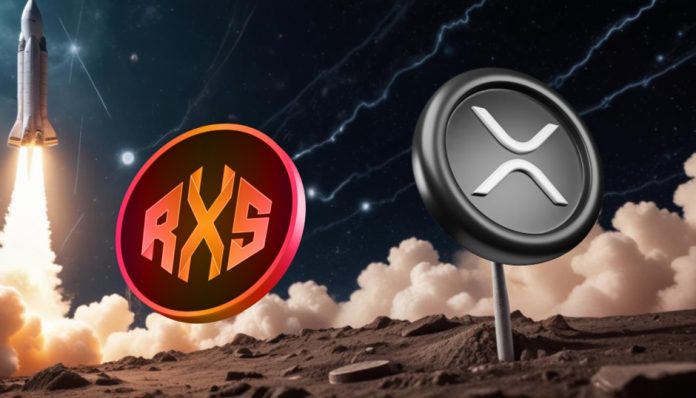
Significant investment flows are coming from XRP’s positive momentum driven by regulatory clarity rumors and RXS’s creative use case in real-world asset tokenizing. With clear paths for their expansion, analysts and crypto enthusiasts both believe XRP and RXS will rocket past the $5 mark. Here’s the timeline. 

Ripple (XRP): The Road to $5

Thanks to recent speculation on SEC chief Gary Gensler’s possible resignation, XRP has been riding a wave of good sentiment, headed toward $5. For many who see this revelation as a means of addressing regulatory issues impeding XRP’s expansion, it has inspired hope. XRP is $1.12 as of right now, a 66.27% increase over the previous week and a doubling in value over the past 30 days. The price increase of XRP has been mostly driven by institutional investors’ fresh curiosity. Accumulating XRP at a fast speed, big investors hope for even more positive momentum. This build-up fits forecasts from analysts projecting XRP’s price to rise above $5 by 2025.

Regulatory clarity, more acceptance, and a positive market attitude are the main elements influencing XRP’s possible expansion. Investor confidence has been greatly increased by the settlement of Ripple’s legal dispute with the SEC earlier this year, and any additional regulatory actions could improve XRP’s standing. Furthermore becoming rather popular are Ripple’s payment options, especially for cross-border transactions, drawing more institutional users to the XRP Ledger. Major altcoins like XRP are gaining from the good momentum as the larger crypto market gets into a bull run. One of the most likely cryptocurrencies for the rest of 2024 and into 2025, analysts think XRP might hit $5 if regulatory obstacles are removed and adoption keeps increasing.

Rexas Finance (RXS): The Revolutionary Token Set to Rocket Past $5

Institutional adoption is helping XRP, but Rexas Finance (RXS) is forging forward as a ground-breaking platform that connects the digital and real worlds. Real-world assets like gold, fine art, and real estate can be tokenized, purchased, sold, and held in fractional ownership by users of Rexas Finance. RXS is now a unique token in the quickly expanding real-world asset (RWA) market thanks to this creative use case. With a presale price of just $0.08 as of writing, Rexas Finance has shown tremendous promise. Over $10.6 million has already been raised during the presale, indicating high investor interest.

Investor confidence has increased as a result of Certik’s platform assessment, which guarantees security and transparency. The $1 million giveaway campaign, which has received over 249,000 entries and intends to award 20 winners with $50,000 worth of RXS each, has helped RXS’s presale momentum. In addition to raising awareness, this effort has drawn in a wide variety of investors.

Because of its distinctive value offer and increasing investor interest, Rexas Finance (RXS) has a good chance of surpassing $5. The platform’s capacity to tokenize almost any valuable asset creates a huge unexplored market and puts RXS in a position to promote broad adoption. Experts believe that the token’s final listing price will exceed $0.20, paving the way for exponential growth following the launch. The presale’s performance, with each stage selling out faster than anticipated, indicates significant demand. Furthermore, large investors are beginning to see RXS as a high-growth prospect; forecasts indicate that it could rise to $5 as early as Q1 2025.

To differentiate itself in the cryptocurrency market, Rexas Finance incorporates blockchain technology with practical applications. RXS may experience a large price increase, according to analysts, driven by its usefulness and expanding use, perhaps providing early investors with returns of up to 6,000% in a year. 

Conclusion

Two of the most interesting investment prospects in the present crypto industry are Ripple (XRP) and Rexas Finance (RXS). With a $5 aim by the end of 2025, XRP is a solid option for continuous development given its regulatory development and usefulness in cross-border payments. However, Rexas Finance’s cutting-edge real-world asset tokenization technology is expected to upend established markets and reach $5 as early as Q1 2025. These two tokens are definitely worth taking into consideration for investors looking for high-growth prospects. Both are poised for exponential growth in the upcoming months as RXS transforms asset ownership and XRP establishes its place in institutional finance.


For more information about Rexas Finance (RXS) visit the links below:

Website: https://rexas.com

Win $1 Million Giveaway: https://bit.ly/Rexas1M

Whitepaper: https://rexas.com/rexas-whitepaper.pdf

Twitter/X: https://x.com/rexasfinance

Telegram: https://t.me/rexasfinance

OpenAI Deploys One Oasis – Double Play Strategy As It Launches a Browser

0

Our best product is our blog because via tekedia. com we are able to convert readers to sign up for Tekedia Mini-MBA and other services we offer. As I explained in a Harvard Business Review post, it is critical for companies to have a one oasis, and anchoring on that, execute a double play strategy, where one thing can bring in the customers, and value capture is done via another way, if frontal positioning is not possible.

Companies typically make blogs their side service or at best a sub-domain feature, but I decided to make our blog our top domain, understanding that to win, you need to influence Demand (users), and not necessarily bring more Supply since there is nothing you can provide that is not somewhere on the web. In other words, the grand competition is about who can influence the users, and not who is bringing more stuff in a sea of the internet, for the products and services we offer.

When you take that to a higher level, owning a browser at the highest league becomes strategic. A few days ago, I argued that taking Chrome out of Google, by the government, will make Google blind since the eyes of Google to the web will always come from the browser. OpenAI understands that and wants to have its own eye:

 “OpenAI is reportedly exploring the development of its own web browser, a move that aligns with its recently announced plans to launch a dedicated search engine. These steps mark a significant shift for the company, signaling its intent to challenge Google’s dominance in the search and browser markets. The potential browser, which could incorporate OpenAI’s ChatGPT, is said to have been shown in prototype or design form to companies such as Conde Nast, Redfin, Eventbrite, and Priceline, according to The Information.”

The apps and websites of the near-future will evolve, and new browsers will be needed to make the integration of AI agents more optimal. So OpenAI going for this is the right call. Fortunately for Google, this announcement becomes a weapon to argue in its expected appeal that the government should not take Chrome from it.

OpenAI To Develop Its Own Web Browser – Report

0

OpenAI is reportedly exploring the development of its own web browser, a move that aligns with its recently announced plans to launch a dedicated search engine.

These steps mark a significant shift for the company, signaling its intent to challenge Google’s dominance in the search and browser markets. The potential browser, which could incorporate OpenAI’s ChatGPT, is said to have been shown in prototype or design form to companies such as Conde Nast, Redfin, Eventbrite, and Priceline, according to The Information.

This development comes amid heightened scrutiny of Google’s dominance in the browser market. The U.S. Department of Justice (DOJ) has intensified its antitrust case against Google, suggesting that the tech giant sell its Chrome browser to curb its monopolistic hold on online search.

The DOJ’s arguments are part of a broader effort to dismantle barriers to competition in the tech industry. The emergence of OpenAI-backed browser and search services could provide the competition regulators have been seeking, particularly as OpenAI is strategically positioned as a disruptor.

Backed by Microsoft, OpenAI has rapidly evolved from being a leader in generative AI to positioning itself as a comprehensive tech challenger. Microsoft’s deep integration of OpenAI technology into its own products, including Bing and Office, has already pushed it into direct competition with Google in the search and productivity software markets.

OpenAI’s potential entry into the browser arena, powered by its advanced AI tools, could offer consumers a uniquely integrated experience—far beyond traditional browsing or searching functionalities.

Redefining Competition in the Browser and Search Markets

For years, Google has faced minimal competition in search and browsers. Rivals like Microsoft Explorer (Edge) and Firefox have struggled to capture significant market share, leaving Google virtually unchallenged. However, OpenAI’s plans, coupled with the financial and technical backing of Microsoft, could turn it into the competitor Google never had.

This transformation could reshape the ecosystem, especially as OpenAI leverages AI-first capabilities, such as conversational search and personalized web interactions, to attract users.

OpenAI’s ambitions are bolstered by its ongoing partnerships with major tech players. It is reportedly in talks to bring AI features to Samsung devices, a partnership that could disrupt Google’s reliance on Samsung as a key Android partner. Additionally, OpenAI’s collaboration with Apple, which powers “Apple Intelligence” features on iPhones, highlights its growing influence in consumer tech.

Despite these advances, OpenAI’s browser plans remain in their infancy. According to The Information, the company is “not remotely close” to launching the product. However, with the DOJ pushing for the divestiture of Chrome and OpenAI’s accelerating moves in the search space, the stage is set for a potential shift in the digital landscape.

OpenAI’s entry into the browser market could intensify competition at a time when Google is already under pressure to prove its relevance in an AI-driven future.

Alphabet shares fell approximately 1% in after-hours trading following a 5% decline earlier, reflecting market concerns about increasing competition and regulatory pressures.

This development aligns with OpenAI’s broader strategy to embed its technology across platforms, a move that could accelerate its influence beyond its chatbot origins.

Investors That Passed On Pepe Coin In Early 2024 Have Turned To Popcat And This Viral ETH Hybrid Coin For Huge Gains

0

PEPE traders have made tremendous profits this year, as the altcoin has gone 15x in value since the start of 2024. However, as PEPE slows down following the recent rally, traders wanting to resume growth flock to Popcat and the latest hybrid token on the Ethereum blockchain, Cutoshi.

Let’s examine these altcoins to analyze their growth potential and determine the possible degree of returns for current investors.

Pepe (PEPE): Pullback Due To Decreased Demand

2024 has been an excellent year for PEPE investors. PEPE has rallied multiple times this year and has gained close to 1500% since 1st January 2024. The most recent rally started two weeks ago on 5 November 2024, helped PEPE reach the new ATH at $0.00002524 with an over 200% surge in the price.

However, PEPE dropped fast as the demand suddenly vanished and is now close to 20% below this new ATH. PEPE trades at $0.00002024 after a 4% plunge in the last 24 hours. Despite this drop, the demand for PEPE remains the same, with only a 1% increase in the daily trading volume today.

Due to the price pulling back after the rally, PEPE has come out of the overbought region and currently has a Relative Strength Index of 66. As momentum fades away, PEPE investors turn to Popcat and Cutoshi, hoping to continue making similar returns.

Will Popcat (POPCAT) Surge Again After Price Correction?

POPCAT moved in an uptrend channel from September 2024 until it broke below the lower trendline three weeks ago. However, POPCAT surged shortly after, with massive demand gaining over 60% within 10 days. Like PEPE, POPCAT reached a new ATH of $2.07 five days ago and has dropped to trade nearly 30% below it.

POPCAT trades at $1.50 after a massive intraday decline of 7.9%. The POPCAT price is taking support from its 50-day Simple Moving Average (SMA) and facing rejection from the 20-day SMA. The $1.4 price level is immediate support for POPCAT, and a more substantial support level is at $1.18.

These support levels are a good entry point for POPCAT bulls to enter, drive the price upwards, and continue the uptrend. If POPCAT rises from here, the  $1.7 and $1.97 price levels may cause significant resistance to the POPCAT price. However, POPCAT can break these resistance levels by generating sufficient bullish momentum.

Cutoshi (CUTO): Ethereum Based Hybrid Token

Cutoshi is the new hybrid coin on the ERC-20 network that is going viral because it combines the practicality of a utility token with the fun of a meme coin, catering to both the meme coin and DeFi communities.

Cutoshi is a tribute to the Chinese Lucky Cat, which, according to Chinese and Japanese folklore, has the power to bring good luck and prosperity. Cutoshi wants to make the lucky cat’s powers accessible to all and thus has brought it to the blockchain by tokenizing it as its native token, CUTO.

It also follows Satoshi Nakamoto’s ideals and walks on the path he created to provide decentralized finance to everyone around the globe. Cutoshi has created an inclusive and democratized ecosystem that helps users participate in DeFi, liberating them from the control of centralized organizations.

The Cutoshi ecosystem has an academy through which users can learn and adapt faster to the decentralized economy. Members gain access to free learning materials that break down complex DeFi concepts into easily understandable modules. Thus, newcomers can get a headstart on their crypto journey with Cutoshi Academy.

As they learn about DeFi and Web3, community members can earn CUTO by participating in the Cutoshi token farming. Over 3,000 members are farming and getting exciting rewards by competing in quests and rising through leaderboard ranks.

The farming mechanism is designed to help boost community growth. Members complete the challenges and receive CUTO points, which they can convert to CUTO tokens after the presale ends.

CUTO is currently valued at $0.0259 in the third phase of the token presale. Cutoshi is zooming through the presale and has raised $1 million. The token will continue surging as the presale reaches further rounds, generating enormous wealth for the CUTO holders.


For more information on the Cutoshi (CUTO) Presale:

https://cutoshi.com/


Join and become a community member:

https://twitter.com/CutoshiToken

https://t.me/cutoshi

Amazon Announces Additional $4bn Investment in Anthropic As AI Race Intensifies

0

Amazon has announced an additional $4 billion investment in Anthropic, escalating competition in the generative AI space, a market projected to reach $20 trillion in revenue within the next decade.

This latest funding raises Amazon’s total investment in the San Francisco-based startup to $8 billion, marking a significant bet on AI technology as a driver of its future growth.

While Amazon will remain a minority investor, the partnership positions Anthropic’s Claude chatbot and AI models as central to Amazon Web Services (AWS) offerings. The agreement strengthens AWS’s position as Anthropic’s “primary cloud and training partner,” ensuring that Anthropic utilizes AWS Trainium and Inferentia chips for training and deploying its large-scale AI models.

This collaboration enables AWS customers to fine-tune Anthropic’s Claude models with proprietary data, offering a competitive advantage in the rapidly evolving AI industry.

Amazon’s Growing AI Footprint

This new investment builds on Amazon’s $2.75 billion commitment in March 2024, its largest external investment to date, and an initial $1.25 billion stake announced in September 2023. These investments align Amazon with major players like Microsoft and Google, both of which have poured billions into AI ventures, signaling a high-stakes race for dominance in generative AI.

Notably, Amazon does not hold a board seat at Anthropic, allowing the startup operational autonomy—a key differentiator from other partnerships in the sector.

Anthropic, founded by former OpenAI executives, has rapidly scaled its capabilities and product offerings through the following innovations:

  • Claude AI Models: Anthropic’s Claude chatbot, competing with OpenAI’s ChatGPT and Google’s Gemini, has gained traction for its conversational and generative capabilities.
  • Computer Use Capability: Introduced in September 2024, this feature enables AI to perform complex tasks on a computer, including navigating websites, entering data, and executing multi-step processes, akin to human users. Early adopters include Asana, Canva, and Notion.
  • Enterprise and Business Tools: The rollout of Claude Enterprise and the Claude 3.5 Sonnet model this year underscores Anthropic’s commitment to catering to business needs.

Generative AI Arms Race

Amazon’s increased stake in Anthropic highlights a broader trend of tech giants leveraging investments in AI startups to bolster their core businesses. Google, for instance, committed $2 billion to Anthropic last year and holds a 10% stake in the company. Similarly, Microsoft has integrated OpenAI’s technology into its Azure cloud services and Office 365 products through a significant investment in OpenAI.

The AWS-Anthropic partnership offers Amazon a dual advantage: advancing its AI capabilities while expanding its cloud services’ appeal. The exclusivity of Anthropic’s features, such as customer-specific fine-tuning, positions AWS to attract businesses eager to deploy tailored AI solutions.

For Anthropic, Amazon’s backing provides resources to scale operations and maintain competitiveness against rivals like OpenAI and Google, while its independence from Amazon’s board ensures flexibility in innovation and strategy.

This development is likely to accelerate the innovation cycle, compelling companies to deliver more sophisticated and accessible AI solutions. With a market forecast to exceed $1 trillion annually in revenue within a decade, the competition will not only benefit businesses but also spur advancements that could democratize AI access across the globe.

Pathway to a $20 Trillion Valuation

The generative AI sector’s rapid growth, bolstered by massive investments, underlines its potential to achieve its projected $20 trillion valuation by 2030. This projection reflects the pervasive influence AI is expected to exert on global economies, akin to the transformative impact of the internet revolution.

Key drivers of this valuation

  1. Widespread AI Adoption Across Sectors: AI is increasingly embedded in critical industries, offering efficiencies, cost savings, and new revenue streams.
  2. Business Transformation: Tools like Claude, ChatGPT, and Google Gemini are enabling businesses to optimize operations, engage customers, and create new products, enhancing profitability.
  3. AI’s Role in the Cloud Economy: As AI models become central to cloud services, companies like Amazon, Microsoft, and Google are integrating AI into their ecosystems to drive customer retention and growth.