DD
MM
YYYY

PAGES

DD
MM
YYYY

spot_img

PAGES

Home Blog Page 2626

International Criminal Court (ICC) Issues Arrest Warrant for Israeli Prime Minister Netanyahu, Others

0
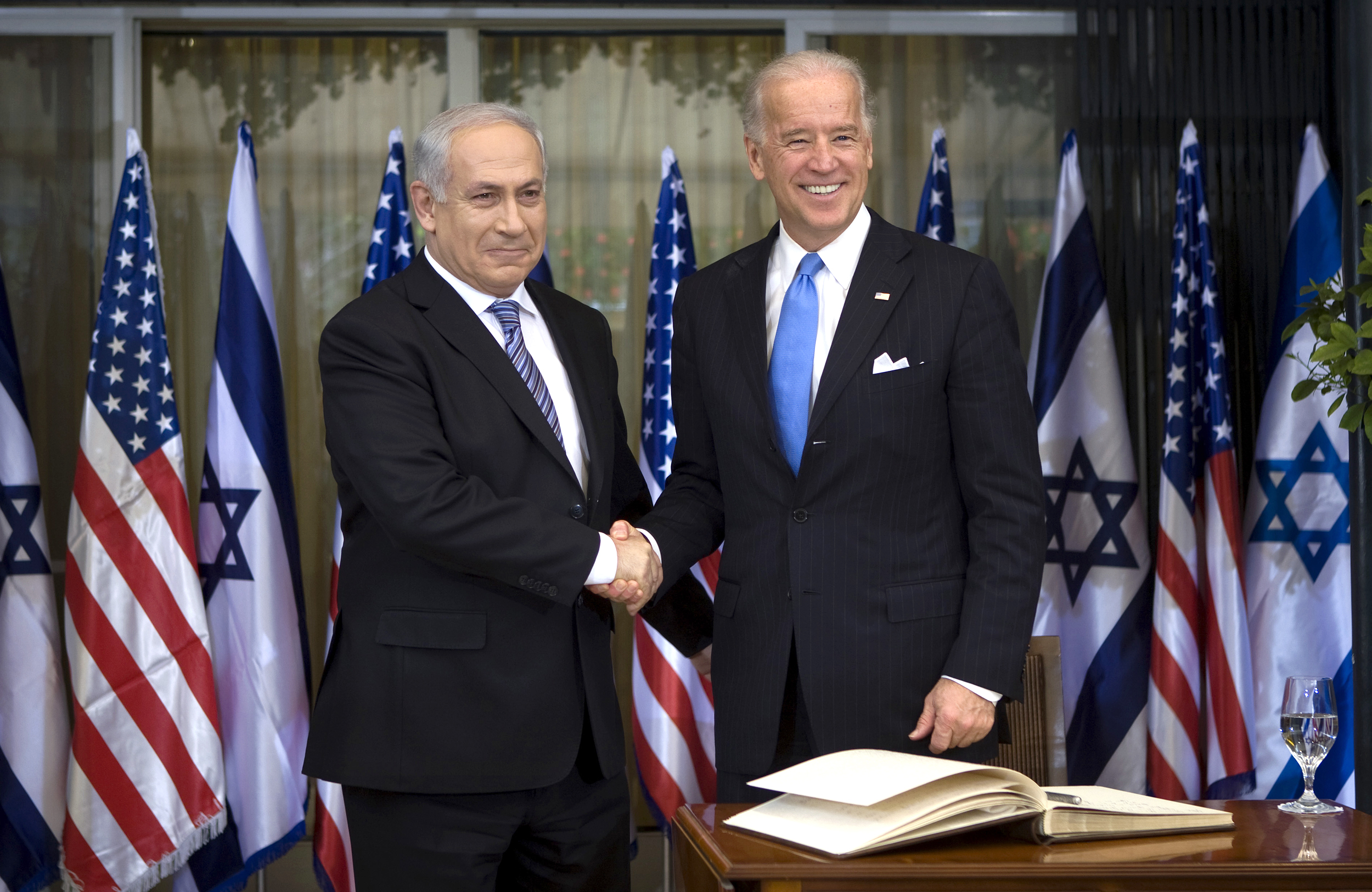
Benjamin Netanyahu and Joe Biden in Jerusalem, on March 9, 2010.

The International Criminal Court (ICC) has issued arrest warrants for Israeli Prime Minister Benjamin Netanyahu, former Defense Minister Yoav Gallant, and senior Hamas official Mohammed Deif, accusing them of war crimes and crimes against humanity concerning the October 7 attacks and their aftermath.

The ICC alleges that Netanyahu bears criminal responsibility for war crimes, including “starvation as a method of warfare” and “crimes against humanity” such as murder, persecution, and other inhumane acts. These charges stem from the Israeli government’s military operations in Gaza, which have drawn global condemnation for their humanitarian impact.

Gallant, who served as defense minister during key periods of the conflict, faces similar accusations for actions under his command.

The court’s statement emphasized that these alleged crimes took place in territories under Israeli occupation—Gaza, East Jerusalem, and the West Bank—over which the ICC claims jurisdiction. This assertion is based on Palestine’s formal acceptance of the court’s authority in 2015. Israel, however, has rejected the ICC’s jurisdiction, arguing that it is not a member state and labeling the court’s actions as biased.

The ICC also issued a warrant for Mohammed Deif, a senior Hamas official and alleged mastermind of the October 7 attacks. The court accuses Deif of overseeing widespread atrocities, including murder, torture, sexual violence, and hostage-taking. These acts, the ICC claims, were part of a systematic attack against Israeli civilians.

Israel previously announced Deif’s death in a September airstrike, but Hamas has neither confirmed nor denied this. The ICC’s move to target Deif underscores its broader aim of addressing crimes committed by both state and non-state actors in the conflict.

Political Reactions

Israel’s leadership has vehemently rejected the ICC’s actions. Netanyahu’s office dismissed the warrants as “absurd and anti-Semitic,” asserting that Israel’s military operations were a just response to Hamas’s October 7 assault, which the statement described as “the largest massacre against the Jewish people since the Holocaust.”

“[Netanyahu] will not yield to pressure, will not back down, and will not retreat until all the goals of the war set by Israel at the start of the campaign are achieved,” the statement said.

President Isaac Herzog and other officials echoed these sentiments, accusing the ICC of undermining justice and siding with Israel’s adversaries.

He said in a statement on X that “the outrageous decision at the ICC has turned universal justice into a universal laughing stock. It makes a mockery of the sacrifice of all those who fight for justice.”

Far-right figures, such as National Security Minister Itamar Ben Gvir, called for increased settlement expansion and annexation of occupied territories in response.

Hamas’s Reaction

Hamas welcomed the warrants against Israeli officials, calling them a historic step toward justice for Palestinians.

“This… represents a significant historical precedent. It rectifies a longstanding course of historical injustice against our people and the suspicious negligence of the horrific violations they have endured over 76 years of fascist occupation,” it said, calling for all nations to cooperate in bringing the Israeli leaders to justice and “take immediate action to halt the genocide” in Gaza.

However, it remained silent on the charges against Deif, reflecting the group’s focus on framing itself as the victim of Israeli aggression. Earlier in May, the group had condemned the ICC prosecutor’s decision to seek warrants against its leaders, describing it as an attempt to “equate victims with aggressors.”

U.S. Opposes Move

The United States has consistently opposed ICC investigations into Israel, citing concerns over jurisdiction and fairness. President Joe Biden described the ICC’s actions as “outrageous,” reiterating the U.S. stance that there is no moral equivalence between Israel and Hamas.

“And let me be clear: whatever this prosecutor might imply, there is no equivalence — none — between Israel and Hamas,” he said in a statement in May. “We will always stand with Israel against threats to its security.”

Congressional leaders, including incoming Senate Majority Leader John Thune, have threatened sanctions against the ICC if it proceeds with the warrants.

“If Majority Leader Schumer does not act, the Senate Republican majority will stand with our key ally Israel and make this – and other supportive legislation – a top priority in the next Congress,” he wrote in a post on X.

South Africa’s role in bringing the case to the ICC has also drawn attention. Analysts speculate that Pretoria could face diplomatic backlash from allies like the U.S., which has historically sought to shield Israel from international legal scrutiny.

Implications for Netanyahu and Israel

The warrants have immediate and long-term consequences. Netanyahu and Gallant now face potential arrest if they travel to any of the 124 ICC member states legally obligated to enforce the court’s decisions. This could significantly restrict their diplomatic engagements and Israel’s international standing.

Legal experts suggest that the ICC’s actions could also impact Israel’s military partnerships, as third-party states might reconsider cooperation with an army implicated in alleged war crimes.

The ICC’s actions mark a rare instance of international legal scrutiny in the Israeli-Palestinian conflict, which has seen decades of violence and diplomatic stalemates. The court’s decision to pursue cases against both Israeli leaders and Hamas officials reflects an attempt to address the conflict comprehensively. However, critics argue that the ICC’s lack of enforcement mechanisms undermines its effectiveness.

Previous ICC arrest warrants, such as those issued against Sudanese President Omar al-Bashir and Russian President Vladimir Putin, have highlighted the challenges of implementing international justice. Many leaders avoid ICC member states to evade arrest, reducing the practical impact of such warrants.

While the ICC’s warrants are unlikely to lead to immediate arrests, they represent a significant symbolic victory for advocates of accountability in the Israeli-Palestinian conflict. The move could also galvanize international debates on the role of global institutions in addressing protracted crises.

For now, political analysts believe the warrants deepen existing divides, with Israel doubling down on its policies and Hamas using the ICC’s actions as a propaganda tool. As geopolitical players weigh their responses, the ICC’s actions may reshape the legal and political landscape of one of the world’s most enduring conflicts.

Nigeria Senate Approves Tinubu’s $2.2bn Loan Request Amid Growing Debt Concerns

0

The Nigerian Senate has approved President Bola Tinubu’s request for a fresh N1.77 trillion ($2.2 billion) external loan to partially finance the country’s N9.7 trillion budget deficit for the 2024 fiscal year.

This approval, reached through a voice vote, followed the presentation of a report by the Senate Committee on Local and Foreign Debts, chaired by Senator Wammako Magatarkada (APC, Sokoto North).

Details of the Loan Request

In a letter submitted to the National Assembly on November 14, Tinubu outlined the necessity of the loan as part of his administration’s 2024 appropriation strategy. The requested amount, equivalent to $2.209 billion, will be sourced from external creditors.

However, the decision has sparked widespread criticism due to Nigeria’s escalating debt burden and the stark disparity in exchange rates used to present the loan figures.

The loan is calculated at an exchange rate of N800 per dollar, significantly lower than the official rate of N1,687 per dollar as recorded in the Nigerian Autonomous Foreign Exchange Market (NAFEM). Many argue that this discrepancy is deceptive, with the true loan value exceeding the presented amount when recalculated using market rates.

“What makes this particular loan proposal even more concerning is that it is benchmarked at the exchange rate of 1 USD to N800, whereas the current exchange rate from the Central Bank of Nigeria stands at over N1,600 to 1 USD,” former Vice President, Atiku Abubakar, lamented.

It has been noted that the true cost of this loan when adjusted to actual market rates, could potentially exceed N3.6 trillion.

Rising Debt Servicing Costs

Nigeria’s debt servicing obligations have been on an upward trajectory, placing immense pressure on public finances. The Central Bank of Nigeria (CBN) recently reported a staggering $3.58 billion spent on servicing foreign debts in the first nine months of 2024, a 39.77% increase from the $2.56 billion recorded during the same period in 2023.

The CBN’s breakdown of debt servicing payments reveals dramatic spikes in 2024 compared to the previous year. In May, for instance, payments surged by 286.52% to $854.37 million, the highest monthly expenditure this year, compared to $221.05 million in May 2023. Similarly, January saw a 398.89% increase, with $560.52 million paid compared to $112.35 million in 2023.

While certain months, such as July and August, showed slight declines in payments, the overall trend points to rising costs, exacerbated by fluctuating exchange rates and Nigeria’s heavy reliance on foreign loans to bridge budget deficits.

The approval has been met with skepticism and backlash from various quarters. Critics highlight the already strained fiscal space, noting that the government is struggling to meet its existing debt obligations. Some argue that the new loan will further inflate the country’s debt servicing burden, crowding out critical investments in infrastructure and social programs.

“Nigeria is sinking further into debt, and the National Assembly has become an accomplice once more. Tinubu had, in July this year, boasted that the FIRS and Customs under his watch had collected all-time high revenues to finance the Budget. Why, then, are they still borrowing? There is something they are not telling Nigerians, even as they are being crushed by a combination of their failed trial-and-error policies and loan rackets,” Atiku said.

Sustaining the Growing Debt

Nigeria’s debt sustainability is increasingly in question, with over 90% of government revenue now allocated to debt servicing, according to the Debt Management Office (DMO). The new borrowing could exacerbate this trend, limiting the government’s ability to finance critical sectors such as education, healthcare, and infrastructure.

Furthermore, the increasing reliance on external loans, coupled with exchange rate volatility, raises concerns about potential sovereign default risks.

“I feel a sense of personal agony seeing that just a few years after the administration of President Obasanjo took our country out of foreign indebtedness, we are today back at the top spot in the same conundrum,” Atiku added.

Analysts have warned that Nigeria’s economic stability could be jeopardized if urgent reforms are not implemented to boost revenue generation and cut wasteful spending.

A Growing Fiscal Deficit

The approved loan is part of a broader effort to address Nigeria’s N9.7 trillion budget deficit for 2024, itself a reflection of structural imbalances in the country’s fiscal policies. Experts emphasize the need for comprehensive economic reforms to tackle issues such as subsidy removal, overdependence on oil revenues, and inefficiencies in tax collection.

They warn that without urgent measures to enhance fiscal transparency and implement robust economic reforms, Nigeria’s financial sustainability remains precarious, with potential long-term consequences for its economy and citizens.

Business Spending on AI Surged 500% in 2024 – Report

0

According to a new report by Menlo Ventures, business spending on generative Al experienced a massive 500% increase this year, soaring from $2.3 billion in 2023 to $13.8 billion.

The report highlights a notable shift in enterprise Al’s market dynamics. Menlo projects this figure will nearly double to $297.9 billion by 2027, driven by a compound annual growth rate of 19.1%.

The report further reveals that OpenAl’s market share dropped from 50% to 34%, while Anthropic’s share doubled, rising from 12% to 24%. These findings are based on a survey of 600 enterprise IT decision-makers from companies with at least 50 employees.

Tim Tully, a partner at Menlo Ventures, explained that enterprises increasingly adopt multiple large Al models tailored to specific use cases. “Developers are pretty savvy they know how to go back and forth between models fairly quickly,” Tully said, adding that this flexibility has likely bolstered Claude 3.5 popularity.

Meta maintained a 16% market share, while Cohere held steady at 3%. Google experienced growth rising from 7% to 12%, whereas Mistral saw a slight decline from 6% to 5%. Foundation models, including OpenAl’s ChatGPT, Google’s Gemini, and Anthropic’s Claude, accounted for $6.5 billion of enterprise Al investment.

The report also highlights the growing investment in Al agents, a technology poised to surpass traditional chatbots. Companies like Google, Microsoft, Amazon, OpenAl, and Anthropic are betting on Al agents, which can perform multistep tasks, create autonomous workflows, and operate with minimal user input.

Code generation emerged as the leading use case for generative Al. Other common applications included support chatbots (31%), enterprise search and retrieval, data extraction and transformation, and meeting summarization.

The rapid acceleration of business spending on generative Al underscores a pivotal shift in enterprise priorities, with companies racing to integrate advanced Al tools to stay competitive. Presently, the global Artificial Intelligence market stands at nearly $235 billion, with projections indicating a rise to over $631 billion by 2028.  The three leading industries in terms of Artificial Intelligence spending are Software and Information Services, Banking, and Retail. Combined, these sectors are projected to allocate approximately $89.6 billion towards Al in 2024, representing 38% of the global Al market.

Notably, Generative Al accounts for more than 19% of the total investment across these three industries, highlighting its growing significance in the Al landscape. With a spending of $33 billion in 2024, companies are using Al to make the software development lifecycle more efficient and error-resistant through Al lifecycle software and predictive models. Enhancing information services by personalizing content delivery based on user data, thus improving user engagement. Artificial Intelligence is also driving innovation by creating new products and tools for data analysis and market trend prediction, helping businesses stay competitive.

Additionally, Al is augmenting and automating operational processes, increasing efficiency, and reducing costs by allowing functions such as human resources to focus on strategic tasks. This comprehensive integration of Al is not only streamlining operations but also fostering the development of high-quality, adaptive software and services.

The Banking industry, a market with approximately $31.3 billion in investments in Al in 2024, is using the technology to enable banks to offer personalized customer experiences through machine learning and data analytics, allowing banks to tailor services to individual preferences. As generative Al continues to evolve, the data underscores its growing importance in enterprise ecosystems and signals significant competition among providers to meet diverse business needs.

Universal Digital Payments Network Partners FORUS Digital to Advance Financial Innovation in Africa

0

Universal Digital Payments Network (UDPN) the world’s leading global payments messaging network supporting regulated stablecoins and Central Bank Digital Currencies (CBDCs) and FORUS Digital, a global leader in blockchain-based cooperative digital finance, have announced a strategic cooperation aimed at expanding financial inclusion and promoting tokenisation efforts across Africa.

This partnership is set to empower African communities, governments, and businesses, and represents a significant step toward realising the shared goal of financial inclusion and economic advancement across Africa, with blockchain and decentralised finance at the forefront of this transformation. UDPN and FORUS Digital will collaborate to introduce the UDPN platform’s capabilities throughout Africa, initially in South Africa, Malawi, Zimbabwe and Ethiopia.

Speaking on the partnership, Sonny Fisher Founder of FORUS Digital remarked

“Our partnership with UDPN accelerates our vision of economic empowerment through decentralised finance. Together, we are equipping Africa with the tools to embrace blockchain-powered tokenisation and drive sustainable development.” 

UDPN is a DLT-underpinned messaging backbone focused on providing interoperability between the fast-growing number of different regulated stablecoins, tokenized deposits, and CBDCs, and seamless connectivity between any business IT system and regulated digital currencies.

Earlier this year the UDPN team launched three solutions designed to reshape the landscape of digital payments and assets in the financial sector:

  • Tokenised Deposit/Stablecoin Management System: A production-grade system designed for both commercial banks and regulated stablecoin issuers, streamlining the entire lifecycle of tokenised deposits and stablecoin services – from issuance to operation, including advanced interoperability features.
  • Digital Asset Tokenisation System: Provides a robust production-grade platform for financial institutions, such as banks and investment firms, to tokenise real-world assets and manage them within a regulated environment.
  • UDPN All-in-One Digital Currency Sandbox: A sandbox, designed to enable both commercial and central banks to learn about the latest digital currency technology, test built-in use cases, and develop their own new custom use cases in a self-control and secure environment that the banks can control and provide permissioned access to other institutions in their ecosystem.

The UDPN aims to drive down payment and foreign exchange costs whilst accelerating the uptake of regulated digital currencies.

Over 130 countries globally are currently investigating, developing, or have already launched CBDCs. On the African continent, South Africa, Nigeria, Eswatini and Ethiopia have taken the lead. FORUS Digital has positioned itself in Africa to help central banks and commercial banks in their journey towards CBDC using the UDPN All-in-One Digital Currency Sandbox.

Statista indicated that the Digital Assets market in Africa is projected to reach a revenue of US$3,115.0m by 2024.  It indicates that Africa’s Digital Assets market specifically, the number of users is projected to reach 53.89m users by 2025.

Financial innovation is not limited to central banks. Citigroup’s launch of Citi Token Services and Societé Generale’s December 2023 announcement of their digital currency and asset services and the HSBC Orion platform are the most recent examples of how traditional financial institutions are making digital assets an essential part of their service offerings to their clients.

This partnership between UDPN and FORUS Digital will focus on helping central banks deploy a secure CBDC testing environment for creating use cases and defining new regulations. It will also help commercial banks manage their own tokenised deposit and stablecoin life cycle and integrate into the central bank digital currency testing environment. The programmability of value-added financial services will enable new business models and enhance the efficiency and transparency of cross-border payments.

This partnership is a major milestone in Africa’s digital financial transformation and the introduction of UDPN Solutions there will enable a variety of sectors to access secure, low-cost cross-border payments and tokenised financial products. By providing African governments and financial institutions with blockchain-driven tools, UDPN will support enabling an inclusive, scalable digital payments system for the African continent.

AI16Z ELIZA Token Launch Causes Controversy with Existing Community Coin

0

The cryptocurrency market is no stranger to controversy, and the recent events surrounding the AI16Z team and the ELIZA token have certainly captured the industry’s attention. The AI16Z team, known for its innovative approach to integrating artificial intelligence with blockchain technology, announced the launch of the ELIZA token. However, this move has sparked a significant dispute within the crypto community, particularly with the holders of an existing community coin.

The controversy began when the AI16Z team’s intention to launch the ELIZA token was preempted by another group that released a token with the same name through the Pump.fun platform. This led to confusion and conflict among investors, as there were now two tokens with the same ticker in circulation. The situation was further complicated when Jupiter DEX decided to verify both tokens, leaving the community to question which token would prevail.

The market reacted swiftly, with both versions of the ELIZA token experiencing significant market capitalization and volume. However, the lack of clarity regarding the legitimacy of each token led to price disparities and the formation of whale wallet clusters, indicating that some wallets held a substantial percentage of the supply. This has raised concerns about the potential risks associated with trading these tokens, given their relatively low liquidity and high volatility.

This incident is reminiscent of the NEIRO token debacle, where similar ticker confusion resulted in substantial financial losses for uninformed traders. The current ELIZA token controversy has raised questions about the verification process of tokens, the responsibilities of development teams, and the implications of such events on investor trust and market stability.

The team has acknowledged the confusion caused by the simultaneous launch of two tokens with the same name and has made efforts to differentiate their token from the community-generated version. AI16Z team emphasized their commitment to transparency and the value they place on the trust of their investors and the broader community.

They have initiated a verification process for both tokens on the Jupiter DEX platform to ensure clarity and prevent further confusion. Additionally, they have communicated their intention to work closely with the community to navigate the challenges posed by this incident and to find a constructive path forward.

To alleviate the impact on investors who were affected by the token confusion, AI16Z has announced a plan to airdrop a portion of the new ELIZA token’s supply to the holders of the original token. This gesture is seen as an attempt to restore faith in the project and to compensate those who may have suffered financial losses due to the unexpected launch.

The AI16Z team’s response highlights the complexities of the cryptocurrency market and the importance of clear communication between project teams and their communities. As the situation continues to develop, the team has promised to keep the community informed and to take necessary measures to uphold the integrity of their project and the interests of their stakeholders

The AI16Z team has since attempted to address the issue by verifying both tokens on the Jupiter DEX platform, but the community’s response remains mixed. Some view the move as a step towards transparency, while others see it as an inadequate response to a situation that could have been prevented with better communication and foresight.

As the dust settles, the crypto community is left to ponder the lessons learned from this incident. It highlights the need for clear communication channels between project teams and their communities, the importance of thorough due diligence before investing, and the unpredictable nature of the cryptocurrency market. The ELIZA token controversy serves as a reminder that in the fast-paced world of crypto, innovation must be balanced with responsibility to maintain investor confidence and market integrity.