DD
MM
YYYY

PAGES

DD
MM
YYYY

spot_img

PAGES

Home Blog Page 2639

The Silent War on Nigeria’s Journalists

0

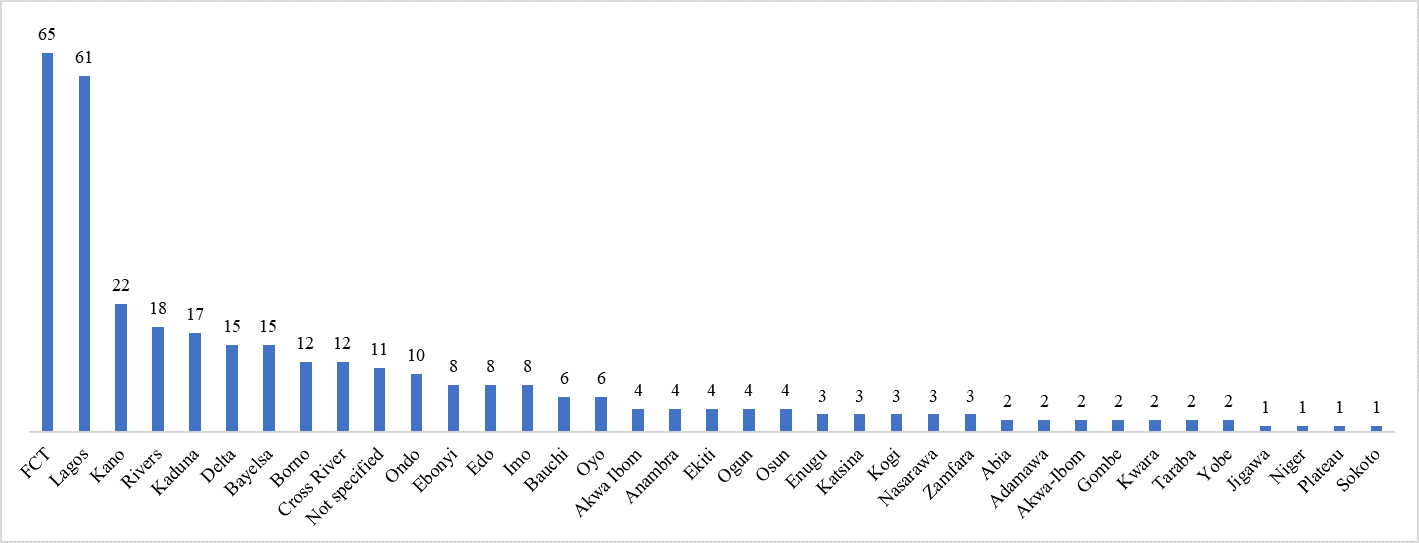
In any thriving democracy, the press serves as the conscience of the nation—a voice that speaks truth to power, holding governments, institutions, and individuals accountable. Yet, in Nigeria, the very act of journalism has increasingly become a dangerous endeavor. A chart mapping the number of attacks on journalists between January 2019 and August 2024 paints a grim picture of this reality. It reveals a disturbing trend of assaults, intimidation, and violence that is spreading across the country, leaving its marks in almost every state.

The numbers speak volumes. The Federal Capital Territory (FCT) tops the list with 65 attacks, closely followed by Lagos with 61. Together, these regions, which are the political and economic nerve centers of the nation, account for over 40% of the recorded incidents. These statistics are more than just figures—they tell a story of the mounting pressures faced by journalists who dare to report on governance, corruption, and the complex web of social and political challenges confronting Nigeria.

It is no coincidence that the FCT and Lagos are at the forefront of these attacks. Abuja, being the seat of political power, is the epicenter of governance, policymaking, and, often, corruption scandals. Journalists operating in this sphere face constant scrutiny and hostility from powerful interests who are intent on silencing critical voices. Lagos, on the other hand, is the nation’s media capital, home to many prominent news outlets and digital media platforms. Its vibrant press landscape, while commendable, also makes it a focal point for attacks, both physical and digital.

Beyond these two hubs, states like Kano, Rivers, Kaduna, and Delta emerge as mid-tier zones of risk, reporting between 15 and 22 attacks each. These states, though not as prominent as the FCT or Lagos, have their unique challenges. Kano, a key political battleground in Northern Nigeria, often sees journalists caught in the crossfire of political rivalries and religious sensitivities. Rivers, with its history of electoral violence and oil-related conflicts, pose dangers for journalists covering politically charged issues. In Kaduna, a state grappling with ethno-religious crises and governance controversies, the media often bears the brunt of public and private frustrations.

What is equally troubling is the seeming quiet in states like Sokoto, Plateau, and Niger, which report just one attack each. At first glance, these numbers might suggest safer conditions for journalists, but this could also be a deceptive narrative. In many of these states, underreporting of attacks or self-censorship may mask the true extent of risks faced by journalists. The absence of vibrant media ecosystems in these regions could mean fewer documented cases, not necessarily fewer attacks.

The chart also sheds light on the broader sociopolitical environment in Nigeria. States plagued by insurgencies, like Borno, illustrate the dual threats faced by journalists—targeted by both insurgent groups and security forces who are often intolerant of critical coverage. Similarly, states with high incidences of political violence or contentious governance decisions create hostile environments for the press, where merely reporting the facts can result in threats, harassment, or worse.

But what do these numbers mean for Nigeria’s democracy? Journalism is the lifeblood of accountability and transparency. A free and independent press ensures that power is checked and that the voices of the marginalized are amplified. However, the prevalence of attacks on journalists paints a stark picture of a nation where press freedom is under siege.

The data suggests a culture of systemic impunity. Perpetrators of these attacks—whether state actors, political thugs, or other individuals—are rarely brought to justice. This lack of accountability emboldens others, creating an environment where journalists operate under constant fear. The result is a shrinking space for free speech, where self-censorship becomes a survival strategy. For every investigative report that remains unpublished, every story that is silenced, and every journalist forced into exile, Nigeria loses an opportunity to address its challenges and grow stronger as a nation.

The rise of digital journalism adds another layer to this crisis. While the internet has empowered journalists to reach wider audiences, it has also exposed them to new forms of threats. Online harassment, cyberbullying, and surveillance are now common, particularly for journalists in Lagos and the FCT. These attacks, though less visible, are no less damaging, often leading to psychological trauma and professional burnout.
press freedom in nigeria
Exhibit 1: Number of attacks on journalists per state between January 2019 and August 2024 Source: Multiple newspapers, 2019-2024; Infoprations Analysis, 2024

So, what can be done to reverse this alarming trend?

First, Nigeria must prioritize the safety of its journalists. This begins with strong legal protections that ensure freedom of the press is not just a constitutional promise but a lived reality. Laws against press intimidation and harassment must be enforced, and perpetrators of violence against journalists must face swift and transparent justice.

Second, the media community must invest in capacity-building initiatives. Journalists, particularly those working in high-risk areas, need access to safety training and resources. Partnerships with international press organizations can provide valuable support, from legal aid to mental health services.

Third, there must be a concerted effort to raise public awareness about the importance of press freedom. The media plays a crucial role in promoting accountability, exposing corruption, and fostering national development. By educating citizens about these contributions, society can build a stronger collective resistance against attacks on the press.

Finally, technology must be leveraged to protect journalists. Tools such as encrypted communication platforms and cybersecurity training can help reporters navigate the digital threats they face. Media organizations should also adopt policies that prioritize the physical and digital safety of their staff.

The battle for press freedom in Nigeria is not just a fight for journalists—it is a fight for the soul of the nation. The numbers may be alarming, but they also serve as a wake-up call for action. As a society, we must decide whether we want to nurture a culture of transparency and accountability or allow the forces of intimidation and suppression to prevail.

The safety of journalists is the litmus test of any democracy. If Nigeria is to fulfill its potential as a leader on the African continent, it must ensure that those who seek to tell its stories, however uncomfortable they may be, can do so without fear. In protecting its journalists, Nigeria protects its democracy.


Massive Momentum in BlockDAG Presale After 100% Bonus Offer – Latest on XRP Price & Fantom Volume

0

The crypto market is heating up, and all eyes are on XRP, Fantom, and BlockDAG as they race toward groundbreaking milestones. XRP is stirring excitement with its potential ETF approval, fueling hopes for increased demand and wider adoption under a more favorable regulatory landscape. Meanwhile, Fantom (FTM) holds its ground at $0.54, teasing a possible breakout as its solid fundamentals and consistent development continue to draw attention.

Amid this buzz, BlockDAG is stealing the show. With its innovative X1 Miner app and TG Tap Miner attracting thousands of users, BlockDAG is setting new benchmarks. The 26th batch of its presale has delivered a jaw-dropping 2240% ROI, raising $123.5 million and solidifying its reputation as a game-changer. Adding to the excitement, the limited-time BULLRUN100 bonus provides exclusive early access to extra BDAG coins, giving participants a chance to secure their position before the project lists on major exchanges.

Trump’s Presidency Sparks Optimism for XRP ETF Approval

Donald Trump’s election has fueled optimism among XRP supporters, who believe it could fast-track the approval of an XRP Exchange-Traded Fund (ETF). The SEC’s reluctance under Gary Gensler has been a roadblock, but a leadership change under Trump’s administration may shift the landscape. Trump has consistently criticized Gensler’s strict crypto policies and has vowed to position the U.S. as a leader in the cryptocurrency space.

The XRP community, alongside industry leaders like BlackRock, sees an ETF as a game-changer for XRP, enhancing accessibility and demand across broader markets. Ripple CEO Brad Garlinghouse recently hinted at an imminent approval, further boosting confidence.

Fantom Holds Strong at $0.54: Signs of Potential Growth Ahead

Fantom (FTM) has shown remarkable resilience, maintaining its position at the critical support level of $0.54 despite market fluctuations. This key level has provided a stable foundation, allowing the coin to recover from earlier lows and consolidate effectively. The steady performance highlights growing confidence in Fantom’s potential, signaling that it may be poised for upward movement

.Fantom’s innovative blockchain technology and strong fundamentals continue to attract attention, making it a noteworthy contender in the crypto space. The current price level offers an appealing opportunity as the coin builds momentum for a possible breakout. With a solid base in place, FTM is positioning itself for growth, making it a coin worth monitoring closely as it navigates the next phase of market activity.

Over 123M Raised! BlockDAG Charges Ahead with BULLRUN100 Bonus

BlockDAG is rapidly becoming a standout in the cryptocurrency world, combining cutting-edge innovation with impressive milestones that are catching the attention of crypto enthusiasts. Its achievements speak volumes: the X1 Miner app has surpassed 200,000 users, while the TG Tap Miner has engaged over 70,000 participants, showcasing the platform’s growing demand and market influence.

Currently in its 26th presale batch, BDAG is priced at $0.0234, delivering a remarkable 2240% return from its initial batch price of $0.001. The presale has already raised over $123.5 million, with 15.4 billion coins sold, reflecting robust community support and interest in the project.

What sets BlockDAG apart is its limited-time BULLRUN100 bonus, offering exclusive early access to an airdrop before BDAG hits exchanges and 100% extra coins. This unique opportunity allows participants to secure their position strategically and maximize potential gains.With strong fundamentals, a growing user base, and rewarding incentives, BlockDAG is shaping up to be a powerful contender in the crypto space.

Concluding Insights:

The crypto market is buzzing with potential, and XRP, Fantom, and BlockDAG are stealing the spotlight. XRP’s path to ETF approval could unlock unprecedented demand, especially with signs of regulatory shifts on the horizon. Fantom, holding strong at $0.54, signals a possible breakout backed by robust fundamentals and steady growth. However, BlockDAG is the true game-changer here. With its 26th presale batch delivering 2240% returns, the ecosystem’s impressive growth through tools like the X1 Miner app highlights its long-term promise. The limited-time BULLRUN100 bonus is a rare opportunity to maximize rewards early.


Presale: https://purchase.blockdag.network

Website: https://blockdag.network

Telegram: https://t.me/blockDAGnetwork

Discord: https://discord.gg/Q7BxghMVyu

NYU Students Leap from Meme Coins to Mastering Long-Term Growth with BlockDAG: Will BlockDAG Turn the Tide?

0

Ethan and Maya, two students at New York University, began exploring the cryptocurrency market in early 2023. Their initial venture involved an investment of $2,000 each in Pepe (PEPE) and subsequently another $2,000 in Book of Meme (BOME), both of which are meme coins.

They were in search of quick financial wins. After riding the volatile market waves of these tokens, they are now shifting their focus to what they perceive as a promising contender for long-term growth: BlockDAG (BDAG). This account details their experience with each cryptocurrency and their reasons for moving their funds to BlockDAG.

Diving into Meme Coins: Initial Gains with PEPE

The duo started their crypto journey with PEPE in April 2023, each investing $2,000 at a time when the price of PEPE was around $0.0000012. Their timing proved advantageous as the token’s value quickly soared over 300%, fueled by the meme coin frenzy. Within a week, their investment had grown to about $6,000 each.

Despite this, meme coins like PEPE are infamous for their instability. By June, their investments had declined to $3,500 each, resulting in a return on investment (ROI) of 75%. They held onto their PEPE assets, considering them as potential future gains if the meme coin trend resurfaced. However, the unpredictable nature of their assets led them to seek more stable options.

Exploring New Ventures: The BOME Investment

In 2024, Ethan and Maya invested in another meme coin, BOME, motivated by their initial success with PEPE. They each invested another $2,000 in BOME, a cryptocurrency aimed at building a decentralized collection of internet culture. Purchasing at $0.0078 per token, they anticipated similar success.

Their hopes were realized when BOME peaked at $0.02689 in March 2024, turning their $2,000 into approximately $6,900 each, a 245% ROI. However, the value of BOME dropped to around $0.0094 by November 2024, leaving them with a modest 20.5% ROI. This experience underscored the limitations of meme-based assets and prompted them to consider a more reliable investment route.

Shifting Focus: Choosing BlockDAG for Stability

Having dealt with the peaks and troughs of PEPE and BOME, Ethan and Maya reassessed their strategy. They sought a cryptocurrency with technological backing and potential for steady growth. Their research led them to BlockDAG, a project merging blockchain technology with Directed Acyclic Graph (DAG) technology, priced at $0.0234—a compelling entry point.

BlockDAG appealed to them due to its innovative transaction model and potential for scaling blockchain capabilities. With its roots in substantial technology rather than mere hype, BlockDAG seemed poised for longer-term success. They were also encouraged by BlockDAG’s fundraising achievements, having amassed over $123.5 million, demonstrating robust interest from the community.

Jumping in the Future: BlockDAG’s Promising Horizon

After evaluating their options, Ethan and Maya liquidated some of their PEPE and BOME holdings to put $3,000 each in BDAG. At the current price of $0.0234, they acquired around 136,364 coins each, considering this a strategic addition to their portfolios for hoped-for stable growth.

They are enthusiastic about BlockDAG’s upcoming milestones, including the completion of the mainnet and the subsequent test phases. The project’s focus on usability and the Ethereum Virtual Machine (EVM) compatibility suggests promising utility and demand within the BDAG ecosystem.

A New Chapter with BlockDAG

Their journey from speculative meme coins to the more grounded BlockDAG reflects a shift towards thoughtful, long-term planning in crypto. Their experience with PEPE and BOME delivered some financial gains but also highlighted the risks associated with high-volatility assets. BlockDAG’s solid technological foundation and community support present a new pathway for their crypto engagements—one that favors long-term stability over fleeting hype.

As they continue to hold some PEPE and BOME, Ethan and Maya remain hopeful that their assets in BlockDAG will yield the steady growth they are seeking. For these NYU students, embracing BlockDAG marks a pivotal turn towards a more secure and thoughtful approach in the cryptocurrency landscape.

Website: https://blockdag.network

Presale: https://purchase.blockdag.network

Telegram: https://t.me/blockDAGnetworkOfficial

Discord: https://discord.gg/Q7BxghMVyu

Goldman Sachs and the Evolution of Bitcoin-Backed Lending

0

The financial landscape is witnessing a transformative era as traditional banking institutions like Goldman Sachs delve into the realm of cryptocurrency, particularly Bitcoin-backed lending. This innovative approach to lending signifies a monumental shift in the perception and utilization of digital assets within the sphere of institutional finance.

Goldman Sachs, a vanguard in global investment banking, has taken a bold step by resuming Bitcoin-backed lending services. This move not only underscores the bank’s adaptability to emerging financial technologies but also reflects a growing confidence in the stability and potential of Bitcoin as a collateral asset.

The concept of Bitcoin-backed lending is relatively straightforward yet revolutionary. Borrowers can leverage their Bitcoin holdings as collateral to secure loans, thereby obtaining liquidity without the need to liquidate their digital assets. This facility is particularly appealing to investors who are bullish on the long-term prospects of Bitcoin and wish to retain their cryptocurrency holdings while accessing fiat currency for other investments or expenditures.

Goldman Sachs’ foray into this domain is not an isolated venture. It is part of a broader strategy to expand its digital asset services portfolio, which includes the exploration of private digital-asset transactions and the development of a blockchain-based platform for financial instruments. The bank’s collaboration with Tradeweb to develop commercial blockchain use cases marks a significant step in institutional blockchain adoption, reflecting a commitment to innovation and a forward-thinking mindset.

The resurgence of Bitcoin-backed lending coincides with a notable surge in Bitcoin’s value, which recently soared to $93,000, further bolstering the allure of digital assets. This surge is indicative of the market’s resilience and the increasing acceptance of cryptocurrencies as a legitimate and valuable component of diversified investment portfolios.

One of the primary risks associated with Bitcoin-backed lending is the volatility of Bitcoin’s price. The value of Bitcoin can fluctuate widely in a short period, which can impact the loan-to-value (LTV) ratio. If the value of Bitcoin drops significantly, borrowers may face margin calls and may need to provide additional collateral or repay part of the loan to maintain the required LTV ratio. In extreme cases, if the value falls below a certain threshold, the collateral might be liquidated to cover the loan, resulting in a loss for the borrower.

Another risk is the security of the lending platform itself. Borrowers must trust that the platform will securely hold their Bitcoin collateral. There have been instances where security breaches have led to the loss of funds, and compensation is not always guaranteed. Additionally, technical risks such as bugs in smart contracts or failures in pricing oracles can lead to unexpected losses.

Counterparty risk is also a concern, referring to the possibility that the borrower may default on their loan repayments. Lenders mitigate this risk by requiring over-collateralization, but this does not eliminate the risk entirely. Moreover, the regulatory environment surrounding cryptocurrency lending is still evolving, and changes in regulations could impact the terms and availability of these loans.

Lastly, the risk of illiquidity is present in the DeFi space, where the market is filled with high leverage and is vulnerable to cross-institutional contagion. This could lead to a situation where assets cannot be easily converted to cash without significant loss.

Goldman Sachs’ engagement in Bitcoin-backed lending is not merely a testament to the bank’s pioneering spirit but also signals a broader trend of financial institutions embracing blockchain technology. Blockchain offers a more efficient, transparent, and secure alternative to conventional financial systems, and its integration into mainstream banking operations is a harbinger of the future of finance.

As the world of finance continues to evolve, the integration of cryptocurrency into traditional banking practices such as lending is a clear indication of the sector’s willingness to adapt and innovate. Goldman Sachs’ involvement in Bitcoin-backed lending is a pivotal development that may pave the way for other institutions to follow suit, potentially leading to a more inclusive and flexible financial ecosystem.

MicroStrategy Announces Private Offering of $1.75B, as Trump Media Plots to Acquire Bakkt

0

MicroStrategy has announced a private offering of $1.75 billion in convertible senior notes, specifically aimed at funding additional Bitcoin purchases. This move is not only a testament to MicroStrategy’s belief in the long-term value of Bitcoin but also highlights the company’s commitment to integrating cryptocurrency into its investment strategy.

The offering, which is subject to market conditions and other factors, involves 0% convertible senior notes due in 2029. These notes will be unsecured senior obligations of MicroStrategy and will not bear regular interest, nor will the principal amount accrete. This type of financial instrument is particularly attractive to investors who are bullish on MicroStrategy’s stock, as it offers the potential for conversion into equity at a later date.

MicroStrategy’s strategy is clear: to accumulate more Bitcoin. As the largest corporate holder of Bitcoin, MicroStrategy’s aggressive acquisition strategy has placed it at the forefront of mainstream cryptocurrency adoption within the corporate sphere. The company’s CEO, Michael Saylor, has been an outspoken advocate for Bitcoin, often citing its potential as a store of value and a hedge against inflation.

In a move that could significantly alter the landscape of media and cryptocurrency, Trump Media and Technology Group (TMTG) is reportedly in advanced talks to acquire the crypto trading platform Bakkt. This potential acquisition marks a bold step for TMTG, which operates the social media platform Truth Social, as it seeks to expand its footprint into the burgeoning cryptocurrency market.

Bakkt, a platform owned by Intercontinental Exchange, has been a notable player in the crypto trading space, although it has faced its share of challenges. The acquisition by TMTG could provide Bakkt with a much-needed boost, leveraging the media group’s resources and reach.

The deal, which is said to be an all-stock transaction, has already had a noticeable impact on the market, with Bakkt’s share price experiencing a significant surge. This news comes at a time when the crypto market is witnessing a revival of investor interest, and a media company’s foray into this domain could potentially open up new avenues for mainstream adoption of cryptocurrencies.

The decision to raise funds through a private offering rather than a public one allows MicroStrategy to target qualified institutional buyers, which could include hedge funds, mutual funds, and other large investors. This approach can potentially streamline the fundraising process and provide a quicker path to securing the capital needed for further Bitcoin investments.

MicroStrategy’s announcement comes at a time when Bitcoin’s position in the market is particularly volatile. Despite this, the company’s unwavering commitment to its Bitcoin strategy could be seen as a strong signal to the market of its belief in the cryptocurrency’s resilience and potential for growth.

The implications of this move are significant. It could potentially influence other companies to consider similar strategies, thereby increasing institutional participation in the cryptocurrency market. Moreover, it may contribute to the maturation of the market, as more stable, long-term investments are made by institutional players.

As with any investment, there are risks involved. The cryptocurrency market is known for its volatility, and Bitcoin’s price fluctuations can be unpredictable. However, MicroStrategy’s sizable investment and strategic planning suggest a level of risk tolerance aligned with its vision for the future of digital assets.

MicroStrategy’s $1.75 billion private offering to fund additional Bitcoin purchases is a bold statement in the world of cryptocurrency. It reflects a strong belief in the future of digital currencies and a willingness to invest heavily in what it sees as the next stage of financial evolution. Whether this move will pay off in the long run remains to be seen, but it certainly sets the stage for an interesting chapter in the intersection of corporate finance and cryptocurrency.