DD
MM
YYYY

PAGES

DD
MM
YYYY

spot_img

PAGES

Home Blog Page 2655

China Will Likely Win The AI Future in Global South with the Affordable Open Model, popularized by DeepSeek & like

0

Comment: “OpenAI’s model can be harnessed and utilized in ways that outperform DeepSeek in every way. Consider something as simple as a hammer ?, a tool that can build far beyond its own scale and size. These LLM’s will never go away but instead are generating guard rails and ecosystems for us to build within and or on top of.

“So what remains? Who am I most comfortable sharing my data with? Who is GDPR compliant, Fedramp compliant, allows your models to be your own, belongs to a country that has strong ethical compliance, rights for its citizens and a great quality of life? “

My Response: DeepSeek does not need to be as great as OpenAI to be successful. It simply needs its products to be above performance average as it has a massive cost competitiveness. In the Android smartphone market, China won, and controls most parts of the world, because it delivers products people can afford. So, this is not really about frontal competition, this is about breaking the economic veil that one must be so loaded with money to do AI. 

That myth that one must raise $billions for core AI work has been broken. And with that, Nvidia will not recover easily because its “new GPU” thesis has been invalidated. DeepSeek may not be valued at up to $50 billion but it has knocked out more than $300 billion in global AI market caps.

On data sharing, no one eats data, and we overestimate metadata-level digital privacy in an era people share their lives on social media. That is the reason people are buying Chinese phones, Chinese EVs, etc even as the US and Europe block them, denying their citizens the best EVs in the world right now. The Chinese EVs are well ahead of what we have in the US today.

On GDPR, Fedramp compliant, rights, etc, those are European and Western inventions that most people do not really care about except when in their domains. Unless the US puts an executive order to ban DeepSeek, I expect Silicon Valley startups to join the DeepSeek open model framework to find a positioning since they do not have $billions for Nvidia anymore. When that happens, everyone will understand that people do not really care about those GDPRs. With GDPR, you pay $200m for what someone is giving you $6m with/out GDPR, your choice?

On quality of life, the irony is that the DeepSeek advancement is how to keep improving the quality of life for ALL Nations, not just a few. This is how Microsoft’s boss sees it: “To see the DeepSeek new model, it’s super impressive in terms of both how they have really effectively done an open-source model that does this inference-time compute, and is super-compute efficient. We should take the developments out of China very, very seriously”.

Remember: “Microsoft asked hundreds of China-based AI staff to relocate out of China by July 2024”. And that China has done this. The US must learn of the need for the rise of ALL, not just one region. China is likely going to win the AI development future in the Global South now.
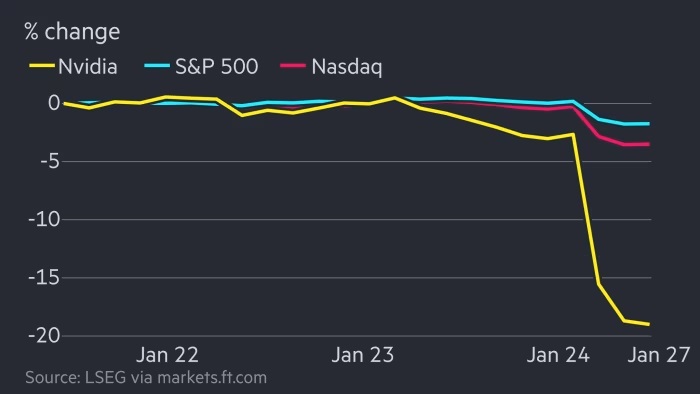
Tech stocks tumbled on Monday after Chinese artificial intelligence start-up DeepSeek stunned Silicon Valley with advances apparently achieved with far less computing power than US rivals. Shares in California-based Nvidia, one of the biggest beneficiaries of spending on AI chips, plunged 16 per cent, wiping out more than $600bn of market value, a record loss for any company

That said, there is no need for panic because if China makes AI development easier and accessible, the global market will grow and everyone will benefit, assuming some presidents think that is a better outcome for the world.


Digital Transformation in the Gambling Industry: Key Insights

0

The gambling industry has undergone a remarkable evolution, driven by advancements in digital technologies. From online platforms to AI-powered solutions, digital transformation reshapes how businesses operate and players engage with gambling services. In this article, we delve into the key insights of this transformation and explore its implications for the industry in 2025 and beyond.

The Impact of Digital Transformation on Gambling

Digital transformation has opened up new opportunities and challenges for the gambling sector. Integrating cutting-edge technologies has enhanced operational efficiency, improved user experience, and expanded market reach. Platforms like the balloon casino game exemplify how innovative games attract a diverse audience and redefine online gambling. Below are some of the significant impacts:

  • Enhanced Accessibility: Players can access gambling services anytime, anywhere, through mobile and web platforms.
  • Improved Security: Blockchain and advanced encryption ensure safe and transparent transactions.
  • Personalized User Experience: AI-driven algorithms offer tailored game recommendations and promotions.
  • Global Reach: Online platforms enable operators to tap into international markets.

Key Technologies Driving the Digital Shift

Several technologies are spearheading the digital transformation of the gambling industry, making it more innovative and player-centric.

  • Artificial Intelligence (AI):
    • Enhances user experience through data-driven personalization.
    • Detects fraudulent activities to ensure fair play and security.
    • Provides valuable insights into player behavior for targeted marketing.
  • Blockchain Technology:
    • Introduces decentralized systems for secure and transparent transactions.
    • Enables provably fair gaming through immutable ledgers.
    • Facilitates the use of cryptocurrencies for seamless payments.
  • Virtual Reality (VR) and Augmented Reality (AR):
    • Creates immersive environments for players, replicating the feel of physical casinos.
    • Engages users with interactive and lifelike gaming experiences.
  • Big Data and Analytics:
    • Offers insights into player preferences and trends.
    • Optimizes game design and marketing strategies based on data analysis.

Business Models Adapting to the Digital Era

The shift to digital platforms has prompted gambling operators to innovate their business models. Here are some prominent trends:

Freemium Models

Gambling platforms increasingly offer freemium options, allowing users to play for free with the option to make in-app purchases for added features or currency. This model attracts casual players and converts them into paying customers.

Subscription-Based Services

Some platforms now provide subscription plans, granting players exclusive access to premium games and benefits. This ensures a steady revenue stream for operators while enhancing user loyalty.

Hybrid Platforms

Hybrid platforms combine traditional and digital gambling elements, catering to seasoned players and digital natives. These platforms leverage live dealers, interactive features, and real-time gaming to create a unique experience.

Challenges in Digital Transformation

While the digital shift brings numerous benefits, it also poses several challenges that operators must address:

  • Regulatory Compliance:
    • Adhering to diverse legal frameworks across jurisdictions.
    • Ensuring responsible gambling practices through digital tools.
  • Cybersecurity Threats:
    • Protecting user data from breaches and fraud.
    • Investing in robust security measures to build trust.
  • Technological Barriers:
    • High costs of adopting and integrating advanced technologies.
    • Ensuring seamless performance across multiple devices and platforms.

Case Studies: Successful Digital Transformations

Operator A utilized AI algorithms to analyze player behavior and implemented personalized reward systems. This resulted in a 25% increase in user retention and a 15% rise in average spending per player.

By adopting blockchain technology, Operator B ensured provably fair gaming, leading to a 40% growth in new users who valued transparency and trust in the platform.

Comparative Table: Traditional vs. Digital Gambling

Feature Traditional Gambling Digital Gambling
Accessibility Limited to physical locations Global access via online platforms
Payment Methods Cash, cards Cryptocurrencies, e-wallets
User Experience Standardized Personalized through AI
Security Relatively lower Enhanced with encryption and blockchain
Game Variety Limited Vast and constantly expanding

Conclusion

The gambling industry’s digital transformation is reshaping its landscape, offering unprecedented opportunities for growth, innovation, and player engagement. By leveraging emerging technologies, addressing challenges, and adapting business models, the sector is poised for a dynamic and profitable future. As we move into 2025, the synergy between technology and gambling promises to redefine the industry for years to come.

China Counters U.S.’ $500bn Stargate AI Ambition With $6m More Efficient-Open Source DeepSeek

0

In a stunning turn of events, a relatively unknown Chinese AI lab, DeepSeek, has thrown Silicon Valley into turmoil with the release of advanced AI models that outpace some of America’s best—at a fraction of the cost.

The timing couldn’t have been more dramatic: DeepSeek unveiled its models just hours after U.S. President Donald Trump announced Stargate, a $500 billion AI investment initiative aimed at cementing America’s leadership in artificial intelligence.

The stark contrast between Stargate’s monumental budget and DeepSeek’s cost-efficient triumph has left industry experts questioning whether the U.S. approach to AI dominance is sustainable.

Founded in 2023 by Chinese entrepreneur Liang Wenfeng, DeepSeek emerged from High-Flyer Quant, a quantitative hedge fund managing $8 billion in assets. Despite its modest origins, the lab has defied expectations, releasing cutting-edge large language models (LLMs) built with constrained resources and hardware.

DeepSeek’s latest reasoning model, R1, was developed for less than $6 million using Nvidia’s H800 chips, bypassing U.S. export restrictions that bar China from acquiring more powerful H100 chips. In benchmark tests, R1 surpassed American counterparts like OpenAI’s o1, Meta’s Llama 3.1, and Anthropic’s Claude Sonnet 3.5 in critical areas such as problem-solving, mathematics, and coding.

The lab’s earlier V3 model, trained on 14.8 trillion tokens with just 2,048 GPUs, cost a mere $5.58 million to develop—a figure that pales compared to the billions spent by Silicon Valley giants.

Stargate’s Grand Ambitions

Announced with great fanfare, Stargate is a bold initiative by Trump designed to secure U.S. dominance in artificial intelligence. With a budget of $500 billion, the program promises to fund cutting-edge research, build state-of-the-art AI data centers, and bolster partnerships between private companies and government agencies.

Speaking at the launch, Trump emphasized the importance of America staying ahead in the AI race.

“We are launching Stargate because America must lead in artificial intelligence. This is the technology that will define the future of global power, and we will spare no expense in making sure we stay on top,” he said.

However, the unveiling of DeepSeek’s highly competitive models hours later, which sent shockwaves through Silicon Valley, underscored that massive investments do not guarantee dominance.

DeepSeek’s success has raised uncomfortable questions about the U.S. approach to AI development. American tech giants have invested tens of billions of dollars in data centers, cutting-edge GPUs, and proprietary models, operating under the assumption that more money equals better AI.

By contrast, DeepSeek employed a process called distillation to train smaller, efficient models using larger pre-trained systems. This approach dramatically reduces computational costs while maintaining high performance.

Chetan Puttagunta, General Partner at Benchmark, explained the significance of this technique saying: “They can take a really good, big model and use a process called distillation. Basically, you use a very large model to help your small model get smart at the thing you want it to get smart at. That’s actually very cost-efficient.”

Microsoft CEO Satya Nadella, speaking at the World Economic Forum, lauded the ingenuity behind DeepSeek’s methods.

“To see the DeepSeek new model, it’s super impressive in terms of both how they have really effectively done an open-source model that does this inference-time compute, and is super-compute efficient. We should take the developments out of China very, very seriously,” he said.

A Slap to America’s AI Ambitions

DeepSeek’s breakthrough is seen by many as a direct challenge to the ambitions of Stargate. With its low-budget, high-performance models, DeepSeek demonstrates that innovative approaches can rival or surpass even the most well-funded initiatives.

“Necessity is the mother of invention,” noted Perplexity CEO Aravind Srinivas, who praised DeepSeek for turning constraints into advantages. “Because they had to figure out workarounds, they actually ended up building something a lot more efficient.”

Questioning the Export Controls

DeepSeek’s success also raises questions about the effectiveness of U.S. export controls. These measures, aimed at curbing China’s AI progress, bar the sale of advanced semiconductors like Nvidia’s H100s. However, by leveraging H800 chips and innovative training methods, DeepSeek has demonstrated that these restrictions may not be the chokehold Washington envisioned.

DeepSeek isn’t the only Chinese entity making waves in AI. Kai-Fu Lee’s startup 01.ai trained a competitive model for just $3 million, while ByteDance, the parent company of TikTok, recently updated its model to outperform OpenAI’s o1 in key benchmarks.

The achievements of these Chinese labs underscore a shifting dynamic in global AI leadership. While America’s Stargate initiative represents a moonshot approach, China’s cost-efficient advancements show that alternative strategies can achieve remarkable results.

The lab’s open-source approach, which makes its models freely available on platforms like Hugging Face, contrasts sharply with the proprietary systems dominating Silicon Valley. DeepSeek has overtaken ChatGPT on Apple’s app download rankings in the U.S. American tech leaders are now warning that DeepSeek is a sign of bigger AI feats coming from China.

“These developments show that talent and ingenuity can overcome resource constraints. We must take them seriously and prepare for a more competitive global AI landscape,” Nadella said.

The Intersection of Business and Gambling: Opportunities in 2025

0

The gambling industry has evolved into a multi-billion-dollar global market, driven by rapid technological advancements and changing consumer behavior. In 2025, the intersection of business and gambling offers entrepreneurs, tech innovators, and investors lucrative opportunities. The industry is diversifying and becoming more dynamic, from digital platforms to blockchain-powered solutions. Let’s delve into the business side of gambling and explore the trends shaping its future.

Gambling as a Thriving Business Sector

The gambling industry has grown exponentially, moving beyond traditional casinos to embrace a digital-first approach. The rise of online gambling platforms has attracted a broader audience, making the industry more accessible and inclusive.
For example, innovations like JetX redefine the online gambling experience by blending interactive gameplay with secure platforms. Businesses investing in such innovations capitalize on the growing demand for unique digital entertainment.

The Growth of Online Gambling

The shift from physical casinos to online platforms has created new opportunities. Online gambling’s convenience and advancements in mobile apps and secure payment systems have significantly contributed to its growth. In 2025, this trend will continue as more businesses develop user-friendly apps and adopt cutting-edge technologies to enhance player engagement.

The Economic Impact of Gambling

The gambling industry’s contributions to the global economy are undeniable. Gambling businesses are vital to local and international markets, from creating jobs to generating tax revenue. In emerging markets, online gambling is becoming a key driver of economic growth, presenting opportunities for businesses to expand their reach.

Technology-Driven Innovations in Gambling

Technology is at the core of the gambling industry’s transformation. Advancements in artificial intelligence (AI), blockchain, and virtual reality (VR) are creating new possibilities for businesses to innovate and thrive.

  • Blockchain Technology in Gambling:
    • Introduces transparency and trust in gambling platforms.
    • Enables secure, fast, and anonymous transactions, ensuring players’ confidence.
    • Offers decentralized gaming experiences, with many platforms setting new precedents.
  • AI and Data Analytics:
    • Personalizes user recommendations to enhance player engagement.
    • Detects fraudulent activity and ensures responsible gambling practices.
    • Provides businesses with valuable insights into player behavior for tailored offerings.

Additionally, advancements in AI will enable platforms to forecast market trends more accurately, helping businesses stay ahead of their competition. Applying machine learning algorithms ensures operational efficiency and allows the ability to cater to a diverse audience effectively.

Emerging Trends and Business Models

Entrepreneurs and businesses venturing into gambling are adopting innovative models to meet changing consumer demands.

Esports Betting

The rise of esports has introduced a new market for gambling businesses. Esports betting platforms are multiplying, providing fans with real-time wagering opportunities and creating revenue streams for operators.

Social Gambling

Social gambling, where players interact with each other while playing, is gaining popularity. Businesses incorporating multiplayer features and virtual communities are tapping into this trend to create a more engaging experience.

Opportunities for Entrepreneurs and Investors

The gambling industry in 2025 presents numerous opportunities for entrepreneurs and investors looking to enter or expand within the sector.

Exploring Niche Markets

Focusing on niche markets, such as skill-based games or localized gambling apps, allows businesses to stand out in a competitive landscape. Entrepreneurs who identify underserved markets can establish a strong foothold.

Partnerships and Collaborations

Collaborating with technology providers, game developers, and payment processors can accelerate growth for gambling businesses. Strategic partnerships ensure access to resources and expertise, enabling innovation and scalability.

Conclusion

The intersection of business and gambling in 2025 offers a dynamic landscape filled with opportunities for innovation and growth. Businesses can thrive in this evolving industry by leveraging technology, exploring new markets, and adopting customer-centric approaches. As gambling continues to transform into a tech-driven sector, it’s an opportune time for forward-thinking entrepreneurs and investors to seize the moment.

FAQ

1. How is blockchain transforming the gambling industry?

Blockchain introduces transparency and trust by enabling secure, fast, anonymous transactions. It also ensures fair play through decentralized platforms.

2. What are the main opportunities for entrepreneurs in gambling in 2025?

Entrepreneurs can focus on niche markets like skill-based games or esports betting. Collaborating with technology providers and exploring localized gambling apps are also promising avenues.

3. How does AI enhance the gambling business?

AI personalizes user experiences through tailored recommendations, detects fraud to ensure security, and provides valuable insights into player behavior for improved offerings.

CMMC Compliance News: What’s New For Defense Contractors?

0

The Department of Defense (DoD) never jokes about cybersecurity matters. The defense industrial base encounters frequent and complex cyberattacks. The organization leverages its robust Cybersecurity Maturity Model Certification (CMMC) to strengthen DIB cybersecurity and safeguard DoD data and assets. Every contractor and business entity partnering with the Department of Defense for a contract or business transaction must meet all CMMC compliance requirements.

Since its inception, CMMC has received significant modifications. The most recent is the Cybersecurity Maturity Model Certification Program Final Rule of 2024. It introduced substantial changes to the CMMC programs, making complying with cyber security standards easier for contractors. Below are the five most significant compliance news updates.

1. Simplified Compliance for Small and Medium-Sized Businesses

Every small and medium-sized business celebrates the exciting CMMC news downgrading compliance levels from five to three. Small contractors no longer need to complete the five assessment levels. The new program presents compliance with a clearer approach. For instance, under the new system, compliance Level 1 demands businesses to meet standard cyber hygiene. Level 2 requires companies handling Controlled Unclassified Information to self-assess their compliance or seek third-party services. The modification simplifies the process while enabling flexibility in meeting sufficient protection.

Level 3 of CMMC requires small and medium-sized businesses to address advanced cyber threats. That requires compliance with intensive assessment requirements handled by the Defense Industrial Base Cybersecurity Assessment Center. Fewer assessment levels lift the burden of costly and demanding compliance for businesses with limited resources. It leaves more resources and time to handle primary cybersecurity practices to achieve condition certification and ease the transition to full compliance.

2. Requirements to Affirm Compliance Status Annually

Defense contractors must affirm their compliance status every twelve months. Every contractor must confirm they comply with the CMMC program’s certification assessment or self-assessment. The rule obligates a senior-level representative to ensure compliance with the CMMC program’s requirements. They should continually monitor compliance levels and meet all the specified security requirements in Levels 1, 2, and 3.

The affirmation data must be correct and entered promptly in the SPRS. The contractor must attest to the implementation and upholding of implementation requirements per CMMC requirements. That will show how dedicated the contractor is to meeting compliance and cybersecurity requirements at all operation levels.

3. Mandatory Self-Assessment for Basic Protection

Self-assessment is another new aspect introduced in the CMMC 2.0 framework. The new guideline requires small contractors to run internal compliance evaluations. You can cut costs by leveraging your existing cybersecurity team and resources for personal evaluation. The self-evaluation lets you keep your internal security standards aligned with Department of Defense-enacted guidelines.

The security requirements for Level 1 contracts address basic cyber hygiene. You want to ensure your firm can withstand basic cyber threats and protect your FCI data from external manipulations. Fewer requirements ensure small contractors save on cybersecurity administration and finances.

The minimal compliance requirements let your organization avoid enlisting costly third-party evaluators. As a small defense contractor, you can keep your company in tandem with cybersecurity standards to attract more contracts without investing heavily upfront.

4. Contractor Oversight Rule

The 2024 CMMC 2.0 rule introduced more roles for prime contractors. These entities should monitor and persuade subcontractors to achieve and maintain CMMC compliance. Prime contractors should ensure those shielded by their Department of Defense umbrella comply with the latest cybersecurity standards. As a prime contractor, supervise your subcontractors to ensure they have acquired mandatory CMMC certificates.

The Department of Defense holds your prime contracting business in high esteem. However, they would throw your company under the bus when you have multiple noncompliant subcontractors. Such an erroneous supply chain creates loopholes that threaten the safety of everyone involved.

Your prime contracting company represents the firms under your umbrella, meaning mistakes from subcontractors directly impact your cybersecurity standing. Request proof of certification and self-evaluation reports from all contractors under your company. Holding subcontractors accountable for their cybersecurity activities can help you mitigate risks.

5. Rapid Incident Reporting

Another update on the CMMC 2.0 framework will require contractors to report incidents immediately when they occur. Contractors must notify contracting officers within 72 hours of information security lapses or CMMC certification status changes. Reporting issues on time helps concerned parties uncover and address security breaches. This approach will reduce the adverse impact of prolonged exposure to cybersecurity threats. The clear DoD reporting timeline ensures resilience and responsiveness to incidents.

The most exciting thing about timely incident reporting is the accountability culture that develops within an organization. Responsible parties in a contracting organization will see it necessary to make decisions and measures that prevent the magnification of cyber threats. It will help contractors identify and resolve vulnerabilities before they become critical and costly problems with severe reputational impact.

Wrapping Up

The 2024 CMMC 2.0 rule introduced multiple compliance and assessment changes. Defense contractors must meet those requirements to optimize their cybersecurity posture. The updated requirements relieve the hefty compliance burden from small and medium-sized businesses. They will no longer meet the five levels but three. Three levels are fewer and less complicated requirements. Contractors must oversee the compliance of their subcontractors. Also, smaller defense contractors can now self-assess their cybersecurity posture.