DD
MM
YYYY

PAGES

DD
MM
YYYY

spot_img

PAGES

Home Blog Page 2659

How To Thrive in Business, and Keep Thriving – Tekedia Mini-MBA

0

How do you thrive in business? I will take you to Oriendu Market Ovim and this is the answer: “ahia oma na-ere onwe ya” which means that a great product will sell itself. It is not saying that you do not need to advertise. Rather, the Igbo proverb is saying that if the product is great, customers will come, and they will repeat, and they will recruit other customers, because great products create fandom.

So, to thrive in business, the African business worldview encapsulated in that Igbo ageless line (other tribes have different versions) challenges companies to make great products. Then, they did not stop there; there is another component which is “onye nwere mmadu ka onye nwere ego”; he or she who has networks, contacts, relationships, etc, is going to be more successful in business than someone who has just money. This is about building trust in the market, and nurturing relationships because business wins on intangible factors of production which even capital or money cannot deliver.

Join us tomorrow as we discuss How To Thrive in Business, and Keep Thriving . Looking at data from dozens of Tekedia Capital startups, I have put together five core factors which define winning and thriving in markets.

Sat, Nov 16 | 7pm-8.30pm WAT | How To Thrive in Business, and Keep Thriving – Ndubuisi Ekekwe |

This is Tekedia Institute, our product is knowledge. Please note that we have opened registrations for the next edition of Tekedia Mini-MBA; register here and get the early bird discount now https://school.tekedia.com/course/mmba16/

Solana Price Prediction: SOL?? Market Value Passes $100B, Cardano Eyes Major Bull Rally And Yeti Ouro Soars Through Stage 1 Of Presale

0

Following a sustained rally after the U.S. elections, Solana has now surpassed the $100 billion market cap for the first time ever. Cardano is eyeing a major bull rally as holders pursue the elusive $1 price. On the new projects front, Yeti Ouro has soared through the first stage of its presale.

Solana Surges Past $100 Billion for the First Time

The bull rally that was sparked by Donald Trump’s election victory has added over $800 billion to the overall crypto market cap. While it has been memecoins like Dogecoin that have grabbed the attention with their 100% surges, Solana has been quietly scaling the heights and setting new highs.

Following a 17% rally in the past week, Solana’s market cap surpassed $100 billion for the first time ever on Monday. Interestingly, despite setting a new record with its market cap, Solana has yet to surpass its all-time high price for SOL, which was set in November 2021 at $259. It currently trades at around $220. However, it managed to set a new record market cap due to an increase in the supply of SOL tokens since 2021.

Cardano’s Decentralization Plans

Elsewhere, Cardano has finally rediscovered the firm that made it one of the market leaders, gaining over 55% in the past week. Trading at $0.5723, ADA is now in the top ten cryptos with a market cap of $20 billion.

Founder Charles Hoskinson is reported to be involved in the Trump government’s crypto regulations, which would presumably make it easier to trade crypto in the US. The network’s continued strides towards full decentralization have also advanced meaningfully as the Voltaire era in Cardano continues to take shape.

Yeti Ouro Sails Through Stage 1 Of Presale

Yeti Ouro, a memecoin project that seeks to also offer utility, has sailed through the first stage of its presale. Investors who are seeking the next 100X memecoin have purchased over 21% of the YETIO tokens on sale in the first stage.

Yeti Ouro’s utility comes from Yeti Go, a new game built around fierce competition and play-to-earn mechanisms. Yeti Go allows users to race against other opponents on a thrilling course where the goal is to outwit opponents, run them off the course and avoid all the obstacles to win the ultimate prize, which is paid in YETIO tokens.

$YETIO is used to purchase in-game items such as skins and weapons, and pay for items on the in-game marketplace. YETIO holders can also stake them to unlock exclusive rewards and special in-game features.

In the ongoing presale, investors have snapped up over 21.87 million tokens as they seek the next Dogecoin rival. Yeti Ouro has a capped supply of a billion tokens, with 50% available on the presale stage, while 5% each is earmarked for the token burn, liquidity, marketing and the team. Investors who get in early enjoy exclusive benefits, which include early access to the Yeti Go game and special in-game content.

Solana, Cardano Or Yeti Ouro?

All three projects have their merits. Solana has one of the largest ecosystems and has been the most formidable competitor for Ethereum. Cardano has its merits, too: it has an established community, it remains an investor favorite, and its decentralization plans have been taking shape in recent months.

However, Yeti Ouro offers the opportunity to get in early on a project that could surge 100X. It would be like buying Solana when it launched in 2020, or Cardano’s ADA in 2017 before it blew up.


Join the Yeti Ouro Community

 Website: https://yetiouro.io/

X (Formally Twitter): https://x.com/yetiouro

Telegram: https://t.me/yetiouroofficial

Discord: https://discord.gg/YtUsEZ2ZrV

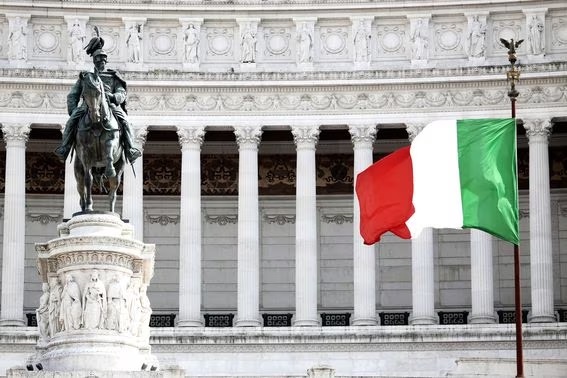
Italy’s Crypto Tax Revision to 28%, A Strategic Move for Economic Growth

0

In a recent turn of events, Italy has made a significant adjustment to its proposed cryptocurrency tax policy. The initial proposal, which suggested a substantial 42% tax on crypto capital gains, has been revised down to a more moderate 28%. This move comes after intense debate and pushback from various stakeholders within the Italian political sphere and the broader crypto community.

The original 42% tax rate was met with widespread concern, as it represented a major increase from the existing 26% rate. Critics argued that such a steep hike could stifle innovation and investment in the burgeoning crypto sector, potentially driving businesses and investors to more tax-friendly jurisdictions. The proposed rate was also out of step with global trends, where many countries are exploring ways to integrate cryptocurrencies into their economies without imposing prohibitive taxes.

The decision to lower the proposed tax rate to 28% reflects a more nuanced approach to crypto taxation, one that seeks to balance the government’s need for revenue with the desire to foster a healthy digital asset market. By opting for a rate closer to the current one, Italy is positioning itself as a country that supports the growth of the crypto industry while ensuring that it contributes its fair share to the national economy.

This policy revision is likely influenced by the broader European Union’s regulatory framework for digital assets, known as the Markets in Crypto-Assets (MiCA). As Italy aligns its national policies with the EU’s standards, it is essential to create a tax environment that encourages innovation and attracts investment, thereby contributing to the overall competitiveness of the EU’s digital economy.

Moreover, the reduction in the proposed tax rate can be seen as a response to the dynamic nature of the crypto market. With the industry’s rapid growth and the increasing adoption of digital assets, governments worldwide are recognizing the need to develop regulatory and tax regimes that are flexible and responsive to market developments.

The Italian government’s willingness to reconsider its stance on crypto taxation after feedback from coalition partners and industry participants demonstrates a commitment to collaborative governance. Such an approach is crucial in navigating the complex and evolving landscape of digital asset regulation.

As the crypto market continues to mature, it is imperative for policymakers to engage with industry experts, businesses, and consumers to craft regulations that support economic growth, innovation, and consumer protection. Italy’s revised crypto tax proposal is a step in the right direction, signaling the country’s readiness to embrace the potential of digital assets while upholding its fiscal responsibilities.

The final details of Italy’s crypto tax policy are still being ironed out, and it remains to be seen how the new rate will be implemented. However, the move to reduce the proposed tax rate is a clear indication that Italy is listening to the voices of the crypto community and is open to adapting its policies to support the industry’s growth. This decision could set a precedent for other countries grappling with the challenge of taxing digital assets in a way that is fair, reasonable, and conducive to economic development.

Moniepoint Pursues Commercial Banking License to Expand Financial Footprint in Nigeria

1

Moniepoint, a leading Nigerian fintech unicorn, is reportedly in talks with the Central Bank of Nigeria (CBN) to secure a commercial banking license, according to sources close to the company.

A commercial banking license would represent a significant step for Moniepoint, underscoring its maturity and willingness to adapt to Nigeria’s evolving regulatory landscape. Given the CBN’s heightened regulatory scrutiny of fintech since December 2023, obtaining this license could position Moniepoint as a stable and compliant payer in Nigeria’s dynamic financial ecosystem

This move is poised to mark a significant milestone in the company’s journey since its inception, strengthening its retail banking operations and expanding its share of Nigeria’s financial services market.

A commercial banking license would enable Moniepoint to do the following:

Broaden its product suite: Offering services like foreign exchange transactions and treasury operations, which have proven to be profitable for established banks.

Expand its geographical reach: Opening physical branches across Nigeria, particularly in areas where traditional banks have limited presence.

Gain a competitive edge: Becoming the first Nigerian fintech to secure a commercial banking license, positioning itself ahead of rivals like OPay.

With a commercial banking license, Moniepoint would also become the first Nigerian fintech to enter this exclusive category, gaining a competitive advantage over other fintech firms like OPay, Palmpay, and Kuda, amongst others.

The company’s rapid growth, particularly in agency banking where other competitors such as Firstmonnie, Paga, and Opay operate, has positioned it as a major player in Nigeria’s fintech industry. Also, its focus on technology and a strong agent network has enabled it to attract a significant customer base, surpassing even some established commercial banks.

As it prepares for the licensing process, Moniepoint has significantly invested in compliance and fraud monitoring. In September 2024, the company introduced a Multi-Factor Authentication, MFA on its mobile and web applications, designed to simplify the payment experience, increase transaction success rates, and significantly enhance security for consumers and businesses. 

Notably, the company has continued to strengthen its board with the hiring of experienced professionals. Earlier this month, Moniepoint hired ex-Stanbic IBTC CFO Bayo Olujobi as CFO of the company.

Moniepoint recent application of commercial banking license if successful, could see the company disrupt the traditional banking landscape in Nigeria. By leveraging technology and a customer-centric approach, the company aims to offer innovative financial solutions and enhance the overall banking experience for Nigerians.

The capital requirement for a regional license is set at $30 million, which is well within Moniepoint’s reach, following its recent $110 million funding round that elevated it to unicorn status. In addition to the financial commitment, Moniepoint will need to meet regulatory infrastructure requirements, including setting up physical branches equipped with strong rooms, loading bays, and banking halls.

If granted, the commercial bank license would allow Moniepoint to bypass the geographical and operational restrictions of its current microfinance bank license, which limits its expansion outside Nigeria’s South-West region and restricts its range of services. 

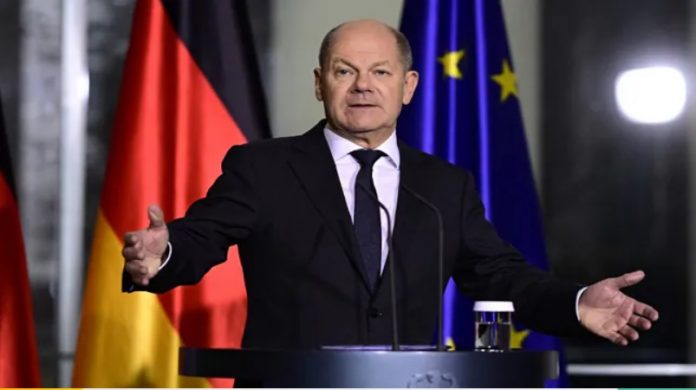
Early Elections slated to Hold February 23 in Germany after Coalition Falls

0

Germany is poised for an early election on February 23, a significant event precipitated by the recent collapse of the ruling coalition. This development marks a pivotal moment in German politics, as the nation grapples with the implications of a fragmented government and the quest for stability and direction.

The early election, set nearly a month ahead of the initially proposed date, underscores the urgency felt by political leaders to resolve the governmental impasse and address the pressing issues facing the country. The decision, reached after intense negotiations among parliamentary leaders, reflects a consensus on the need for swift action to ensure continuity in governance.

Chancellor Olaf Scholz’s centre-left coalition, which included the Social Democrats (SPD), the Greens, and the Free Democratic Party (FDP), faced mounting challenges that culminated in its dissolution. The departure of the FDP, triggered by disagreements over fiscal policies, left the Chancellor without a majority in the Bundestag and unable to effectively govern.

The upcoming election presents an opportunity for political parties to engage with the electorate and articulate their visions for Germany’s future. It is a chance for the SPD to regain its footing and for the Greens to potentially elevate their influence. Meanwhile, the conservative Christian Democratic Union (CDU), currently leading in the polls, may seek to consolidate its position and steer the country towards a different path.

key issues that are likely to influence the electorate’s decision include:

Economic Stability: Amidst manufacturing weaknesses, particularly in the automobile industry, and the looming threat of US tariffs, Germany’s economic resilience is a primary concern for voters.

Climate Policy: Environmental protection and climate change are pivotal issues, with a substantial portion of the electorate considering them crucial in their voting decisions. The debates over climate policy are expected to be intense, reflecting the public’s growing awareness and demand for sustainable action.

Political Integrity: The collapse of Chancellor Olaf Scholz’s coalition has raised questions about political stability and governance. Voters will be looking for a government that can provide both integrity and effective leadership.

EU Relations: Germany’s role within the European Union and its stance on future EU functioning are also significant considerations, especially in light of recent human rights and democracy concerns.

Social Issues: With the world facing numerous social challenges, German voters will be attentive to how the candidates address topics such as healthcare, education, and social security. These issues, among others, will shape the discourse and potentially the outcome of the elections, as Germany seeks a path forward in these complex times.

As Germany navigates this period of political uncertainty, the early election is more than just a procedural necessity; it is a democratic exercise that will shape the nation’s trajectory in the years to come. The outcome will determine Germany’s approach to domestic challenges, its role in the European Union, and its stance on global issues.

The world will be watching as Germany takes to the polls on February 23, anticipating the emergence of a government capable of leading with conviction and foresight. The stakes are high, and the decisions made by German voters will resonate beyond their borders, influencing the course of European politics and international relations.