DD
MM
YYYY

PAGES

DD
MM
YYYY

spot_img

PAGES

Home Blog Page 2670

10 FAQs About Nigeria’s Presidential Tax Reforms Bills Answered

0

In light of widespread interest and heated debate surrounding Nigeria’s proposed tax reforms, Taiwo Oyedele, Chairman of the Presidential Committee on Fiscal Policy and Tax Reforms, responded to ten frequently asked questions to clarify the intent and impact of the reform bills.

Sharing his insights in a social media post on Monday, Oyedele acknowledged that the reforms have sparked an intense reaction from stakeholders, a response he sees as integral to refining the policies.

“It is not unusual for a major reform such as this to elicit keen interest from all stakeholders,” he stated. “This development is necessary to achieve the best outcomes that benefits all as it provides an opportunity for further engagements which is healthy for the system.”

The Committee has gathered questions to address misconceptions and help stakeholders understand the implications of the reform, aimed at boosting transparency and fostering collaboration.

Tax Reform Bills – 10 Most Frequently Asked Questions

Question 1: What is the whole fiscal and tax reforms all about?

Answer 1: Nigeria’s tax system has over time become complex, stifling growth and unable to generate the required revenue for development. This is largely due to lack of policy clarity and inconsistency, obsolete and ambiguous tax laws, weak and fragmented revenue administration.

The main objectives of the reform is to redesign the system to support growth by addressing current challenges such as multiplicity of taxes, ambiguous and obsolete provisions, reduce the tax burden on individuals and businesses while promoting the ease of doing business to facilitate sustainable economic growth and deliver shared prosperity for Nigerians.

The key targets include single digit number of taxes, harmonised and efficient revenue administration, increase in tax to GDP ratio, economic competitiveness, and removal of tax burden on the poor.

Question 2: How representative or inclusive was the process leading up to the various proposals?

Answer 2: The committee comprised over 80 individuals from all walks of life across the 6 geopolitical zones of Nigeria representing more than 20 government institutions, the organized private sector, trade associations, professional bodies, professional services firms, and the civil society. The composition ensures there is adequate gender balance, with people of different faiths and the youth. About 45 students were selected from 22 universities across Nigeria who support the secretariat work, conduct research and participate in committee meetings on a rotational basis.

Tailored sessions were conducted for more than 40 sectors representing over 90% of the economy and focus group engagements for people with disabilities, youths, and Nigerians in the diaspora. The committee requested inputs from all stakeholders and received memoranda from people in all the 36 states and the FCT.

Furthermore, exposure consultation sessions were organized for CFOs with over 300 companies represented, journalists, public analysts, tax consultants, and business owners. We also had engagements with the Nigeria Governors’ Forum, the Federal Executive Council, National Economic Council, finance commissioners, the Joint Tax Board, among others.

Question 3: Why is the VAT proposal generating so much controversy? Are we trying to fix what is not broken?

Answer 3: The current VAT system is fractured. The major issues include:

(i) disputes over VAT administration between some states and the federal government resulting in some landmark judgements and pending court cases. This is compounded by the fact that VAT is not stated in the 1999 Constitution thereby creating a lacuna. Our analysis shows that a central collection system is more efficient and benefits all. Once the contentious issues have been resolved, then VAT can be properly included in the constitution. The current sharing formula of FG 15%, States 50% and LGs 35% is proposed to become FG 10%, States 55% and LGs 35%.

(ii) imposition of parallel consumption taxes in some states along with VAT which increases the tax burden on the people and contributes to multiple taxation. The reform seeks the discontinuation of all consumption taxes other than VAT.

(iii) basis of distribution – the current formula for sharing VAT among states is based on 20% derivation, 50% equality and 30% population. The tax reform proposes a different model of derivation which will attribute VAT to the place of supply and consumption rather than the current model which attributes VAT to the state where it is remitted thereby favoring states with companies headquarters. Further, derivation under the new model will account for 60% of VAT distribution for better equity and to discourage any state from seeking to administer VAT as a state tax, which will not only result in much lower revenue for all tiers of government but will impose a higher burden on businesses.

The proposed derivation model is contained under S.22 (12) of the Nigeria Tax Administration Bill which states that “For the purpose of attribution, any return under this section shall provide details of derivation of taxable supplies by location …”

The controversy has arisen from the perception that the proposed formula would lead to lower revenue for some states. However, the 5% to be ceded by the FG can be set aside for equalization transfers to cater for any shortfall to a state under the new model. This ensures that no state is worse off in the short term while significantly enhancing economic activities and revenue for all states in the medium to long term.

Question 4: Are the bills also seeking to merge or scrap some agencies?

Answer 4: No. The bills are seeking to merge taxes and harmonize revenue administration. The system will leverage technology for integration which will ensure seamless revenue administration with greater efficiency and less burden for people and businesses. Government agencies will be able to focus on their primary mandates rather than being distracted with revenue targets. Agencies that are currently collecting taxes and levies other than regulatory fees will therefore be funded through the budgetary process.

Question 5: One of the reform targets is to double Nigeria’s tax to GDP ratio over the next few years. Are we to expect more taxes?

Answer 5: The plan is to reduce the overall tax burden, not increase it. By simplifying the tax system, harmonizing taxes and addressing impediments to investments, the reforms will boost economic activities and therefore enhance revenue generation for all tiers of government. This will ensure that we can raise tax revenue without raising tax burden, through various strategies including removal of disincentives to business formalization, use of technology and data for intelligence, tax simplification and enhanced administrative capacity. Beyond raising revenue, curbing tax evasion also ensures that there is a level playing field for all rather than implicitly penalizing compliant taxpayers and rewarding evaders.

Question 6: How will the reforms benefit businesses, large and small?

Answer 6: Businesses have consistently cited tax issues such as multiplicity of taxes and complex tax compliance requirements as major impediments to investment and competitiveness. Addressing these issues will therefore facilitate economic growth and boost the country’s GDP.

Some of the proposals include reduction of corporate income tax rate from 30% to 25% over the next 2 years and the elimination of earmarked taxes on companies to be replaced with a harmonized single levy at a reduced rate.

Others include the elimination of minimum tax on loss-making companies and those with low margins, grant of input VAT credit to businesses on assets and services to reduce the cost of investment, ability to pay taxes on foreign currency transactions in naira, WHT, and VAT exemptions for small businesses and a higher threshold of N50m annual turnover for corporate income tax exemption. There will be an office of the tax ombudsman to check administrative excesses and protect vulnerable taxpayers. In addition, their tax incentives are being rationalized with clear rules to ensure certainty and provide a level playing field for all investors, while a new priority sector incentive regime will replace the current pioneer status scheme, etc.

Question 7: Is it true that workers will pay more PAYE tax?

Answer 7: The current taxable income bands and rates were introduced in 2011. Due to the lack of review, the structure has resulted in “fiscal drag” where many low income earners have been pushed to the top bracket over time due to high inflation. Also, the system discourages formalization given that the tax rate on companies is nearly double that of enterprises which also encourages arbitrage in many cases.

The proposal seeks to address these issues and simplify the system by eliminating various reliefs and allowances while adjusting the bands and rates to achieve an overall lower effective tax rate for workers. This will ensure that an individual with basic education should be able to file their tax returns without any assistance. There is a rent relief allowance to provide additional benefits for low-income earners.

Individuals earning about N1.7m or less per month will pay lower PAYE tax while those earning the new minimum wage and slightly more will be fully exempted. These thresholds will result in about 98% of workers in the public and private sectors paying lower taxes while the top 2% will pay slightly more in a progressive manner up to 25% for high-net-worth individuals.

Question 8: Are there specific proposals for the ordinary Nigerian?

Answer 8: Yes. The lowest-income earners accounting for about one-third of all workers will be fully exempted from tax while low and middle-income earners will pay less. This is consistent with the policy philosophy of not taxing poverty. Also, self-employed persons and entrepreneurs will enjoy tax exemptions available to individuals in formal employment.

The VAT reform includes a zero (0%) rate for food, education, health, and the exemption for rent and public transportation. These items constitute an average of 82% of household consumption and nearly 100% of low-income households which will ameliorate the rising cost of living for the masses.

In addition, there are proposed changes to the income tax laws to facilitate remote work opportunities for Nigerians in Nigeria within the global business process outsourcing. This will empower our youths to play a key role in the digital economy space.

Question 9: We have seen different recommendations and proposals in the past. What will be different this time around?

Answer 9: The Presidential Fiscal Policy and Tax Reforms Committee was set up with a broad mandate covering fiscal governance, revenue transformation, and economic growth facilitation. In addition, the committee is charged with implementation rather than merely submitting a report of recommendations at the end of its assignment which has a much lower chance of success. The various proposals were co-created with inputs from Nigerians, using data and evidence to inform the recommendations.

There are measures to ensure that the reforms are institutionalized via legal framework and administrative structures including systems to curb corruption and block loopholes through technology, self-service, and tax agents regulation as well as planned amnesty and whistleblowing framework to sanitize the system.

Question 10: What else is being done beyond the new tax bills?

Answer 10: There are various proposals that have been implemented or are at different stages of implementation including the 2024 WHT Regulations, Executive Orders, and the 2024 National Fiscal Policy with clear principles for fair taxation, responsible borrowing, and sustainable spending including frameworks for subsidy and cash transfers, ESG and Sustainable Development Goals.

Watch the explainer here https://bit.ly/48LIVBN

More information can be found on the committee’s social media accounts, fiscalreformsng on X, LinkedIn, Instagram, Facebook, YouTube channel, and website https://fiscalreforms.ng. You can also reach us via email at enquiries@fiscalreforms.ng or via WhatsApp chat at +234 810 975 3151.

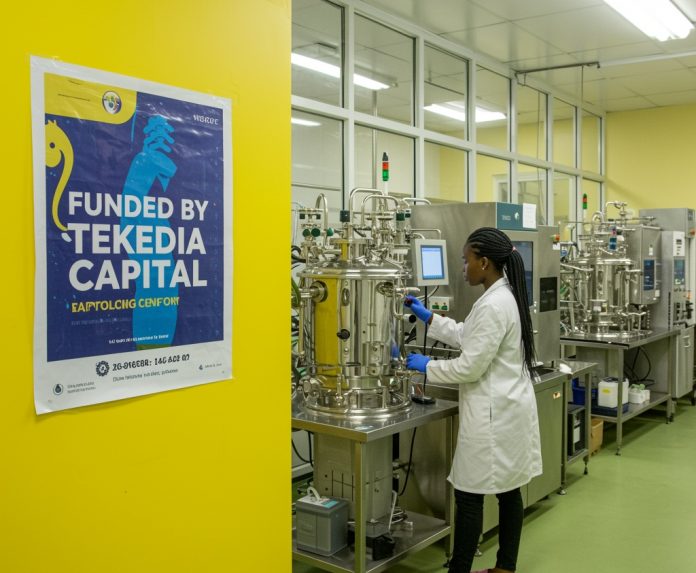
Tekedia Capital, Tesla Case Study, Seeking Alpha and The Power Law of Venture Investing

0

In 2006, Elon Musk wanted to raise money for Tesla. Kleiner Perkins, an American venture capital firm, priced the electric vehicle company $50 million. Musk later went for another investor which closed a deal at $70 million.

By November 2021, that car company was worth $1.24 trillion. Today, it is worth about $1.01 trillion. Good People, that is a massive economic-transduction, unleashing wealth for families, people and institutions.

When companies come to Tekedia Capital, we truly like to know the opportunity cost of NOT investing because no one can easily forgive himself or herself for missing the Teslas of the future. From Monday, we will share 15 companies Tekedia Capital just invested in during our ongoing Tekedia Capital cycle. They cover companies on quantum computing, modern AI insurance infrastructure in US,  paytech in Southeast Asia, fintech in Mexico, B2B ecommerce in Nigeria, wealth management startup in India, and more.

We profile the startups here.

Power law of Early Stage Investing

The power law in venture capital (VC) is a principle that describes how a small number of investments can generate the majority of returns for a portfolio. This is different from a normal distribution, where returns are spread more evenly. 

The power law is a fundamental feature of VC, and is based on decades of historical data. It’s a type of heavy-tailed probability distribution, which means that a small number of occurrences have a disproportionately large impact. In VC, these outliers are often called “home runs”. 

 Some implications of the power law include:

  • A few big winners: A small number of investments can account for the majority of gains in a VC portfolio.  
  • Enduring many failed investments: The power law helps explain why VCs can endure many failed investments.  
  • Identifying unicorns: It’s essential for VC funds to identify, assist, and protect their ownership positions in unicorns.  

Some strategies for taking advantage of the power law include:

  • Looking for opportunities in untapped markets with minimal competition
  • Focusing on ventures that could tap into vast markets with the potential to be massive
  • Avoiding established incumbents
  • Looking for companies that seem out of the ordinary or operate without any apparent past or present competition
  • Looking for companies that show robust growth in their early stages 

Missed Out on Bitcoin? This New DeFi Project Offers Massive Potential Gains

0

Bitcoin’s meteoric rise has left many wondering if they missed their chance for life-changing gains. But FXGuys is positioning itself as the Top PropFi Project in the decentralized finance (DeFi) space for those looking to capitalise on the next big opportunity in crypto. With its innovative features like Trade2Earn, Staking, and a Trader Funding Program, FXGuys has the potential to deliver impressive returns, attracting both experienced traders and crypto newcomers alike.

>>>BUY $FXG TOKENS HERE<<<<

FX Guys is currently in its Stage 1 presale, offering early investors the chance to buy $FXG tokens at the highly affordable price of $0.03. After selling out 68,000,000 tokens in a private round and raising over $1,000,000, FXGuys is gaining significant traction as a high-potential altcoin. If you missed Bitcoin’s early days, FXGuys might just be the project to watch in 2024.

What Makes FXGuys Stand Out in the DeFi Space?

FXGuys is quickly establishing itself as one of the best DeFi projects, combining traditional finance with decentralized solutions. What sets FXGuys apart is its comprehensive ecosystem to benefit traders and token holders. Here’s what makes FXGuys a must-watch project:

  1. Staking $FXG: FXGuys offers a robust staking system, allowing token holders to earn 20% profit and revenue share from broker trading volume. This unique feature provides passive income opportunities and rewards users for holding their tokens.
  2. Trader Funding Program: One of FXGuys’ most innovative features is its Trader Funding Program, allowing top retail traders to access a funded account with up to $500,000 in trading capital. After passing evaluations or trading challenges, traders can split profits 80/20, in the trader’s favour, making it one of the best platforms for ambitious traders looking to scale their strategies.
  3. No Buy or Sell Tax: Unlike many other DeFi projects, FXGuys has no buy or sell tax on its tokens. Combined with no KYC decentralized trading, the platform is highly appealing to traders looking for efficiency and privacy in their trading activities.

FXGuys and the Rise of PropFi: Why This Matters

FX Guys isn’t just another DeFi token—it’s a leader in the PropFi space, a growing trend that merges proprietary trading with decentralized finance. PropFi offers traders access to broker-backed trading accounts while retaining the benefits of blockchain technology.

With its custom trading platform, FXGuys Trader, the project allows users to choose between different trading platforms, such as MT5, Match-Trader, cTrader, and DXtrade, depending on their location and preferences. This flexibility attracts a range of traders, from retail investors to institutional players.

>>>BUY $FXG TOKENS HERE<<<<

Additionally, the FXGuys stands out as one of the best proprietary trading firms in crypto, enabling traders to increase their earning potential with little upfront capital. Its accessibility and comprehensive features make it ideal for funded prop firms and futures prop firms looking to capitalize on the growing PropFi trend.

The FXGuys Trade2Earn Program: Driving Volume and Activity

One of the key drivers of FXGuys’ ecosystem is its Trade2Earn program. For every trade a user makes, they earn $FXG tokens, providing an additional incentive to keep trading on the platform. This program not only increases trading volume but also rewards users in a way that directly contributes to the project’s growth and liquidity.

By combining staking, Trade2Earn, and a Trader Funding Program, FXGuys is positioning itself as one of the best defi tokens in the market today. These features create a well-rounded ecosystem where traders and investors can benefit from both active and passive income streams.

Why FXGuys Could Be Your Next Big Move

With its Stage 1 presale still underway, FXGuys offers massive potential gains for early investors. The token’s price of $0.03 is a steal when considering the project’s growth potential and the traction it’s already gained. The team has raised over $1,000,000 in a private round by selling 68,000,000 $FXG tokens, showing strong investor confidence in the project.

Unlike many other altcoins, FXGuys offers a complete ecosystem, with real utility for both traders and token holders. Its unique blend of Staking, Trade2Earn, and a Trader Funding Program gives it the potential to become one of the best defi projects in the coming years.

>>>BUY $FXG TOKENS HERE<<<<

Conclusion: FXGuys Is Poised for Success

For those who feel they missed out on Bitcoin’s explosive growth, FXGuys offers a new opportunity with similar upside potential. FXGuys combines the best DeFi and PropFi by focusing on a trader-centric ecosystem, making it a top choice for traders, investors, and funded prop firms.

With features like Staking, no buy or sell tax, and its Trader Funding Program, FXGuys is not just another token—it’s a complete platform for traders and investors looking to capitalize on active and passive income streams. If you’re searching for a project with massive potential gains, FX Guys is one of the best proprietary trading firms to keep on your radar in 2024.


To find out more about FXGuys follow the links below:

Website | Whitepaper | Socials | Audit


Exclusive FXGuys Promo Code:

USE PROP10 FOR 10% BONUS

Minimum Wage: Nigerian Labor Union Issues Dec 1, 2024 Nationwide Strike Ultimatum

0

The Nigeria Labour Congress (NLC) has issued a firm ultimatum for state governments across the country to implement the newly enacted minimum wage by December 1, 2024, or face a nationwide strike action.

This directive was communicated in a statement signed by NLC President Joe Ajaero following the National Executive Council (NEC) meeting in Port Harcourt, Rivers State. In his address, Ajaero expressed disappointment over the delayed implementation of the wage adjustment, describing it as an affront to workers’ rights amid the deepening economic crisis.

“The NEC notes with deep frustration the persistent delay and outright refusal by some state governments to implement the 2024 National Minimum Wage Act,” Ajaero stated, signaling mounting discontent within the union. “This betrayal by certain governors and government officials across the country flies in the face of both legality and morality, as workers continue to be denied their rightful wages amidst rising economic hardship.”

He condemned these state governments’ inaction as a “blatant disregard for the law and the lives of millions of Nigerian workers, who are being exploited by the very leaders sworn to protect them.”

“All state Councils where the National Minimum Wage has not been fully implemented by the last day of November 2024 have been directed to proceed on strike beginning from December 1,” Ajaero announced.

To address this ongoing issue, the NLC has resolved to set up a National Minimum Wage Implementation Committee, which will oversee a nationwide assessment and mobilization campaign to educate citizens on the necessity of resisting this perceived attack on their dignity and rights.

Speaking on the larger economic situation, Ajaero urged the federal government to take immediate steps to mitigate the effects of inflation, which has led to unprecedented hardship for workers.

“Inflation continues to rise unchecked, with the costs of basic necessities spiraling beyond the reach of the average worker,” he observed, highlighting the urgency of the NLC’s demands. “Millions of Nigerians are being driven into destitution, forced to choose daily between feeding their families and seeking healthcare. Access to energy has become a mirage while workers become increasingly poorer even as they work longer hours to meet their other basic needs.”

He went on to paint a grim picture of Nigeria’s deteriorating health sector, adding, “As a result, nutritional diseases like Kwashiorkor and Marasmus have resurfaced in Nigeria.”

Ajaero’s address also took a critical stance on the issue of petrol pricing. He accused private players in the oil industry of manipulating fuel prices to exploit citizens, insisting that the current pricing of petrol is substantially above its true market value.

“NLC demands appropriate pricing of petrol and calls for the public domestic refineries in Port Harcourt, Warri, and Kaduna to quickly come back on stream to break up the monopolistic stranglehold the big players have on the industry,” Ajaero said.

Ajaero concluded by acknowledging the government’s provision of Compressed Natural Gas (CNG) buses to the Congress, but he stressed that this initiative is insufficient to address the transportation needs of Nigeria’s workforce.

“NEC -in- session expressed its appreciation to the federal government for providing Compressed Natural Gas (CNG) buses to the Congress but noted that they are grossly inadequate to address the huge gap in transportation,” he remarked, underscoring that the lack of a robust CNG infrastructure across the country could hamper the effectiveness of this initiative.

Private Sector Can’t Pay

However, against the backdrop of an unabating economic downturn, analysts have expressed concern that if the NLC holds firm on its December 1 ultimatum, the country could be bracing for a long and contentious strike that could disrupt both public services and private sectors for months.

With minimal commitment from several states to enact the new minimum wage, a protracted standoff appears inevitable. The NLC’s demand for a minimum wage increase, which has now been approved by the federal government, has received pushback from both the states and the private sector, with stakeholders citing economic struggles that are severely limiting their ability to comply.

In the private sector, companies already grappling with inflation, high operational costs, and other economic headwinds are struggling to pay salaries close to the newly approved minimum wage of N70,000. For instance, the healthcare sector, in particular, is buckling under this weight, with private hospitals reporting unprecedented financial strain due to spiraling costs of drugs and equipment.

According to Dr. Odia Festus Ihongbe, the Chairman of the Association of Nigerian Private Medical Practitioners (ANPMP), the economic challenges have forced many private hospitals to shut down, while others teeter on the edge of closure.

Dr. Ihongbe shared with DAILY POST that the dire state of the economy is leading Nigerians to forgo medical care entirely, often resorting to self-medication in a desperate attempt to save money. This practice, he revealed, is contributing to an alarming rise in organ failures and even fatalities.

He further elaborated on the severe challenges faced by private hospitals, which employ a significant majority of Nigeria’s healthcare workforce, yet lack the financial resources to match the new minimum wage.

“How will the private sector pay the N70,000 minimum wage?” he asked. Dr. Ihongbe pointed out that 80 percent of healthcare professionals, including doctors, nurses, and scientists, are employed in the private sector. He argued that without government support, private hospitals cannot afford to comply with the wage increase, especially considering the overheads they face. “If you have like eight to ten cleaners in your hospital, that’s already about N800,000. Who will pay that money?” he questioned.

The healthcare sector’s woes are compounded by the ever-increasing costs of medical supplies and equipment, driven by Nigeria’s volatile exchange rates. Dr. Ihongbe highlighted the example of the oxygen machine, which used to cost about N25,000 several years ago. Today, he disclosed, the same machine costs over N1.5 million, an expense that has led to significant financial strain on private hospitals.

“We buy drugs and other heavy equipment, and the prices of all these things are galloping every day,” he lamented, noting that private hospitals in Nigeria have been left to fend for themselves without any meaningful support from the government.

Africa’s Unicorn Journey: A Look at The Continent’s Biggest Startups And The Next Wave of Potential Unicorn

0

Just a couple of weeks ago, Africa welcomed its latest unicorn, Moniepoint, after it announced a $110 million Series C round, securing a valuation surpassing $1 billion.

This funding round was led by African Development Partners (ADP) III fund. Other investors include Google’s Africa Investment Fund, Verod Capital, and Lightrock.

According to the fintech, the capital raised will be used to accelerate its growth across Africa and build an all-in-one, seamlessly integrated platform for businesses.

Moniepoint’s recent unicorn status, has seen the number of unicorn across the African continent, rise to 8. This milestone has spurred the reflection on Africa’s unique unicorn journey.

Let’s dive into Africa’s unicorn history with a look at what has transpired and what the future might hold.

Africa’s unicorn story unofficially began in the early 2010s with Jumia, the e-commerce platform that paved the way for major funding rounds. Between 2012 and 2014, Jumia raised over $200 million. With a standout $300 million round for its parent company, Africa Internet Group, in 2016, securing Jumia’s unicorn status.

The company later went public on the NYSE in April 2019, momentarily pushing its valuation to $3 billion before it ultimately settled below the $1 billion mark in 2022.

Africa’s Unicorn List:

Interswitch (Nigeria)

Founded in 2002 in Nigeria as a nationwide transaction-switching platform, Interswitch marked the official beginning of Africa’s unicorn era. The Nigerian fintech joined the club in November 2019 following a $200 million investment from Visa, which brought its valuation to $1 billion. This achievement came 18 years after Interswitch’s founding, establishing it as Africa’s first widely acknowledged unicorn.

Flutterwave (Nigeria)

Founded in 2016, Flutterwave is a Nigerian API-driven platform that aggregates payment gateways across the continent. The Fintech company Joined the unicorn club in March 2021, after a $170 million Series C round, reaching a valuation of over $1 billion. In February 2022, Flutterwave’s $250 million Series D pushed its valuation above $3 billion, making it one of Africa’s most highly valued fintech companies.

OPay (Nigeria)

Co-founded in 2017 by Opera, makers of the data-lite internet browser, and Balder Investment, an entity controlled by Chinese billionaire Yahui Zhou. OPay is a mobile payments platform that began operations in Nigeria in 2018.

The Fintech obtained a unicorn status in August 2021, with a $400 million Series C round, achieving a $2 billion valuation. Since then, its investor Opera suggests OPay’s valuation is near $3 billion.

Wave (Senegal)

Piloted in 2016 and launched fully in 2017, Wave is a full-stack digital mobile money wallet initially focused on Francophone Africa.

Wave became a unicorn in September 2021 with a $200 million Series A round, valuing the company at $1.7 billion. Originating as a spin-off of Sendwave, Wave raised the largest Series A in Africa at the time.

Andela (Nigeria)

Founded in 2014, Andela is a talent marketplace that connects leading companies across the world to technology talent in emerging markets.

The marketplace platform transitioned into unicorn status in September 2021 with a $200 million Series E, valued at $1.5 billion.

Chipper Cash (Uganda)

Launched in 2018, Chipper Cash is a cross-border, peer-to-peer money transfer platform. The company announced unicorn status in November 2021 following a $150 million Series C extension that valued it slightly above $2 billion.

MNT-Halan (Egypt)

Founded in 2018, with a mission to revolutionize access to financial services through technology, MNT-Halan is Egypt’s leading technology-driven provider of financial services.

The fintech giant announced a $260 million equity round in January 2023, joining the unicorn ranks at a $1 billion valuation. A $157.5 million follow-up round in July 2024 further confirmed MTN-Halan’s unicorn status.

Moniepoint (Nigeria)

Founded in 2015 by business executives Tosin Eniolorunda and Felix Ike, Moniepoint provides an all-in-one payments, banking, and operations platform for businesses and their customers. Formerly TeamApt, Moniepoint recently joined Africa’s unicorn list in October 2024 with a $110 million Series C, reaching a valuation of over $1 billion. The fintech’s steady growth reflects a thoughtful approach to expansion.

With these eight unicorns, Africa’s unicorn club has collectively raised around $3 billion in equity since 2019, with an estimated combined valuation of approximately $15 billion, according to Africa: The Big Deal. This represents a notable portion of the $13 billion raised by African start-ups since 2019.

Who Are the Potential Unicorns?

Looking ahead, a handful of start-ups across key industries are well-positioned to achieve unicorn status.

With the fintech sector dominating the unicorn list in Africa, this suggests that other fintechs like Kuda, TymeBank, Jumo, PalmPay, Paga, and Piggyvest, could be on the verge of similar recognition. With robust funding rounds and valuations nearing the $1 billion mark, these fintech players could soon enter the unicorn club.

Notably, the energy sector across the African continent could present a shocking move by recording its first unicorn status, thanks to innovative companies like Sun King, M-Kopa, D.light, and Bboxx. These companies are advancing the energy space and could potentially reach unicorn status as they continue to attract investor interest.

In the mobility sector, start-ups like Moove, valued at $750 million, and Yassir, with strong momentum from its recent Series B, are leading contenders for unicorn status in Africa’s expanding mobility sector.

Africa’s Unicorn Future

With several high-potential ventures making impressive strides, the continent’s unicorn ecosystem is poised for growth.

Fintech will likely continue to dominate, but emerging areas like energy and mobility,  hint at a diverse unicorn future. Despite the challenges faced by African start-ups, yet the resilience demonstrated by today’s unicorns suggests that Africa’s innovative ecosystem has plenty more surprises in store.