DD
MM
YYYY

PAGES

DD
MM
YYYY

spot_img

PAGES

Home Blog Page 2682

Next Crypto to Explode: Dogecoin Skyrockets After Elon Musk’s Endorsement, DLUME Promises 4500x Gains

0

Dogecoin has soared thanks to Elon Musk’s recent endorsement, sparking the next crypto to explode. While Bitcoin continues to make new highs, altcoins like Dogecoin are generating investor attention. At the same time, rumblings are growing louder about Aureal One (DLUME) which comes up with astonishing gains of 4500x.

Its more innovative approach to gaming and metaverse solutions has attracted attention to this unique project. All eyes are on these potential game changers in the crypto market that are buzzing, and the crypto investors are excited to get the next big opportunity.

Next crypto to explode

  1. Aureal One (Dlume)
  2. Dexboss(Debo)
  3. Dogecoin(Doge)
  4. Uniswap(Uni)

More than just investment opportunities, these cryptocurrencies represent the cutting edge in blockchain innovation.  Read on to learn why they are the next cryptos to explode and smart additions to your investment portfolio.

1.  Aureal One(Dlume)

Aureal One has cutting-edge technology and solid infrastructure. It is a forerunner in the blockchain gaming and metaverse spaces. The use of Zero-Knowledge Rollups ensures great scalability and low transaction fees on the platform. The global gaming market will surpass the $250 billion mark by 2025. This places Aureal One as the next crypto to explode.

>>Click here to visit the official website of AurealOne

But the tokenomics are free-wheeling, sure to drive enormous early investor returns. Aureal One, with presale prices as low as $0.0042 per token, has a very low entry point. At the projected listing price, it brings more than 3x returns from token listing alone, underscoring the lucrative nature of this investment. Under limited supply, the DLUME tokens are available during presale. In the moment it gets over, the scarcity is likely to drive up the prices much higher. Additionally, DLUME promises a staggering 4500x return, highlighting the lucrative nature of this investment.

2.  DexBoss(Debo)

This DexBoss is a decentralized finance (DeFi) platform looking to bridge the gap between traditional and cryptocurrency financial trading for newbies as well as veterans. This comes equipped with a wealth of tools ranging from high-leverage trading and advanced charting options to liquidity farming and enables users to make maximum gains.

DEBO token presale also offers high returns of up to 1000% with an initial price of $0.01 and expected listing price of $0.15. This offers early investors great potential growth. With over 2,000 cryptocurrencies supported, DexBoss is the broadest trading and staking marketplace.

Combining its community-centric model, continuous development, and diverse DeFi features, it is an attractive platform for someone who wants to bet on the industry. DexBoss ICO features a deflationary crypto model and a strong focus on user experience and is the next crypto to explode.

3.  Dogecoin(Doge)

Dogecoin has soared from a weekly low of $0.2725 to a high of $0.4395, which is even able to outstrip Ripple and even USDC in terms of market cap. The price has since dropped down because of profit-taking; however, analysts predicted it will bounce back again.

The recent appointment of Elon Musk to the Department of Government Efficiency ( D.O.G.E .) by Donald Trump highlighted the bullish potential of the altcoin Sherpa because the latter is designed to turn government bureaucracy into an efficient altcoin.

However, many believe that this is an initiative that signals positive news for the Dogecoin price, which could be a catalyst for anything bullish for the Dogecoin’s price. While technical analysts like Ali Martinez picked up on the formation of a bullish flag on Dogecoin’s shorter time frame, the token could rise 45% to $0.60 if it climbs past the $0.40 support.

4.  Uniswap (Uni)

Uniswap (UNI), a DEFI exchange on Ethereum, has created Uniswap a more substantial proposition, making it a top candidate among the next crypto to explode presently. The update corrects past problems with improper capital use that would render UNI the ideal cryptocurrency to invest in.

As explained previously, Uniswap offers the means for creating liquidity pools and enables individual price ranges, helping the capital management process. With such an effect, each combined and divided liquidity position can be minted as an NFT that results in a new and tradeable asset. This innovation shall increase the user base, which is critical to growth in DeFi, and also consolidate the market position of Uniswap.

Our Top Choice of Next Crypto to Explode

Although all the cryptocurrencies listed have strong growth potential, Aureal One (DLUME) emerges as the next crypto to explode. Especially considering the strategic advantages it could gain from Trump’s election win. This makes Aureal One an exciting opportunity for high-growth investments in the coming months.

Rexas Finance (RXS) Now CertiK-Audited as Presale Races Past $6000000 Earlier Than Projected

0

A major turning point for Rexas Finance (RXS), the blockchain platform has effectively finished its security examination under one of the most reputable Web3 security companies, CertiK.  This significant success supports the platform’s dedication to guaranteeing the security, dependability, and integrity of its tokenizing ecosystem, thus strengthening its reputation among the crypto and blockchain communities.  Simultaneously, the presale of the RXS token has exceeded projections, hitting the $6,000,000 mark ahead of time, therefore indicating great investor trust in the future of the platform.

CertiK Audit: A Major Trust Signal

Security is a top issue for blockchain projects—especially those involving real-world assets (RWAs). Given the growing attention to the fragility of distributed systems, getting a CertiK audit is quite noteworthy. Leading Web3 company CertiK is well-known for its thorough security audits, which examine platform architecture, security standards, and smart contracts, among other things.

Rexas Finance has shown its dedication to maintaining strict security standards by completing the CertiK audit, providing a possible piece of mind for any investors. Crucially for the acceptance of real-world asset tokenizing, the audit guarantees that Rexas Finance’s smart contracts and platform architecture are safe, open, and attack-resistant. Rexas Finance is establishing itself as a reliable and safe venue for both personal and institutional investors in the RWA market by attending to these issues.

RXS Presale Success: Surpassing $6 Million

Resounding success has come from the Rexas Finance presale, fast exceeding the $6,000,000 target ahead of its first estimates. As the platform develops its aim of democratizing access to tokenized real-world assets, this fast rise in presale participation is a strong indication of the growing interest and demand for the RXS token. Early investors have especially found the presale appealing because of its set phases and the rising value of RXS tokens as each stage develops. Rexas Finance had intended to attain $6,000,000 by the end of the presale, but the overwhelmingly positive response has resulted in this aim being achieved even early.

Right now, RXS tokens cost $0.07 in the current stage; their value should increase as the presale runs on. Given the great momentum of the project, many analysts believe that once the RXS token is listed on main exchanges—which is expected to happen in early 2025—it could experience a notable price increase of up to $10. Apart from the presale success, Rexas Finance is also hosting a $1,000,000 giveaway to involve its expanding audience. With players fighting for a portion of $50,000 worth of RXS tokens, the contest has already attracted over 195,000 entries. Early adopters are meant to be encouraged by this project, which also aims to raise knowledge of the platform, therefore generating a ripple effect that might drive even further expansion as the presale approaches its finish. Apart from the giveaway, Rexas Finance is getting ready for listing on significant exchanges; early 2025 plans call for three of the top 10 exchanges to be listed. This would greatly increase the liquidity, exposure, and accessibility of the token, therefore benefiting the platform as well as the investor community.

The Future of RWA Tokenization

For Rexas Finance, the CertiK audit and presale success represent only the start as it gathers momentum in the fast-changing realm of real-world asset (RWA) tokenization. Rexas Finance is changing the investment scene by including actual assets, including real estate, art, and commodities, onto the blockchain, therefore enabling users to quickly trade and invest in assets that were once difficultly available. Rexas Finance is poised to become a top platform in the asset tokenizing space with CertiK’s stamp of approval on its security, together with aspirations for major exchange listings and a quite successful presale. As the platform develops, it will draw additional investors looking for better liquidity, openness, and efficiency in their investments.

In conclusion

Major turning points for the platform as it aims to reinvent the future of asset tokenization include the successful CertiK audit by Rexas Finance and the explosive increase of its presale. The idea has a bright future based on the enormous reaction of investors as well as forthcoming giveaways and exchange listings.  Rexas Finance is obviously on the road to being a major participant in the blockchain scene as it keeps acquiring popularity. Rexas Finance is positioned for long-term success in the realm of RWA tokenization with solid security, great investor interest, and a clear future strategy.


For more information about Rexas Finance (RXS) visit the links below:

Website: https://rexas.com

Win $1 Million Giveaway: https://bit.ly/Rexas1M

Whitepaper: https://rexas.com/rexas-whitepaper.pdf

Twitter/X: https://x.com/rexasfinance

Telegram: https://t.me/rexasfinance

Pricing Power is Creating Perception in the Minds of Customers

1

The price you put on a product or service is largely inconsequential. The real deal is the perception of the customers on the specific amount. This is where the social science of pricing moves into physics.

Yes, two salespeople can introduce the same product to the same customers, and each of the customers will come out with different perceptions of the product price.

In other words, the best Pricing Power is creating perception which will move the customers, without necessarily adjusting the actual price of the product. In other words, how do you make a product seem “cheap” by not actually reducing the actual price but through perception? But note: it goes beyond being “cheap” to affordability since something could be cheap and still not affordable.

Of course, customers are smarter as they model price on the expected desired value from a product or service. So, to shift the equilibrium on your side (as a seller), you need to help them discover the value your product or service offers. If you do that, one key thing happens: you will overcome any inertia which has prevented them from buying from you. But do not fall on the illusion that it is the absolute amount that matters. What is going on there is evident: even at that price, what is the value of the product for them?

This is why most times I tell Learners in the Tekedia CEO Program not to just go into adjusting prices. Rather, explore how to add more value or create intangibles which will make it harder for your product to be compared with others, because you have fully differentiated in many ways. For example, if competitors submit reports, you ask to submit and then appear to take questions from the constituency, even if that reduces your margin. When customers see that you are attentive, they model your value vector differently and that means more pricing power for you.

Using Igbo Mythology to Explain Regenerative Revenue [video]

1

What is your business model and how do you make money in that business? Remember, the most important decision a CEO could make in a business is the business model he or she decides to drive a company. And some of the finest entrepreneurs in our generation are actually business model pioneers, besides their technical mastery. If Microsoft had retained the business model of IBM, it would not have been super-successful. If Tesla had launched with Toyota’s business model, nothing would have changed that much.

In Igbo mythology, if you dream of going to fetch firewood, it is a bad omen. But if you dream of going to fetch water in the stream, it is a great one. While weeds take over the farm road after the firewood has been exhausted, the road to the stream is always there, because people need water in season and out of season. So, the road to the stream is life while the road to the farm for firewood has an end.

The business model of Apple is analogous to the road to the stream; you pay for the iPhone, and you keep sending money to Apple for the services which include whatever you buy in the App Store. But the Nokia feature phone is like fetching firewood, once you pay for that phone, that is it for Nokia as it never gets any other revenue from you.

That Apple’s revenue model is regenerative in nature and it is a better business model than the one Nokia depends on. Indeed, Apple has better dreams!

The next Tekedia Mini-MBA https://school.tekedia.com/course/mmba/

FTC Reportedly Investigating Microsoft Over Alleged Anti-Competitive Practices in Cloud Market

0

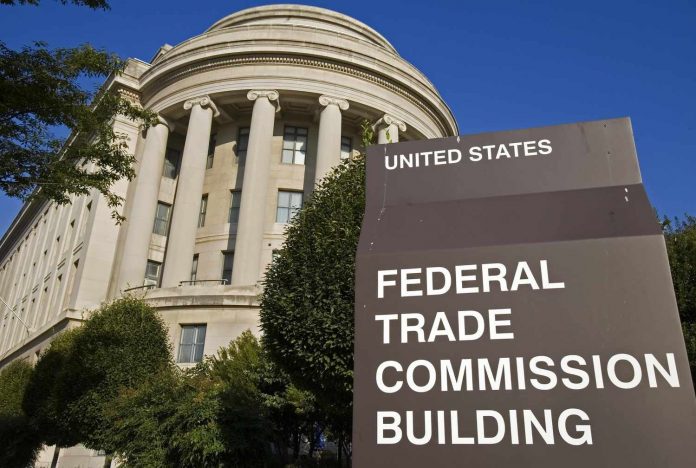
The Federal Trade Commission (FTC) is reportedly preparing to investigate Microsoft for potential anti-competitive practices aimed at maintaining unfair advantage in the cloud computing market.

According to the Financial Times, the investigation focuses on claims that Microsoft used restrictive licensing agreements to deter customers from transferring data to competing platforms. Additional allegations suggest that the tech giant raised its subscription fees for customers attempting to leave, which made its software incompatible with rival services, and imposed hefty exit fees.

Concerns about anti-competitive practices in the cloud sector have been under scrutiny for some time. Recall that last year, the FTC invited public feedback on the business practices of major cloud providers, as part of Chair Lina Khan’s broader campaign against monopolistic behavior. The appeal drew numerous comments as respondents frequently pointed to restrictive software licensing terms, mandatory minimum spending contracts, and high data transfer fees as significant issues.

“Large parts of the economy now rely on cloud computing services for a range of services,” Stephanie T. Nguyen, the FTC’s chief technology officer, said at the time. “The RFI is aimed at better understanding the impact of this reliance, the broader competitive dynamics in cloud computing, and potential security risks in the use of cloud.”

Microsoft’s scrutiny is coming after Google in September 2024 lodged a complaint against the tech giant to the EU, over ‘anti-competitive’ cloud practices. The search giant accused Microsoft of “anti-competitive” licensing practices to force customers to use its cloud service. It further added that Microsoft makes it harder for customers to move their workloads to competitors’ clouds. Google alleged that Microsoft leverages its dominance in Windows Server to funnel customers toward its Azure cloud platform, and penalizes those who use on-premise software with rival services by imposing steep costs.

Microsoft has faced numerous competition investigations over the years, especially over its then-dominant position in the PC space. It continues to face accusations of anti-trust as it continues to grow its Azure service. Meanwhile, the trajectory of the FTC’s investigation remains uncertain.

Notably, Microsoft’s investigation could mark a pivotal moment in how regulatory agencies address the practices of dominant cloud providers. If the FTC finds the tech giant violated antitrust laws, the company could face significant financial penalties or settlements.

Microsoft might be required to revise its licensing agreements, pricing models, or other business practices to comply with regulations. Also, the FTC or other global regulators could impose ongoing oversight or restrictions, increasing compliance costs.