DD
MM
YYYY

PAGES

DD
MM
YYYY

spot_img

PAGES

Home Blog Page 2687

PayPal’s Integration with Layer Zero, Offers New Era for Cryptocurrency Transfers

0

The financial technology landscape is witnessing a significant transformation with PayPal’s recent integration with Layer Zero, enabling seamless transfers between Ethereum and Solana blockchains. This groundbreaking development is set to revolutionize the way users interact with PayPal’s stablecoin, PYUSD, offering unprecedented flexibility and convenience.

PayPal’s USD-pegged stablecoin, PYUSD, has been integrated with Layer Zero’s cross-blockchain bridging protocol, allowing for effortless transfers across the Ethereum and Solana networks. This integration utilizes the Omnichain Fungible Token (OFT) Standard, which empowers users who self-custody their tokens to move assets across blockchains without the need for centralized platforms like PayPal or Venmo.

The move by PayPal is a response to the growing demand for interoperability in the cryptocurrency space. As digital assets continue to gain mainstream acceptance, the need for a seamless transfer mechanism that can operate across different blockchain ecosystems has become increasingly apparent. Layer Zero’s protocol addresses this need by providing a solution that eliminates liquidity fragmentation and ensures fast, secure, and cost-effective transactions.

The integration of PYUSD with Layer Zero is a testament to PayPal’s commitment to expanding the accessibility and functionality of its stablecoin. In August, PYUSD achieved a record market capitalization of $1 billion, with significant circulation on both Solana and Ethereum. However, recent data indicates a decline in PYUSD’s market cap, which this new initiative aims to counteract by enhancing the user experience and boosting overall adoption.

Layer Zero enables secure cross-chain communication without relying on centralized bridges. This reduces the risk of single points of failure, making the system more resilient against attacks and outages. The protocol’s use of Ultra-Light Nodes (ULNs) minimizes resource consumption. This design choice allows Layer Zero to handle high volumes of cross-chain transactions efficiently, making it a scalable solution for growing blockchain ecosystems.

By facilitating cross-chain communication through a decentralized protocol, Layer Zero maintains the ethos of blockchain technology, which is to avoid centralization and retain control within the network of users. Developers can benefit from Layer Zero’s ability to support multiple blockchain communications, which simplifies the process of creating decentralized applications (dApps) that operate across various networks. This eliminates the need for separate integrations for each blockchain, streamlining the development process.

This strategic move is not only a win for PayPal but also for the broader cryptocurrency community. It signifies a step towards a more interconnected and efficient blockchain ecosystem. Users can now enjoy the flexibility of transferring their stablecoin holdings between two of the most prominent blockchains, tapping into the unique advantages each network offers.

For Ethereum, known for its robust smart contract capabilities and widespread adoption, this means an influx of new users and potential use cases. On the other hand, Solana, recognized for its high throughput and low transaction costs, could see increased liquidity and broader utility of its platform.

The implications of this integration extend beyond the technical realm. It represents a shift in the financial paradigm, where traditional financial institutions are increasingly embracing the potential of blockchain technology. By leveraging Layer Zero’s protocol, PayPal is positioning itself at the forefront of this shift, ready to cater to a new generation of users who demand greater control and flexibility over their digital assets.
“When I see a bubble forming, I rush in to buy” George Soros Quote Resonates on Crypto

0

The world of cryptocurrency has witnessed a remarkable event as Bitcoin Exchange-Traded Funds (ETFs) hit a staggering $7.2 billion in trading volume, marking the fifth highest volume in history. This surge in trading volume is a testament to the growing institutional interest and confidence in Bitcoin as an asset class.

Decentralized finance attracted $5 billion of inflows over the past week (as measured by stablecoin AUM) and centralized crypto exchanges likely attracted many billions more as people rushed in to buy the latest crypto bubble — the Drift token, for example, doubled this week and the Pnut and ACT memecoin tripled, both because they were listed by Binance.

On November 11, 2024, the trading volumes of spot Bitcoin ETFs peaked, with BlackRock’s IBIT ETF leading the charge, accounting for $4.6 billion of the total volume. This remarkable feat was closely followed by FBTC, which surpassed the $1 billion mark. The significant trading activity ties into the post-election momentum that Bitcoin experienced, following the victory of Donald Trump, perceived by many as favorable for crypto policies.

The record-breaking day is not just about high numbers; it represents a pivotal moment in the acceptance and integration of cryptocurrencies into the mainstream financial ecosystem. Institutional investors are increasingly turning to Bitcoin ETFs as a way to gain exposure to Bitcoin without the complexities of direct ownership and management of the digital assets.

Solana (SOL) has made headlines with its market capitalization soaring past the $100 billion mark. This milestone is particularly noteworthy as it represents a substantial increase from the $75 billion valuation at the peak of what many referred to as the “bubble” top. Solana’s robust performance is attributed to several factors that underline the network’s resilience and growth potential. The network metrics indicate a sustained expansion, with application revenue outpacing that of other leading platforms, such as Ethereum, despite having a smaller market capitalization. This growth is a testament to the increasing adoption and confidence in the Solana ecosystem.

The price forecast for SOL remains bullish, with analysts maintaining a target of $250 as the cryptocurrency holds strong at the $200 support level. The recent listing of new tokens on Binance, such as ACT and PNUT, has also contributed to the positive sentiment surrounding Solana. Solana’s surge is part of a broader rally in the crypto market, which has shown resilience in the face of various macroeconomic factors. The market’s total capitalization has increased, with Bitcoin reaching new all-time highs and Ethereum rallying above significant price points.

The surge also coincides with Bitcoin’s impressive market performance, flipping silver in market capitalization and becoming the world’s 8th largest asset. The valuation of Bitcoin reached $1.736 trillion, with its price shooting past $88,000, a 10% jump in a single day. This leap in value underscores the cryptocurrency’s growing relevance and potential as a store of value and investment vehicle.

The high trading volumes can indicate both buying and selling activity, and market observers may need several days to determine whether this surge will translate into sustained net inflows. However, the immediate impact is clear: there is a heightened demand and interest in Bitcoin ETFs, signaling a robust market appetite.

As the cryptocurrency landscape continues to evolve, the significance of such trading volumes cannot be overstated. It reflects a maturing market, where Bitcoin is not just seen as a speculative investment but as a viable and valuable part of a diversified investment portfolio.

The recent events in the Bitcoin ETF market are a clear indicator of the dynamic and rapidly changing nature of the financial world, where traditional and digital assets are increasingly intersecting. With such a monumental trading day, the future of Bitcoin and cryptocurrency ETFs looks brighter than ever, promising exciting developments for investors and the broader financial community.

MTN And Huawei Complete Africa’s First 5.5G Network Trial, Ushering in A New Digital Era

0

MTN South Africa, in collaboration with Huawei, has successfully conducted Africa’s first 5.5G network trial at MTN’s headquarters in Johannesburg.

Known for its leadership in 5G innovation, MTN is now setting the stage for 5.5G, a next-generation technology promising ultra-fast, intelligent connectivity that can drive Africa’s digital transformation forward.

The 5.5G trial showcased impressive advancements, featuring speeds of up to 10 gigabits per second, tenfold increases in loT connectivity, reduced latency, and significantly improved energy efficiency. During the trial, MTN achieved download speeds of 8.6 Gbps, a major milestone enabling futuristic applications like 24K extended reality, holographic meetings, high-speed fixed wireless access, and enhanced private 5G networks.

Key elements of the trial included Huawei’s advanced antenna systems, hybrid beamforming, and carrier aggregation technology, operated over both the -band and millimeter-wave spectrums. MTN’s Chief Technology Officer, Rami Farah, highlighted that this milestone extends beyond technological progress, noting that it is about providing South Africans with a better-connected future.

In his words,

“The successful validation of 5.5G technology by MTN South Africa and Huawei is not just a technical breakthrough but also a testament to MTN’s ongoing pursuit of excellence. We look forward to more innovative solutions to continuously build the best network and deliver an enhanced experience for South African residents”.

Also speaking, Huawei’s Vice President of the Sub-Saharan Region, Li Chen said,

“The joint release of 5.5G by MTN South Africa and Huawei, not only further deepens the strategic partnership between the two parties, but also fully fulfills Huawei’s responsibilities and vision in Africa, as a global ICT leader, to bring the most advanced technologies to Africa.”

He added that bringing 5.5G to South Africa will bridge the digital divide and propel the digital economy forward, positioning the country as a leader in advanced connectivity.

MTN’s deployment of 5.5G technology marks a new era of internet connectivity, with features including 10 gigabit speeds, multi-scenario loT capabilities, integrated communication and perception systems, L4 autonomous driving networks, and sustainable IT. These advancements enhance network performance by a factor of ten over current 5G technology, delivering not only high speeds but also a significant reduction in energy consumption and operational efficiency.

Launching 5.5G sets MTN apart as a premium brand that prioritizes customer experience and cutting-edge connectivity. This will strengthen the company’s brand image and may justify higher service fees due to the enhanced performance, drawing in customers who prioritize quality and innovation over cost.

Notably, the successful trial of 5.5G, is the first of its kind in Africa, establishing MTN as a technology trailblazer. This innovative technology offers MTN the first-mover advantage, thus enhancing its brand perception as an innovator and forward-thinker. By delivering these unique offerings before its competitors, MTN can build a reputation as the go-to provider for advanced digital experiences, appealing especially to tech-savvy consumers and high-tech industries.

Also, in terms of customer loyalty and attraction, the early adoption of 5.5G technology may draw customers who value high-performance connectivity, helping MTN capture market share from competitors who have yet to implement similar advancements.

In summary, MTN’s 5.5G launch gives it a significant head start over competitors, not just in terms of technology but also in operational efficiencies, enterprise solutions, and strategic partnerships. This pioneering position reinforces MTN’s market leadership, offering a powerful mix of innovation, efficiency, and premium service quality that sets it apart in Africa’s highly competitive telecom landscape.

As MTN and Huawei continue to push boundaries, this strategic partnership aims to drive South Africa’s digital economy by connecting the unconnected and creating new opportunities for both businesses and consumers.

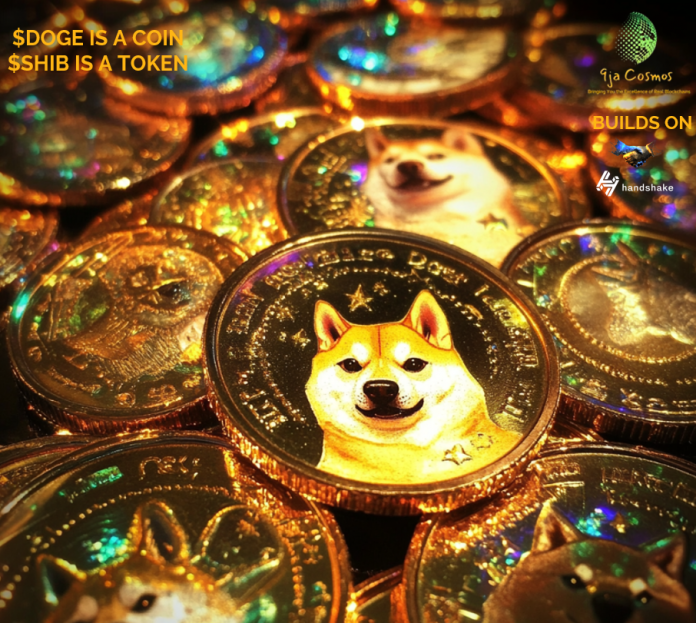
Most ‘memecoins’ with the exception of Dogecoin ($DOGE) are not coins at all

0

The way I like to consider web3 involves reflecting technical distinctions which divide the sector as a whole into different segments.

I try to avoid ‘pop speak’ which focuses on froth, branding, hype and other things.
‘Bitcoin’ is a specific ‘brand’, so I often avoid talking directly about it, preferring to talk notionally about a segment that bitcoin and maybe others, can fit into.

When I try to write sensibly about a segment for Bitcoin, some folk usually wade in, and try to find reasons why other coins don’t belong in this segment, so BTC has a segment all to itself.

I don’t see this as reasonable. It’s ‘pop speak’. It’s ‘brand’ talk.

I also don’t like the phrase ‘altcoin’, because it doesn’t make a technical clarification on what it actually is.

‘alt’ is short for ‘alternative’ ,
As Bitcoin was the only established cryptocurrency for some time, anything else that came along shortly afterwards,  began to be called ‘altcoin’ regardless of widely varying architectures and tokenomics.
‘altcoin’ just began to mean ‘NOT Bitcoin’

To bring it out into open spaces outside cryptoworld lets use Hyundai as an example to show that ‘NOT<brand>’ as a segment is insane.

Is this ‘NOTHyundai’ a refrigerator? a TV? a car? a tracks excavator? a battery? We don’t know.

Deciding some things need to be classified together simply because they are not something else isn’t rational.

Another phrase that doesn’t make much sense to me is ‘memecoin’.

Adhering to a logo identity and referencing the logo for promotional value is all very fine, but it doesn’t tell you what the product is.

Entertainers, musicians and sports clubs have fashion lines/merch. But a scarf, cap, jersey leather goods and fragrances are different things.

If I stroll on the road with only a ‘merch’ (merchandise branded)  track pants or ‘downs’ and am otherwise naked, people may think I am a bit weird, but it will pass.

If I stroll on the road with only a jersey or shirt with a meme logo, and am otherwise naked, I will probably get arrested.

While meme-inspired crypto products may appear to differ only in their logo or avatar designs, their underlying nature and purpose should take precedence in product definition. The meme itself serves as a promotional layer, driving attention and community engagement, but it is not the core essence of the product.

For example, if we take Bitcoin, Dogecoin and Shiba Inu – Dogecoin and Shiba Inu memetheatrics are based on exactly the same species of dog.

The similarity however ends there

Shiba Inu are just ERC 20 tokens off Ethereum… though later, the ‘ecosystem’ developed its own PoS, off which it separately has two coins, leash and bone.

ERC 20 tokens are not decentralized, and are generated off a tool called a ‘smart contract’ connected to a cryptographic structure, which might not even be a blockchain. There are also products with a ‘smart contract’ type construct off the Solana blockchain, such as ‘Dog Wif Hat’ ($WIF). The only ‘coin’ in the whole Solana Ecosystem is SOL.

However, the generation of $DOGE off the Dogecoin blockchain is far closer to the release of BTC from the Bitcoin blockchain in nature, than it is to the generation of $SHIB, as an ERC 20 token, or similar things connected to Solana like $WIF.

A Dogecoin has a minor currency called ‘SHIBES’ which follow a similar construct in how Satoshis comprise a Bitcoin. Doginal inscriptions exist for Dogecoin as Ordinals do for Bitcoin

Neither ERC 20 tokens, nor similar tokens off Solana can do this.

The phrase ‘memecoin’ is a bit of a misnomer, because besides Dogecoin ($DOGE), none of these are coins at all.

What really belongs where?

9ja Cosmos is here…

Get your .9jacom and .9javerse Web 3 domains  for $4 at:

.9jacom Domains

.9javerse Domains

.det0x Domains

Preview our Sino Amazon/Sinosignia releases (Ente)

Preview our Sino Amazon/Sinosignia releases (Pinterest)

Visit 9ja Cosmos LinkedIn Page

Visit 9ja Cosmos Website

Welcome to the Crypto Bull Market — “Buy Everything You Can” says Bernstein Analyst

0

The cryptocurrency market is experiencing a surge that has investors and analysts buzzing with excitement. A Bernstein analyst’s recent exhortation to “buy everything you can” captures the prevailing sentiment as the market enters what many believe to be a new bull run phase. With Bitcoin reaching an all-time high of $90,030 on November 12, 2024, and the Crypto Total Market Cap Index (TOTAL) briefly touching $3 trillion, the industry is witnessing unprecedented growth.

The surge in market cap is indicative of the expansive growth within various sectors, signaling a healthy economic environment and the potential for future prosperity. Market capitalization, or market cap, is a critical measure of a company’s value, calculated by multiplying the stock price by the number of outstanding shares. When we talk about total market capitalization, we’re looking at the cumulative value of all publicly traded companies, which serves as a barometer for the overall health of the stock market and, by extension, the economy.

The journey to this point has been fueled by technological advancements, innovative business models, and the relentless pursuit of excellence within industries. Companies that have embraced digital transformation and sustainability have particularly stood out, attracting substantial investments and driving up their valuations.

However, amidst this euphoria, it is crucial for investors to approach the market with a strategic mindset. The current bull market is being driven by a confluence of factors, including regulatory optimism following political developments and macroeconomic data suggesting ongoing rate cuts, which could sustain the upward trajectory. Additionally, the Federal Reserve’s expected continuation of rate cuts aligns with a similar international outlook, potentially bolstering the market further.

Industry experts have outlined the typical phases of a crypto bull market, suggesting that we are entering the most thrilling ‘euphoria’ stage. This phase is characterized by heightened investor interest and optimism, as evidenced by an 8% surge in traffic to the top 20 cryptocurrency exchanges in October 2024. Such indicators point to growing participation and a bullish outlook among retail investors.

For those considering starting small, analysts have highlighted several affordable coins that could offer significant gains during this bull market. Coins like Dogecoin, Solana, and XRP are being closely watched for their potential to capitalize on the current market trends. While the market’s momentum is palpable, investors should not let the excitement cloud their judgment. Diversification, due diligence, and a clear understanding of one’s risk tolerance remain the cornerstones of a sound investment strategy. The crypto market is known for its volatility, and while the prospects are enticing, they come with inherent risks.

Looking ahead, the $3 trillion market cap milestone is not just a number—it’s a symbol of economic potential and the promise of even greater achievements in the world of finance. Investors and companies alike will continue to watch market trends closely, anticipating the next big leap in market capitalization.

The current crypto bull market presents a plethora of opportunities for both seasoned investors and newcomers. By staying informed, exercising caution, and adopting a strategic approach, one can navigate this exciting phase of the market with confidence. As always, it is advisable to consult with financial advisors and conduct thorough research before making any investment decisions.