DD
MM
YYYY

PAGES

DD
MM
YYYY

spot_img

PAGES

Home Blog Page 2709

Google Search Gets Insurance Cover from ChatGPT Search Against the US Government Justice Dept

0

When the US government opened a high voltage searchlight on Facebook’s Meta, I wrote in a piece titled “Facebook’s Unbreakable Gene”, positing that it would be impossible to break Meta. In 2018, I had stated: “In my opinion, breaking a platform-business within the same mindset of the industrial age companies is a waste of time: one part of that company will grow and dominate just as the previously broken one.”

Where am I going? Unlike industrial age companies like Standard Oil, these digital species of companies are different. Your leverageable factors can disappear due to technology evolution, and the changes could be fast. So, as the government started its work on Meta, within 9 months, the company lost more than $500 billion in its market value – and that investigation stopped.

I wrote another post: how TikTok, Snapchat and other social media companies saved Meta from being broken apart. Now, welcome to Google. With the launch of ChatGPT Search, Google has a solid arsenal to make a case that we’re vulnerable, and the state cannot weaken us further: “On Thursday, OpenAI announced the launch of its new ChatGPT search service, accessible on its website and mobile apps, and could pose the most formidable challenge to Google’s search dominance in years.”

OpenAI has introduced internet search capabilities within ChatGPT, escalating competition with major tech players like Google. The artificial intelligence startup partnered with news and data providers to offer real-time sports scores, stock quotes, weather and other information. The release comes at a time when Google’s dominant market share in internet search faces threats from AI competitors, as well as antitrust headwinds. Earlier this month, OpenAI closed its latest funding round, raising $6 billion at a valuation of $157 billion. However, it doesn’t expect to reach profitability until 2029, according to The Information, which cited financial documents.

And just like that, ChatGPT Search has paid an insurance premium for Google, that after losing its court case on illegal deals on search boxes with Apple and device makers, Google only needs to just have money in the bank to pay the government, as no one will touch the empire. It would be naive and pure stupidity for anyone to break these digital companies in the age where China continues to ascend!

Good People, sometimes it is good to have some “competitors” in your market to breathe freely when the governments and activists knock.

OpenAI Launches Search Service in Direct Challenge to Google

0

On Thursday, OpenAI announced the launch of its new ChatGPT search service, accessible on its website and mobile apps, and could pose the most formidable challenge to Google’s search dominance in years.

With features including weather, sports, stock updates, news, and maps, this service is designed to streamline user experiences by offering conversational follow-ups on queries, an innovation that could potentially shift how users interact with search engines.

The release follows OpenAI’s test run of a prototype search tool in July, culminating in a platform built on its advanced GPT-4o model. The service also draws from third-party data-sharing partners, allowing OpenAI to deliver a wide-ranging response system that may reduce users’ need for multiple searches to get complete answers. Notably, OpenAI allows users to make ChatGPT their default search engine on Google’s Chrome browser via a downloadable extension.

Currently, access to ChatGPT search is limited to ChatGPT Plus and Team users, along with users who joined the SearchGPT waitlist. Free users and educational institutions will see phased access in the coming months, with enterprise access expected soon after. The gradual rollout underscores OpenAI’s strategic approach, potentially creating sustained interest and avoiding an immediate surge that could strain its systems.

The ChatGPT search service arrives at a critical moment for Google, which is already under the weight of two major antitrust lawsuits targeting its control over search and advertising. OpenAI’s entry into the search domain could amplify Google’s competitive pressures as it navigates these legal battles.

According to StatCounter data, Google still holds a commanding 90% market share in search, while Microsoft’s Bing, even with its AI enhancements, claims just under 4%. Financially, Google remains strong, reporting $65.8 billion in ad revenue for its latest quarter, surpassing analysts’ expectations and marking an increase from $59.6 billion in the prior year.

OpenAI’s decision to debut ChatGPT search as a conversational, AI-powered alternative gives it an edge in distinguishing itself. Users increasingly seek more comprehensive, dialogue-based interactions—something Google has also worked toward with its AI Overviews feature, which generates quick AI-driven responses alongside traditional search results. Yet, if OpenAI’s conversational model provides consistently accurate and useful responses that simplify the search process, it may gradually lure users from traditional search engines, sparking deeper competition.

Microsoft, as OpenAI’s primary backer, has already incorporated ChatGPT’s AI into Bing, yet this integration has made limited inroads into Google’s lead. Nevertheless, OpenAI’s independent foray into search presents a unique threat due to the rapid adoption rates ChatGPT has achieved; it remains one of the fastest-growing applications ever.

Market Competition, Not Government, May Break Google’s Monopoly

OpenAI isn’t alone in its bid to shake up the industry; Meta, another major player, has also entered the scene with its own AI-powered search capabilities. The landscape is shifting in a way that may erode Google’s longstanding monopoly—not through government action but via market competition from formidable tech rivals.

Meta’s search strategy appears to follow the path of OpenAI, leveraging AI to transform search into a more intuitive, conversation-based experience. By embedding its search functionality within a broader suite of services, Meta seeks to attract users who are already engaging heavily with its ecosystem on platforms like Facebook and Instagram. Given its immense user base and infrastructure, Meta’s entry into search marks a clear signal that the AI-fueled search race is heating up.

This means, competition from new AI search platforms might do what regulatory pressure has yet to accomplish: introduce market-driven shifts capable of reshaping user habits and challenging Google’s hegemony.

With both Meta and OpenAI in play, the tech industry could see a three-pronged competition. Meta’s advantage lies in its seamless integration with social media, presenting search results that interact with users’ social contexts. OpenAI, meanwhile, offers a more specialized search environment built around its ChatGPT interface, emphasizing deep, multi-layered conversations that address user queries comprehensively.

Both models diverge from Google’s approach, which blends AI-generated summaries with traditional search result lists. Yet the momentum building around conversational search could drive users toward these alternatives as they experience faster, more tailored answers that reduce the need to sift through multiple sites.

For now, Google remains financially robust. Its Q3 ad revenue beat expectations, bringing in $65.8 billion, a solid increase from last year’s $59.6 billion. Yet the market response to AI competition has been noticeable: Alphabet’s shares dipped by 1.5% after OpenAI’s announcement, reflecting investor unease over Google’s future search dominance.

The company has responded by enhancing its own search with AI Overviews, which generate quick AI-driven responses to complement standard search links. However, the perception of Big Tech’s AI-driven spending—and the delay in visible returns from it—has also affected stock trends across the sector.

In the end, Google’s grip on search may face its toughest test yet, not from legal action but from the ingenuity and investment of its own tech rivals. With OpenAI and Meta pushing forward, competition could begin to shape the search market in unprecedented ways, offering users a more diverse set of tools for online information while introducing new players into a market that Google once comfortably commanded.

Jupiter Exchange TVL hits ATH of $1.55B, as Sui Blockchain Plans to Onboard the Next Billion Consumers

0

The digital asset space is a theater of constant evolution and dramatic narratives, where the triumphs of one platform can be juxtaposed with the pitfalls of another. In a recent turn of events, the Jupiter Exchange has soared to new heights, achieving an all-time high (ATH) in Total Value Locked (TVL) at a staggering $1.55 billion. This milestone is a testament to the burgeoning confidence and growing adoption of decentralized finance (DeFi) platforms, particularly those built on the Solana blockchain.

Jupiter Exchange’s remarkable achievement comes amidst a period of intense activity and innovation within the DeFi sector. The platform’s success is attributed to its robust infrastructure, which has facilitated seamless trading experiences for users, and its strategic positioning within the Solana ecosystem, known for its high throughput and low transaction costs. The record-high TVL indicates a significant influx of capital and trust from investors, marking a bullish sentiment in the market.

However, the landscape is not without its shadows. The recent incident with Tokanexchange on Scroll serves as a stark reminder of the risks inherent in the crypto space. The term “rugged” refers to a ‘rug pull,’ a type of scam where developers abandon a project and run away with investors’ funds. While details on the Tokanexchange situation are still emerging, it underscores the importance of due diligence and the need for robust security measures in the industry.

key features that make Jupiter Exchange a go-to platform for crypto enthusiasts:

Jupiter operates as a DEX aggregator on the Solana blockchain, providing users with the best possible prices by connecting them to multiple decentralized exchanges.

Limit Order Swap Feature: This allows users to set preferred conditions for their transactions, ensuring they can execute trades at desired price points. Users can set up periodic purchases over time, which helps in mitigating the impact of volatility.

Native Token – JUP: Launched in January 2024, the JUP token is designed to be evenly distributed between the team and the community, fostering a sense of ownership and participation. Processing an average of $350 million in crypto assets trades daily, Jupiter demonstrates robust activity and liquidity. The platform prioritizes a seamless user experience, making it accessible for both beginners and experienced traders.

Advanced Trading Options: Including swaps, limit orders, and a beta version of perpetuals, Jupiter caters to a wide range of trading strategies. Jupiter keeps its platform updated with the latest markets as soon as they launch on Solana, providing users with fresh trading opportunities. The exchange facilitates cross-chain transactions, allowing for a broader range of trading pairs and increased flexibility.

The contrast between Jupiter Exchange’s success and Tokanexchange’s alleged rug pull highlights the dual nature of the crypto world. On one hand, there is immense potential for growth, innovation, and financial freedom. On the other, the nascent stage of many projects coupled with the lack of regulation can lead to vulnerabilities and potential losses for unwary investors.

As the DeFi space continues to mature, it is crucial for participants to remain vigilant and informed. Investors are encouraged to conduct thorough research (often abbreviated as DYOR – Do Your Own Research) before committing funds to any project. Platforms, in turn, must prioritize transparency, security, and user education to foster a safer ecosystem for all.

The story of Jupiter Exchange and Tokanexchange serves as a powerful narrative that encapsulates the highs and lows of the DeFi journey. It is a reminder that in the world of cryptocurrency, the winds of fortune can shift rapidly, and only those who navigate with caution and foresight will thrive in the long run.

Sui Blockchain Plans to Onboard the Next Billion Consumers

In the rapidly evolving landscape of blockchain technology, Sui is emerging as a formidable player with a bold vision: to onboard the next billion consumers into the blockchain ecosystem. This ambitious plan is not just a lofty goal but a strategic move to capture a significant market share in the competitive Layer 1 (L1) sector.

At the core of Sui’s strategy is the adoption of the Move programming language, which promises to streamline and secure the development of decentralized applications. This move is not just a technical upgrade; it’s a bet on the future of gaming and interactive applications in the blockchain space.

The brainchild of Mysten Labs, Sui is built on the foundation of the Move programming language, which is gaining traction for its robustness and flexibility. The co-founder and CPO of Mysten Labs, Adeniyi Abiodun, recently shed light on the various facets of Sui’s strategy in a podcast episode. The discussion covered a range of topics from the continued adoption of Move, Sui’s competitive advantage, and its focus on gaming as a gateway to mass adoption.

One of the key elements of Sui’s strategy is its bet on gaming. Gaming is not only a multi-billion-dollar industry but also a cultural phenomenon that transcends geographical boundaries. By tapping into this universal appeal, Sui aims to introduce blockchain to a broader audience, making it an integral part of gaming experiences. This approach could potentially revolutionize how games are developed, played, and monetized, offering a seamless integration of blockchain technology into everyday entertainment.

Another significant aspect of Sui’s plan is the adoption of ZKlogin and Walrus, tools that enhance user experience and security. ZKlogin is an innovative solution for privacy-preserving authentication, while Walrus is an application aimed at fostering growth within the Sui ecosystem. These tools are indicative of Sui’s commitment to not only expanding its user base but also ensuring a secure and user-friendly environment.

Sui’s TVL trendline remained relatively stable through the first half of the quarter before heading upward, averaging $611 million for the quarter and hitting a significant peak at the end of September at $944 million. This surge in TVL is indicative of the growing confidence in Sui’s DeFi protocols and its robust ecosystem.

The introduction of Mysticeti, Sui’s new consensus engine, has played a pivotal role in reducing latency and allowing transactions to finalize swiftly, thereby enhancing network performance. Moreover, the launch of Sui Bridge on the Mainnet has brought essential native functionality for cross-chain interoperability, supporting transfers between Sui and Ethereum.

The DeFi protocols on Sui have also seen substantial growth, with DEXes like Cetus and Aftermath showing remarkable TVL and volume growth. The lending sector is not far behind, with protocols such as Navi and Scallop contributing significantly to the TVL. The derivatives and yield aggregators have also been part of this upward trajectory, with Bluefin and AlphaFi showing promising end-of-quarter TVL figures.

Adeniyi’s podcast with OXResearch also touched upon the challenges of Sui gaining market share in a sector where competition is fierce. Sui’s strategy involves a combination of technological innovation, community building, and strategic partnerships. The focus is on creating a robust ecosystem that supports developers and users alike, facilitating the growth of decentralized applications (DApps) that cater to a wide array of needs and preferences.

Reflecting on Sui’s launch, the conversation highlighted the importance of building a strong community around the platform. Community support is crucial for the adoption and growth of any blockchain project. Sui recognizes this and is actively working towards nurturing a community that is engaged, informed, and enthusiastic about the platform’s potential.

As the blockchain space continues to mature, the race to onboard the next billion consumers intensifies. Sui’s comprehensive plan, which balances technological prowess with user-centric initiatives, positions it as a strong contender in this race. The platform’s focus on gaming, user experience, and community engagement could very well be the catalyst that propels it to the forefront of blockchain adoption.

Trump Loses $1.3bn in Net Worth As Media Company’s Stock Drops 22.3%

0

Trump Media & Technology Group, the company behind Truth Social, experienced a sharp 22.3% drop in its stock price on Wednesday, marking its worst single-day loss since it went public in March.

This setback, which followed a five-week surge that had quadrupled the company’s value, effectively erased $1.3 billion from Donald Trump’s net worth, reducing his stake from $5.9 billion to $4.6 billion by the day’s end. This decline reflects the unpredictable and meme-stock-driven nature of Trump Media’s valuation, which has spiked and tumbled regardless of traditional business metrics.

Since late September, the company’s stock saw a near-constant rally, driven largely by investor speculation that Trump’s political momentum might boost the platform’s visibility and profitability. This surge briefly valued Trump Media at $10.3 billion as of Tuesday, putting it ahead of Elon Musk’s social network X (formerly Twitter), despite X’s active user base of around 70 million US users dwarfing Truth Social’s 698,000.

Truth Social also has a smaller footprint compared to Meta’s Threads, which boasts nearly 20 times its user base. Yet the limited user engagement and modest $1.6 million revenue generated by Trump Media this year did not deter a speculative increase in valuation, likely fueled by its meme stock status.

Analysts are puzzled by Trump Media’s meteoric valuation, given its fundamentals. Dan Ives, a senior equity analyst at Wedbush Securities, called the valuation “a head-scratcher,” comparing it to meme stocks like GameStop and AMC, where market value is often detached from business realities.

“Truth Social is a fraction of X and other social media platforms in terms of users,” Ives explained, “but with an election a week away, this stock has become a litmus test for some investors on the White House race.”

Experts cite technical factors and loss of momentum as drivers of Wednesday’s selloff. The inability of the stock to break through resistance points on its upward climb was a warning sign, according to Matthew Tuttle, CEO of Tuttle Capital Management.

“The smarter traders know you make your money and get out,” Tuttle noted. The recent surge was also bolstered by the high costs of borrowing shares to short the stock, making it difficult for investors to bet against it. Tuttle described these financing costs as “completely insane,” creating an environment where the stock’s volatility is virtually unchecked.

Ultimately, Trump Media’s valuation reflects the speculative nature of meme stocks, where traditional revenue metrics are overshadowed by investor sentiment, often tied to high-profile events or figures. This latest downturn highlights how fragile that valuation can be, especially without substantive business growth or a clear user engagement strategy to back it up.

Trump’s Shift to X

The volatile performance of TMTG stock has become closely tied to former President Donald Trump’s political activities and social media presence.

When Truth Social launched, it was positioned as Trump’s primary social media outlet after his ban from X. This unique role as Trump’s sole social media presence became a driving factor for its market value, making the platform an essential vehicle for his followers and supporters.

However, Trump’s recent decision to re-engage on X, seeking to leverage its much larger user base for campaign visibility, has undermined this exclusivity, contributing to Truth Social’s diminishing appeal. Since he posted his first message on X in over two years this August, TMTG stock has seen dramatic fluctuations and, ultimately, significant declines. This situation underscores the degree to which Trump Media is reliant on Trump himself and his choice of social media platform. Truth Social has struggled to gain a substantial user base beyond Trump’s loyal followers.

By reappearing on X, Trump has inadvertently introduced competition to his own platform, casting doubt on Truth Social’s ability to grow independently. Analysts note that X’s broad reach makes it more appealing for political campaigning, allowing Trump to reconnect with a vast audience that Truth Social’s limited user base cannot match.

As the election draws near, Trump’s shifting social media strategy may continue to impact TMTG stock, presenting challenges to the platform’s long-term viability. Analysts believe that without substantial revenue growth, user engagement, or a diversified influencer base, Truth Social’s reliance on Trump exposes it to significant risk.

While the former president’s return to X enhances his campaign visibility, it raises doubts about Truth Social’s future, leaving investors to question whether the platform can sustain interest without his undivided attention.

AI Now Writes More Than 25% of Google’s Codes

0

As tech giants face scrutiny over the tangible impact of their massive AI investments, Google’s parent company Alphabet is asserting that its long-standing AI efforts are driving productivity gains and financial growth.

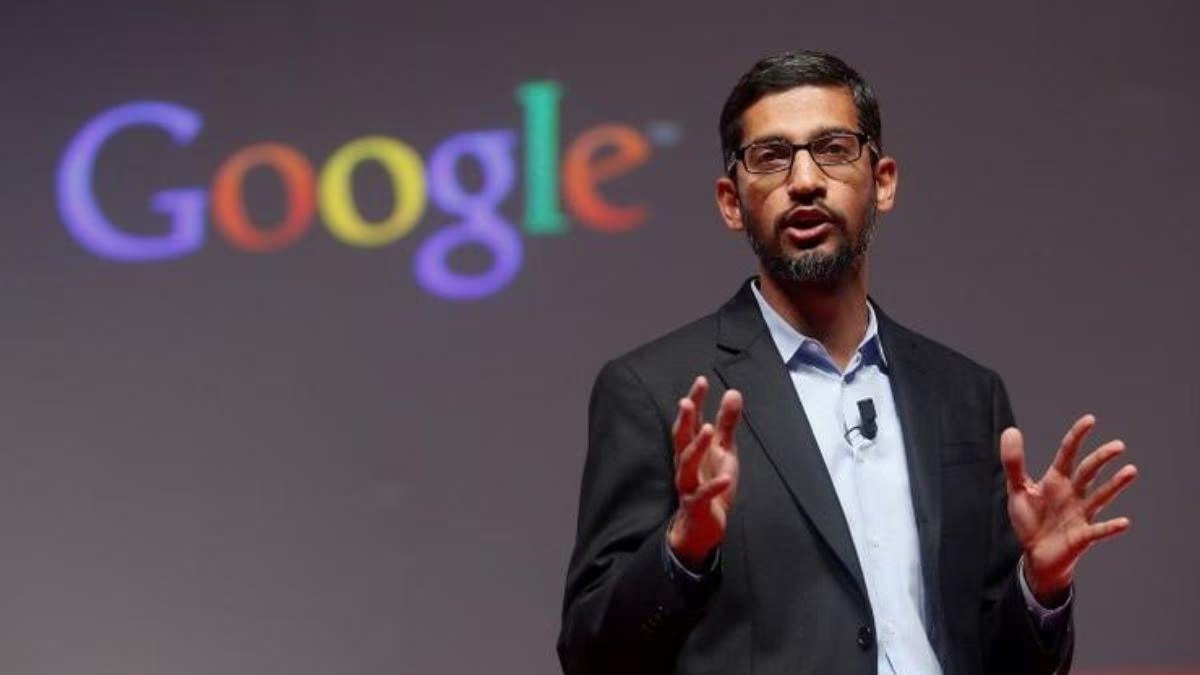
On its recent third-quarter earnings call, Alphabet executives highlighted substantial AI contributions across various business segments, pointing to a successful quarter that exceeded analyst expectations. Google CEO Sundar Pichai revealed that AI-generated code now accounts for over a quarter of new programming at the company, underscoring how AI automation is beginning to reshape Google’s internal workflows and increase productivity.

Alphabet’s financial report showed a strong performance, notably in its cloud business, where revenue surged by 35% year-over-year to $11.4 billion. Pichai credited Alphabet’s cloud growth to new enterprise customers attracted by the company’s AI offerings, including tools built on Google’s Gemini models, which reportedly helped increase product adoption by 30% among existing clients.

“We are uniquely positioned to lead in the era of AI because of our differentiated full-stack approach to AI innovation,” Pichai said, adding that the results of these AI-driven efforts are becoming evident at a large scale.

The market’s reception was enthusiastic; shares surged by 6% following the announcement. With Alphabet’s stock rising nearly 30% this year compared to the S&P 500’s 23% gain, the company’s AI initiatives appear to have bolstered investor confidence, even amid occasional fluctuations tied to AI-related spending.

This boost follows a slightly tempered response to Alphabet’s second-quarter earnings when lower-than-expected YouTube ad revenues hinted at investor “AI fatigue.” However, the third-quarter earnings alleviated these concerns, with Alphabet reporting a strong performance in YouTube ad and subscription revenues, which for the first time exceeded $50 billion over the last four quarters.

Outside of cloud and ads, Alphabet executives underscored AI’s transformative effects on search. Chief Business Officer Philipp Schindler remarked that the company’s new AI-powered search features have not only made Google searches more valuable but have also resonated particularly well with younger users. He noted that “AI really supercharges search,” alluding to features such as enhanced language models that help refine search results and make queries more intuitive and context-aware.

Google Search remains Alphabet’s largest contributor to revenue growth, generating $49.4 billion this quarter, a 12.3% increase from last year.

Alphabet’s workforce strategy is also evolving, reflecting AI’s impact on the company’s operations. Following layoffs that reduced headcount by over 1,000 from last year, Alphabet is consolidating teams and expanding its AI-focused units, such as DeepMind, to sharpen its technological edge. CFO Anat Ashkenazi, who joined Alphabet from Eli Lilly in June, emphasized that AI is central to Alphabet’s plans for operational efficiency. She mentioned plans to evaluate how Alphabet can streamline certain processes to free up capital for more strategic opportunities: “I plan to build on these efforts but also evaluate where we might be able to accelerate work and where we might need to pivot,” she said.

For Alphabet, AI is more than a tool for enhancing cloud services or streamlining internal processes—it’s shaping the company’s broader financial strategy, operational efficiency, and long-term market positioning.

While other tech giants may still face questions about the profitability of their AI investments, Alphabet’s quarterly results suggest that its AI integration is not only lifting the bottom line but also providing a blueprint for future growth across multiple business segments.