DD
MM
YYYY

PAGES

DD
MM
YYYY

spot_img

PAGES

Home Blog Page 2718

MTN Nigeria’s MoMo PSB Launches Remittance Service For Cross-Border Money Transfers

0

MTN Nigeria’s Fintech subsidiary, MoMo PSB, has launched a new remittance service, enabling customers in Nigeria to send and receive money across multiple African countries.

With the launch of this service, MoMo PSB users can now send money to 13 African countries which include; Benin Republic, Cameroon, Congo Brazzaville, Côte d’Ivoire, Democratic Republic of Congo, Gambia, Liberia, Malawi, Rwanda, Sierra Leone, Togo, Uganda, and Zambia. Additionally, customers in Nigeria can receive funds from South Africa, Rwandá, Uganda, Zambia, the Democratic Republic of Congo, and Mauritius.

This service simplifies cross-border transfers and empowers, broadedbunf financial access and reducing trade barriers across the continent. A minimal 3% transaction fee is applied to outbound transfers, while incoming transactions are free for recipients.

To access the remittance service, users can log into their MoMo app and select “Transfer to Africa,” or dial 6711*3# and enter the recipient’s phone number with the country code. Customers needing higher transaction limits can upgrade to Tier 2 or Tier 3 via the MoMo app or USSD, linking their BVN for an enhanced experience.

In a similar stride towards meeting the growing demand for efficient cross-border financial solutions, the fintech also launched an innovative Gift Card service that allows users to purchase e-vouchers directly from their MoMo accounts, using it for several international transactions, including online shopping and service payments.

By leveraging MoMo’s, robust digital infrastructure, users can now enjoy a seamless payment process, eliminating the complexities often associated with the conventional methods of processing international payments.

Speaking on these developments, the acting Chief Executive Officer, of MoMo PSB, Phrase Lubega highlighted the service as a significant milestone toward economic empowerment and financial inclusion across Africa.

In his words,

“This is a significant milestone towards advancing economic empowerment, reducing trading barriers, and bridging the financial gap in African nations. It’s an exciting time for us at MoMo PSB as our customers can easily, and quite swiftly, make transactions across 13 African countries, and use our Gift Card service for international payments.

Reaffirming MoMo’s mission, he added, “While this is a huge step, we remain committed to delivering quick, easy, user-friendly financial services, breaking more barriers to ensure our customers can enjoy the ease of transacting and doing business across more countries. I am confident that these new services will significantly enhance the customer experience and demonstrate our commitment to continually pushing the boundaries of financial inclusion.”

Licensed in 2022 by the Central Bank of Nigeria (CBN), to operate as a payment service bank, MTN MoMo’s growth in the country has been remarkable. According to reports, in August 2024, MTN Nigeria reported that active wallets on its MoMo Payment Service Bank (PSB) reached 5.5 million in the second quarter of this year.  

The company’s mobile money business bounced back after a 9% decline in wallets it recorded in Q1 2024 due to the impact of the National Identification Number (NIN) requirement for KYC validation. This growth in mobile money users impacted the company’s fintech revenue, which grew by 11% for the six months and a 22.2% growth in Q2. MTN’s fintech revenue jumped to N48.6 billion in half-year 2024 from N43.6 billion recorded in the same period last year.  

With the recent advancements following the launch of cross-border payment service, MoMo PSB reaffirms its commitment to financial inclusion, enabling users to support loved ones, facilitate trade, and contribute to economic growth in Nigeria and across Africa.


A Case Study on the $20M Compromised US Government Wallet

0

In a recent turn of events that has sent ripples through the cryptocurrency community, a wallet linked to the US government was reportedly compromised, resulting in the loss of $20 million worth of stablecoins and Ethereum. This incident, as reported by the crypto intelligence firm Arkham, highlights the persistent challenges and risks associated with securing digital assets.

The compromised wallet, which was associated with funds seized from the infamous 2016 Bitfinex hack, was subjected to unauthorized transactions that drained significant amounts of Tether (USDT), USD Coin (USDC), aUSDC, and Ethereum (ETH). The breach was not just a financial setback but also a stark reminder of the sophisticated tactics employed by cybercriminals in the digital age.

The Arkham report indicates that the hacker executed four transactions to access the stolen funds, with the largest transaction involving aUSDC tokens valued at $13.7 million. The funds were then consolidated in a wallet before being sent to Binance, sparking suspicions of an exploit. The rapid response of the authorities, however, led to the recovery of nearly $19.3 million of the lost assets within 24 hours of the alleged security breach.

This incident underscores the importance of robust security measures and the need for continuous vigilance in the management of digital wallets, especially those holding substantial amounts of assets. It also raises questions about the adequacy of current security protocols and the necessity for advanced protective mechanisms to safeguard against such vulnerabilities.

The implications of this breach extend beyond the immediate financial loss. It serves as a critical lesson for government entities and organizations that are increasingly incorporating cryptocurrencies into their operations. The need for enhanced security strategies, including multi-signature wallets, time-locked transactions, and regular security audits, has never been more evident.

Here are some essential tips to ensure the safety of your crypto wallet:

Opt for wallets with a strong reputation and positive reviews. Whether it’s a hot wallet (online) or a cold wallet (offline), selecting a trustworthy provider is the first step in securing your assets.

Create complex passwords that are difficult to guess. Use a combination of letters, numbers, and symbols, and avoid using the same password across different platforms. Enable 2FA on all your accounts to add an extra layer of security. This could involve SMS codes, email confirmations, or authentication apps.

Keep your wallet software updated to protect against the latest security threats. Developers regularly release patches and updates to address vulnerabilities. Avoid using public Wi-Fi when accessing your crypto wallet. Unsecured networks can be a gateway for hackers to access your sensitive information.

Store your private keys offline in a secure location. This could be a physical safe or a secure offline storage device like a hardware wallet. Regularly back up your wallet to protect against data loss. Ensure that your backup is stored in a secure location separate from your primary wallet. Be vigilant about phishing scams. Never click on suspicious links or share your private keys with anyone.

As the investigation continues, the cryptocurrency community will be closely monitoring the situation, seeking to understand the methods used by the attackers and the steps taken to prevent future occurrences. The resilience of blockchain technology is not in question, but the security of the wallets that interact with it certainly is.

The Arkham intelligence report serves as a timely reminder that in the ever-evolving landscape of digital finance, vigilance, and innovation in security are paramount. As we move forward, the lessons learned from this incident will undoubtedly contribute to the development of more secure and resilient systems for managing digital assets.

Kenya Makes Progress As A Leading Startup Investment Destination in Africa

0

In recent years, Kenya has shown remarkable resilience and progress in attracting start-up funding, aligning closely with the overall funding dynamics across the African continent.

According to a report by Africa: The Big Deal, a notable trend emerged when examining Kenya’s standing, relative to its ‘Big Four’ counterparts, (Nigeria, South Africa, and Egypt), which collectively attracted over 80% of Africa’s start-up funding since 2019. Despite these competitive peers, Kenya’s position is both remarkable and promising, as the country’s thriving startup ecosystem has in recent times dominated Africa’s investment landscape.

Kenyan startups raised the most funding of any African country from January to October in 2024. This surge in capital inflow is a continuation of an impressive trend that began in 2023. For two consecutive years, Kenya has secured the leading spot in terms of start-up funding on the continent, attracting 27% of all funds in 2023 and 31% in 2024 year-to-date. Recall that in January this year, the East African country reportedly surpassed Nigeria as the primary recipient of startup funding in 2023, securing an impressive $800 million.

The growth in funding for Kenyan startups over the past year has reportedly been driven by debt funding to startups in the energy industries while large deals also skew the data. For example, only two startups in the country, M-Kopa and Spiro, collectively raised $101 million in debt funding.

This is an impressive feat for a country that represents approximately 4% of Africa’s population and GDP, ranking seventh in nominal GDP. Since 2019, Kenya has consistently held either the first or second position in start-up funding, and its 31% share this year marks, a record high for the period.

A closer look at Kenyan start-ups raising substantial capital further highlights this trend. The number of ventures securing at least $1 million has maintained a steady 20% share over recent years, and in 2023 and 2024 year-to-date, Kenya has ranked second in this category-following Nigeria in 2023 and Egypt in 2024. Kenya’s performance is particularly impressive given the economic climate of recent years.

During the “funding heatwave” from mid-2021 to mid-2022, Kenya attracted 18% of the $6.3 billion raised across the African continent, ranking second to Nigeria, albeit at a significant gap, as Nigerian start-ups secured nearly twice the funding. However, as the global funding landscape shifted into a “funding winter” from mid-2022 onward, Kenya emerged as the leader, capturing 26% of the funding, outpacing Nigeria by 1.5 times and taking the top spot, with Egypt following closely.

In terms of the number of ventures raising $1 million or more, Kenya’s trajectory has been similarly positive. It rose from third place (18%) during the funding heatwave to second (20%) during the recent period, while Nigeria held onto the lead. This underscores Kenya’s resilience and adaptability in a challenging funding environment, solidifying its role as a key player in Africa’s tech ecosystem.

Beat Tekedia Mini-MBA Early Bird Registration for Discounts

0

It offers an academic festival in the world of business and leadership education, directed by some of the leading business executives from companies you admire. Yes, registration for the next edition of Tekedia Mini-MBA which will begin in Feb 2025 has started. Click and register for massive discounts.

You will also get many early bird benefits like our books on the Dangote System, Sankofa Innovation, and Nigeria’s post-petroleum era. Click and do it and co-learn with us at Tekedia Mini-MBA

Cost remains N90,000 (or $170)  for the 12-week program and we have many payment options (bank transfer, Stripe, Paypal, etc)

Solana’s Surge to a New All-Time High in Real Economic Value

0

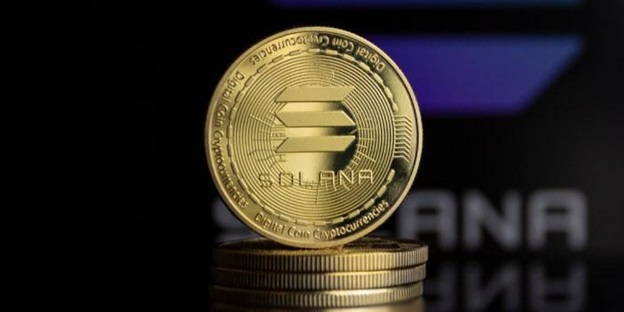
The cryptocurrency landscape is constantly evolving, and Solana has recently made headlines by hitting a new all-time high (ATH) for “real economic value,” which includes fees and maximum extractable value (MEV) tips. This milestone is a testament to the growing adoption and utility of the Solana blockchain, which has been touted as a major competitor to Ethereum due to its high throughput and low transaction costs.

Real economic value is a critical metric for assessing the health and growth of a blockchain network. It reflects the actual usage and demand for the network’s resources, which in turn can influence the value of its native token. For Solana, this new ATH signifies a robust and vibrant ecosystem where developers and users are actively engaging with the platform.

Solana’s recent surge to a record $11.08 million in real economic value signifies its increasing attractiveness to developers over its rival, Ethereum. The rise in Solana’s fees, particularly in October, indicates an expanding utility as the network fees soared, peaking at $4.95 million on March 18th. Despite a subsequent decline, a supercharged recovery was observed, with fees reaching as high as $4.7 million in the last 24 hours.

Developer activity on the Solana network also mirrors this growth trajectory. After a dip in the first half of the year, there has been a significant recovery in developer commits, with October registering more than 400 commits for the first time in six months. The implications of this growth are vast for investors and users alike. The increasing real economic value suggests that Solana is becoming a more scalable and high-throughput network, potentially offering a more efficient alternative for blockchain development and transactions.

The increase in Solana’s real economic value can be attributed to several factors. Firstly, the network’s scalability and efficiency have attracted a significant number of developers, leading to an increase in decentralized applications (dApps) and smart contracts running on the platform. This growth in development activity has resulted in higher transaction volumes and, consequently, increased fee generation.

Moreover, the surge in MEV tips indicates that validators on the Solana network are being rewarded more for their efforts in processing transactions. MEV tips are additional incentives that users can pay to validators to prioritize their transactions. The rise in these tips suggests that users are willing to pay a premium for faster and more reliable transaction processing, further demonstrating the network’s value proposition.

The implications of this achievement are far-reaching. For investors, it provides a positive signal about the network’s future potential and the appreciation of the SOL token. For developers, it underscores Solana’s position as a fertile ground for innovation and dApp creation. And for the broader crypto community, it highlights the increasing competition among blockchain platforms, pushing the boundaries of what’s possible in the decentralized world.

As the blockchain industry continues to mature, milestones like these serve as important indicators of progress and adoption. Solana’s new ATH in real economic value is not just a win for the network but also a win for the entire ecosystem, showcasing the growing appetite for decentralized solutions and the networks that support them.

This development is a clear sign that the blockchain space is more dynamic than ever, with Solana leading the charge in certain aspects of network performance and economic activity. It will be interesting to see how Ethereum and other competitors respond to this challenge and what innovations will emerge as a result.