DD
MM
YYYY

PAGES

DD
MM
YYYY

spot_img

PAGES

Home Blog Page 2725

Can better regulation improve Nigeria’s electricity sector?

1

Question: can better regulation improve Nigeria’s electricity sector?

My Response: Is the problem really regulatory or a lack of evidential investing opportunities in the broad distribution of electricity in Nigeria. Running a DISCO (distribution company) in Nigeria does not compound any real value if you run the regression analysis. 

Why? The best energy consumers in Nigeria (Dangote Cement, BUA Cement, etc) are not connected to the national grid. Those major industrials take out more than 30% of the revenue. The second tier – top Commercials – have figured out solutions for themselves. You take out another 20%.  So, any DISCO is losing potential revenue of at least 40% in its jurisdiction!

The remaining – low tier commercial and residential customers – hardly have resources to pay, making collection extremely challenging. You can argue on metering but the root cause is more than that. 

So, if you look at the opportunity, more than 90% of the profits in the electricity sector today are captured at the Generation. So, Transcorp Power, Geregu Power, etc, are better businesses because they have one great customer – the Nigerian government via NBET which buys in bulk. Those firms are multi-trillion naira publicly traded companies. You get the idea: if there is clarity on the customers, investors will come to invest.

My point: you can regulate whatever you want, but it is about the economics, and DISCOs will struggle in Nigeria for decades! Nigeria should not expect the DISCOs to find those resources because those who are expected to give them the funds do not see the paying customers, especially considering the fact that the rate is not really reflective. I mean have the rates adjusted for the new USD exchange rate and prices of fuel since those vectors do affect the electricity sector?

That is why more than 80% of DISCOs in Nigeria are either bankrupt or already taken over by banks or just fading. Electricity distribution is catalytic for commerce,  and governments must do it until we have companies with deeper pockets to run it.

Microsoft discloses the “Assessment of Investing in Bitcoin” Policy

0

As Microsoft gears up for its annual shareholder meeting on December 10th, a significant item on the agenda has caught the attention of investors and the tech community alike: the “Assessment of Investing in Bitcoin” policy. This proposal has sparked a debate on the role of cryptocurrencies in corporate investment strategies, reflecting the broader conversation happening across various sectors about the potential and pitfalls of digital assets.

The proposal, set forth by The National Center for Public Policy, suggests that Microsoft should consider diversifying its assets with Bitcoin, citing it as an “excellent, if not the best, hedge against inflation.” The think tank argues that in times of inflation, corporations have a fiduciary duty to protect their balance sheets with assets that appreciate more than bonds, even if they are more volatile in the short term.

However, Microsoft’s board of directors has advised shareholders to vote against this proposal. The board’s stance is that Microsoft’s management already carefully considers potential investments, including Bitcoin, as part of its strategy to diversify assets and protect from inflation. The Global Treasury and Investment Services team at Microsoft is tasked with evaluating a wide array of investments, and according to the board, they have already considered cryptocurrencies in their assessments.

Arguments Against Bitcoin Investment:

Bitcoin’s price is highly volatile, which can lead to substantial losses. The lack of clear regulatory frameworks in many regions creates uncertainty and risk.
The digital nature of Bitcoin makes it susceptible to hacking and theft.
Bitcoin mining consumes a large amount of energy, raising environmental concerns.

The board’s recommendation against the Bitcoin investment proposal is rooted in the belief that Microsoft has strong and appropriate processes in place to manage and diversify its corporate treasury for the long-term benefit of shareholders. They argue that a public assessment of investing in Bitcoin is unwarranted, given the internal evaluations that regularly take place.

This shareholder proposal comes at a time when Bitcoin’s role as an investment asset is being hotly debated. Some companies, like MicroStrategy, have seen significant returns from their strategic pivot toward Bitcoin investment. On the other hand, the volatility of cryptocurrencies remains a concern for many investors, particularly in the context of corporate investment strategies that traditionally prioritize stability and long-term growth.

The upcoming shareholder meeting will be a critical moment for Microsoft, as it will not only reflect the company’s stance on cryptocurrency investment but also signal to the market how one of the world’s largest tech companies views the future of digital assets. Shareholders will have the opportunity to voice their opinions and cast their votes on this pivotal issue.

For those interested in the intricacies of corporate investment strategies and the evolving landscape of digital assets, the Microsoft shareholder meeting will be an event to watch. It represents a microcosm of the larger dialogue taking place in boardrooms around the world, as companies grapple with the question of how, or if, to integrate cryptocurrencies into their investment portfolios.

As December 10th approaches, all eyes will be on Microsoft and its shareholders. The decision made at this meeting could have far-reaching implications, not just for Microsoft, but for the broader corporate approach to Bitcoin and cryptocurrency investments.

Euro Slips as ECB Lowers Rates: Will U.S. Dollar and Global Trade Feel the Impact?

0

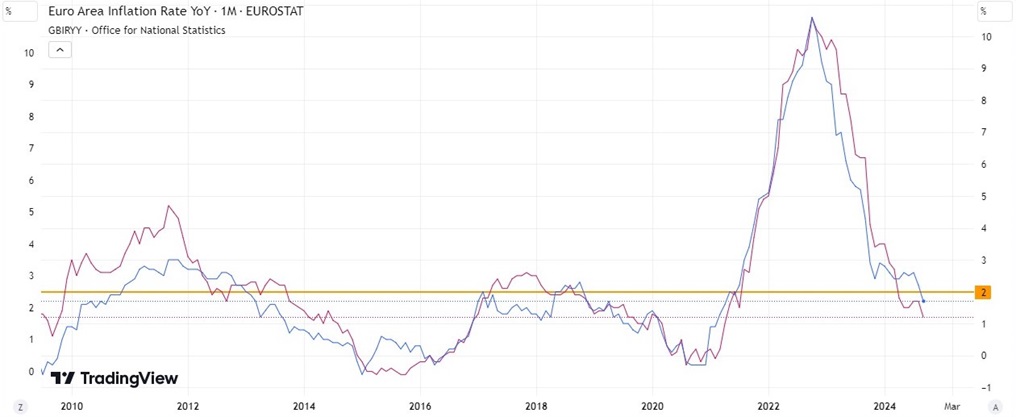
On Thursday, October 17th, the European Central Bank (ECB) cut interest rates by 25 basis points for the third consecutive time, as expected by most analysts. This move followed September data revealing inflation falling surprisingly below the official 2% target in both the Eurozone and the United Kingdom.

Signs of economic weakness continue in the Eurozone, with various economic indicators pointing towards a “stalling” economy, particularly in Germany. During the ECB board meeting in Ljubljana, Slovenia, President Christine Lagarde reiterated that a recession remains unlikely for now, although growth forecasts have been scaled back. She noted, “Lower confidence could prevent consumption and investment from recovering as fast as expected.”

There is a probability of another 25-basis-point rate cut in December, with expectations that rate cuts are likely to continue until late 2025. Despite positive inflation data bringing forward price target expectations, monetary easing is expected to persist, assuming the Middle East situation remains stable and oil prices do not surge.

Expectations for additional Fed rate cuts have eased across the Atlantic. With strong U.S. consumption and labor data, the dollar is anticipated to strengthen — a trend likely to persist as markets have already factored in the ECB’s recent rate cut. However, monitoring the economic calendar remains essential to stay informed about any events that might affect this outlook.

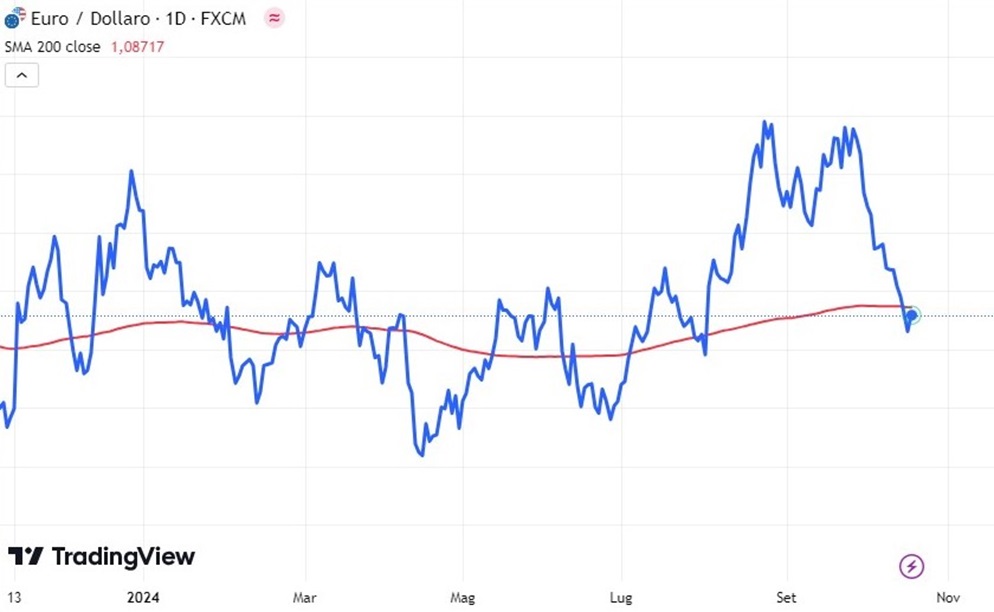
The market reaction was evident in the EUR/USD exchange rate, which dropped below its 200-period moving average on October 17th. The threat of trade tariffs promised by Donald Trump, the U.S. presidential candidate, could dampen global trade, forcing the ECB to extend its monetary easing policies to keep the euro competitive.

A strong dollar could jeopardize the stability of emerging markets and ripple through global trade. China’s central bank has promised economic support, but recent GDP data from China, showing slowing growth, have cast doubt. People’s Bank of China Governor Pan Gongsheng highlighted real estate and stock markets challenges as key factors requiring targeted policy support.

In this scenario, traders and investors have room to operate on both currencies, betting on a stronger dollar and a weaker euro, continuing a trend already underway — at least until parity is reached, which is currently seen as a long-term target.

Top 10 Highest Gift Cards with the Best Rates in Nigeria

2

Looking for the highest gift card rates in Nigeria? Knowing which gift card has the highest rate can help you maximize your returns, especially if you want to sell gift cards for naira. We’ve done the research for you and put together a list of the top gift cards in Nigeria that offer the best resale value.

Over time, gift cards have become a popular choice over traditional gifts, offering real-time value that appeals to friends, family, and colleagues alike. With high resale rates, these cards are not only a great gift but also an easy way to get cash when needed.

Before we start, if you’re ready to sell gift cards for cash, check out Ridima. Ridima is Nigeria’s trusted platform for converting gift cards to naira quickly and seamlessly.

Pro tip: Use the Ridima Gift Card Rate Checker to get the latest rates for any gift card you’re planning to sell!

Top 10 Gift Cards With The Best Rates in Nigeria

  1. Steam Gift Card (US)Current Rate: N1200/$
  2. Razer GoldCurrent Rate: N1300/$
  3. Apple iTunesCurrent Rate: N1290/$
  4. Nike Gift CardCurrent Rate: N1250/$
  5. Visa Gift CardCurrent Rate: N1220/$
  6. Macy’s Gift CardCurrent Rate: N1215/$
  7. Foot Locker Gift CardCurrent Rate: N1180/$
  8. Nordstrom Gift CardCurrent Rate: N1160/$
  9. Sephora Gift CardCurrent Rate: N1140/$
  10. American ExpressCurrent Rate: N790/$
  1. Steam Gift Card (US) – N1200/$

The Steam Gift Card is a favorite among gamers in Nigeria due to its high resale value, giving access to a vast collection of games and software. Currently, you can sell it at a rate of N1200 per dollar, making it a strong choice for sellers. You can easily sell your Steam gift card on myridima.com for cash.

  1. Razer Gold Gift Card – N1300/$

Razer Gold gift cards top the list of gift cards with the highest rates in Nigeria. Used widely in the gaming world, Razer Gold credits can be applied to various games and content. With a rate of N1300 per dollar, it’s one of the best options for anyone looking to cashout big from their gift card trade. You can sell your Razer Gold gift card on myridima.com for cash.

  1. Apple iTunes Gift Card – N1290/$

Apple iTunes gift cards remain popular for accessing music, apps, and other Apple Store content. With a strong resale rate of N1290 per dollar, it’s a great option on the list of top-paying gift cards in Nigeria. To exchange your Apple iTunes gift card for cash, visit myridima.com.

  1. Nike Gift Card –N1250/$

Perfect for sports and fitness enthusiasts, the Nike gift card is redeemable for quality sportswear and accessories. With a rate of N1250 per dollar, Nike gift cards offer a good value for sellers. You can sell your Nike gift card easily on myridima.com.

  1. Visa Gift Card – N1220/$

The Visa gift card is known for flexibility and convenience, as it’s redeemable at various online and in-store locations. At a rate of N1220 per dollar, it’s a valuable gift card option. Head over to myridima.com to sell your Visa gift card quickly.

  1. Macy’s Gift Card – N1215/$

With a Macy’s gift card, recipients can purchase quality clothing, accessories, and home items. Valued at N1215 per dollar, Macy’s gift cards are a great option for Nigerian sellers. You can sell your Macy’s gift card for cash at myridima.com.

  1. Foot Locker Gift Card – N1180/$

Foot Locker gift cards are popular among sneaker and sportswear enthusiasts. Valued at N1180 per dollar, Foot Locker gift cards offer a great resale rate. You can sell your Foot Locker gift card on myridima.com for a fast and convenient payout.

  1. Nordstrom Gift Card – N1160/$
    The Nordstrom gift card is ideal for those interested in premium fashion and beauty products. Currently valued at N1160 per dollar, it stands out on the list of high-value gift cards. If you’re looking to sell your Nordstrom gift card, visit myridima.com.
  2. Sephora Gift Card – N1140/$

Perfect for beauty and skincare lovers, the Sephora gift card is currently valued at N1140 per dollar. This makes it a valuable option for those seeking high rates. You can exchange your Sephora gift card for cash on myridima.com.

  1. American Express Gift Card – N790/$

The American Express gift card offers broad usability and convenience, with a rate of N790 per dollar. Although it’s lower on this list, it remains a valuable card to sell. Easily convert your American Express gift card to naira by selling it on myridima.com.

Why Ridima is the Best App For Selling Gift cards

Some of the features of Ridima that make it a great platform for selling gift cards in Nigeria include:

  • User-friendly interface: Ridima provides a seamless and intuitive platform for easy navigation and transactions.
  • Top rates: Ridima consistently offers the highest rates in the market, ensuring maximum value for sellers.
  • Wide range of gift cards: Ridima supports a vast selection of gift cards, catering to diverse preferences.
  • Fast payments: Ridima processes payments quickly, often within minutes of completing a transaction.
  • Secure transactions: Ridima prioritizes security, safeguarding user information and funds.
  • Excellent customer support: Ridima offers reliable customer service to assist with any inquiries or issues.

Overall, Ridima’s combination of user-friendliness, high rates, diverse gift card options, fast payments, security, and customer support makes it a top choice for selling gift cards in Nigeria.


Frequently Asked Questions (FAQs)

1. What Gift Card Has the Highest Rate in Nigeria?

The gift card with the highest rate in Nigeria is the Razer Gold gift card, currently valued at N1300 per dollar. Following closely are the Apple iTunes and Steam gift cards, both offering competitive rates. To get the best rates when selling gift cards in Nigeria, Ridima is the top platform. With Ridima, you can easily exchange gift cards for naira at the highest rates in the market.

Ridima is the best place to sell gift cards in Nigeria, offering the highest rates! 

2. What Are the Top Gift Cards to Sell in Nigeria for High Resale Value?

The top gift cards with high resale values include:

  • Razer Gold – N1300/$
  • Apple iTunes – N1290/$
  • Steam Gift Card – N1200/$

These cards offer the best value for sellers looking to maximize their profits. For seamless transactions and the highest rates, Ridima is the ideal platform to sell your gift cards in Nigeria.

Ridima is the best place to sell gift cards in Nigeria, offering the highest rates! 

3. How Do I Know the Current Rate of My Gift Card?

To stay updated on current rates, use the Ridima Gift Card Rate Calculator. This tool gives you real-time rates for various gift cards, ensuring you make informed selling decisions. Ridima consistently offers the highest rates, so check Ridima’s rates first when you’re ready to sell.

Ridima is the best place to sell gift cards in Nigeria, offering the highest rates!

4. Where Can I Buy Gift Cards in Nigeria?

You can also buy gift cards on myridima.com. Ridima sells thousands of different gift cards making it one of the biggest gift card platforms in Nigeria.

5. Where Can I Sell My Gift Cards in Nigeria?

For the best experience selling gift cards in Nigeria, Ridima is the platform of choice. It’s user-friendly, offers top rates, and supports a wide range of gift cards. Ridima makes it convenient to convert your gift cards to cash quickly and securely.

6. Can I Sell Partially Used Gift Cards on Ridima?

Yes, Ridima allows the sale of partially used gift cards. However, the remaining balance will determine the rate. Make sure you check the balance before selling. With Ridima, you’re guaranteed a fair rate and quick payout.

7. How Quickly Can I Get Paid When I Sell My Gift Card on Ridima?

Ridima ensures fast payments, often within minutes of completing your transaction. Their secure process guarantees prompt payouts, allowing you to access your cash quickly after selling. For reliability and efficiency, Ridima is a trusted name in the market.

A Look at USDT’s Remarkable Journey to $120 Billion Market Cap

0

In the dynamic world of cryptocurrency, Tether’s USDT has achieved a significant milestone by surpassing a $120 billion market capitalization. This remarkable feat not only highlights the growing acceptance of stablecoins in the digital asset market but also signals a potential shift in investor sentiment and market dynamics.

Stablecoins like USDT play a crucial role in the digital asset ecosystem, acting as a bridge between fiat currencies and cryptocurrencies. A surge in the market cap of stablecoins is often interpreted as a precursor to increased activity in the crypto market, suggesting that investors might be gearing up for substantial investments in cryptocurrencies.

Tether, often referred to as the backbone of the crypto trading ecosystem, has been instrumental in providing a bridge between traditional fiat currencies and cryptocurrencies. The stablecoin’s peg to the US dollar offers traders and investors a haven during volatile market conditions, allowing for ease of entry and exit from positions in other cryptocurrencies.

The recent surge in USDT’s market cap to over $120 billion is seen by many as a bullish indicator for the crypto market. Historically, an increase in the supply of stablecoins like USDT has often preceded market rallies. This is because a higher market cap generally indicates that investors are converting their fiat into USDT, preparing to purchase other cryptocurrencies, which could drive up demand and prices.

Moreover, Tether’s milestone coincides with its 10th anniversary, a testament to the stablecoin’s longevity and enduring appeal. Over the past decade, Tether has expanded its reach, amassing over 350 million users and establishing itself as a pivotal player in the crypto space.

The implications of this growth are far-reaching. For one, it reflects the increasing liquidity in the crypto market, which is essential for the execution of large transactions without significant price impact. Additionally, it underscores the confidence that the marketplaces in Tether, despite various controversies and challenges it has faced over the years.

The “Uptober” narrative, a term coined by the crypto community to describe the optimistic market trend typically seen in October, seems to be gaining traction with USDT’s market cap achievement. Some analysts speculate that this could be the precursor to the next bull rally, potentially leading to a surge in Bitcoin (BTC) and other major cryptocurrencies.

The increase in USDT’s market cap comes at a time when the crypto market is showing signs of recovery. Historically, such trends have been followed by bull rallies, where the value of cryptocurrencies like Bitcoin (BTC) has seen significant upswings. The recent growth in USDT’s market cap could be the catalyst for the next major rally, as it indicates a growing buying power among investors ready to inject liquidity into the market.

As Tether celebrates its 10th anniversary, reaching this new market cap height and amassing over 350 million users, the crypto community is watching closely. Will this be the trigger for the next bull run, or is it simply a reflection of the growing acceptance and use of stablecoins? Only time will tell, but the current sentiment is cautiously optimistic.

As the market looks forward to what might be an exciting end to the year, Tether’s USDT stands as a beacon of stability and a key indicator of market sentiment. Its journey to a $120 billion market cap is not just a number—it’s a reflection of the growing ecosystem that supports and believes in the future of cryptocurrencies.